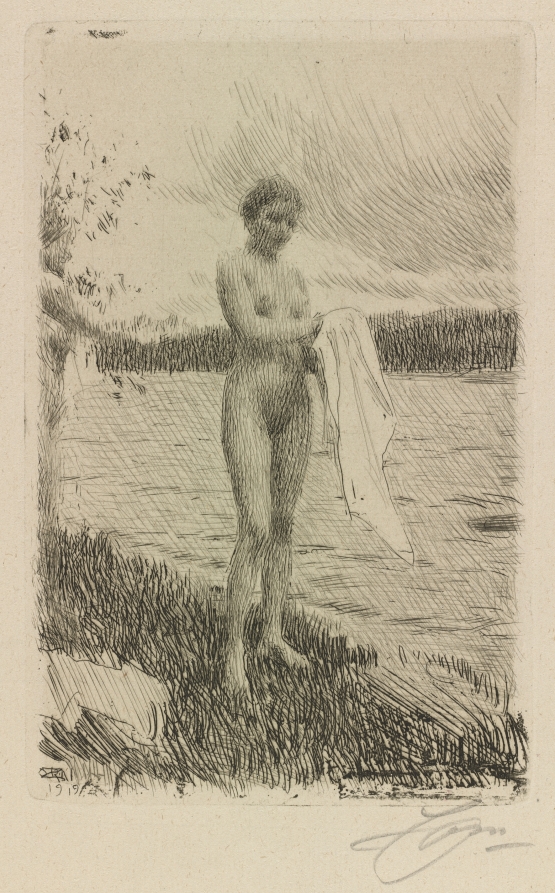
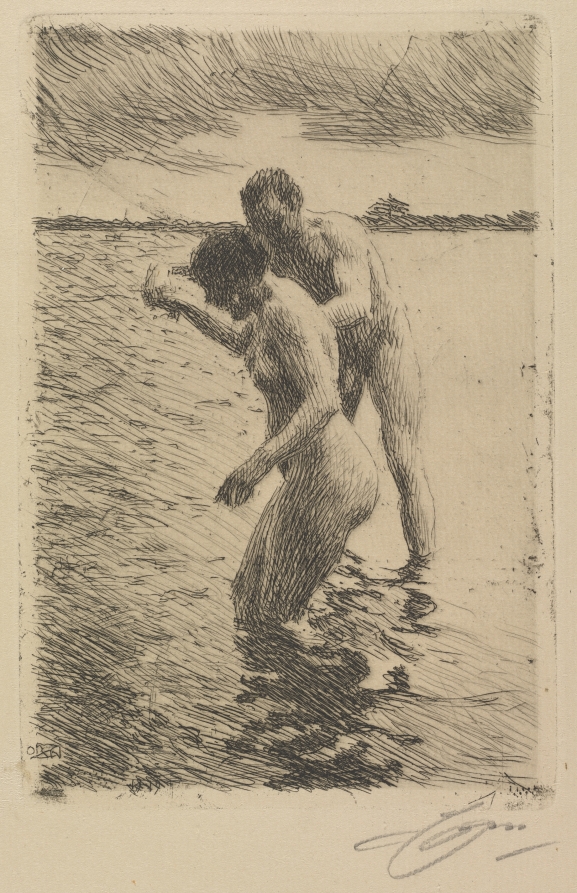
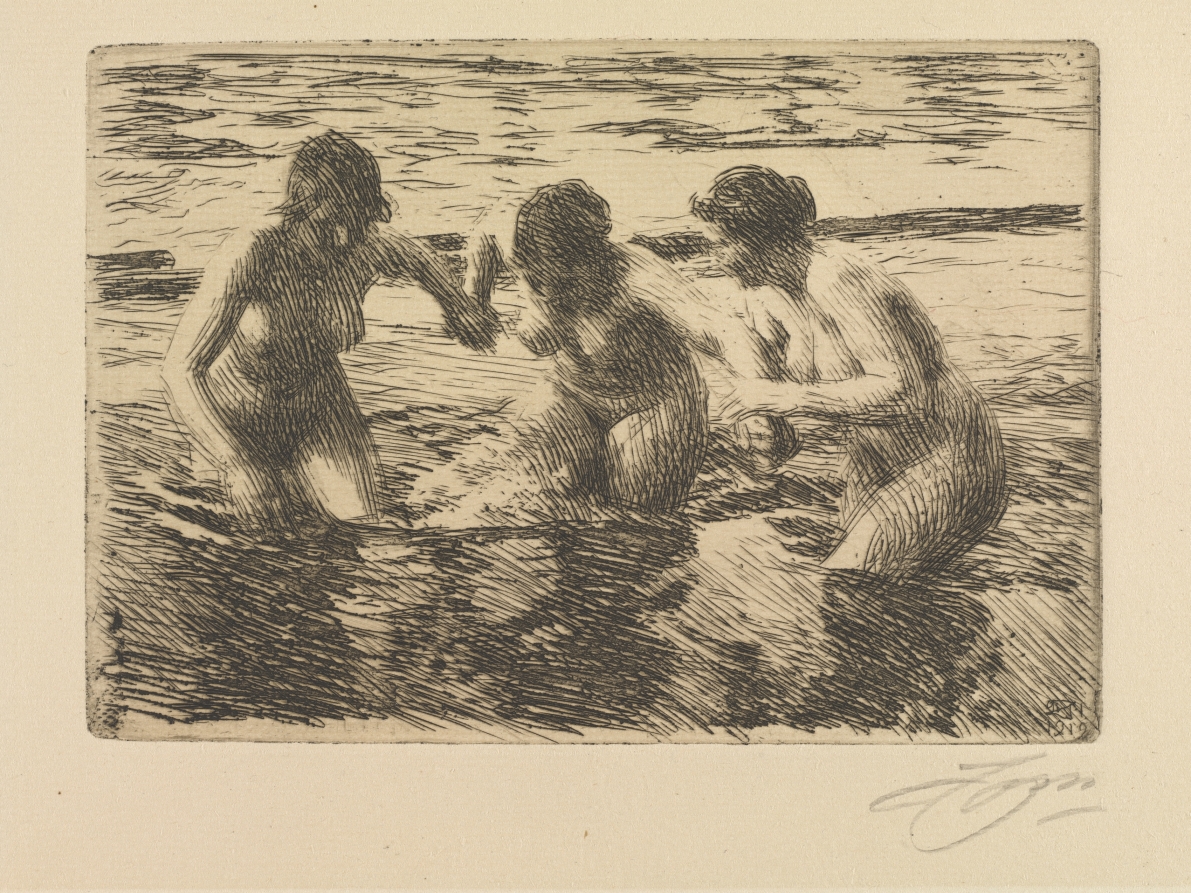
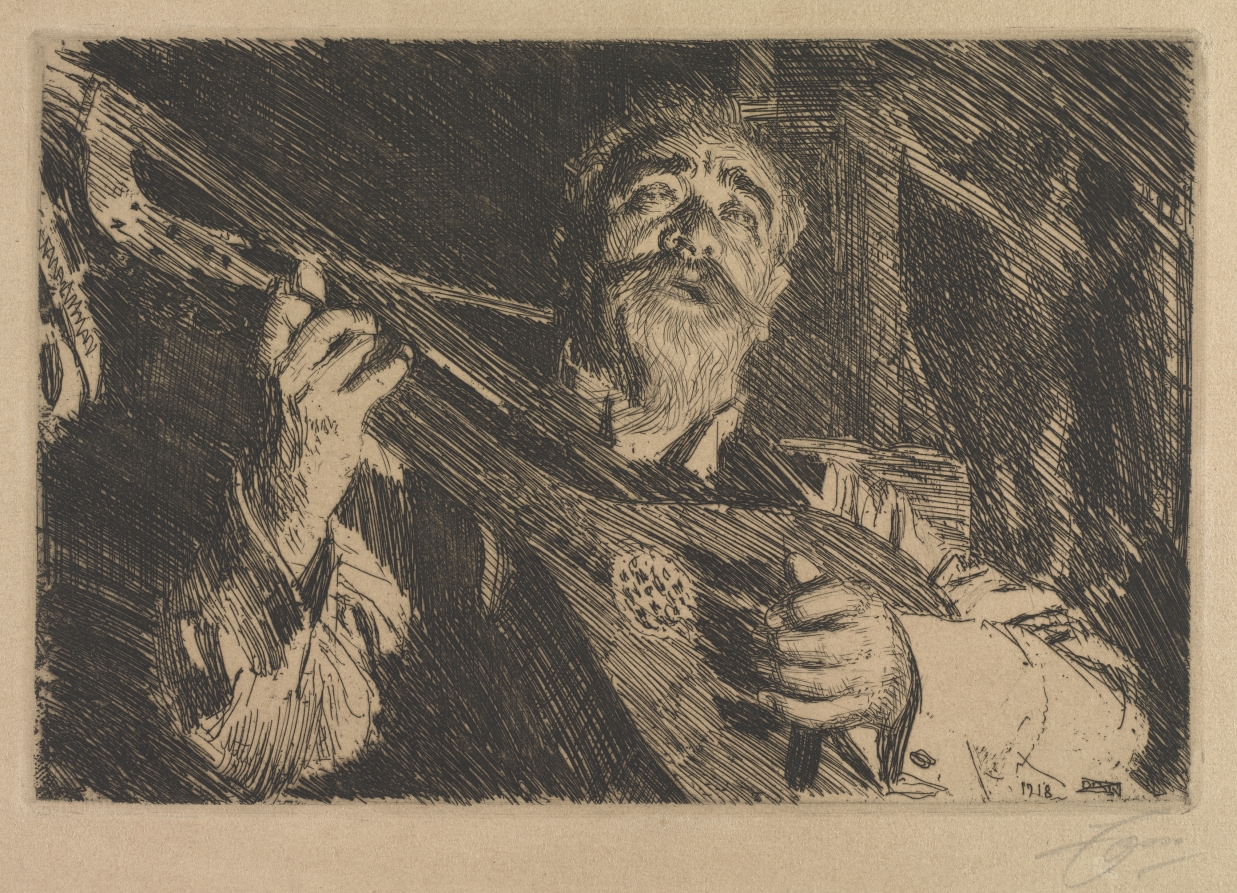
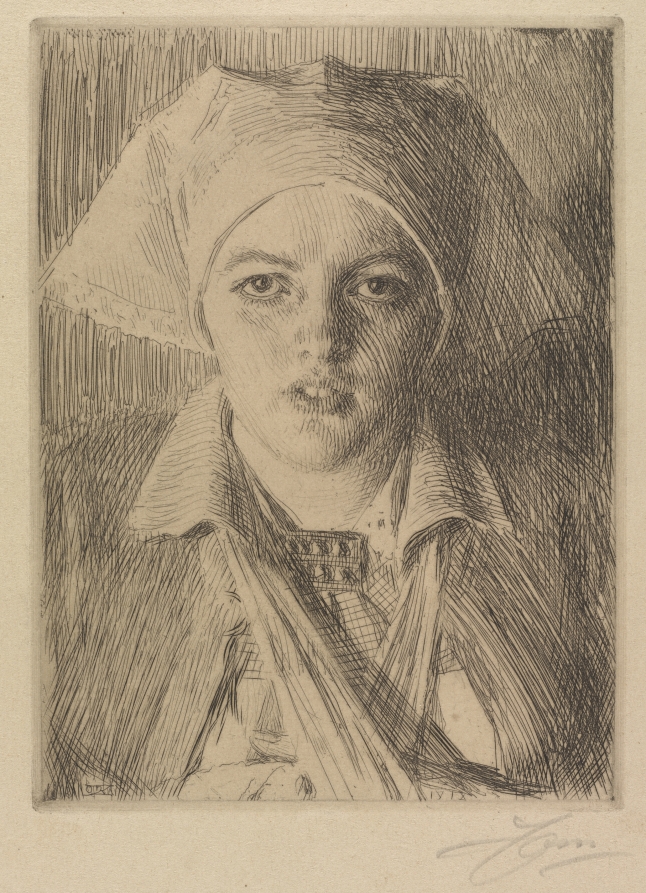
There is a moment in the great hall of the Nationalmuseum in Stockholm when visitors stop and simply stare. The painting before them seems to breathe. Light falls across skin and water with such immediacy, such casual authority, that the question of how it was done feels almost beside the point. This is the signature effect of Anders Zorn, the Swedish painter, watercolorist, and printmaker who elevated everyday human presence into something luminous and enduring. Though he died in 1920, his reputation has never dimmed, and among serious collectors of nineteenth and early twentieth century work, his prints and paintings command both devotion and significant market attention. Zorn was born in 1860 in Mora, in the Dalarna region of central Sweden, a landscape of forests, lakes, and folk traditions that would never fully leave his imagination even as he became one of the most celebrated portrait painters in the world. He was raised largely by his maternal grandparents after his parents did not marry, and the relative simplicity of his rural upbringing gave him a grounded sensibility that no amount of international success would erode. He entered the Royal Swedish Academy of Arts in Stockholm at the age of fifteen, demonstrating a precocious technical gift that made his professors take notice almost immediately. His early career was defined by watercolor, a medium he wielded with extraordinary fluency during his travels through Spain, the Balkans, England, and North Africa in the 1880s. These journeys were formative. He arrived in London and found an audience willing to pay well for his society portraits, and he pushed himself to render fabrics, faces, and reflected light with a directness that owed something to the Spanish masters, particularly Velázquez, whose influence can be felt in Zorn's comfort with tonal contrast and psychological presence. A pencil drawing from 1887 now held on The Collection, titled Ada Lymon (Woman in a Large Hat), captures the elegance and restraint of this period: the line is spare, confident, almost effortless in its precision. By the late 1880s and into the 1890s, Zorn had shifted his primary attention to oil painting and etching, and it was in these two mediums that he would achieve his most lasting renown. He spent significant periods in Paris, where he absorbed the energy of Impressionism without ever becoming a strict adherent. His brushwork grew looser and more gestural, his palette warmer, and his interest in natural light, particularly the soft northern light of Swedish summers, became the animating concern of his figure paintings. The nude bathing scenes he produced during summers in Mora remain among the most sensually alive images in Scandinavian art. Works like Two Bathers, an etching from 1910 held on The Collection, demonstrate how he translated that painterly warmth into the economy of the intaglio line, using drypoint and roulette to suggest the shimmer of water and the weight of a human body with almost uncanny economy. Zorn's career as a portraitist brought him into contact with presidents, industrialists, and cultural figures across Europe and America. He painted three American presidents, Grover Cleveland, William Howard Taft, and Theodore Roosevelt, as well as Isabella Stewart Gardner, the formidable Boston collector whose museum still bears her name and spirit. These commissions were not mere exercises in flattery. Zorn brought the same directness and warmth to his portrait subjects that he gave to his bathers and his village scenes. His 1899 etching Portrait of the Artist and His Model, also on The Collection, reveals a playful self awareness, a sense of theater and intimacy balanced in equal measure. The image has a quality of confession: here is the man, here is the work, here is the space between them. As a printmaker, Zorn ranks among the finest etchers of his era, a peer to James McNeill Whistler and Mary Cassatt in his command of the medium. His prints were collected enthusiastically during his lifetime and continue to attract rigorous collector attention today. Part of their appeal is technical: Zorn's hatching and cross hatching create surfaces that feel almost textured, that seem to capture not just form but atmosphere. Part of the appeal is tonal: he understood how to make white paper function as light, so that his figures seem illuminated from within rather than simply rendered. Works such as Mme. Granberg (1903) and Mme. Olga Bratt (1892) exemplify this gift, the former a study in social confidence and composed femininity, the latter a more intimate and psychologically complex image. Among the prints currently on The Collection, the range on offer reflects both his versatility and his consistency of vision across nearly three decades of printmaking practice. From a collecting perspective, Zorn represents something genuinely attractive: a blue chip artist whose work is both historically significant and visually pleasurable. His prints appear regularly at major auction houses including Christie's, Sotheby's, and Bonhams, where strong impressions of his most celebrated etchings reliably attract competitive bidding. Collectors are advised to attend to impression quality and provenance, as Zorn's plates were sometimes printed after his death, and early impressions carry both aesthetic and market advantages. Oil paintings by Zorn are rarer at auction and correspondingly more expensive, with major works achieving prices well into the millions. For collectors entering the market, works on paper and prints offer a meaningful and financially accessible point of entry into an artist whose ceiling remains impressively high. Within the broader sweep of art history, Zorn belongs to a generation of internationalist painters who moved fluidly between national traditions and European modernism. He is often discussed alongside John Singer Sargent, with whom he shares a taste for bravura technique, social portraiture, and the rendering of skin and light. His Scandinavian contemporaries, including Bruno Liljefors and Carl Larsson, provide another frame of reference, though Zorn's ambitions were always more cosmopolitan, more willing to engage with the avant garde currents flowing through Paris and London. He never abandoned his roots in Mora, where he built his home and studio and established what would become the Zornmuseet, and this tension between the local and the global gives his work a distinctive vitality. Zorn died in 1920, at sixty years old, leaving behind a body of work that his contemporaries recognized as exceptional and that subsequent generations have continued to esteem. His legacy is secure not because critics have defended him but because the paintings and prints themselves are genuinely hard to resist. They carry within them a deep pleasure in looking, in being alive, in finding in the human figure something worth celebrating at length and with care. For collectors on The Collection, engaging with Zorn's work is an invitation into one of the most rewarding conversations in the history of Western art.