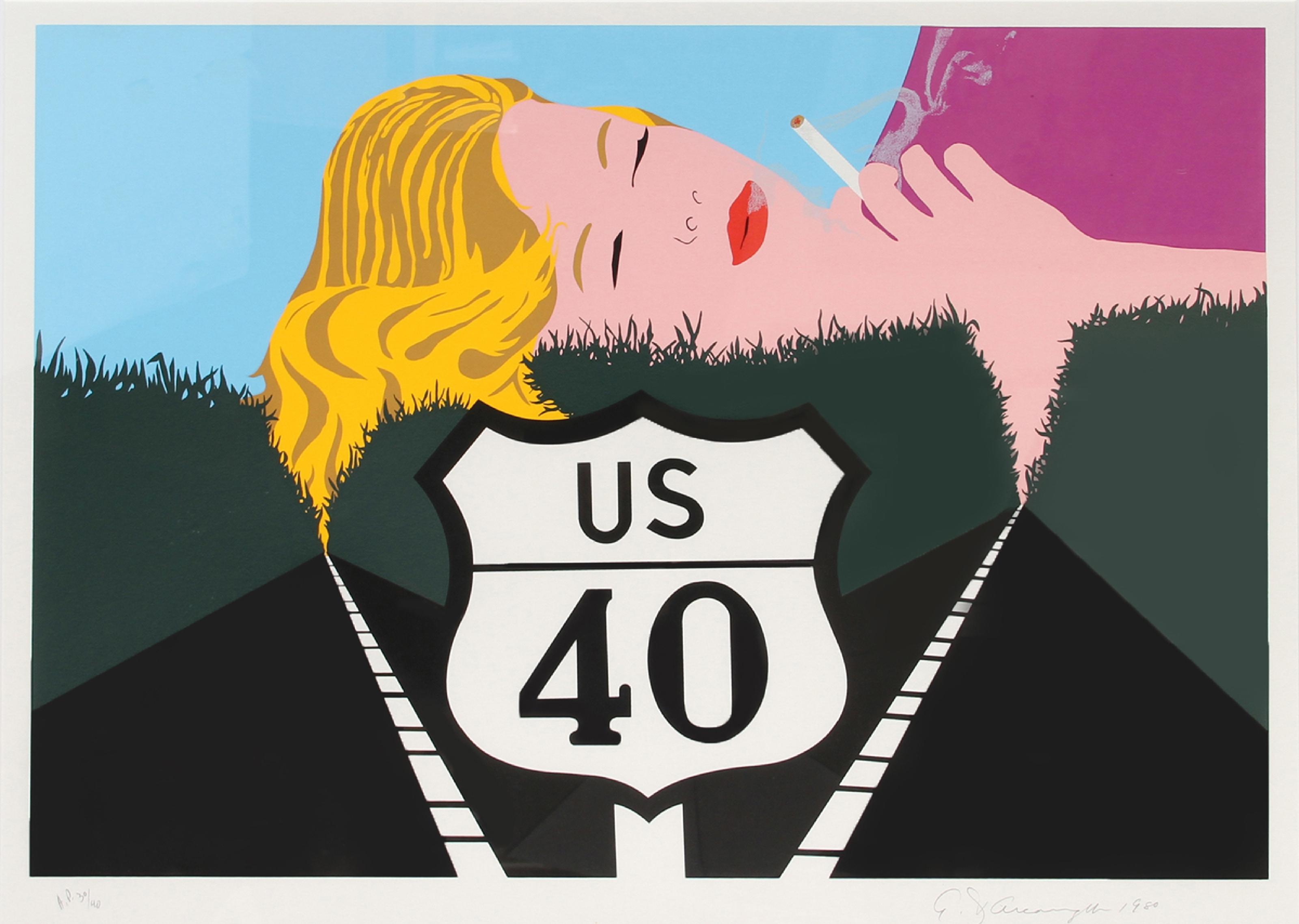
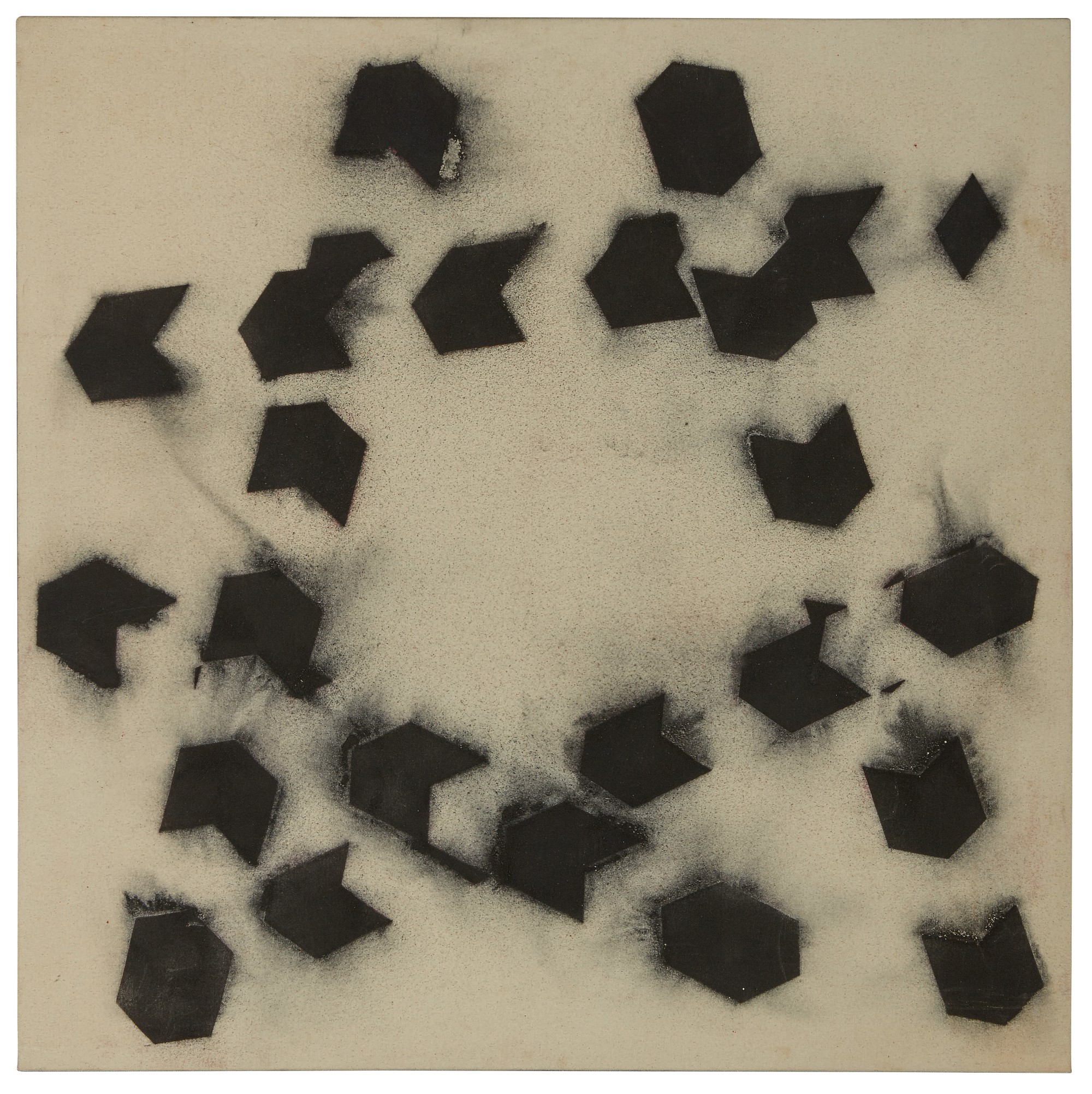
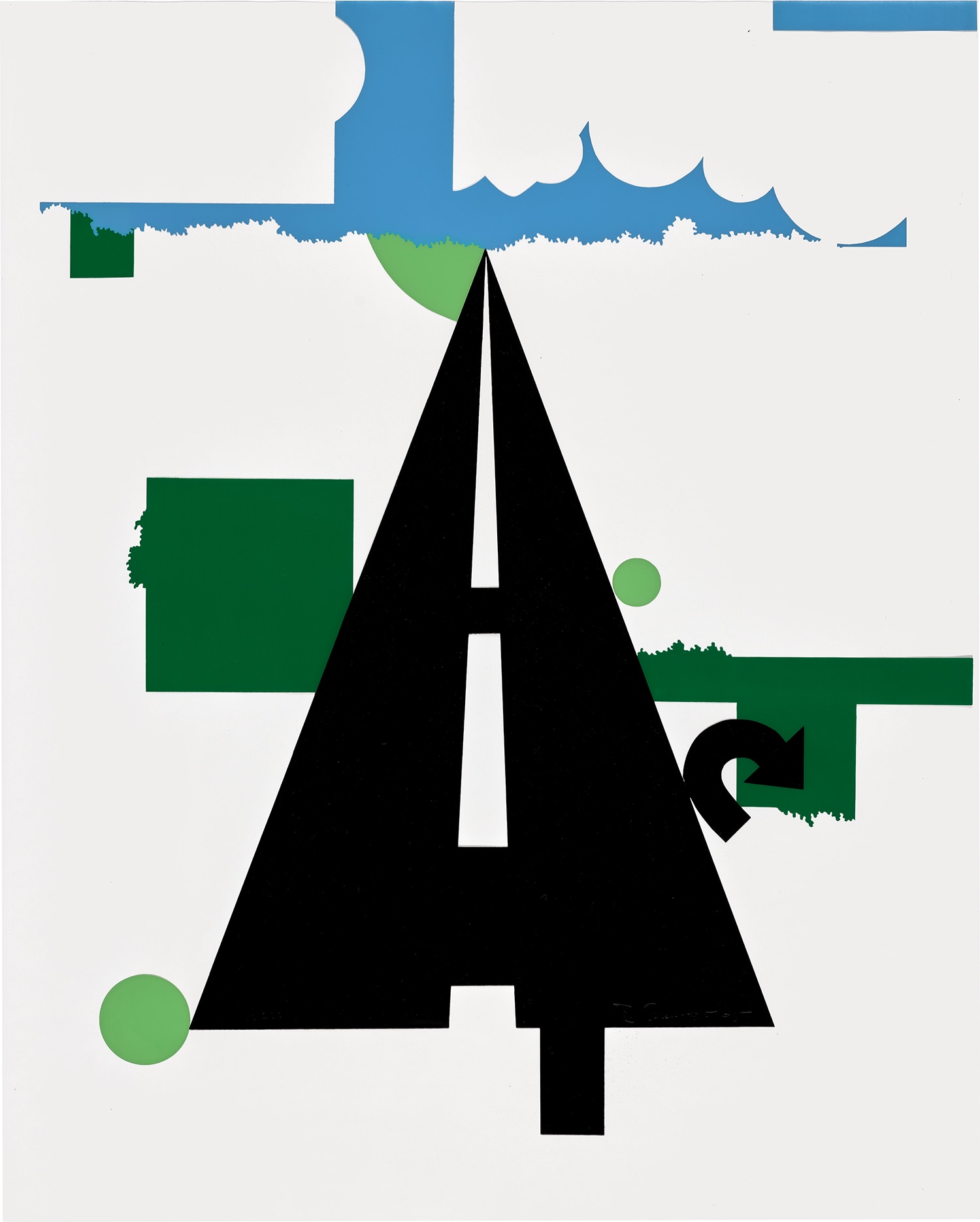
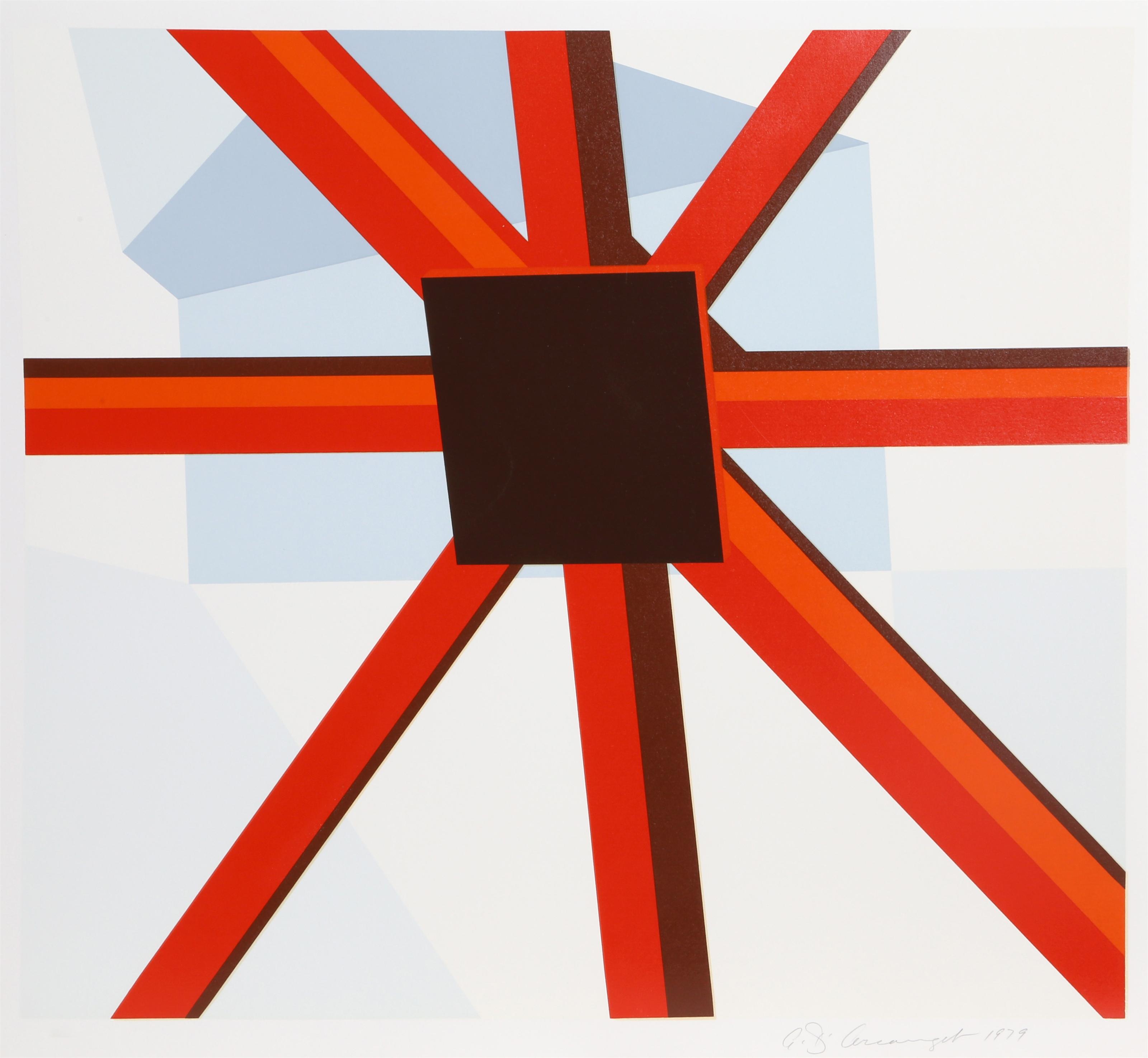
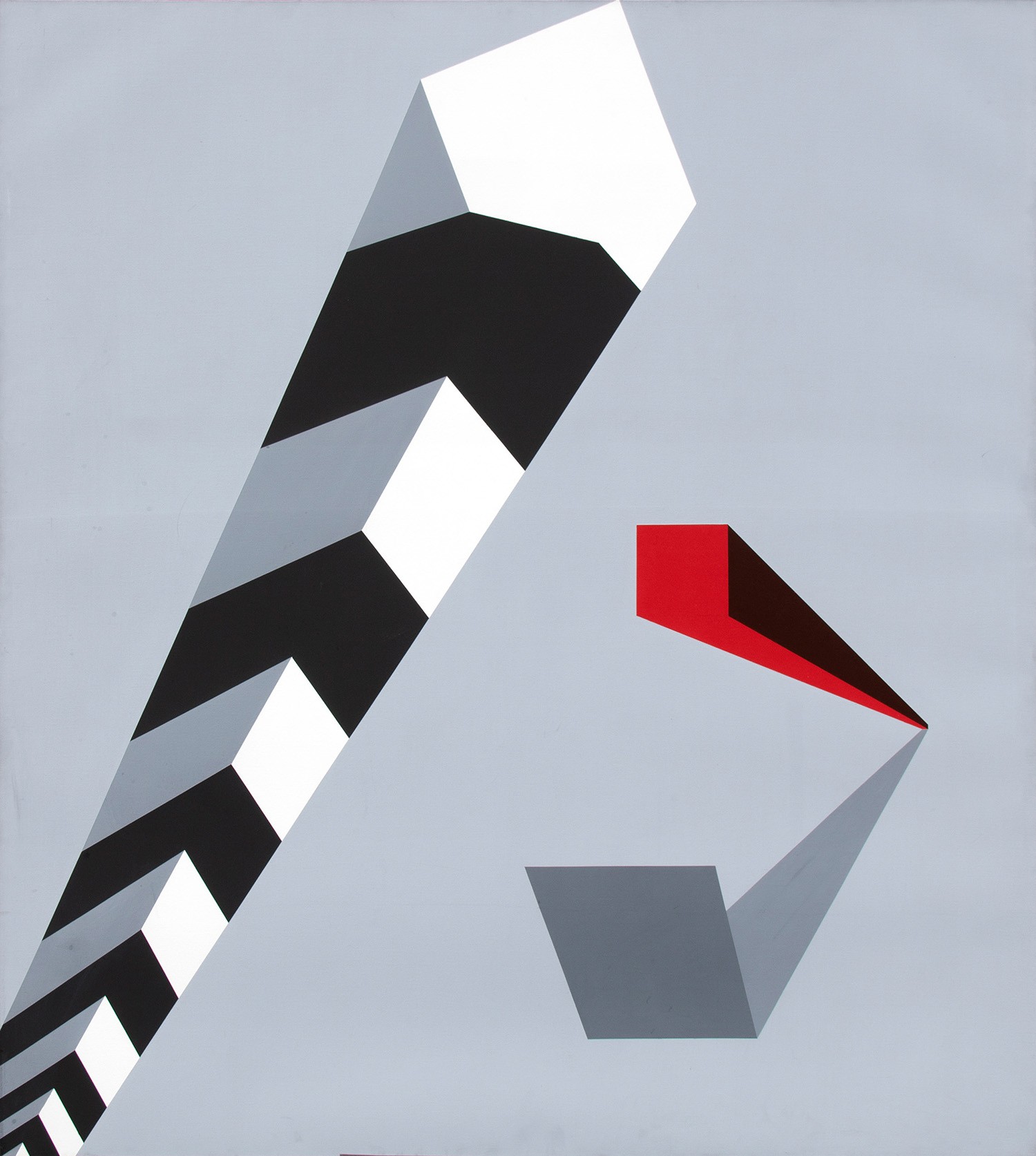
There is a moment, familiar to anyone who has driven an American highway at dusk, when the road ahead becomes something more than asphalt and painted lines. It becomes pure geometry, pure possibility, a ribbon of light pulling you forward into an open country. No artist understood that feeling more deeply, or rendered it more beautifully, than Allan D'Arcangelo. His canvases have been enjoying renewed scholarly and market attention in recent years, as curators and collectors recognize that his vision of American mobility was not merely Pop Art decoration but a genuinely philosophical engagement with landscape, speed, and the modern condition. D'Arcangelo was born in Buffalo, New York in 1930, a city defined by its industrial weight and its proximity to the vast horizontal sweep of the American interior. He studied at the University of Buffalo before moving to Mexico City in the early 1950s, where he immersed himself in the monumental mural traditions of Diego Rivera and José Clemente Orozco. That experience of large scale public imagery, bold flat color, and art designed to be read quickly and powerfully by a wide audience left a permanent mark on his sensibility. He returned to New York City and continued his studies at City College of New York and the New School for Social Research, arriving fully formed in the creative ferment of early 1960s Manhattan. New York in the early 1960s was a city crackling with competing artistic energies. Abstract Expressionism still held enormous prestige, but younger painters were restless, drawn toward the shared visual language of commercial culture, advertising, and the American vernacular. D'Arcangelo found his peers among the artists who would define Pop Art, exhibiting alongside Roy Lichtenstein, James Rosenquist, and Andy Warhol at galleries that were remaking the art world's understanding of what painting could address. Yet D'Arcangelo carved out a distinctly personal territory within that movement. Where Warhol examined consumer objects and celebrity, and Lichtenstein mined the comic strip, D'Arcangelo turned to the highway, a subject at once completely ordinary and strangely sublime. His breakthrough Highway series, begun in the early 1960s, remains among the most immediately recognizable bodies of work produced by any American artist of that decade. Working with flat, unmodulated color and hard edges drawn from the graphic conventions of road signage and commercial illustration, D'Arcangelo reduced the American landscape to its essential geometry. A road bisects the canvas. Guard rails recede in strict perspective. A moon hangs flat and white against a deep blue sky. The compositions are spare to the point of austerity, yet they vibrate with a peculiar emotional charge, capturing the simultaneous exhilaration and loneliness of American automotive life. These were paintings made at the height of the Interstate Highway System's expansion, when the open road carried enormous cultural weight as a symbol of freedom, progress, and postwar prosperity. Among the works that demonstrate the full range of D'Arcangelo's practice, his acrylic on canvas Landscape from 1969 stands as a particularly compelling example of his mature vision. The work shows his command of pictorial reduction, the way a few carefully chosen elements, a horizon line, a color field, a suggestion of movement, can conjure an entire experiential world. His prints deserve equal attention. The screenprint Landscape II from the celebrated 11 Pop Artists portfolio, printed on transparent mylar, reveals how thoughtfully D'Arcangelo engaged with the possibilities of the multiple, using the medium's inherent flatness and reproducibility as expressive tools rather than mere technical constraints. His graphite works on unprimed canvas, such as Constellation 41 126, show yet another dimension of his intelligence, a willingness to work reductively in materials that emphasize surface and process alongside his signature imagery. From a collecting perspective, D'Arcangelo represents a genuinely compelling opportunity. His work is held in the permanent collections of the Museum of Modern Art, the Whitney Museum of American Art, and the Smithsonian Institution, institutional endorsements that speak to his secure place in the American art historical canon. Works on paper and prints, including his screenprints and works produced in collaboration with major print publishers, offer accessible entry points for collectors building serious holdings in postwar American art. His paintings on canvas, when they appear at auction or through dealers, command strong prices reflective of his critical stature, and the trajectory for postwar Pop adjacent artists with institutional backing has remained consistently positive. Collectors drawn to the intersection of American vernacular culture, graphic precision, and conceptual depth will find D'Arcangelo enormously rewarding. Understanding D'Arcangelo fully requires placing him within a constellation of related artists whose work shares his concerns without ever duplicating them. Edward Ruscha, like D'Arcangelo, found poetry and philosophy in the American roadscape and the language of commercial signage. James Rosenquist brought a billboard painter's eye to the scale and urgency of American imagery. Robert Indiana worked with the graphic conventions of American commercial culture to produce images of deceptive simplicity and genuine emotional power. Among these peers, D'Arcangelo stands out for the particular stillness and spatial clarity of his compositions, an almost meditative quality that gives his highways their haunting resonance. He was not simply documenting American culture; he was translating it into something timeless. D'Arcangelo continued painting and teaching until his death in 1998, remaining committed to a vision of art rooted in direct visual experience and formal rigor. He taught for many years at the Pratt Institute in Brooklyn, influencing generations of younger artists who absorbed his lessons about clarity, economy, and the dignity of everyday imagery. His legacy today feels more vital than ever, as artists and critics grapple with questions of landscape, infrastructure, and the American built environment that D'Arcangelo addressed with such elegant intelligence half a century ago. To collect his work is to acquire a piece of the American visual imagination at one of its most fertile and searching moments, a gesture of faith in painting's enduring capacity to make us see the world we move through with fresh and wondering eyes.