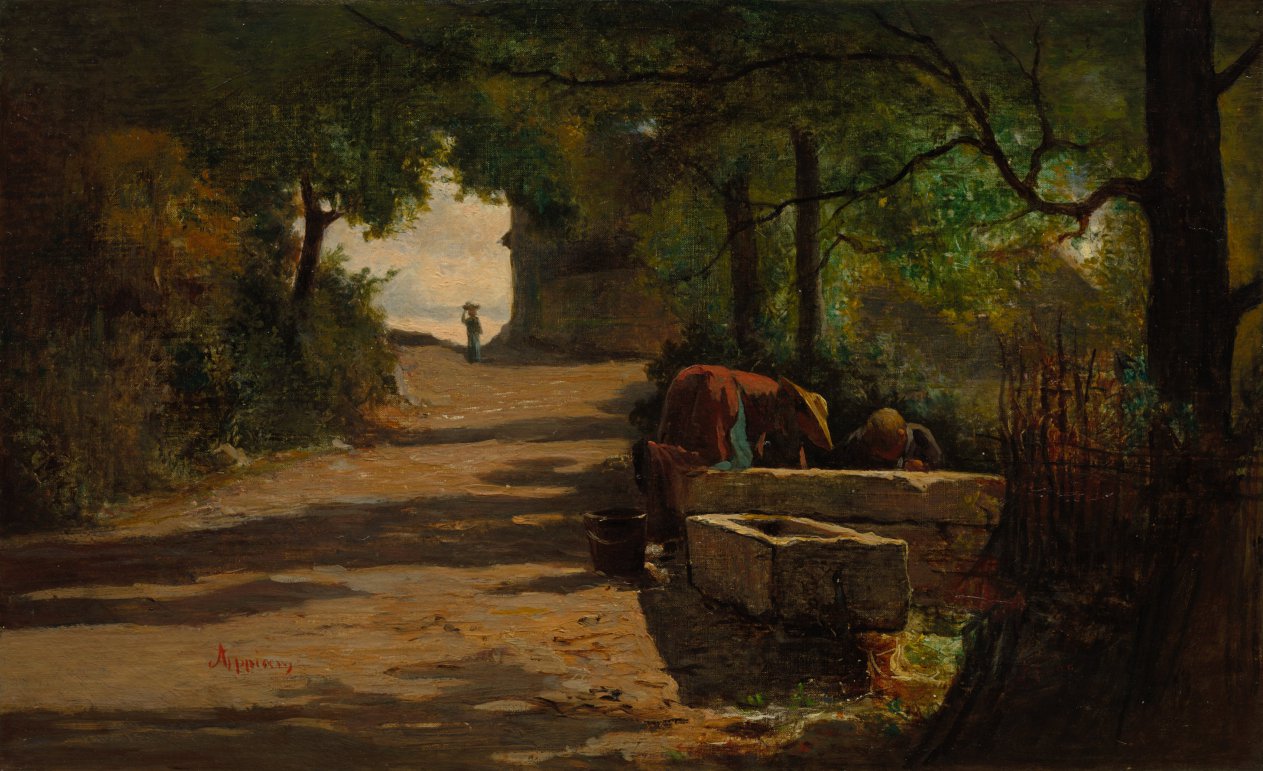
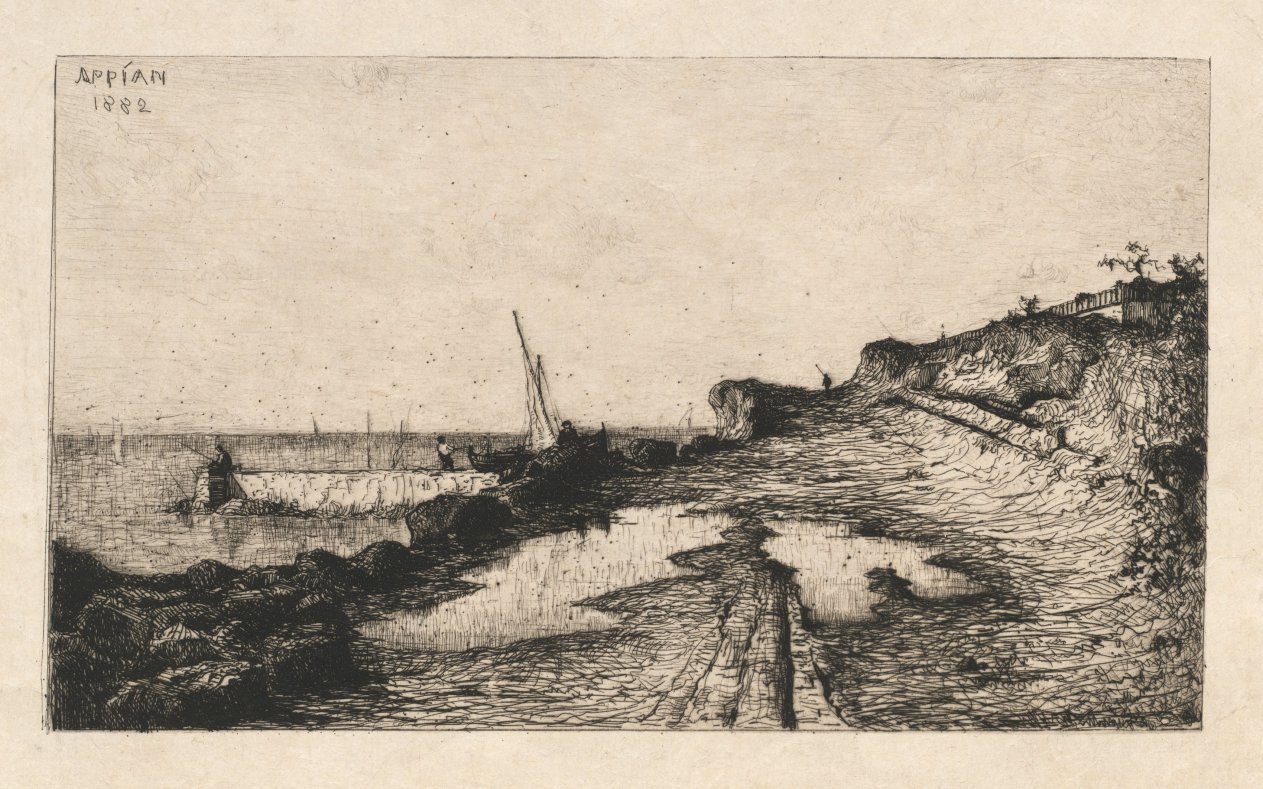
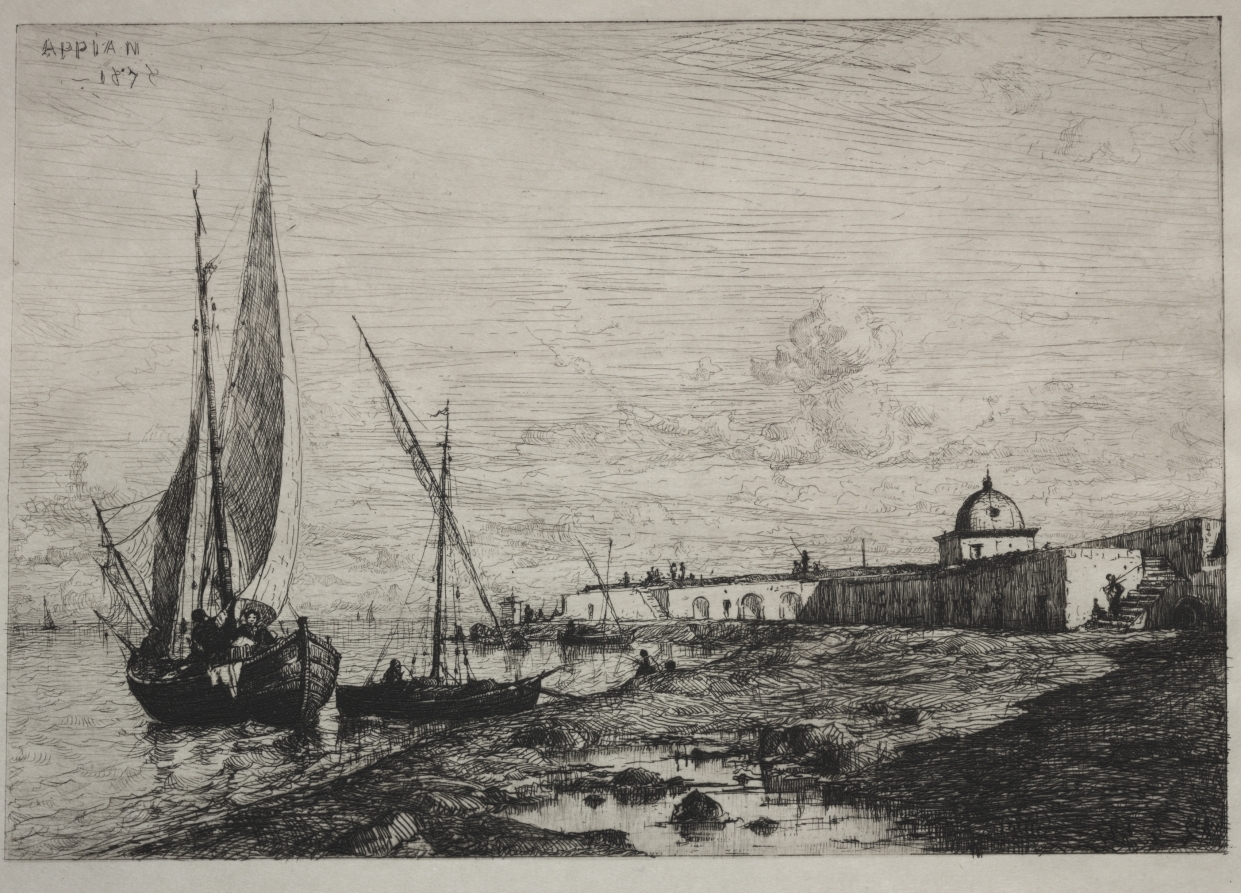
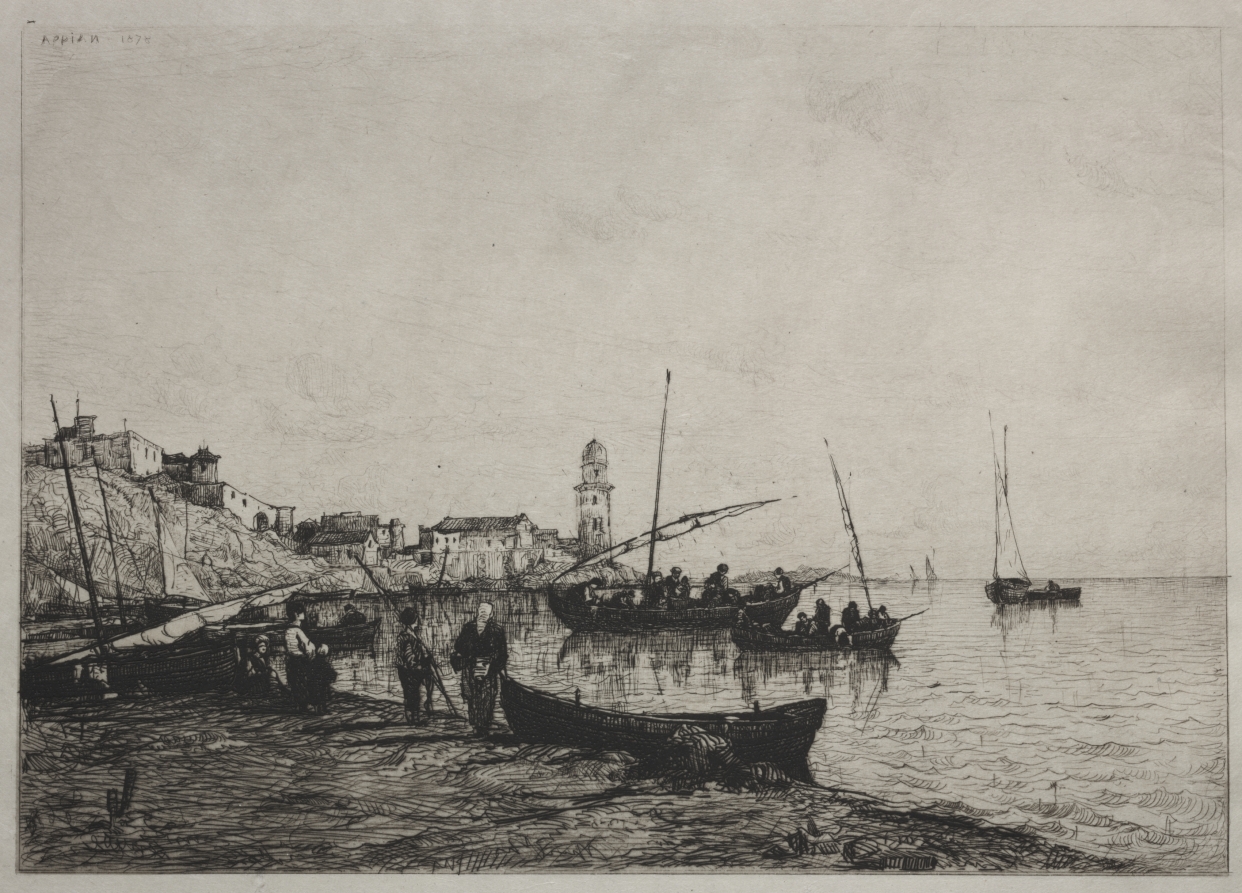
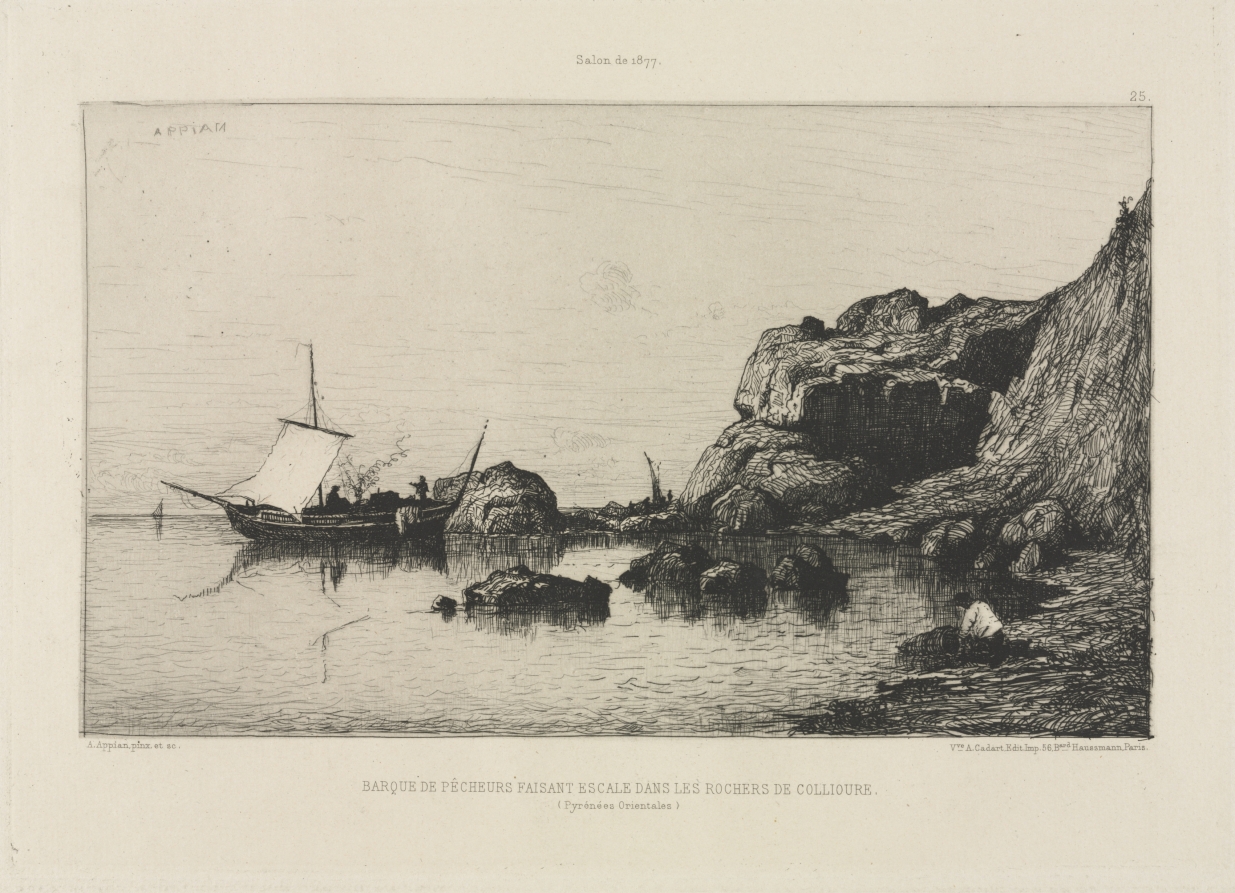
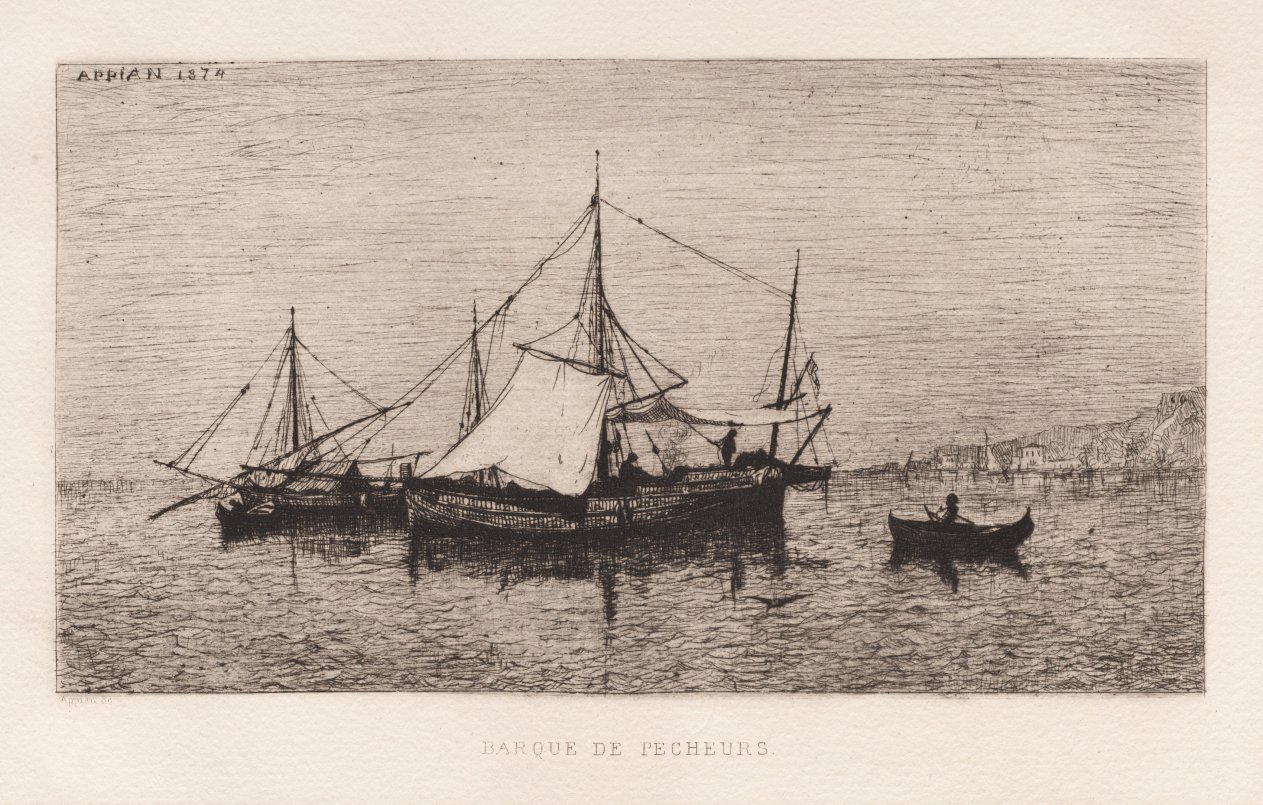
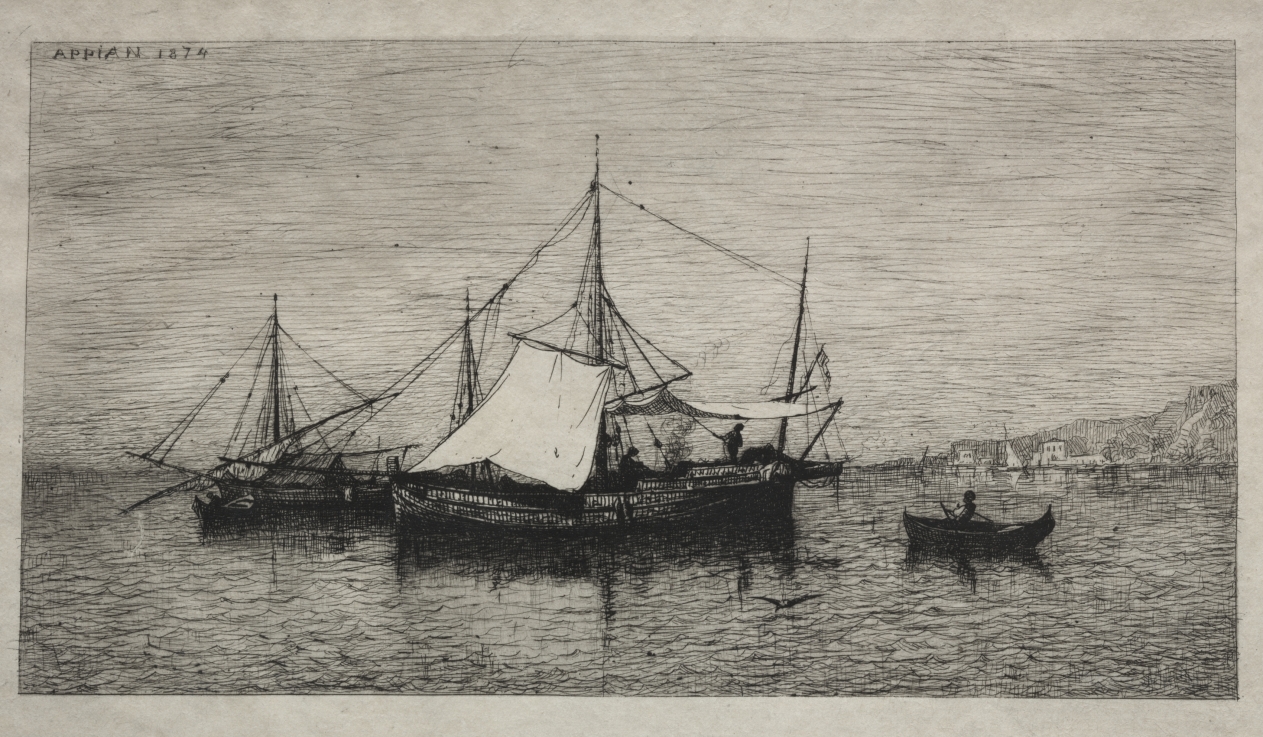
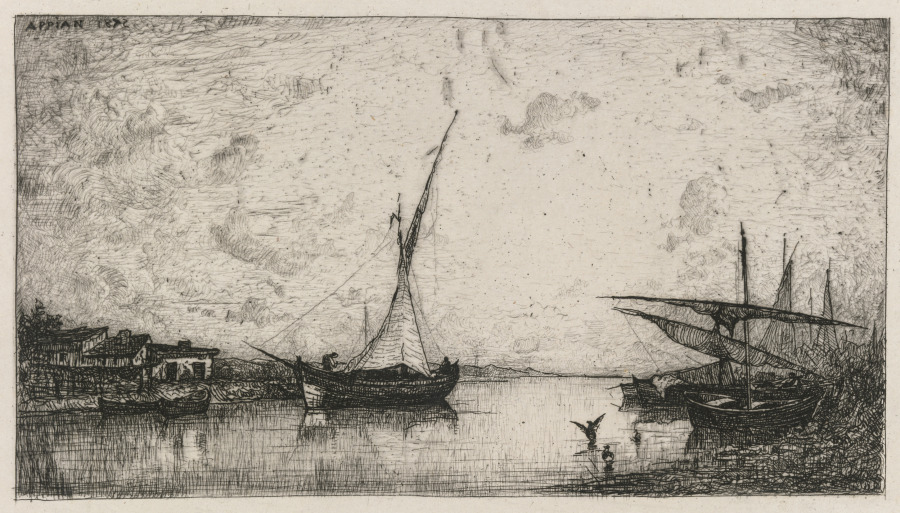
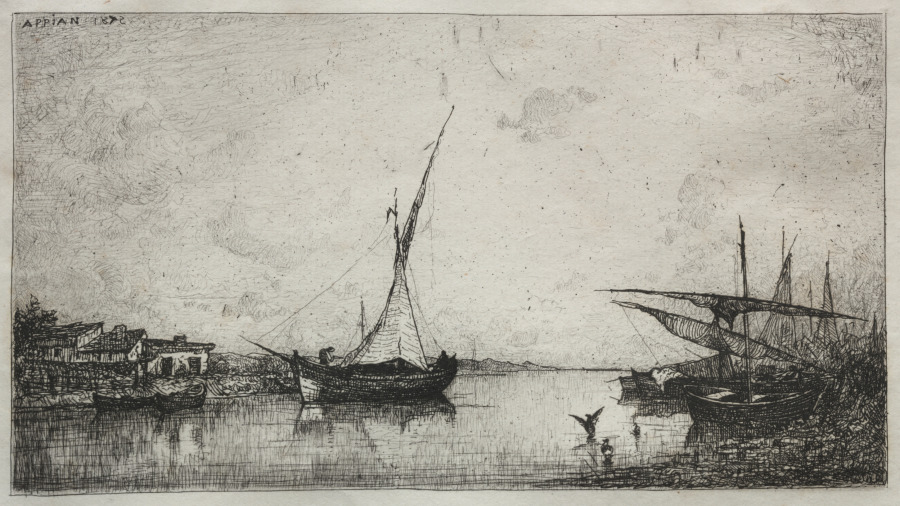
Picture the banks of the Rhône at dusk, the river surface catching the last silver of an overcast sky, bare willows leaning toward still water, and a lone figure making his way home along a muddy track. This is the world of Adolphe Appian, the Lyon born painter and printmaker whose patient, luminous vision of the French landscape earned him a devoted following among the most discerning collectors of the nineteenth century. Though his name is less immediately familiar than those of Corot or Daubigny, there is a growing and entirely deserved reappraisal of his work underway, driven by collectors who prize quiet mastery over spectacle and who recognize in Appian a sensibility that feels remarkably modern in its restraint and attentiveness to the natural world. Adolphe Appian was born in Lyon in 1818, a city that would shape his artistic temperament in ways both practical and poetic. Lyon sat at the confluence of the Rhône and Saône rivers, and the waterways that threaded through his childhood landscape became the defining motifs of his life's work. He trained initially as a decorative painter, a discipline that instilled in him an exacting relationship with surface, texture, and the careful organization of visual space. His early formation was rooted in the crafts traditions of a prosperous commercial city rather than in the grand academic apparatus of Paris, and this gave his sensibility a grounded, artisanal quality that never left him even as his ambitions expanded. Appian's artistic development took a decisive turn through his encounter with the Barbizon School, the loose confederation of painters who retreated to the Forest of Fontainebleau and the surrounding countryside to paint directly from nature in defiance of the smooth classical confections favored by the Académie des Beaux Arts. Artists such as Théodore Rousseau, Charles François Daubigny, and Jean Baptiste Camille Corot were forging a new language of landscape, one rooted in direct observation, emotional honesty, and a willingness to find the sublime in the unspectacular. Appian absorbed these lessons deeply, but he brought to them the particular geography of his native south and the Mediterranean coast, stretching the Barbizon sensibility into saltier, more luminous territory. His friendship with Corot was especially formative, and the older master's influence can be felt in Appian's silvery tonal harmonies and his gift for capturing the transient moods of sky and water. It was through etching that Appian found his most distinctive voice, and it is in this medium that his true greatness becomes apparent. He took up printmaking seriously in the 1860s, at a moment when etching was experiencing a passionate revival in France, championed by figures such as Charles Meryon and the Société des Aquafortistes, founded in 1862. Appian threw himself into the craft with remarkable energy, producing a body of prints that rank among the finest landscape etchings of the century. Works such as the Banks of the Rhone from 1865 and the Shore of a Stream at Rossillon from 1867 demonstrate his extraordinary command of the etched line, the way he could conjure the weight of overhanging foliage, the shimmer of moving water, and the particular grey luminosity of an overcast northern sky through nothing more than the most disciplined arrangement of fine incised marks. His 1870 Source of the Albarine, rendered in etching and drypoint, shows him pushing the technique further still, the velvety drypoint burr adding warmth and depth to shadowed passages in a way that anticipates the tonal experiments of later printmakers. His coastal and Mediterranean subjects represent a glorious expansion of his range. The Return of the Fishing Boats at Collioure, near the Spanish Border from 1878 and The Port at San Remo from the same year reveal an artist energized by the south, by the density of rigging against bright sky, the chop of harbor water, the sociable bustle of working ports. The Canal aux Martigues, revisited in 1872, became something of an emblematic subject, the Provençal town known for its shimmering waterways having attracted painters of every generation. In Appian's hands, the canal becomes a study in reflection and stillness, a meditation on the way light pools and scatters on flat water. These Mediterranean prints have a warmth and openness that balance beautifully against the more introspective northern landscapes, giving his body of work a geographical breadth that rewards sustained attention. For collectors, Appian presents a remarkable opportunity. His oils, such as the Well at the Side of a Road from 1860, a quietly monumental work in the Barbizon tradition, appear relatively rarely on the market and command serious attention when they do. His prints, however, offer a more accessible point of entry, and the quality of impression varies considerably, which means that patient and informed collectors can still find exceptional examples at prices that have not yet caught up with the quality on offer. What to look for is freshness of impression, strong contrast, and the presence of that characteristic Appian atmosphere, the sense that you are standing in the scene rather than looking at a representation of it. His etchings reward close looking in a way that few prints of the period can match, and they hold the wall with genuine authority. Within the broader arc of nineteenth century French art, Appian occupies a position of genuine importance as a bridge between the Romantic landscape tradition and the emerging sensibility of Impressionism. He was a near contemporary of Camille Pissarro and shared with the Impressionists a devotion to observed light and atmospheric truth, though his means remained rooted in the Barbizon practice of tonal modulation rather than the broken color of the new painting. Artists such as Johan Barthold Jongkind, who similarly moved between oil and printmaking and between northern and Mediterranean subjects, offer useful points of comparison, as does the work of Eugène Boudin, another painter of skies and harbors who mediated between the Barbizon generation and Impressionism. Appian's work sits comfortably in this distinguished company, enriching any collection that takes seriously the art of this pivotal transitional moment. Adolphe Appian died in Lyon in 1898, having witnessed the full transformation of French painting from Romanticism through Realism to Impressionism and beyond. He remained true throughout to his own deeply considered vision, never chasing fashion, never sacrificing the integrity of his observation for effect. In an era that prizes authenticity and attentiveness, his work feels not like a relic but like a living practice, a reminder that the most enduring art is made by those who look at the world with patience and love. To discover Appian now is to find one of the great quiet pleasures of nineteenth century French art, waiting with characteristic patience for the attention it has always deserved.