Watercolor And Pencil
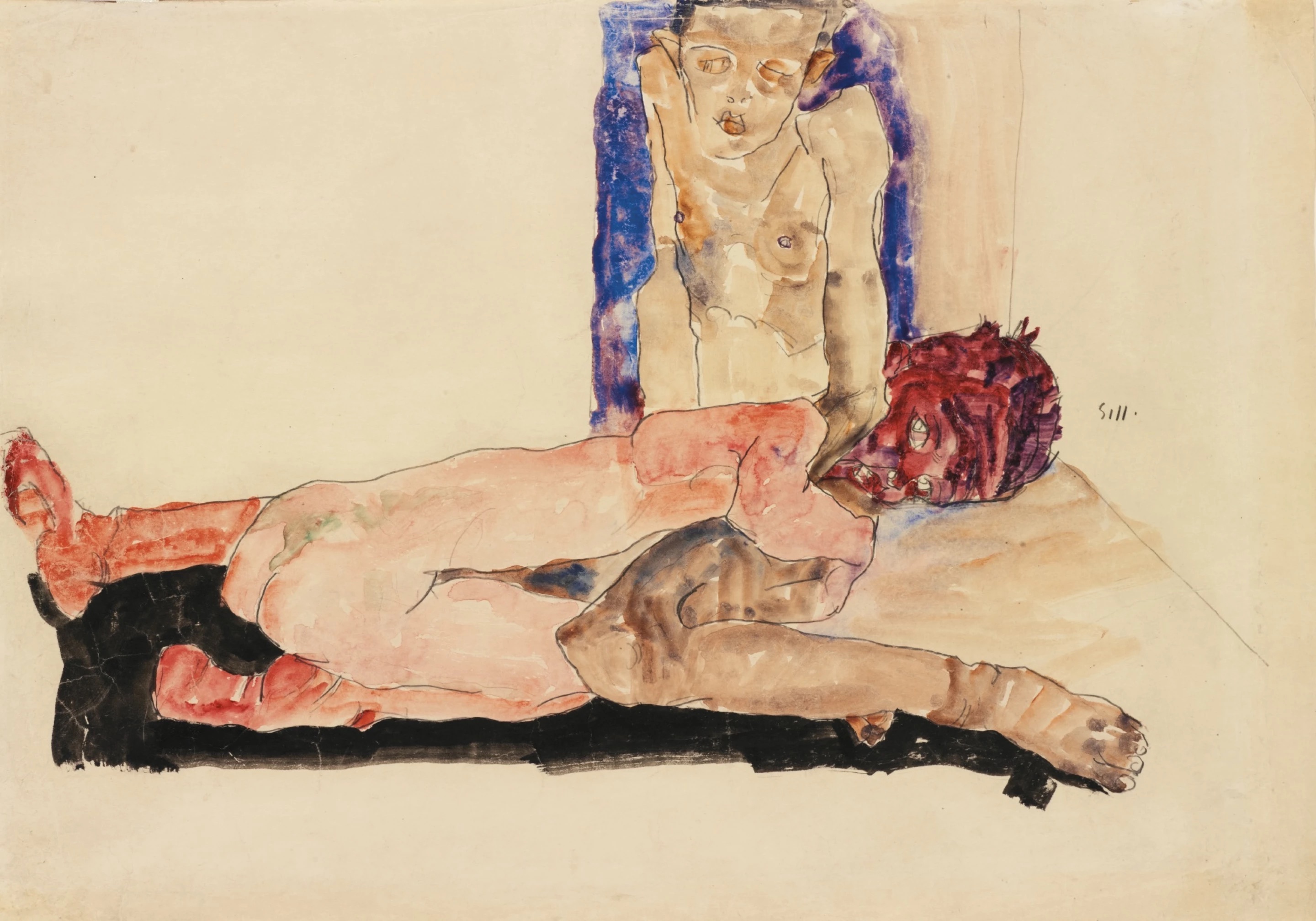
Egon Schiele
Nacktes Paar (Nude Couple), 1911

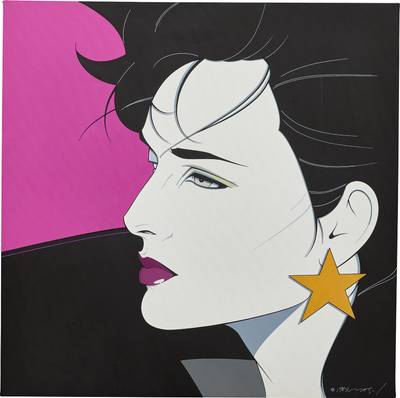


The Humble Medium That Conquered Everything
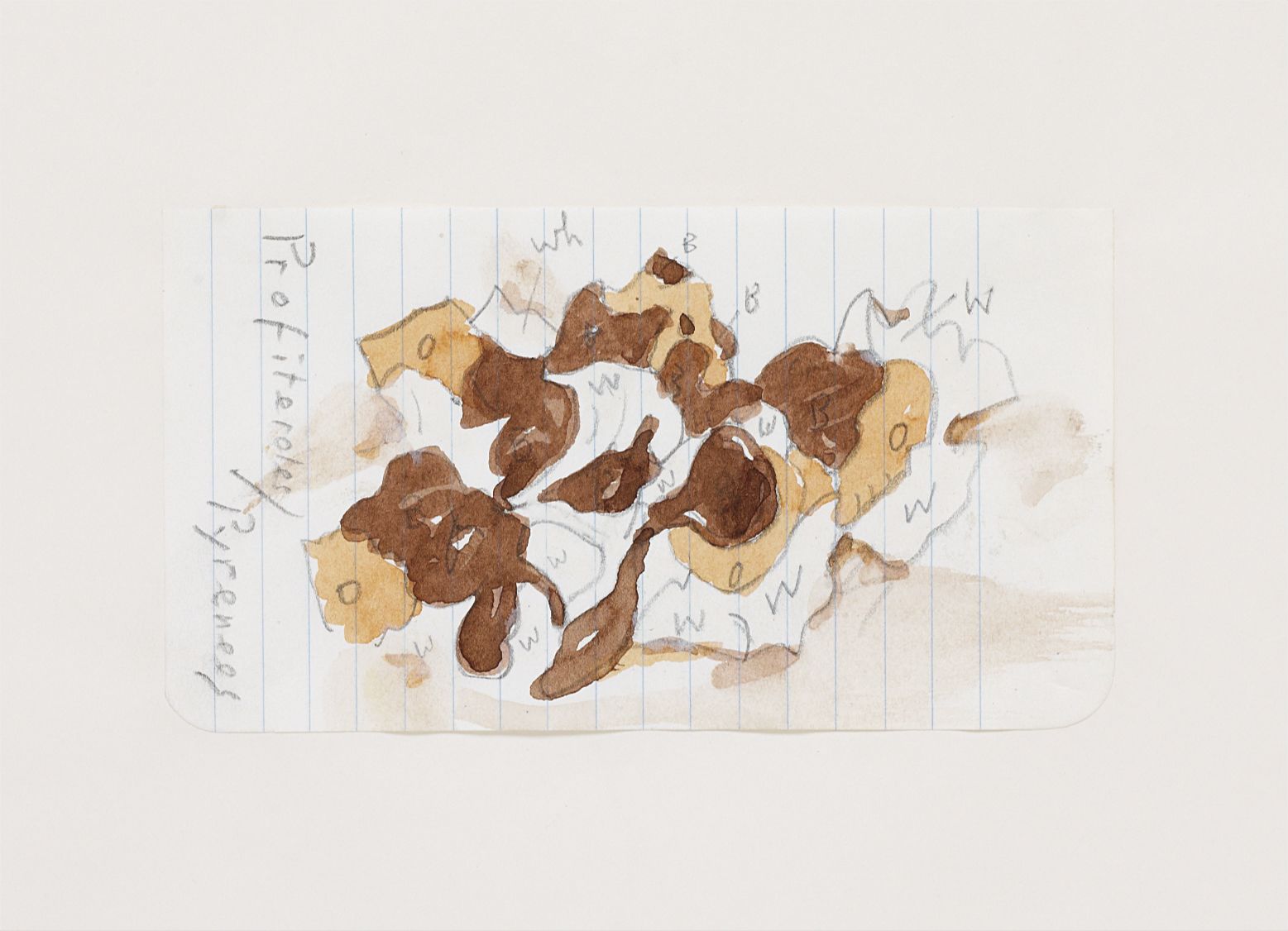
There is something almost paradoxical about the combination of watercolor and pencil. Pencil suggests precision, architecture, the skeleton of intention. Watercolor suggests release, the wash of pigment bleeding past its own boundaries, yielding to water and gravity and chance. Together they form one of the most intimate conversations in the history of art, a medium that has housed everything from Turner's luminous storms to the radical nervousness of early modernism.
To collect works in this category is to hold something that reveals the artist's hand more nakedly than almost any other format. The tradition runs deep. Watercolor as a serious artistic pursuit took hold in Britain during the late eighteenth century, when artists like Paul Sandby and later J.M.
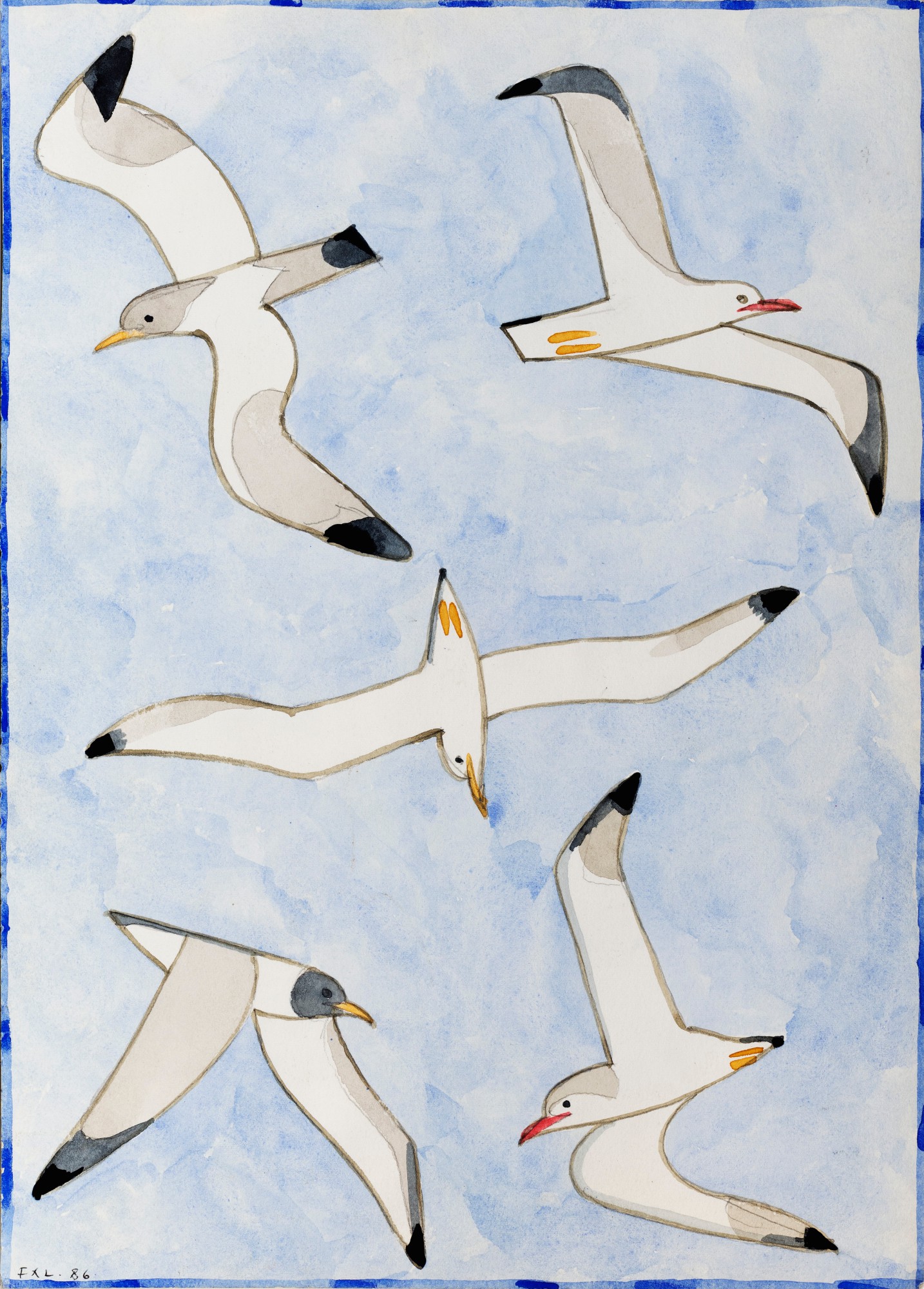
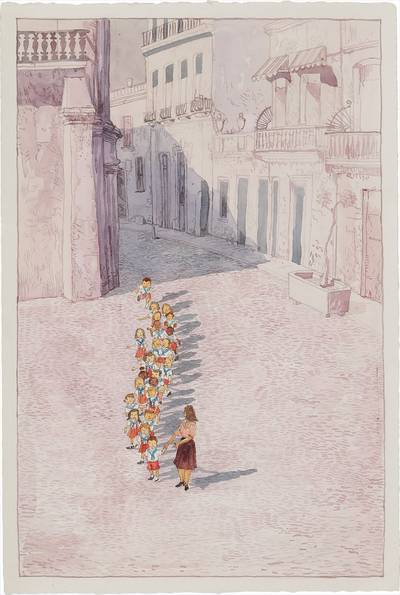
François-Xavier Lalanne
Les mouettes
W. Turner elevated it from a genteel hobby to a fully legitimate expressive language. The Society of Painters in Water Colours was founded in London in 1804, a deliberate act of institutional legitimization. In America the medium found its own champion in Winslow Homer, whose marine watercolors from the 1880s and 1890s remain benchmarks of the form.
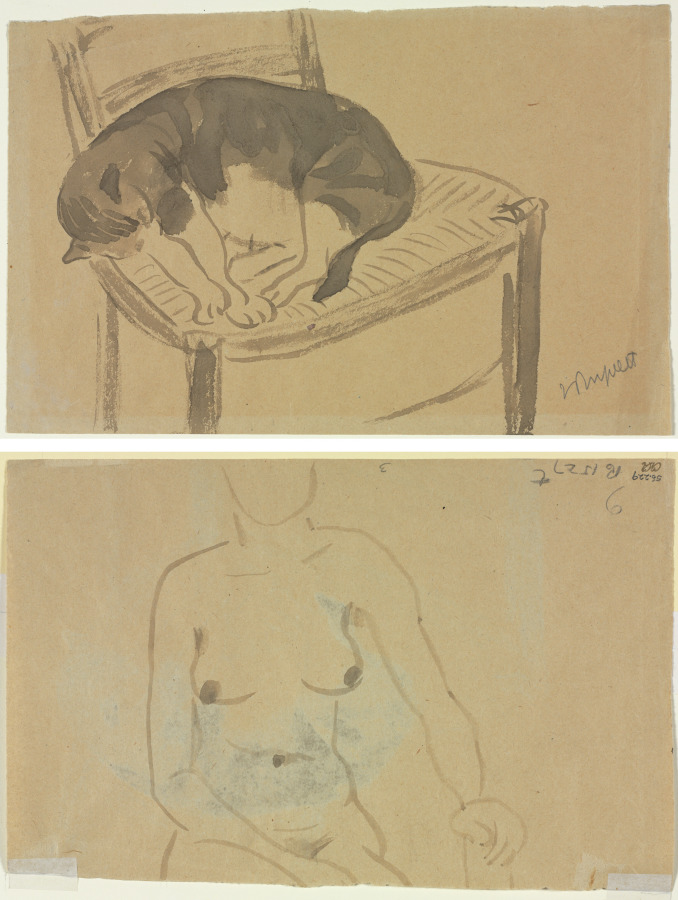
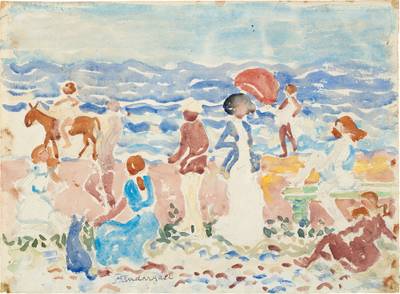
Yet pencil had always been watercolor's quiet companion, used to establish compositional armature before the first wash, or allowed to remain visible beneath translucent layers as a ghost of the artist's thinking. Maurice Prendergast understood this dialogue between line and wash with rare intuition. His sketchbooks and finished watercolor sheets, many made during his time in Venice and Boston around the turn of the twentieth century, carry that particular shimmer of someone who trusted the medium entirely. The pencil underlayers in his crowd scenes pulse beneath the color like a heartbeat, giving structure without dominating it.
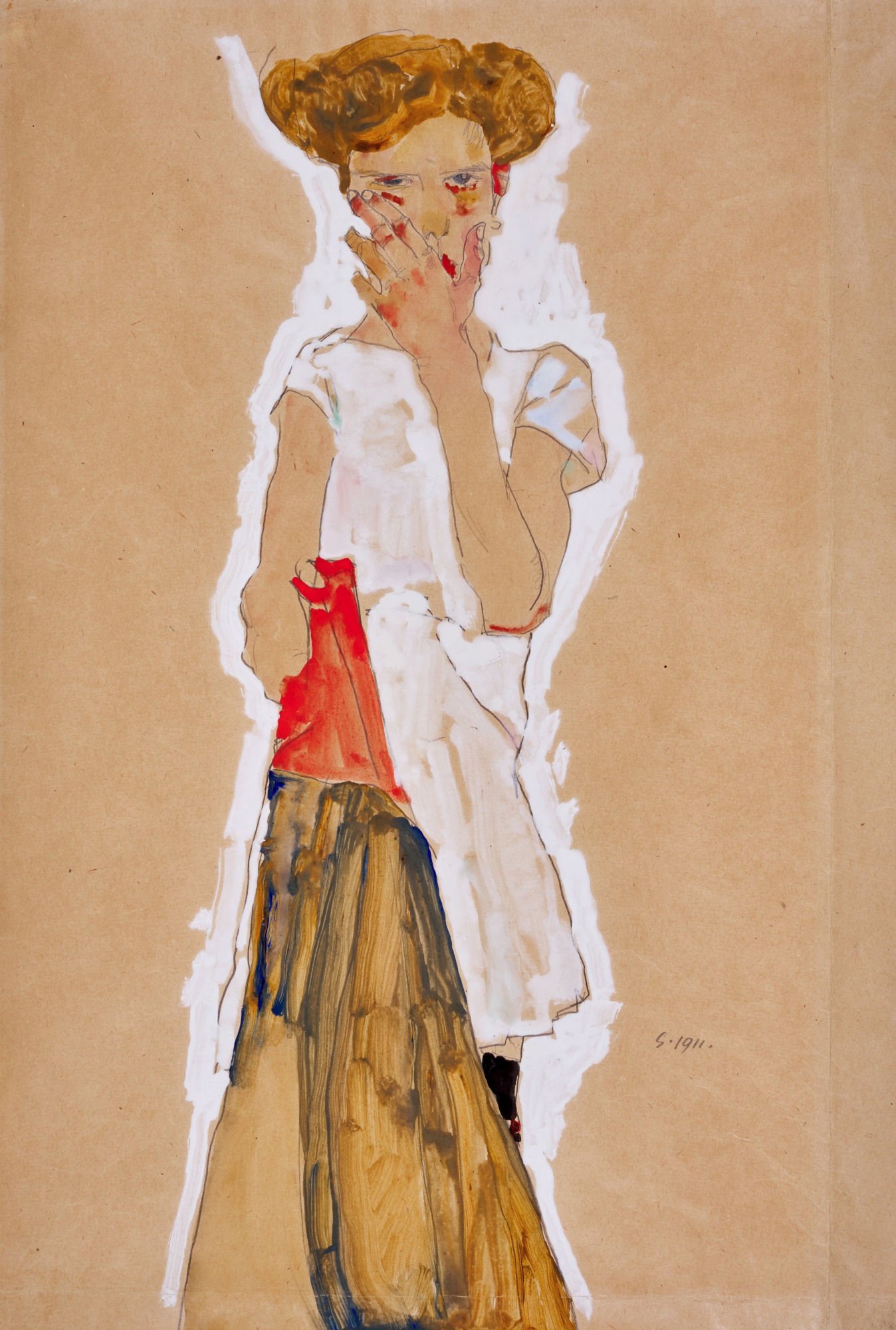
Egon Schiele
Stehendes Mädchen in Weissem Unterkleid (Standing Girl in White Petticoat), 1911
His work sits at the intersection of Post Impressionist color theory and a distinctly American appetite for the pleasurable textures of everyday life, and his watercolors remain among the most lyrical documents of that moment. On the European side, Egon Schiele brought a completely different intensity to the pencil and watercolor format. His drawings from the early 1910s, many of which are studies of the figure in extremis, use the pencil line as an instrument of psychological pressure and the watercolor wash as a kind of bruised atmosphere around it. Where Prendergast celebrated surfaces, Schiele excavated beneath them.
Paul Klee, too, found in watercolor over pencil a space for his particular brand of poetic symbolism, building grids and landscapes in which line and color operated as independent but cooperative systems. The medium seemed to attract artists for whom duality was a natural way of thinking. Technically, the relationship between pencil and watercolor is one of productive tension. Graphite has a slight waxiness that can resist watercolor in subtle ways, creating unexpected textures where the wash pools and separates.
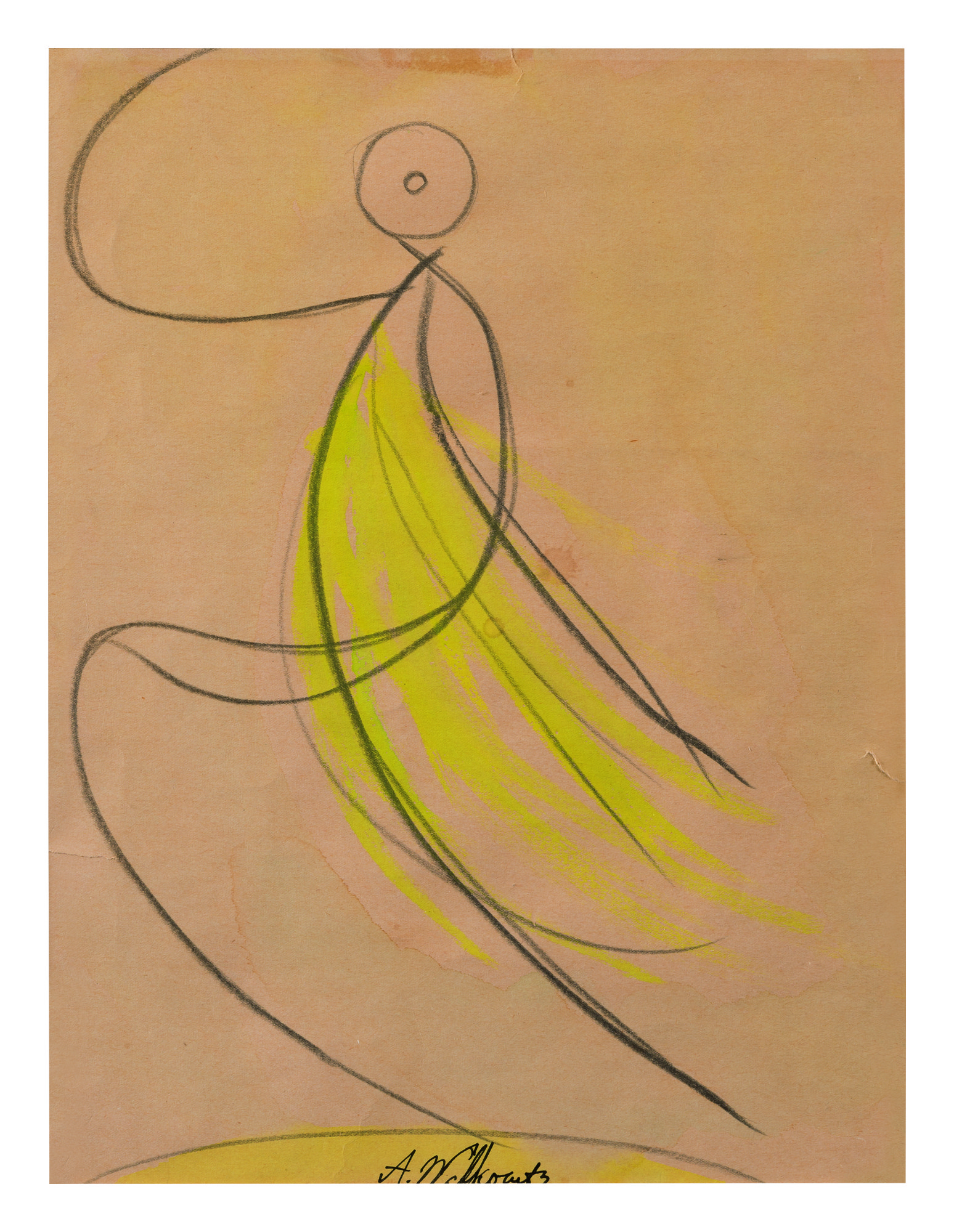
Abraham Walkowitz
Study Of A Dancer, 1912
Artists who work in this format must decide at every stage how much of the pencil to leave exposed and how much to submerge. Paul Signac, better known for his oil pointillism, made watercolor sketches during his travels that are animated by exactly this calibration, the drawn structure holding the color just loosely enough that the whole thing breathes. Abraham Walkowitz, less celebrated but no less gifted, brought a similar sensitivity to his watercolor and pencil work, particularly in his studies of Isadora Duncan that captured movement with a kind of feathery economy. The medium has never been exclusively associated with any single movement, which is part of its endurance.
The Vorticists in Britain, including Wyndham Lewis, used it for studies that crackled with angular energy. Paul Nash brought it to the pastoral English landscape with a melancholy that deepened considerably after his experience of the First World War. Across the Atlantic, Romare Bearden worked with watercolor in ways that connected to his broader investigation of collage and pattern, drawing on the African American visual tradition with both structural rigor and chromatic warmth. The medium accommodates all of this without losing its essential character.
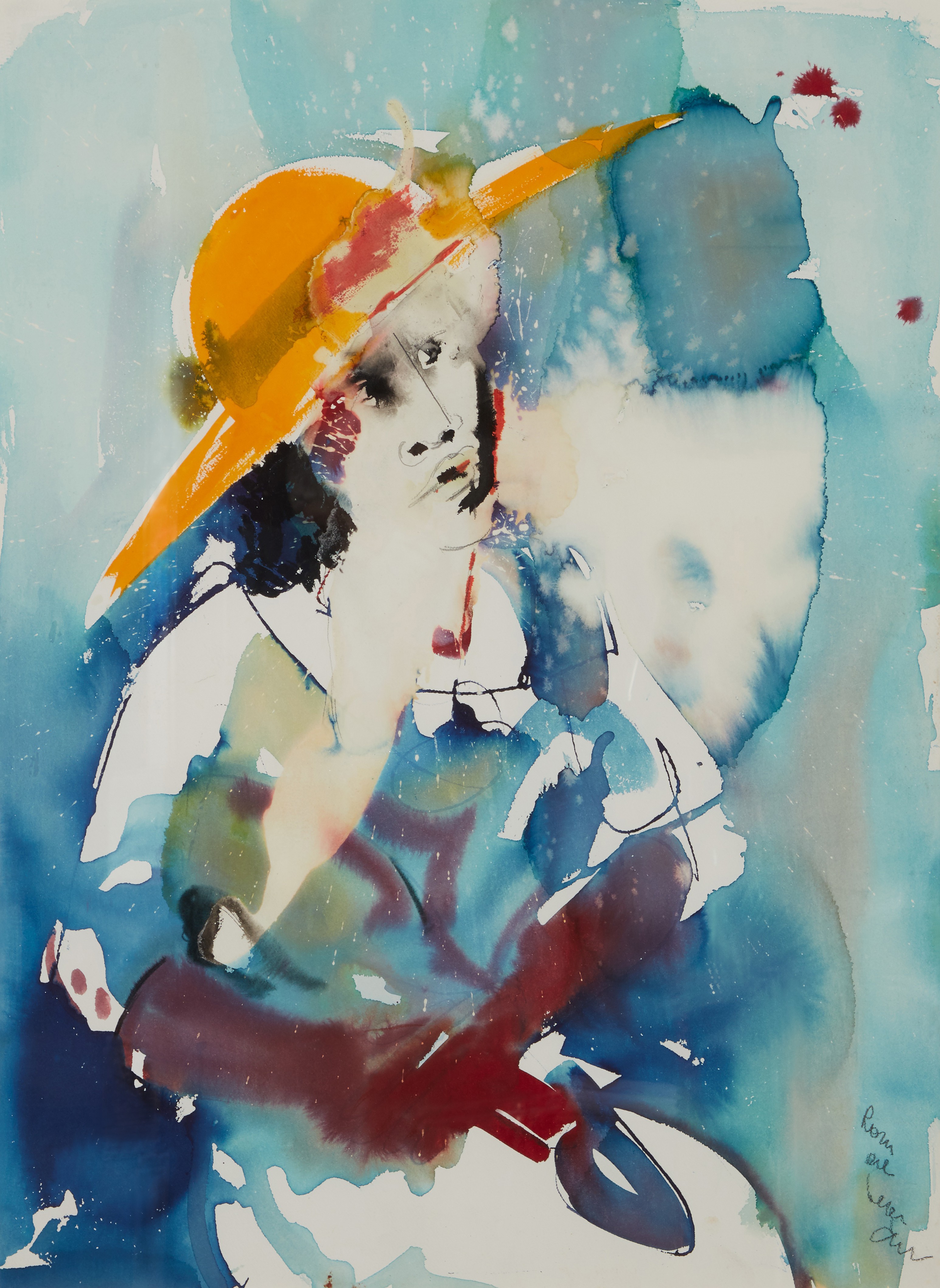
Romare Bearden
The Straw Hat, 1980
What makes a strong watercolor and pencil work as a collecting proposition is precisely its irreducibility. You cannot fake the sequence of decisions. Every line placed before the wash establishes a commitment, and every wash applied over or around the line represents a response. There is no overpainting in the oil sense, no ability to simply correct and move on.
The best works in this category carry the full record of the artist's process within them, which is why they feel so alive in a room. Jean Metzinger, approaching the format from the angular perspectives of Cubism, produced works on paper that reward exactly this kind of close looking. Today the combination continues to attract artists across generations and styles. The intimacy of the format, its association with the private and the provisional, has become if anything more valued in a moment when the art world often prizes spectacle.
Works on paper command serious attention at auction and in galleries, and institutions that once treated them as secondary to oil painting have long since reassessed that hierarchy. The works on The Collection that fall into this category represent a particularly varied cross section of the tradition, from early modernist experiments to more recent investigations of what pencil and watercolor can still say to each other. To live with a watercolor and pencil work is to be in daily contact with a kind of artistic honesty that larger, more finished formats sometimes obscure. The medium strips away pretension almost structurally.
The paper is fragile, the pigment transparent, the line indelible. There is nowhere to hide, and the great practitioners of this form never tried to. That vulnerability is not a weakness but the source of everything the format has to offer.