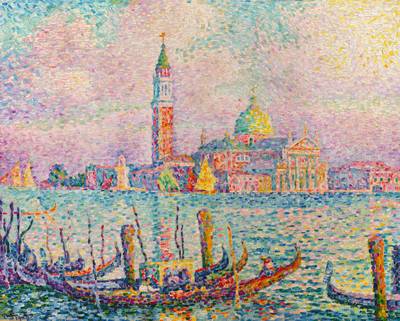
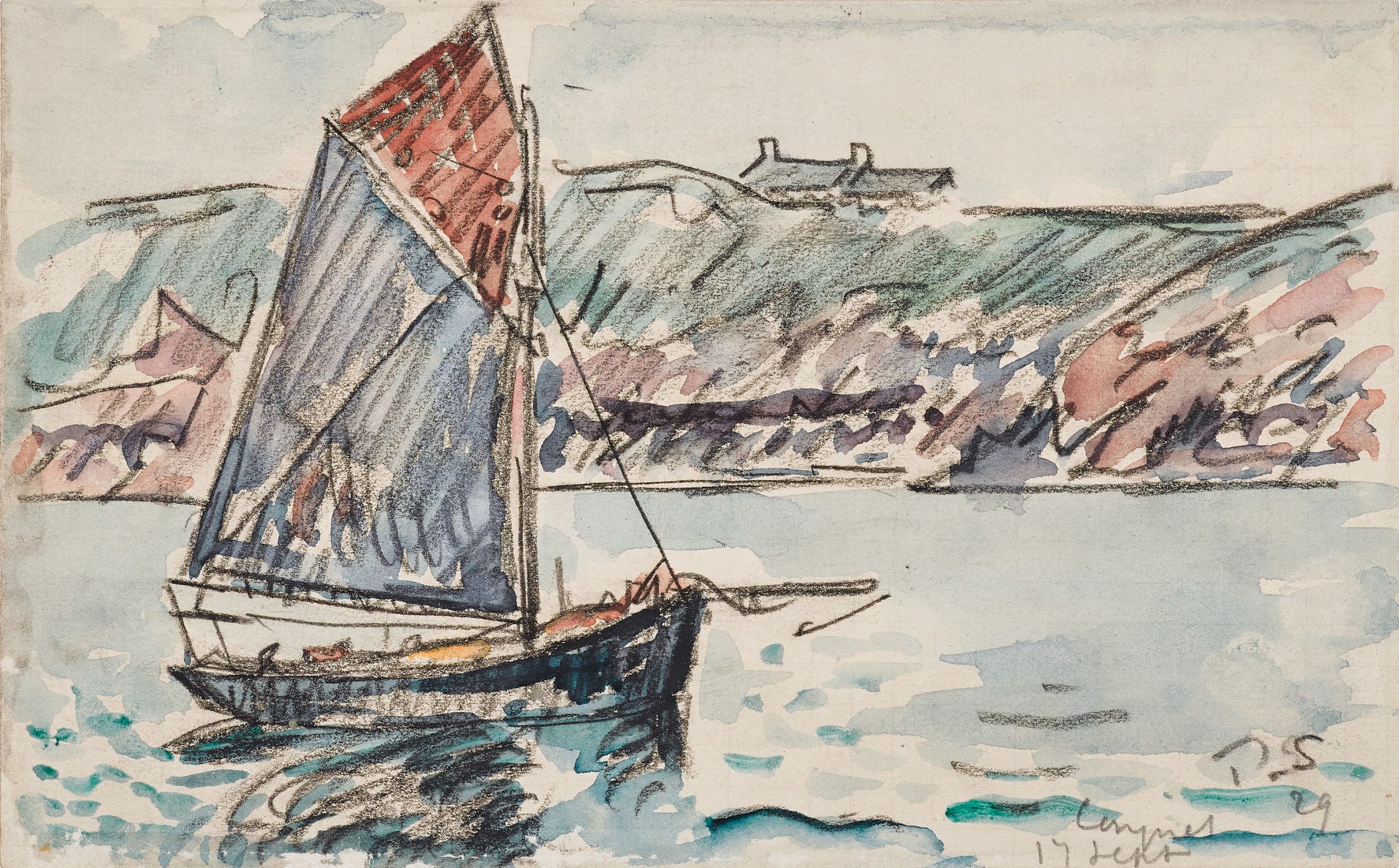
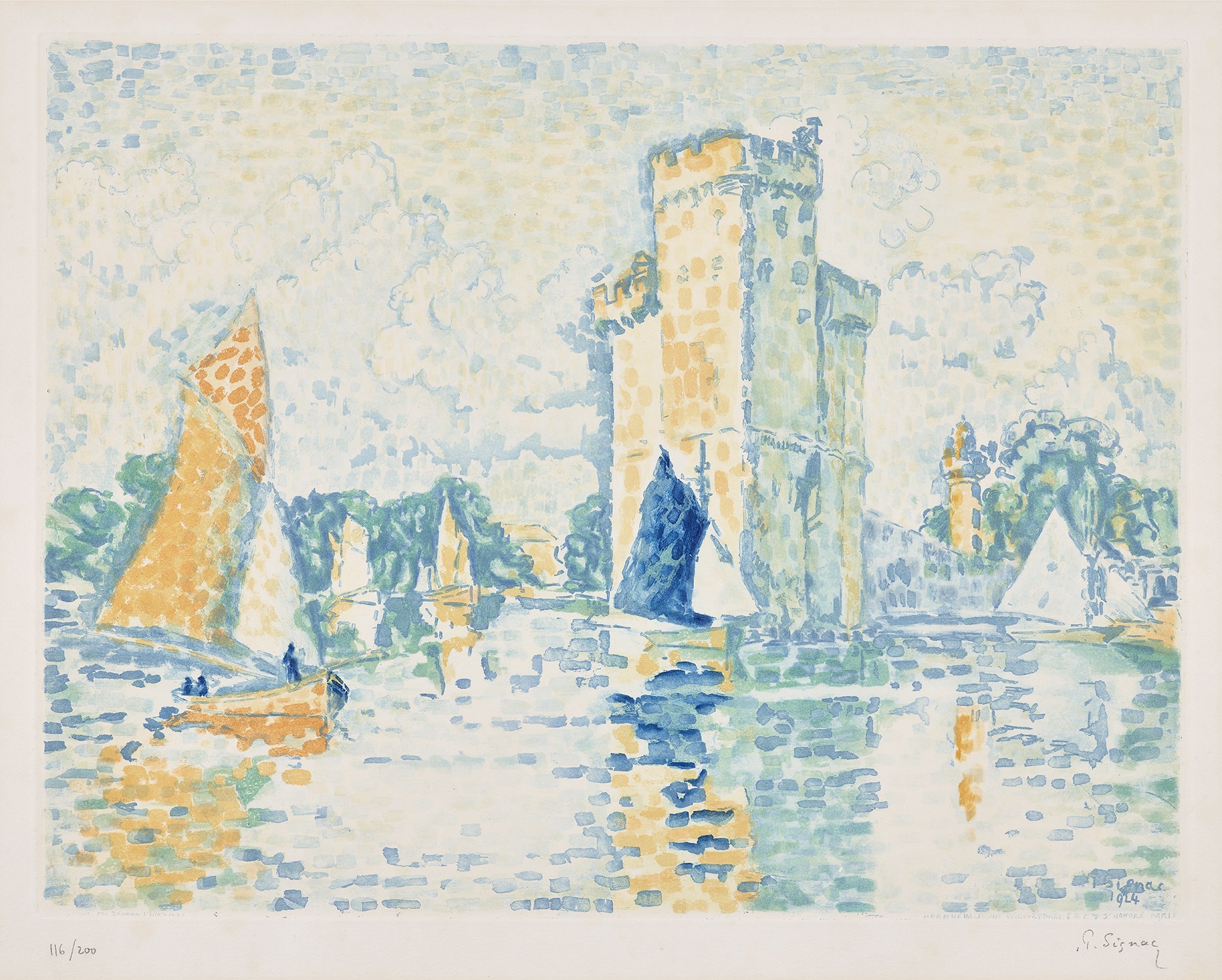
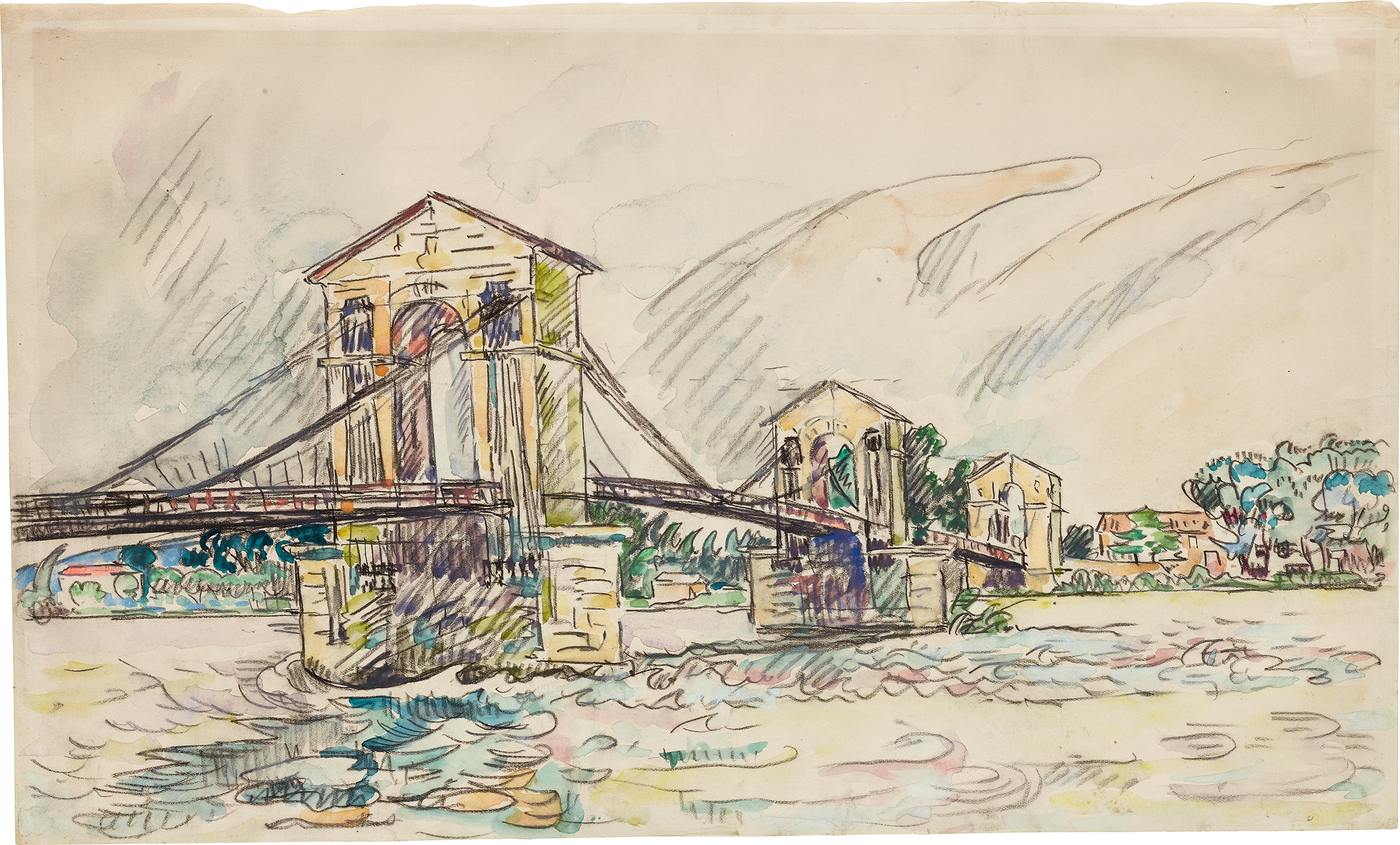
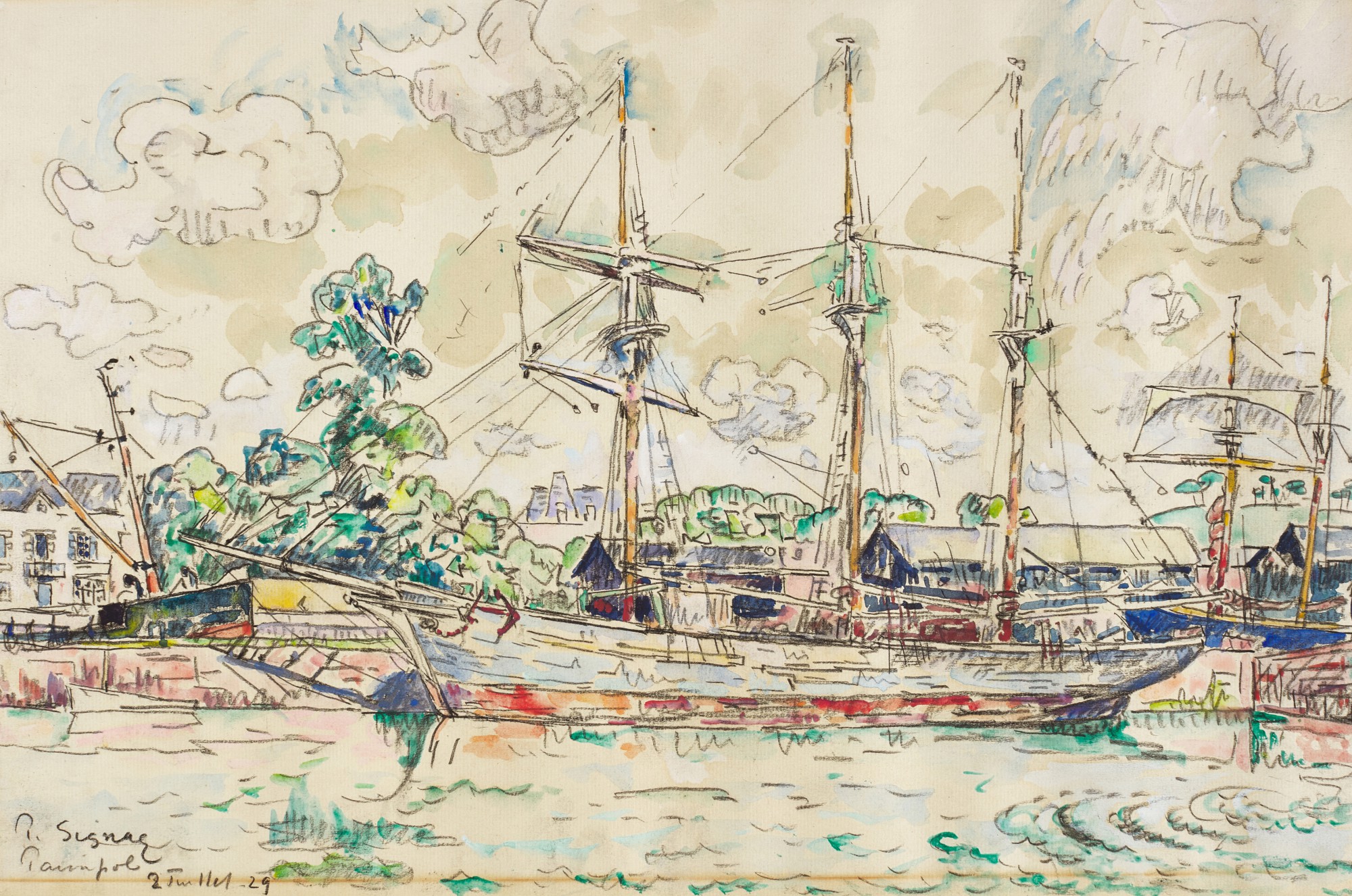
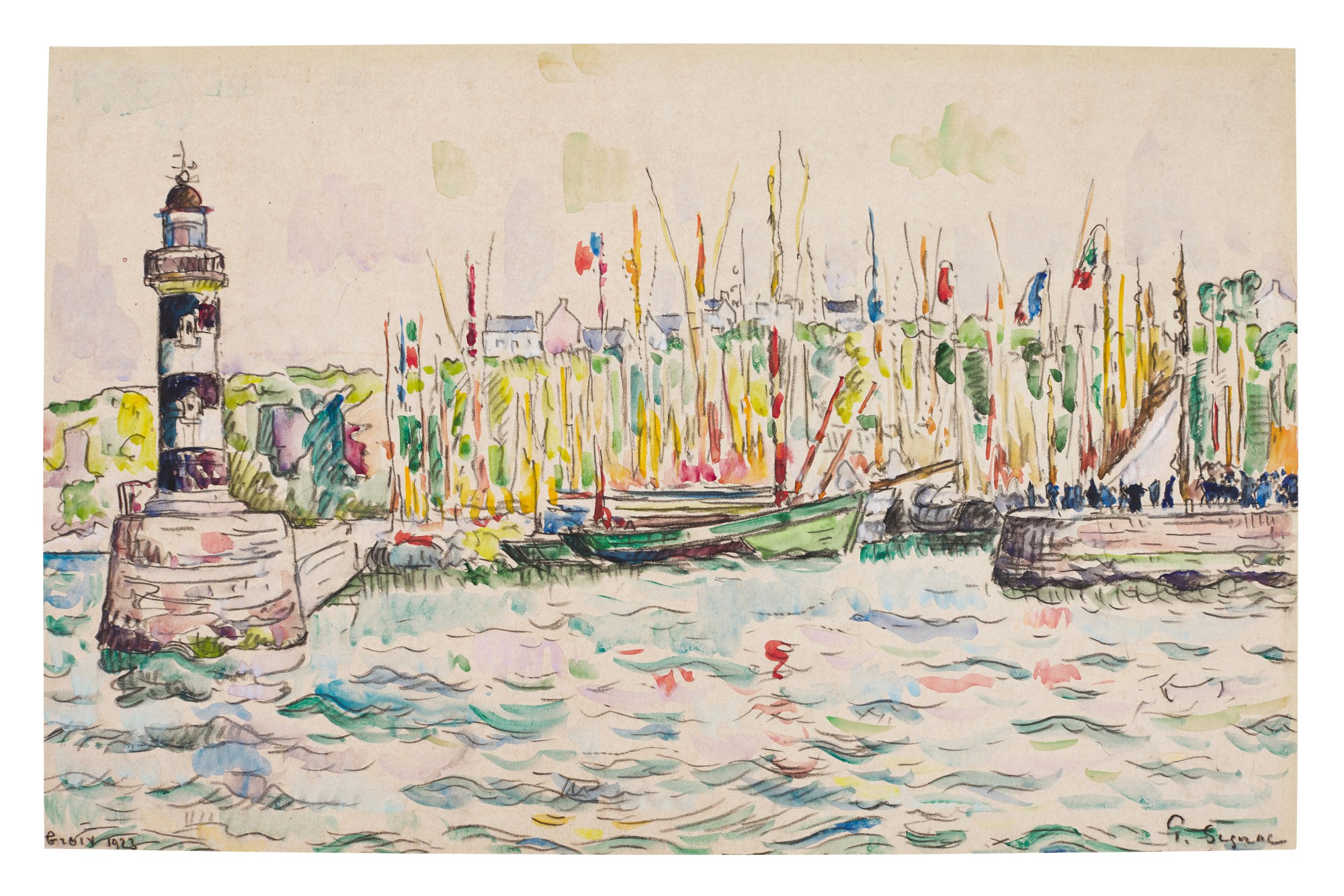
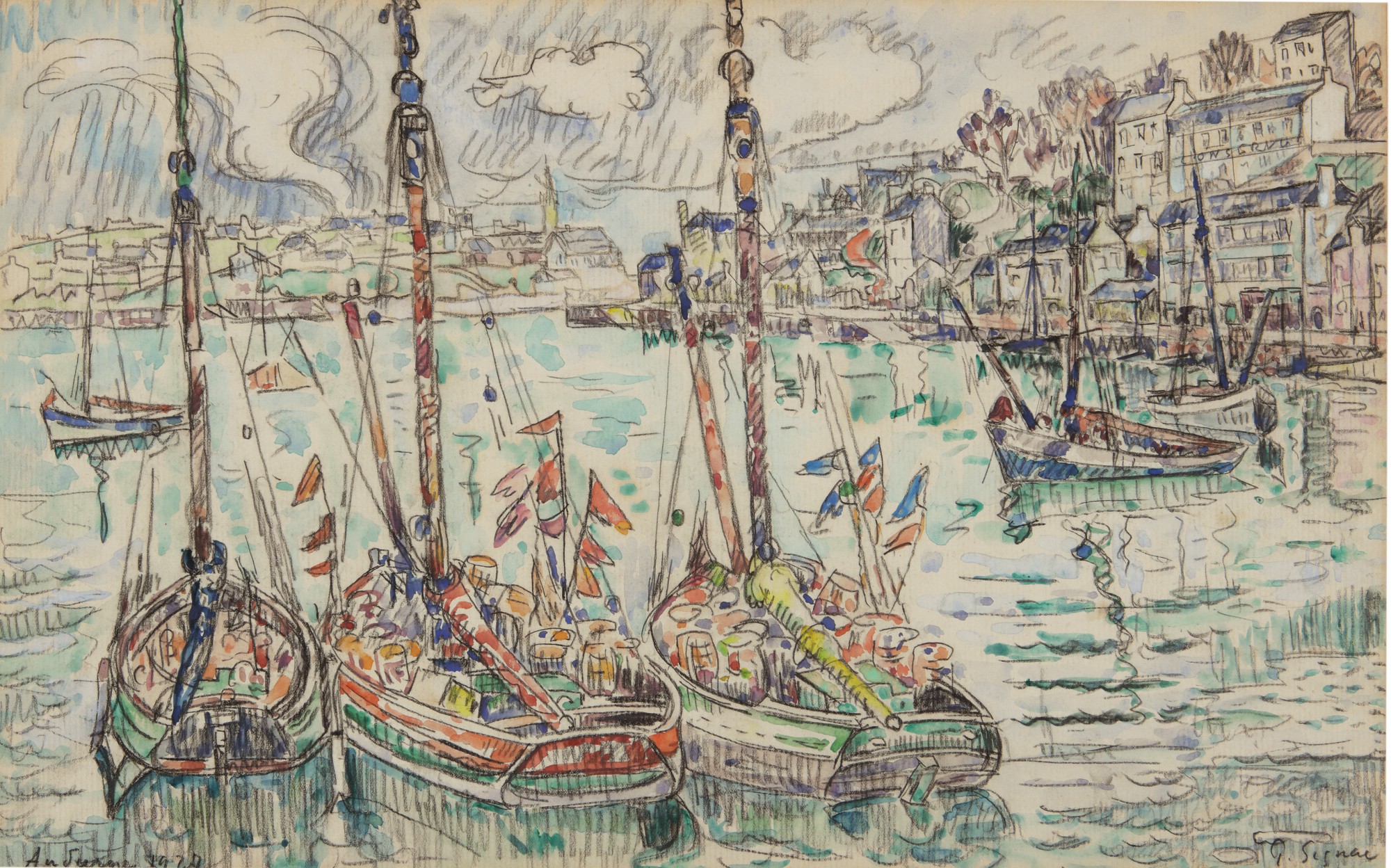
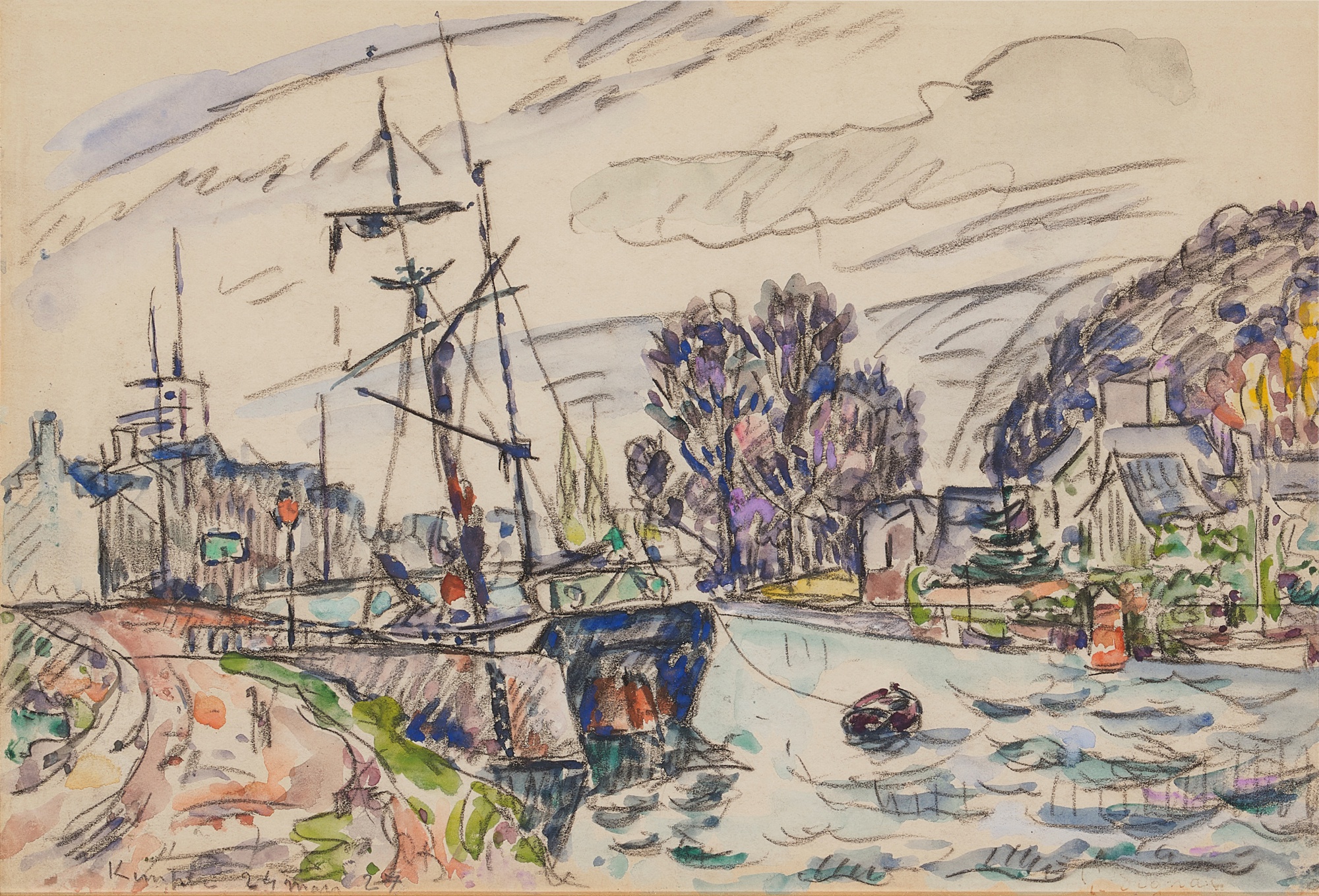
Stand before Paul Signac's "Saint Georges. Couchant (Venise)" from 1905 and something extraordinary happens. The canvas does not simply show you Venice at dusk. It rebuilds the city from the ground up, mosaic by mosaic, each small jewel of pigment vibrating against its neighbor until the whole surface seems to breathe with golden light. This is not painting as documentation. It is painting as a theory of perception made ecstatic, a demonstration that color itself, applied with discipline and joy, can carry more emotional truth than any brushstroke naturalism ever could. More than a century after Signac completed it, the work remains one of the most persuasive arguments for the power of systematic beauty in Western art. Paul Signac was born in Paris in 1863, the son of a prosperous saddlery merchant, and his early life gave little obvious indication of the revolution he would help set in motion. He grew up in Montmartre, that crackling hillside neighborhood that functioned in the latter nineteenth century as something close to a permanent incubator of artistic ambition. As a teenager he haunted the fourth Impressionist exhibition of 1879, where an encounter with the work of Claude Monet ignited in him a passion for painting that no formal training had prepared. He was largely self taught, a fact that paradoxically freed him to think about color without the conservative orthodoxies of the Ecole des Beaux Arts weighing on his hand. The truly decisive moment in Signac's formation came in 1884, when he met Georges Seurat at the founding of the Salon des Independants, the exhibition society that rejected jury selection and offered a radical alternative to the official Salon. Seurat was quietly developing what would become Pointillism, a technique rooted in the optical and chromatic theories of scientists including Michel Eugene Chevreul and Ogden Rood. The idea was rigorous and thrilling: rather than mixing colors on a palette and deadening them in the process, the artist would place pure, unmixed dots of complementary color side by side on the canvas, trusting the viewer's eye to blend them at a distance into a luminosity that physical mixture could never achieve. Signac grasped the significance of this immediately. He threw himself into collaboration with Seurat, and together they refined and championed what they called Chromoluminarism, also known as Divisionism. When Seurat died shockingly young in 1891, Signac became the movement's most eloquent defender and its most tireless practitioner. Signac's development over the following decades reveals an artist who was never merely a theorist in paint. He was also a compulsive traveler, a passionate sailor, and a man of genuine political conviction whose anarchist sympathies shaped his belief in an art that could be both scientifically grounded and democratically joyful. His travels along the coasts of France and into the Mediterranean produced an extraordinary body of watercolors and oils that trace the light of specific harbors and headlands with almost documentary precision while remaining visually intoxicating. Works like "Saint Tropez" from 1895, rendered in pencil and watercolour, capture a fishing village before it became fashionable, with the quiet intimacy of a place known well and loved honestly. His repeated returns to Brittany, the Atlantic coast, and the lagoons of Venice gave his catalogue a geographical breadth that reads like a love letter to water and weather. "Groix" from 1925 and "Goelettes a Paimpol" from 1927 show a late watercolour style of remarkable looseness and confidence, the charcoal underdrawing still visible beneath washes of color that seem to arrive on the paper with the speed and certainty of a man who had been looking at harbors his whole life. The oils present a different kind of commitment. "Les Inondations. Paris. La Seine et le Pont des Arts" from 1924 demonstrates how even in extreme subject matter, the flooded Seine rising over its embankments, Signac's eye finds not catastrophe but an astonishing redistribution of light. The city becomes a reflected world, the familiar architecture of Paris doubled in moving water and broken into the mosaic language he had spent four decades perfecting. "Le Chenal de la Rochelle" from 1927 is equally assured, the harbor's working geometry rendered in the warm, confident Divisionist touch of a painter in full command of his means. These later works are sometimes underestimated relative to the celebrated canvases of the 1880s and 1890s, but they reward close attention. Signac never coasted on his early reputation. He kept looking, kept sailing, kept painting with the appetite of someone who had never stopped being astonished by what light does to water. For collectors, Signac's market offers a genuinely rare combination of art historical significance and aesthetic pleasure. His works appear regularly at the major auction houses, with important oils capable of reaching into the multi million range when strong examples from his celebrated periods come to sale. The watercolors represent a particularly compelling entry point: they are often more immediate and more intimate than the large exhibition canvases, and they document the same voyages and coasts with a freshness that feels almost diary like. Collectors are drawn to the way a Signac work holds its value not merely as a historical document but as a living presence in a room. The dots do not recede with familiarity. They continue to generate light. Works on paper from the final two decades of his career, including pieces like "Antibes, vu de Juan les Pins" from 1914 and "Bourg Saint Andéol. Le pont," offer the opportunity to own a record of specific places at specific moments, filtered through one of the most refined color intelligences of the modern era. Within the broader context of Post Impressionism, Signac occupies a position that is both central and slightly under celebrated relative to his actual influence. His direct contemporaries include Henri Edmond Cross, whose luminous Mediterranean canvases share Signac's Divisionist method, and Theo van Rysselberghe, the Belgian painter who brought the technique to the North Sea coast with considerable beauty. Further afield, the young Henri Matisse spent time with Signac in Saint Tropez in the summer of 1904, an encounter that contributed directly to the explosive color liberation of Fauvism. Without Signac's advocacy and example, the chromatic freedoms that defined so much of twentieth century painting would have arrived differently, perhaps more slowly. He was a bridge between scientific rigor and pure sensory exuberance, and the artists who followed him across that bridge changed everything. Signac died in Paris in 1935, having lived long enough to see Pointillism move from scandal to canon, from the provocative dots of the 1886 Impressionist exhibition to the walls of the world's greatest museums. His legacy is not simply technical. It is philosophical. He believed that color, observed carefully and applied honestly, was a form of argument about what the world could be. Standing before any of his canvases, that argument still holds. The harbor shimmers. The water moves. The light, broken into its smallest possible components and then reassembled by the eye, arrives whole.