Salted Paper Print
Roger Fenton
Lieutenant General Sir Colin Campbell, G.C.B., 1855



Salt, Light, and the Birth of Memory
There is something almost alchemical about holding a salted paper print. The image does not sit on top of the paper so much as live inside it, suspended within the fibers themselves, warm and breathing and faintly impermanent. These photographs look the way memory feels: slightly soft at the edges, luminous in unexpected places, touched by time even when they are perfectly preserved. To encounter a great salted paper print today is to understand that photography, from its very first decade, was already an art form of profound emotional intelligence.
The process was born out of the same restless curiosity that animated so much of early Victorian science. William Henry Fox Talbot, working at his estate at Lacock Abbey in Wiltshire, announced his calotype negative process to the Royal Institution in February 1839, just weeks after Louis Daguerre had stunned Paris with his mirror bright daguerreotypes. Where the daguerreotype produced a singular, shimmering object, Talbot's system offered something arguably more radical: a negative from which any number of prints could be made. The salted paper print was the natural output of this negative, created by brushing writing paper with a solution of common salt and then sensitizing it with silver nitrate.
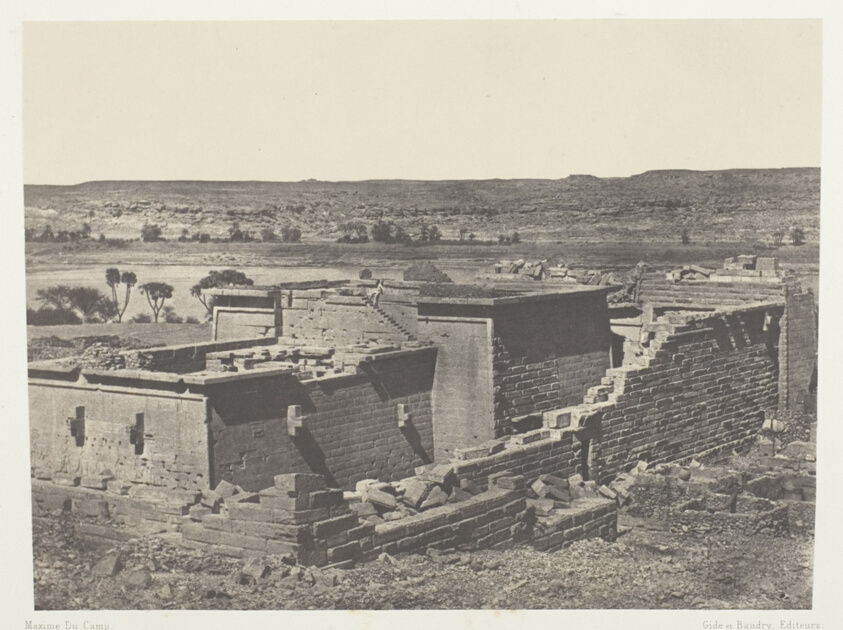
Maxime Du Camp
Kalabscheh, Vue Générale du Temple de Kalabscheh (Talmis); Nubie, plate 89 from the album "Egypte, Nubie, Palestine et Syrie" (1852), 1849
When placed against a calotype negative and exposed to sunlight, the paper darkened wherever light passed through, conjuring an image of extraordinary tonal richness. Talbot formalized and shared his discoveries through what remains one of the landmark publications in the history of art and science. The Pencil of Nature, issued in installments between 1844 and 1846 by his Reading Establishment, was the first commercially published book illustrated with photographs. Each copy contained actual salted paper prints, tipped in by hand.
The images were modest in subject but enormous in implication: a shelf of china, an open doorway, a street in Paris. Talbot was demonstrating that the camera could document the world with a fidelity no engraver could match, and the salted paper print was his chosen language. His works on The Collection reward close looking, carrying that particular hazy authority that only the earliest photographic experiments possess. What happened next was a dispersal of technique across Europe that reads almost like an intellectual contagion.
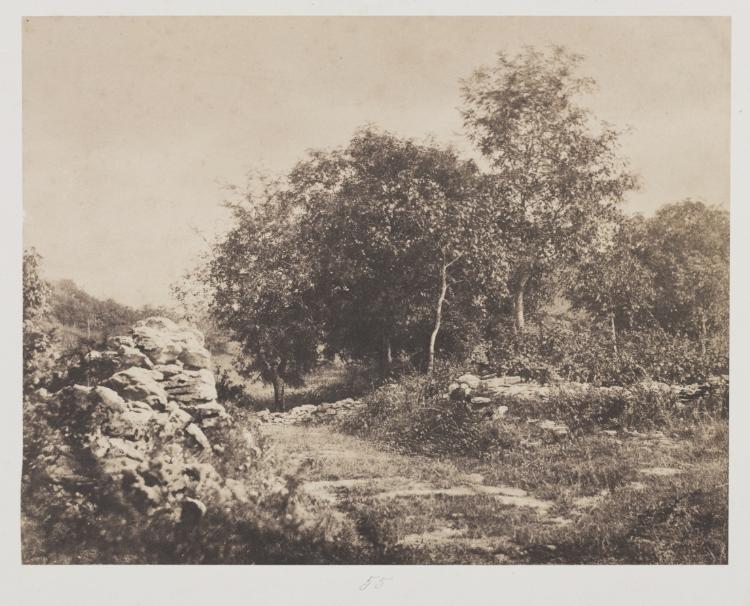
André Giroux
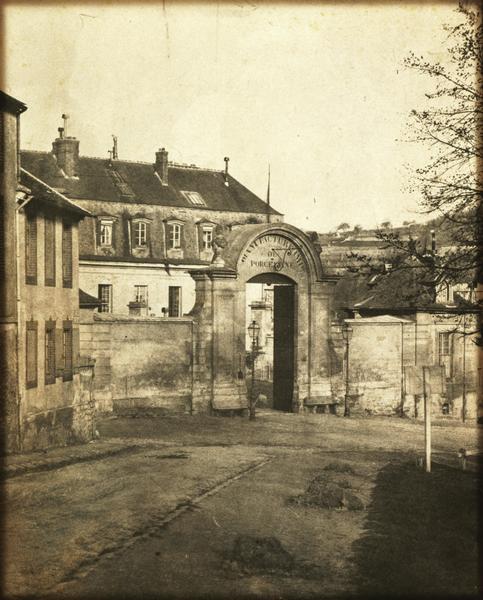
Untitled (Scene of Fontainebleau), 1853
In France, the process found immediate and passionate adopters among a generation of photographers who were also scholars, adventurers, and artists in the fullest sense. Maxime Du Camp, traveling through Egypt and the Near East with Gustave Flaubert between 1849 and 1851, documented temples, monuments, and landscapes using the salted paper process. His photographs, published in 1852 as Égypte, Nubie, Palestine et Syrie, represent one of the first sustained uses of photography as archaeological record. Du Camp is among the most extensively represented photographers on The Collection, and his images carry a particular gravity, that sense of a civilization being measured and held still against the passage of time.
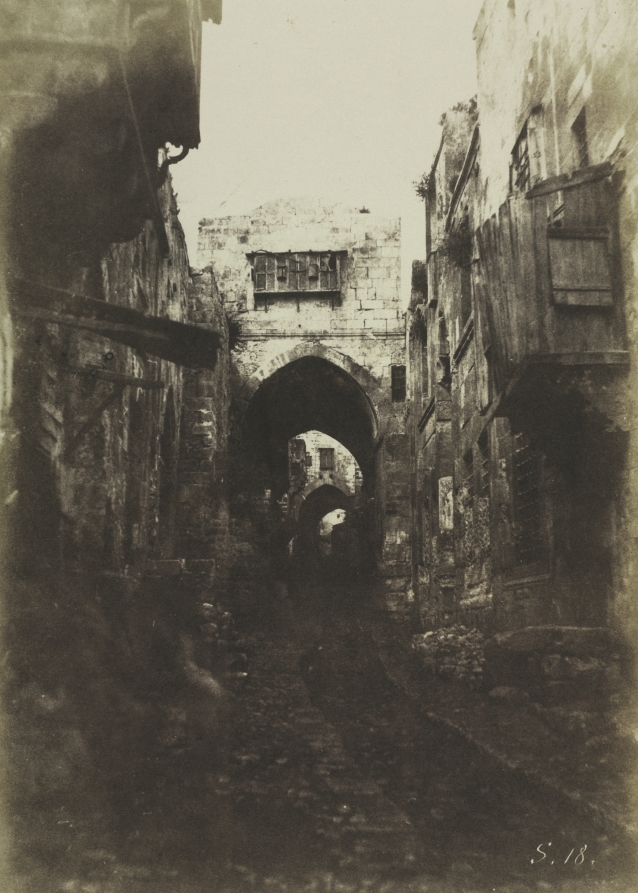
Around the same period, Félix Teynard and Auguste Salzmann were making their own photographic journeys through Egypt and Jerusalem, producing salted paper prints that approached ancient sites with a documentary seriousness that would influence how the West visualized antiquity for generations. In Britain, the calotype circle that gathered around Talbot extended in surprising directions. The Scottish partnership of David Octavius Hill and Robert Adamson, working in Edinburgh between 1843 and 1848, used the process to create portrait studies of extraordinary psychological depth. Hill, a painter by training, brought a compositional instinct to the work that distinguished it immediately from mere documentation.
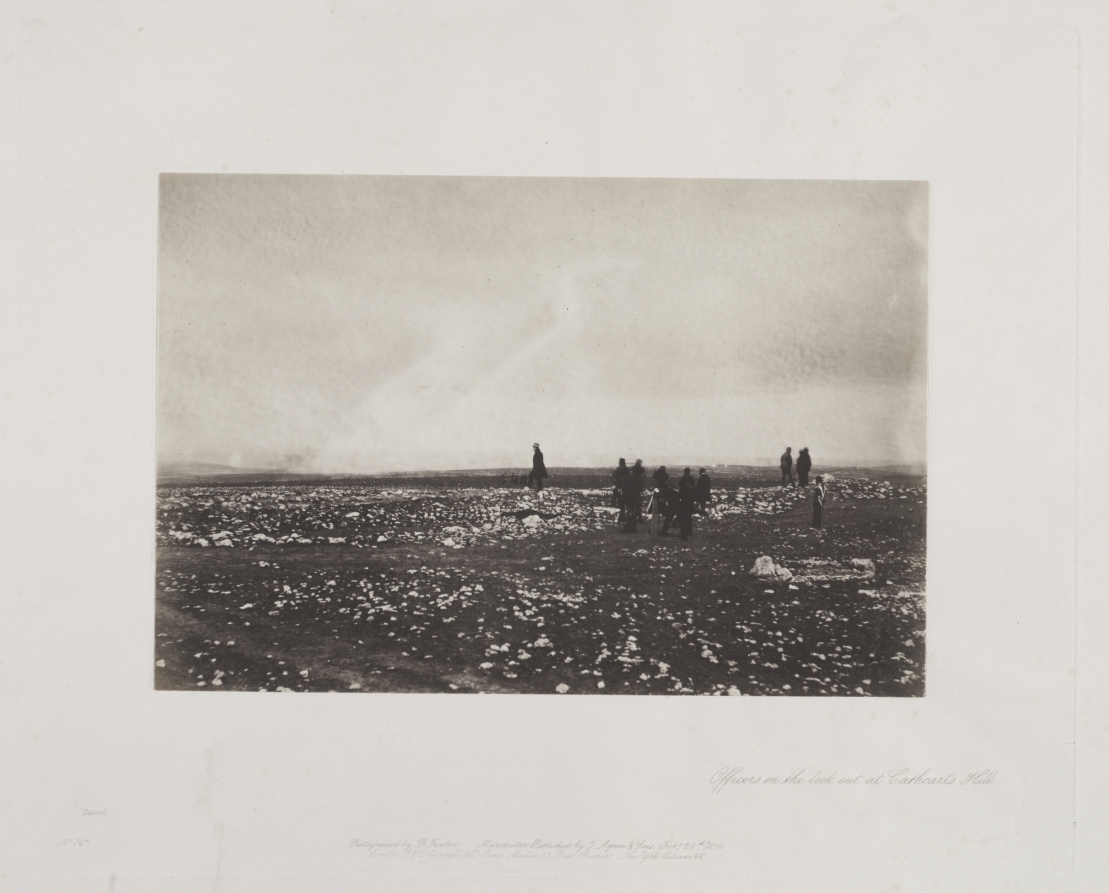
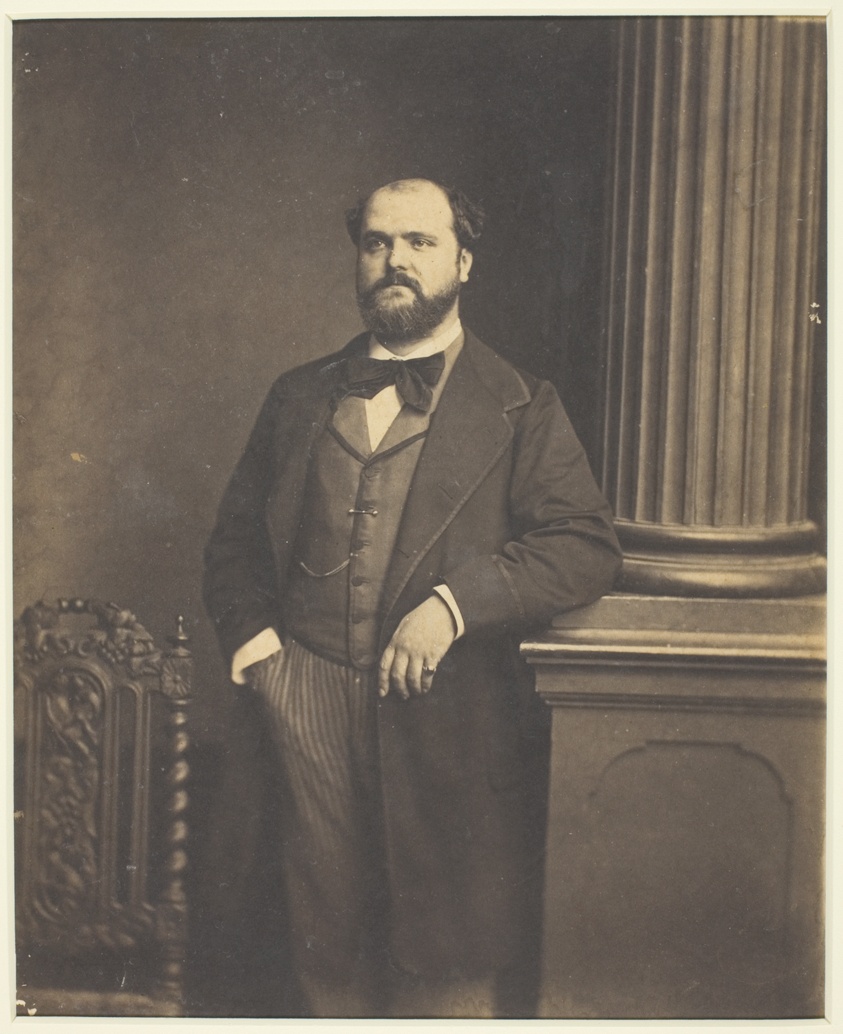
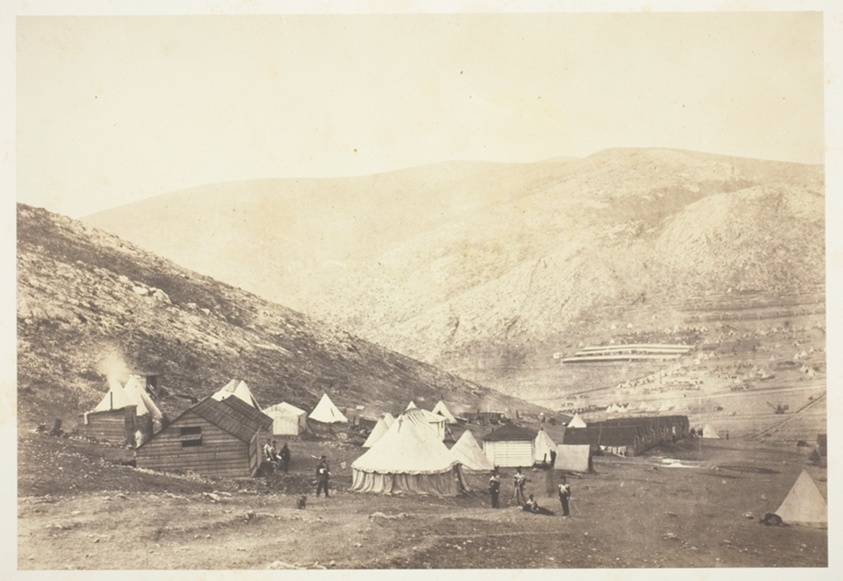
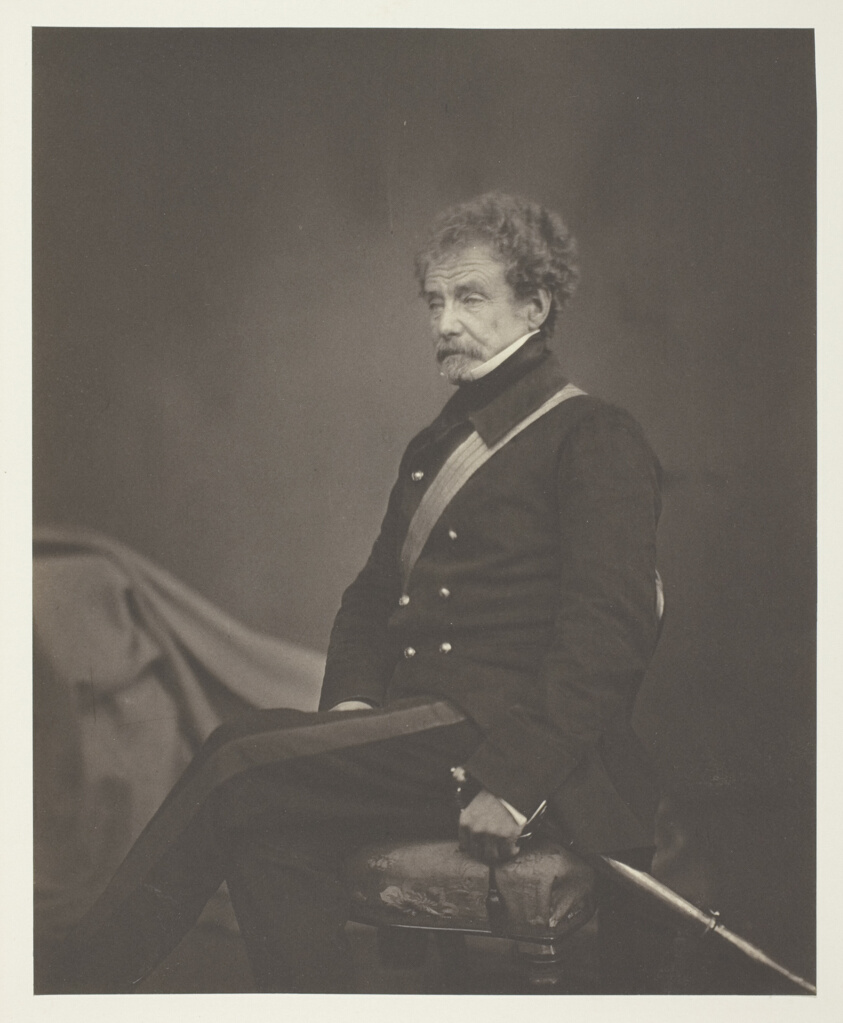
Roger Fenton
Lieutenant General Sir Colin Campbell, G.C.B., 1855
Their images of fisherwomen from Newhaven and ministers of the Free Church of Scotland belong to the first rank of portrait photography in any era, and Hill's works on The Collection reveal how consciously he understood light as a sculptural force. Across the channel, Roger Fenton was building a career that would take him from the studios of London to the Crimean Peninsula, where in 1855 he made the photographs that constitute perhaps the first sustained coverage of a war by camera. Fenton's salted paper prints, rich with shadow and atmosphere, demonstrate how completely the medium had matured within fifteen years of Talbot's experiments. The process itself demanded a particular patience and intimacy.
Printing was done by contact, meaning the negative had to be the same size as the final image, a constraint that shaped composition in fundamental ways. Exposure times were long and variable, dependent on the quality of available sunlight, making each print a small negotiation with weather and season. The resulting images, typically warm in tone ranging from reddish brown to a deep purplish black depending on the chemistry and the paper stock, have an organic quality entirely unlike the cold precision of later gelatin silver prints. Édouard Baldus, who combined photographic ambition with meticulous technical control, used the process to document the architectural patrimony of France in the early 1850s, his prints achieving a clarity and tonal range that pushed against the perceived limitations of the medium.
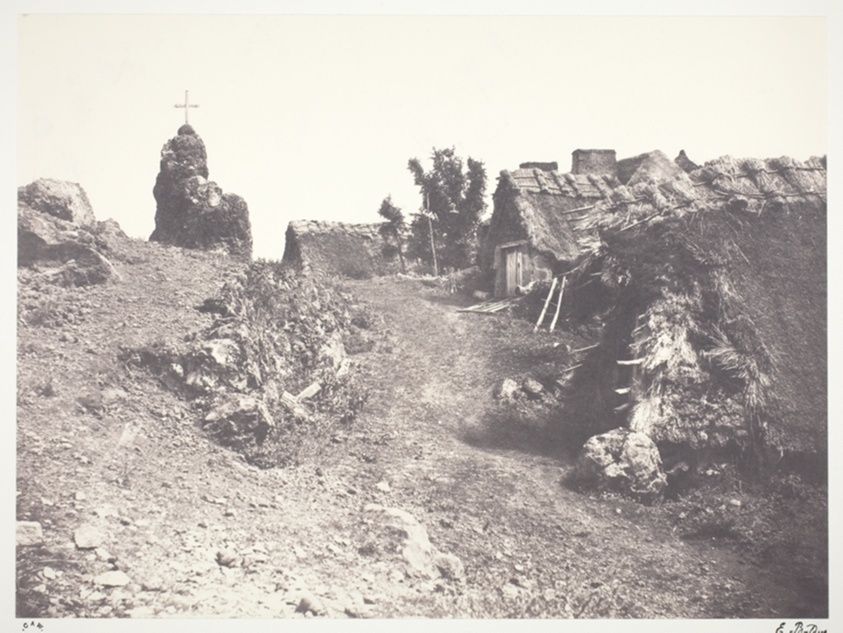
Édouard Baldus
Chaumieres en Auvergne, avec un calvaire, 1854
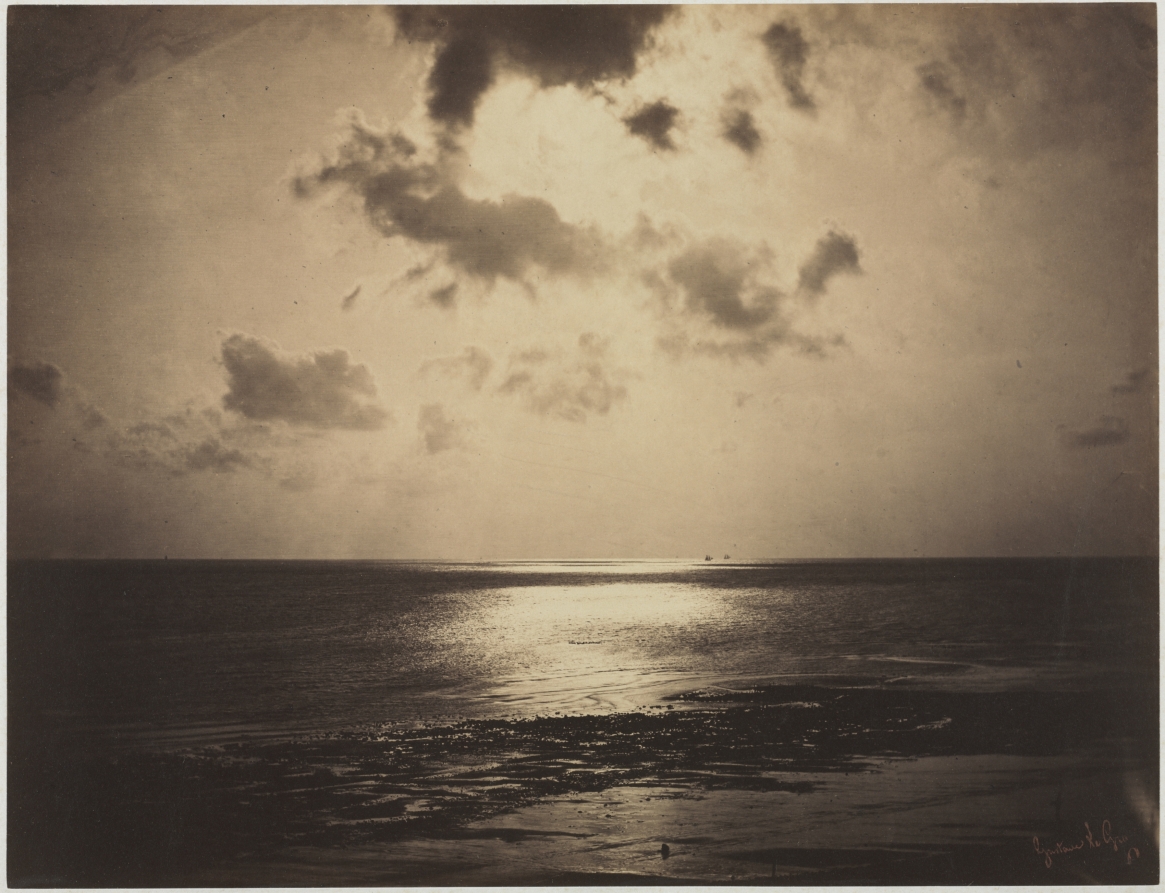
Henri Le Secq, working at the same moment on the Missions Héliographiques commission organized by the French government in 1851, brought a painter's sensitivity to Gothic stonework that made his salted paper prints feel as much like works of art as records of buildings. By the late 1850s, the albumen print had largely displaced salt as the preferred medium, offering sharper detail and a glossier surface that suited the growing appetite for photographic reproductions. But the eclipse of the salted paper print proved to be a long detour rather than a disappearance. Pictorialist photographers at the end of the nineteenth century looked back to early processes as a corrective against mechanical slickness, and the revival of interest in alternative processes that has gained momentum over the past thirty years has returned salt printing to active practice among contemporary photographers who value its handmade warmth.
For collectors today, the medium occupies a position of singular importance: these are objects that are simultaneously historical documents, aesthetic achievements, and evidence of a moment when photography was still deciding what it wanted to be. That uncertainty, it turns out, was not a weakness. It was a kind of freedom.