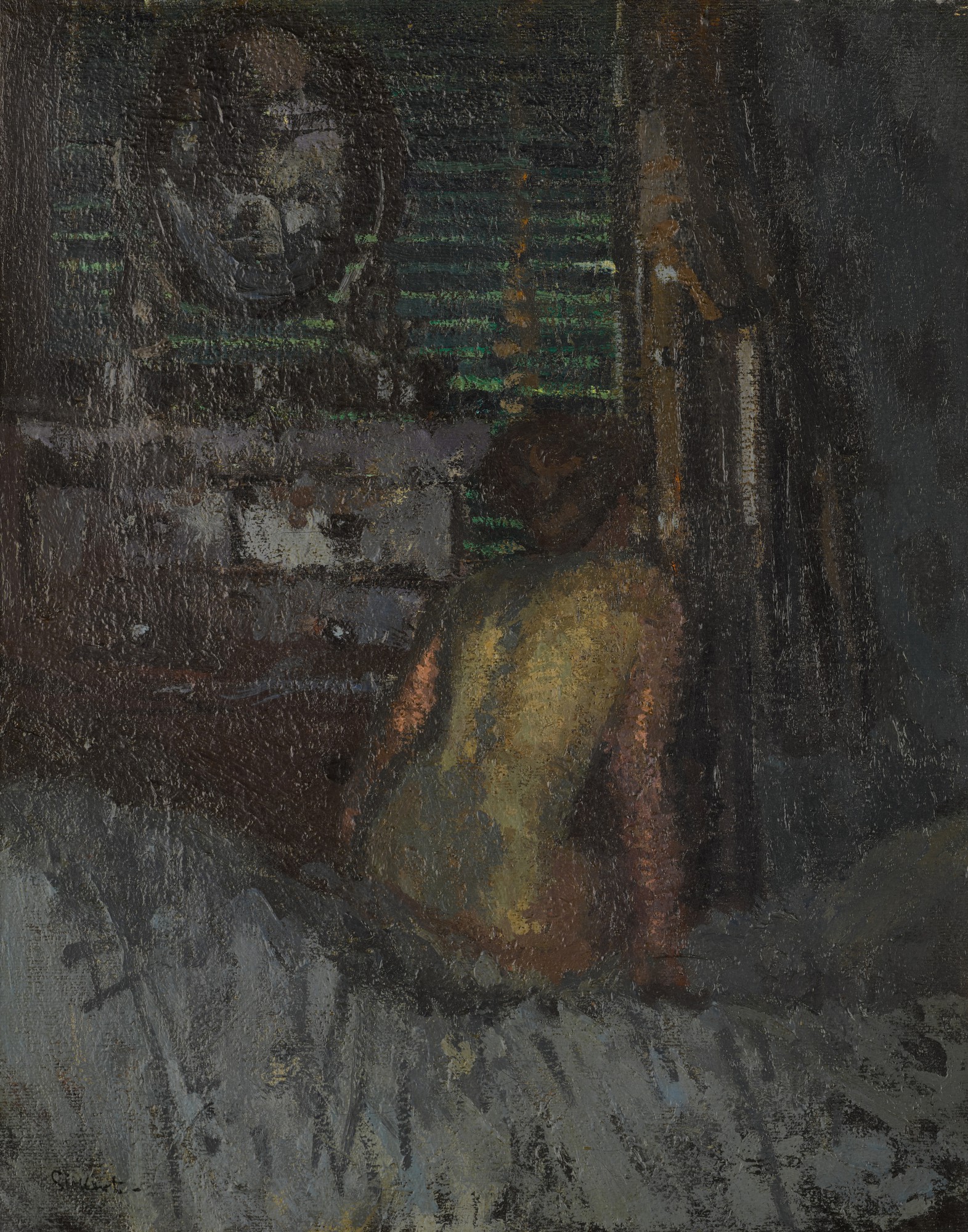
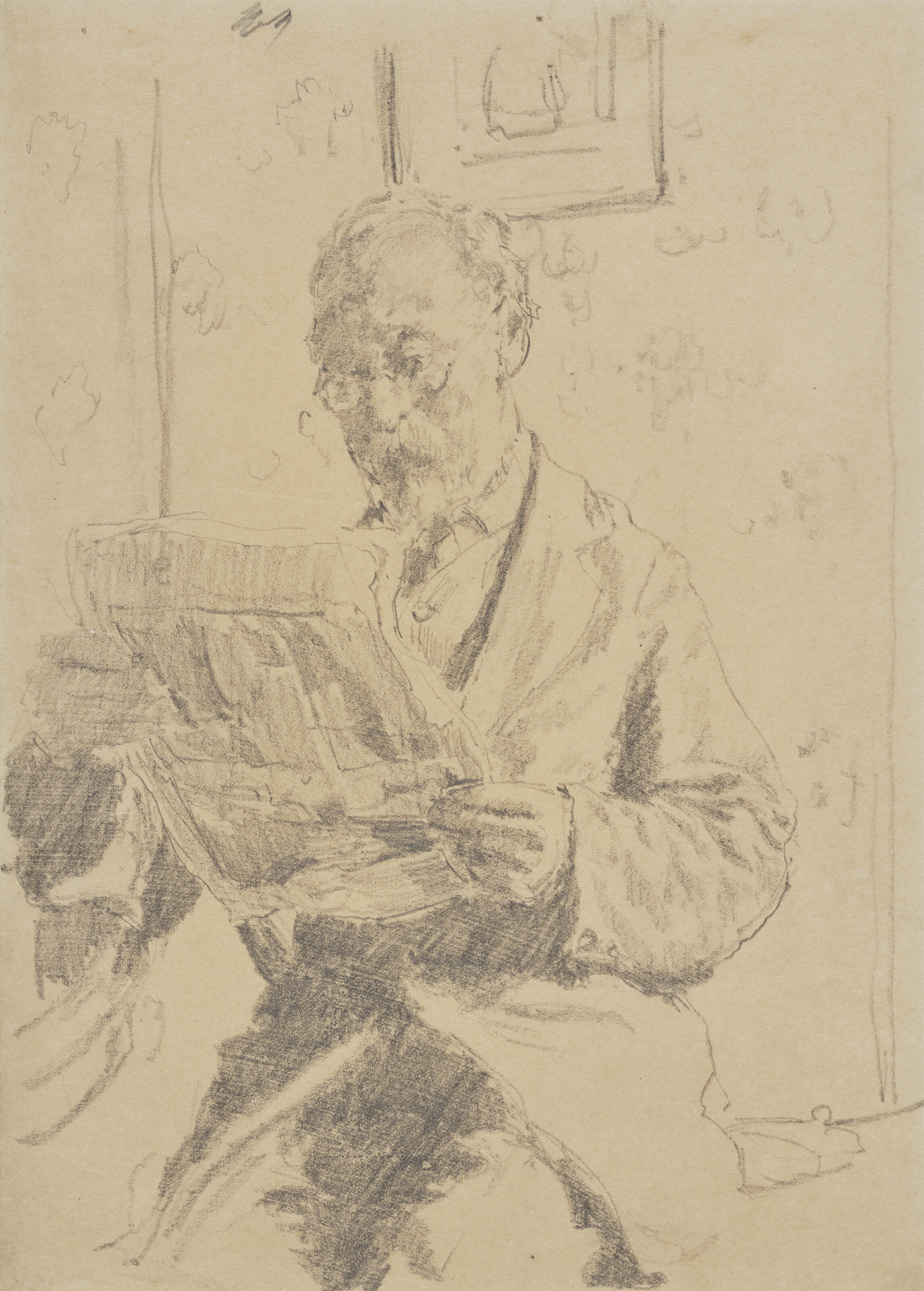
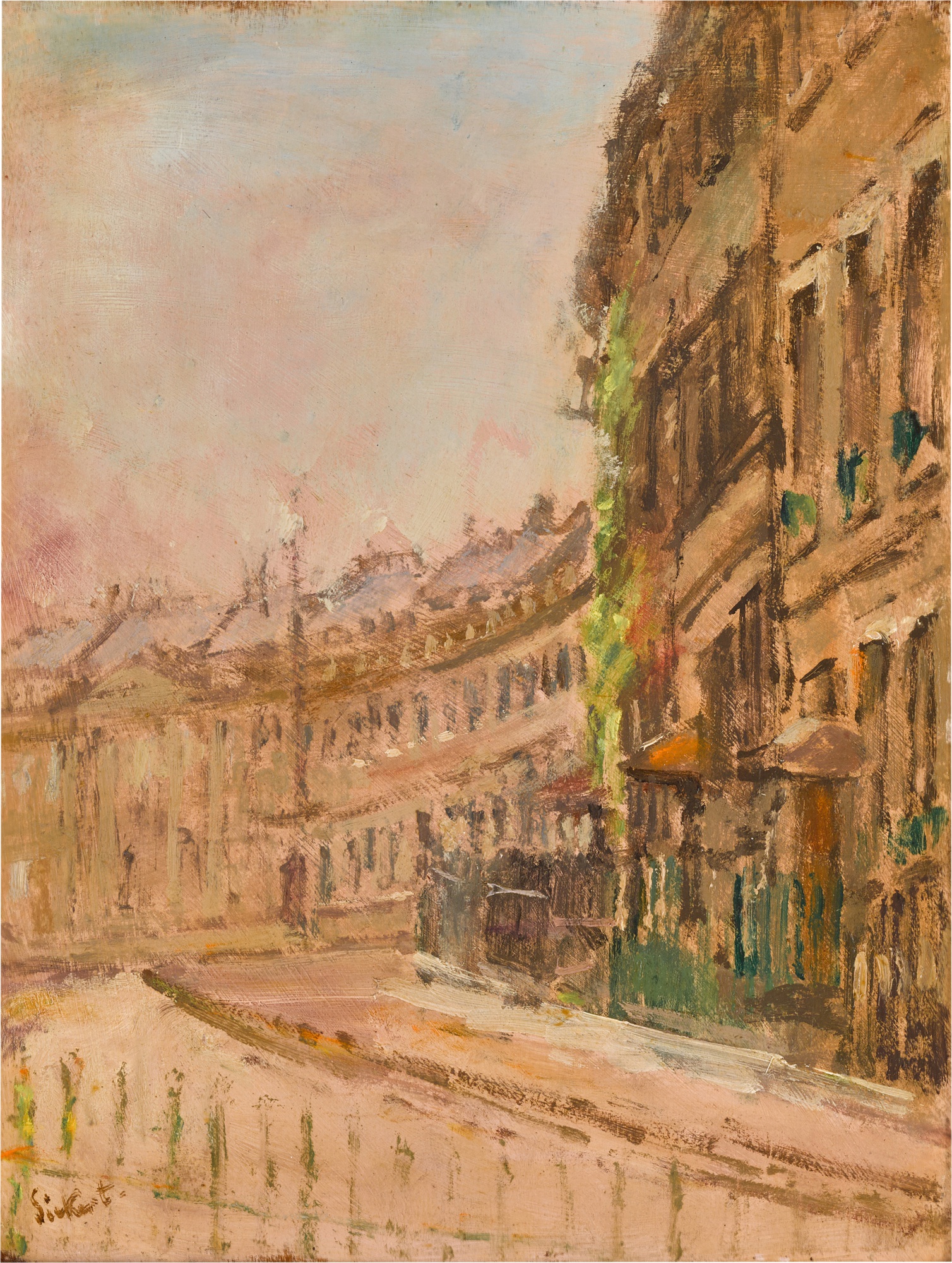
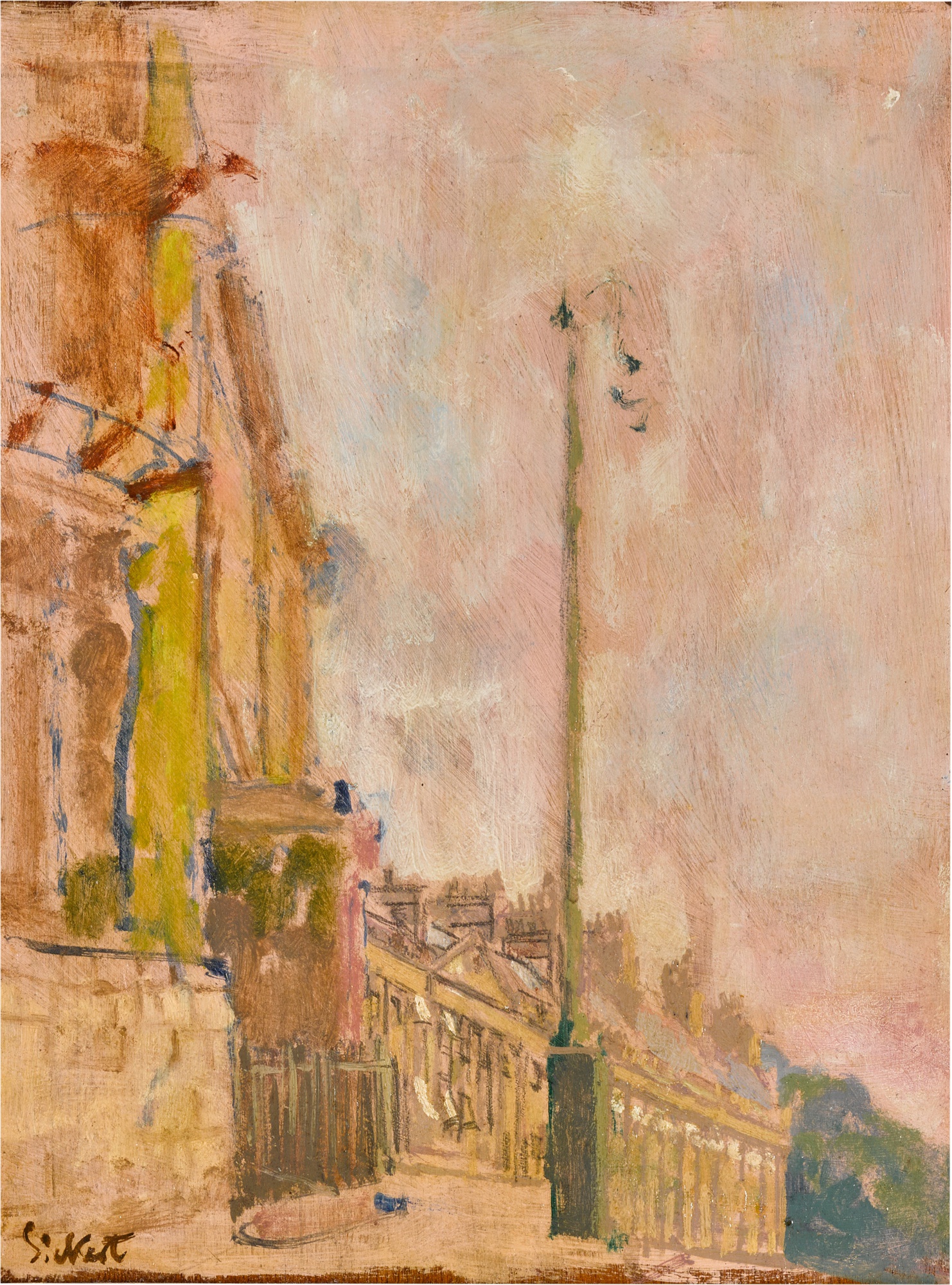
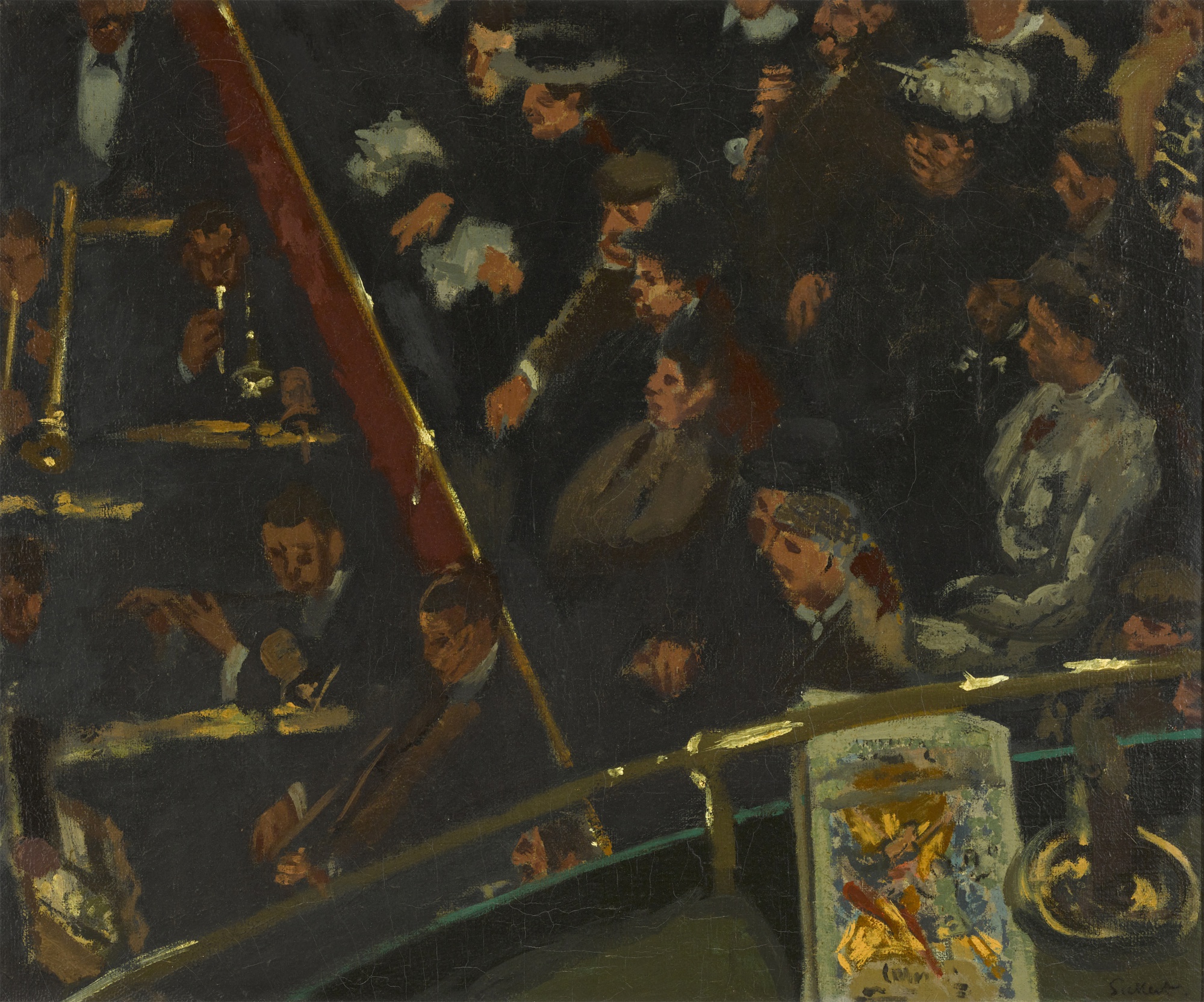
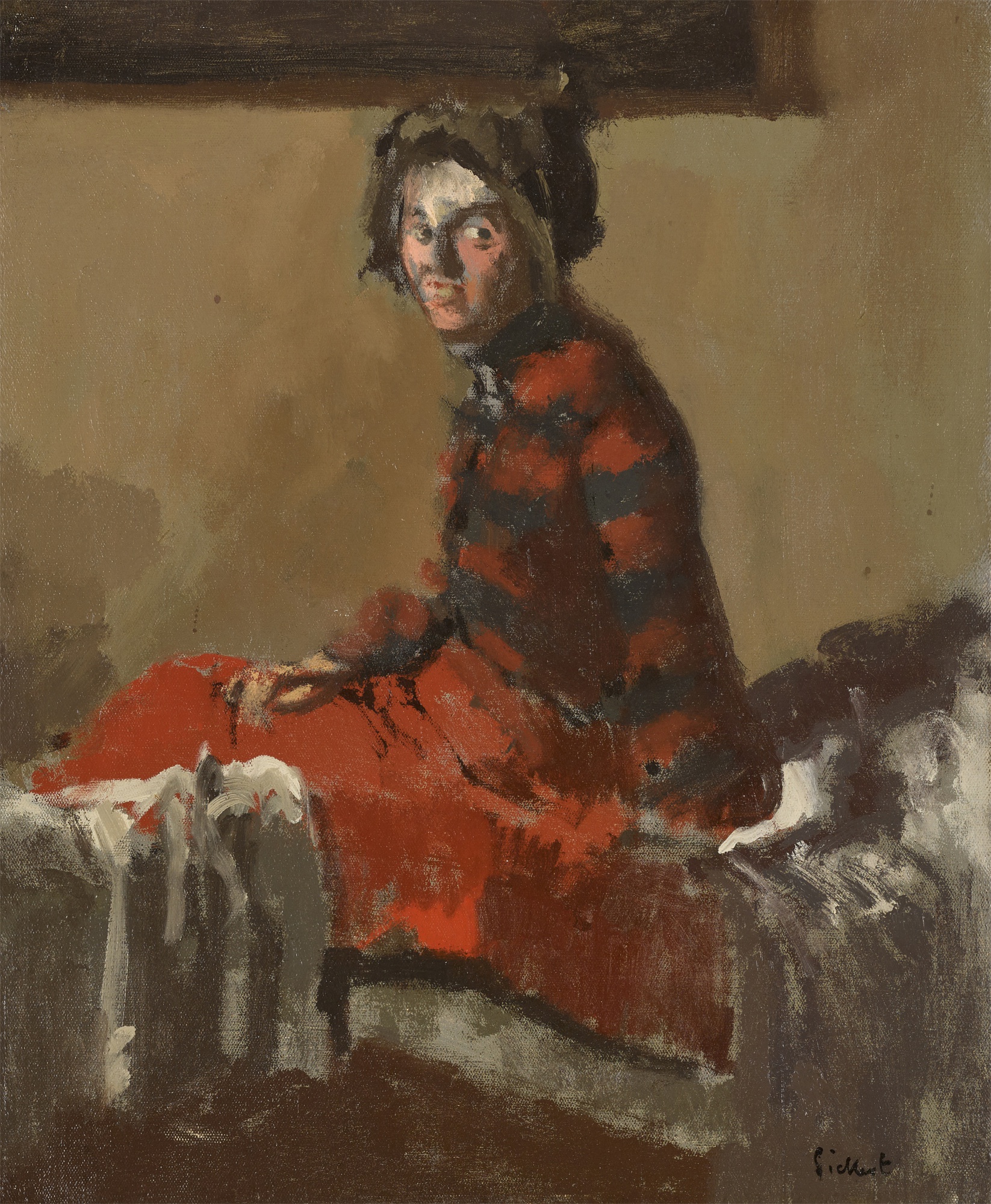
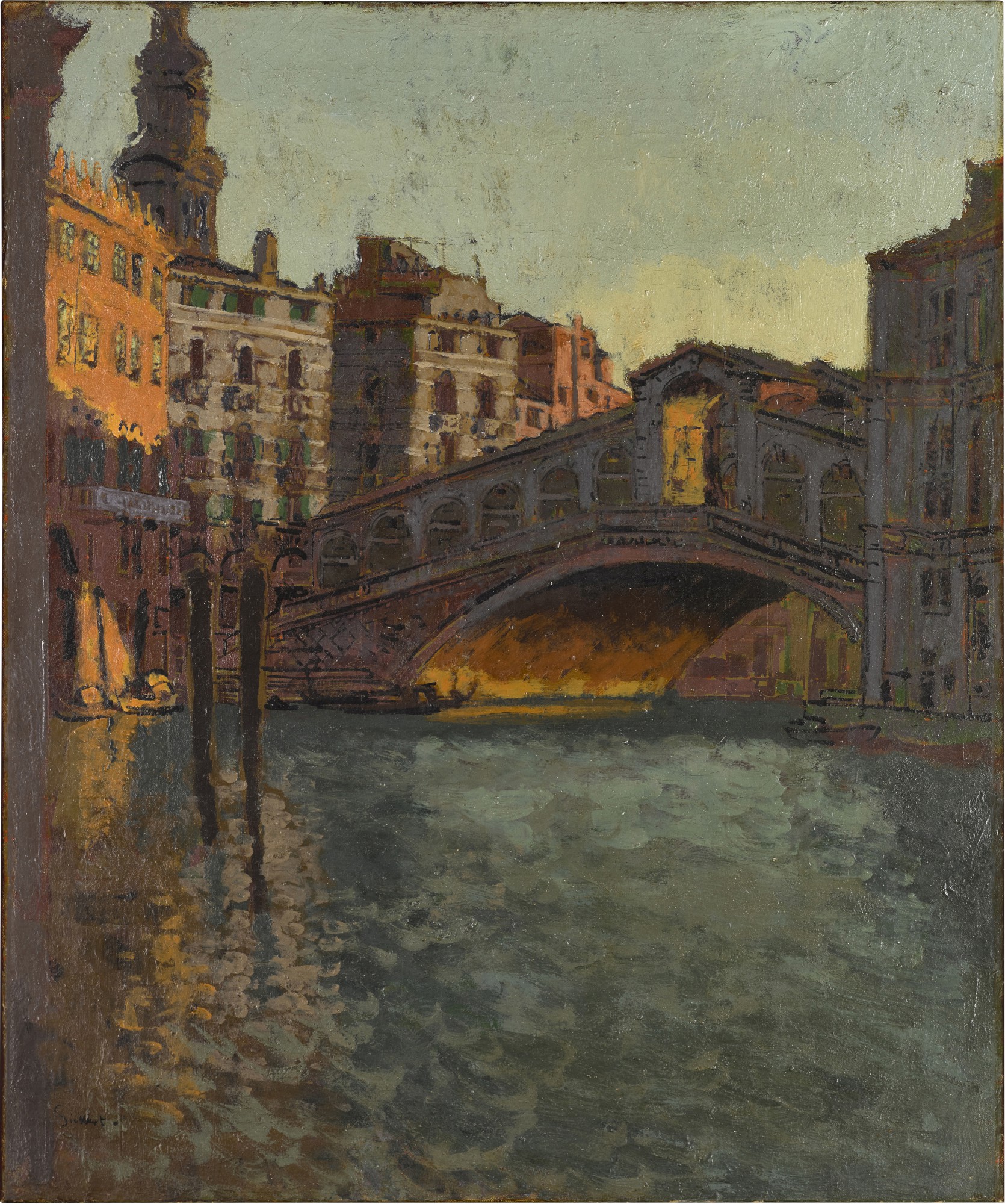
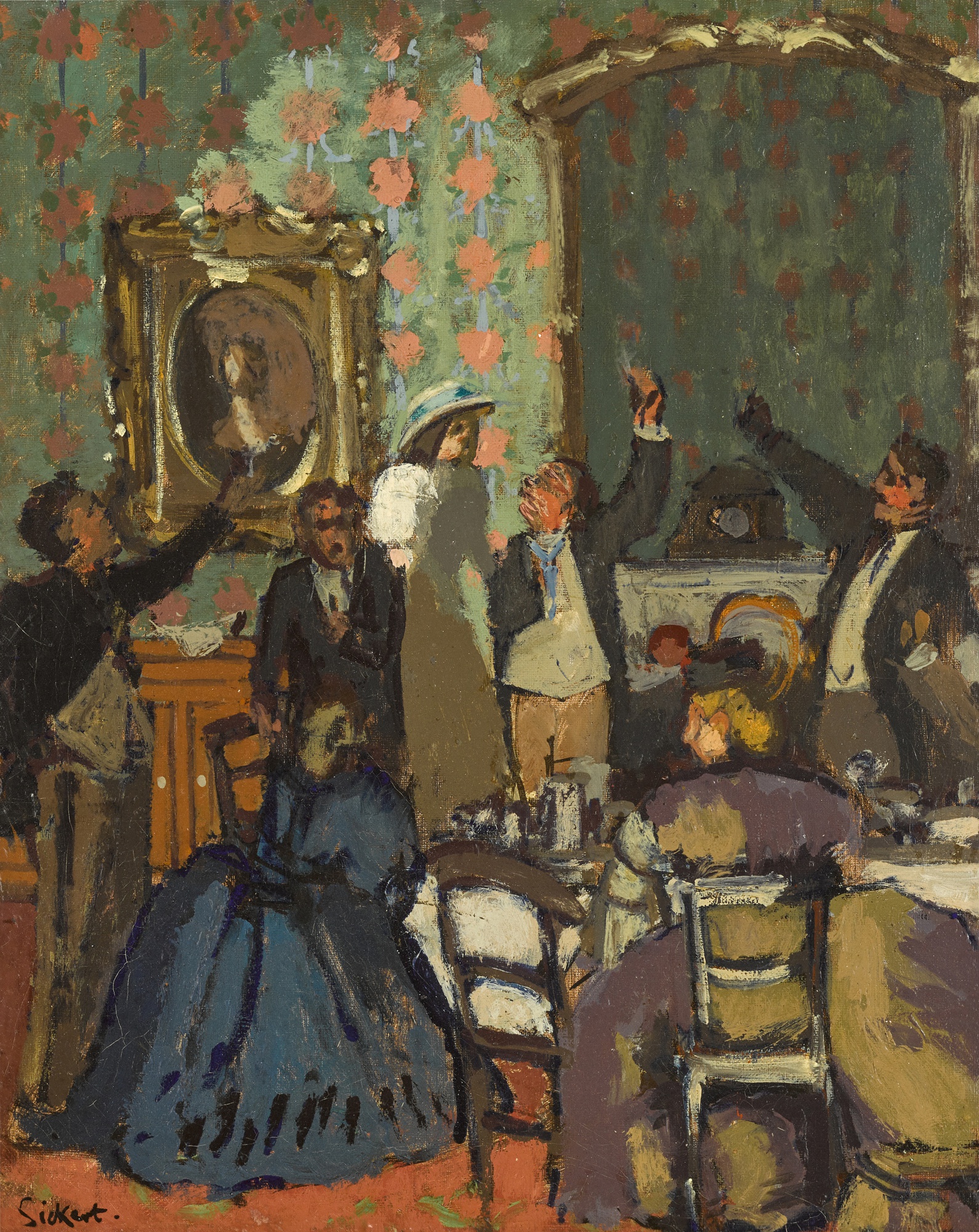
There is a particular quality of gaslight that Walter Richard Sickert understood better than almost any painter of his era. It pools unevenly, it flatters nothing, and it reveals character with a kind of brutal honesty that daylight rarely permits. When the Tate Britain mounted its landmark retrospective of Sickert's work in 2022, visitors encountered this quality immediately and viscerally. The exhibition confirmed what scholars and serious collectors have long understood: that Sickert was not merely a transitional figure between Victorian propriety and British modernism, but one of the most psychologically acute painters the country has ever produced. Sickert was born in Munich in 1860 to a Danish father, Oswald Adalbert Sickert, who was himself a painter and illustrator, and an Irish mother of partly Danish descent. The family relocated to England when Walter was eight years old, and he grew up steeped in the cultural crosscurrents of two continents. He studied briefly at the Slade School of Fine Art before becoming a studio assistant to James McNeill Whistler in 1882, an apprenticeship that proved formative. Whistler taught him to think carefully about tone, atmosphere, and the weight of shadow. But the encounter that would shape the rest of his life came the following year, when Whistler introduced him to Edgar Degas in Paris. The two men developed a genuine and lasting friendship, and Degas became the presiding spirit of Sickert's entire artistic imagination. From Degas, Sickert absorbed the idea that modernity lived not in grand official subjects but in the overlooked corners of everyday life. He began painting the music halls of London with an almost anthropological intensity. Works from the late 1880s and 1890s, including the magnificent series of paintings centered on the Old Bedford Music Hall in Camden, capture the peculiar energy of those smoky, democratic spaces where class distinctions dissolved briefly in shared entertainment. Sickert painted performers from the back, audiences from improbable angles, and gallery crowds lit from below by footlights. The Old Bedford painting of 1890, now among the works available on The Collection, is a superb example of this period: the composition is bold, the observation is sharp, and the atmosphere is one of genuine urban pleasure. In the early 1900s, Sickert divided his time between London, Dieppe, and Venice, accumulating a body of work of remarkable range. His Venetian paintings, among them The Rialto Bridge painted in 1900, show a painter in full command of plein air technique while resisting the picturesque at every turn. Where other artists turned Venice into a postcard, Sickert found texture, shadow, and the slightly worn beauty of a city that had long since learned to live with its own mythology. The Camden Town period that followed, roughly from 1905 to 1914, is generally regarded as his most significant contribution to British art. Paintings such as Mornington Crescent Nude from 1907 established a new register for the depiction of the female figure in British painting: unglamourised, unsentimental, and quietly monumental. In 1911, Sickert was a founding member of the Camden Town Group, gathering around him a generation of younger painters including Harold Gilman and Spencer Gore, who took his methods and his appetite for unglamorous urban subject matter and built an entire movement around them. The signature works available through The Collection span this richest period of Sickert's output and offer collectors a genuine survey of his concerns and capabilities. Bonne Fille from 1904 demonstrates his nuanced handling of interior light and his sensitivity to the human figure in repose. The Toast, painted in 1898 as a response to the playwright Arthur Pinero's drama Trelawny of the Wells, shows his engagement with theatrical culture at its most specific and affectionate. Mr. Sheepshank's House, Camden Crescent, Bath from 1916 and Lansdown Crescent, Bath from 1918 reveal a painter who could bring his characteristic intensity to architectural subjects with the same authority he brought to figures. These Bath paintings, made during a period Sickert spent in the west of England during and after the First World War, are among his most underrated works, and collectors who look carefully at them will find a mastery of tonal structure that rewards close and extended attention. The market for Sickert has strengthened considerably over the past two decades as the canon of British modernism has been reassessed with greater seriousness and international confidence. Major institutions including the Metropolitan Museum of Art in New York and the Art Institute of Chicago hold significant works, and auction results at Christie's and Sotheby's London have reflected growing collector appetite, particularly for the Camden Town period interiors and the music hall compositions. Works on panel from the Bath years, once considered secondary to his London subjects, have attracted increasing attention from collectors who appreciate the intimacy and formal economy they represent. When approaching Sickert as a collector, condition and provenance are as important as subject matter: works with clear exhibition histories and records of early private ownership carry a premium, and rightfully so. To understand Sickert fully is to understand the whole ecosystem of European painting at the turn of the twentieth century. His relationship to Degas places him in direct conversation with the French Impressionist tradition, but his temperament was altogether more northern, more literary, and more interested in psychological ambiguity. Collectors who admire Édouard Vuillard will find in Sickert a similar appetite for interior atmosphere and a comparable willingness to treat domestic space as a subject worthy of the highest ambition. Those drawn to Harold Gilman or Spencer Gore will find in Sickert the source from which so much of British Post Impressionism flows. And those who love Lucian Freud will recognise in Sickert a direct ancestor: the same refusal of flattery, the same conviction that the unidealized human body is the most interesting thing a painter can face. Sickert died in Bath in January 1942, having outlived almost everyone who had known him in his prime. His reputation, which had wavered during his lifetime, has grown steadily since, and the current moment feels like something close to a definitive reckoning with his importance. He was an artist of uncommon intelligence and unflinching honesty, a painter who believed that the ordinary world, seen with sufficient care and love, was inexhaustible as a subject. For collectors, his work offers not just aesthetic pleasure but a direct line into the interior life of a century that is still very much shaping our own.