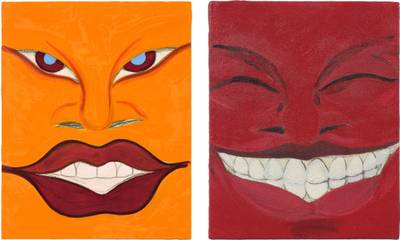
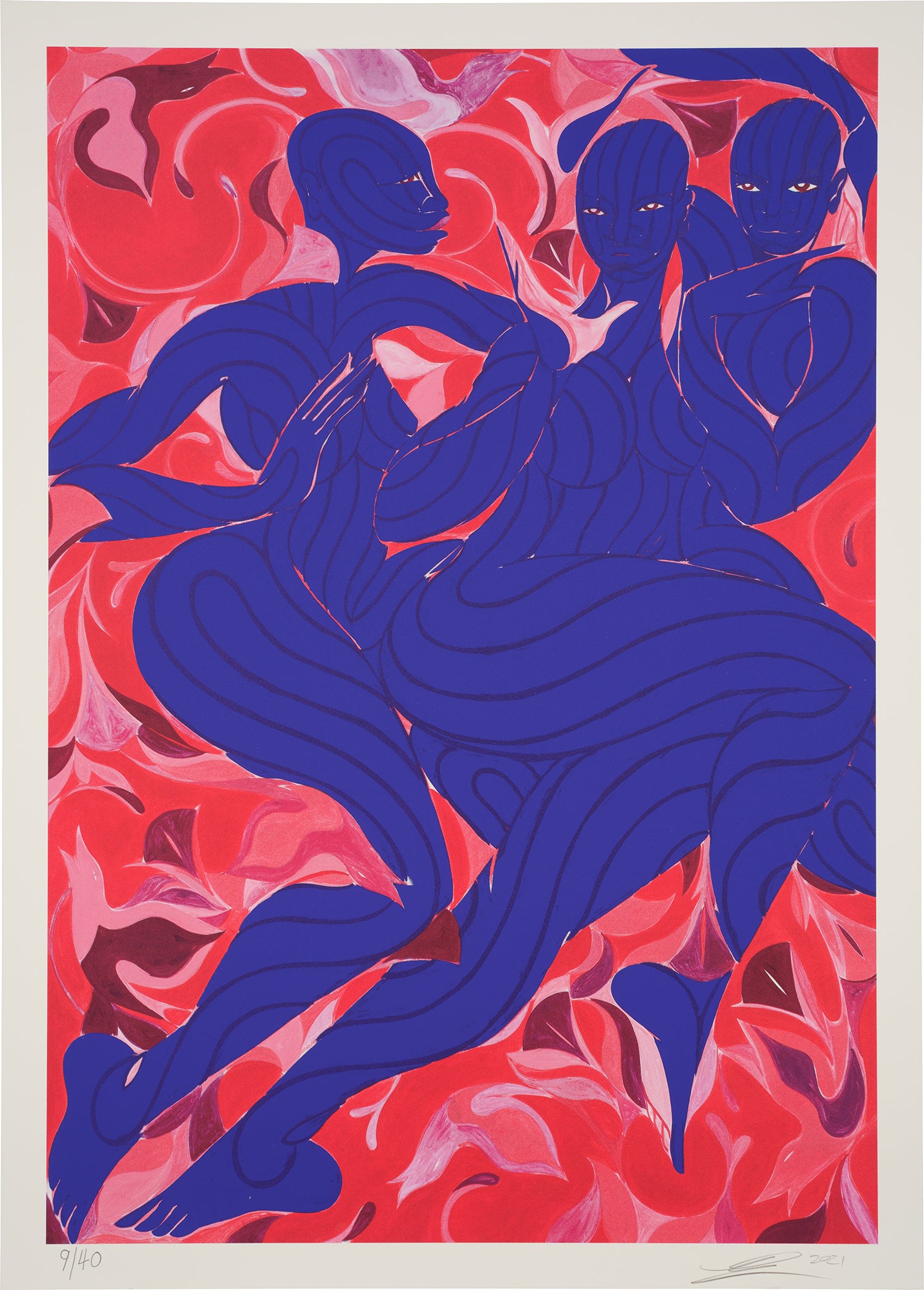
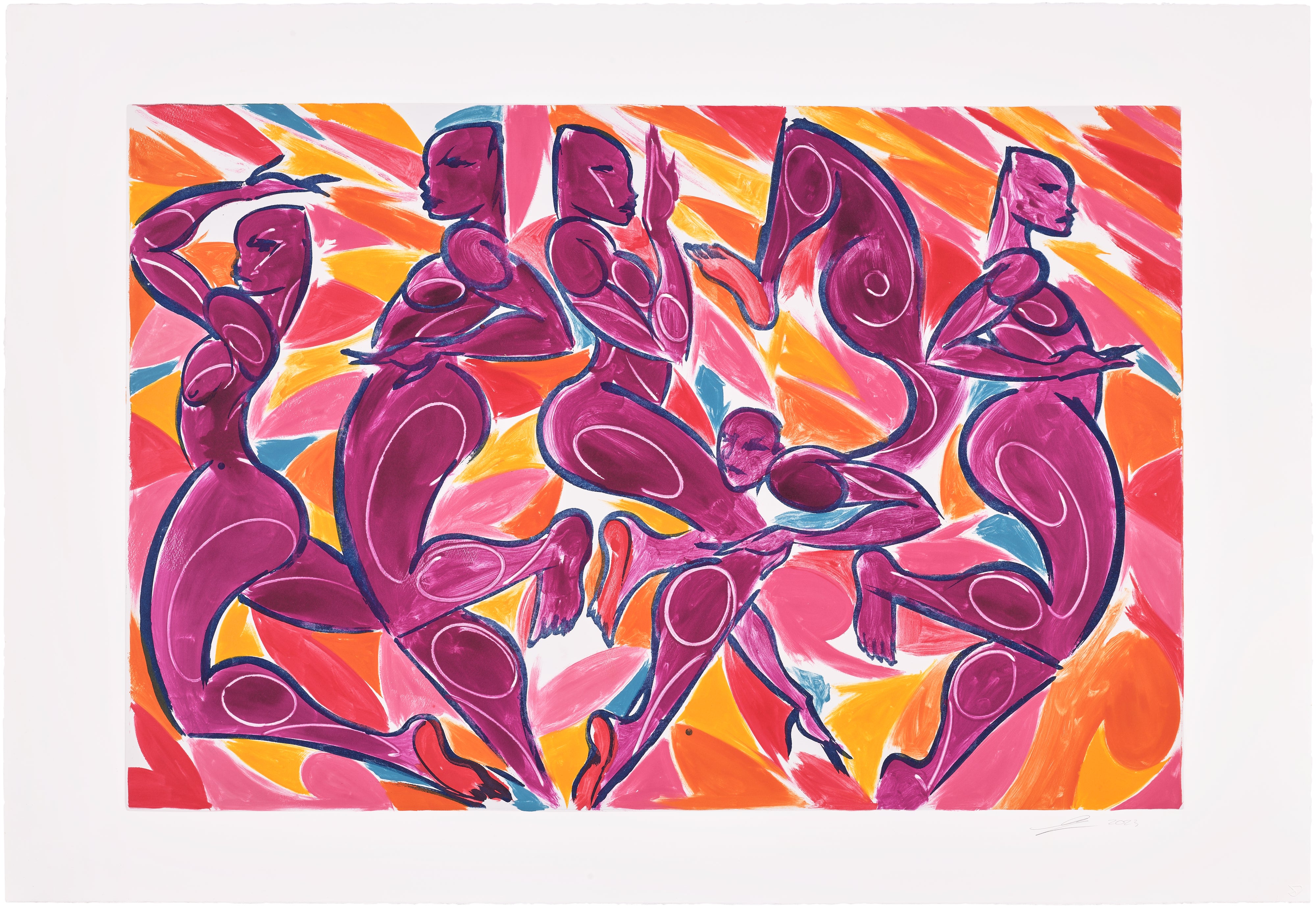
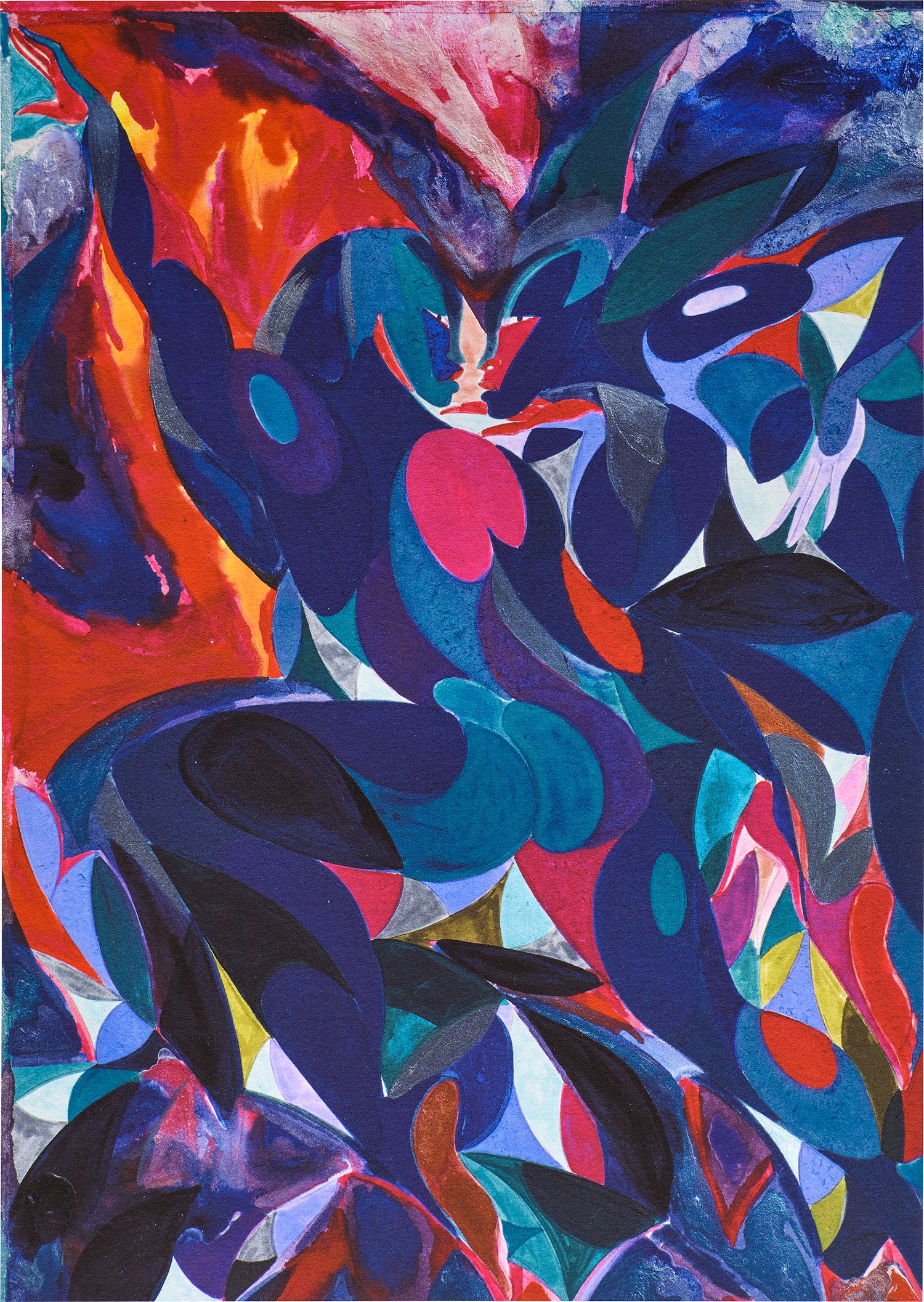
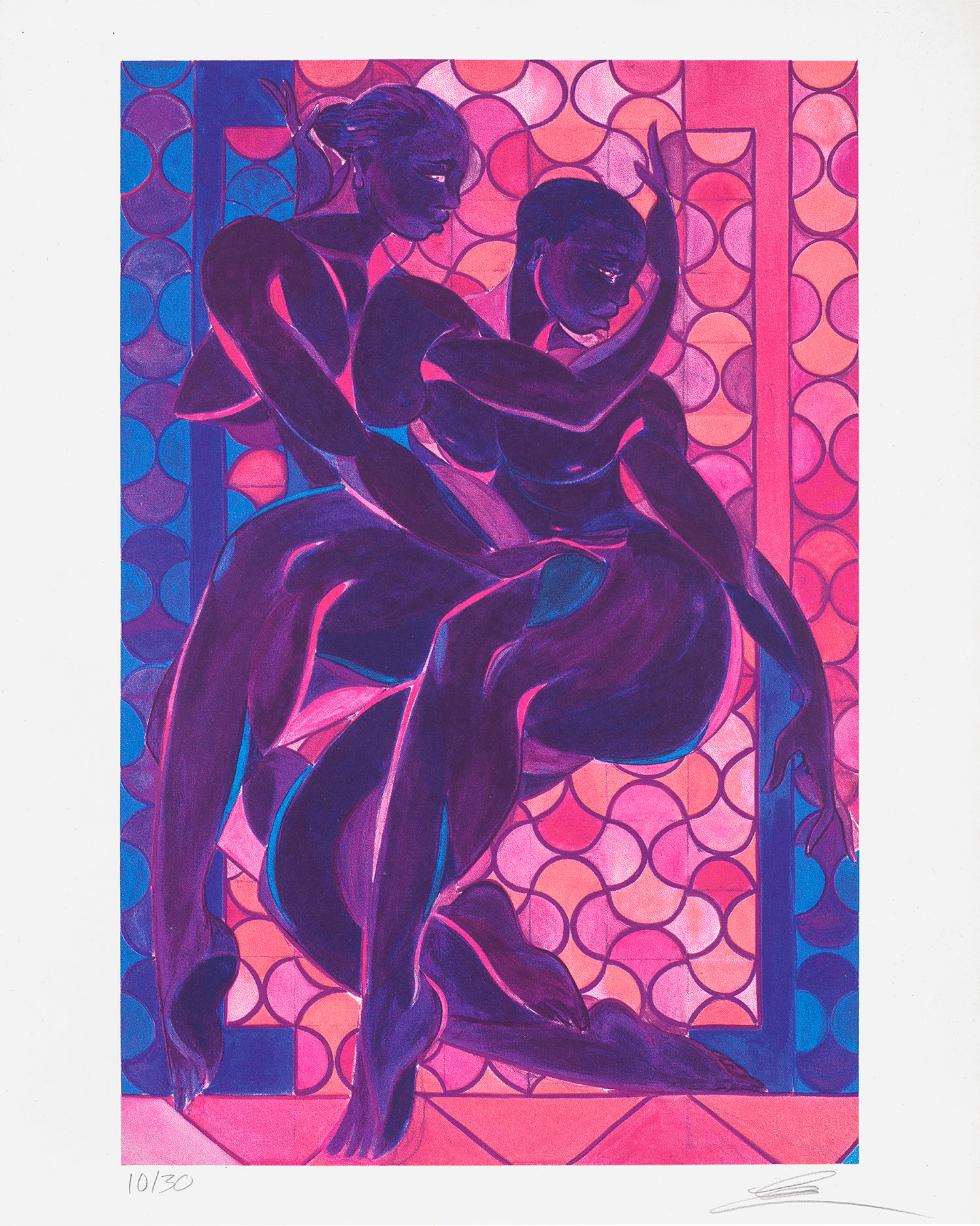
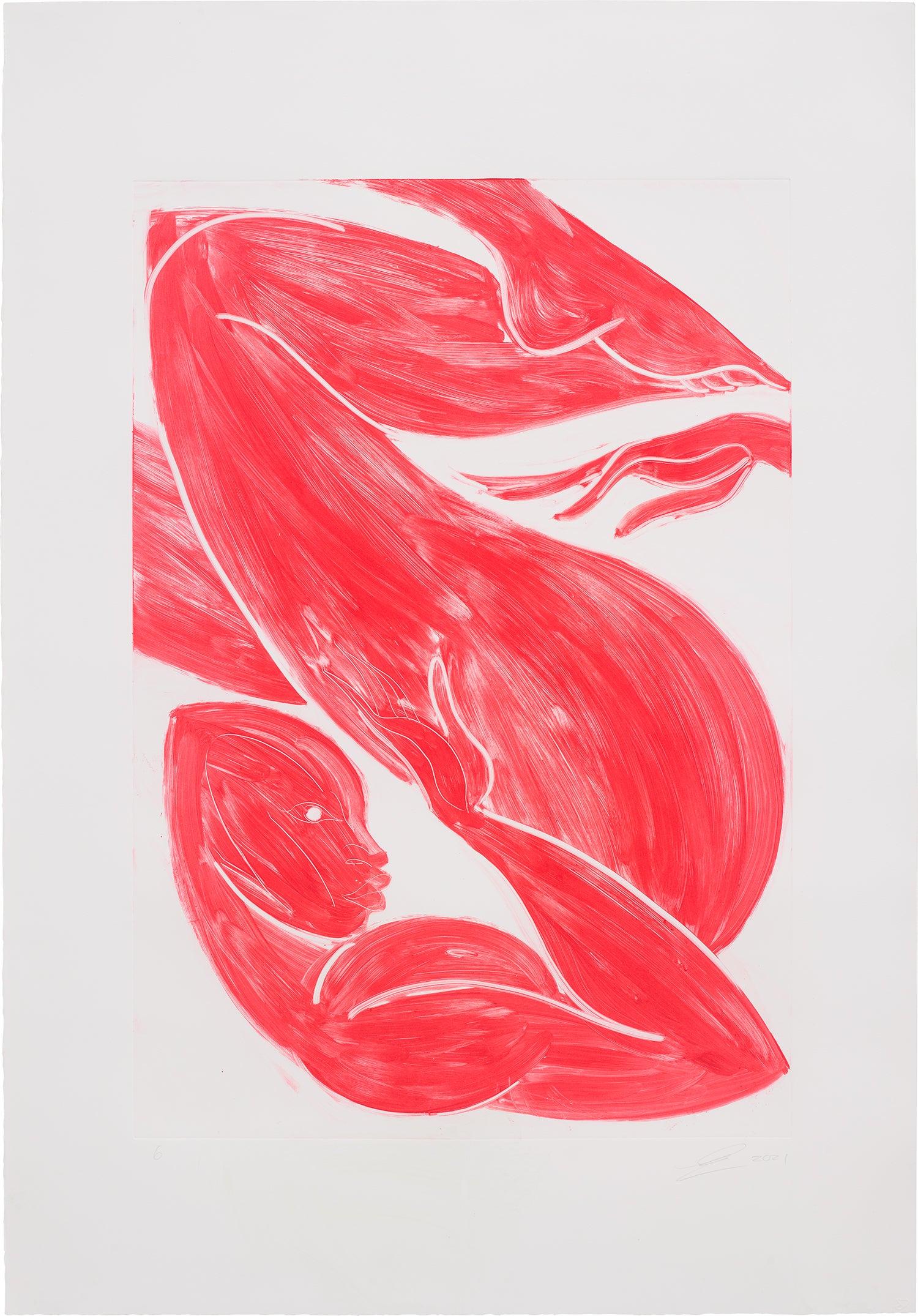
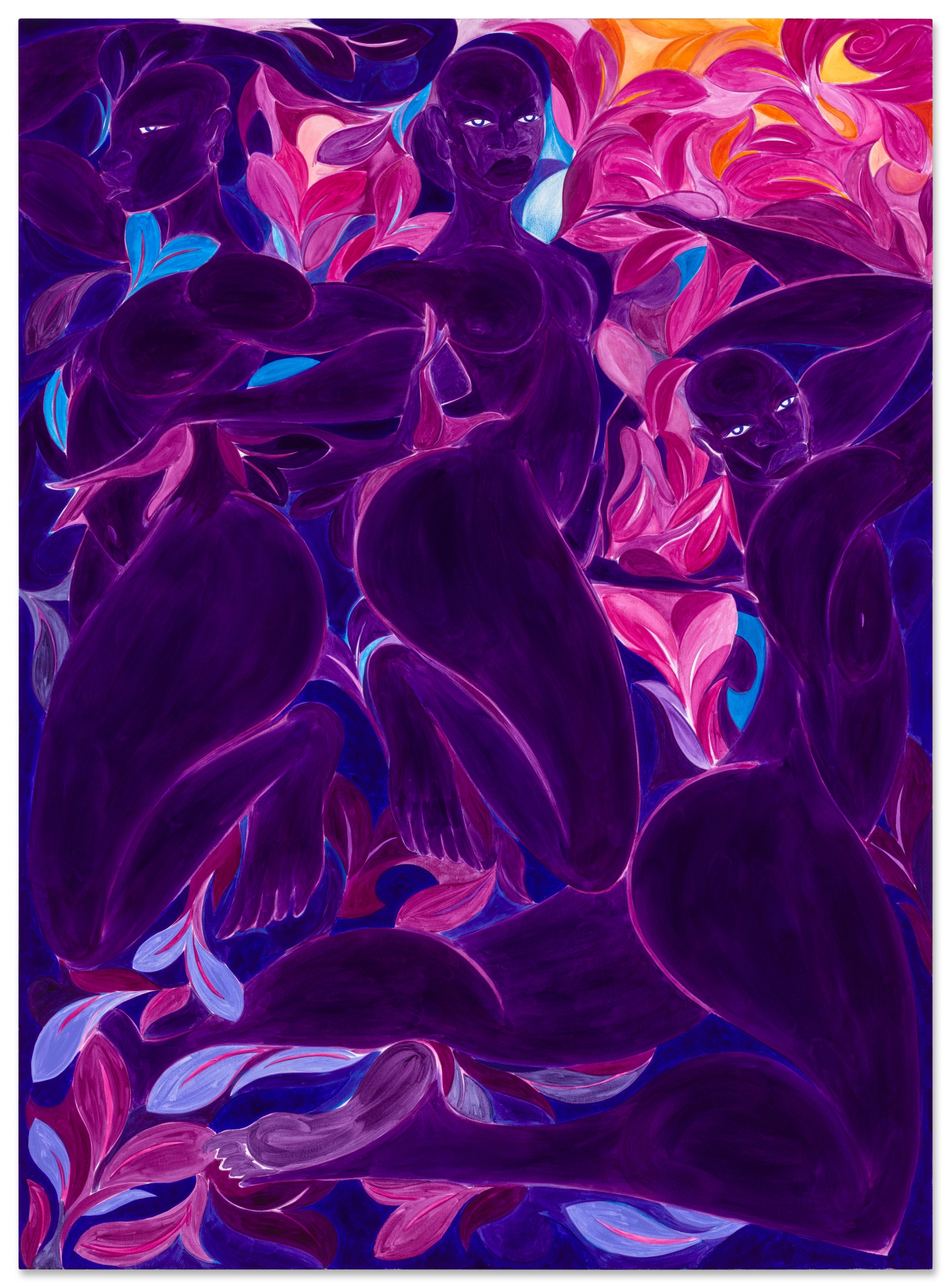
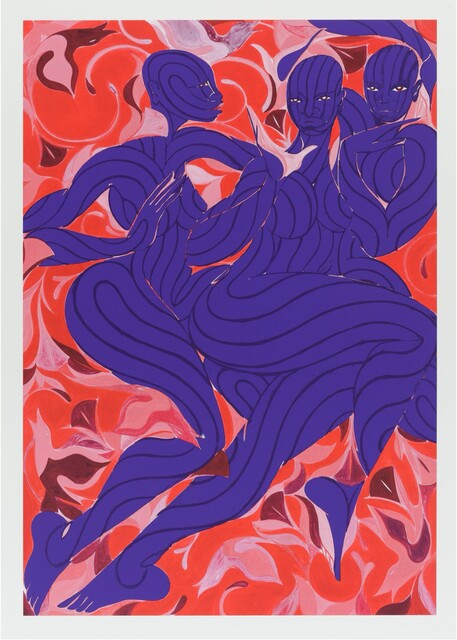
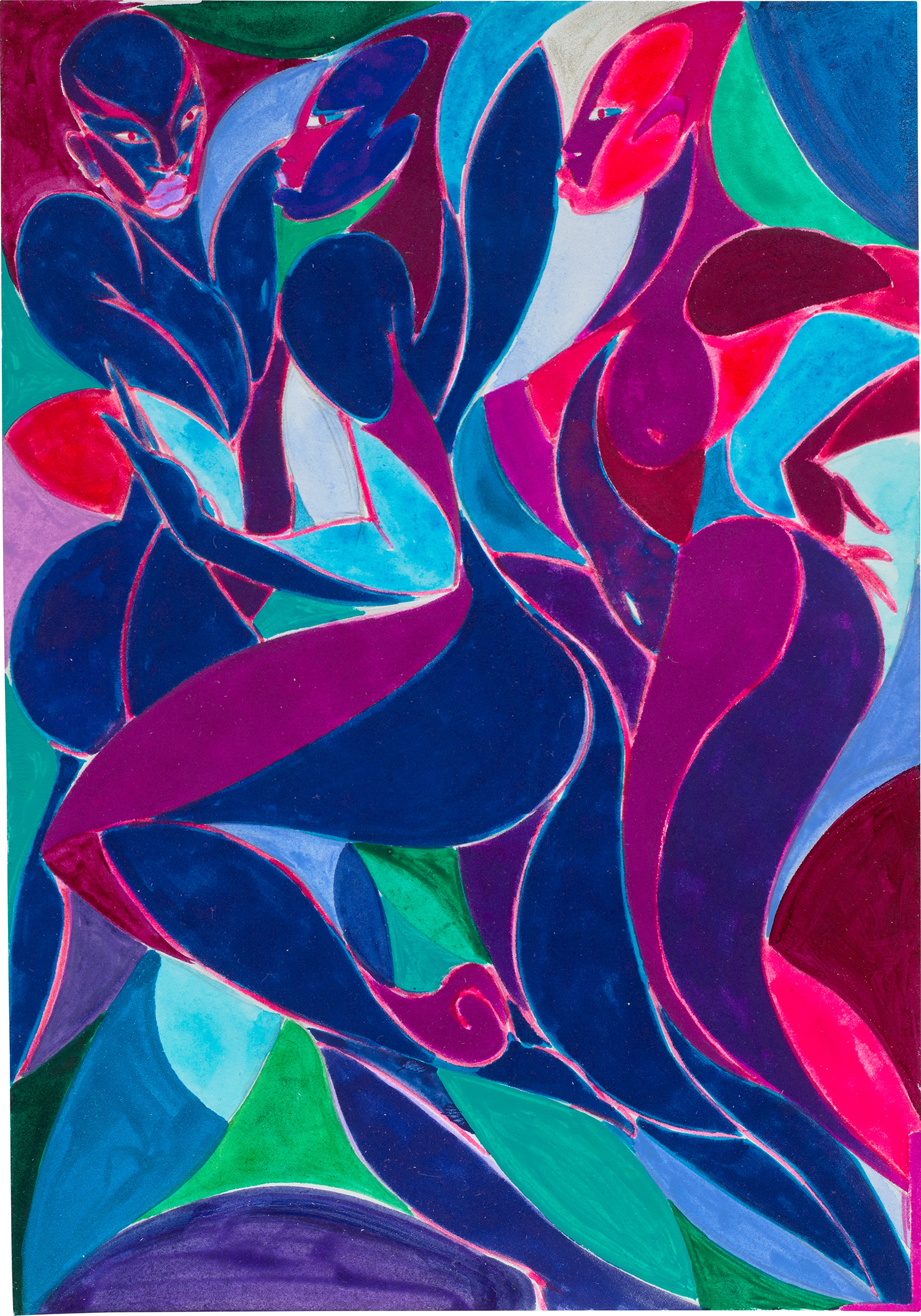
In the years since his work entered the collection of the Studio Museum in Harlem, Tunji Adeniyi Jones has emerged as one of the most compelling voices in contemporary figurative painting. His canvases, alive with arcing bodies and saturated chromatic fields, have drawn serious attention from institutions and private collectors on both sides of the Atlantic. Still in his early thirties, Adeniyi Jones occupies a rare position: an artist whose formal ambition is matched by the emotional generosity of his vision. The conversation around his work has grown louder with each passing year, and for good reason. Born in 1992 to a British Nigerian family, Adeniyi Jones grew up between two cultural worlds, a circumstance that would prove generative rather than disorienting. That dual inheritance, rooted in the visual cultures of West Africa and shaped by the experience of the African diaspora in Britain and the United States, gave him a richly layered foundation from which to build a singular artistic language. He went on to study at the Rhode Island School of Design and later at the Yale School of Art, two institutions known for producing painters with rigorous technical grounding and serious intellectual ambitions. The combination of that training with the depth of his personal cultural inheritance proved decisive. From early in his career, Adeniyi Jones demonstrated an instinct for the figure that sets him apart from many of his contemporaries. His paintings are not portraits in any conventional sense. Instead, the human body becomes a site of mythological possibility, a vessel for narratives drawn from Yoruba cosmology and the broader cultural memory of the African diaspora. The figures in his work bend and stretch and interlock with an almost choreographic energy, suggesting ritual, ceremony, and the kind of collective joy that resists easy categorization. Color is not decorative in his practice but structural and symbolic, with deep blues, burning oranges, and luminous violets working together to create pictorial spaces that feel both ancient and urgently present. Among the works that have helped define his reputation, "Love Ritual" from 2019 stands as a particularly strong example of his mature vision. Painted in oil on canvas, the work brings together interlaced figures in a composition that draws on Yoruba ceremonial traditions while feeling entirely of its moment. That same year produced "Blue Ancestor" and the oil on panel work titled "Two Works: (i)", each demonstrating his capacity to move between intimacy and monumentality within a single body of work. "Vibrant Virtues at Dusk" from 2021 and the screenprint "Violet Dance", produced as a fourteen layer work on Somerset paper with matte varnish and glossy vinyl ink details, show how fluidly he moves between painting and printmaking. The screenprints in particular reveal an artist who understands that works on paper are not secondary objects but distinct and essential expressions of his practice. "Pattern Makers" from 2020, a screenprint in colors on Coventry Rag paper, and the monoprint "Vivid Virtues" further demonstrate the technical ambition he brings to the printed medium. Collectors have responded to Adeniyi Jones with notable enthusiasm, and it is not difficult to understand why. His work offers something that feels increasingly rare in contemporary painting: a genuine synthesis of formal sophistication and cultural depth that does not sacrifice accessibility for complexity. The figures in his paintings invite the viewer in, offering warmth and movement and a sense of shared humanity even when the subject matter is specifically rooted in Yoruba mythology. For collectors building serious collections around the figurative tradition, his work sits in productive conversation with artists such as Chris Ofili, whose engagement with Afro diasporic identity and visual culture opened important pathways, and Lynette Yiadom Boakye, whose similarly atmospheric figurative canvases have achieved significant institutional and market recognition. The context of a broader reappraisal of Black figurative painting, which has seen artists from Henry Taylor to Titus Kaphar gain long overdue recognition at the highest levels of the market and institutional world, has also created a receptive environment for Adeniyi Jones's distinctive contribution. Within art history, his work invites reflection on a longer lineage of artists who navigated between African visual traditions and Western modernism, finding in that negotiation not compromise but creative power. One thinks of the ways in which artists associated with the Harlem Renaissance grappled with similar questions of cultural synthesis, or of the deep influence that Yoruba artistic traditions have had on artists working across the diaspora for generations. Adeniyi Jones enters this lineage with full awareness of its weight and with the confidence to push it somewhere new. His use of flattened pictorial space, bold outlines, and rhythmic compositional structures recalls the formal strategies of modernist painters while remaining fully committed to a vision that is irreducibly his own. What matters most about Tunji Adeniyi Jones, beyond the market enthusiasm and institutional recognition, is the quality of attention his work demands and rewards. To spend time with one of his paintings is to be drawn into a world that operates by its own luminous logic, where bodies carry the weight of history lightly and color becomes a form of knowledge. He is an artist who takes the responsibilities of his inheritance seriously without allowing that seriousness to become solemnity. His canvases are suffused with a sense of celebration, of gratitude, of the particular joy that comes from finding in one's own cultural roots a language capable of speaking to everyone. For collectors, institutions, and anyone paying attention to the direction of contemporary painting, his work represents not merely a promising career in progress but a vision already fully and beautifully formed.