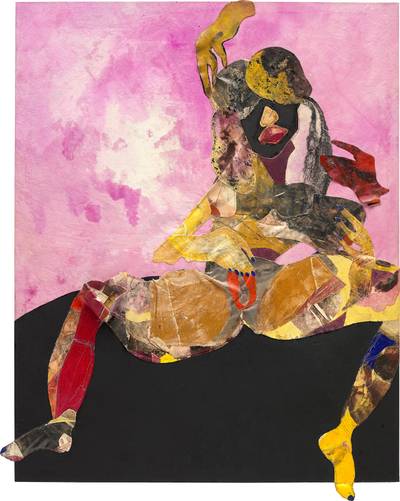
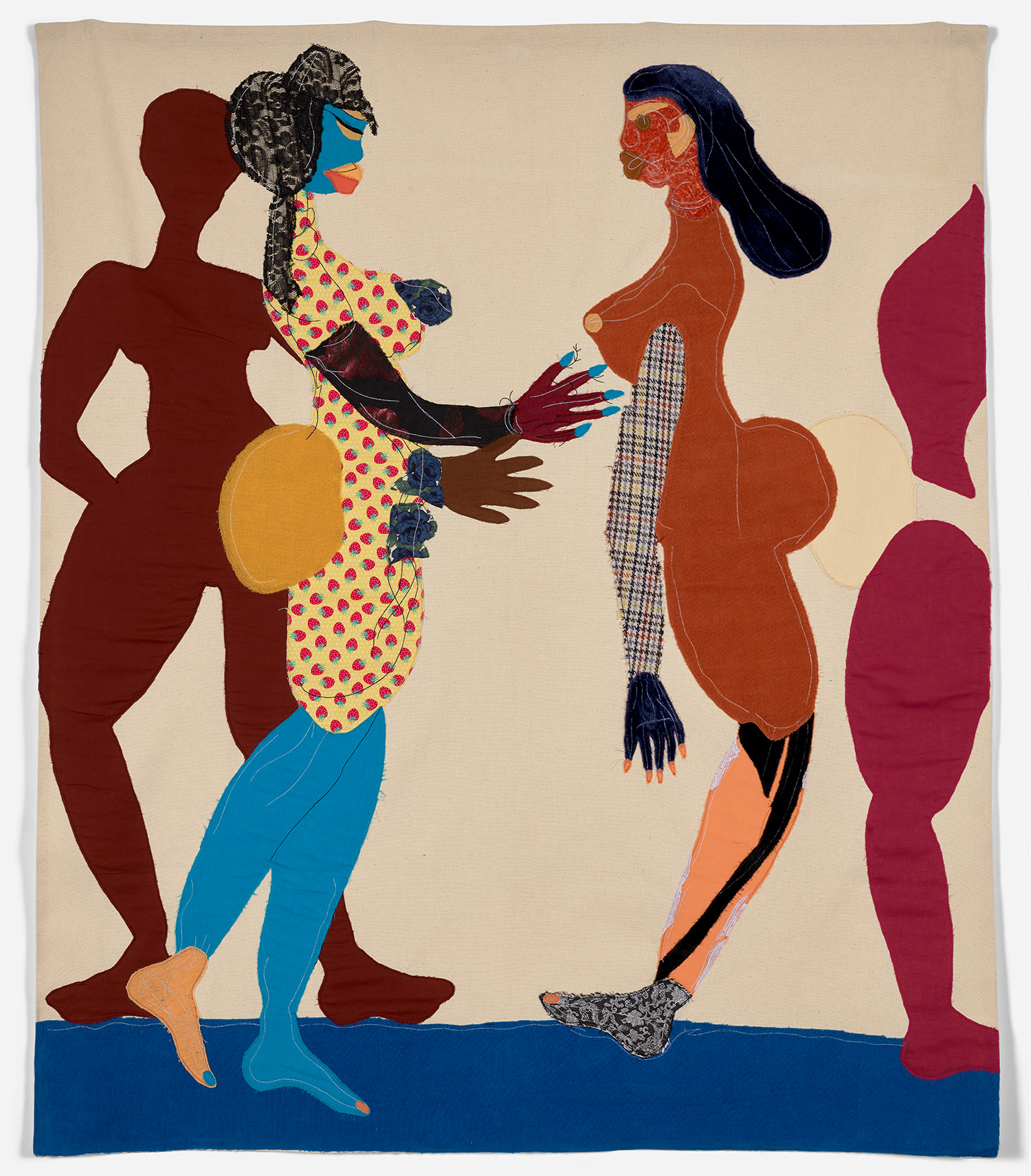
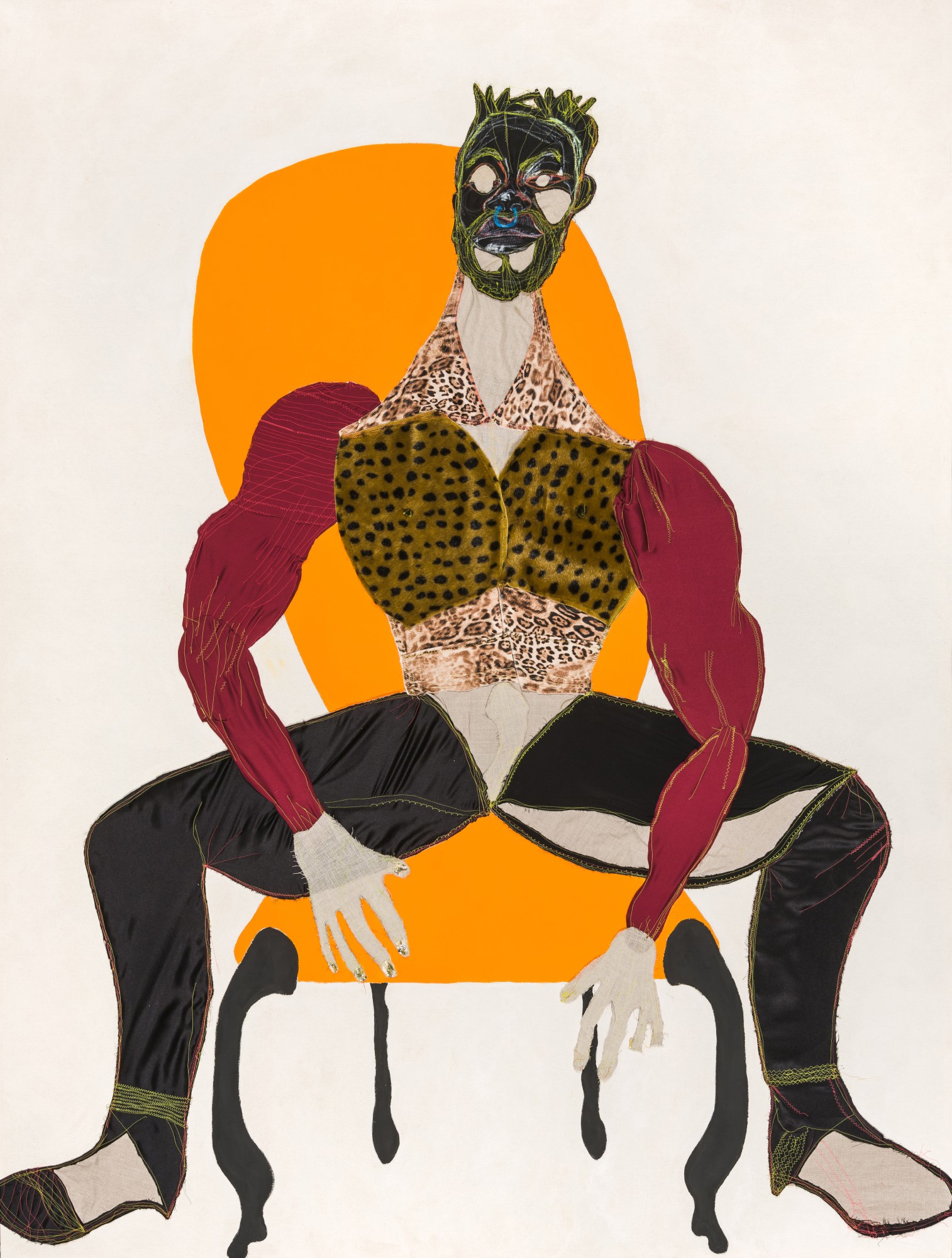
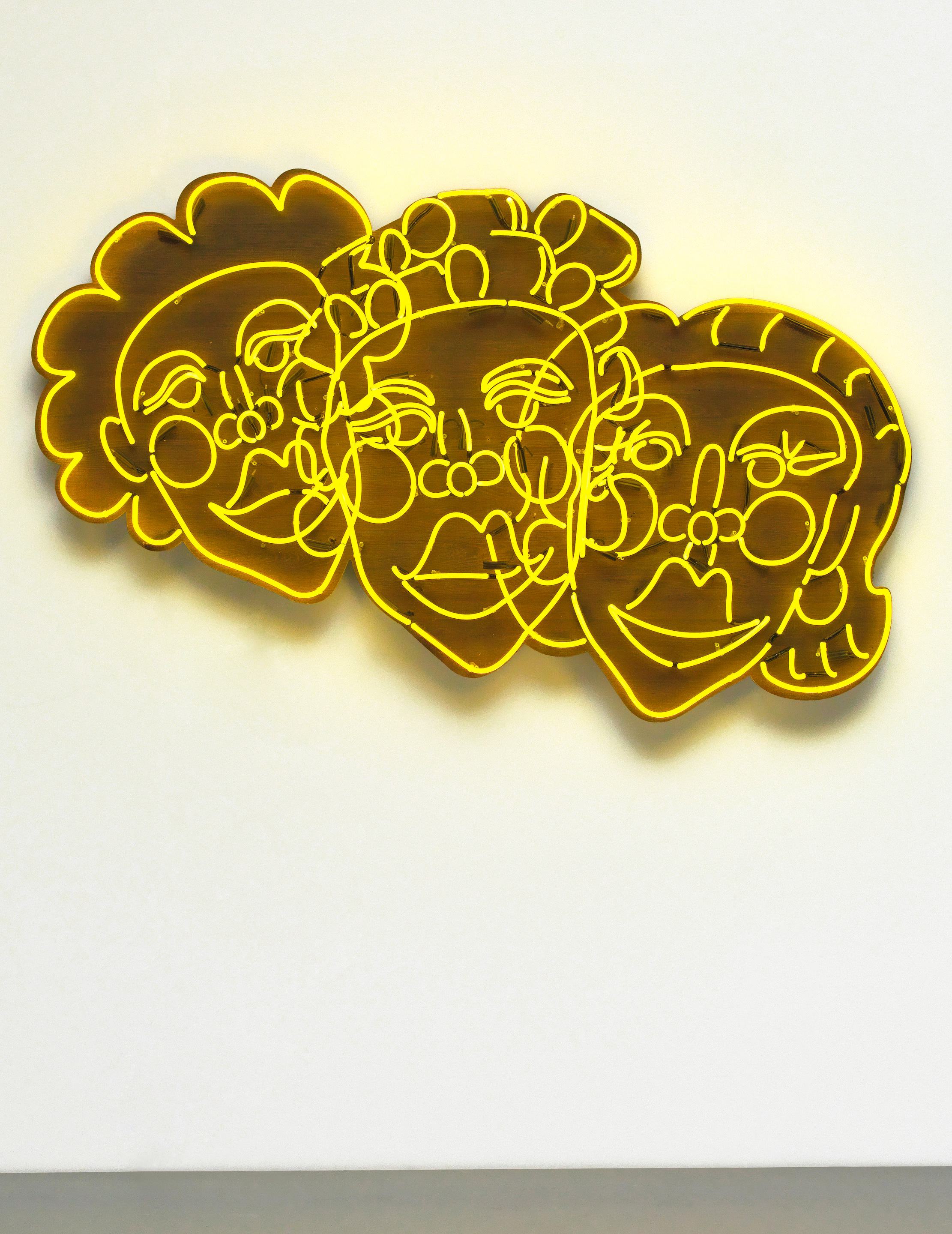
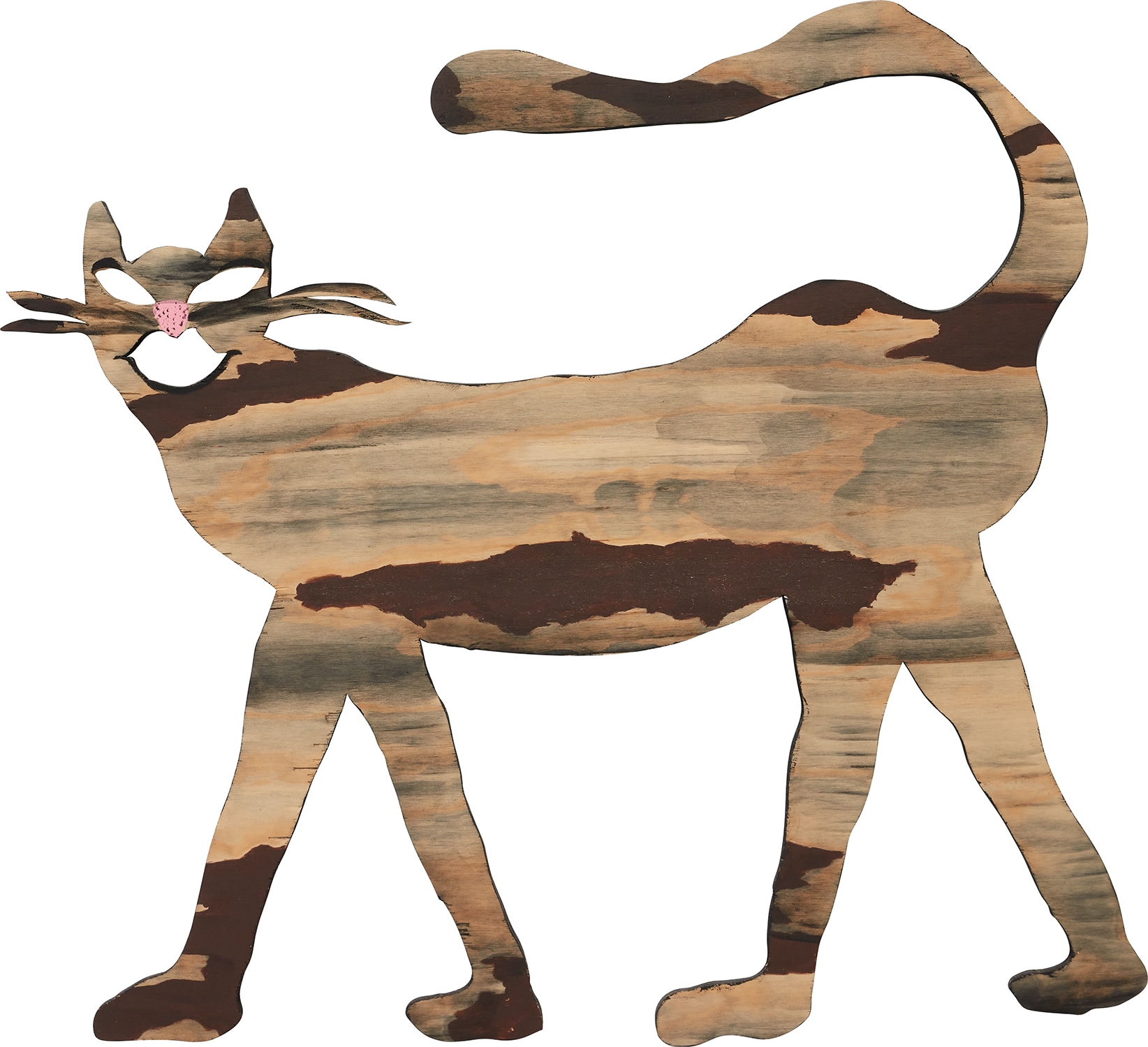
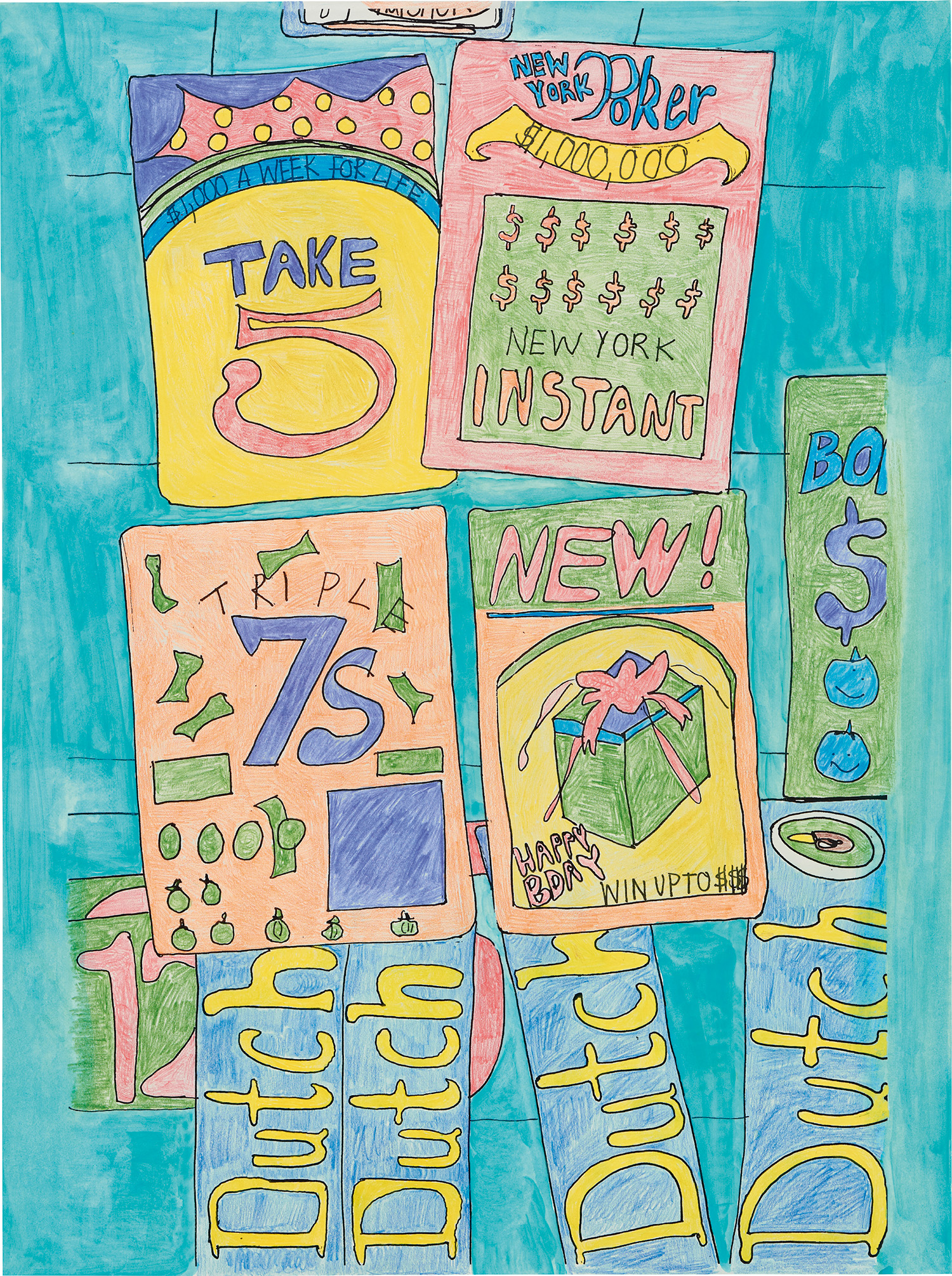
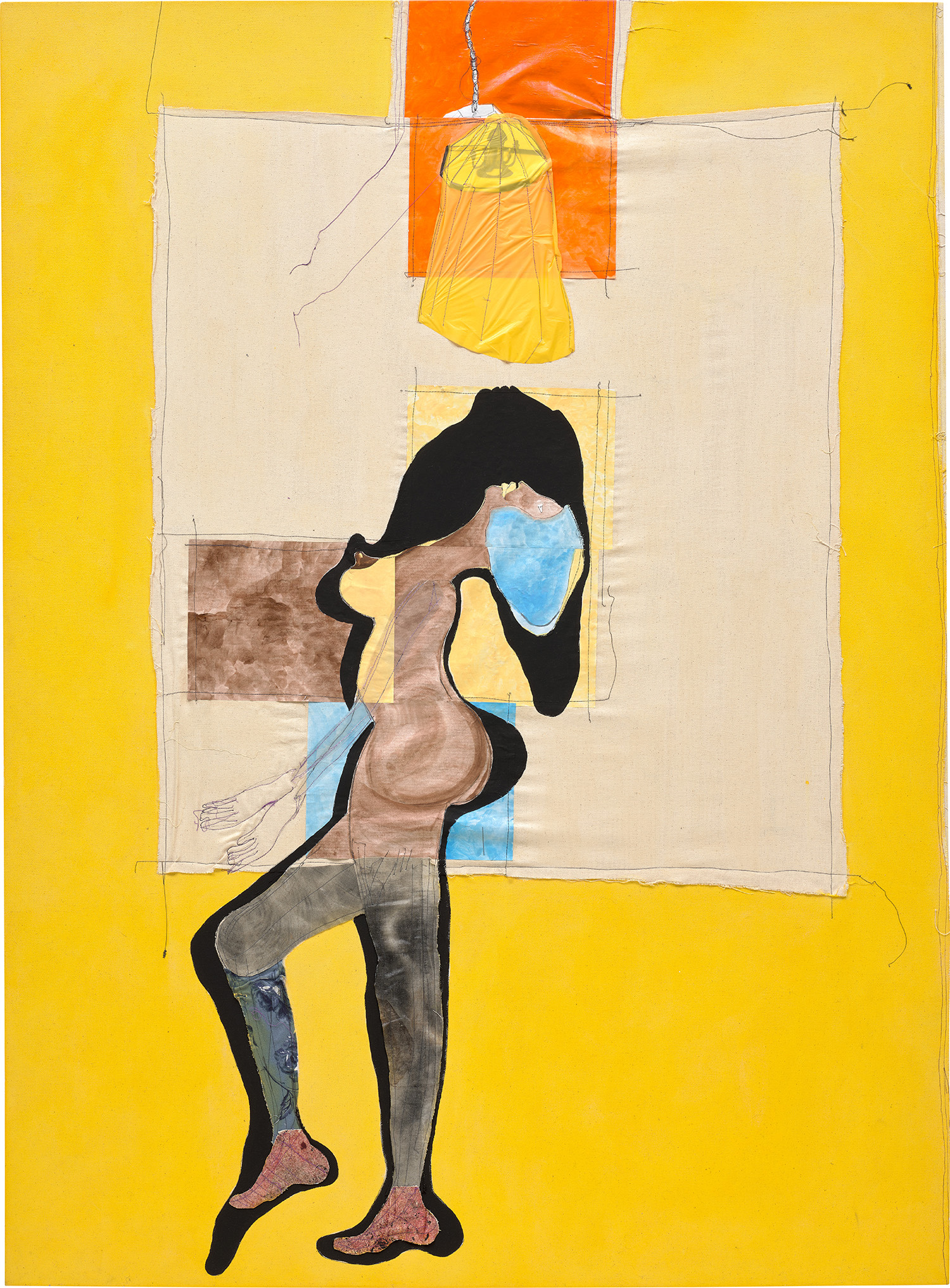
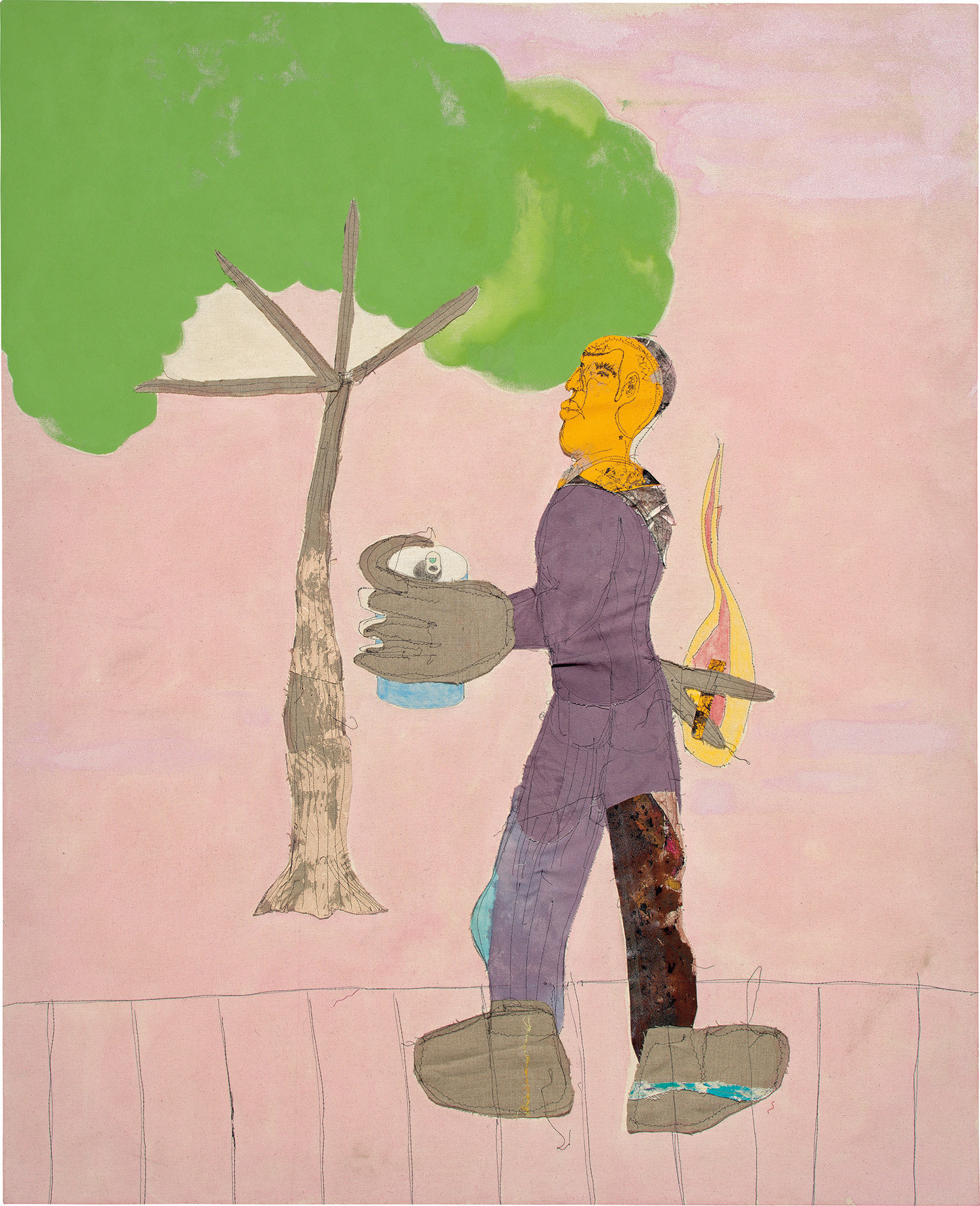
In the years since Tschabalala Self first began stitching, collaging, and painting her way into the contemporary art conversation, few artists have generated such sustained and deserved momentum. Her 2023 exhibition at Pilar Corrias in London confirmed what many collectors and curators had long understood: Self is among the most vital painters working today, an artist whose formal invention and conceptual clarity reinforce each other in ways that feel genuinely rare. Institutions from New York to Basel have taken note, and the broader culture has followed, recognizing in her work something urgent and something joyful at once. Self was born in New York in 1990 and grew up in Harlem, an upbringing that would prove foundational not merely as biography but as visual language. The neighborhood, its textures, its storefronts, its patterns and rhythms, saturates her canvases in ways both literal and felt. She went on to study at the School of Visual Arts and then at Yale School of Art, where she received her MFA. Yale sharpened her thinking without flattening her instincts, and by the time she left, she had already begun developing the distinctive material vocabulary that would define her practice: fabric, thread, Flashe paint, found paper, acrylic, and the bodies of Black women rendered with a tenderness and a boldness that the art world had rarely seen combined in quite this way. The breakthrough arrived swiftly and decisively. Self's early exhibitions at Pilar Corrias and Thierry Goldberg Gallery introduced audiences to a body of work built around collage as both method and metaphor. Her figures are literally assembled, their forms constructed from pieces of printed fabric and canvas that are sewn together and then painted over, so that the seams remain visible, the construction never hidden. This refusal to conceal the process is not incidental. It speaks directly to her subject: the way Black female identity is itself constructed, negotiated, and often imposed from outside. By making that construction visible on the surface of the work, Self invites the viewer to think about who gets to determine how a body is read, and who gets to reclaim that right. Among her most celebrated works, Aqua Babe from 2014 announces itself immediately as a statement of intent. Plastic, beads, acrylic, glitter, canvas, and printed paper collage combine on Masonite to produce a figure that is simultaneously exuberant and monumental. The surface shimmers and crowds the eye with incident, yet the figure holds its ground with complete authority. Lilith and its Chinese titled counterpart Lilith from 2015 bring a mythological weight to bear on the central figure, oil and acrylic and Flashe layered with fabric and dry leaf on canvas and linen, producing surfaces of extraordinary richness. The choice of the Lilith myth, with its long history of demonizing the autonomous female body, and Self's decision to reclaim that name for a figure of unambiguous power and beauty, is characteristic of her approach: deeply considered, historically aware, and ultimately celebratory. Bush from 2016 and Jamb Gams from the same year extend this sensibility through fabric collage, thread, and paint, while Chandelier 2 from 2017 and Trees from the same year show how confidently she moves between figuration and the more abstract pleasures of pattern, color, and material density. Bodega Cat with Stripes from 2018 introduces an affectionate wit alongside the formal ambition, grounding her universe in the particular textures of New York life. Self's practice has been recognized by some of the most important institutions in contemporary art. The Whitney Museum of American Art and the ICA Boston have both presented her work, and she has exhibited internationally at venues including Parasol unit foundation for contemporary art in London. These are not merely honorary appearances. Her work holds its own in institutional contexts precisely because it operates on multiple registers simultaneously, offering immediate visual pleasure alongside sustained conceptual engagement. Lifted Lounge from 2021 demonstrates how her work has continued to evolve, the compositions growing more complex and more spacious, the figures more assured in the environments they inhabit, the overall sense of a fully realized world becoming ever stronger. For collectors, Self's work represents an opportunity that is both financially and intellectually compelling. Works from her early period, particularly those from 2014 through 2016, have become increasingly sought after as her reputation has solidified, and pieces from that formative window carry the particular charge of watching a major artist find their voice. Her mixed media works on canvas and Masonite reward close looking in ways that photographs cannot fully convey, the stitched seams and layered surfaces revealing more with each encounter. Collectors who have lived with her work consistently report that it deepens over time, the initial impact of color and form giving way to a more intimate relationship with the figures themselves, who begin to feel less like subjects and more like presences. Within the broader landscape of contemporary art, Self occupies a position that is clearly her own while also being in genuine dialogue with a rich tradition. Her engagement with the Black female body connects her to a lineage that includes Faith Ringgold, whose own use of fabric and narrative transformed what painting could be, and to the figurative boldness of Kerry James Marshall, whose insistence on the dignity and beauty of Black subjects helped reshape what representation means in American art. She is also in conversation with younger peers who share her commitment to materiality and to expanding whose image gets made monumental. But her synthesis is distinctly hers: the Harlem upbringing, the Yale rigor, the particular warmth and power of the figures she creates. What makes Tschabalala Self matter so profoundly at this moment is not simply that she is talented, though she is extraordinarily so. It is that her work performs something real in the world. Her figures occupy space with a completeness and a joy that feels like an answer to a long history of erasure and distortion. To stand before one of her canvases is to encounter a vision of Black womanhood that is complex, physical, sensual, humorous, and wholly sovereign. That vision, realized through materials as particular and as carefully chosen as any poet's words, is what will ensure her work endures long past any given cultural moment. She is building something that lasts.