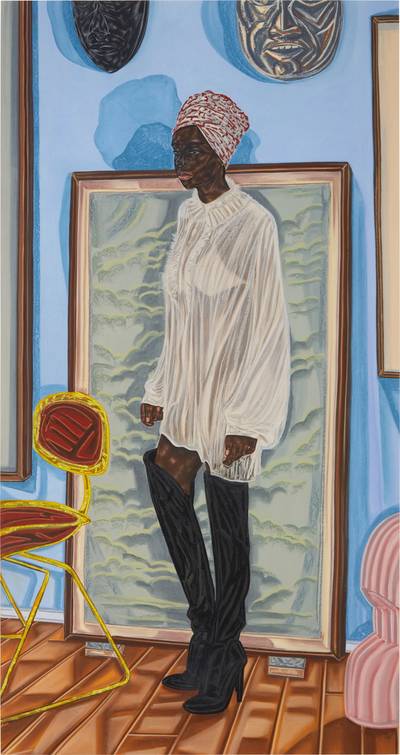
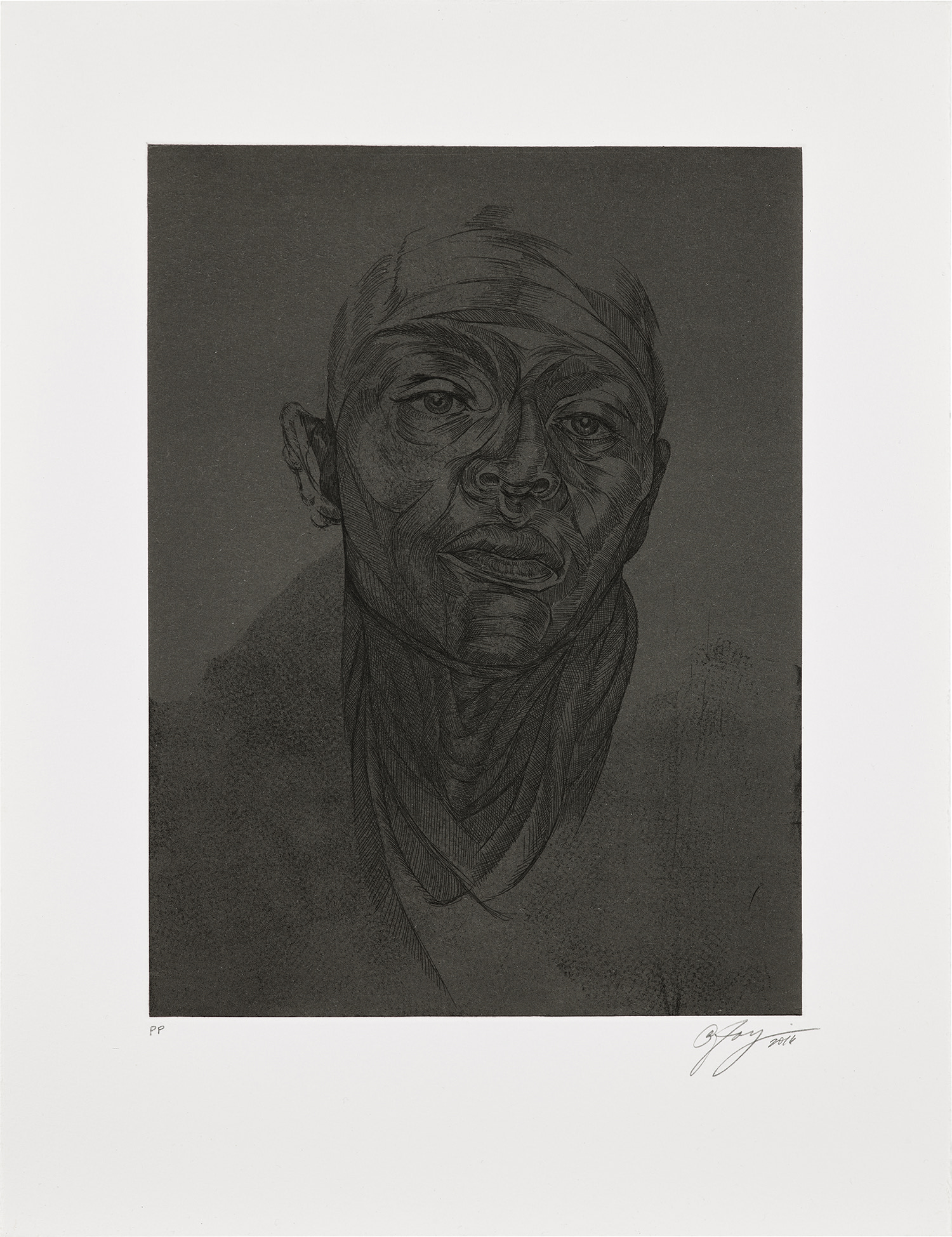
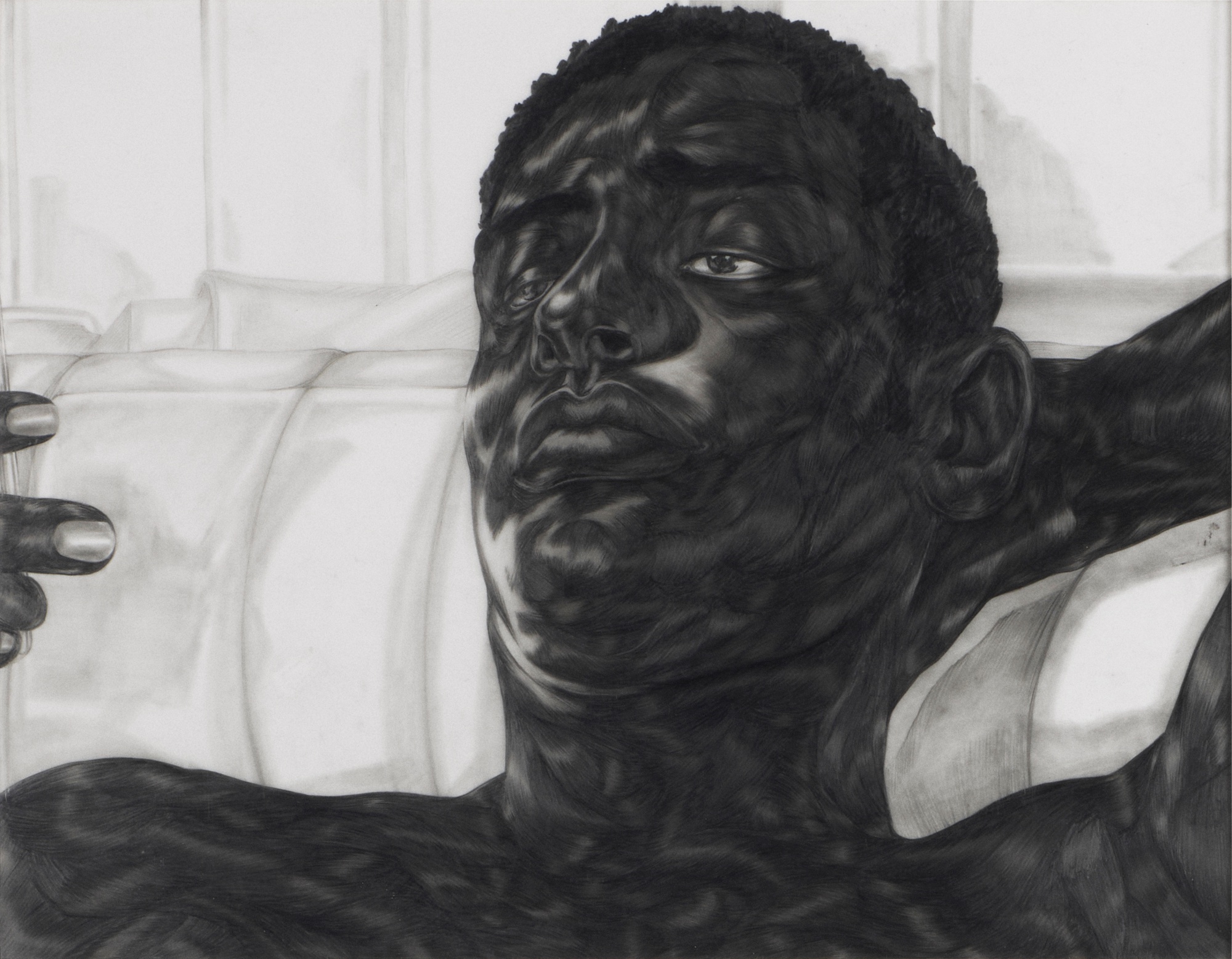
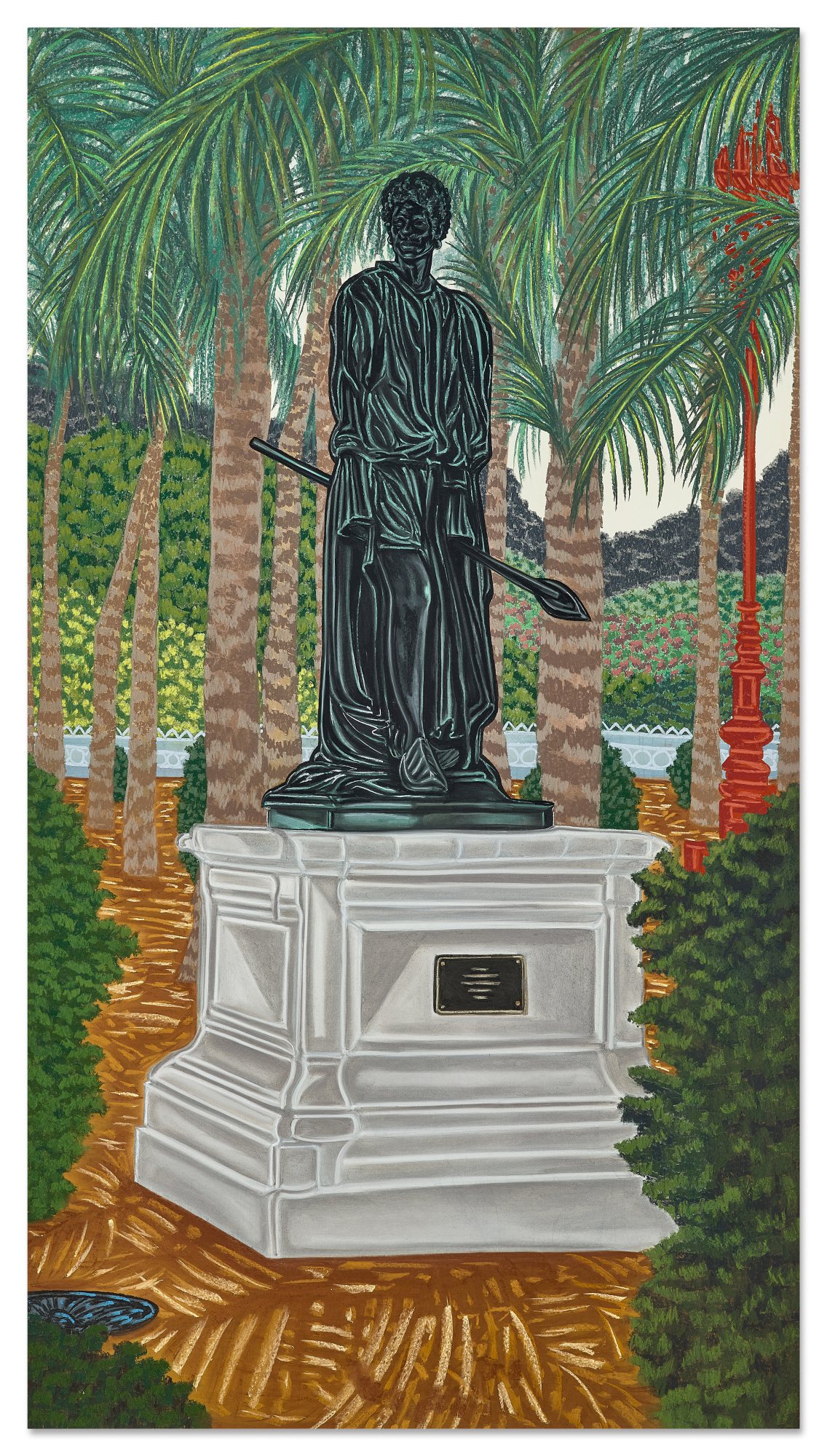
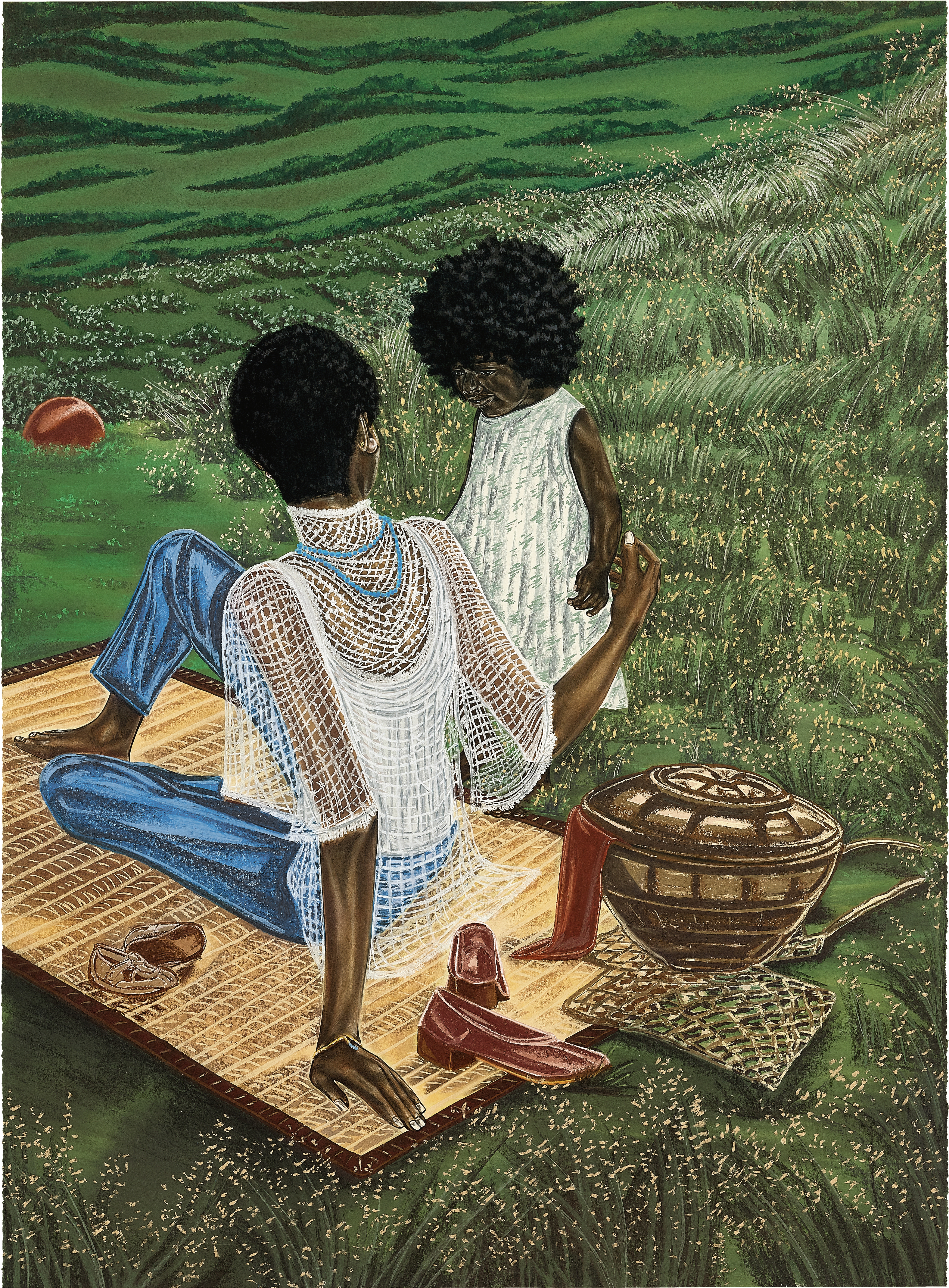
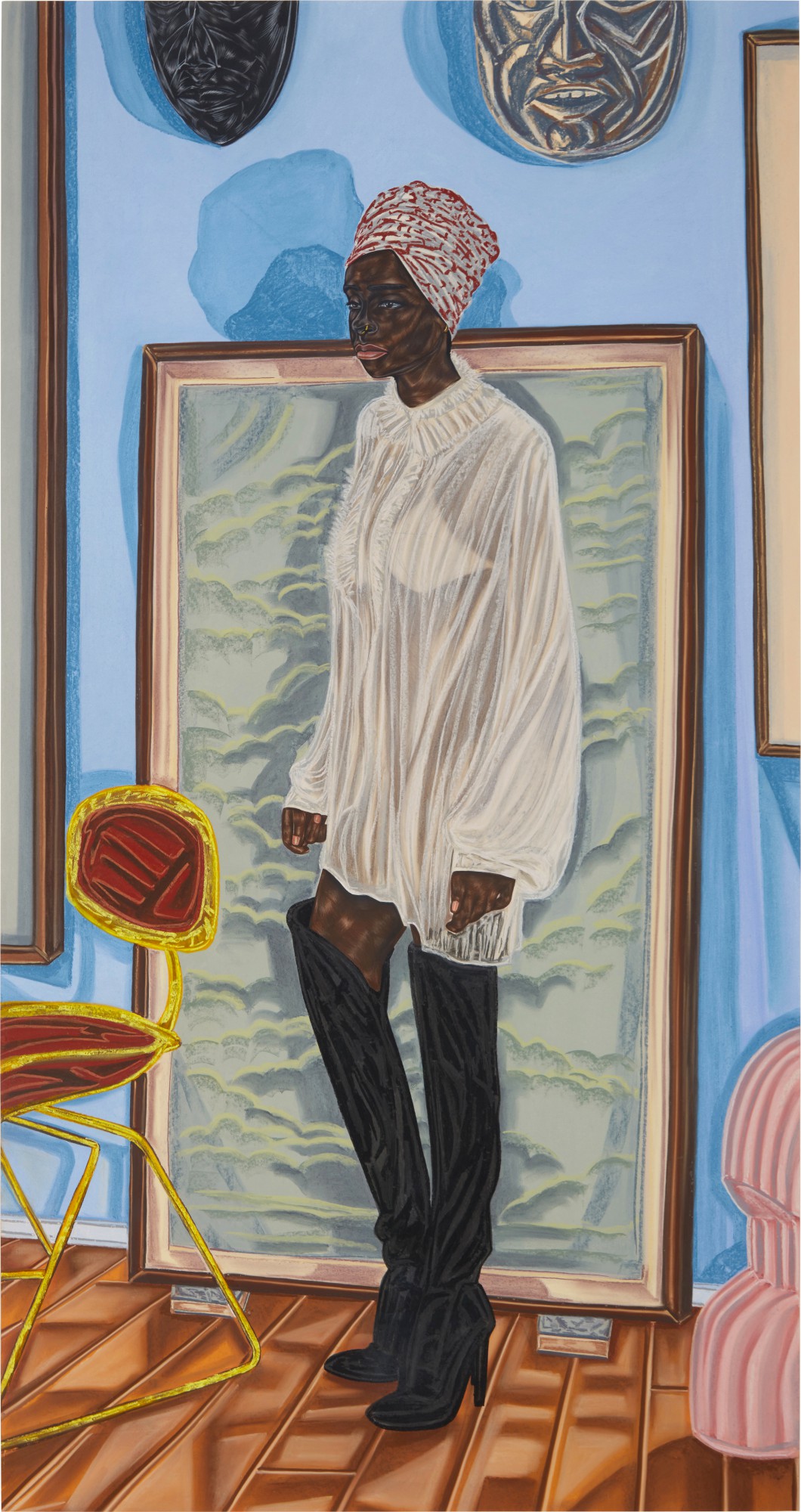
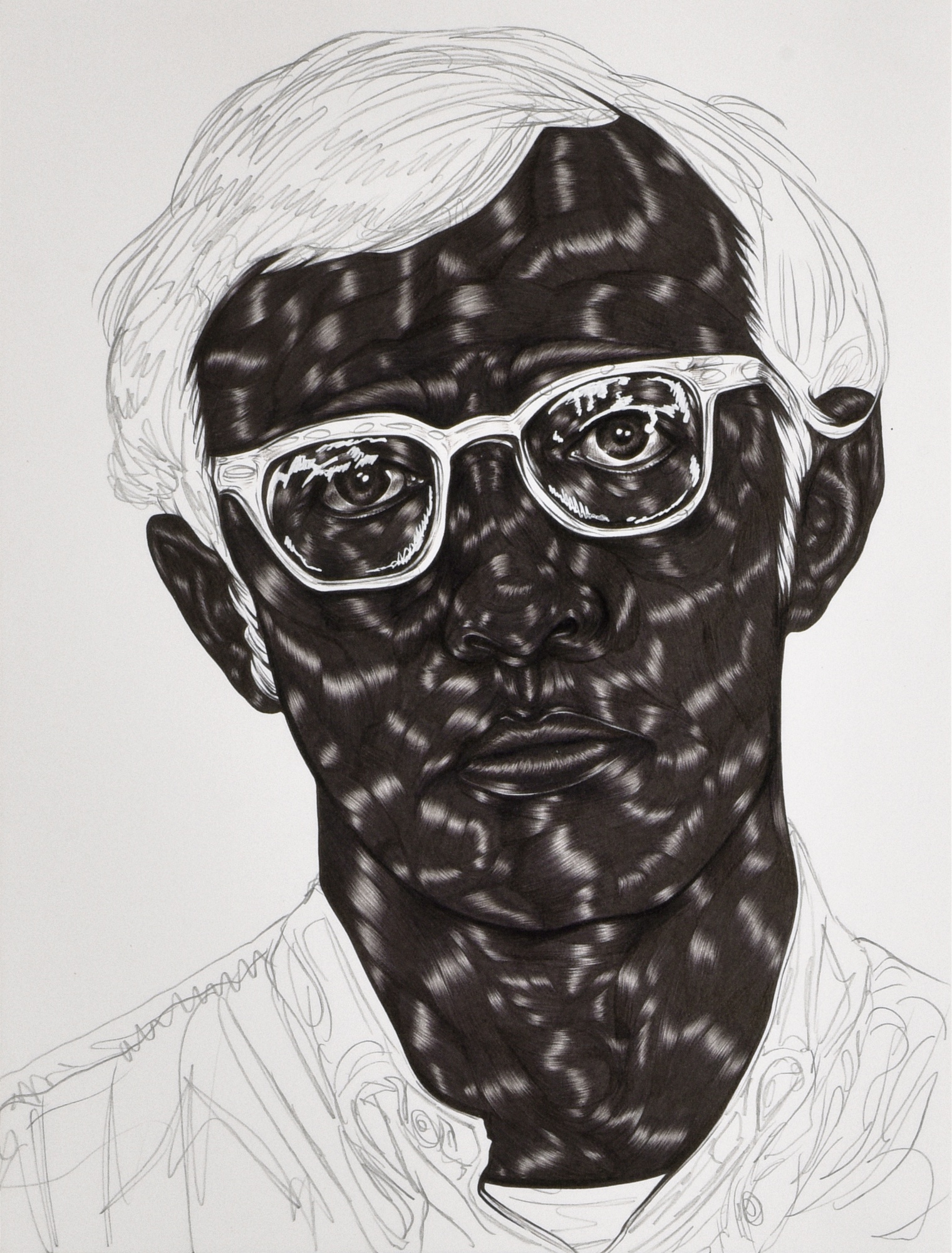
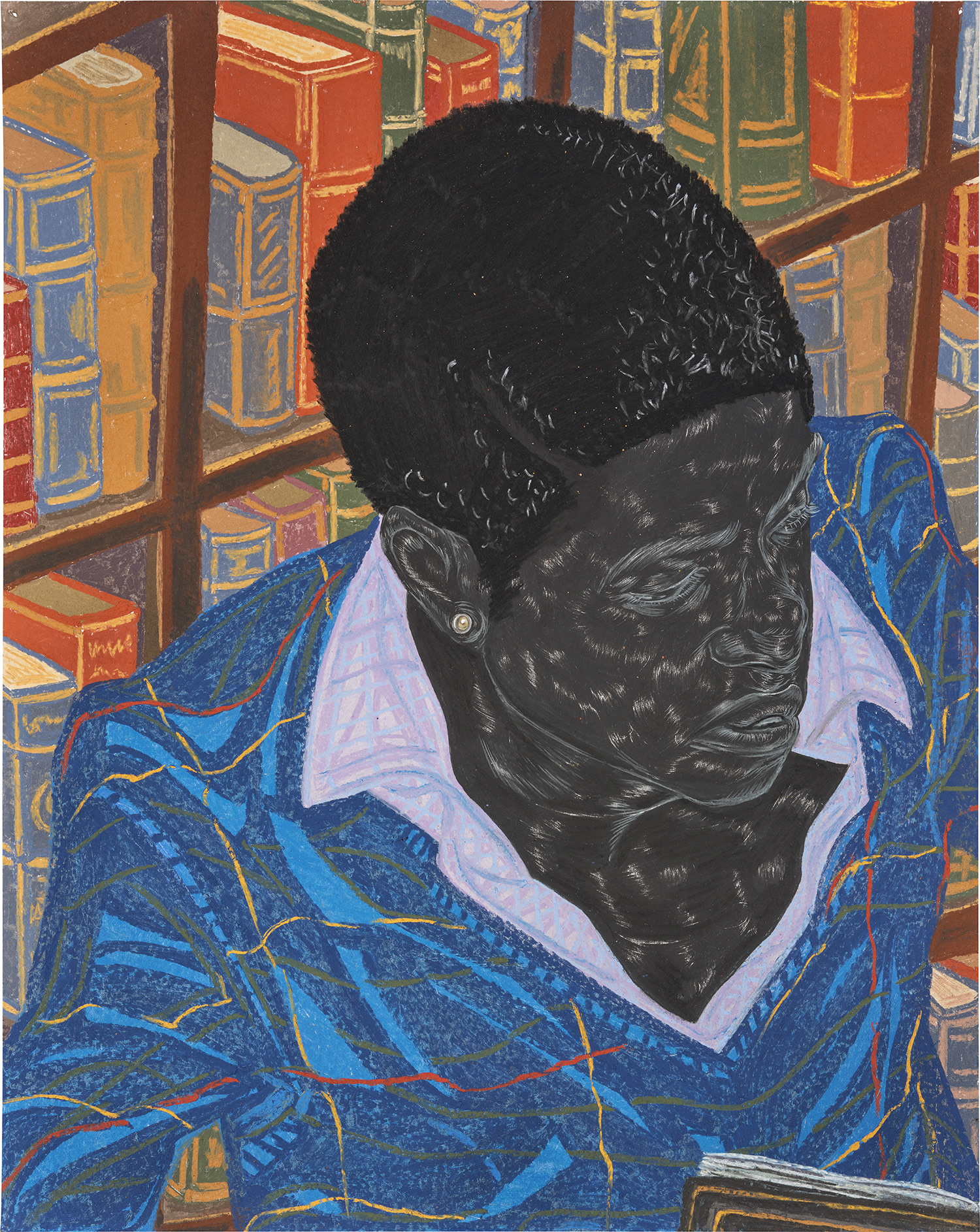
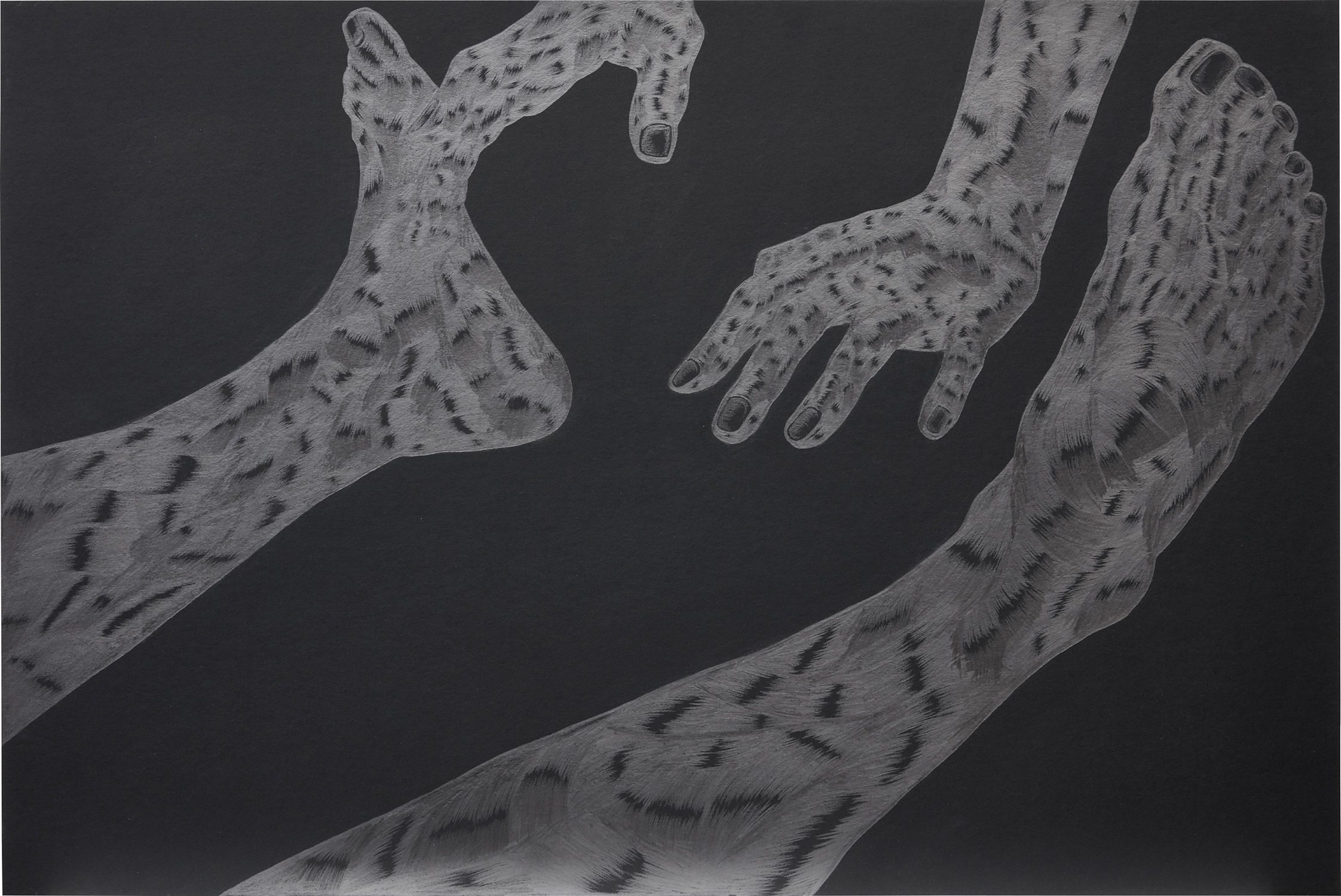
When the Whitney Museum of American Art presented Toyin Ojih Odutola's solo exhibition in 2017, New York stopped and paid attention. The show, titled To Wander Determined, filled the Whitney's galleries with a sweeping fictional narrative set in a reimagined Nigeria, populated by aristocratic figures whose skin shimmered with an almost geological complexity. Visitors moved through the rooms as though entering a fully realized civilization that had always existed just beyond the edge of known history. It was a turning point, not only for Ojih Odutola's career, but for the broader conversation about what drawing as a medium could hold and what stories it could carry. Born in Ife, Nigeria in 1985, Ojih Odutola grew up between two worlds before settling in the United States, spending formative years in Huntsville, Alabama. That experience of navigating between cultures, between languages of identity, between the way others saw her and the way she understood herself, left a permanent imprint on her artistic sensibility. She came of age as an artist during her studies at the California College of the Arts in San Francisco, and later completed her MFA at Yale University, where she honed the obsessive, labor intensive drawing practice that would become her signature. Those years of rigorous training gave her both technical command and the conceptual ambition to use that command in genuinely radical ways. Her early work, rooted in portraiture and the representation of Black skin, announced her intentions immediately. Works from around 2010, including pieces like Masks, a multi part work rendered in ink and varnish on cut vellum, showed her fascination with surface, materiality, and the constructed nature of identity. She was not simply depicting people. She was building a visual language in which Black skin became a landscape, a terrain of pencil marks and layered strokes that refused to be read as neutral or transparent. The skin in her drawings carries marks, histories, and textures that insist on presence and specificity. By the early 2010s, works like Lts Iv from 2014, made with charcoal, pastel, and marker, were circulating in important collections and gallery contexts, signaling that a major artistic intelligence was fully at work. The middle period of her career, roughly 2014 to 2018, represents one of the most fertile stretches in contemporary drawing. Works from The Treatment series, including The Treatment 28 and The Treatment 31, demonstrate her mastery of pen ink, gel ink, graphite, and pencil as tools for building almost tactile surfaces. Each work in the series required extraordinary patience, the accumulation of thousands of marks that together produce figures of astonishing depth and presence. Through Line from 2017 stands among the most celebrated works of this period, its composition and surface achieving a kind of visual density that rewards long, close looking. In 2018, Distinguished Relation at Ejogu Gardens, a pastel, charcoal, and pencil work from her narrative Barbican series, showed how completely she had fused her technical gifts with world building ambition. That Barbican exhibition, A Countervailing Theory presented in London in 2019, confirmed her international stature and introduced her layered fictional universe to European audiences in full. What makes Ojih Odutola's work so compelling for collectors is precisely the combination of qualities that rarely coexist: extreme technical rigor paired with genuine imaginative freedom, intimate scale paired with epic narrative reach, and a practice rooted in drawing, one of the oldest and most humble mediums, that arrives at results of overwhelming richness. Her works on paper, including editions such as Birmingham (center), a lithograph printed with gold leaf on Somerset Satin paper, and her etchings and relief prints on Rives BFK paper, make her practice accessible at different levels of the market while maintaining the conceptual integrity that defines everything she produces. More recent works such as Streets Ain't Ready from 2020, rendered in ink and graphite on Dura Lar, show an artist continuing to push the boundaries of her materials while engaging directly with contemporary cultural experience. Within the broader landscape of contemporary art, Ojih Odutola occupies a distinct and important position. Her work enters into dialogue with artists who have used portraiture and figuration to interrogate Black identity and representation, a lineage that includes Kerry James Marshall, Lynette Yiadom Boakye, and Ellen Gallagher. Like Yiadom Boakye, she creates figures who exist outside documentary history, insisting on the imaginative life of Black subjectivity rather than its social legibility alone. Like Marshall, she works with extraordinary formal discipline in service of deeply humanist and political ends. Yet her specific devotion to drawing as a primary medium, and her commitment to building entirely fictional worlds with their own internal logic, gives her practice a quality all its own. She is not illustrating existing stories. She is the author, the world builder, and the visual architect simultaneously. The collecting case for Ojih Odutola is strong across multiple dimensions. Her institutional recognition is deep and continues to grow, with major holdings in collections at the Museum of Modern Art, the Hirshhorn Museum and Sculpture Garden, and numerous significant private collections internationally. Works from her key series, particularly The Treatment works and the narrative pieces associated with her Whitney and Barbican exhibitions, represent pivotal moments in the development of one of the most distinctive practices in contemporary art. For collectors entering her work through prints and works on paper, the editions she has produced maintain the rigor and visual intelligence of her unique works while offering an entry point into a practice of lasting significance. Toyin Ojih Odutola matters today because she has expanded what a drawing can do and what a drawing can hold. In an era hungry for stories told from perspectives long excluded from the canon, she has responded not with protest or polemic alone but with the full resources of an artist's imagination: invented dynasties, fictional geographies, and figures whose inner lives feel more vivid than most things captured in photographs. Her marks on paper feel like acts of insistence, a declaration that Black life is worthy of the kind of myth making that Western art has reserved for others. That declaration, made with charcoal and pastel and infinite patience, is one of the enduring artistic contributions of our moment.