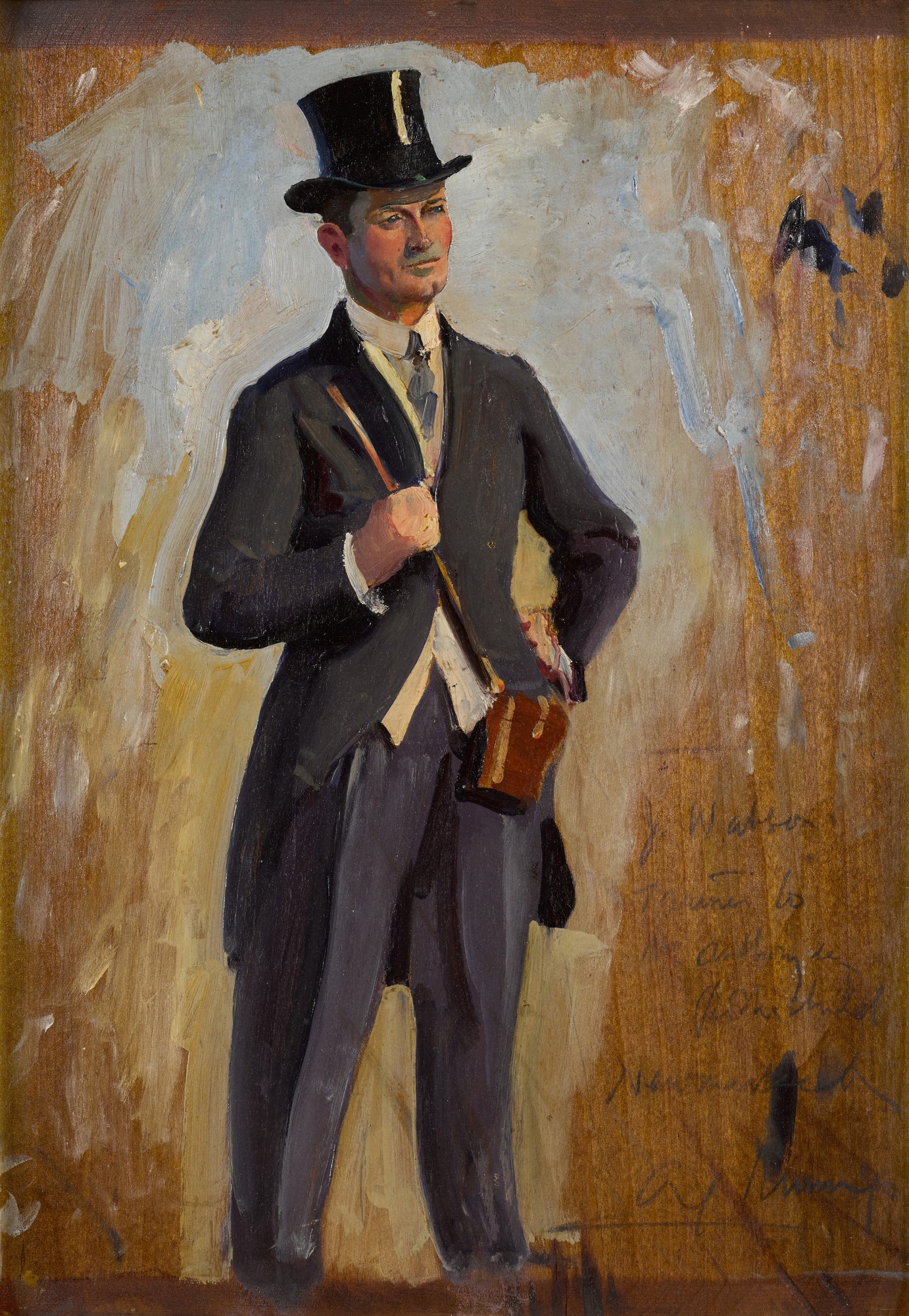
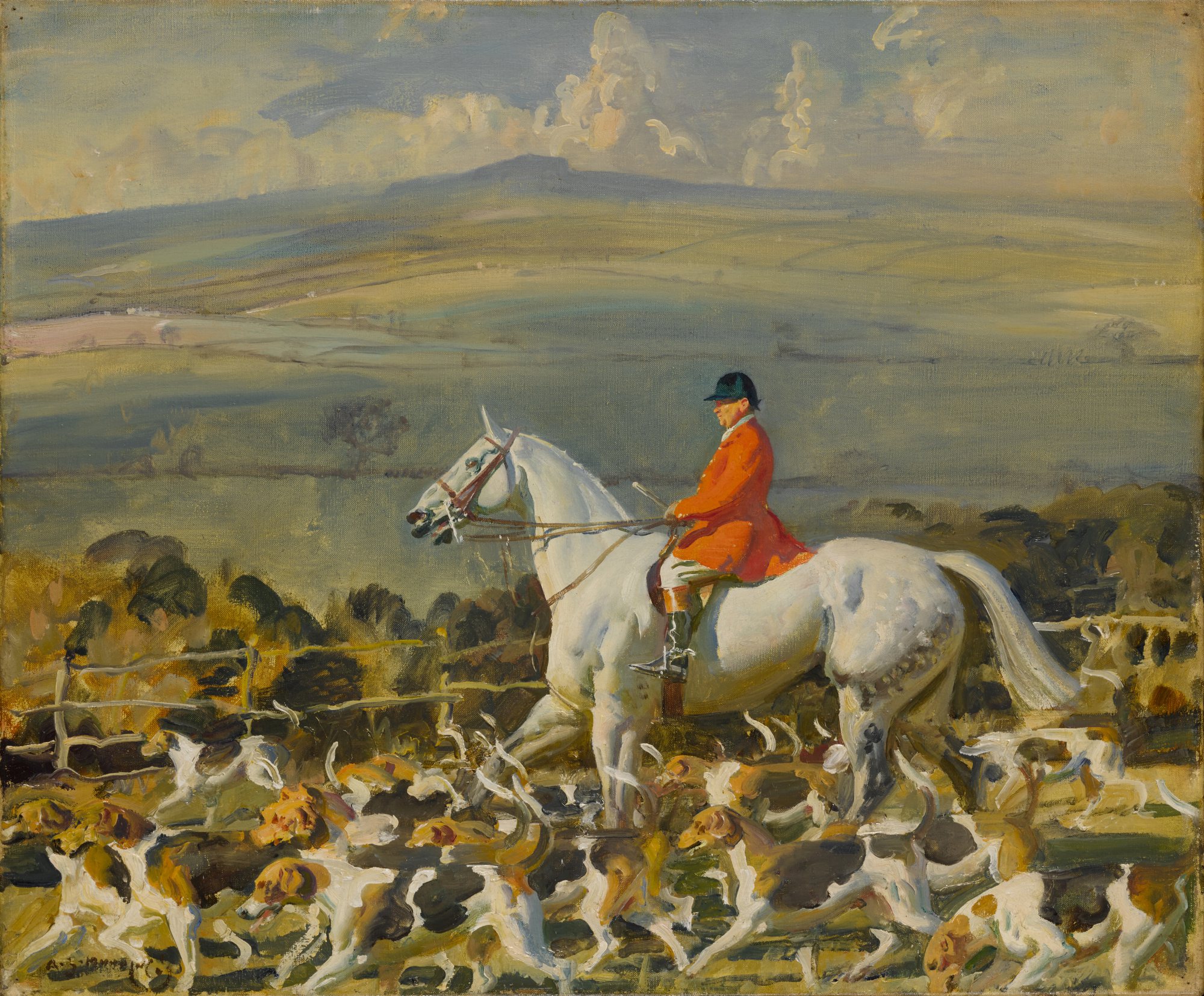
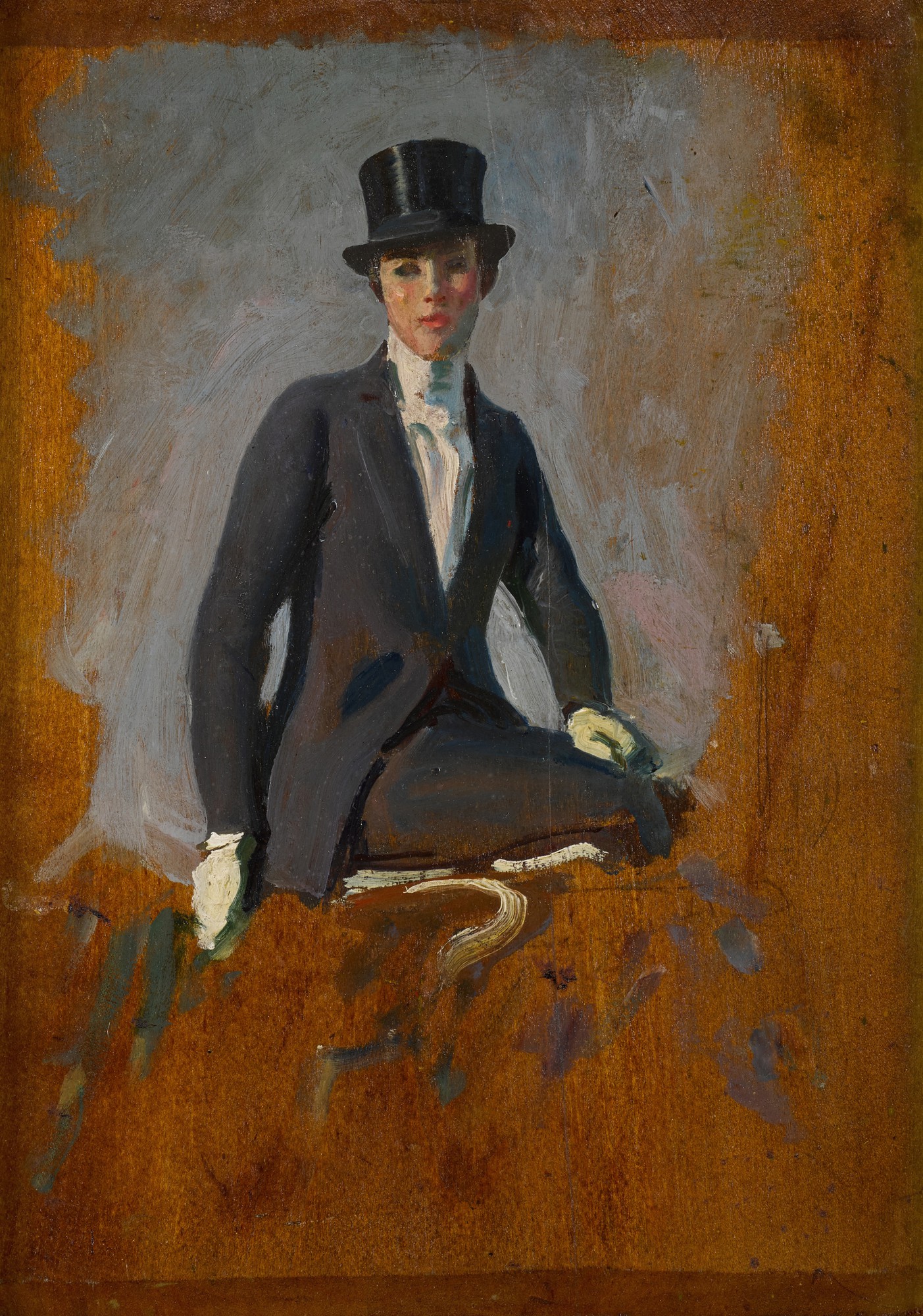
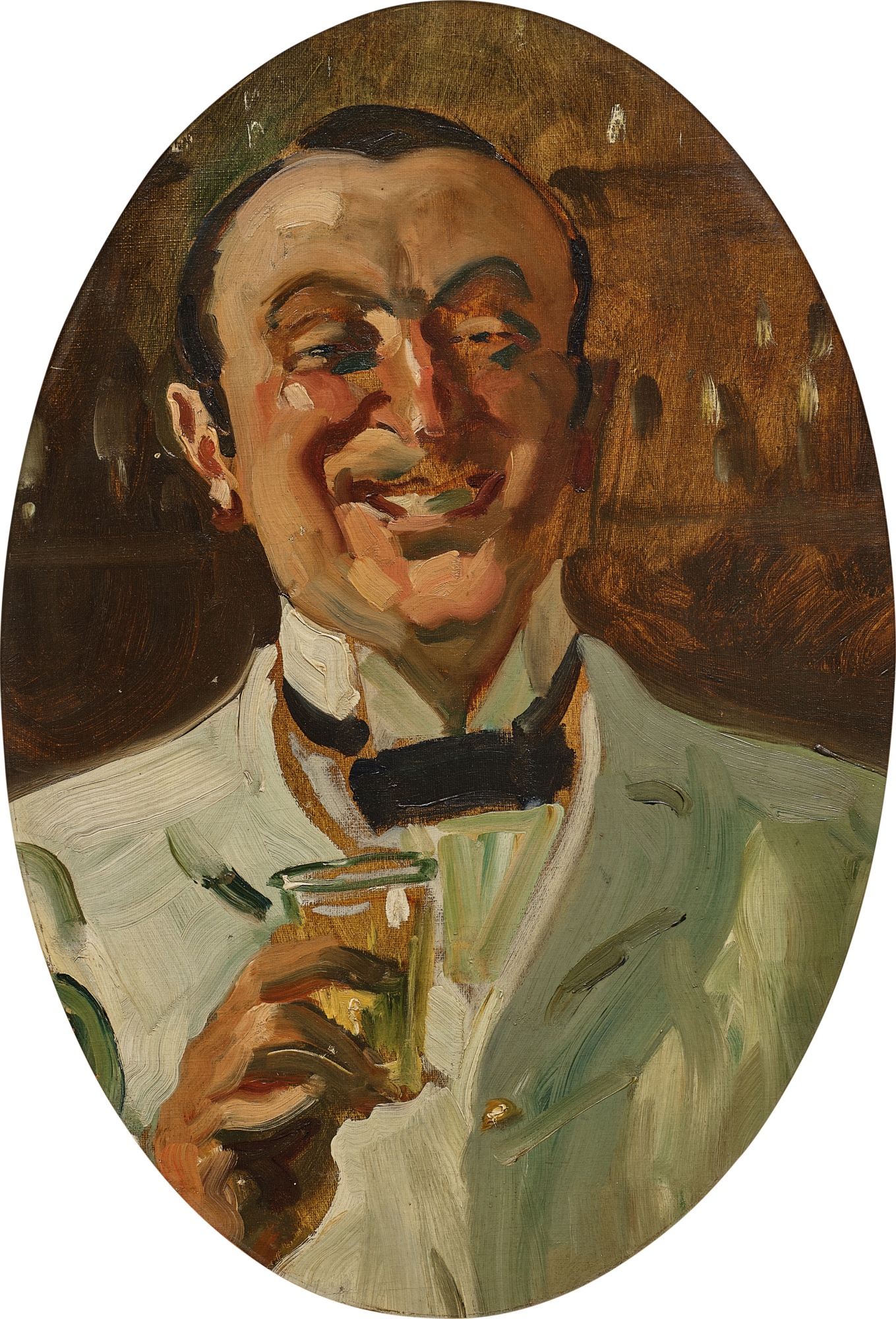
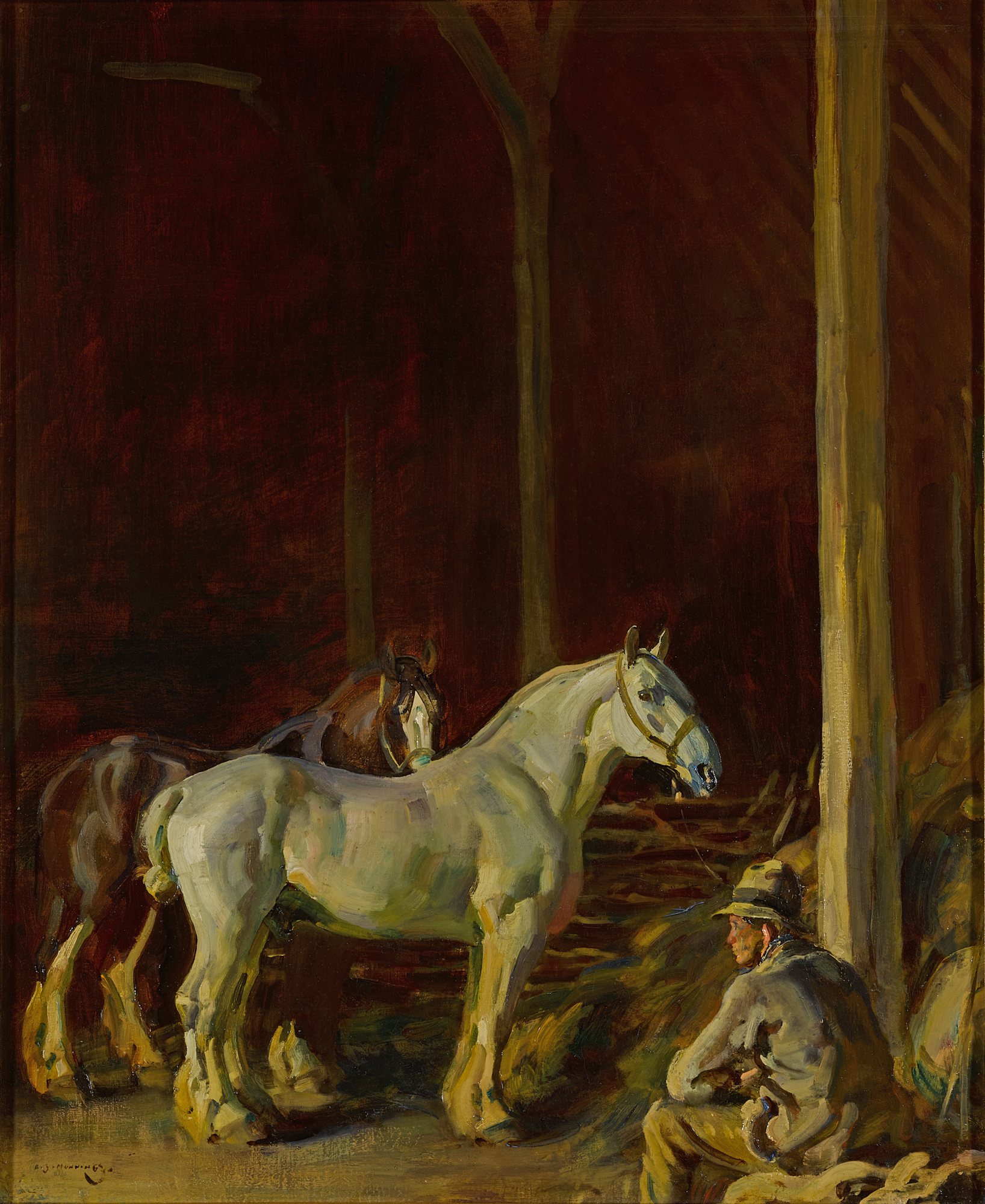
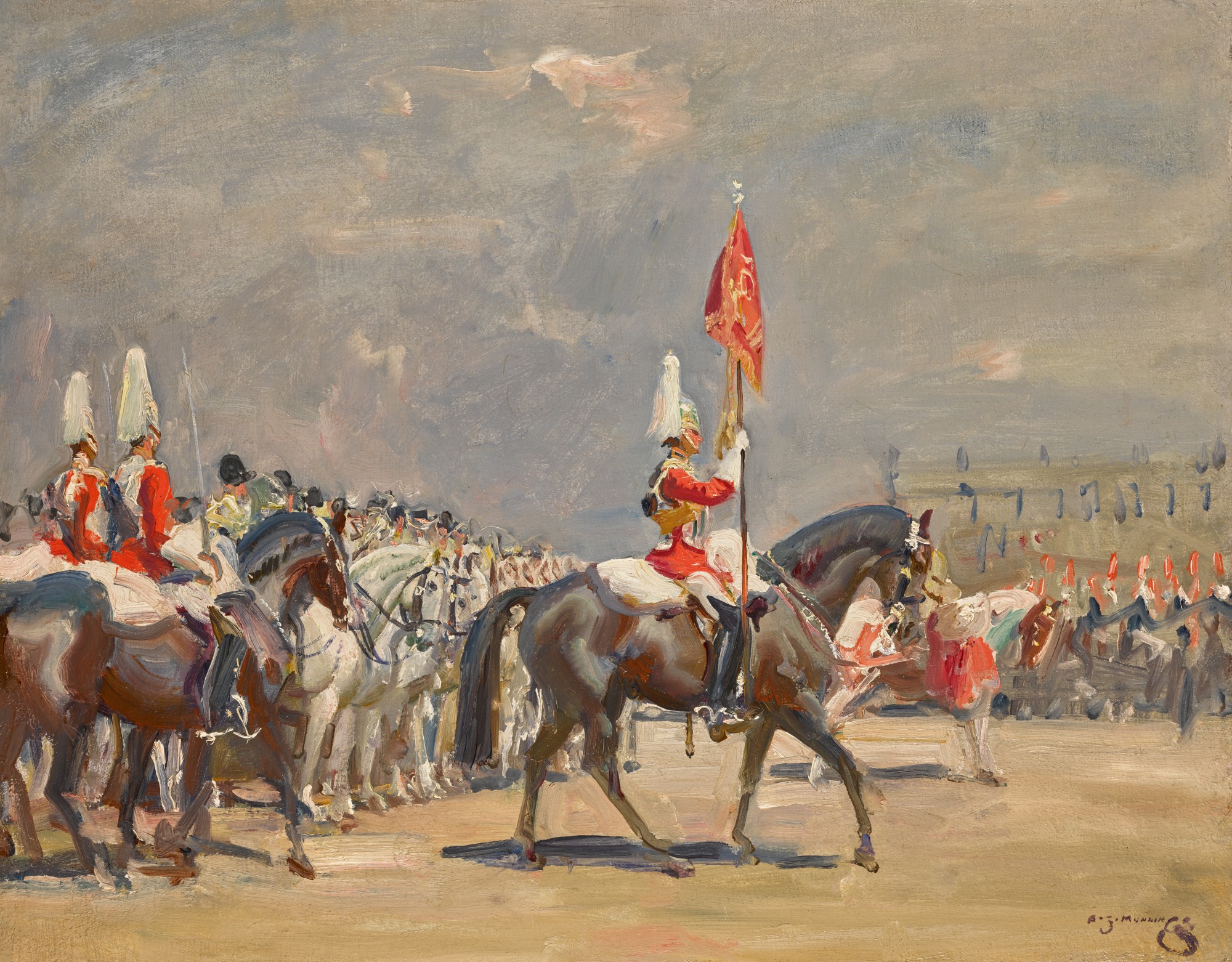
There are paintings that stop you in a gallery doorway, that hold you before you have decided to be held. Alfred Munnings painted those pictures. When a major oil by his hand last crossed the block at Sotheby's London, bidding surged well past estimate as collectors on three continents competed for the privilege of ownership. That appetite has not diminished since his death in 1959, and if anything it has grown more urgent as the qualities Munnings embodied, intimacy with the natural world, an unshakeable belief in the beauty of observed life, and a technical mastery earned through decades of sustained looking, feel increasingly rare and precious in contemporary art culture. Sir Alfred James Munnings was born in 1878 in Mendham, a village straddling the Suffolk and Norfolk border in the heart of rural East Anglia. The landscape of his childhood was one of low skies, wide fields, and working horses, and it entered him so completely that he would spend the rest of his life trying to paint it back out. His father ran a mill, and the rhythms of agricultural life, the sounds of hooves on packed earth, the particular slant of morning light on a horse's flank, were simply the texture of his earliest years. He studied at the Norwich School of Art and later at the Julian Academy in Paris, absorbing the lessons of French Impressionism while never abandoning the English pastoral tradition that ran through his blood. The loss of sight in his right eye following a childhood accident might have ended another artist's ambitions before they began. For Munnings it seems to have sharpened his remaining senses to an almost uncanny degree. His eye for tonal relationships, for the way light dissolves across a moving animal, for the fugitive quality of an afternoon in late summer, is so acute it feels physiological. He spent his early career working across the Norwich and Suffolk countryside, painting fairs, gypsies, and working horses with a loose, confident brushwork that drew immediate admiration. By the time he enlisted as a war artist during the First World War and found himself in Canada and then France documenting the mounted cavalry and the Canadian Expeditionary Force, his name was already known in serious collecting circles. The war years were transformative. Munnings painted soldiers and their horses under conditions that demanded both speed and emotional precision, and the resulting canvases have an urgency that distinguishes them from his more leisurely peacetime work. After the war he settled at Castle House in Dedham, Essex, a landscape already consecrated by Constable and one that suited Munnings perfectly. The surrounding country provided an endless supply of subjects: point to point races, hunt meets, farmers at market, trainers working their charges on the morning gallops at Newmarket. It was at Newmarket that some of his most celebrated work was done, and the racing world embraced him with an enthusiasm that was entirely mutual. He was elected a full member of the Royal Academy in 1919 and was knighted in 1944, the same year he became its President, a post he held until 1949. Among the works available to collectors on The Collection, the range of Munnings's ambitions becomes immediately apparent. Study of J. Watson, trainer to Mr. Anthony de Rothschild is a work that rewards close attention: a portrait of a man whose entire life is written into his posture and his relationship to the animal beside him, painted with the directness and lack of sentimentality that separates Munnings from his more decorative contemporaries. Edwin Short of the Bramham Moor Hounds is equally authoritative, a figure study that belongs to the great tradition of English sporting portraiture running from Stubbs through Ben Marshall and John Ferneley. A Sketch of Miss Brady demonstrates the other register of his talent, something looser and more intimate, a study that feels caught rather than constructed. The New Standard, Presentation of Standards 1927 is a work of considerable ceremonial ambition, capturing a public moment with the compositional confidence of a painter who had long since mastered the challenge of figures in outdoor light. The Barn shows yet another facet: his sensitivity to vernacular architecture and the quiet drama of rural interiors. For collectors approaching Munnings for the first time, the range of available formats and scales is genuinely useful. He worked fluently in oil on panel as well as on canvas, and his smaller studies, often completed in a single sitting on location, can carry as much energy and conviction as his large exhibition pieces. The oval format of Captain W.J. Shaughnessy as George the Barman, oil on canvas laid down on board, is a reminder that Munnings was entirely comfortable with the conventions of formal portraiture while always finding ways to animate them from within. Condition and provenance are the primary considerations in this market, as with any artist whose work has been in active circulation for over a century. Major pieces with clean auction histories and institutional exhibition records command the strongest premiums, but works on paper and smaller oil sketches represent compelling entry points for collectors building a considered collection. Munnings sits within a tradition that includes George Stubbs, whose Anatomy of the Horse established the intellectual framework for all serious equestrian painting in Britain, and John Constable, whose treatment of Suffolk light is the closest English precedent for Munnings's atmospheric landscape passages. Among his contemporaries, the American sporting painter Frederic Remington offers an interesting transatlantic parallel, another artist for whom the horse was both subject and symbol of a vanishing way of life. Collectors who admire Munnings frequently find themselves drawn also to Lionel Edwards, whose hunting scenes share something of the same spatial clarity, and to the earlier Ben Marshall, whose portraiture of racing figures anticipates Munnings's own in its combination of psychological directness and technical exactitude. His legacy is secured not only by the paintings themselves but by Castle House in Dedham, now the Munnings Art Museum, which holds the most comprehensive collection of his work and continues to draw visitors who want to understand him in the context of the life he made for himself. That life was not without controversy. His famous speech at the Royal Academy dinner in 1949, broadcast on BBC radio, in which he attacked Picasso and the modern movement, made him famous in circles that had not previously followed his career, and that notoriety has somewhat obscured the genuine seriousness of his artistic project. What is left, when the noise dies down, is the paintings themselves: luminous, alive, and rooted in a vision of England and of horses that no one before or since has rendered with comparable authority and love.