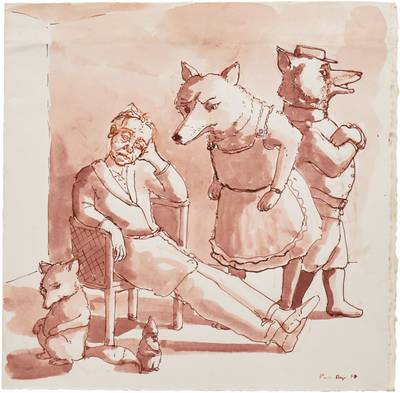
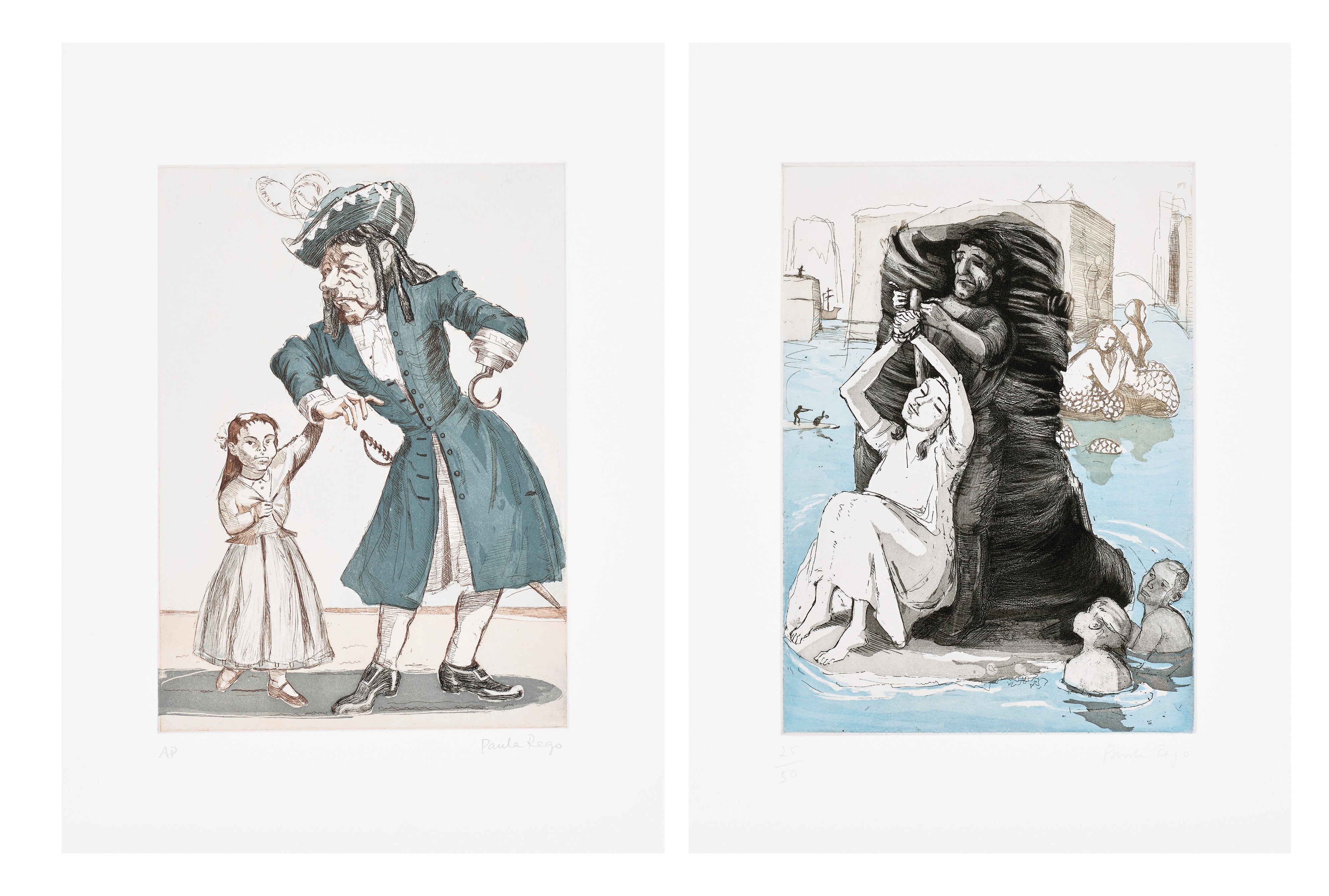
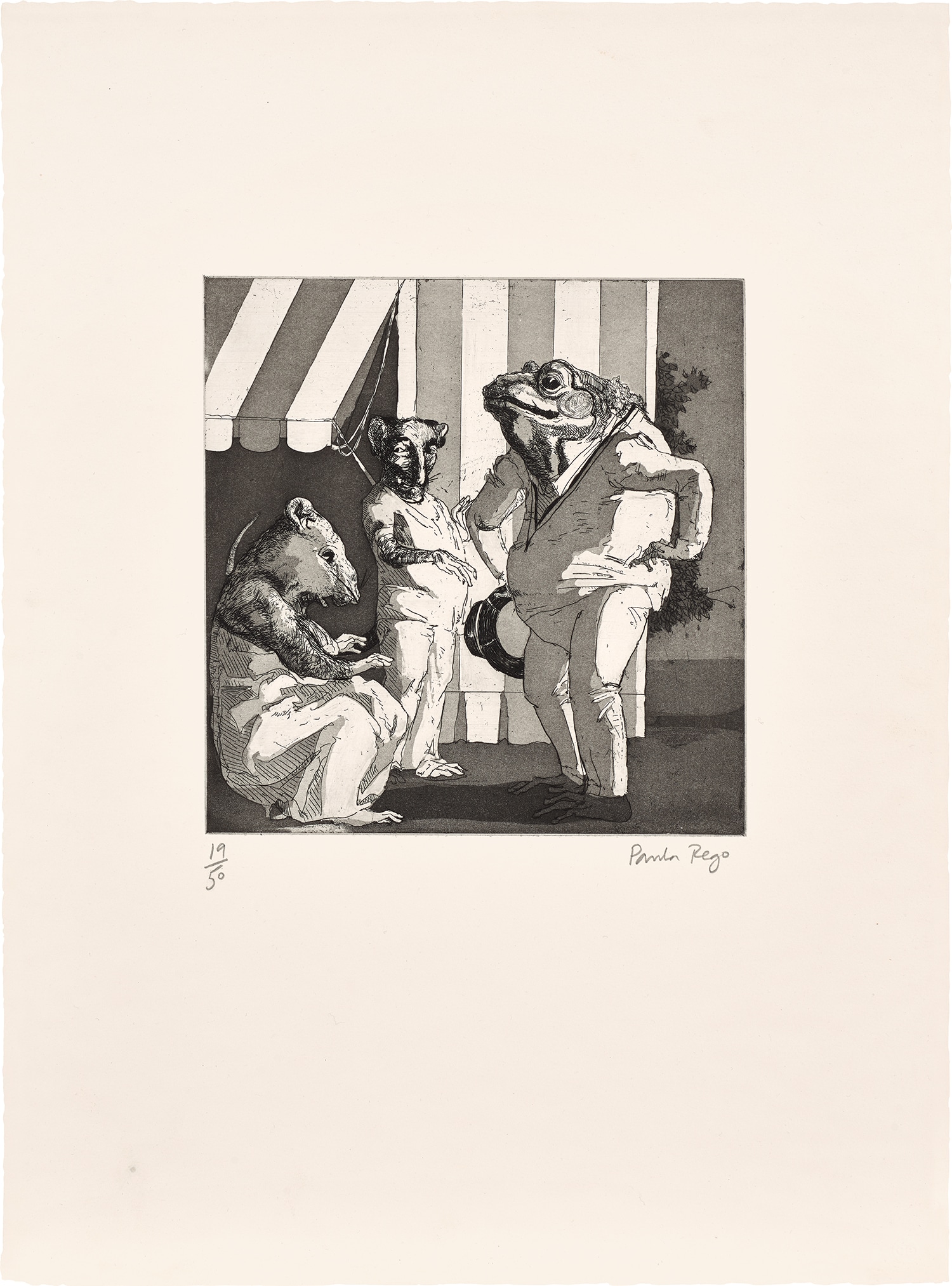
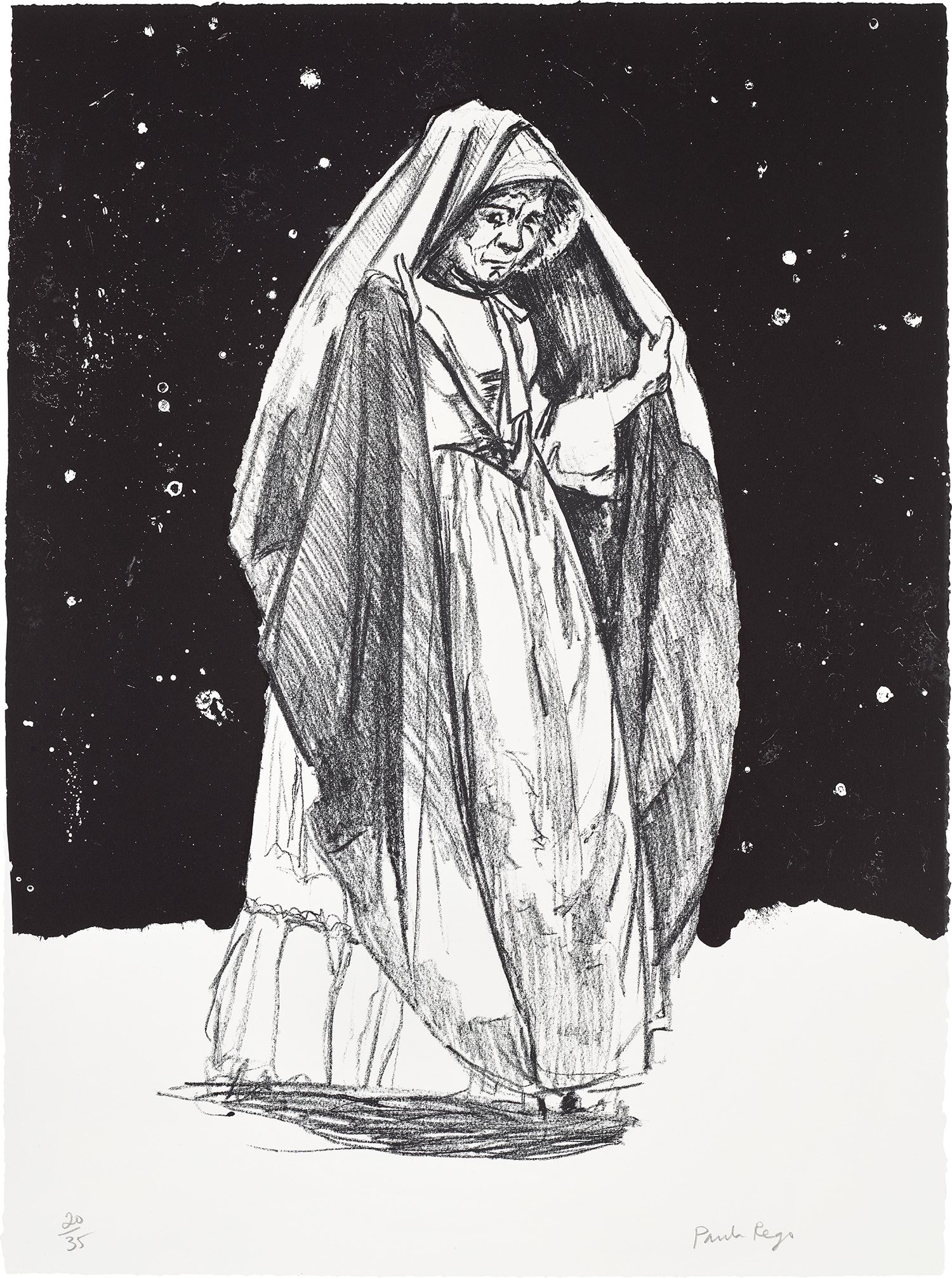
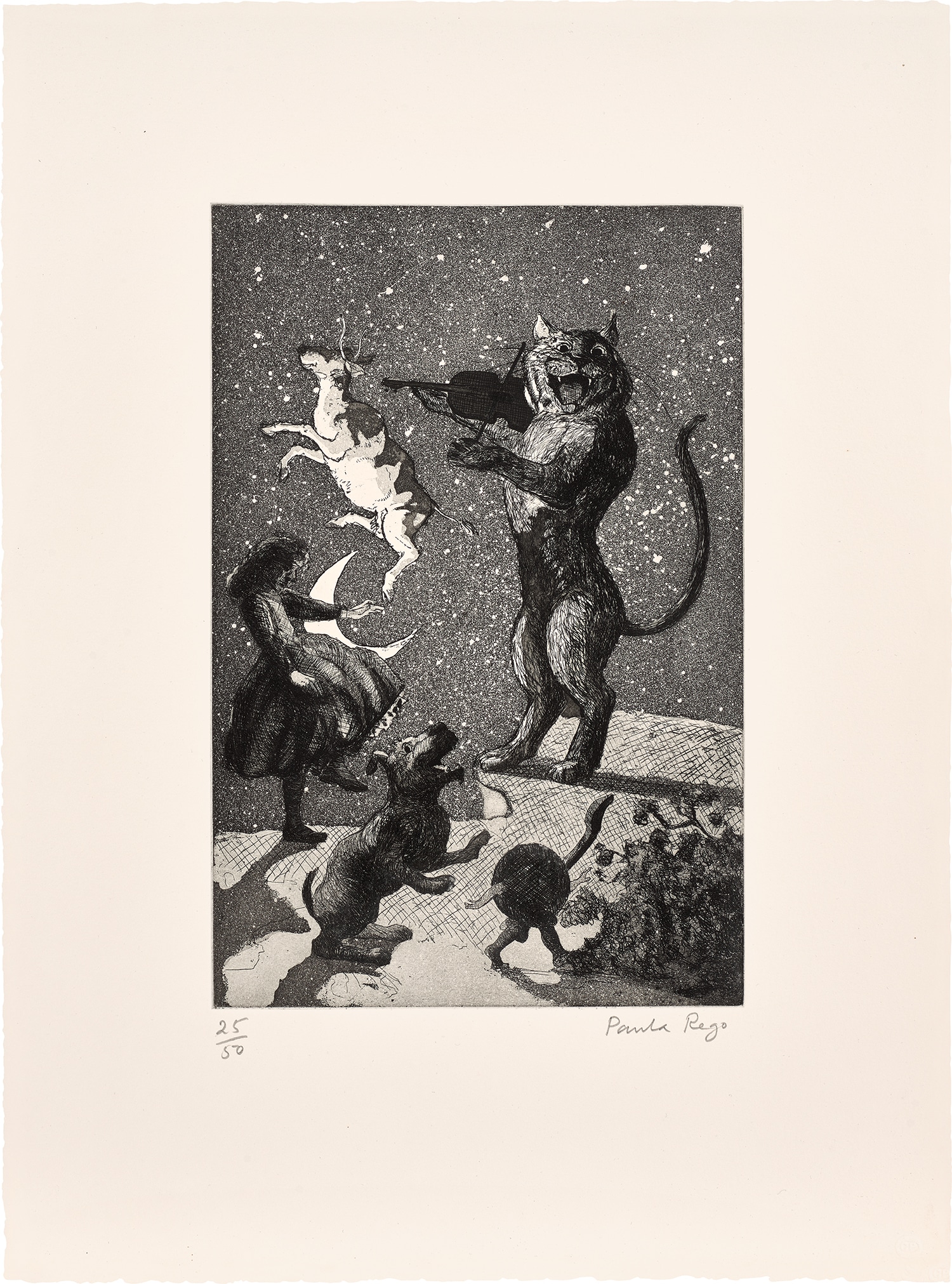
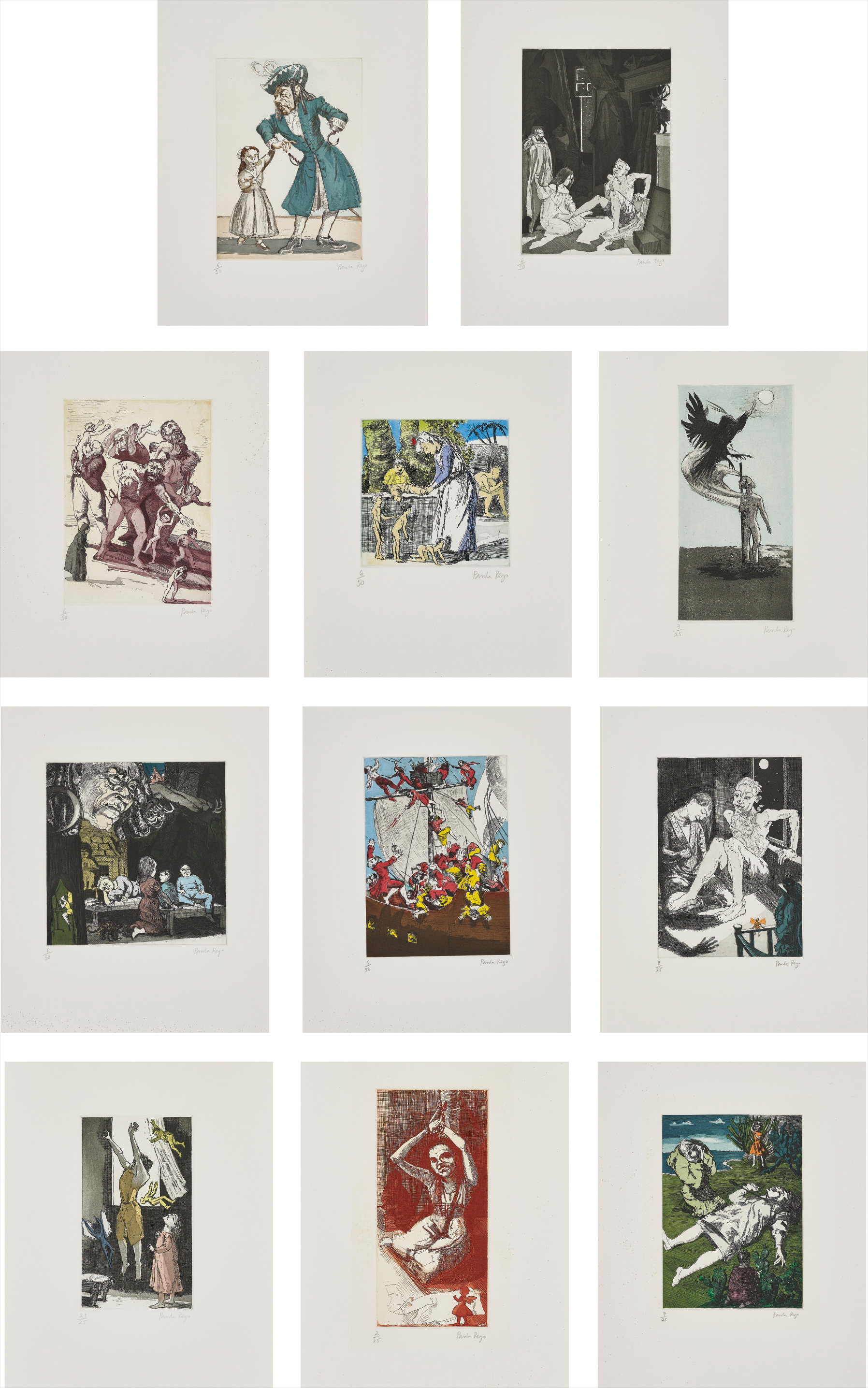
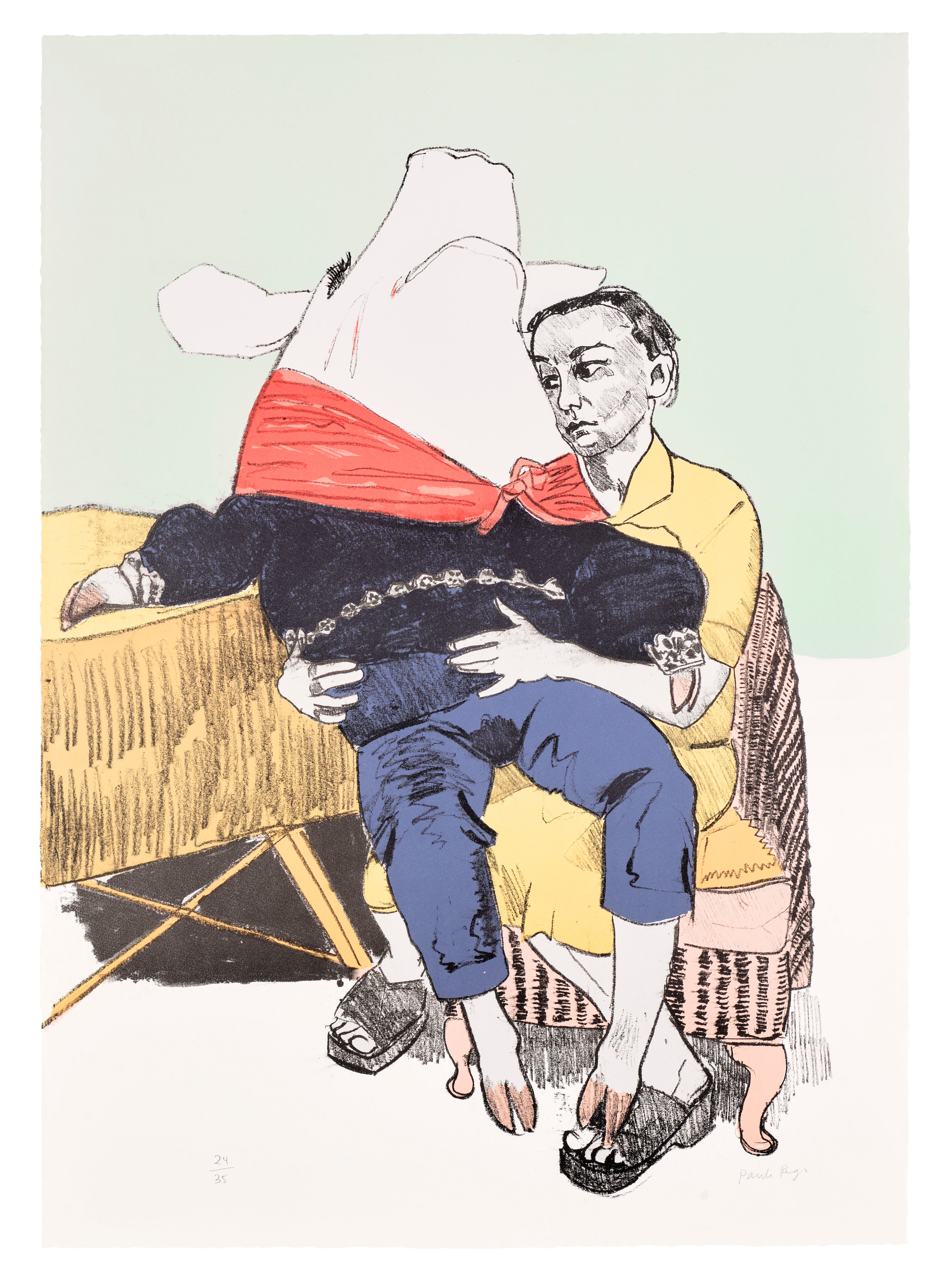
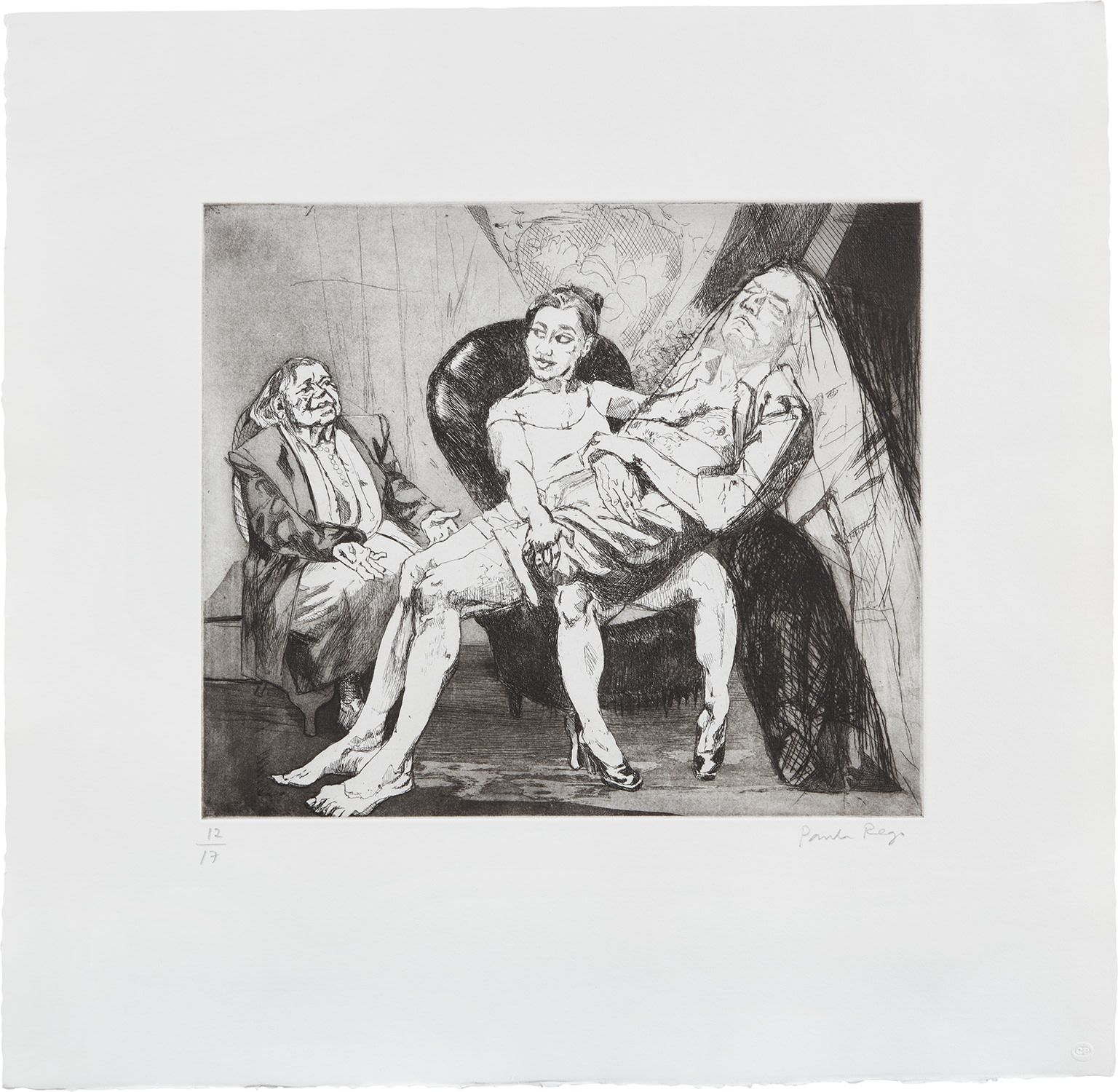
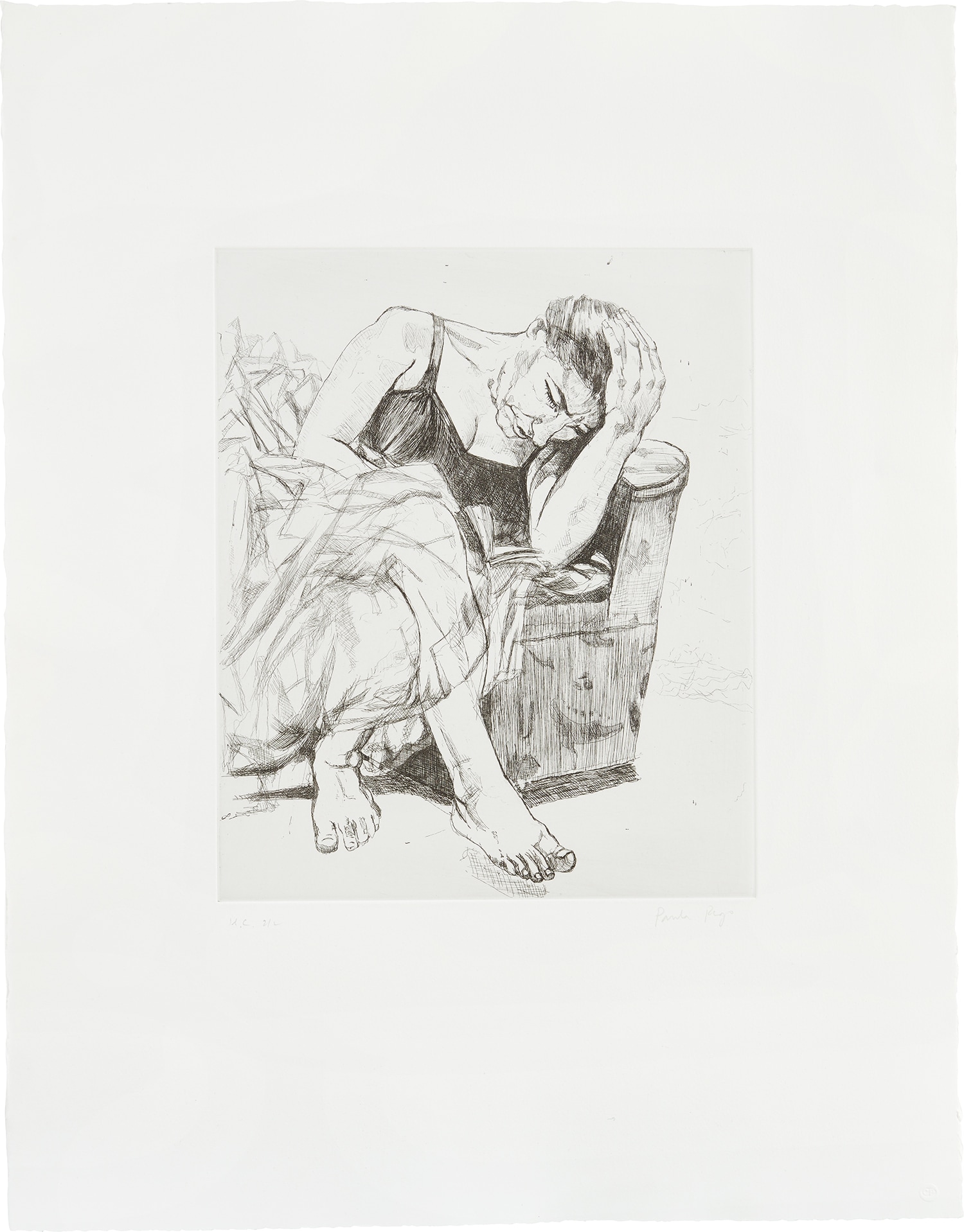
In 2021, the Tate Britain mounted a landmark retrospective of Paula Rego's work, bringing together decades of paintings, pastels, and prints that stopped visitors in their tracks. The show confirmed what devoted collectors and curators had long understood: that Rego was not simply one of the great figurative painters of her generation, but one of the most psychologically penetrating artists of the twentieth and twenty first centuries. The retrospective drew enormous crowds and renewed a surge of critical attention that would carry through to the final years of her life. When she passed away in June 2022 at the age of eighty seven, the art world paused to honour a figure whose vision had been singular, brave, and utterly uncompromising. Paula Rego was born in Lisbon in 1935 into a middle class family with an Anglophile sensibility. Her father, a devoted admirer of all things British, sent her to finishing school in England as a teenager, and it was there that her ambitions crystallised into something urgent and serious. She enrolled at the Slade School of Fine Art in London in 1952, where she would meet the British painter Victor Willing, who became her lifelong partner and collaborator. The Slade in the 1950s was a place of serious discipline and rigorous draughtsmanship, and Rego absorbed those lessons deeply, even as her imagination was already pulling her toward stranger and more unsettling terrain. Portugal, however, remained the emotional bedrock of her world, its folk tales, its Salazar era repression, its domestic rituals all folding themselves into the imagery she would spend a lifetime developing. The early decades of her career were marked by a rawness and experimentation that set her apart from almost anyone working in Britain at the time. In the 1960s and 1970s she worked in a fragmented, collage influenced style, tearing and reassembling images with a visceral energy. Figures from fairy tales and nursery rhymes appeared alongside political caricature and personal memory. By the 1980s her work had shifted toward a more fully resolved figurative language, though the underlying strangeness never relented. Her 1985 painting series exhibited at the Serpentine Gallery in London announced her arrival as a fully formed major presence, and her appointment as the first Associate Artist at the National Gallery in London in 1990 brought both prestige and productive dialogue with the Old Masters she had always admired and argued with. Rego's signature vocabulary draws from sources that seem, at first glance, disparate: Portuguese fado and folklore, the etchings of Hogarth, the devotional gravity of Zurbarán, the narratives embedded in nursery rhymes, and the unspoken power dynamics of domestic life. Yet in her hands these elements fuse into something unmistakably coherent. Her figures, almost always women and girls, occupy their pictorial space with an extraordinary physicality. They crouch, loom, tend, and resist. They are rarely victims, even when the situations they inhabit are threatening. The sense of agency in her women, the refusal to make them passive, is one of the qualities that has given her work such enduring force. Her pastel technique, which she developed as her primary medium from the 1990s onward, allowed her to build surfaces of extraordinary richness and warmth, giving her figures a tangible, breathing presence. The printmaking dimension of Rego's practice is among the most rewarding areas for collectors to explore, and it represents some of the most intimate and technically accomplished work of her career. Works such as her Nursery Rhymes series of etchings and aquatints, produced in the early 1990s, distil the same charged atmosphere of her large scale paintings into smaller, more concentrated images. The nursery rhyme imagery, including pieces such as Hey Diddle Diddle and A Frog He Would A Wooing Go, carries the peculiar menace and comedy of the original verses while adding layers of psychological complexity that are entirely Rego's own. Her series engaging with Hogarth brought a pointed feminist intelligence to bear on the great satirist's moral theatre, and her Pendle Witches prints extend her fascination with female power and persecution into the realm of English history and myth. Works on paper such as The Foxes from 1987, rendered in ink with sepia wash, reveal the directness and economy of her draughtsmanship at its most distilled. Her After Zurbarán charcoal and pastel works from 2007 stand among the most moving of her late productions, reimagining the Spanish master's devotional figures as women bearing private, unspoken burdens. For collectors, Rego's prints and works on paper represent a compelling point of entry into a body of work whose large scale paintings command very significant sums and appear rarely outside institutional holdings. The printmaking output is extensive but far from uniform: unique proofs with hand colouring applied by the artist herself, such as Mother Loves You, occupy a particularly rare and desirable category, combining the intimacy of the print medium with the direct touch of the artist's hand. Rego was represented for much of her career by Marlborough Fine Art in London, and the market for her work has strengthened considerably over the past decade. Her auction records have risen in response to growing institutional recognition, and the Tate retrospective accelerated collector interest substantially. Those drawn to figurative work with intellectual depth, to art that rewards sustained looking, and to an oeuvre that feels both historically rooted and urgently contemporary have consistently found in Rego a deeply satisfying commitment. To place Rego within art history is to recognise how genuinely unusual her position is. She shares with Lucian Freud a dedication to the human figure as the primary site of psychological inquiry, but where Freud's gaze is coolly analytic, Rego's is mythic and narrative. She connects to the tradition of Francisco Goya in her willingness to use imagery as a vehicle for social and political confrontation. Artists such as Kiki Smith and Marlene Dumas, who similarly mine the territory where folklore, gender, and the body intersect, offer useful points of comparison, as does the British painter Jenny Saville in her commitment to figuration of unsparing honesty. Yet Rego's specific confluence of Portuguese cultural memory, British institutional formation, and deeply personal iconography places her in a category that resists easy assimilation into any single movement or tendency. What remains, after all the critical framework is set aside, is the sheer power of the work itself. Paula Rego made art that does not let the viewer go. It lodges in the imagination and continues to operate there, raising questions about power and tenderness, about the stories we tell children and the truths those stories conceal, about what women know and have always known. That work is now part of the permanent conversation of art history, and for those fortunate enough to live with it, it is among the most rewarding company imaginable.