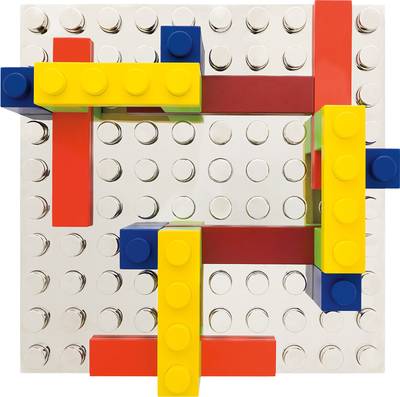
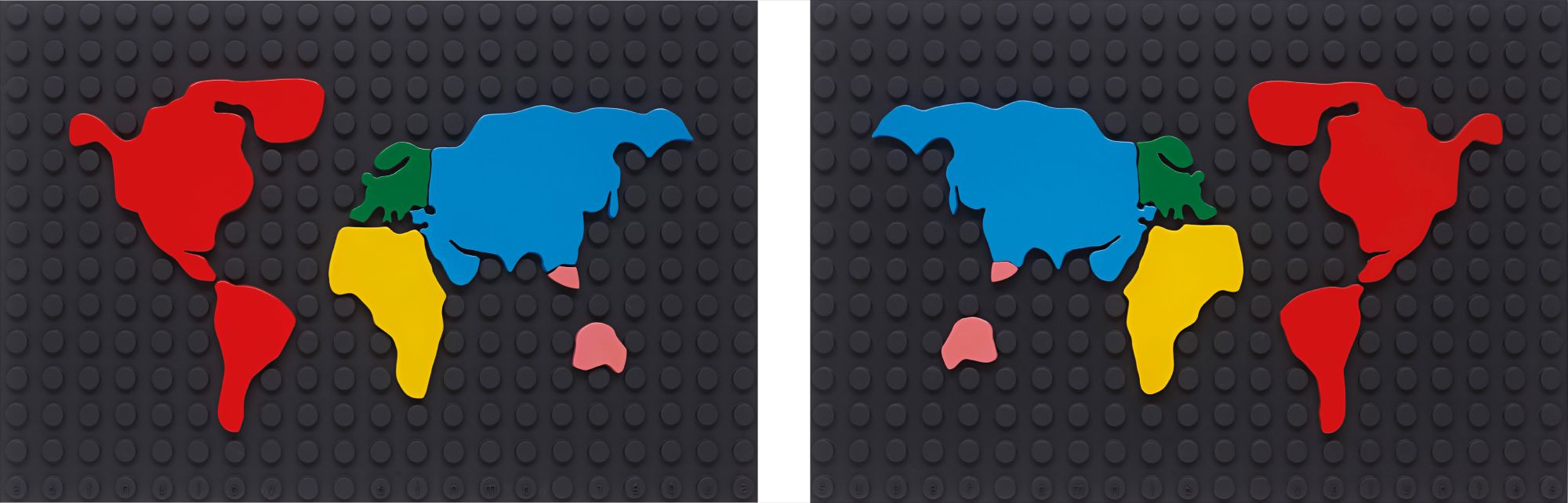
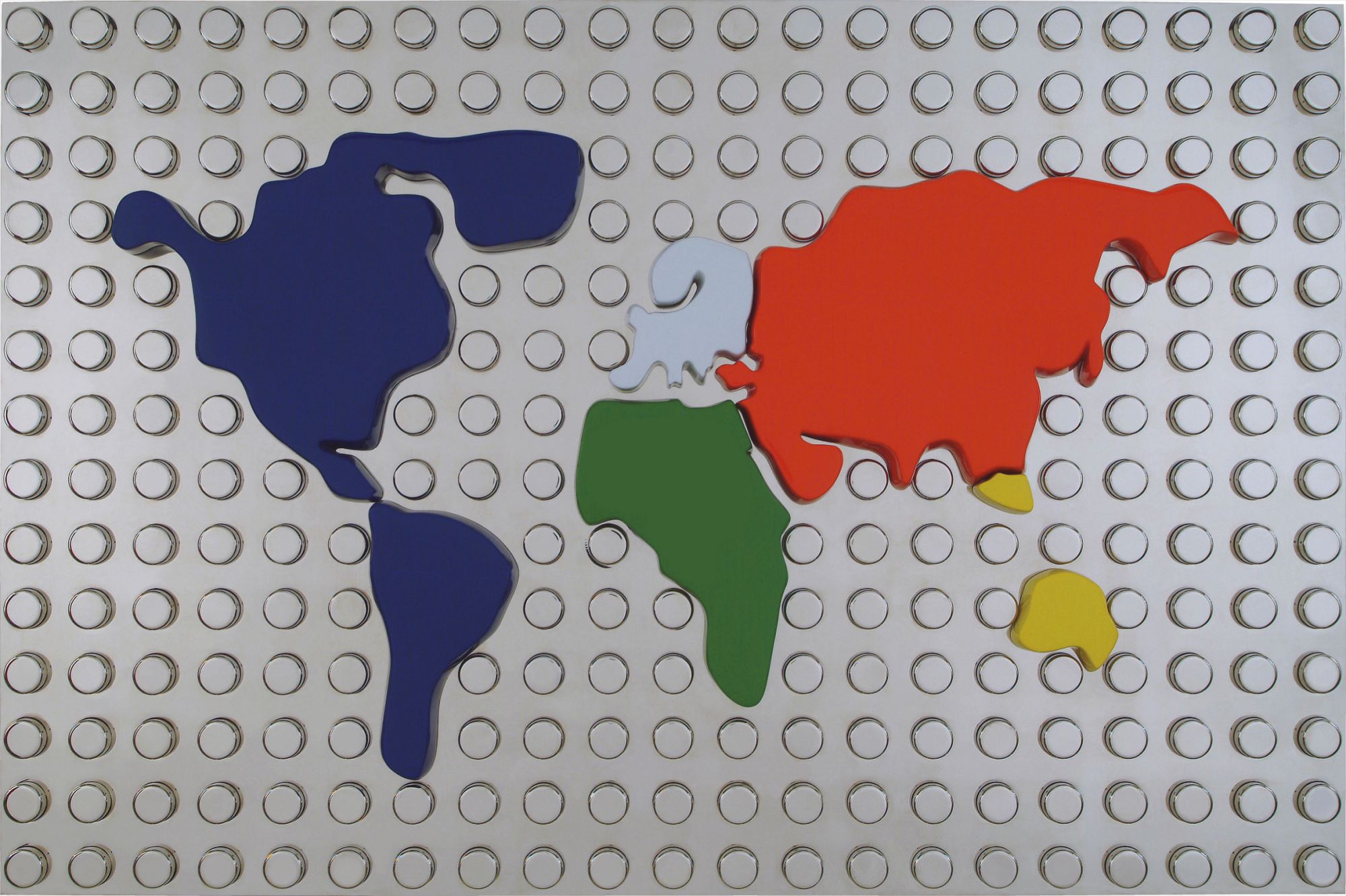
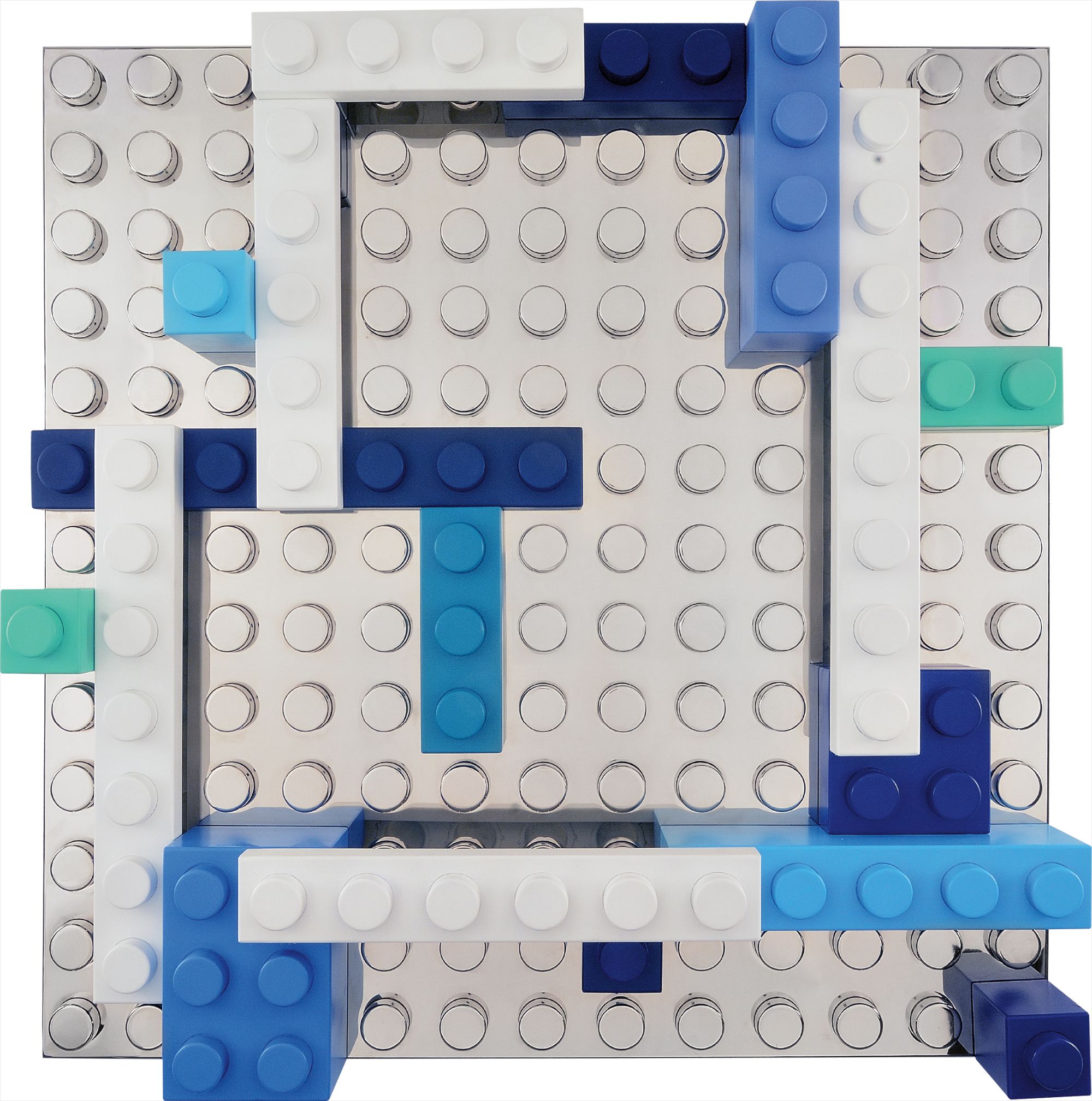
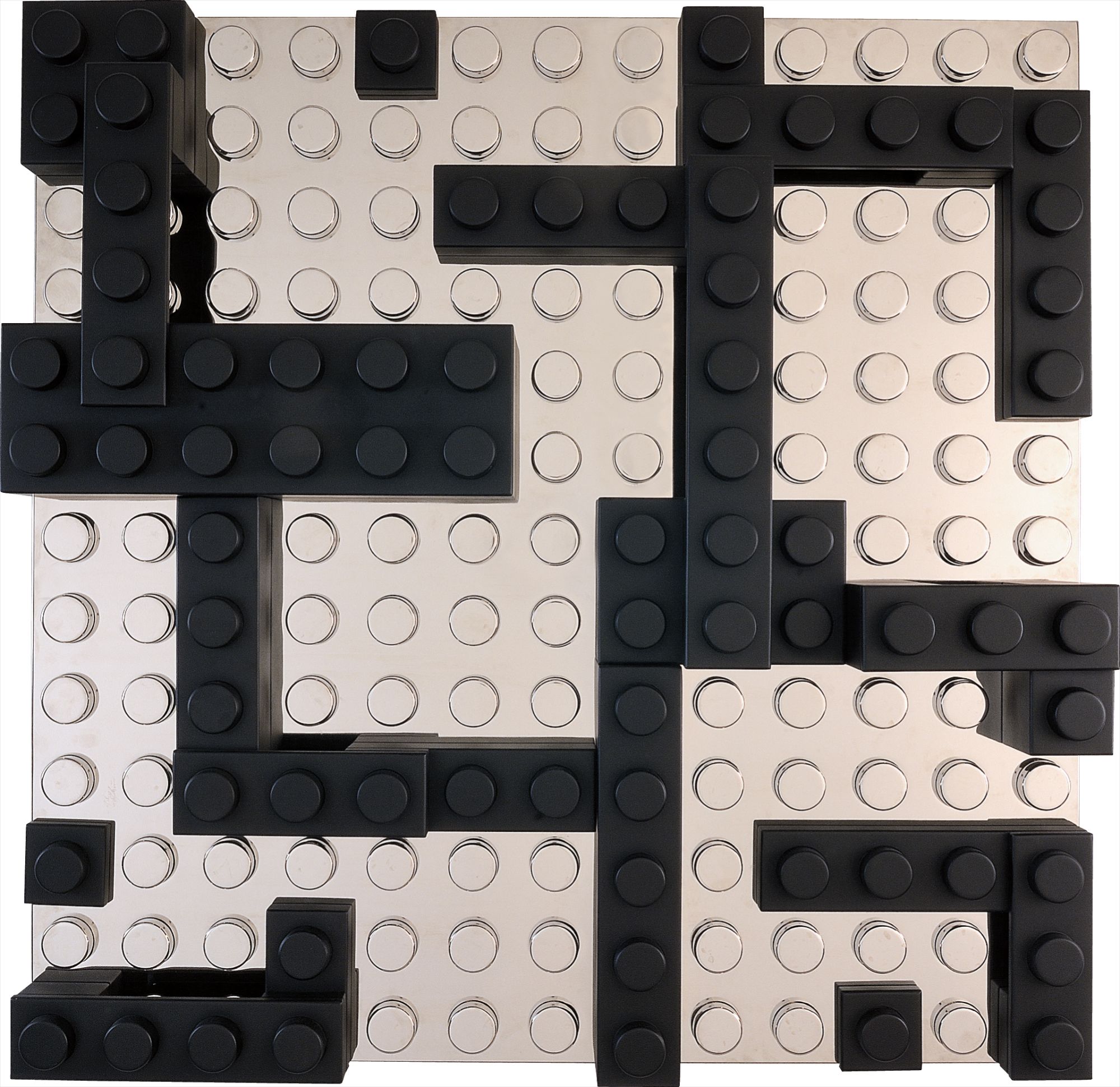
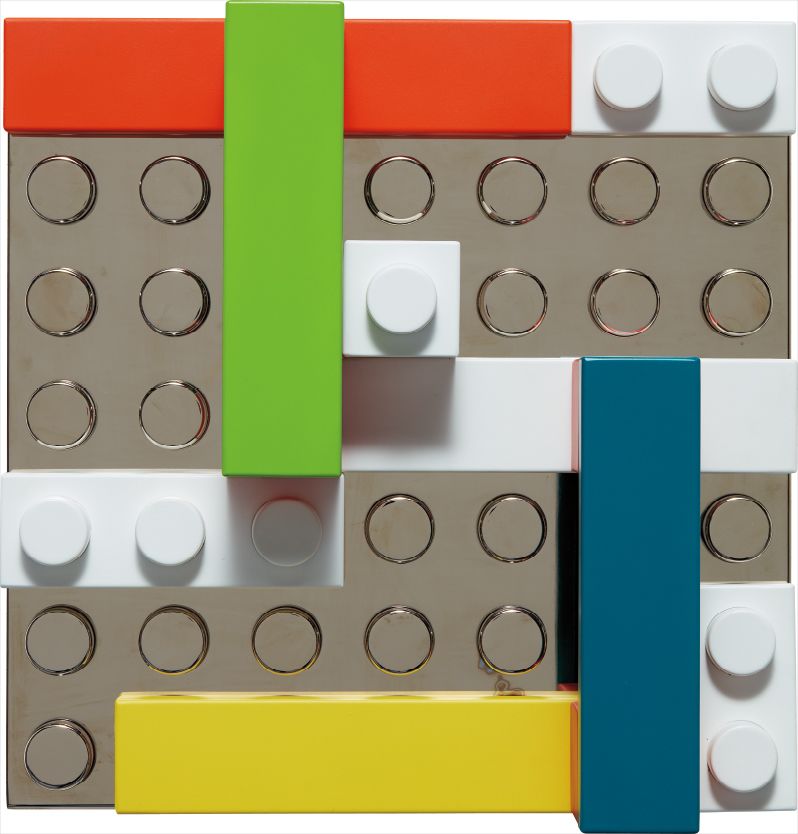
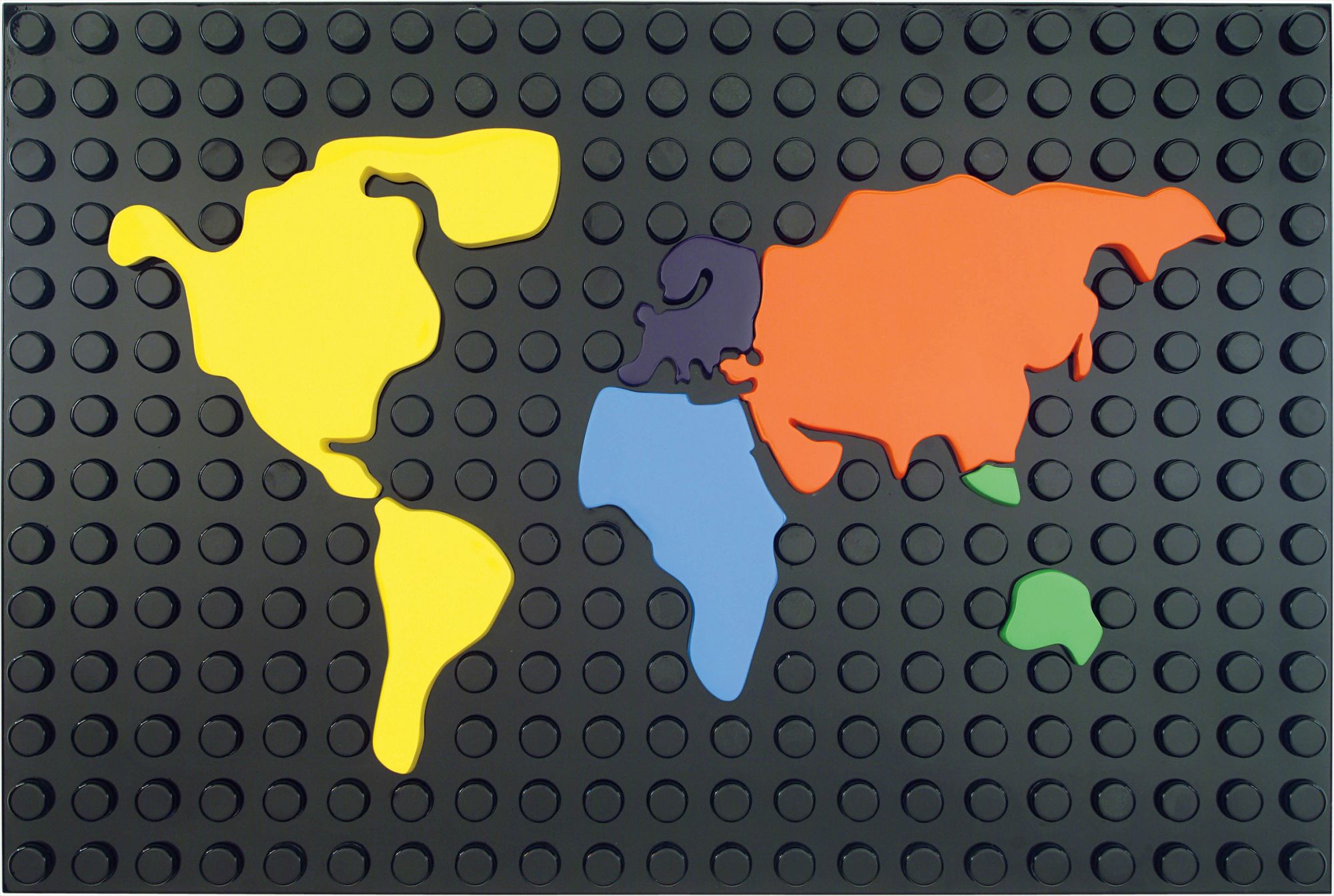
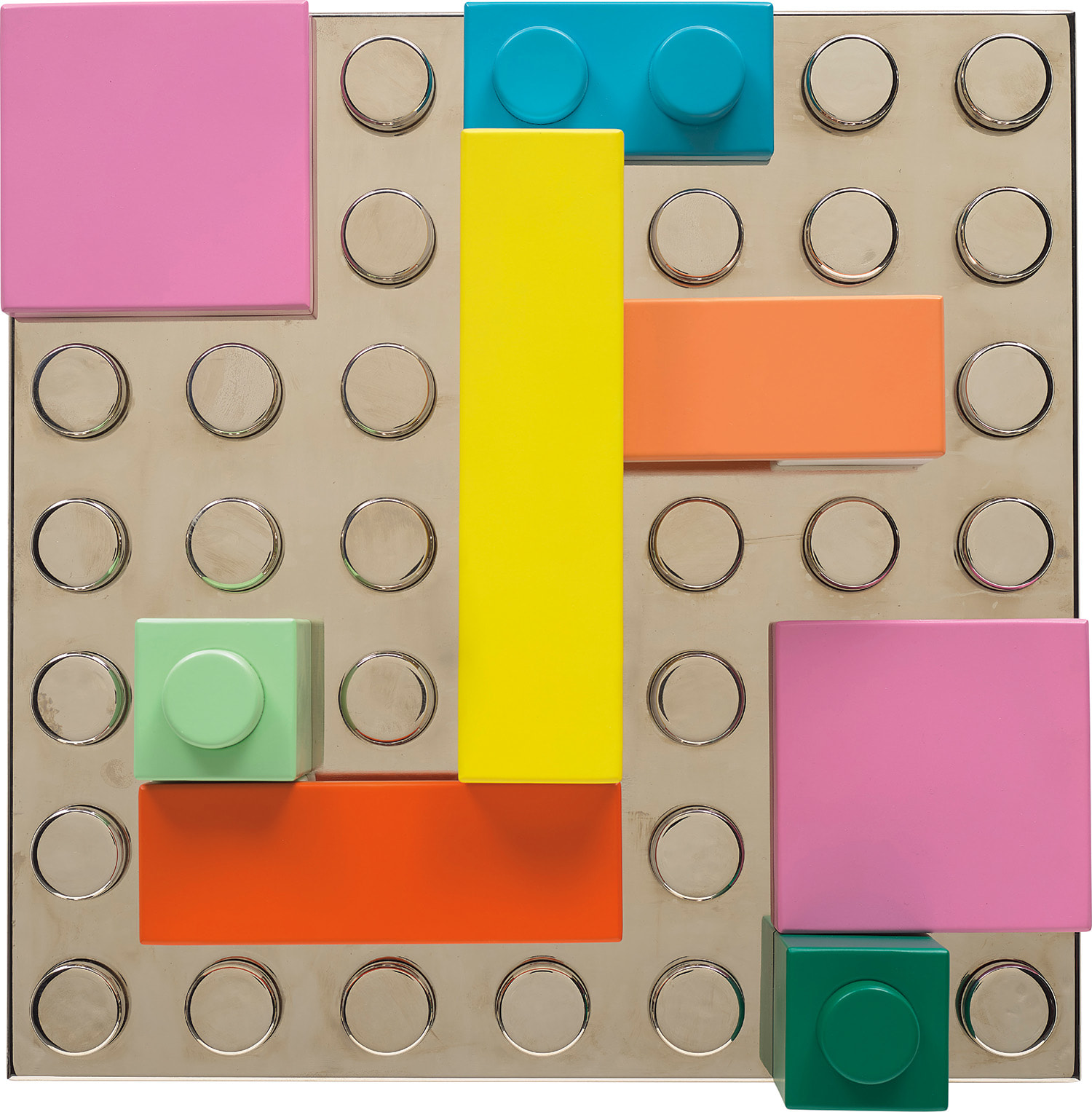
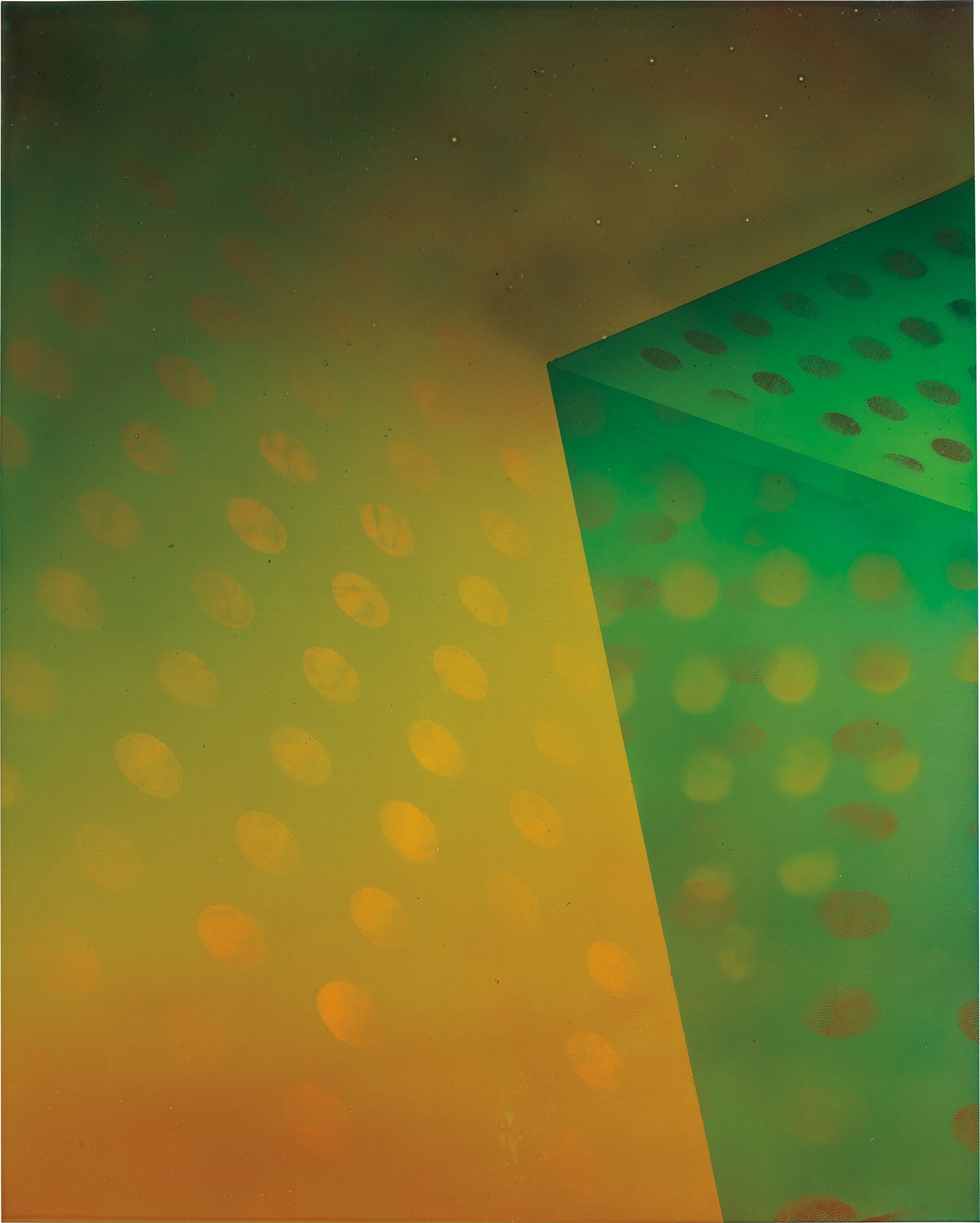
There is a particular kind of attention that Matteo Negri's paintings demand. Not the reverential hush that accompanies old masters in dim gallery light, but something more alert, more charged with curiosity. His canvases arrive with a kind of visual wit that disarms you before it enlightens you, layering references to Mondrian, to urban cartography, to the bright vernacular of everyday objects, into compositions that feel simultaneously familiar and entirely new. Collectors who have encountered his work through auction platforms in Italy and beyond tend to describe the same experience: a double take, followed by genuine delight. Negri is Italian, and that fact matters more than it might first appear. Italy is a country where the weight of visual history is inescapable, where a walk through almost any city center is an involuntary education in form, proportion, and color. To grow up as an artist in that environment is to absorb an extraordinary inheritance, one that can either overwhelm or liberate. For Negri, it appears to have done the latter. His practice channels the classical tradition not as a burden but as a foundation, a grammar from which he constructs a thoroughly contemporary visual language. The discipline of the past becomes, in his hands, a springboard for something more surprising. The development of Negri's practice reflects a sustained engagement with the intersection of figuration and abstraction, two traditions that spent much of the twentieth century in open rivalry. Where many artists have felt compelled to choose a side, Negri moves between them with apparent ease, finding the productive tension that lives in the space between. His work from the late 2000s already showed this tendency clearly. "Boogie Woogie Positivo" from 2009 announces itself in its very title as a conversation with Piet Mondrian, specifically the Dutch master's late Broadway Boogie Woogie period, while the word "positivo" introduces an Italian inflection, a kind of affirmative warmth that shifts the reference into something distinctly his own. This is not homage in the passive sense. It is a dialogue, conducted on equal terms. By the early 2010s, Negri had developed what might be described as his cartographic mode, a body of work in which the logic of maps, grids, and urban structures becomes both subject and method. "Yellow Bridges" from 2013 exemplifies this approach, deploying color with a confidence that recalls both the graphic clarity of constructivism and the intuitive joy of folk art. The following year brought "Flatstep" and "Flat Step III," works that demonstrate his growing interest in seriality and variation, in the way a single idea can be tested, stretched, and refined across multiple iterations without losing its essential vitality. This is an artist who thinks in series, who understands that a single work is often the beginning of a conversation rather than its conclusion. Among the most materially distinctive works in Negri's output are those executed in enamel on cast iron, including "Black Lego Map" and the two part "Mappa (Diptych)." The choice of cast iron as a support is not incidental. It introduces weight, permanence, and an industrial resonance that complicates the playfulness of his imagery in productive ways. Enamel on cast iron is a medium associated with signage, with public communication, with objects designed to endure in outdoor environments. Negri appropriates this material legacy and redirects it toward something more intimate and contemplative. The result is a body of work that carries an unusual physical presence, one that reminds you that paintings are objects in the world, not just images. The work "L'ego Mondrian FRUITJOICE" from 2017 is perhaps the most explicitly witty of his known titles, folding ego, Lego, and a deliberate misspelling into a single compressed phrase that rewards slow reading. It reflects a consistent strand in Negri's practice: the use of language and naming as an additional compositional layer. His titles are not afterthoughts. They function as interpretive keys, sometimes ironic, sometimes affectionate, always purposeful. "Rainbow Arrangement" from 2015 and "Wall Psa 16" from 2016, the latter a flatbed print on aluminum sheet, extend his material experimentation further, demonstrating a willingness to move across supports and processes without losing the coherent sensibility that makes his work immediately recognizable. From a collecting perspective, Negri represents exactly the kind of proposition that rewards both the aesthetically adventurous and the market conscious. His works have appeared at auction with enough regularity to establish a track record, while remaining accessible enough that new collectors can enter without prohibitive barriers. The materiality of the cast iron works in particular gives them a physical weight that translates well into domestic and institutional spaces alike. Collectors drawn to artists working in the tradition of geometric abstraction, to figures such as Mondrian himself, to the Italian arte concreta movement, or to contemporary practitioners exploring the edges of pop and minimalism, will find Negri's work a richly satisfying acquisition. His engagement with color is sophisticated without being academic, and his humor ensures that living with his paintings remains a pleasure rather than a duty. Contextually, Negri occupies an interesting position within the broader landscape of Italian contemporary art. He shares certain concerns with artists working in the tradition that runs from arte povera's engagement with humble materials through to the more recent generation of Italian painters who have revisited geometric and constructivist legacies with fresh eyes. The influence of Mondrian is openly acknowledged in his work, but so too is the spirit of artists like Victor Vasarely in the precision of his color relationships, and the warmth of artists like Niki de Saint Phalle in the unabashed pleasure he takes in visual play. He is not easily categorized, which is precisely what makes him interesting. What ultimately secures Negri's significance is the consistency of his vision across a body of work that spans at least a decade and ranges across painting, enamel, and print. There is no sense of an artist chasing trends or second guessing his instincts. The progression from "Boogie Woogie Positivo" in 2009 to "Wall Psa 16" in 2016 describes an artist deepening and expanding a coherent project, one rooted in Italian visual culture but genuinely open to the world. In an art landscape that often rewards spectacle over substance, Negri's quiet confidence in the power of color, form, and material intelligence is not merely refreshing. It is, in the best sense, exemplary.