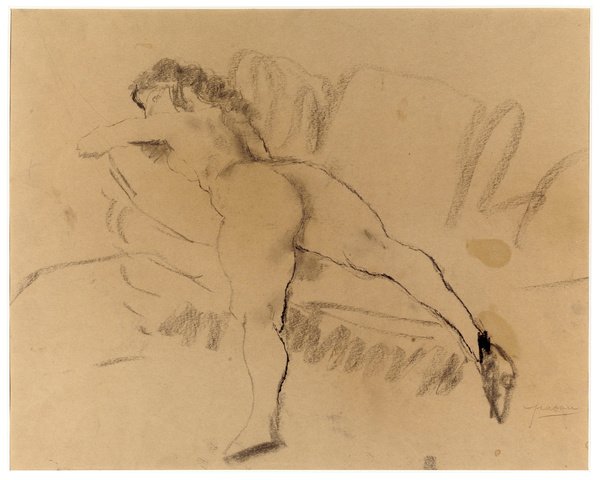
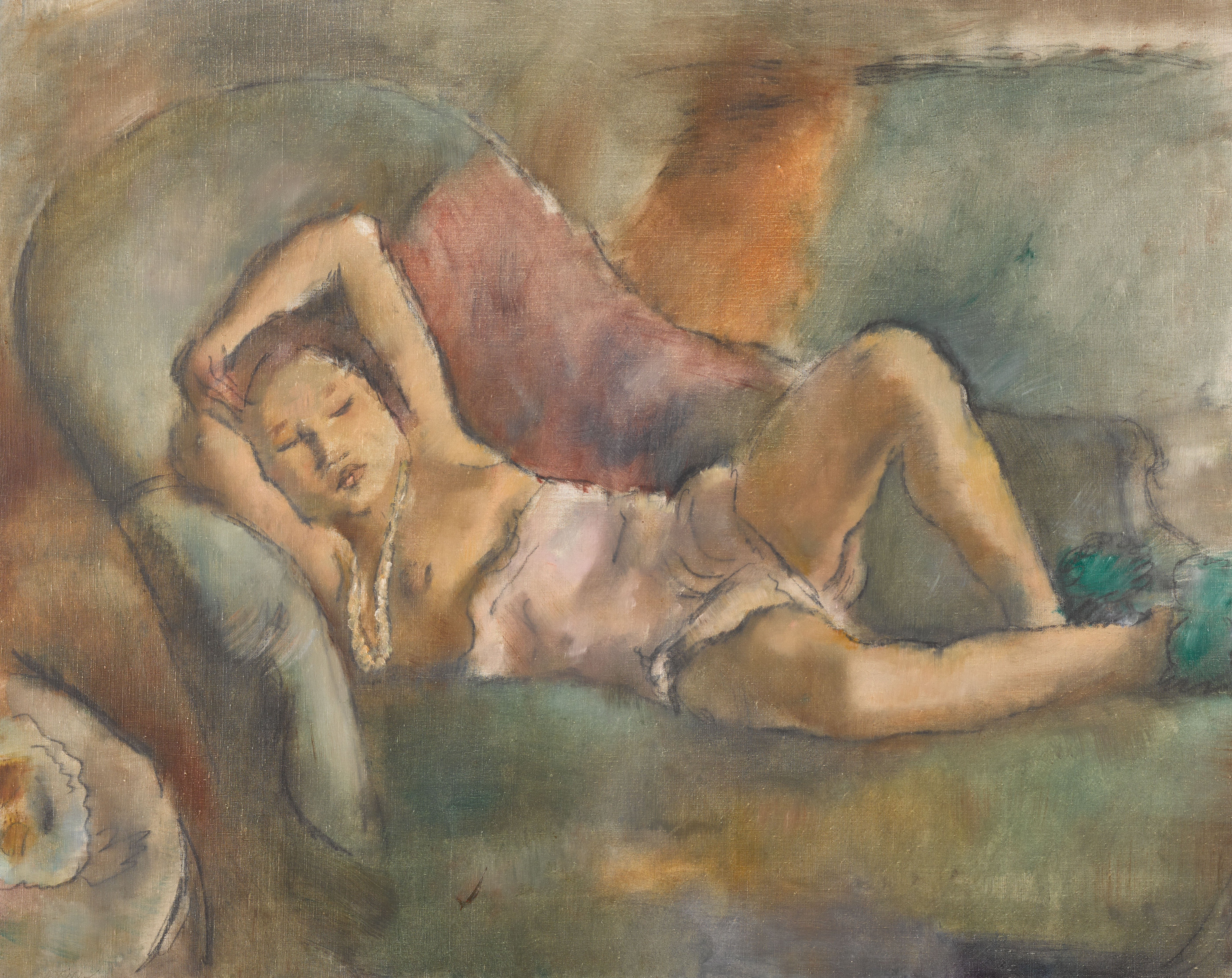
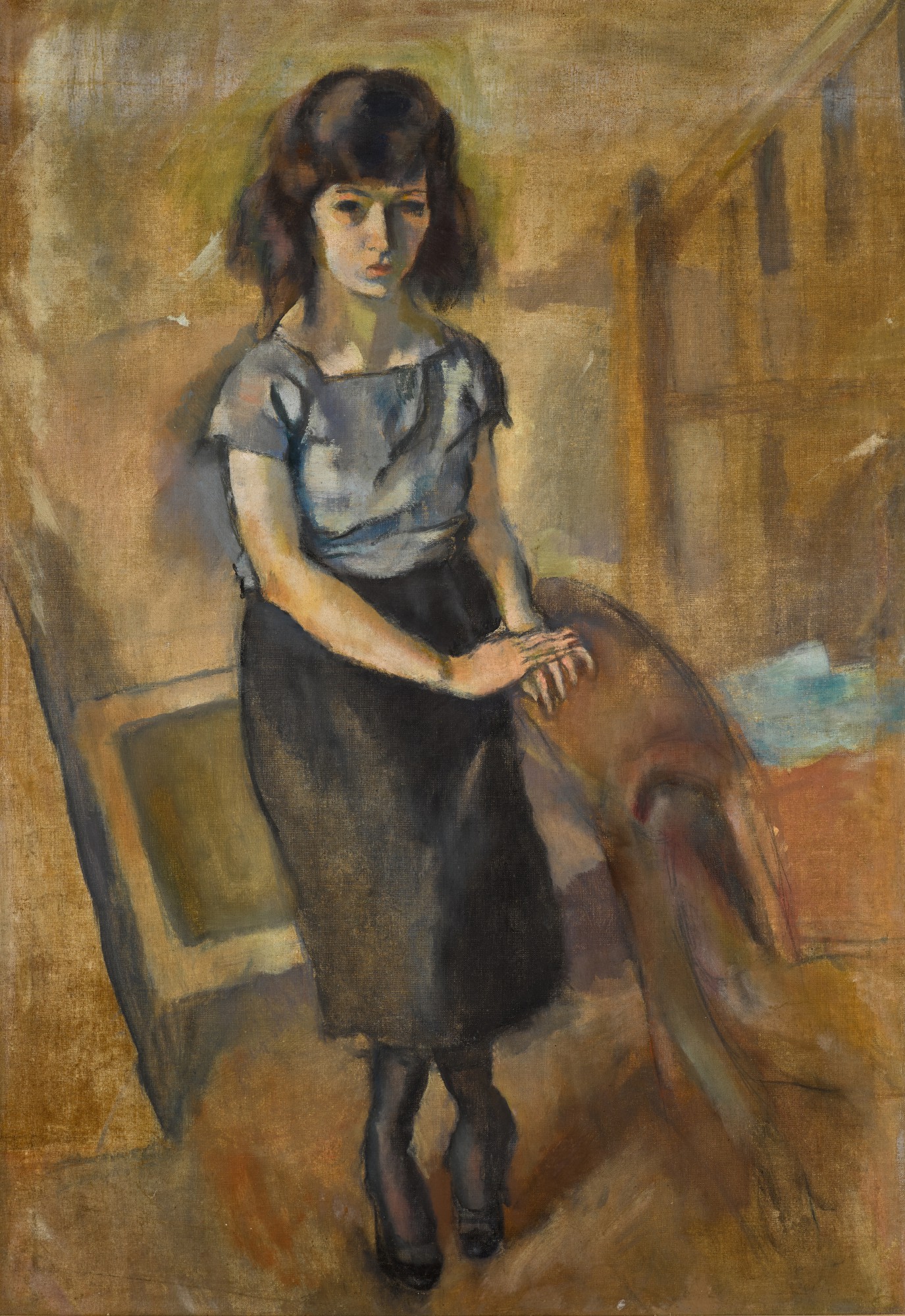
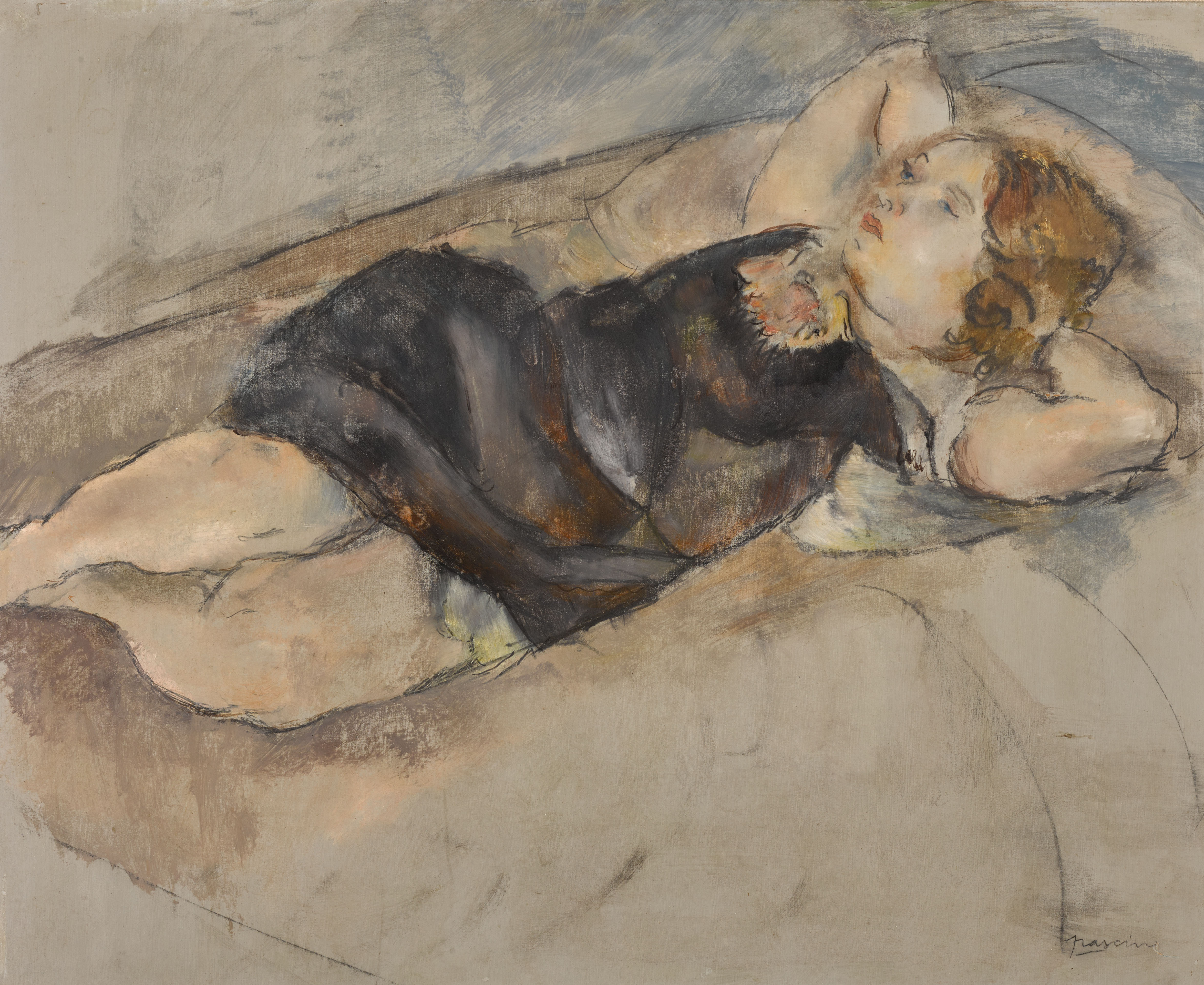
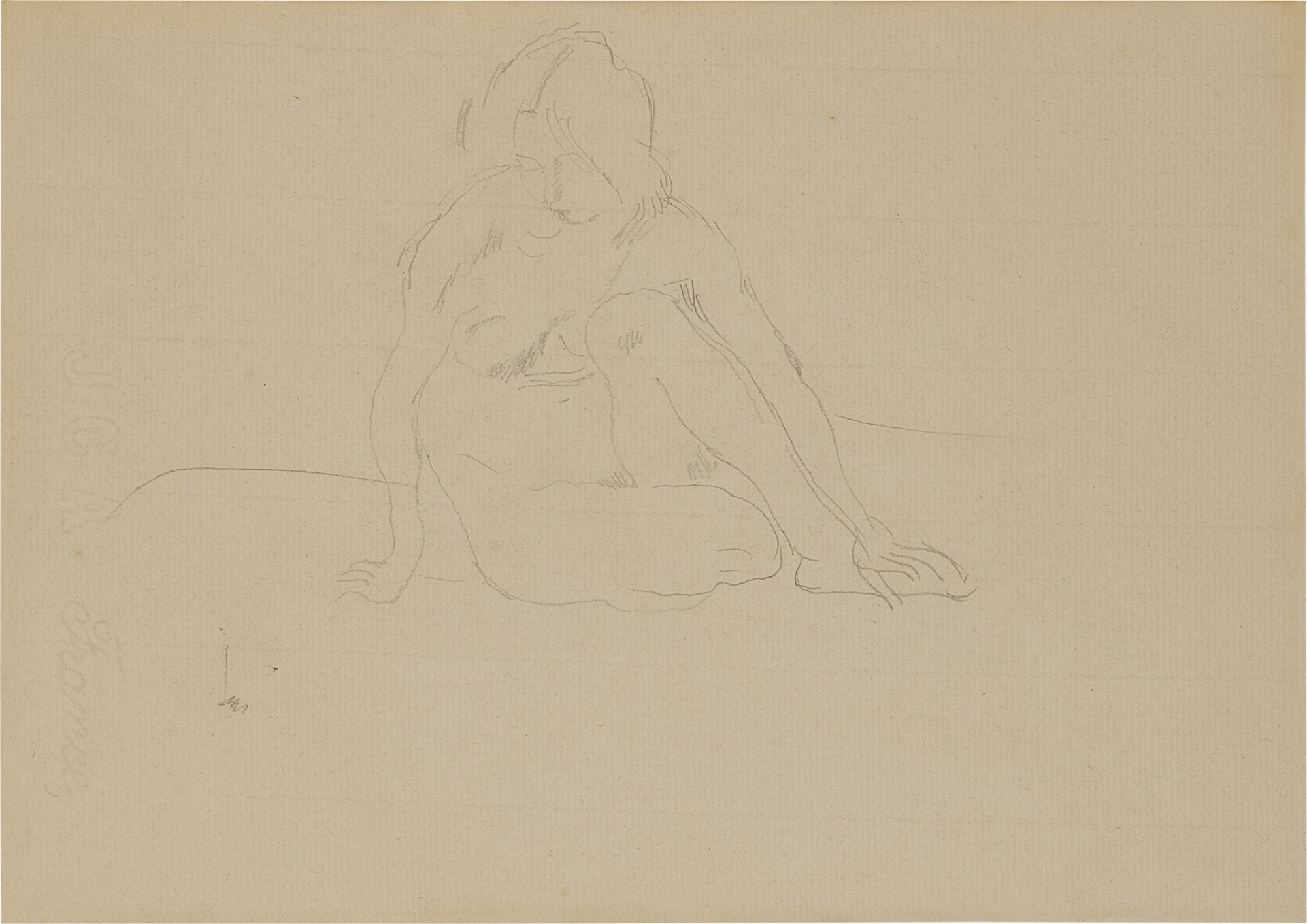
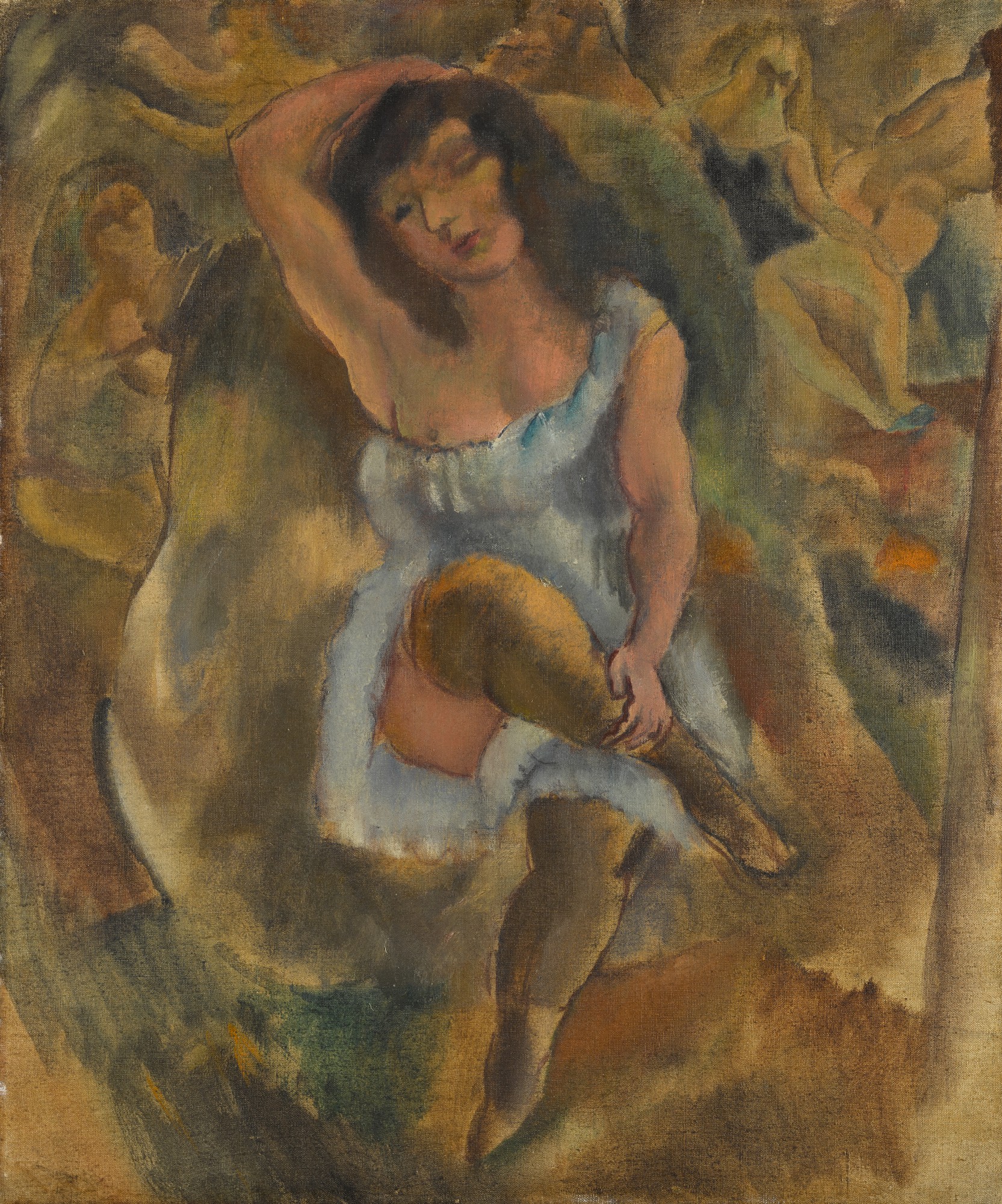
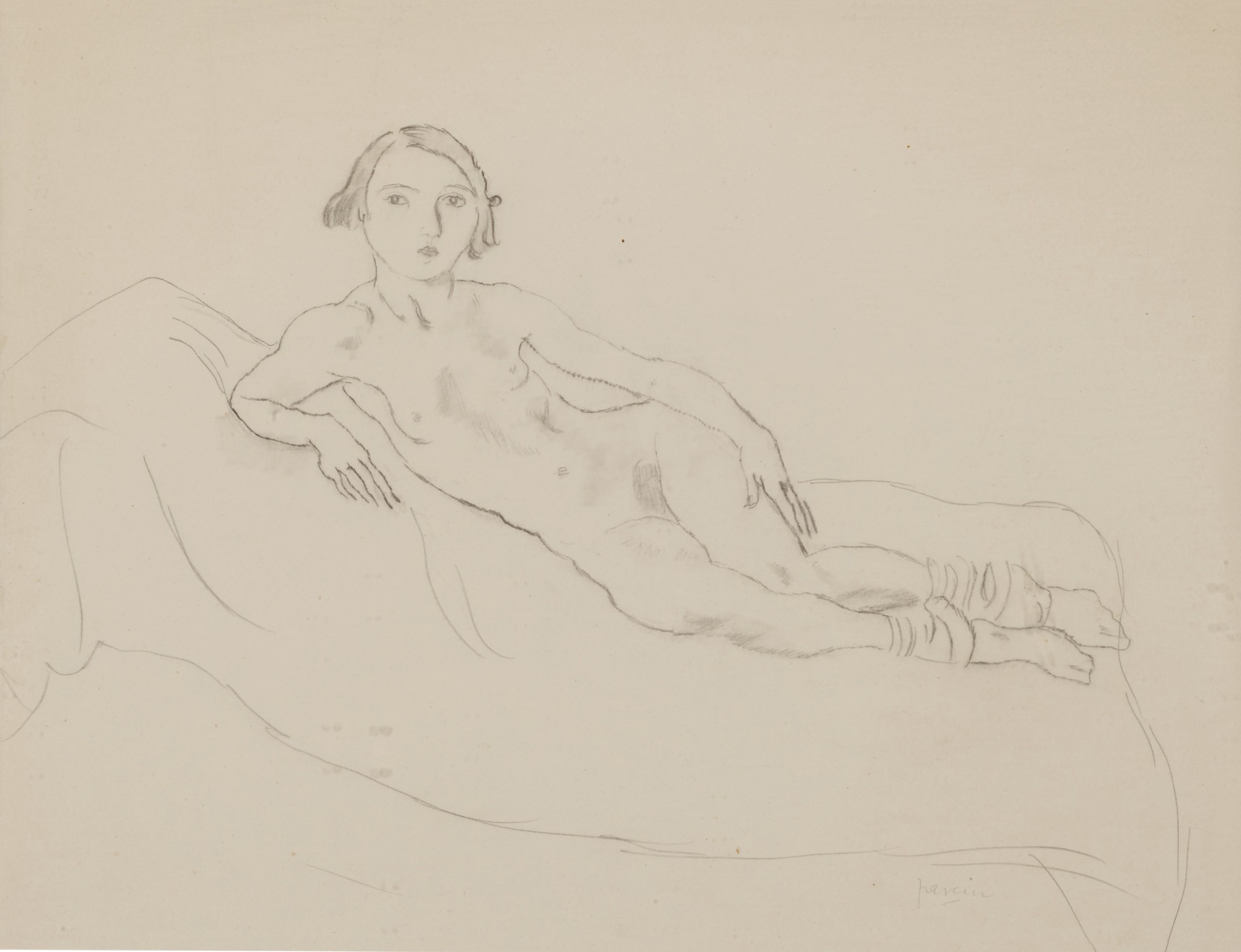
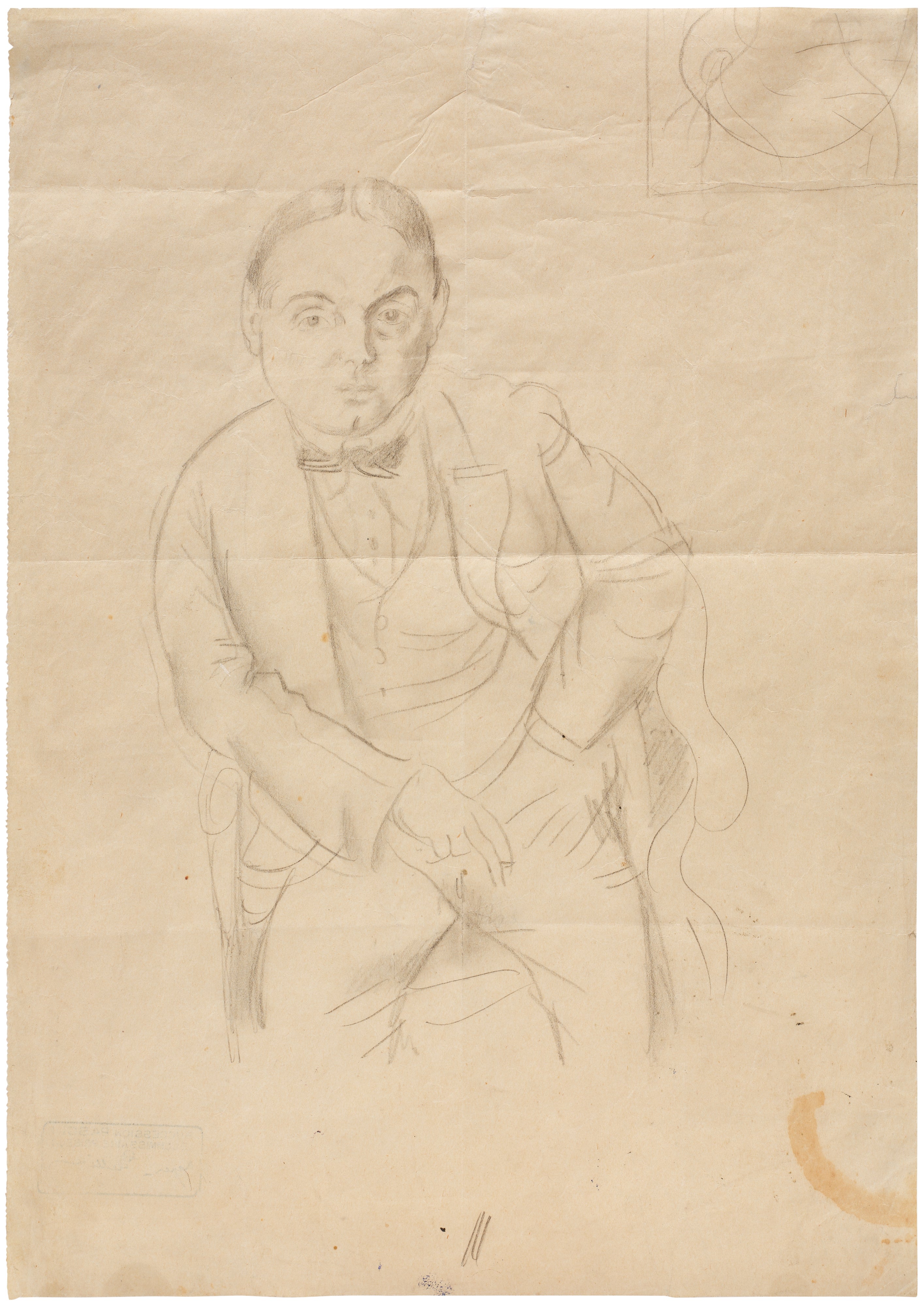
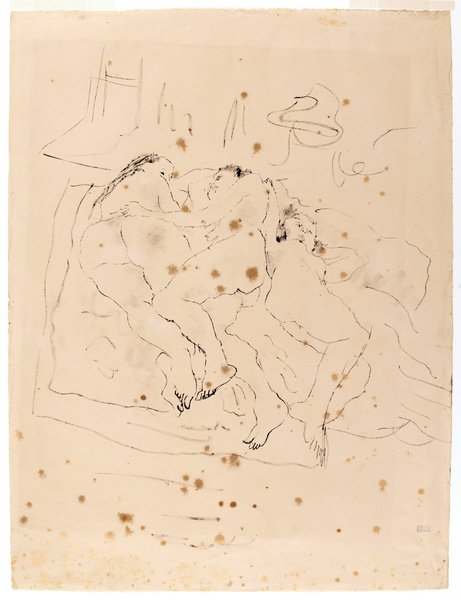
There are artists who define a moment, and then there are artists who define a feeling. Jules Pascin belongs firmly to the second category. At the Musée du Petit Palais in Paris, a room dedicated to works from the School of Paris period stops visitors in their tracks not because of scale or spectacle, but because of intimacy. Pascin's figures seem to breathe. His women lean, lounge, and look inward, rendered in lines so fluid they appear to have been drawn in a single exhaled breath. To encounter his work in person is to understand immediately why he counted Picasso, Modigliani, and Soutine among his peers and his friends. Jules Pascin was born Julius Mordecai Pincas in 1885 in Vidin, Bulgaria, into a prosperous Sephardic Jewish merchant family. His father was a grain merchant of Spanish and Italian heritage, his mother Romanian, and the household was cosmopolitan by the standards of the era. From early childhood Pascin demonstrated a restless, questioning intelligence alongside an obvious gift for drawing. He studied in Vienna and Munich, where he quickly absorbed the graphic language of the Secession and Jugendstil movements, developing a facility for satirical illustration that would later earn him a regular commission with the legendary Munich journal Simplicissimus. It was at Simplicissimus, beginning around 1905, that Pascin first found a wide audience, his biting and elegant cartoons appearing alongside work by the most celebrated illustrators of the German speaking world. Paris, however, was the city that claimed him. Pascin arrived in Montparnasse around 1905 and almost immediately became a central figure in the bohemian world that was transforming Western art. He was gregarious, generous to a fault, and possessed of an almost magnetic social energy. His studio and his table at the Dôme café became gathering points for an extraordinary circle that included Matisse, Derain, the Steins, and countless writers, dealers, and fellow wanderers. Yet beneath the conviviality was an artist of fierce discipline and genuine originality. Pascin traveled constantly and purposefully: to Tunisia and Morocco in North Africa, through the American South, to Cuba, and into the landscapes of Florida and the Caribbean. Each journey deposited new visual material into his practice, and each left clear traces in his work. The years between 1914 and 1920 mark a crucial period of expansion in Pascin's practice. Having arrived in the United States at the outbreak of the First World War, he traveled extensively through the American South and Cuba, producing a remarkable body of watercolors that capture the light, the heat, and the human texture of those places with extraordinary economy. Works such as Scène cubaine from 1916 and Scène de Floride from the same year demonstrate how completely Pascin had made the watercolor medium his own. The washes are transparent and assured, the figures loosely but precisely placed, and the overall impression is of sunlight filtered through gauze. These are not documentary records but deeply felt responses to place. Pascin became an American citizen in 1920, a fact often underappreciated when situating him within art history, and one that underlines just how genuinely transatlantic his life and vision were. Pascin's signature achievement lies in his figures, and most particularly in his nudes. Where contemporaries such as Modigliani elongated the body toward an almost sculptural ideal, Pascin pursued something more elusive: the body as a psychological presence, soft and particular and slightly unresolved. His line was often described as trembling, a quality achieved through layered, searching contours that give his subjects an uncanny sense of inner life. The pencil drawing Nu and the ink work Nu debout from 1917 exemplify this approach, each figure assembled from marks that feel simultaneously tentative and inevitable. His oil paintings from the 1920s, including Zimette et Mireille from 1923 and the celebrated Jeune fille assise aux fleurs from 1929, extend this sensibility into color, wrapping his figures in pearlescent, chalky tones that recall both Fragonard and Renoir while remaining entirely his own. Jeune fille assise aux fleurs in particular represents Pascin at the very height of his powers: the pose is relaxed, the palette luminous, and the relationship between figure and floral ground is handled with a delicacy that no reproduction fully conveys. For collectors, Pascin presents a genuinely compelling proposition. His work spans a wide range of media and formats, from large scale oil paintings that command significant attention in major auction rooms to intimate works on paper that reward close and private contemplation. The pencil drawings and ink works are particularly sought after because they showcase the quality for which he is most celebrated: his line. Works such as Le Club from 1916, executed in pen and ink and pencil, or the remarkable Portrait of Peter Lorre, rendered in pencil on thin buff paper, demonstrate the breadth of his subject matter and his ability to capture character with minimal means. At auction, strong examples of Pascin's oils have achieved meaningful results at Sotheby's and Christie's in both Paris and New York, while his watercolors and drawings offer a more accessible entry point without sacrificing artistic significance. Collectors who come to Pascin through his works on paper frequently find themselves drawn deeper into his world, seeking out the richer chromatic complexity of the oils. To understand Pascin fully is to understand the broader constellation of School of Paris figuration. He was close to Chaim Soutine, whose emotionally charged impasto offered a kind of inverse of Pascin's lyrical economy. He shared sensibilities with Amedeo Modigliani, though where Modigliani sought the monumental, Pascin preferred the provisional. His influence can be traced forward into the work of artists such as Balthus, who absorbed something of Pascin's interest in the psychological weight of the youthful figure, and into the postwar American figurative tradition more broadly. The erotic charge in his work is never prurient; it is instead suffused with a tenderness that keeps his figures on the right side of dignity. Pascin's reputation has experienced the kind of fluctuation common to artists whose work depends heavily on nuance and intimacy rather than on monumental statement. But there are clear signs of a renewed and sustained appreciation. Museum curators, scholars of the School of Paris, and a new generation of figurative artists have all found fresh reasons to return to his work. His ability to render vulnerability with grace, and to find in the human body an inexhaustible subject for both formal and emotional inquiry, feels entirely relevant to the conversations happening in figurative painting today. To collect Pascin is to align oneself with one of the great lyric voices of the twentieth century, an artist whose quiet mastery rewards patience and genuine looking.