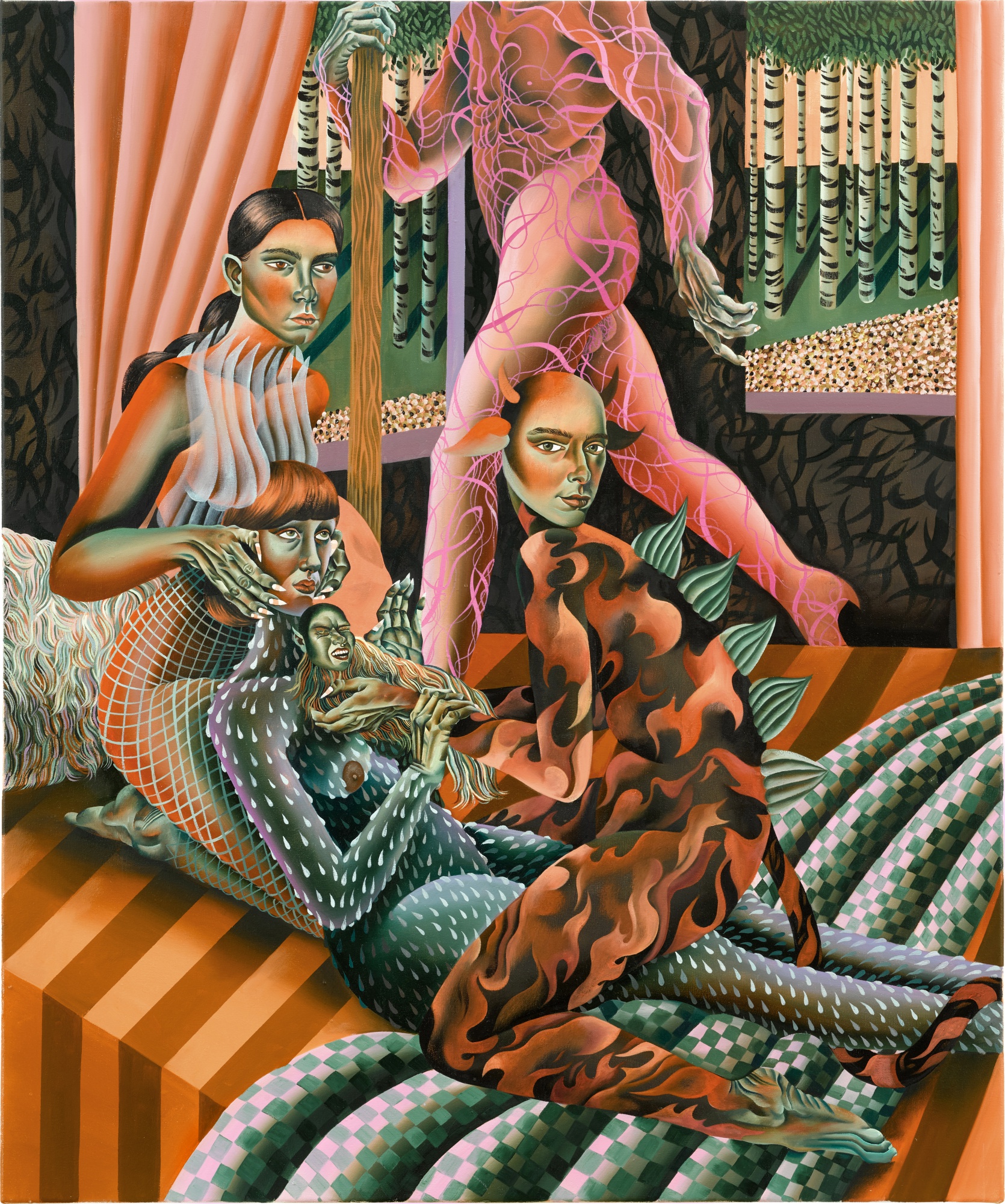
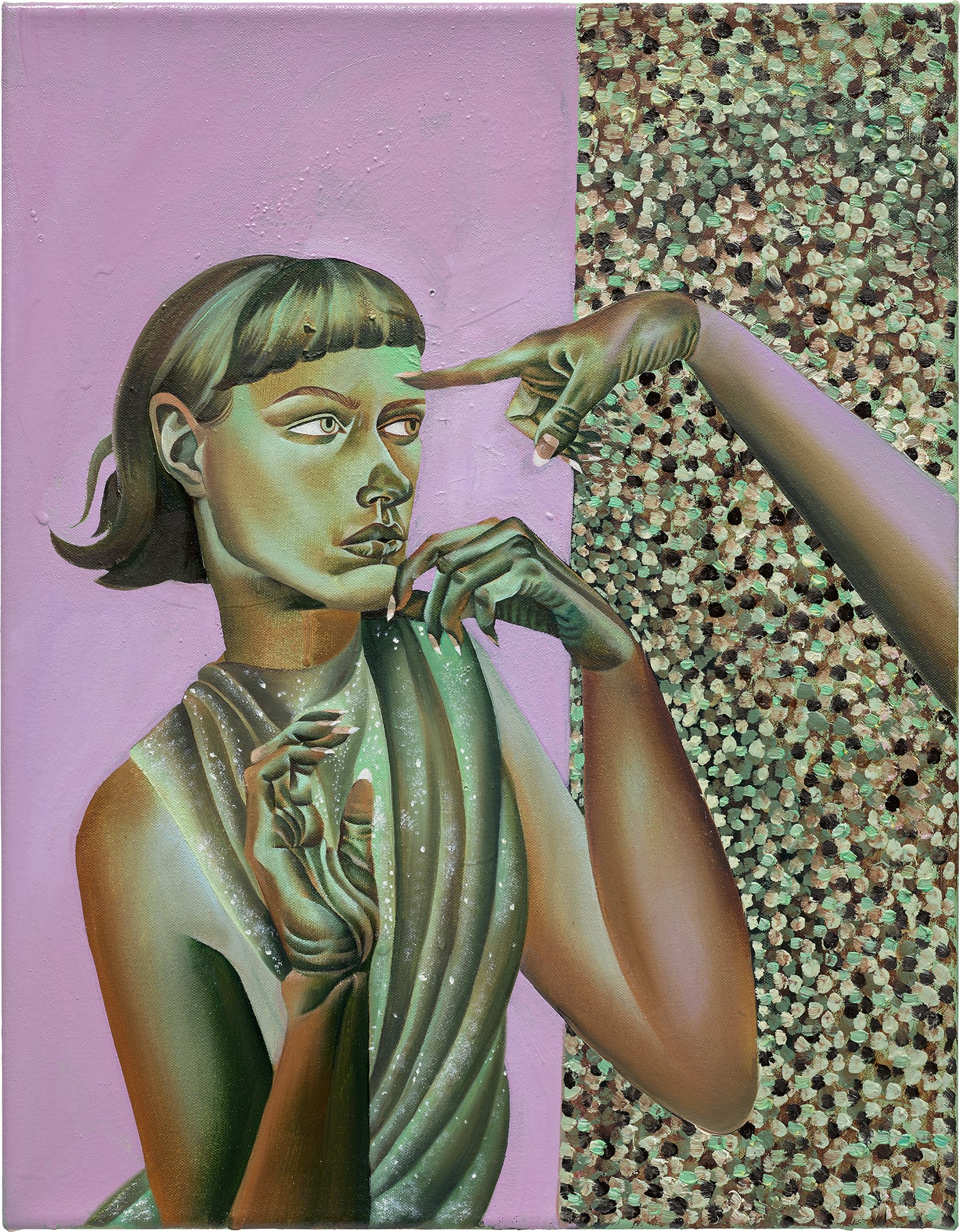
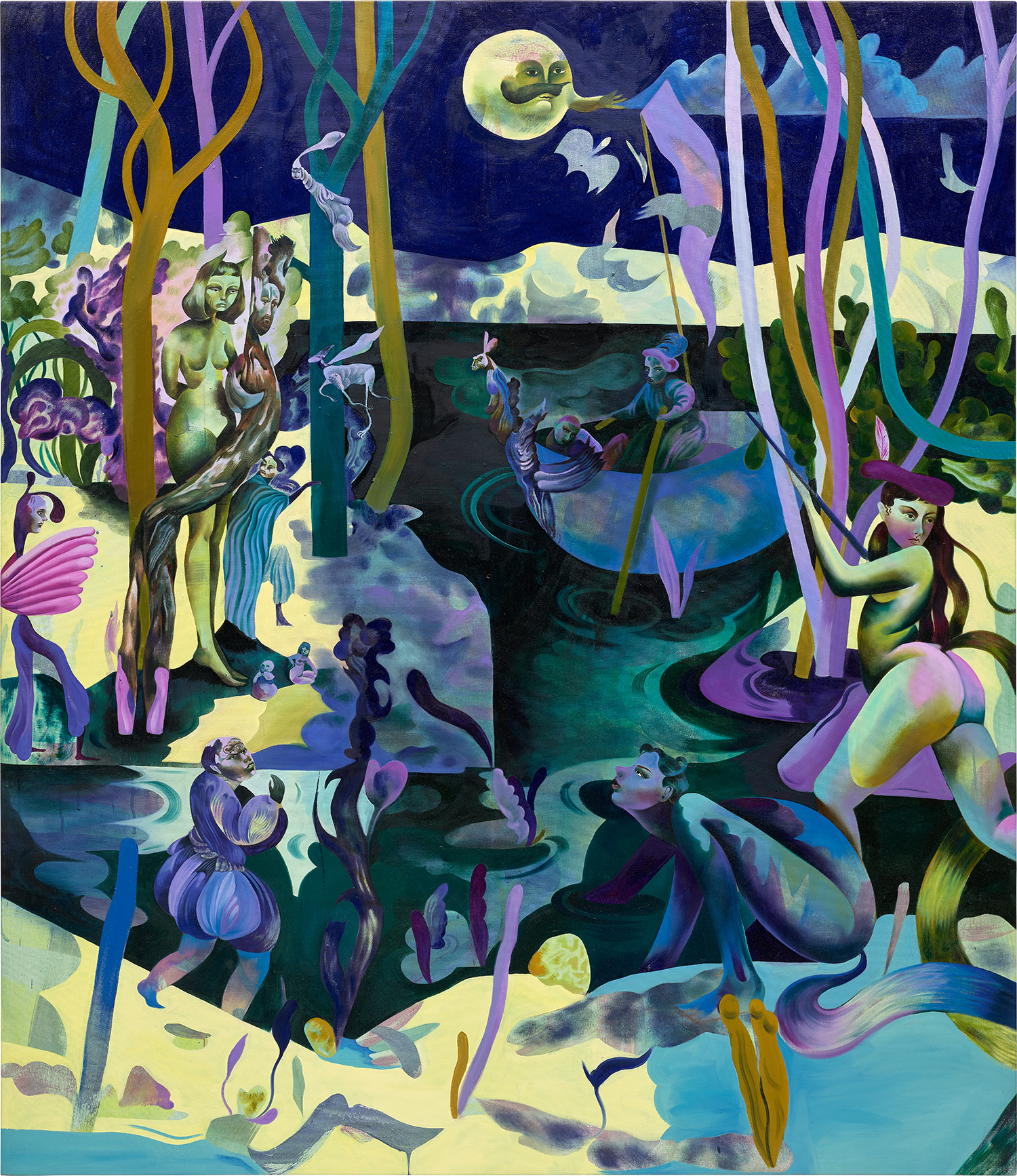
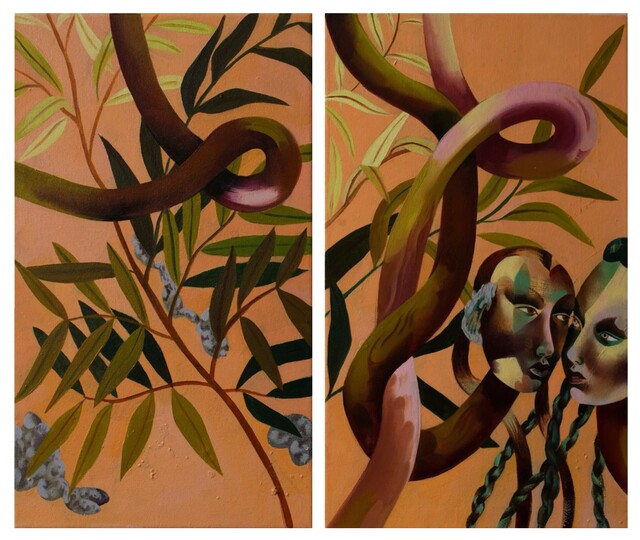
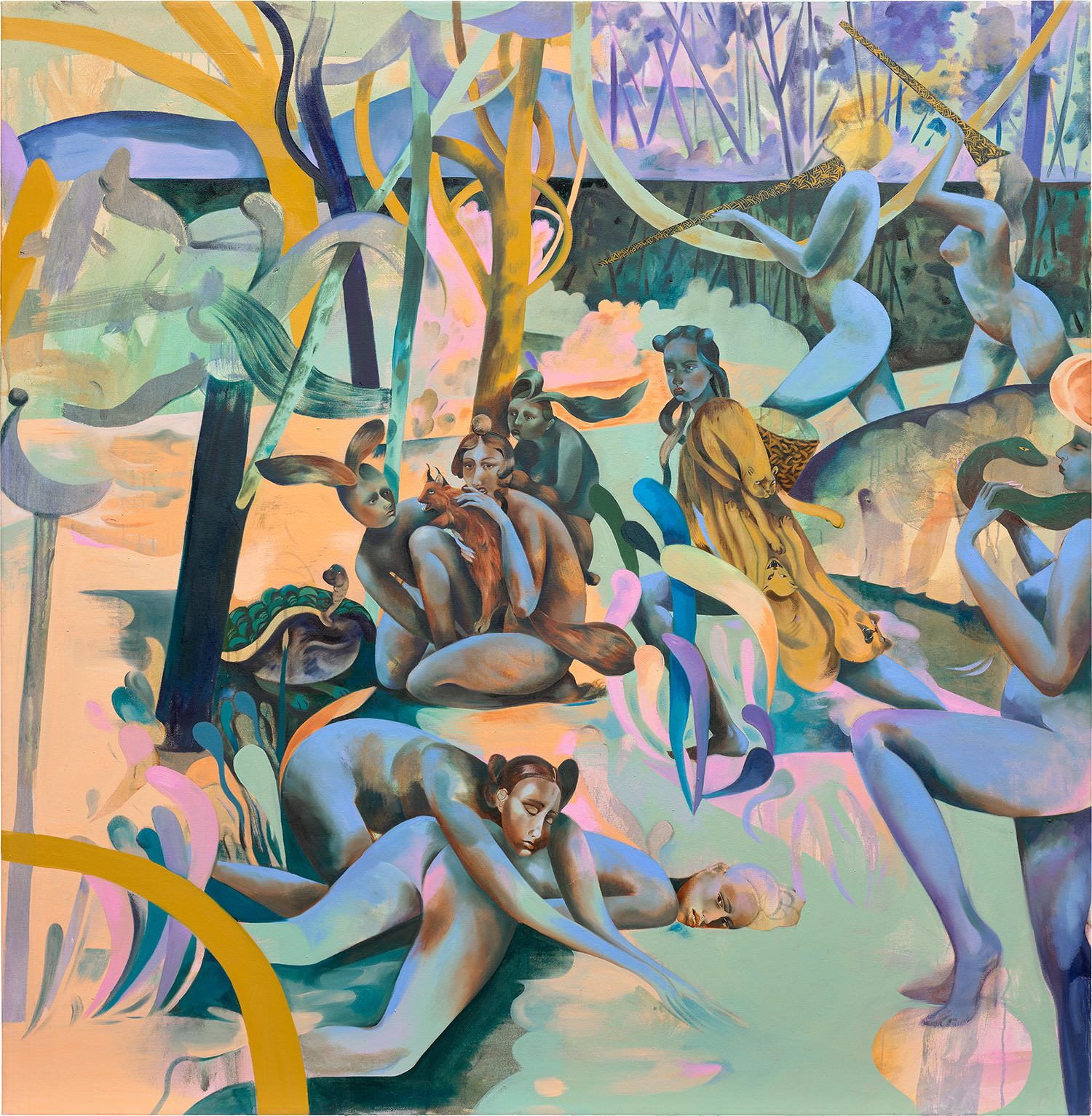
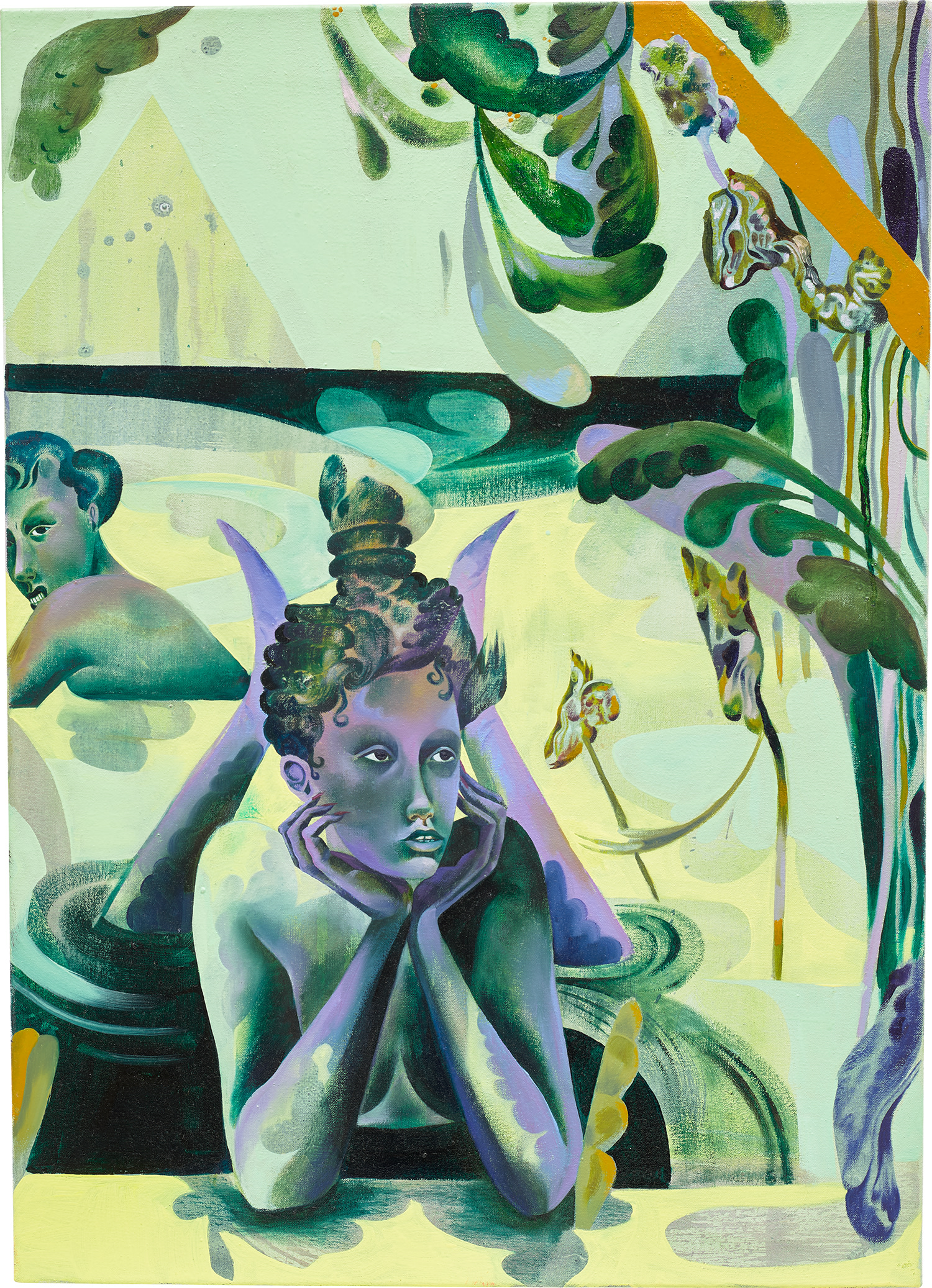
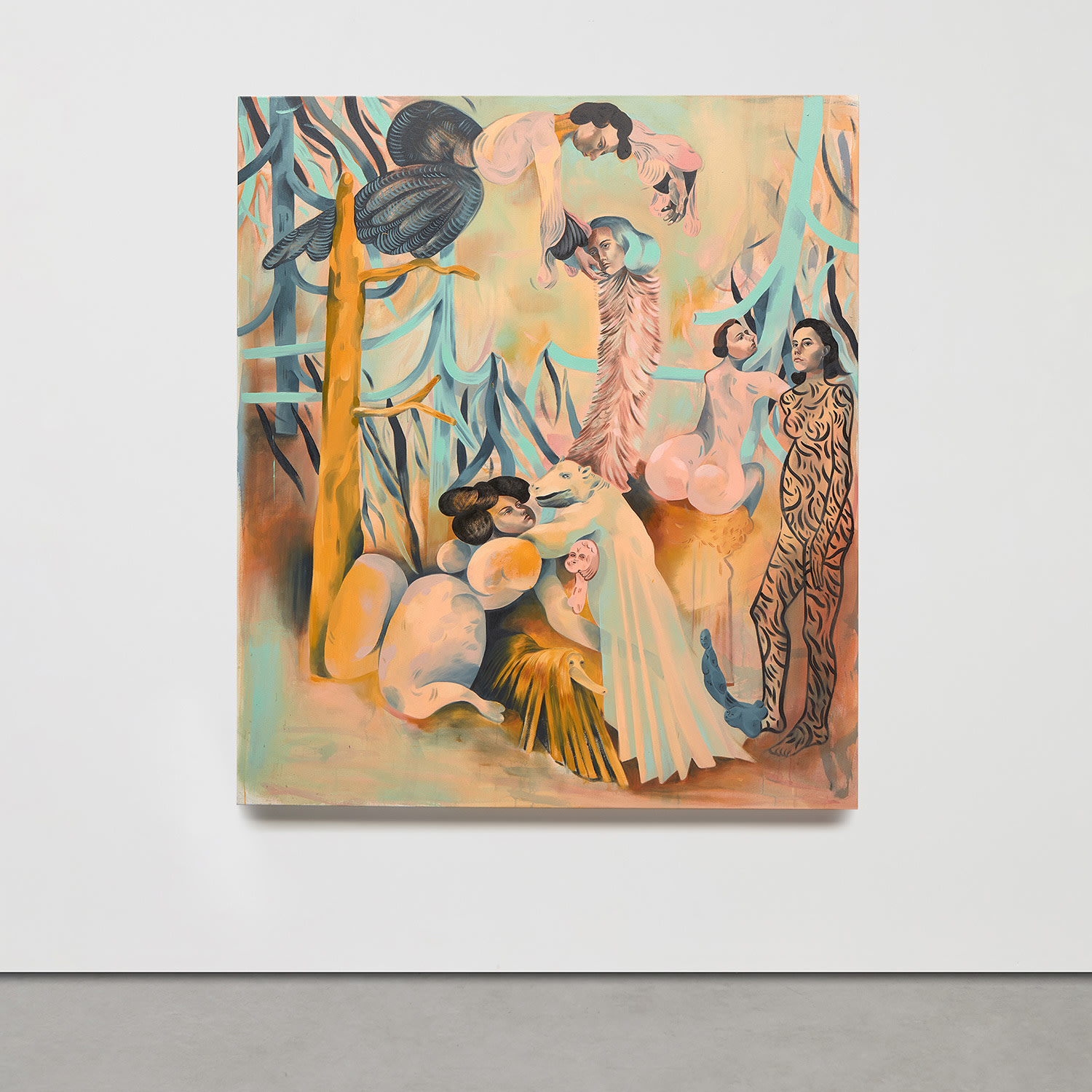
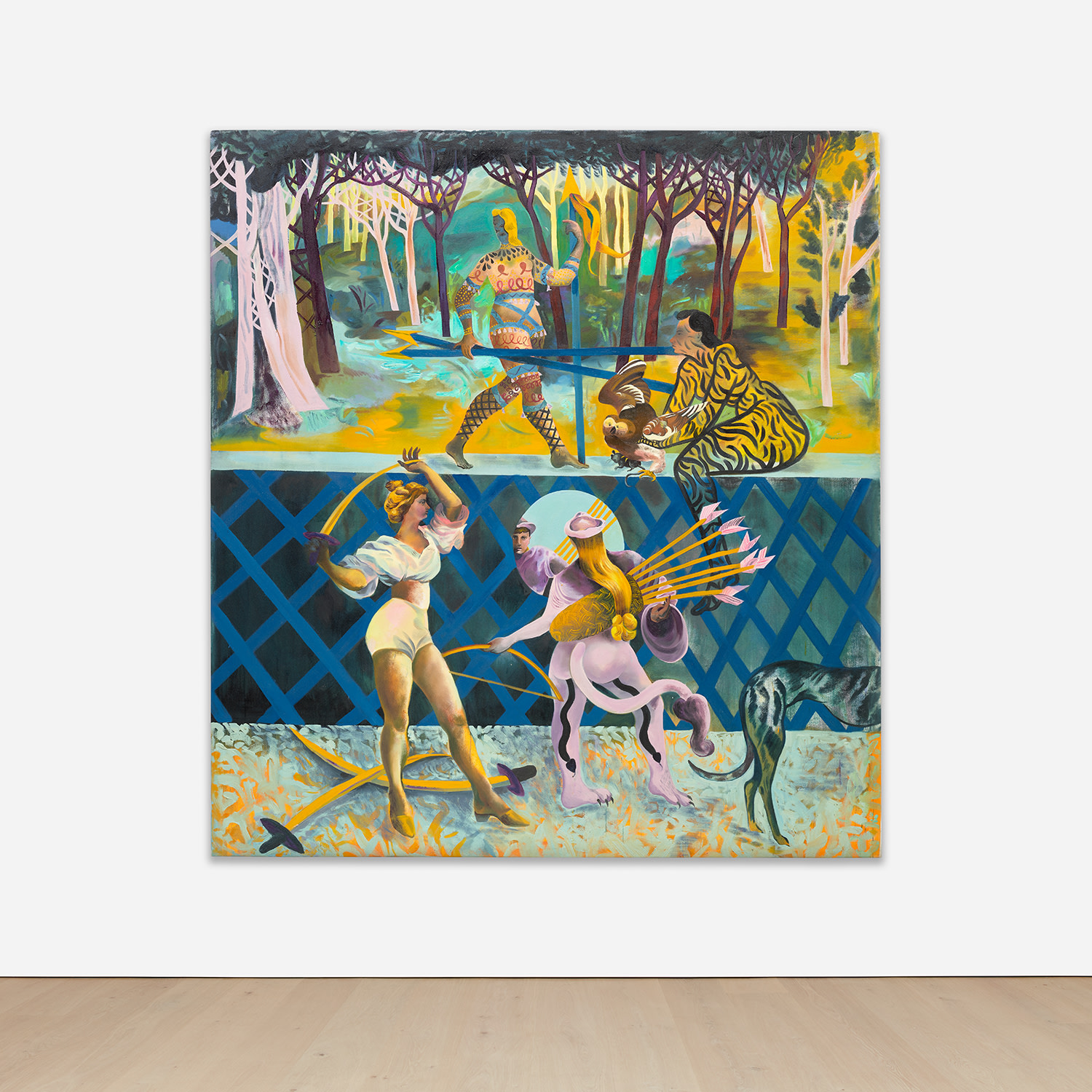
There is a particular kind of painting that stops you mid stride at an art fair, one that seems to breathe, to hum with interior logic, to insist that you lean closer. Jessie Makinson's canvases do exactly that. In recent seasons, her work has moved from the status of a quiet critical favourite into something closer to a cultural phenomenon among collectors of serious contemporary painting, with her exhibitions at Huxley Parlour in London drawing sustained attention from institutions and private buyers alike. The conversation around her practice has only deepened as figurative painting continues to assert its centrality to the most vital discussions in contemporary art. Makinson was born in 1985 and trained in Britain during a period of considerable ferment in painting. The early 2000s saw a renewed appetite for the figure, for pattern, for the kind of pictorial density that had been somewhat unfashionable in the conceptual aftermath of the 1990s. She absorbed these possibilities with obvious intelligence, developing a visual language that feels genuinely her own rather than derivative of any single lineage. Her formation was shaped by an acute sensitivity to art history, to the decorative arts, and to the storytelling traditions embedded in folklore and mythology across cultures. The work that began to attract serious notice in the mid 2010s revealed a painter already operating with unusual confidence. A piece such as "More Cosy Please" from 2014 announces many of the preoccupations that would define her subsequent decade: the female figure at the centre of an elaborate, almost theatrical stage set, colour used not descriptively but emotionally, and pattern functioning as both environment and psychological state. By the time "Fluffy Whistle" and "King Creep" arrived in 2017, it was clear that Makinson was not simply working within a tradition but actively rewiring it. The titles themselves are part of the pleasure, combining nursery rhyme cadence with something faintly unsettling, as though language itself has been fed through the same dreamlike processor as the imagery. 2018 marked a significant deepening of her practice with "Like a Villainelle" and "Through The Lattice Step Lightly," two works that demonstrate her growing command of pictorial space. A villainelle is a highly structured poetic form, and there is something similarly architectural about Makinson's approach to composition: everything has its place, yet the overall effect is of lush, barely contained abundance. The following year brought "La Giggles," an ambitious work executed in oil and pigment on canvas in two parts, which suggested an artist willing to expand the physical and conceptual scale of her inquiry. "Lunar Thorn," also from 2019, draws on celestial imagery with the confidence of someone who has genuinely metabolised the history of allegorical painting rather than simply raided it for decoration. Her more recent paintings, including "She showed a saucy tongue" from 2021 and the bilingual "Another Word and I'll Cut Your Tail Off" from 2022, reveal an artist whose ambitions are expanding in several directions simultaneously. The 2022 work is particularly striking in its incorporation of Chinese script alongside English in its title, gesturing toward a cross cultural dialogue that enriches the mythological substrata of her painting without reducing any tradition to mere ornament. Makinson's enigmatic female protagonists occupy these canvases with an authority that feels neither passive nor aggressive but something richer and more complex: knowing, playful, sovereign. They are figures from no single mythology and yet from all of them at once. For collectors, Makinson's work represents one of the more compelling propositions in contemporary British painting. Her practice sits in productive conversation with artists such as Cecily Brown, whose exploration of the figure in charged decorative space opened important doors, and with painters like Francesca Mollett or Flora Yukhnovich who have similarly revived an interest in sensuous, historically informed painting. The lineage runs further back through Paula Rego's theatrical feminism and even to the visionary intensity of early Symbolist painting, but Makinson's particular voice is distinct enough that such comparisons illuminate rather than contain her. Huxley Parlour, one of London's most discerning galleries, has provided her with a platform that attracts collectors who are genuinely engaged with the history of painting rather than simply following market trends. The market fundamentals around Makinson's work are strong precisely because the paintings reward sustained looking. They are not works that declare themselves in a single glance and then recede. Each canvas contains multiple temporal layers: the folk tale and the contemporary moment, the textile tradition and the oil painting tradition, the specific and the archetypal. Collectors who have lived with her work over years report that new details surface continuously, that the relationship between figure and ground keeps shifting, that the paintings seem to age well in the sense of deepening rather than simply becoming familiar. For anyone building a collection with genuine longevity in mind, that quality is among the most valuable a work can possess. The broader significance of Makinson's practice lies in what it models for painting as a form. At a moment when the medium is sometimes expected to justify itself against the claims of digital image making and post medium conceptualism, her canvases make the quiet but absolute case that oil paint applied with imagination and rigour can do things that nothing else can. The lushness of her surfaces is not mere decoration but argument: an argument that beauty, fantasy, and intellectual seriousness are not in competition with one another. That the figures in her paintings are almost always women, figures of agency and mystery rather than objects of contemplation, gives her work a political dimension that operates through pleasure rather than prescription. Jessie Makinson is painting some of the most genuinely alive canvases being made in Britain today, and the artists and collectors paying attention to her now will not regret the early recognition.