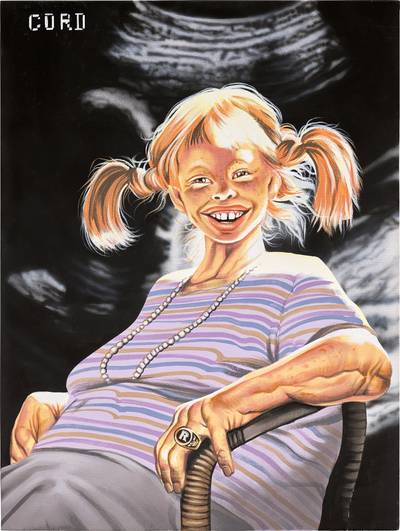
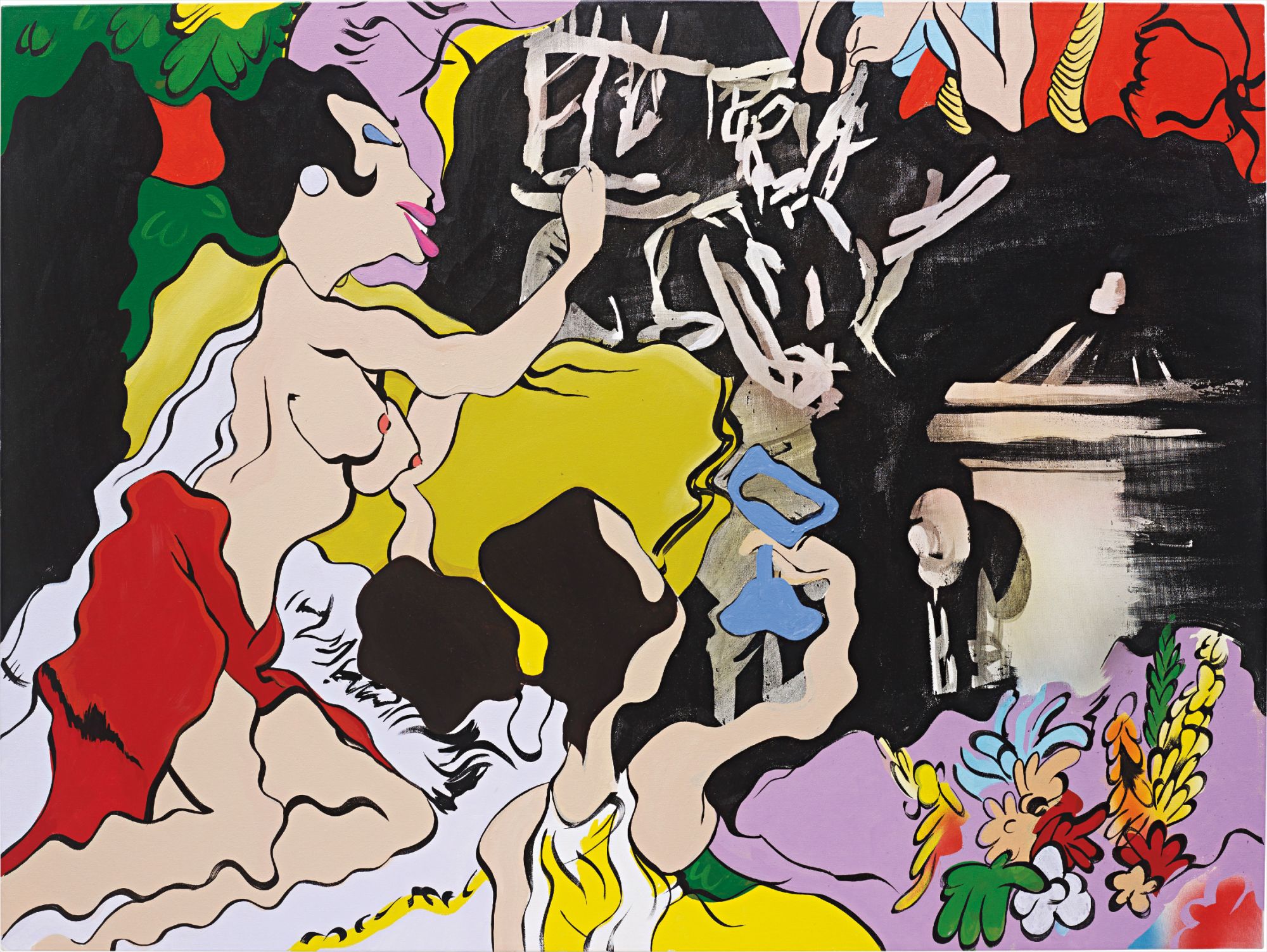
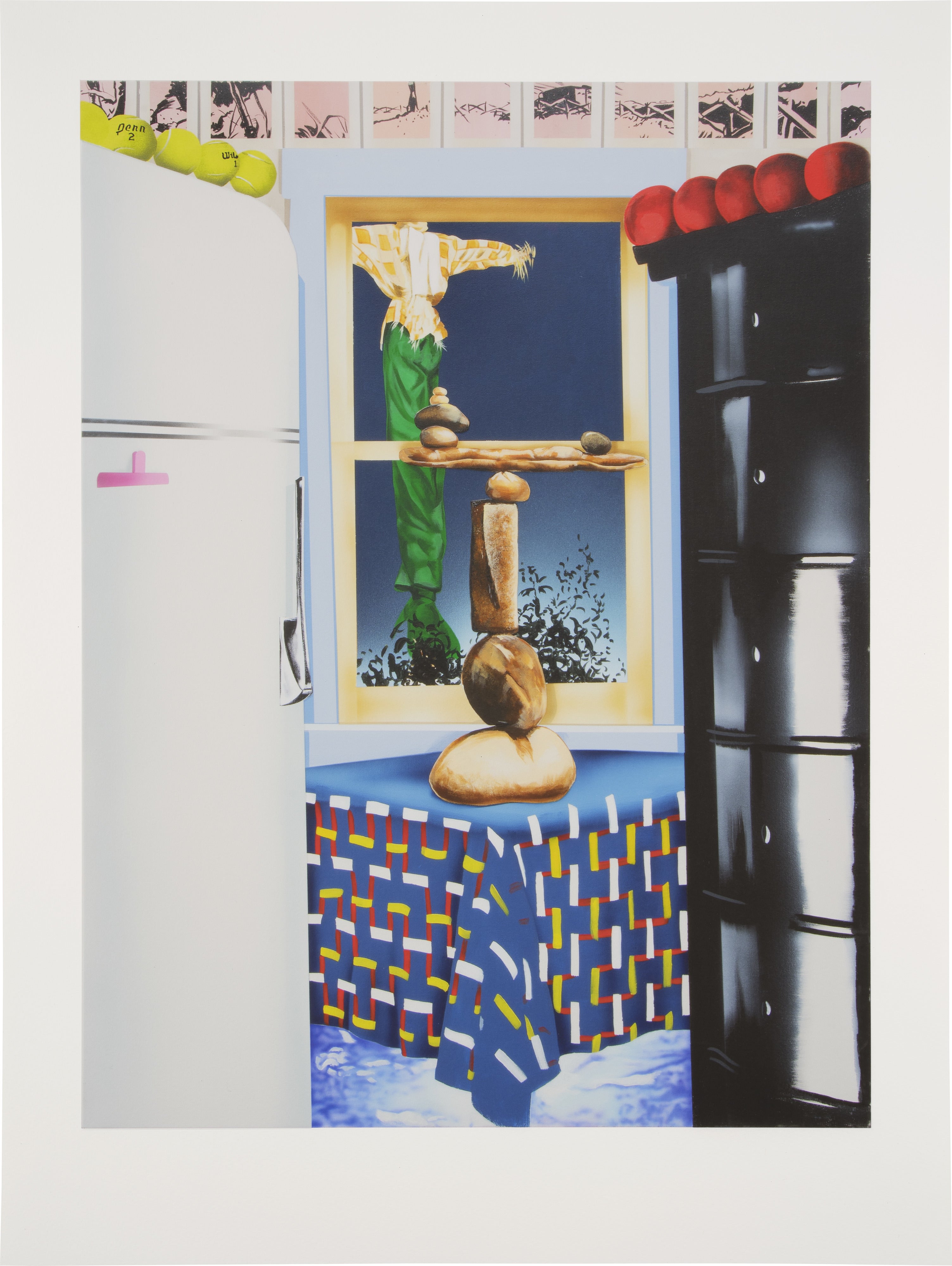
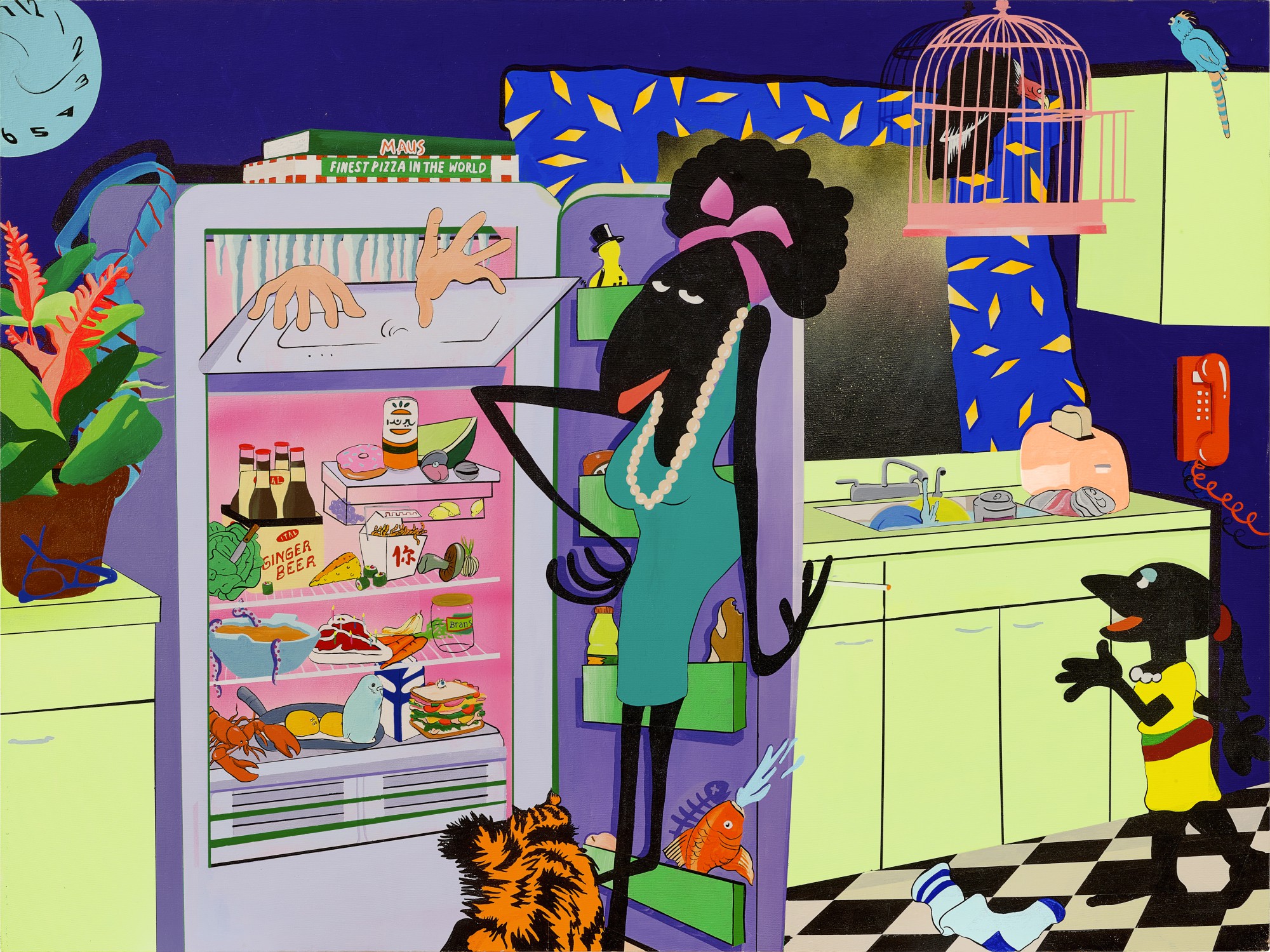
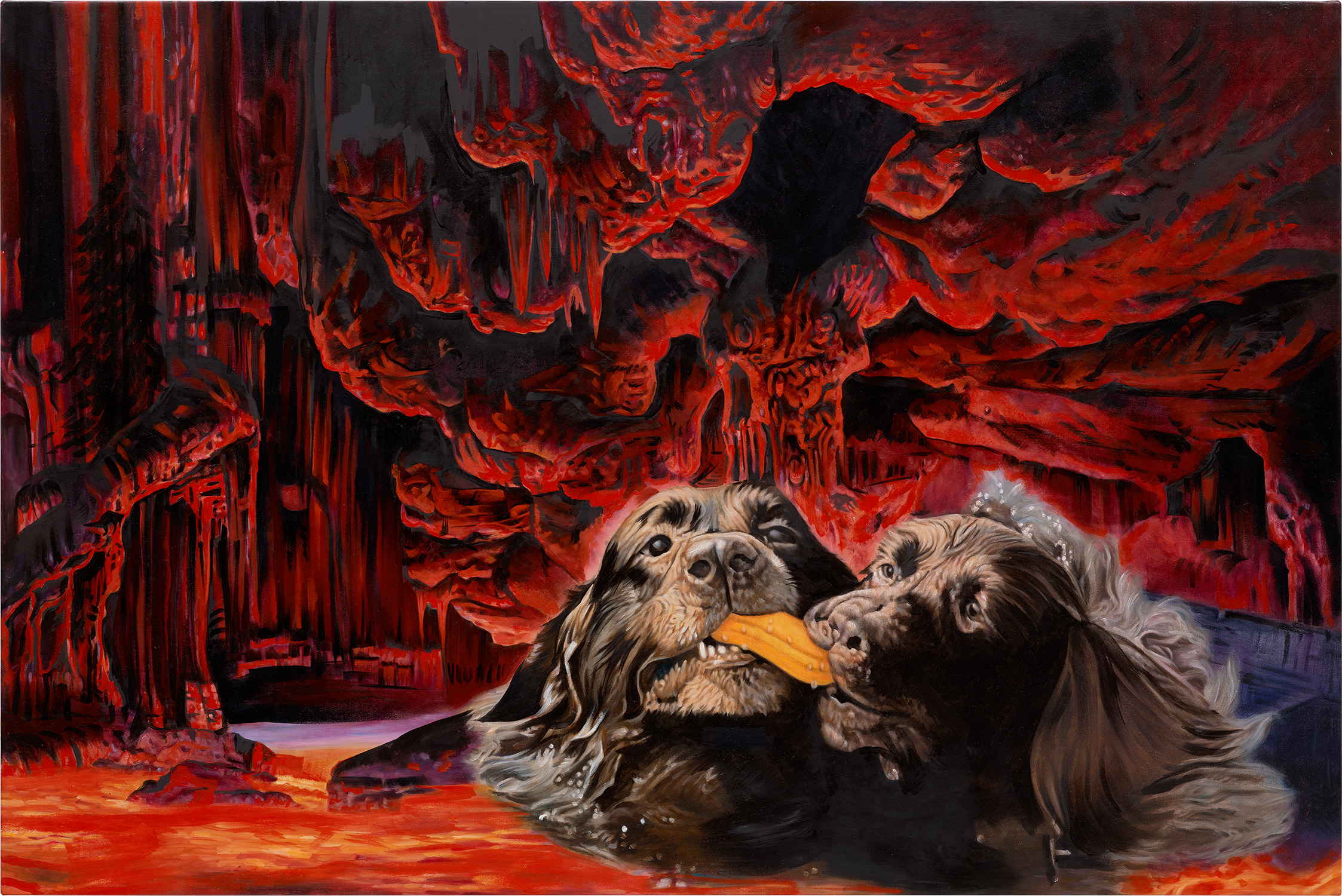
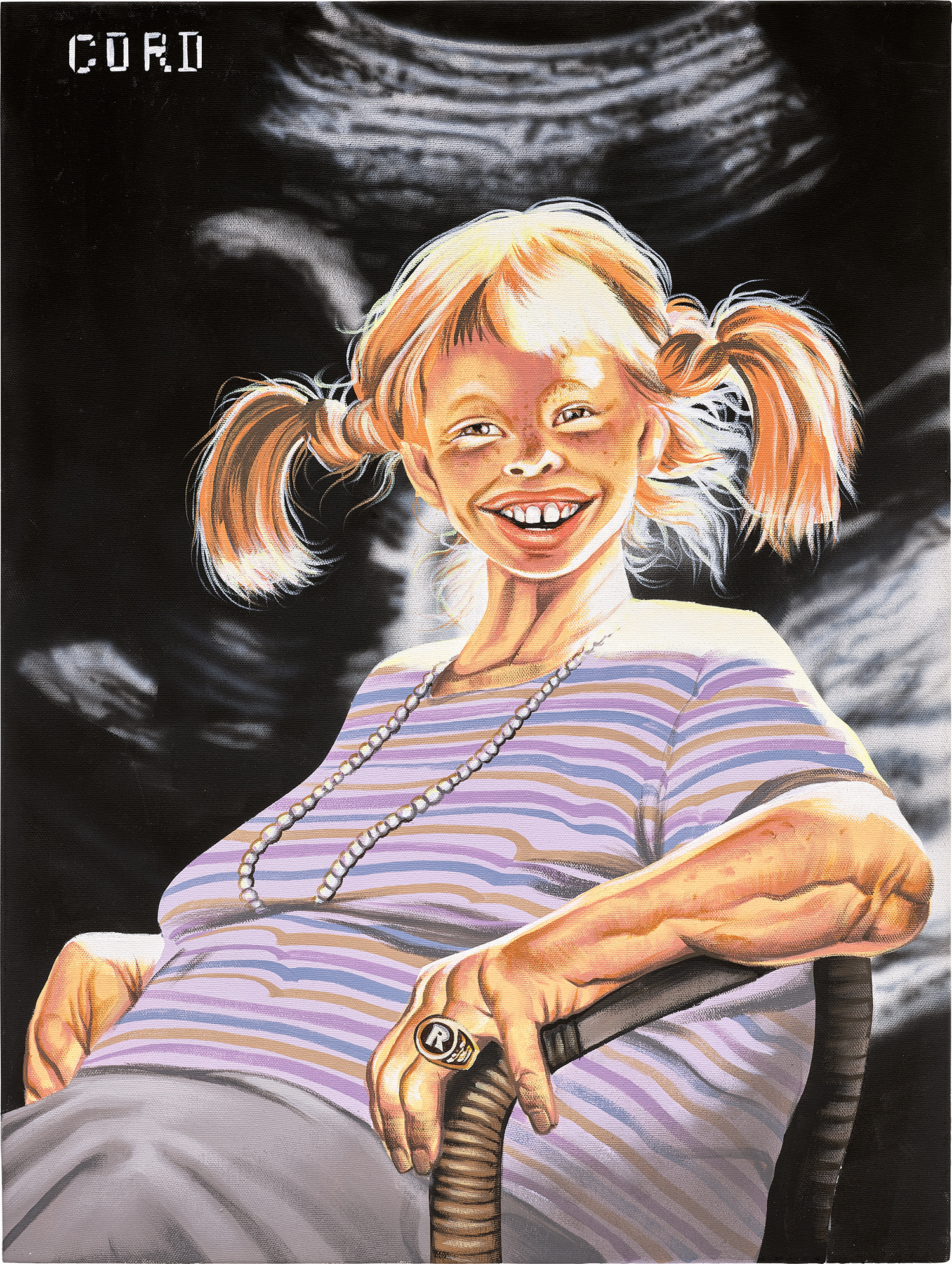
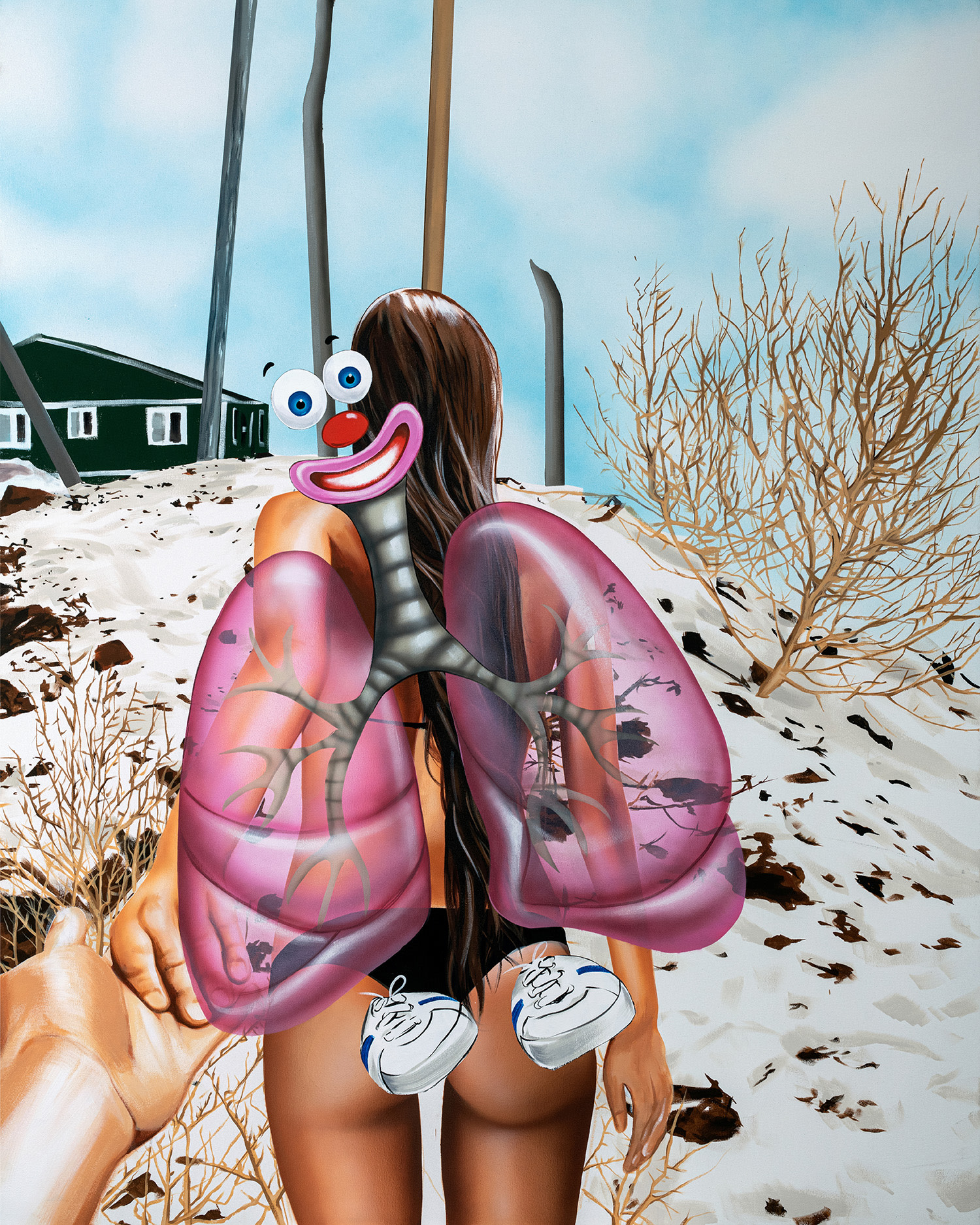
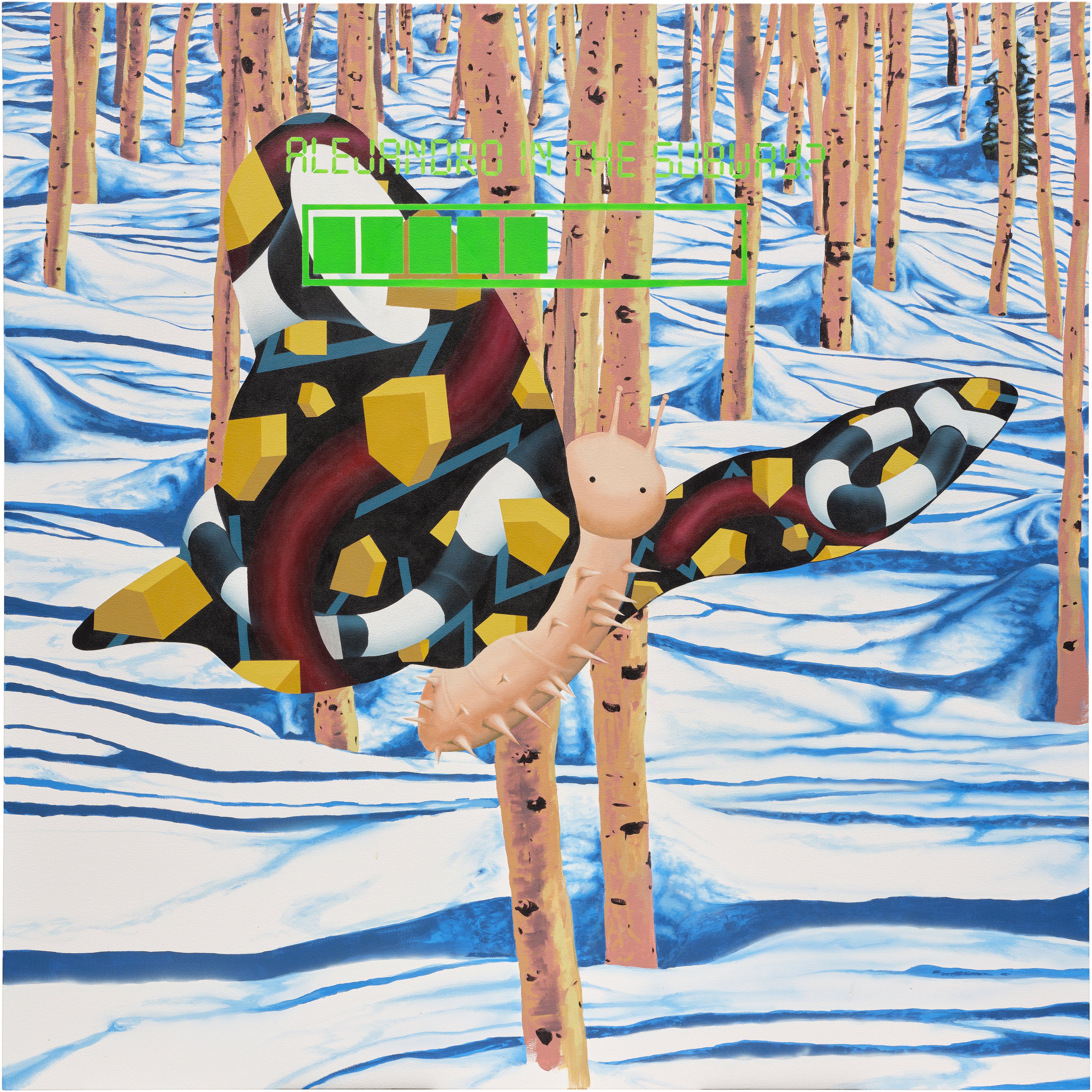
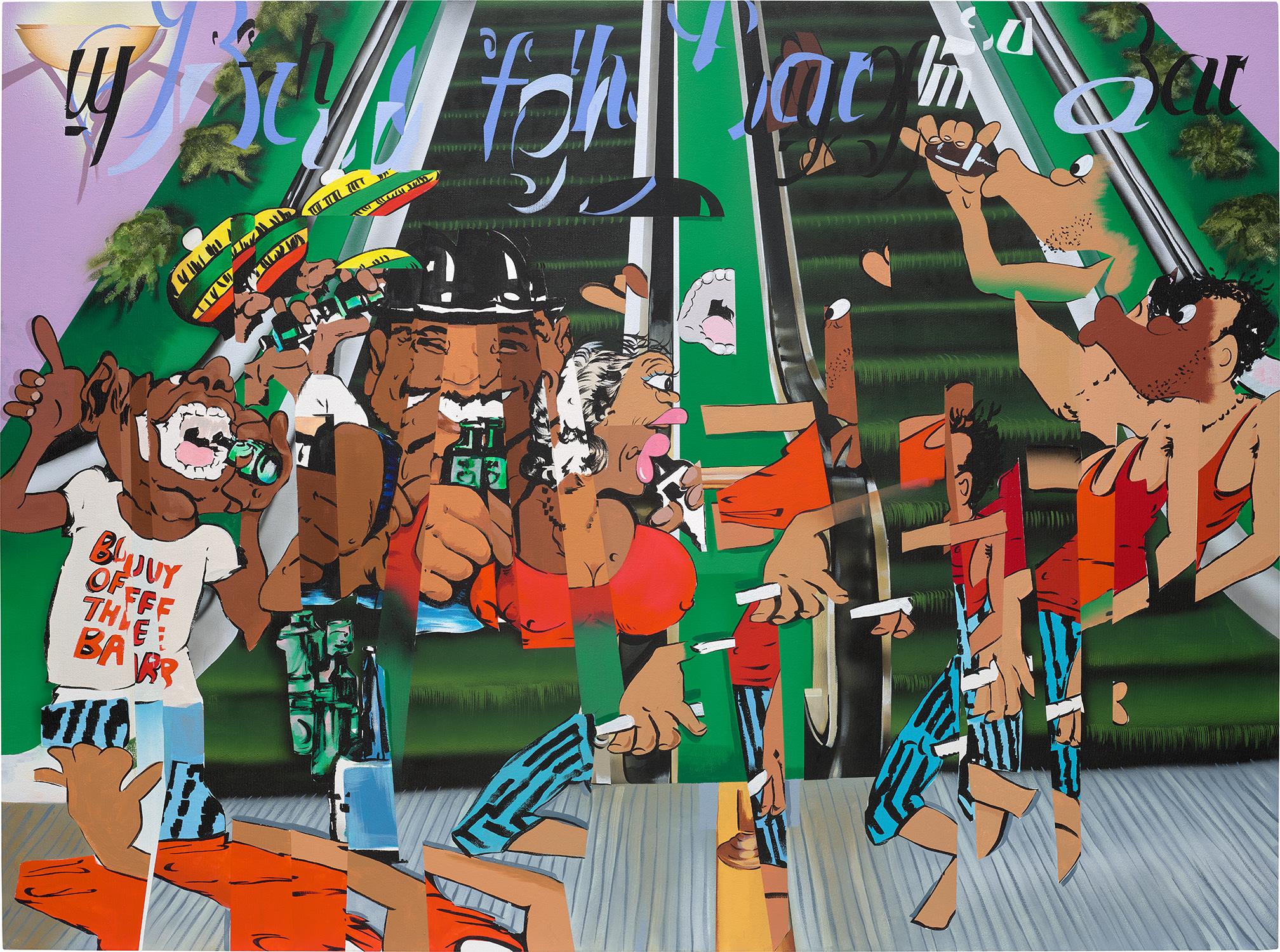
Something shifted in the contemporary painting conversation around 2022 and 2023, and Jamian Juliano Villani was at the center of it. Her exhibition at Karma gallery in New York drew serious attention from collectors and critics who had been tracking her ascent for years, confirming what her devoted following had long understood: that her maximalist, image drenched canvases represent one of the most genuinely original pictorial visions working in American painting today. The art world, always hungry for painters who can hold irony and sincerity in the same brushstroke, found in Juliano Villani an artist who does exactly that, and does it with a kind of raucous, generous intelligence that feels entirely her own. Juliano Villani was born in 1987 and grew up in New Jersey, a biographical detail that matters more than it might seem. The particular visual landscape of the American suburbs, with its strip malls, cable television, fast food iconography, and the peculiar flatness of mass produced imagery, soaked into her sensibility before she had a name for what she was absorbing. She studied at the School of Visual Arts in New York, entering a downtown art world that was undergoing its own restless reinvention. The city gave her proximity to both rigorous art historical conversation and the low culture visual flood of the internet age, and she proved unusually gifted at holding those two worlds in productive tension. Her early works from 2013 and 2014 announced a fully formed sensibility almost immediately. Paintings like "Some Like it Hot" from 2013 and "Don't Touch Mi Tomato" from the same year showed her characteristic approach already in place: figures and objects pulled from wildly disparate visual sources colliding on the canvas with the logic of a fever dream rather than a composed scene. "Biking to the Garden of Eden" from 2014 and "A Younger, Smaller Flame" from the same year deepened this approach, demonstrating that the apparent chaos of her compositions was in fact underpinned by a sophisticated understanding of pictorial structure. These early works on acrylic on canvas established her technical foundation and her thematic obsessions simultaneously. By the mid 2010s, works like "Golden Girl" from 2015 and "Clear Cough from Your Schedule" from 2016 showed her range expanding. The paintings grew more layered and more daring in their combination of references, pulling from art history, advertising imagery, internet vernacular, and cinematic memory with equal confidence. Her palette became more audacious, and her sense of scale more assured. What distinguishes Juliano Villani from painters who merely appropriate or remix is the sense that her canvases are genuinely alive with feeling, that beneath the surface cacophony there is a point of view that is insistently personal. She is not merely commenting on visual culture; she is metabolizing it and returning it transformed. The works from the late 2010s and into the 2020s represent the fullest expression of her vision to date. "Hand's Job" from 2019 and "The Critic" from 2020 show a painter at the height of her powers, deploying her distinctive visual language with complete authority. "Interns" from 2022, executed in oil on canvas rather than her more frequent acrylic, suggests a willingness to evolve her materials even as her compositional DNA remains unmistakably her own. Her move into printmaking, represented by works like "Is There Room for Bruce," a digital pigment print with embossing on wove paper, demonstrates that her sensibility translates compellingly beyond the painted surface. Across every medium she touches, the work retains that quality of urgent, almost hallucinatory presence. For collectors, Juliano Villani's work occupies an increasingly compelling position in the contemporary market. Her paintings from the early 2010s, acquired when she was showing at Company Gallery in New York, have appreciated significantly as her profile has grown. Collectors drawn to the postinternet painting conversation, those who also live with works by artists exploring the visual grammar of the digital age through traditional media, tend to find her canvases unusually rewarding to live with over time. There is always something more to find: another visual rhyme, another embedded reference, another moment where the image destabilizes pleasurably and reveals a new angle. Works on paper and prints offer a meaningful point of entry for collectors approaching her practice for the first time. In the broader context of contemporary painting, Juliano Villani belongs to a generation that has absorbed and then productively complicated the legacies of painters as various as Peter Saul, Nicole Eisenman, and the Pop Art tradition broadly conceived. Her work shares something with the energy of artists who treat painting as a site of accumulation and collision rather than resolution, painters for whom the canvas is a space where contradictory visual information can coexist without hierarchy. She is also deeply in dialogue with the history of image appropriation in American art, from the Pictures Generation onward, but her relationship to that history is irreverent and alive rather than academic. Why does Jamian Juliano Villani matter, particularly now? In a cultural moment saturated with imagery, with visual experience flattened and accelerated by screens and social media, her paintings insist on the possibility of looking slowly, of finding density and strangeness in what appeared at first glance to be familiar. She takes the detritus of contemporary visual life and makes it genuinely weird again, genuinely pleasurable, genuinely worth sustained attention. Her career is still in full development, and the works she is producing now suggest that the most ambitious and surprising chapters of that career may still lie ahead. For collectors, institutions, and anyone who cares about the future of painting, she is an artist to follow with great attention and real enthusiasm.