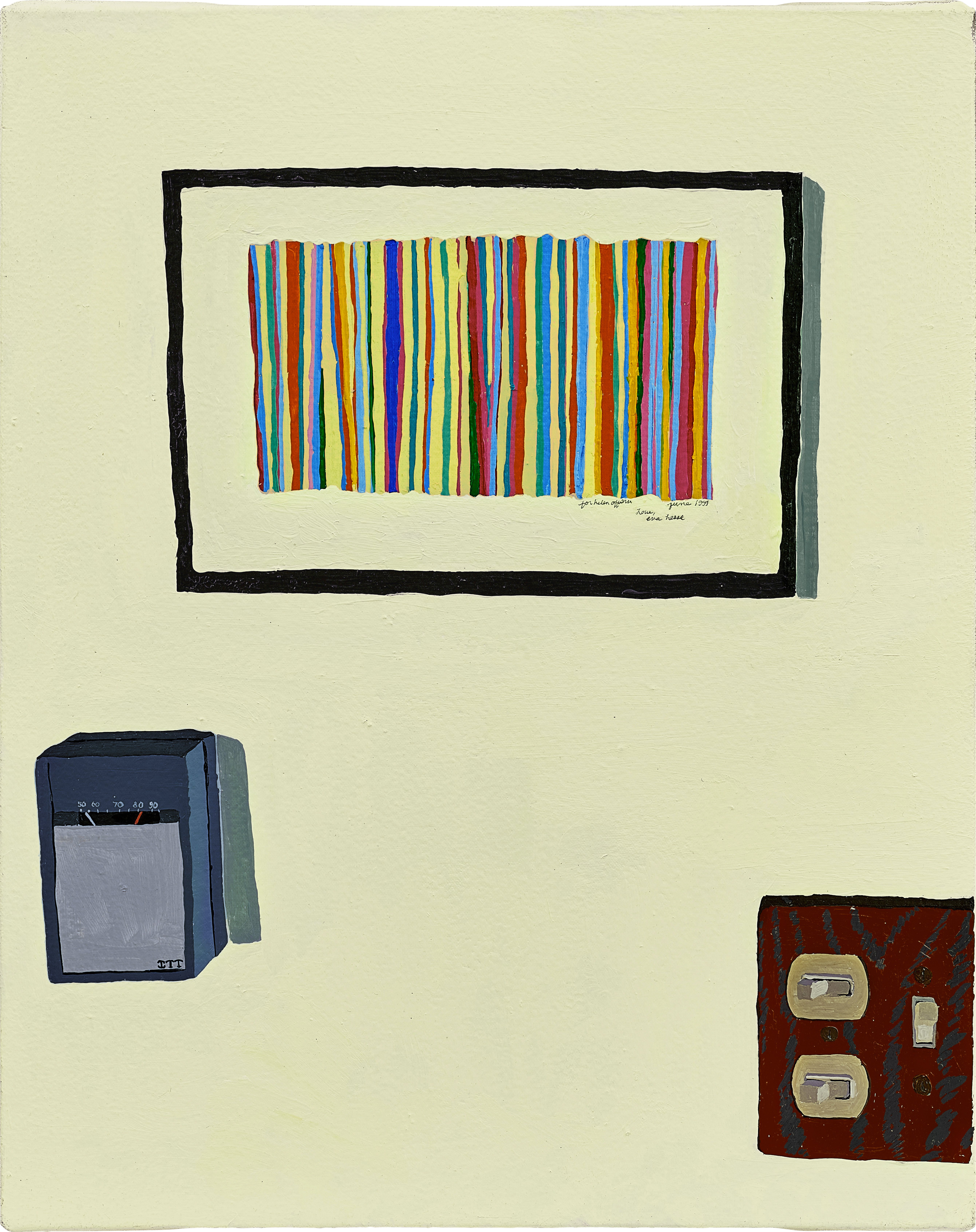
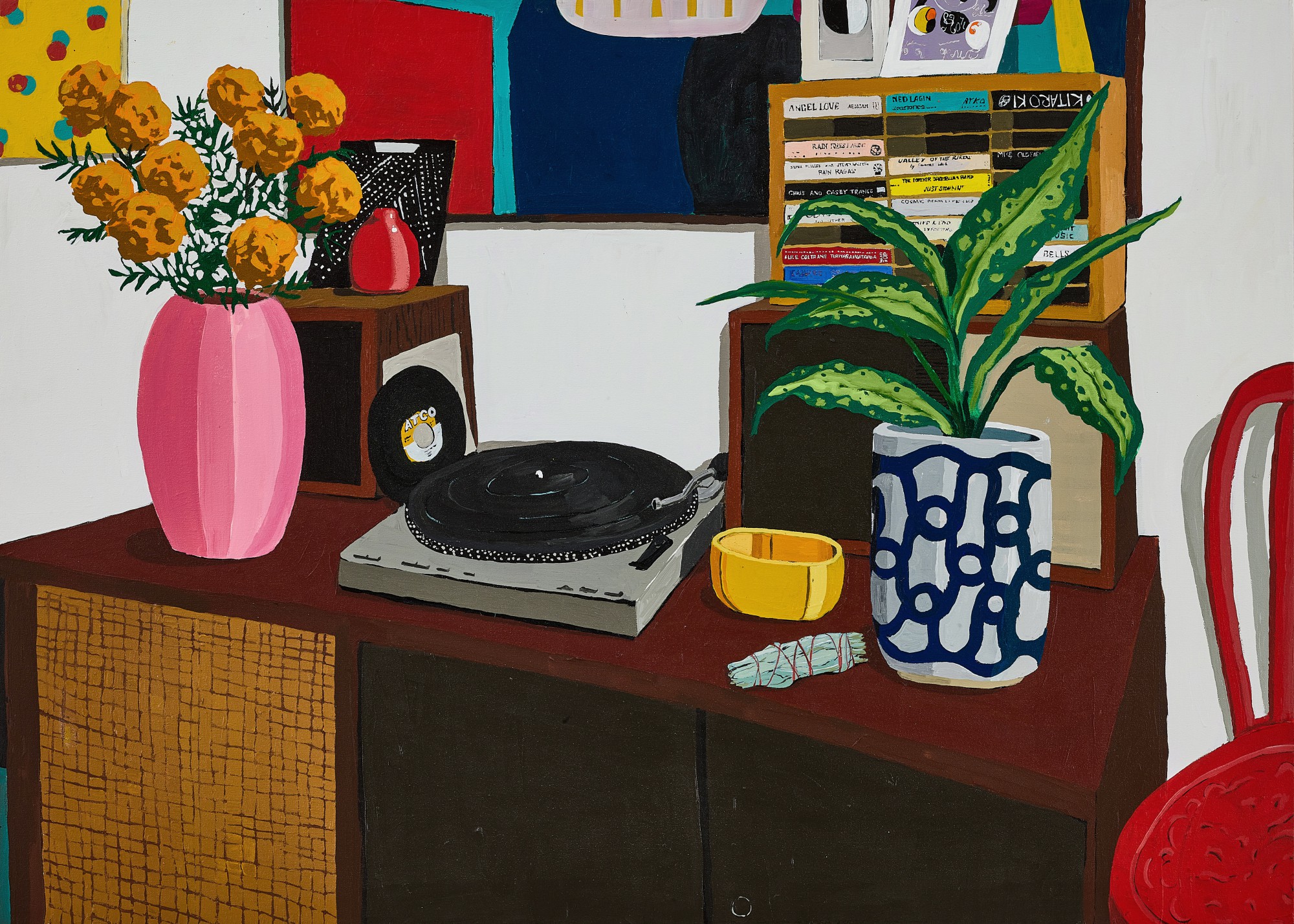
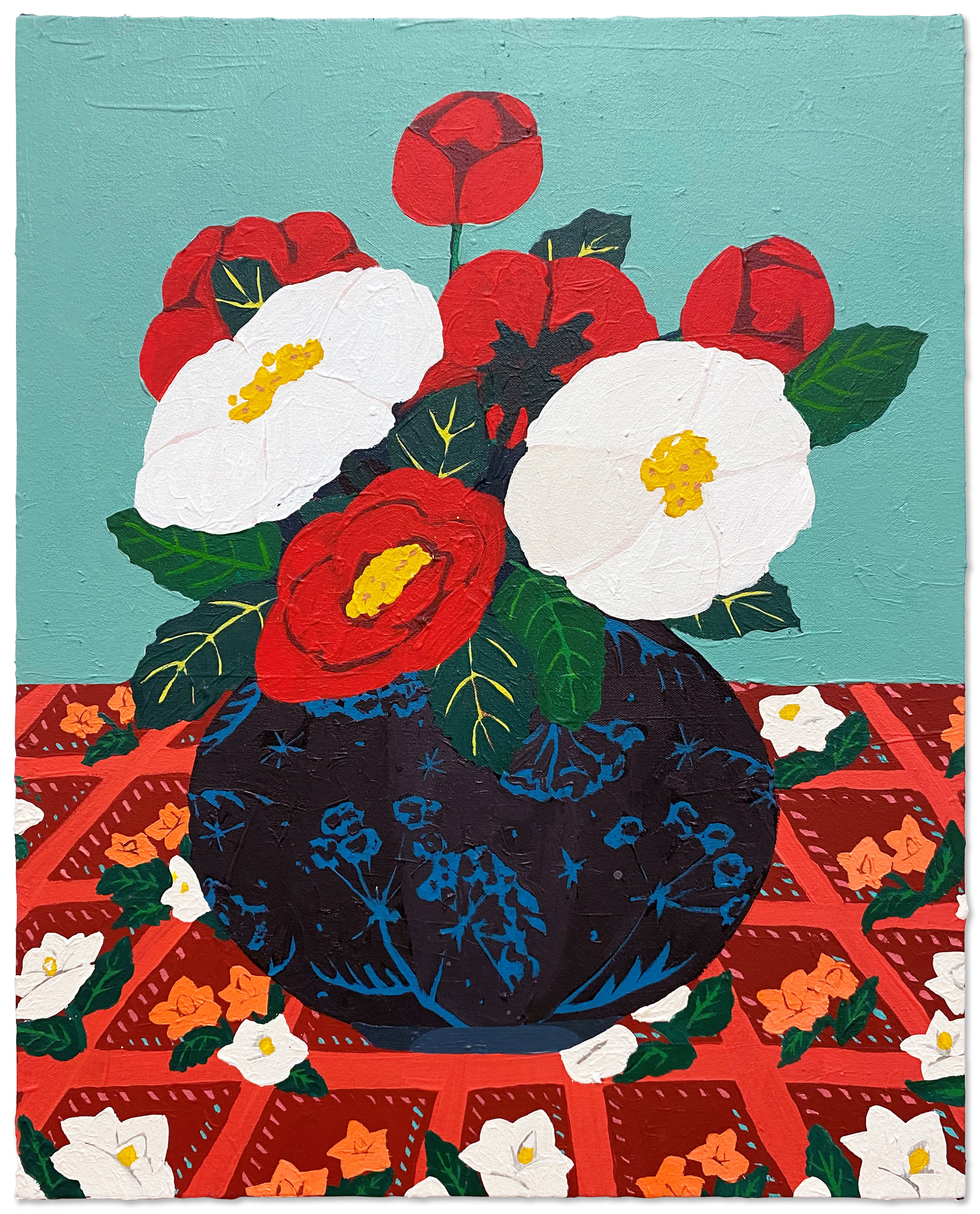
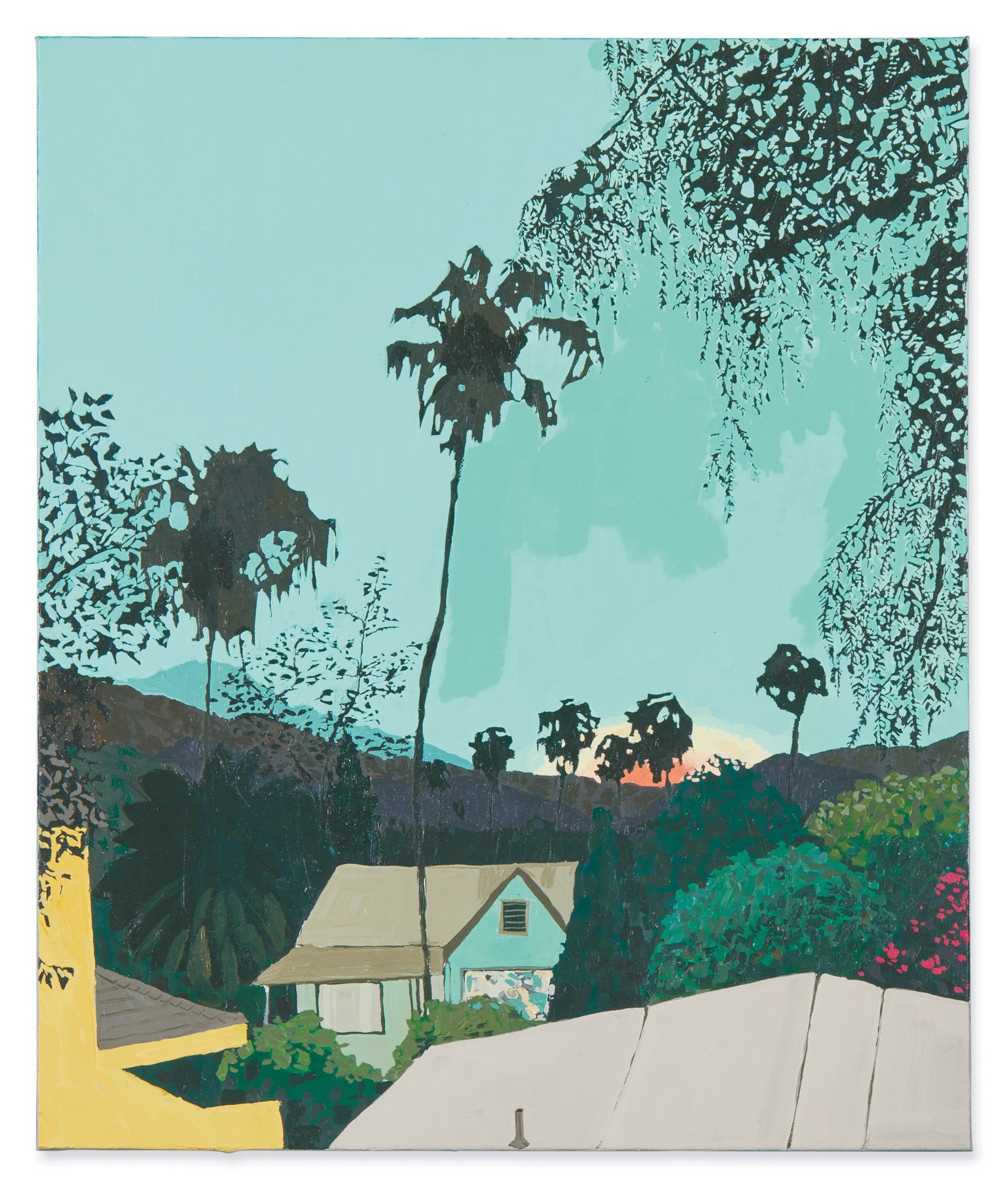
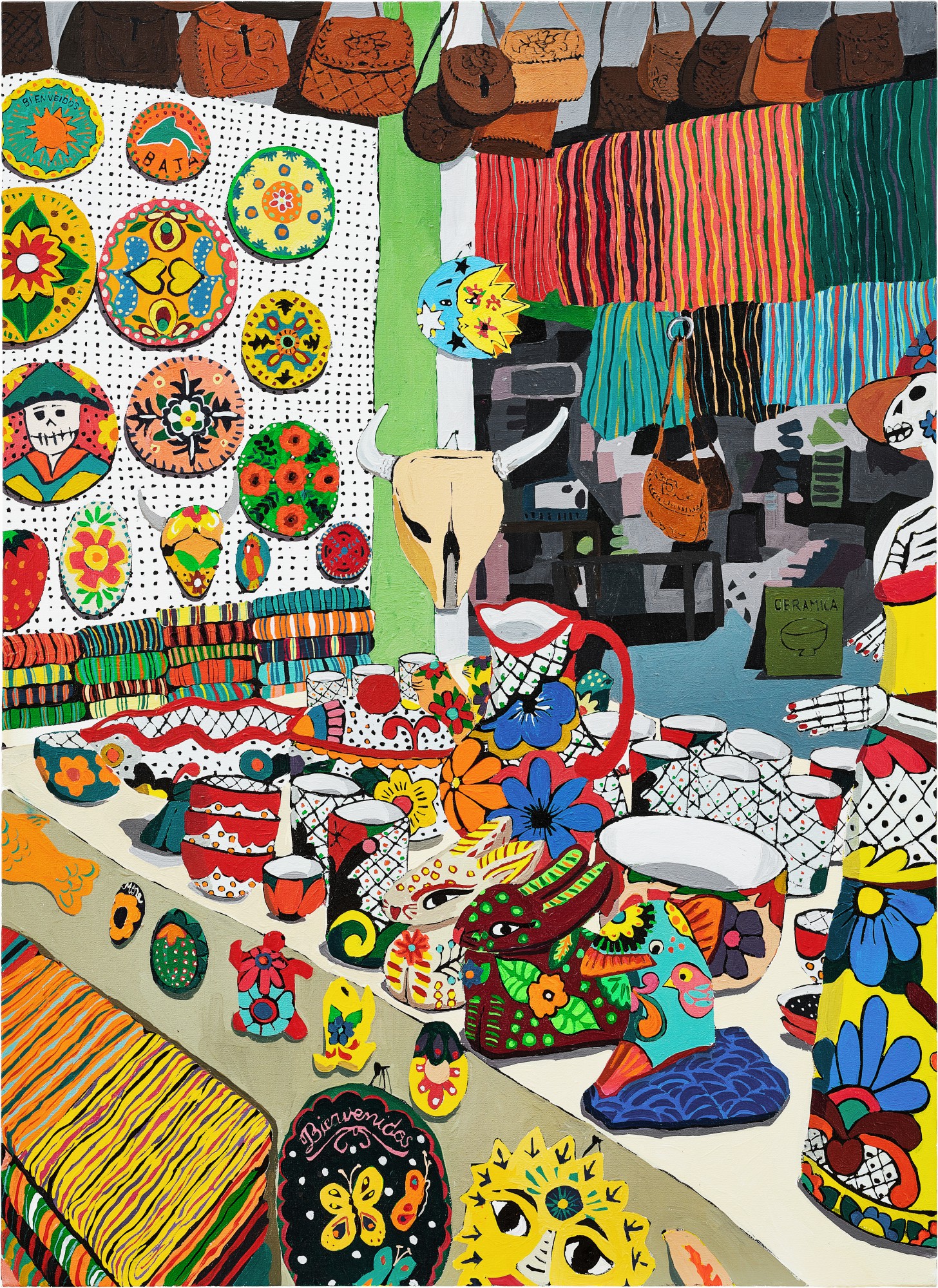
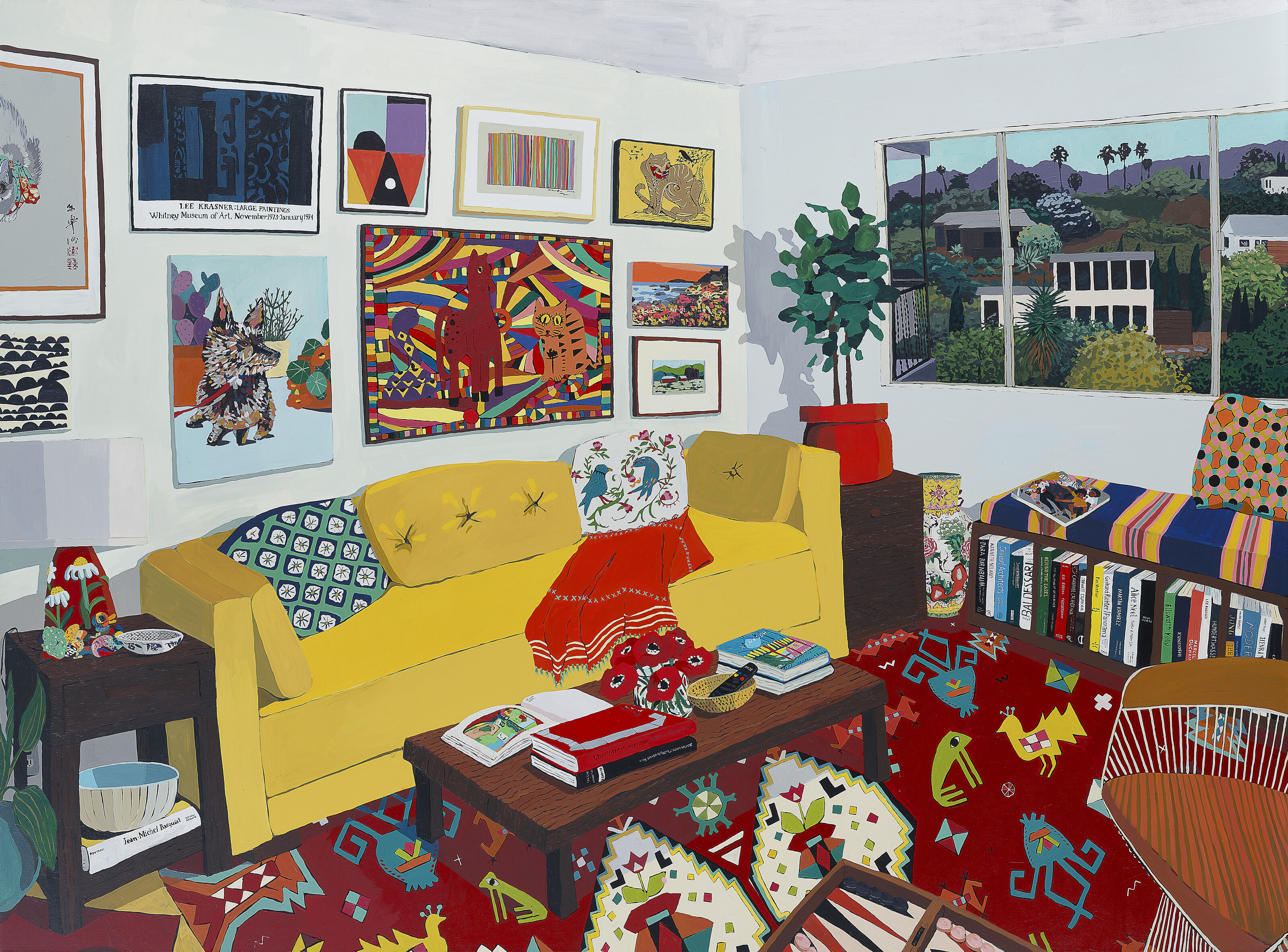
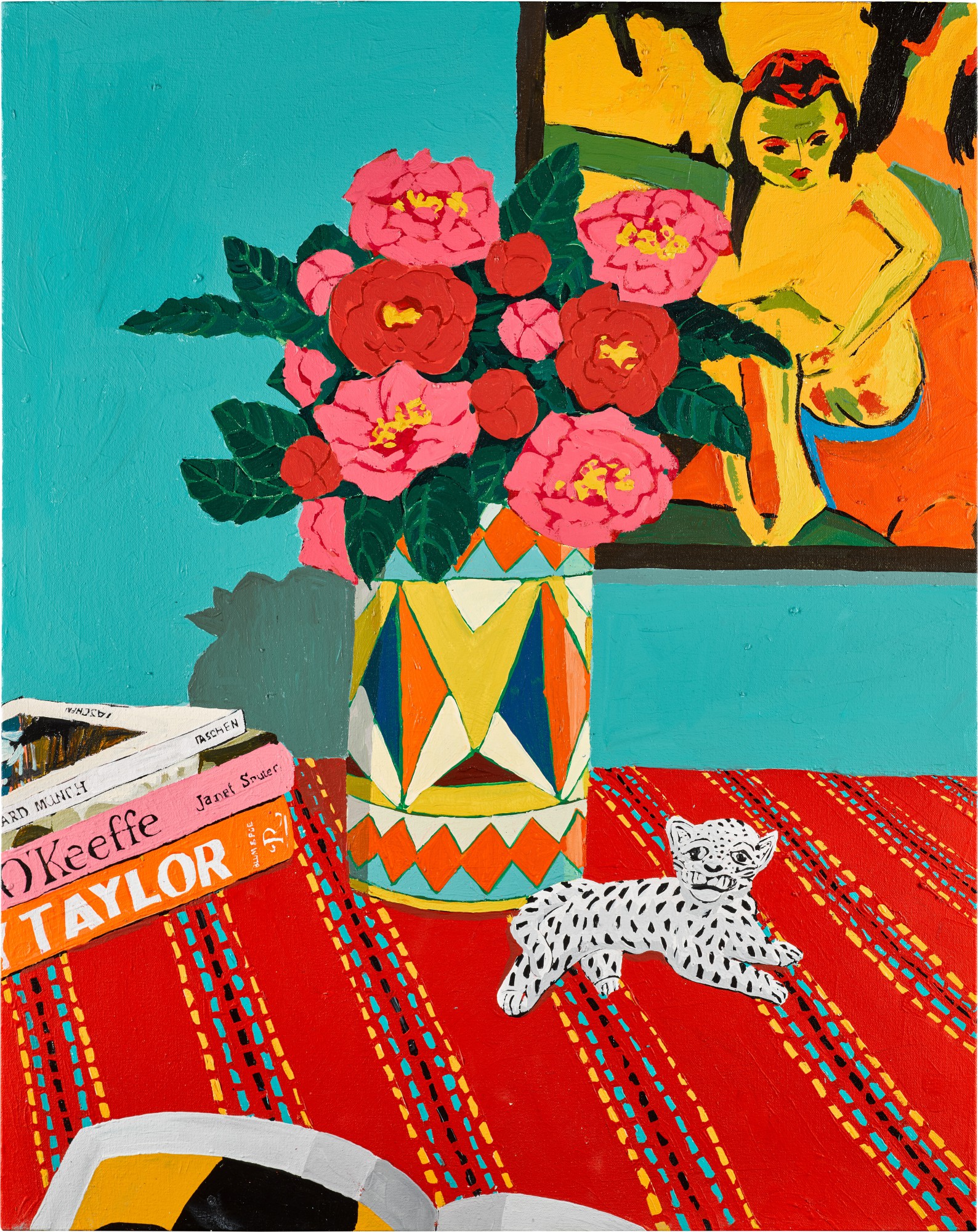
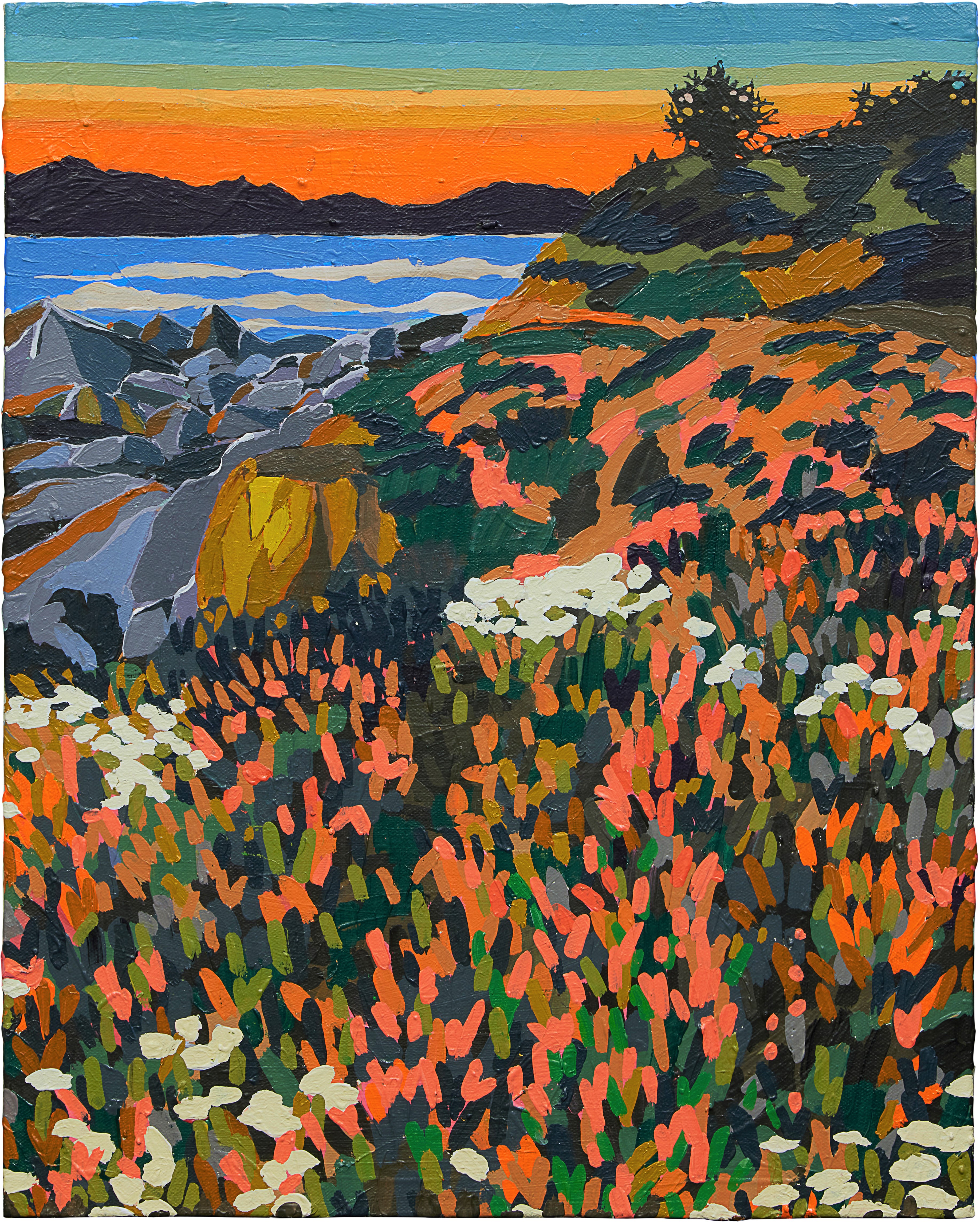
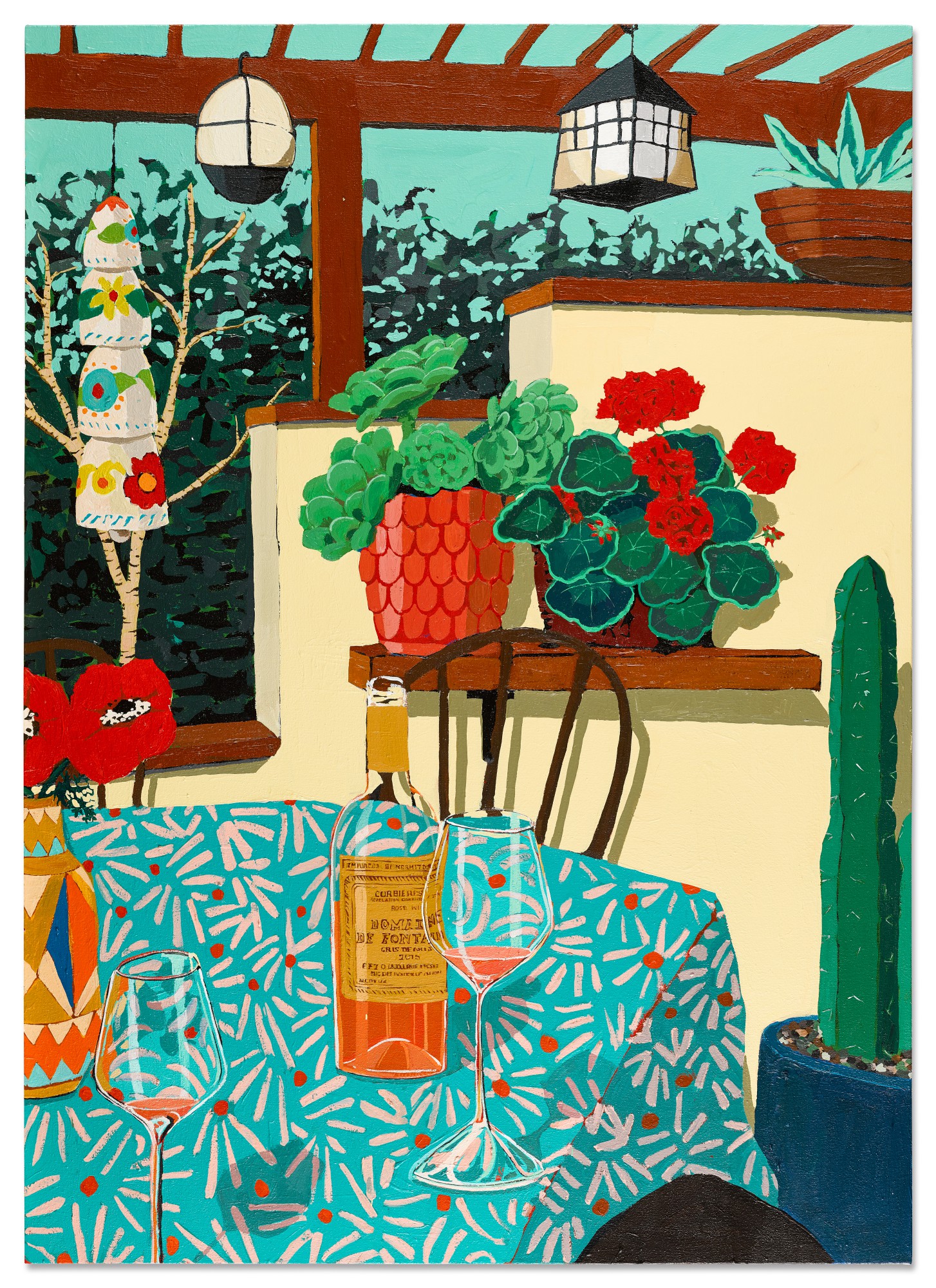
In the years since the Hammer Museum added her work to its permanent collection, Hilary Pecis has become one of the most quietly essential voices in contemporary American painting. Her canvases, filled with afternoon light falling across bookshelves, gardens in full bloom, and tables crowded with flowers and fruit, have moved from the walls of Los Angeles studios into some of the most discerning institutional and private collections in the country. The moment feels right to look carefully at what she has built, and why it matters so much to so many people who care deeply about painting. Pecis was born in 1979 and came of age in California, a place whose particular quality of light, its warmth and flatness and abundance, runs through nearly every canvas she has made. The influence of the West Coast is not merely atmospheric. It is structural. California gave her a subject matter rooted in the domestic and the botanical, in the rhythms of a life lived close to gardens and books and the small ceremonies of everyday comfort. She studied at California College of the Arts, where she developed the foundations of a practice that would prove both deeply personal and immediately communicable to viewers who had never set foot in any room she had painted. Her early work announced an artist committed to representation at a moment when the art world was still uncertain about where painting stood. Pecis chose her own path without apology, working with acrylic on canvas and linen to build pictures of interiors and still lifes that drew from a long lineage including Matisse, Bonnard, and the Pattern and Decoration movement of the 1970s. She absorbed those influences without being consumed by them. What emerged was a voice distinctly her own: looser, more exuberant, less burdened by irony than much of the representational painting that surrounded her. Her commitment to joy as a legitimate and serious artistic subject set her apart from the beginning. The gallery relationship that brought her to wider attention was her association with Rachel Uffner Gallery in New York, which gave her work the platform it deserved and connected her to a community of collectors and curators who recognized the seriousness behind her cheerful surfaces. Works like Eva Hesse from 2015, an acrylic on canvas laid on panel, revealed the intellectual depth beneath the warmth. In that painting, Pecis depicted objects and publications associated with the sculptor Eva Hesse, creating a tribute that was also a meditation on influence, admiration, and the way artists carry one another forward across time. It remains one of the most quietly moving works in her catalogue. Her signature works demonstrate a remarkable range within a deceptively focused practice. Still Life with Poppy Pods from 2016 shows her command of botanical form and her ability to make the familiar feel freshly observed. Fish and Bird from 2019 and Clementine's Bookshelf from 2021 reveal her gift for transforming the objects of daily life into images of genuine pictorial complexity. The bookshelves she paints are particularly beloved among collectors because they carry the pleasures of recognition alongside the pleasures of pure painting. Viewers lean in to read the spines and find themselves caught by the color, the pattern, the generosity of the whole composition. Backyard View and Summer Patio extend this sensibility into outdoor space, capturing that specific California feeling of interior and exterior life bleeding into one another through open doors and dappled shade. For collectors, Pecis represents a compelling proposition at a moment when the market for considered, joyful representation is exceptionally strong. Her works on paper, including Ghost Ranch Drawing from 2019 in colored pencil, offer an accessible entry point into a practice that rewards close attention and extended looking. Collectors who have followed her since her early exhibitions report that living with her paintings is a genuinely different experience from encountering them in a gallery. The light in them seems to change with the light in the room. They are generous in a way that few contemporary works manage to be without sacrificing seriousness. Institutional acquisition by the Hammer Museum has provided the kind of validation that confirms what collectors who came early already understood. In the broader context of contemporary painting, Pecis occupies a position alongside artists who have reinvigorated representation by insisting on the emotional and perceptual value of the world close at hand. She shares with artists like Amy Sillman and Nicole Eisenman a commitment to painting as a mode of thinking and feeling rather than merely image making, though her aesthetic sensibility runs warmer and more overtly celebratory than either of those peers. The Pattern and Decoration movement casts a long and important shadow over her practice, and she has been candid about her admiration for the way those artists reclaimed domesticity and decorative richness as serious artistic territory. Her work continues and extends that project for a new generation. What Hilary Pecis has accomplished is something that looks simple from a distance and reveals itself as genuinely difficult the closer you come. She has made a body of work that is unambiguously pleasurable and unambiguously intelligent, that takes the overlooked textures of everyday life and returns them to us charged with attention and affection. At a cultural moment marked by anxiety and fragmentation, her paintings offer something that feels increasingly rare and increasingly necessary: the reminder that the domestic world, tended carefully and looked at honestly, is endlessly worth painting. For collectors building bodies of work that will carry meaning across time, Hilary Pecis is an artist whose moment is now, and whose work will only deepen in significance as the years accumulate.