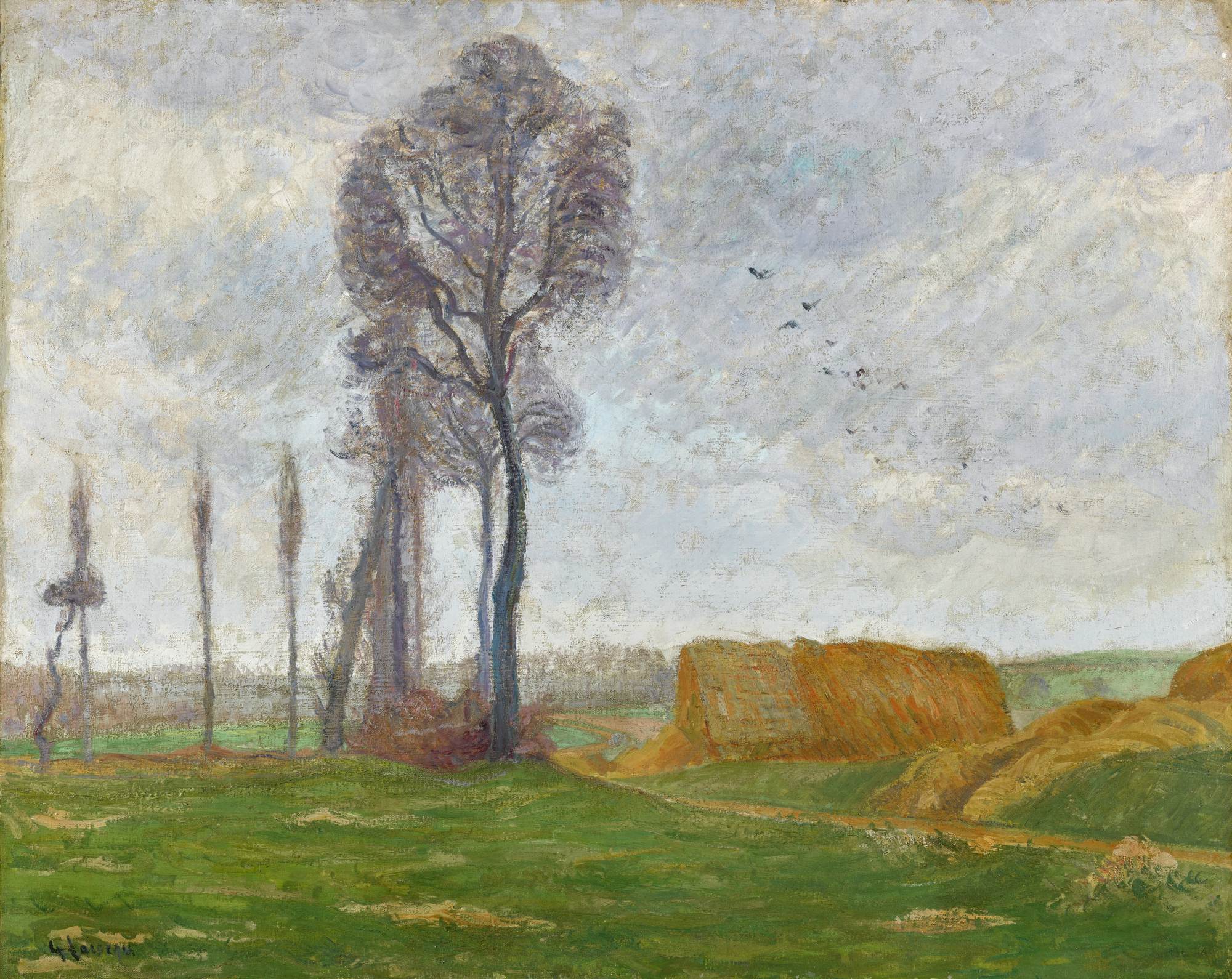
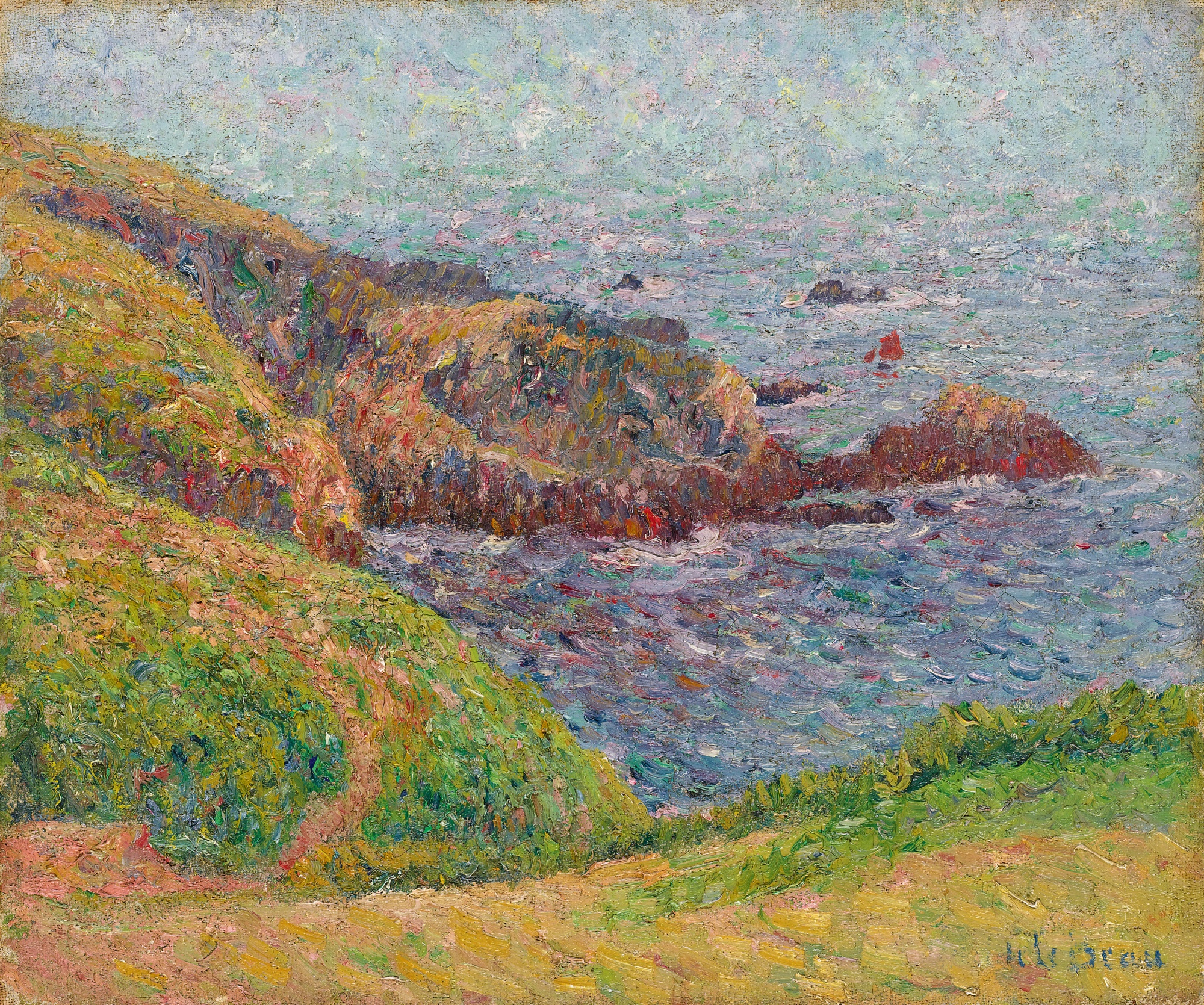
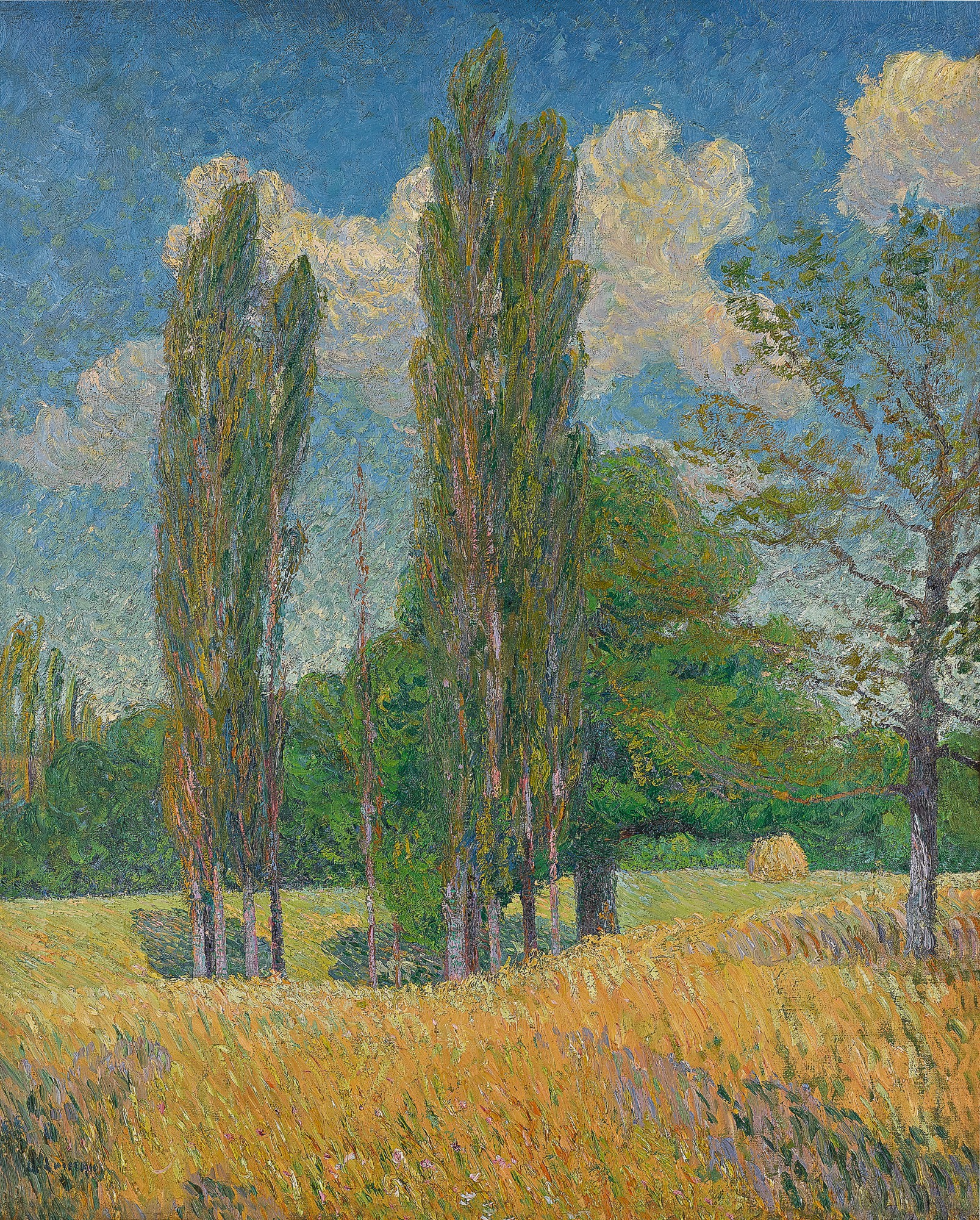
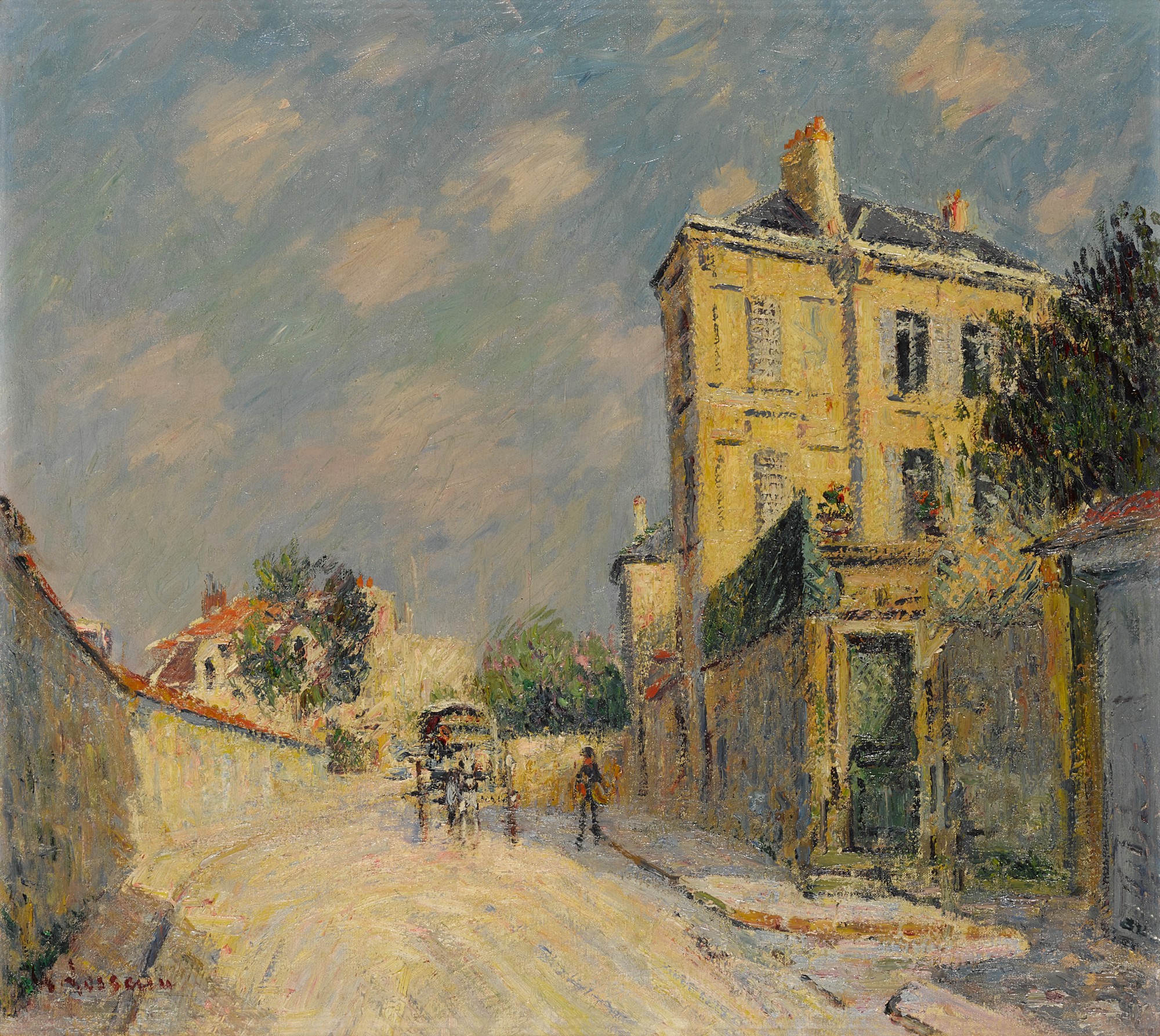
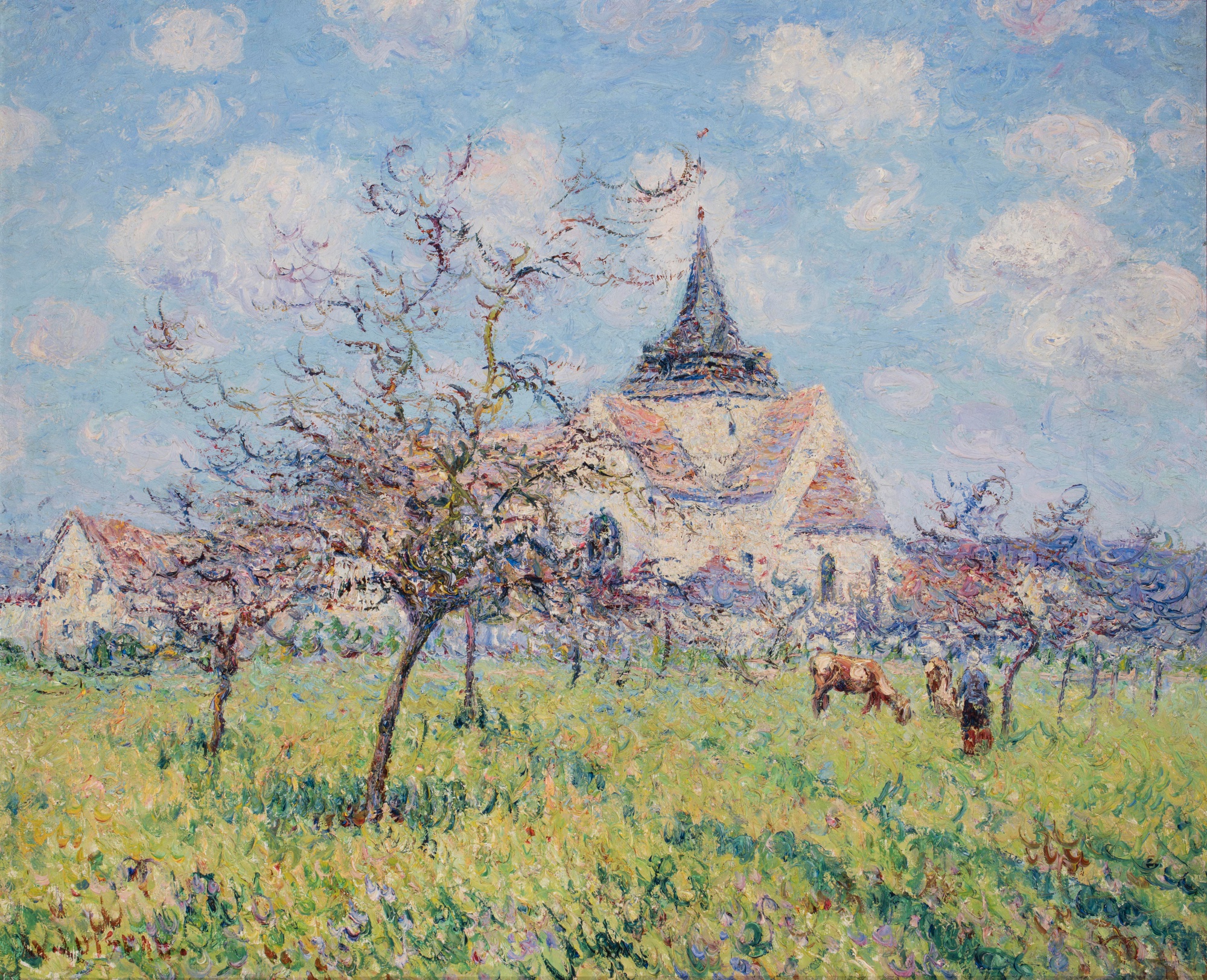
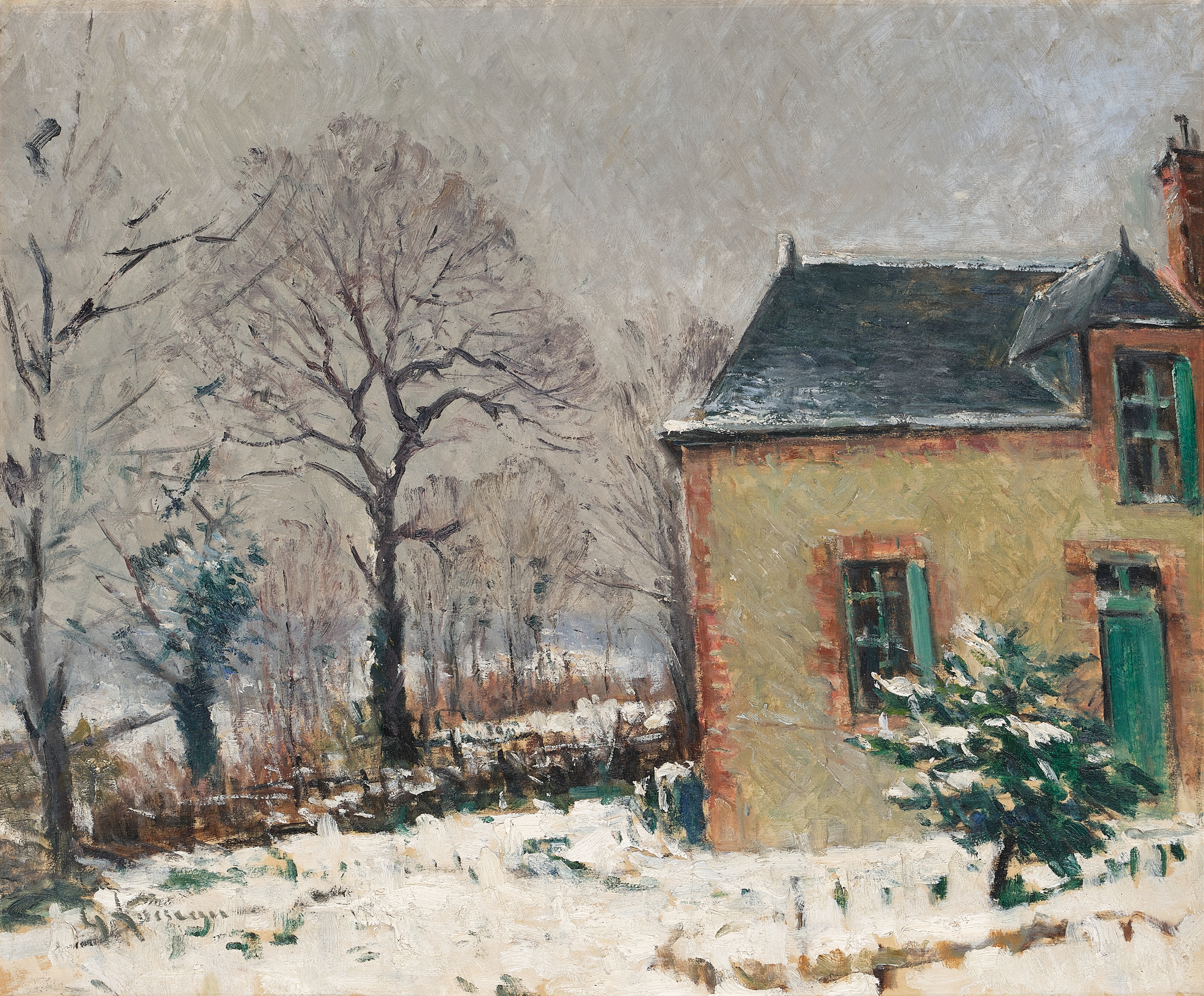
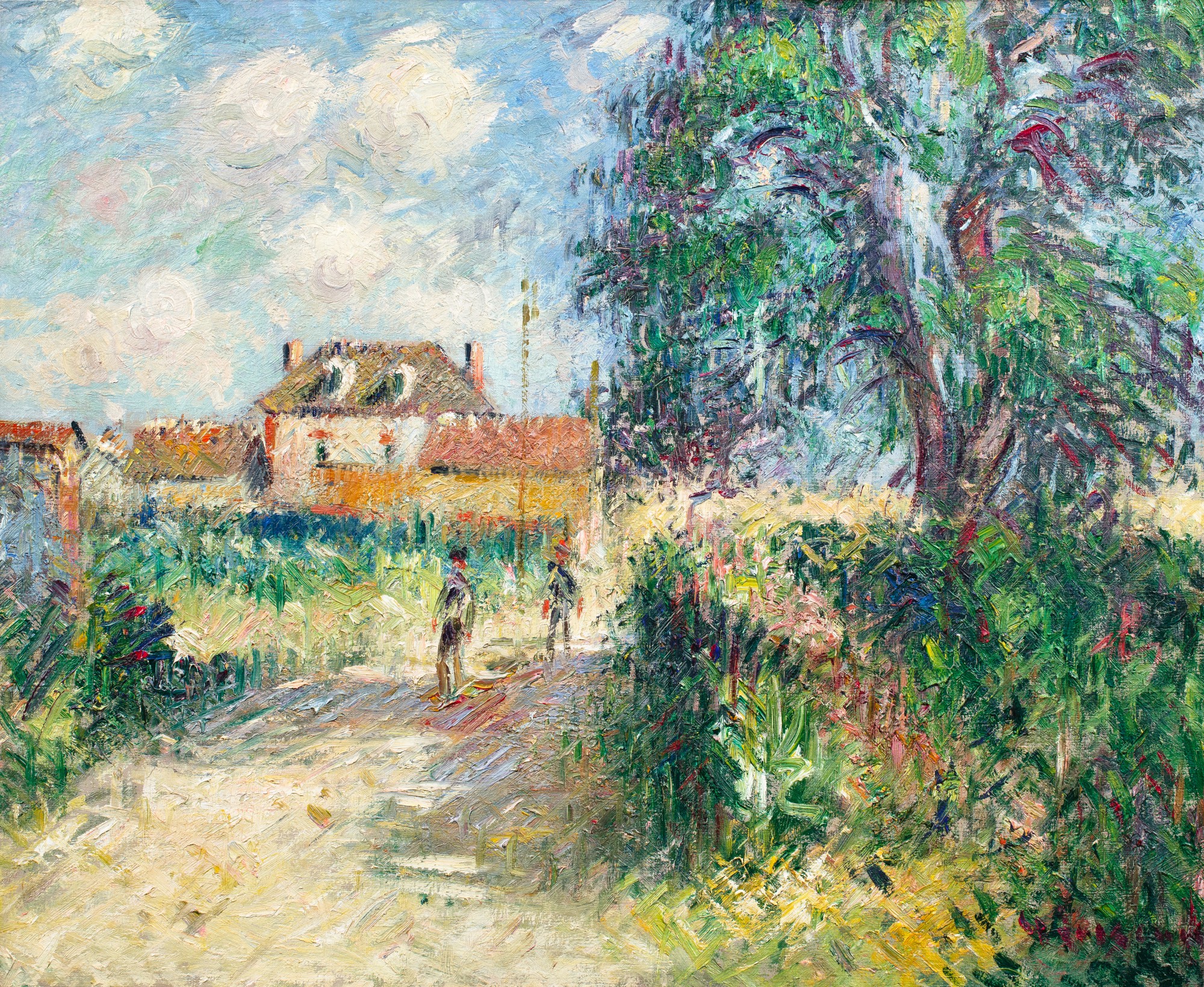
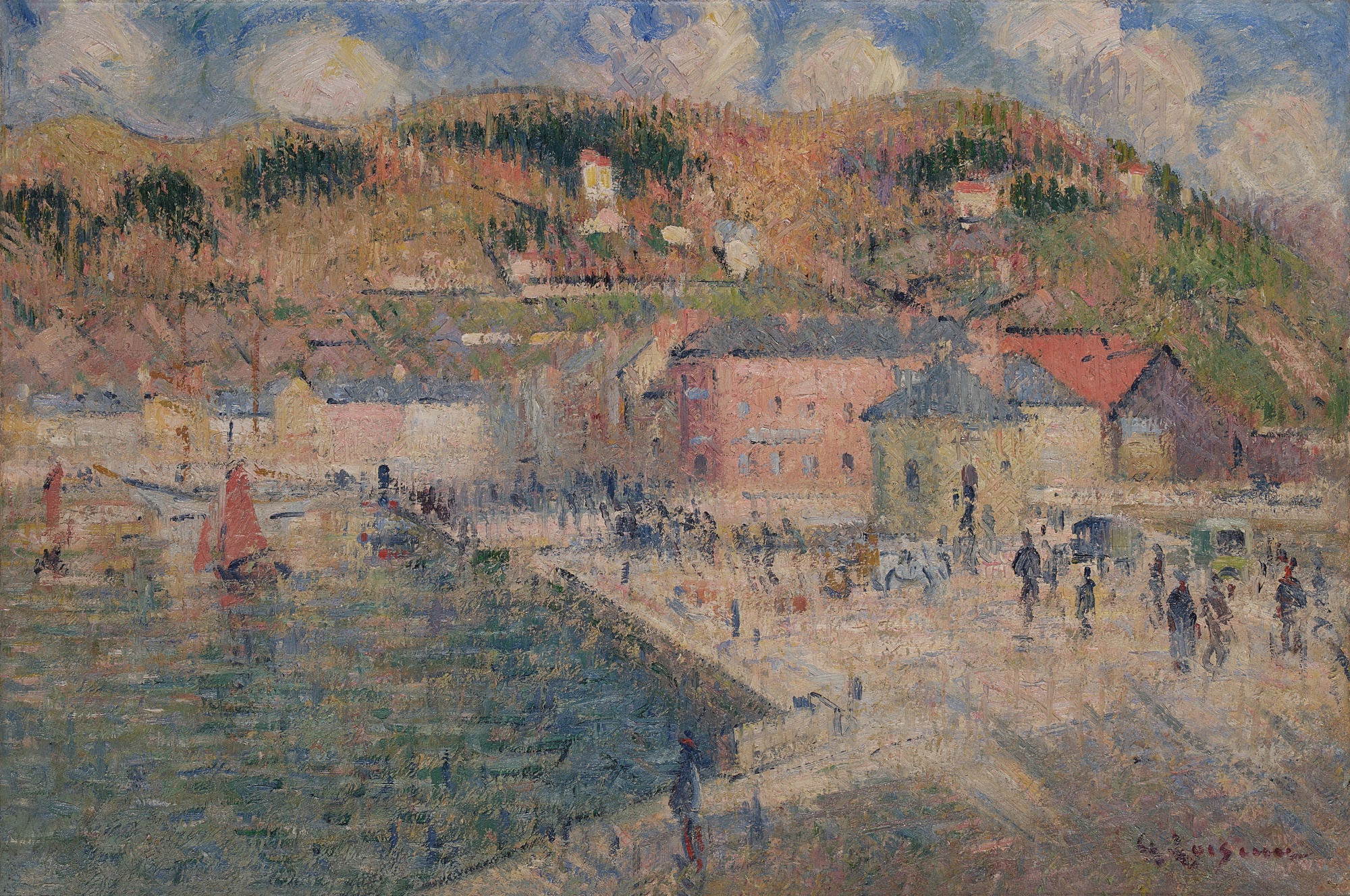
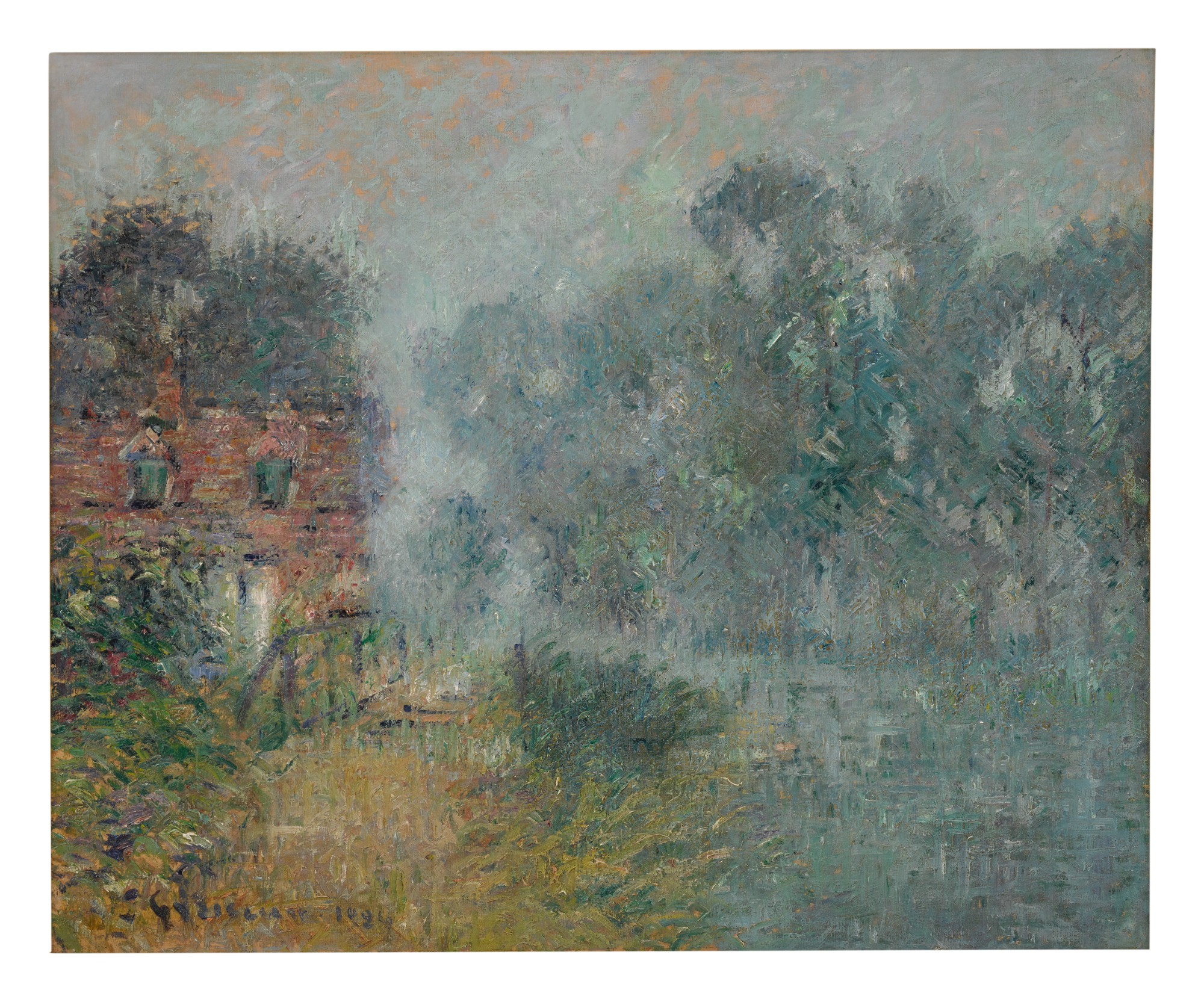
Stand before a painting by Gustave Loiseau and you feel the cold pressing in from the river, the particular silver of a Norman sky in February, the way bare poplars stitch themselves against winter light. That sensation, so immediate and so earned, is why collectors and curators have returned to Loiseau with renewed enthusiasm in recent years. Auction houses including Christie's and Drouot have seen steady demand for his river and coastal scenes, with strong results confirming that the market regards his finest oils as genuinely essential examples of French Post Impressionism. For those who have long admired him, this feels less like a rediscovery than a long overdue reckoning. Gustave Loiseau was born in Paris in 1865, and his formation as an artist was shaped by the particular ferment of late nineteenth century France. He trained initially in the decorative arts, a practical grounding that gave him a craftsman's discipline and a deep respect for surface and material. His real education, however, came through his contact with the circle around Paul Gauguin at Pont Aven in the early 1890s, where artists were pushing beyond Impressionism toward something more structured and emotionally direct. Loiseau absorbed these lessons carefully, and while he never became a Symbolist or a Synthetist, his time in Brittany permanently sharpened his sense of pictorial order. It was his relationship with the dealer Paul Durand Ruel that brought Loiseau into the wider Impressionist and Post Impressionist conversation. Durand Ruel, the legendary champion of Monet, Pissarro, and Renoir, recognized in Loiseau a painter of genuine seriousness and began exhibiting his work in the late 1890s. This association placed Loiseau in distinguished company and gave his career a commercial and critical footing that allowed him to work without compromise. He also exhibited regularly at the Salon des Indépendants, the vital open forum that had become the proving ground for the most adventurous painting in France, and his presence there aligned him with the progressive currents of his era. The signature achievement of Loiseau's practice is his cross hatched brushstroke technique, a method he developed into something entirely his own. Where Monet dissolved form into atmosphere and Pissarro built structure through patient accumulation, Loiseau invented a kind of woven touch, laying strokes at opposing angles to create surfaces that seem to vibrate with contained energy. The effect is extraordinary in person: the paint reads as texture before it reads as image, and then the image resolves with sudden clarity, a field, a river bend, a village church in early spring. This technique is most fully realized in his landscapes of the Seine valley, Normandy, and the Oise, regions he returned to throughout his career with the devotion of a naturalist cataloguing a beloved territory. Among his most celebrated works, "Les bords de l'Oise" from 1900 demonstrates his command of winter light with almost austere beauty, the bare trees and pewter water rendered with a gravity that lifts landscape painting toward something approaching elegy. "La Seine en hiver" from 1914 carries a similar emotional weight, made more complex by its wartime moment, though Loiseau's gaze remains fixed on the enduring world of river and sky. "Peupliers sur les bords de l'Yonne" from 1907 shows his more lyrical register, the tall poplars repeating upward with a rhythm that recalls Monet's great poplar series while remaining unmistakably Loiseau in its woven, earthbound touch. His Normandy coastal work, represented by "L'Avant port de Fécamp" from 1925, brings the same systematic attention to marine light, achieving an atmosphere of briny freshness that is entirely convincing. Even his occasional still lifes, such as "Nature morte, cruche et pommes" from 1904, reveal the same structural intelligence applied to intimate domestic subjects. For collectors, Loiseau presents a compelling proposition that combines art historical significance with genuine aesthetic pleasure. His work occupies a clear and well documented position within the Post Impressionist lineage, yet it remains more accessible than the canonical giants of that moment, meaning that serious examples can still be acquired at prices that represent real value relative to comparable quality in the field. Collectors drawn to Camille Pissarro, Alfred Sisley, or the Pont Aven circle will find in Loiseau a natural companion, an artist who shares their pictorial ambitions and their reverence for the French countryside. When considering a Loiseau acquisition, the most rewarding works tend to be the river and valley scenes executed between roughly 1895 and 1920, years when his technique was at its most assured and his choice of motif most deeply personal. Loiseau belongs to a generation of French painters that includes figures such as Henri Lebacq, Maxime Maufra, and Henry Moret, artists who moved through the Pont Aven experience and emerged with individuated practices that have only recently begun to receive the scholarly and market attention they deserve. He is also productively compared to Pissarro, whose influence on his compositional thinking is clear, and to Sisley, with whom he shares a particular sensitivity to the moods of the French river landscape across seasons. Understanding Loiseau within this constellation helps clarify what is distinctive about him: the cross hatching is not a mannerism but a genuine solution to the problem of how to hold sensation and structure in balance simultaneously. Loiseau died in 1935, leaving behind a body of work that documents the French countryside across four decades of extraordinary change, from the belle époque through the First World War and into the interwar period. That he maintained his commitment to direct observation, to working in the open air before the motif, throughout all of this speaks to an artistic character of real integrity. His paintings do not argue or theorize. They simply insist, with quiet authority, that the light on the Seine in January is worth your full attention, that a Norman harbor in late afternoon contains more beauty than most of us remember to notice. In a moment when collectors and institutions alike are revisiting the broader landscape of Post Impressionism with fresh eyes, Gustave Loiseau rewards that attention generously and without reservation.