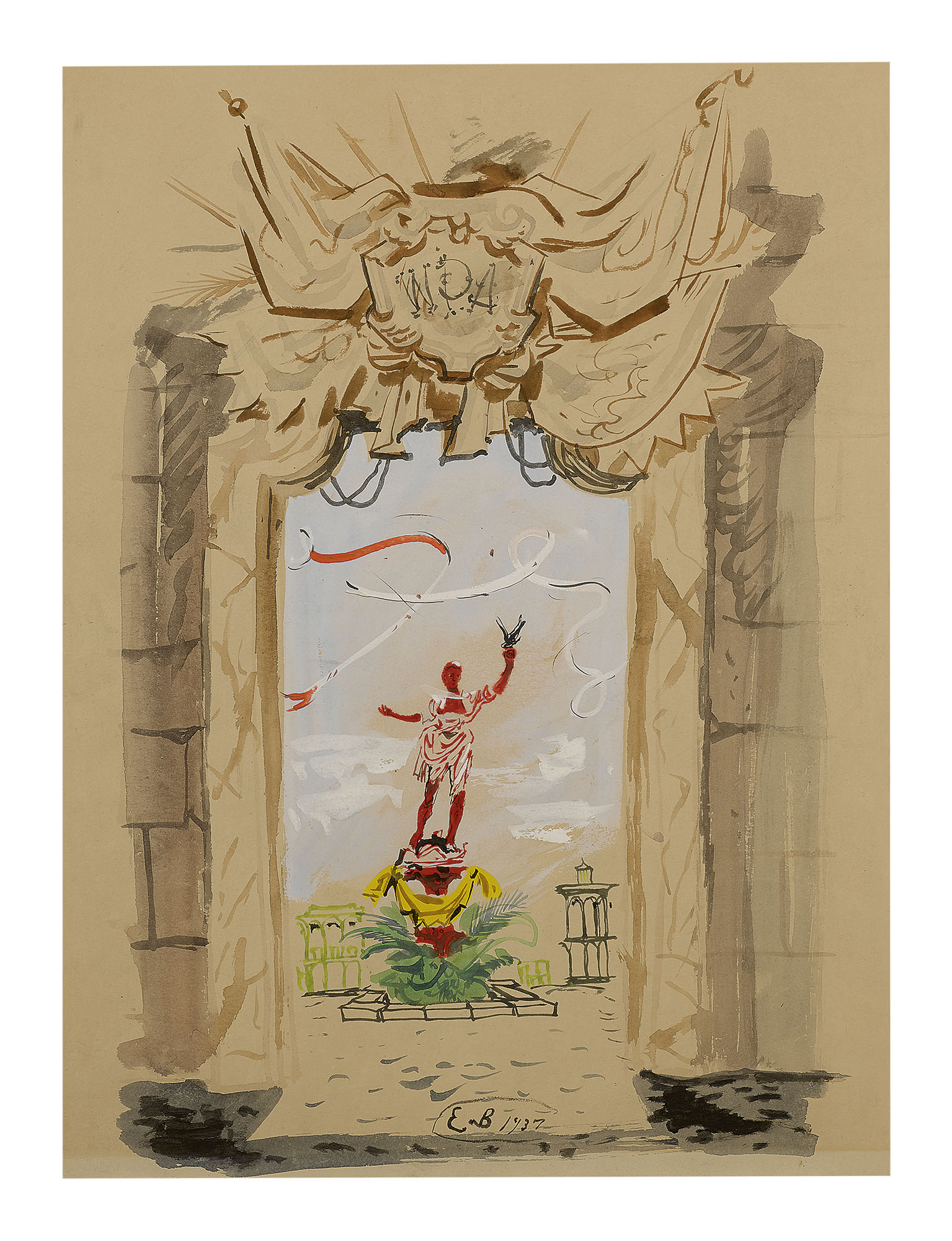
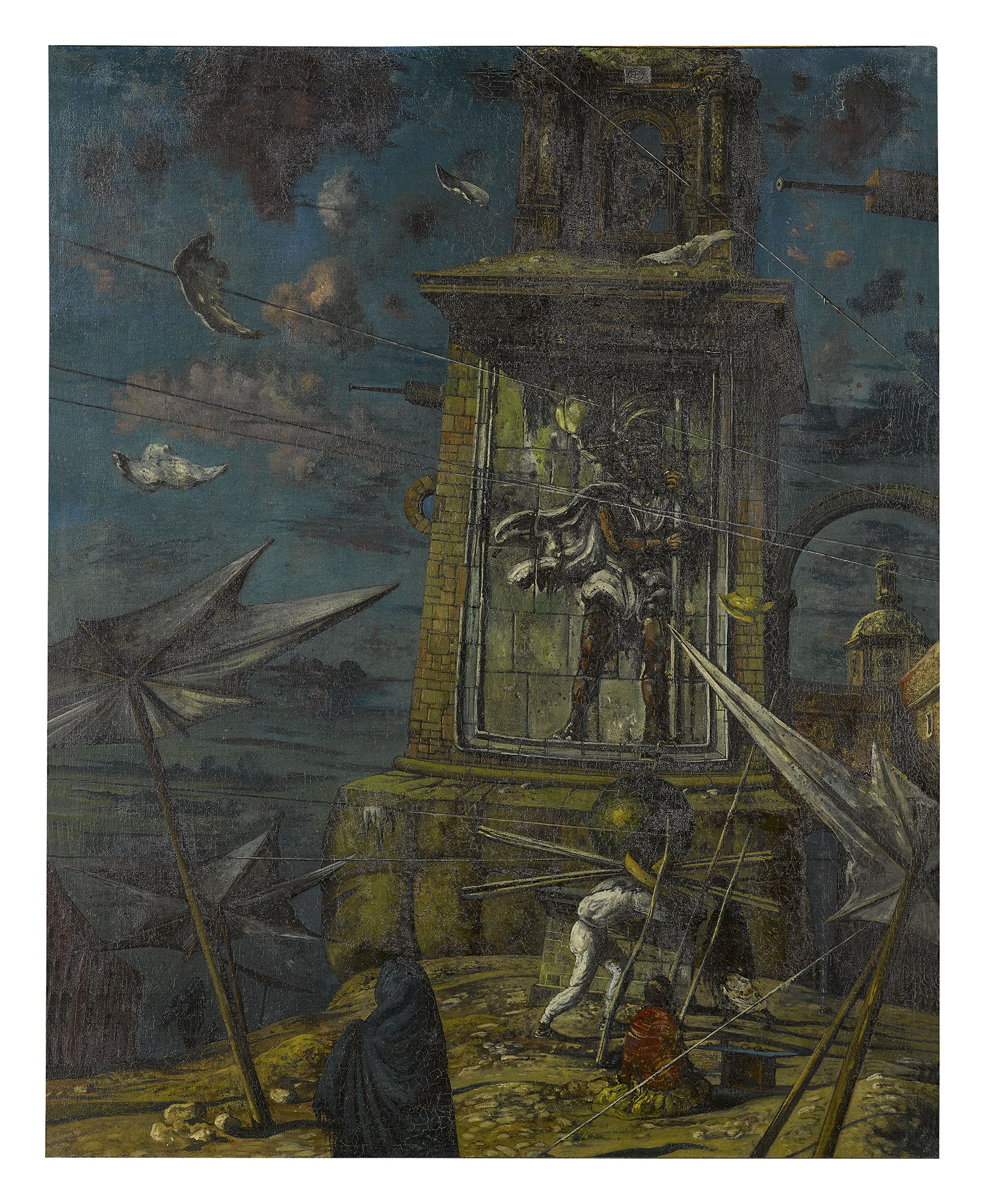
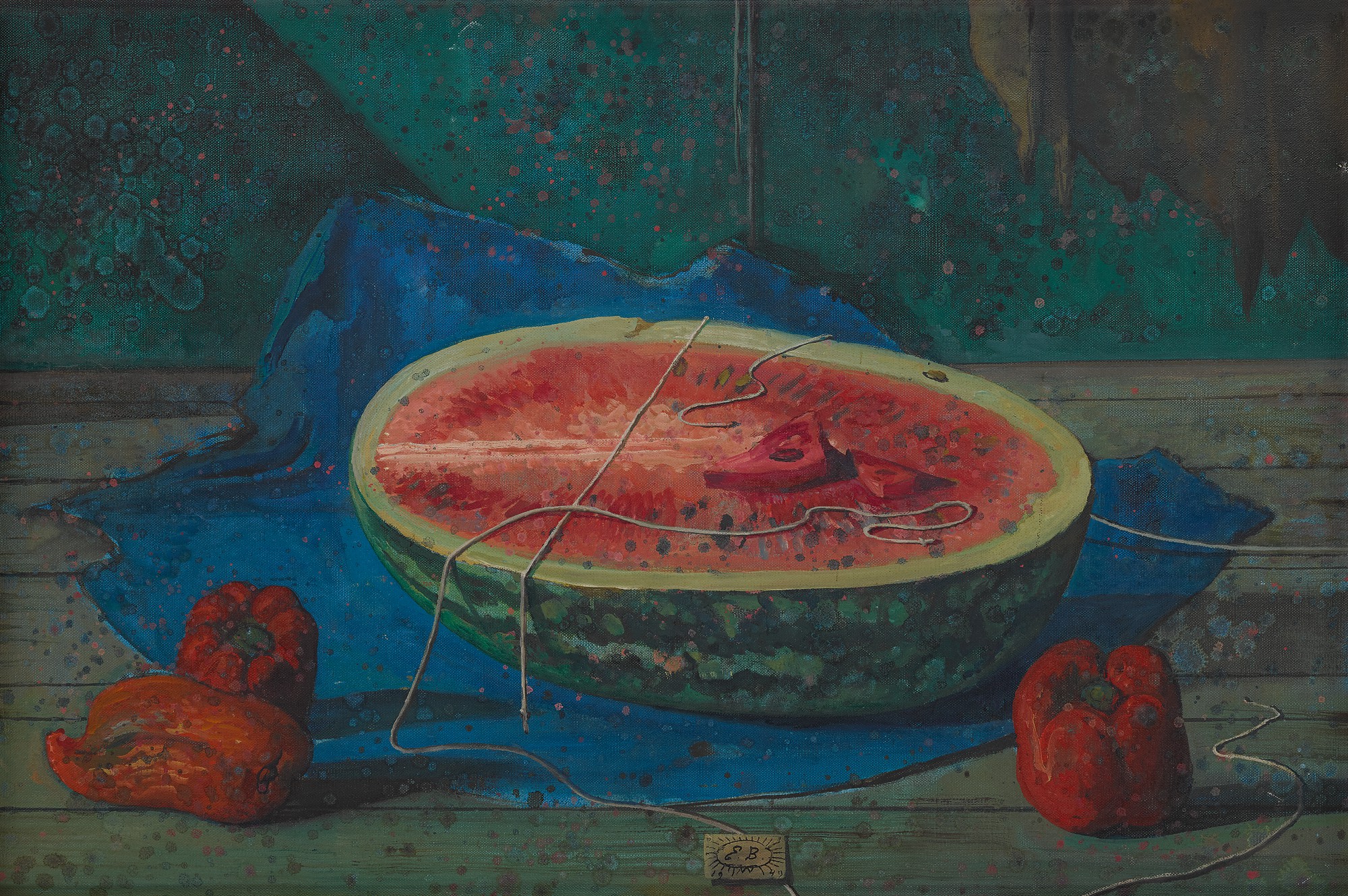
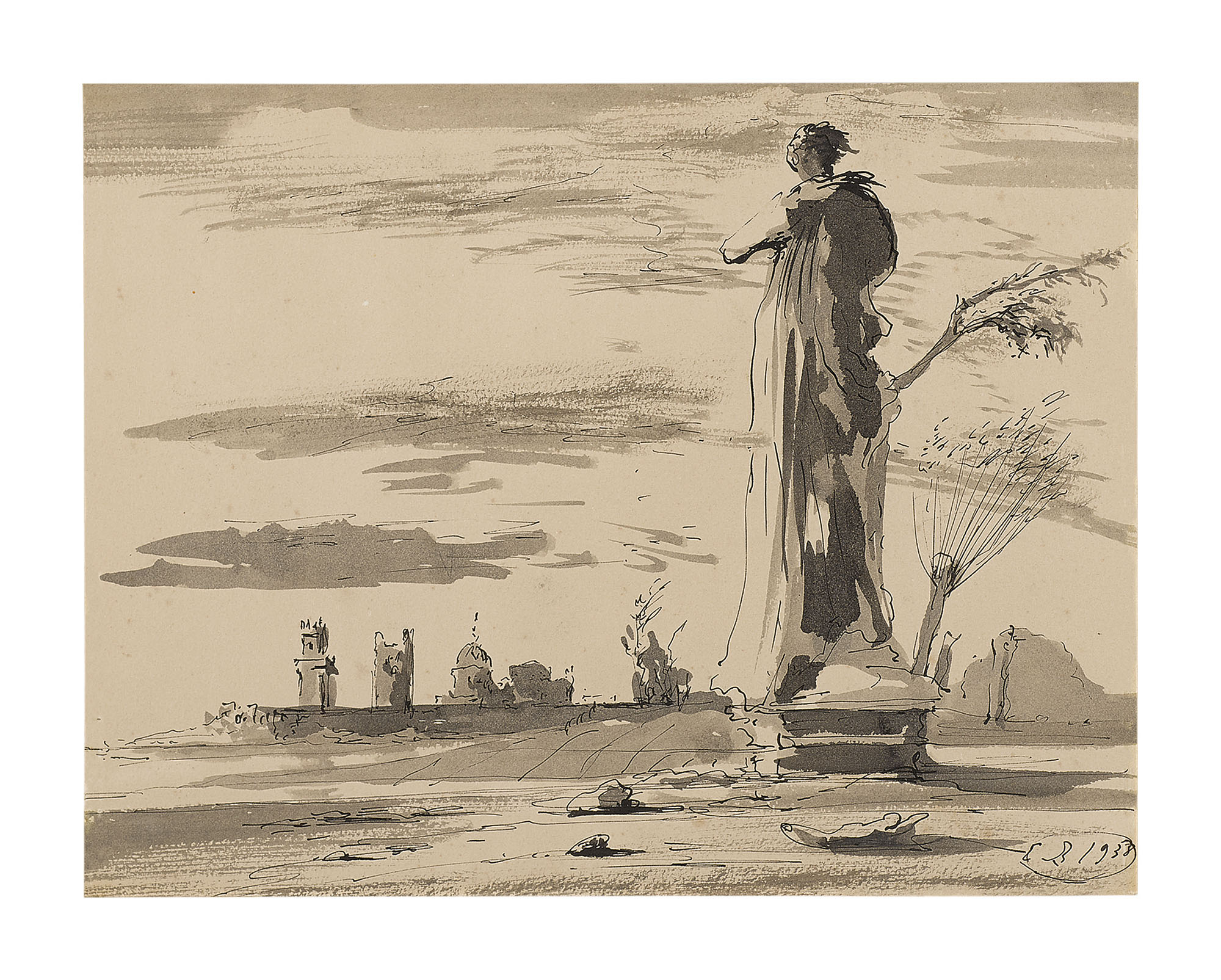
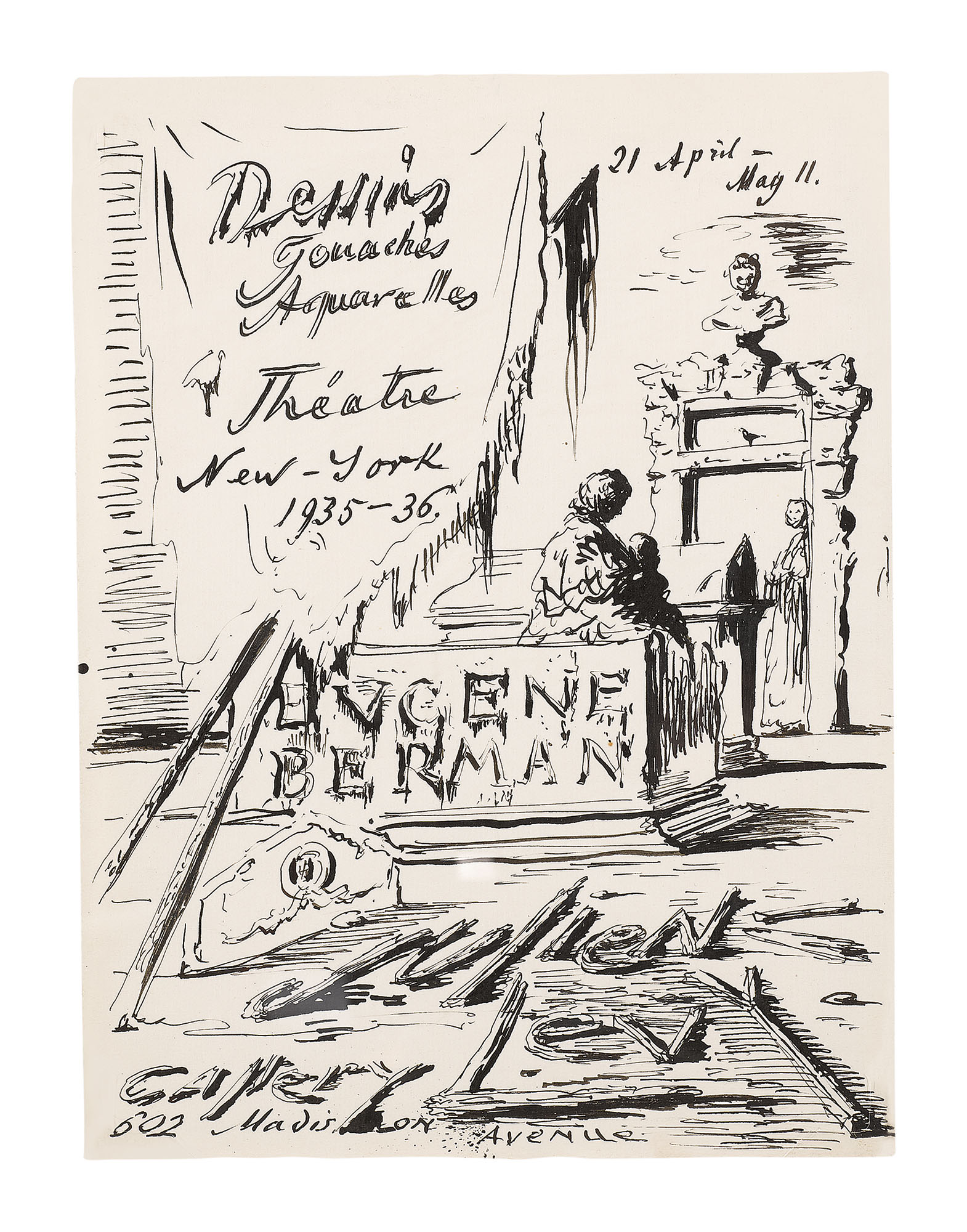
There are artists whose work stops you mid step in a gallery, not through spectacle or provocation, but through an almost uncanny pull of atmosphere. Eugene Berman was one of those artists. To stand before one of his painted visions is to feel the temperature drop slightly, to sense the weight of centuries pressing gently against the present moment. His canvases conjure crumbling architecture, solitary figures draped in shadow, and skies that seem to hold the memory of every storm that ever passed through them. It is painting as elegy, and it is breathtaking. Berman was born in Saint Petersburg in 1899, into a prosperous and cultured family that valued the arts. The upheaval of the Russian Revolution in 1917 scattered that world entirely, sending Berman and his brother Leonid, who would himself become a noted painter, westward into exile. This rupture was not merely biographical. It became the emotional and philosophical engine of everything Berman would ever make. The experience of displacement, of a vanished world glimpsed only in memory and imagination, would color his palette and structure his compositions for the rest of his life. After fleeing Russia, Berman made his way to Paris, where he studied at the Académie Ranson under Pierre Bonnard and Édouard Vuillard, two painters whose mastery of mood and color left a lasting impression on him. Paris in the 1920s was an extraordinary place for a young artist of sensibility and ambition. Berman absorbed the lessons of the Surrealists, the classical tradition visible in every museum and public building, and the cosmopolitan conversation happening in studios and cafés across the city. He exhibited at the Galerie Pierre in Paris and began to attract the attention of serious collectors and critics who recognized something genuinely distinctive in his vision. By the early 1930s, Berman had become a central figure in what critics began calling Neo Romanticism, a loose but meaningful grouping that also included his brother Leonid, the painter Pavel Tchelitchew, and Christian Bérard. These artists shared a rejection of pure abstraction and a commitment to the figurative image charged with psychological and emotional resonance. They looked backward to Baroque painting, to the melancholy grandeur of Giovanni Battista Piranesi, to the theatrical imagination of the Italian Renaissance, and forward into dreams and interior states. Berman's work from this period has an unmistakable signature quality: ruins bathed in ochre light, figures who seem to have wandered in from another century, compositions structured with the rigor of a stage set and the freedom of a reverie. That theatrical instinct was not incidental. Berman emigrated to the United States in 1935, and his American career unfolded on two parallel tracks that fed each other continuously. As a painter he exhibited regularly in New York, finding a devoted audience among collectors drawn to his romantic intensity and his impeccable draughtsmanship. As a stage designer he achieved remarkable distinction, creating sets and costumes for productions at the Metropolitan Opera and the New York City Ballet, collaborating with some of the defining artistic voices of mid century America. His designs for ballet and opera share with his paintings an obsession with atmosphere, with the way light transforms a space into something outside of ordinary time. The Julien Levy Gallery in New York, which championed Surrealism and its allied movements, gave Berman important early exposure to the American art public and placed his work in dialogue with the broader international avant garde. The works available through The Collection offer an exceptionally rich cross section of Berman's practice across key years of his development. The 1937 gouache and ink wash titled "Wpa (Theatrical Design)" reveals the fluency with which Berman moved between fine art and the world of performance, bringing to a design commission the same brooding visual intelligence he applied to his paintings on canvas. "La Torre De San Cristóbal (The Tower Of St. Christopher)" demonstrates his gift for monumental architectural imagery rendered with an almost hallucinatory clarity, the stone structure rising against a sky that feels both ancient and impossible. "The Water Melon and 3 Red Peppers" shows another register entirely, quieter and more intimate, a still life that carries within it the melancholy of objects observed with absolute attention. The 1934 pen and ink study for the Julien Levy Exhibition title page is a document of genuine art historical interest, a glimpse into the working relationship between Berman and one of the most important galleries of the period. From a collecting perspective, Berman represents one of the genuinely underappreciated figures of the twentieth century, which is precisely why serious collectors are increasingly attentive to him. His career touched so many points of cultural significance: the Russian emigration, the Paris avant garde of the interwar years, the Neo Romantic movement, the golden age of American opera and ballet design. Works on paper, including his pen and ink drawings and gouaches, offer an accessible entry point that does not compromise on quality or significance. His oil paintings, when they appear, carry considerable weight both aesthetically and historically. Collectors who appreciate Balthus, Giorgio de Chirico, or the atmospheric figurative tradition will find in Berman a natural and rewarding companion. The market for his work has been steadily consolidating among knowledgeable buyers who recognize the gap between his historical importance and his current valuation. The artists closest in spirit to Berman illuminate his singular position within art history. Pavel Tchelitchew shared his Neo Romantic sensibility and his theatrical gifts. Christian Bérard brought a similar combination of painterly intimacy and stage design brilliance. His brother Leonid Berman, though more directly rooted in landscape, shared the émigré consciousness that runs through all their work. Further back, Berman's true ancestors are the Baroque masters of shadow and ruin, particularly Piranesi and the atmospheric Italian painters who understood that architecture could carry the weight of human longing. Eugene Berman died in Rome in 1972, a city whose layered history and perpetual dialogue between past and present had captivated him for decades. He had chosen Italy as his final home precisely because it embodied the qualities his art had always sought: beauty shadowed by time, grandeur that had learned humility, the persistence of the human spirit against the erosion of centuries. His legacy is that of an artist who turned personal loss into universal poetry, who made exile into a visual language of extraordinary power and grace. To collect Berman is to bring into your home a sensibility that is rare in any era: deeply cultivated, emotionally honest, and luminously beautiful.