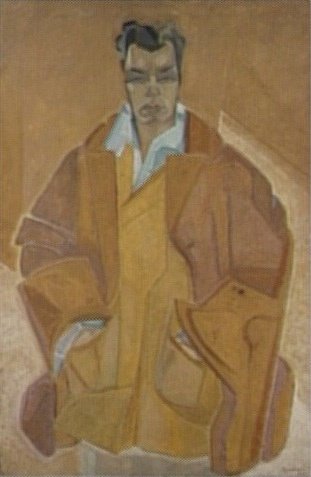
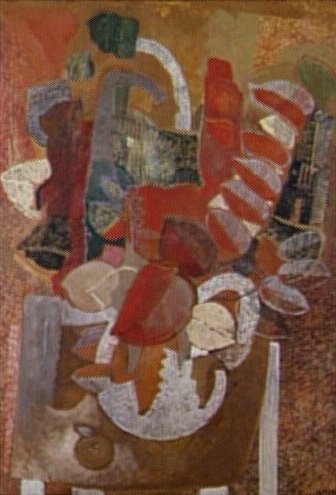
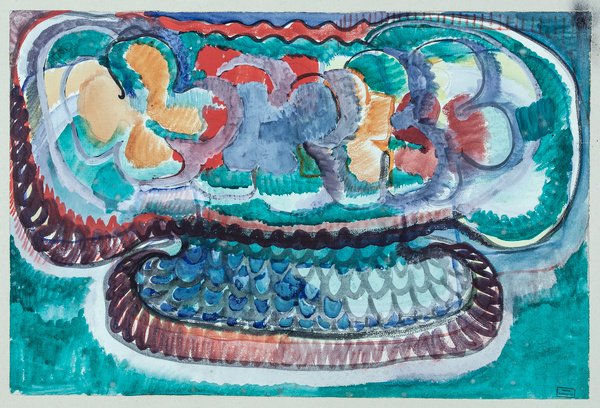
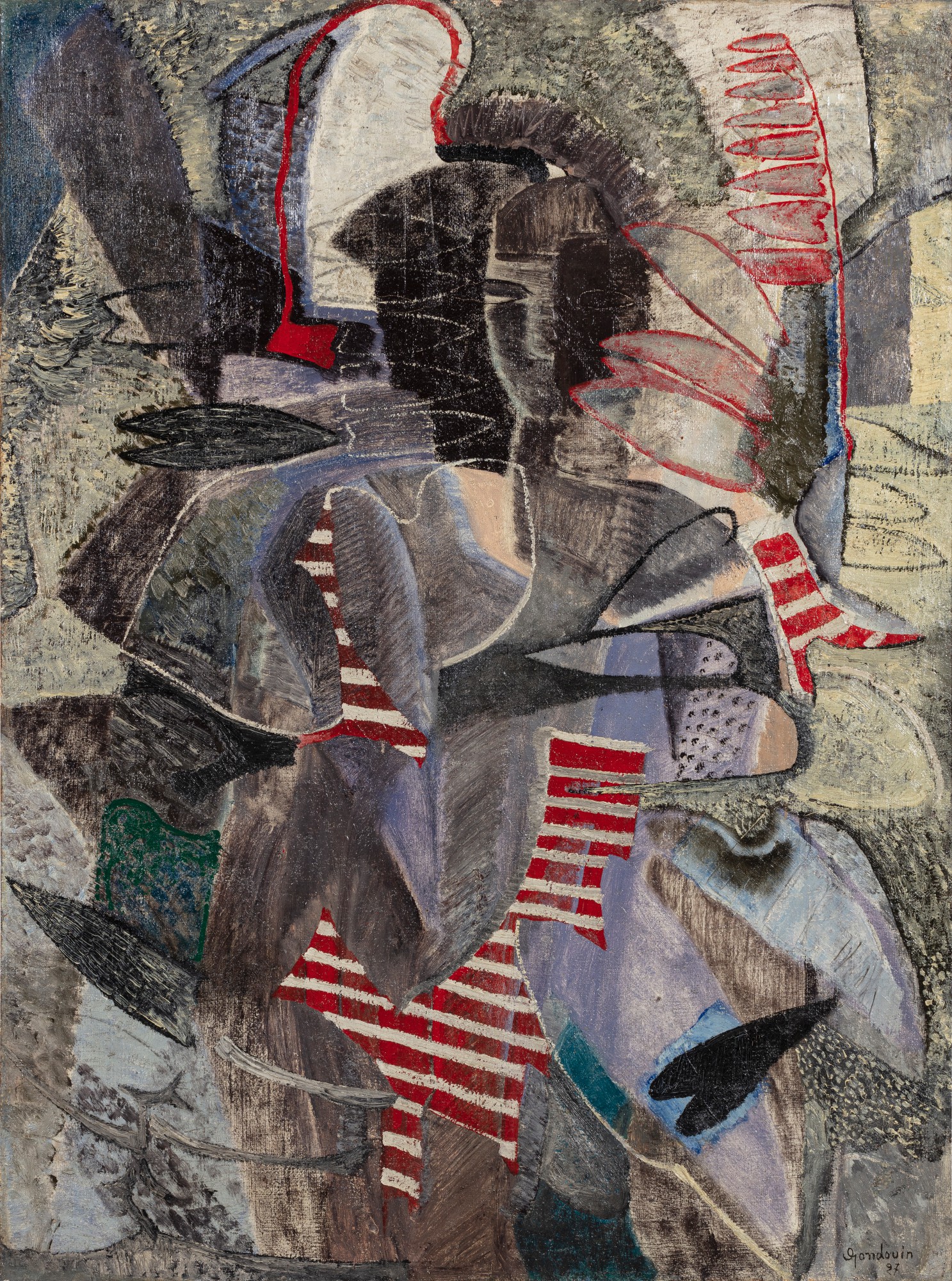
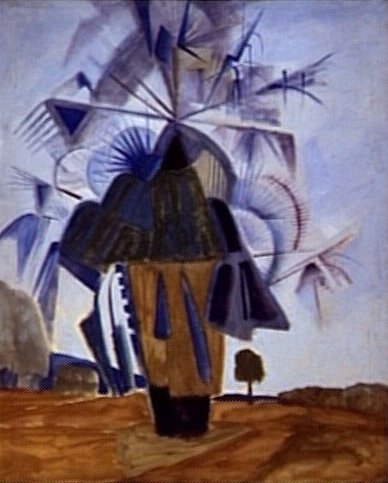
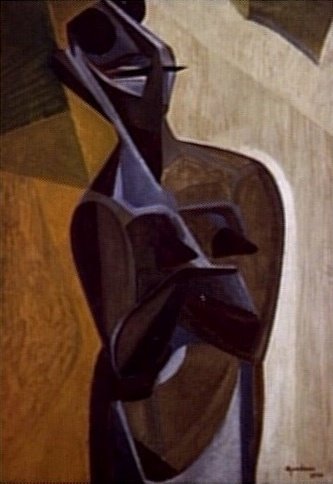
Picture Paris in the early 1920s, a city electric with possibility, where the boundaries between continents and centuries were dissolving on canvas. In the studios and salons of Montparnasse, a quietly determined French painter was assembling a visual language unlike almost anyone else working at the time. Emmanuel Gondouin, born in 1883 and active through one of the most thrillingly generative periods in modern art, was drawing from sources that few of his contemporaries were willing to study so rigorously or celebrate so openly. His paintings did not whisper. They announced themselves with the full force of color and pattern, and today, as collectors and institutions turn with fresh eyes toward the overlooked figures of early twentieth century modernism, Gondouin's work rewards attention in ways that feel genuinely urgent. Very little has been written about Gondouin's earliest years, and this scarcity is itself a kind of invitation. He came of age in a France that was rapidly industrializing and simultaneously fascinated by the cultures it was encountering through colonial expansion, an encounter that was ethically fraught and aesthetically transformative in equal measure. The generation of artists that included Gondouin inherited a world in which African masks sat in flea markets and ethnographic museums alike, in which the rigid hierarchies of academic painting were crumbling under pressure from Cézanne, Gauguin, and the Fauves. For a young painter with an appetite for color and structure, this was an extraordinary moment to be forming an eye. Gondouin's formation as a painter placed him squarely within the orbit of Fauvism, the movement that had exploded onto the French art scene in 1905 under the banner of Henri Matisse, André Derain, and Maurice de Vlaminck. Where the Impressionists had used color to describe light, the Fauves used color to describe feeling, freeing the palette from any obligation to optical accuracy. Gondouin absorbed this lesson deeply and carried it further, fusing the Fauvist inheritance with a sustained engagement with the formal vocabularies of African art. The result was a decorative style that was neither purely European nor exoticizing in the shallow sense, but something genuinely synthesized, a way of organizing a picture plane that felt both ancient and startlingly modern. The paintings that survive from across his relatively short career, he died in 1934 at just fifty one years of age, demonstrate a consistent ambition and a willingness to move between subjects and media with confidence. His 1920 work "Nu" stands as an early statement of intent, a figure study in which the body becomes a vehicle for chromatic exploration rather than classical idealization. By 1922, with "Paysage tropical," Gondouin was demonstrating the full reach of his imagination, constructing landscapes that feel saturated with memory and invention rather than observed directly from nature. The painting is dense with pattern, the kind of all over compositional pressure that connects it visually to both Matisse's late interiors and the textile traditions he was clearly studying. The mid to late 1920s appear to have been a period of particular intensity. "Les deux silhouettes" from 1927 brings the human figure back to the centre of the composition, treating form with a boldness that owes something to the simplified monumentality found in African sculpture. "Nature morte" from 1928, executed in watercolor, shows a different register of his practice, looser and more atmospheric, but no less committed to the idea that color and pattern should carry the full emotional weight of a picture. And then there is "Symphonie en rouge" from 1930, the title alone a declaration of purpose. To name a painting a symphony is to claim kinship with music's capacity for pure, non representational sensation, and the work delivers on that promise with a bravura handling of red that places it in conversation with the most adventurous colorist experiments of the era. Perhaps the most intimate of his known works is the "Autoportrait d'Emmanuel Gondouin" of 1925. Self portraiture is always an act of double exposure: the artist as subject, the artist as observer. In Gondouin's case, it also offers a rare chance to ask who he understood himself to be within the broader landscape of Parisian modernism. The work belongs to a moment when painters like Chaïm Soutine, Moïse Kisling, and Jules Pascin were also producing charged, personal interpretations of the self in paint, and it is worth situating Gondouin within this community of artists who were pushing portraiture toward something more psychologically and formally daring than the salon tradition had permitted. For collectors approaching Gondouin today, the opportunity is significant precisely because his name has not yet achieved the market visibility of his contemporaries. Works by artists in his orbit, Matisse, Derain, and later figures like Wifredo Lam who would develop related dialogues between European modernism and non Western visual traditions, command prices that place them beyond the reach of many serious private collections. Gondouin's work offers the rare combination of genuine art historical substance and relative accessibility. Collectors drawn to early twentieth century French painting, to the decorative traditions of Fauvism and Post Impressionism, and to artists who engaged thoughtfully with African aesthetics will find in Gondouin a figure who deserves a place in any intellectually serious collection. Works on paper such as his watercolors represent a natural point of entry, while the oil paintings, with their ambitious scale of color and pattern, are the works likely to appreciate most meaningfully as scholarly attention grows. Gondouin belongs to a broader story that art history is currently in the process of telling more completely: the story of how modernism was not a monologue spoken from a single podium, but a conversation conducted across continents and cultures. The dialogue between European avant garde painting and African visual culture shaped some of the most significant work of the twentieth century, from Picasso's engagement with Iberian and African masks before 1907 to the Négritude movement's reclamation of African heritage as a source of creative power. Gondouin's position within this history is that of a painter who took the conversation seriously, who made it the structural foundation of his practice rather than a passing influence. To encounter his work now, nearly a century after its making, is to be reminded that boldness in color and conviction in pattern are not decorative qualities in the diminished sense of that word. They are a way of insisting that beauty and formal intelligence are not in opposition, that a painting can be immediately, physically pleasurable and also genuinely demanding. That is a rare combination in any era, and it is why Gondouin's paintings, once seen, are not easily forgotten.