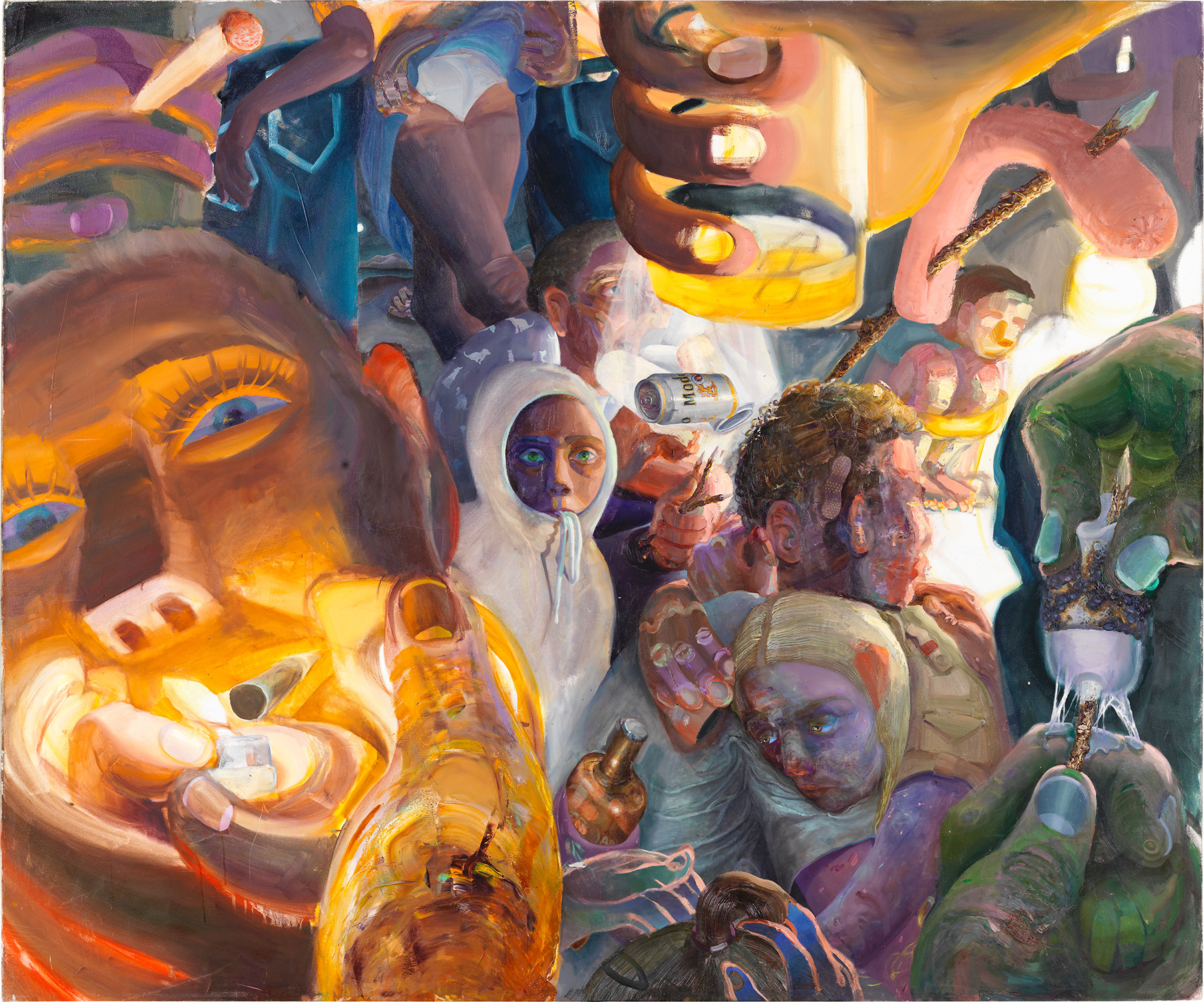
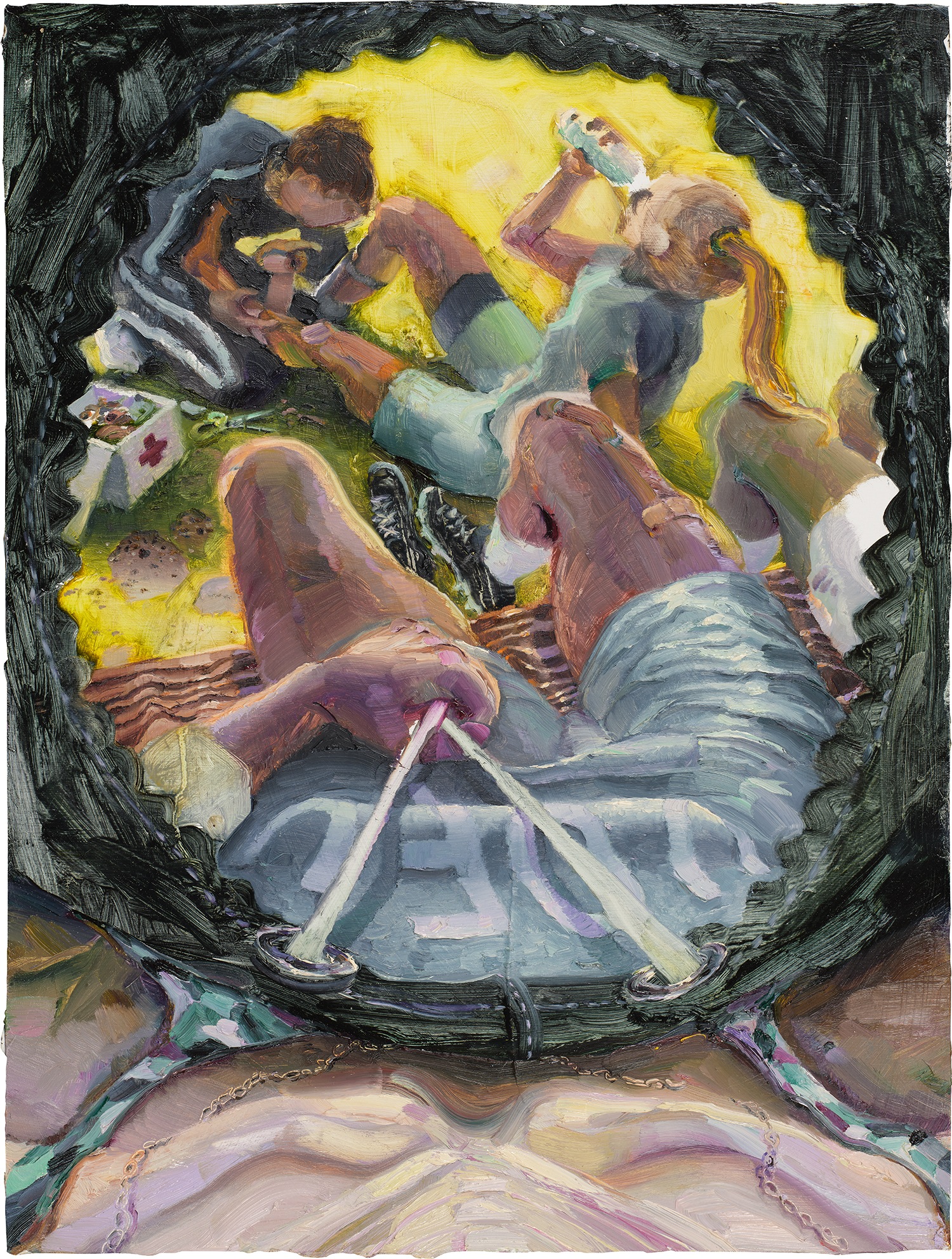
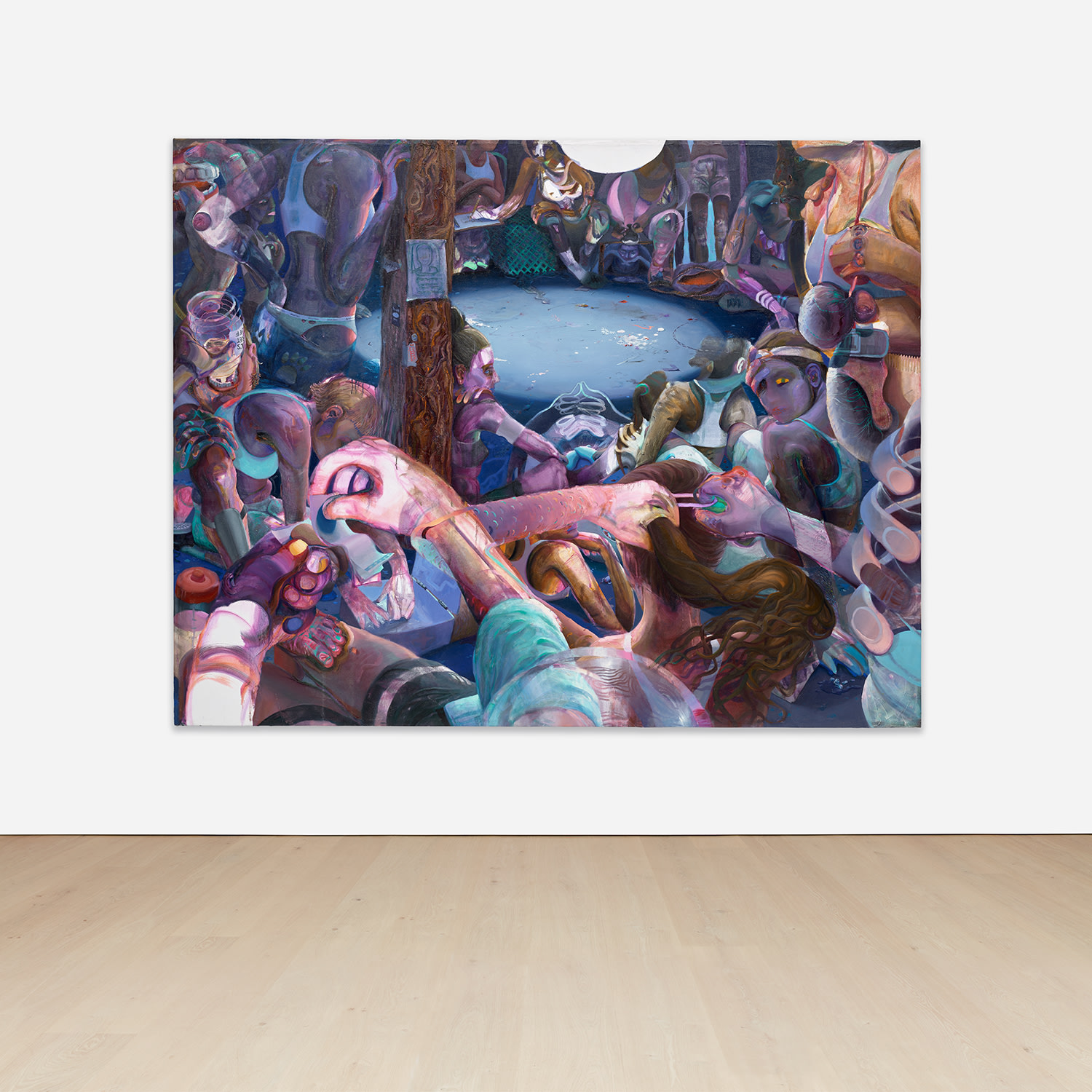
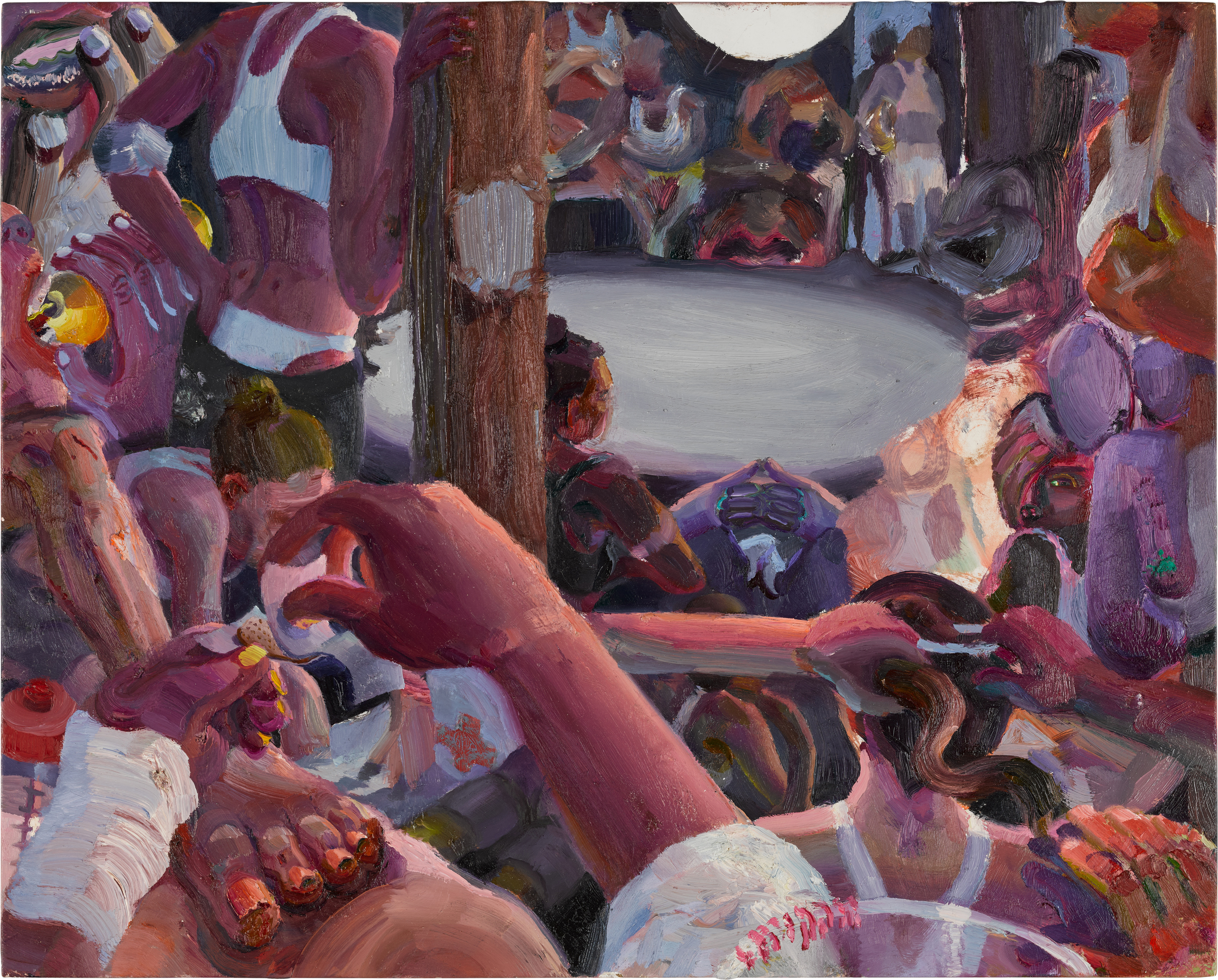
Something is happening in contemporary figurative painting, and Danica Lundy is at the center of it. The Canadian painter, born in 1991, has emerged over the past several years as one of the most compelling voices working in large scale oil painting today, her canvases commanding serious attention from institutions, critics, and collectors across North America and Europe. Her recent international exhibition appearances have confirmed what many in the art world had been quietly saying for some time: that Lundy's unflinching, deeply physical approach to the human figure represents one of the most genuinely original contributions to contemporary painting in her generation. Lundy grew up in Canada, and the particular texture of that upbringing, its landscapes, its bodily realities, its relationship to the natural world, seems to saturate her work at every level. Like many painters who go on to develop fiercely personal vocabularies, she spent her formative years absorbing the full range of art history before beginning to push back against it. The training she undertook gave her technical command, but it was her willingness to move beyond received ideas about beauty, about what a body should look like in paint, about what paint itself should do, that ultimately defined her as an artist of real ambition. The evolution of Lundy's practice is inseparable from her relationship to the human body as a site of transformation rather than a fixed object. Her figures do not simply inhabit her canvases; they dissolve into them, emerge from depths within them, blur against grounds that seem to breathe and shift. There is a strong lineage here that connects to painters who worked in the abject and the visceral, from Francis Bacon's distorted forms to Jenny Saville's monumental female bodies, yet Lundy arrives at something distinctly her own. Where Bacon pursued existential isolation and Saville interrogated feminine flesh through scale and directness, Lundy is preoccupied with process itself, with what it means to be a body in the midst of becoming something else entirely. Water is perhaps the most recurring element in her iconography, functioning less as a subject than as a condition. Figures in Lundy's paintings are perpetually submerged, suspended, or surfacing, caught in states that resist easy narrative resolution. This interest in liminality, in the threshold between states of being, gives her work a psychological charge that goes far beyond surface sensation. The rawness of her mark making, the way her paint application seems to pulse and churn, reinforces this sense of bodies caught in genuine flux. Looking at her paintings, one feels the work of making them, the physical commitment required to sustain such intensity across canvases that are often very large in scale. Among her most significant works, "Bonefire" from 2017 stands as an early signal of her full powers. Rendered in oil on canvas, the painting announced an artist capable of balancing the grotesque and the tender, the repellent and the magnetic, within a single sustained image. "Arena" from 2018, oil on panel, extended this vocabulary into more complex compositional territory, suggesting multiple figures or body fragments in a shared space that feels both intimate and combative. "Miss Fist Kiss" from 2019 brought a charged emotional register to her familiar themes, while "U of U" from 2021, oil on panel, demonstrated a continued deepening of her formal intelligence. Taken together, these works reveal an artist who does not repeat herself but rather spirals forward, each painting expanding the terms of what came before. From a collecting perspective, Lundy represents exactly the kind of sustained, serious practice that rewards early attention. Her work has attracted strong interest in the contemporary art market, with results that reflect genuine institutional and critical backing rather than speculative momentum alone. Collectors drawn to the figurative painting revival, and particularly to artists working at the intersection of the visceral and the psychological, have found in Lundy a painter whose work holds up under sustained looking. This is important: her canvases are not about immediate seduction but about a deepening relationship over time, which is the quality that distinguishes lasting work from fashionable work. For collectors building collections with real depth, her paintings offer both aesthetic and intellectual resonance that continues to reward. In the broader context of contemporary painting, Lundy belongs to a remarkable generation of figurative artists who have reclaimed the large scale oil painting as a site of genuine risk and discovery. Her concerns connect her to painters such as Cecily Brown, whose own work balances figuration and abstraction with a similarly charged sensuality, and to Nicole Eisenman, whose unflinching engagement with the body and its social meanings offers another illuminating parallel. One might also look to the influence of older figurative traditions rooted in Northern European expressionism, in painters who understood that paint could carry existential weight without sacrificing material pleasure. Lundy synthesizes these lineages while remaining unmistakably herself. What Danica Lundy offers to the conversation in contemporary art is something genuinely needed: a commitment to the body in all its complexity, its beauty and its strangeness, its vulnerability and its force. At a moment when figuration has returned to widespread critical favor, she is not simply riding a wave but helping to define what the best of that return can look like. Her paintings insist that the human body remains an inexhaustible subject, that paint remains a medium capable of surprise, and that an artist willing to go far enough into discomfort can arrive somewhere close to truth. To encounter her work is to be reminded of why painting still matters, which is the highest thing one can say about any artist working today.