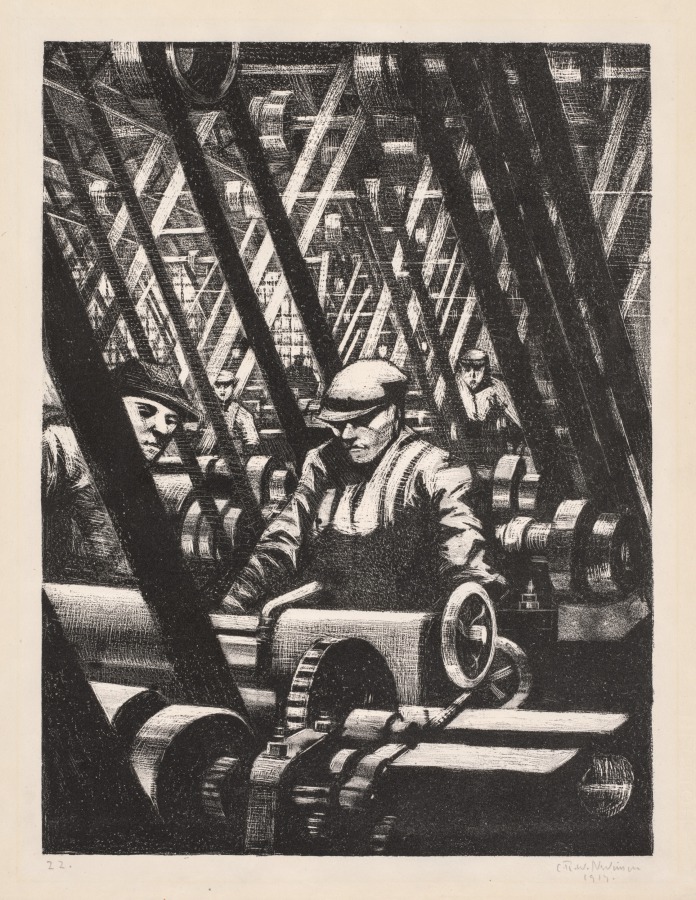
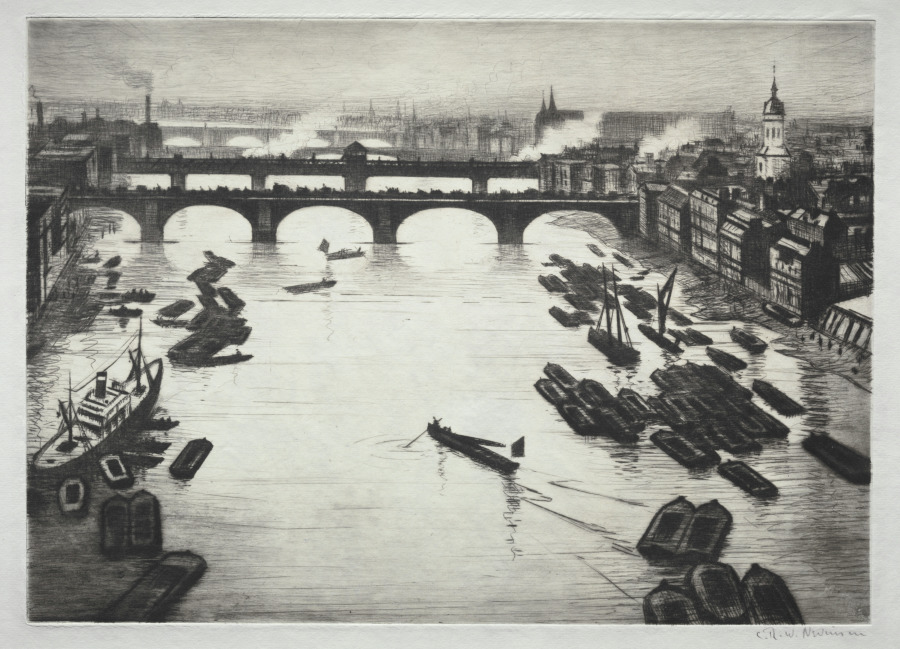
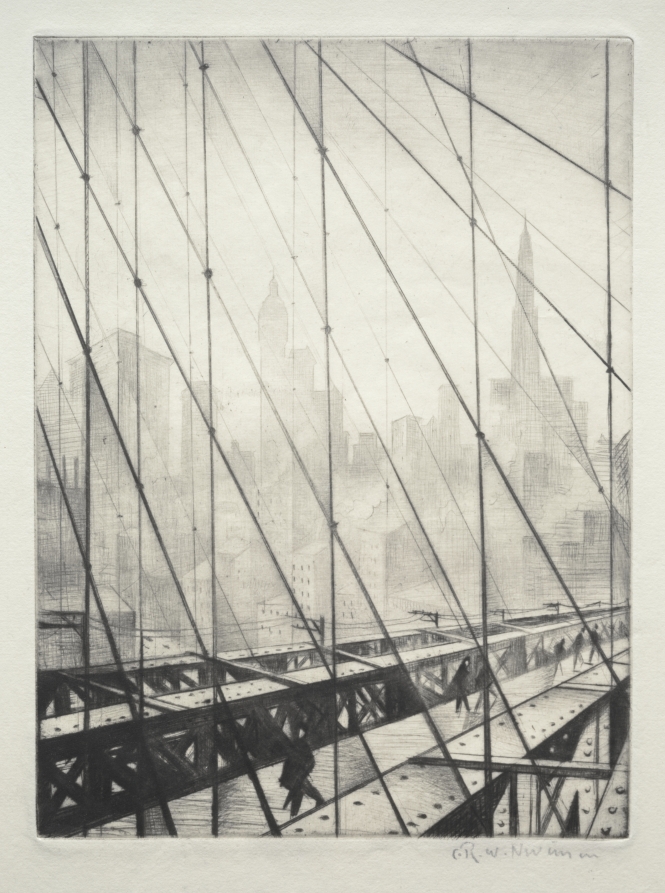
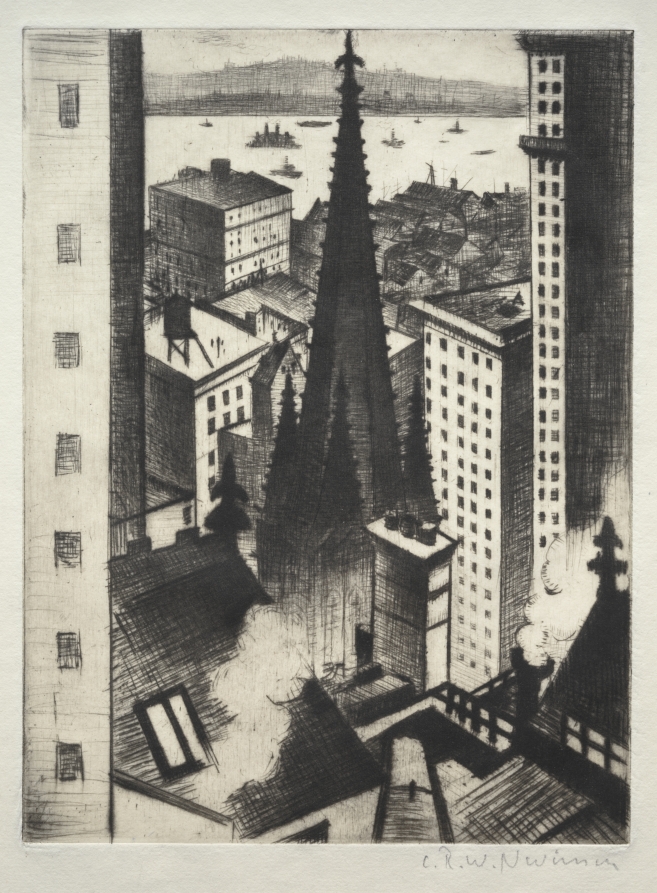
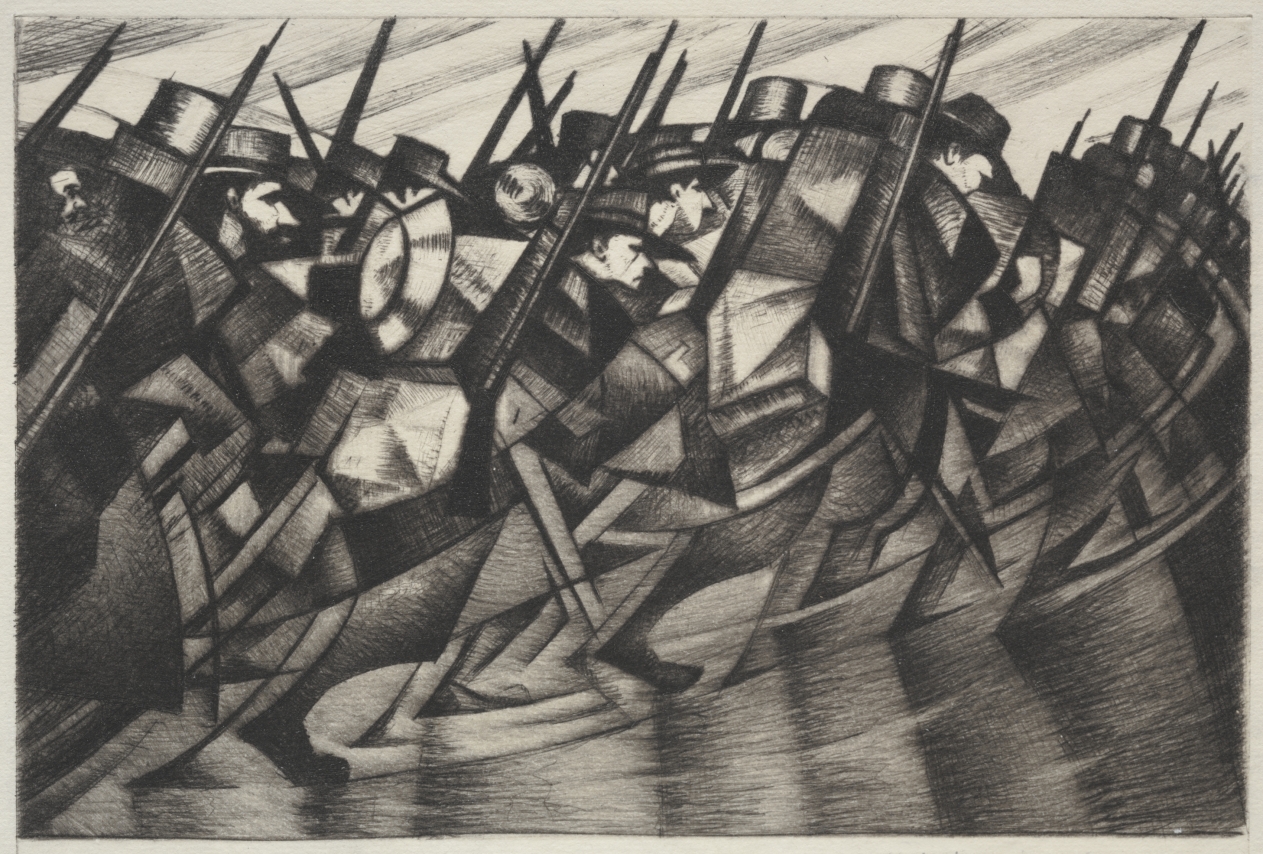
Picture the Western Front in the winter of 1914. Mud, wire, the mechanical grind of a world remaking itself through violence. Into this landscape walked Christopher Richard Wynne Nevinson, sketchbook in hand, with eyes trained by the most radical art movements of the early twentieth century. What he saw, and what he made of it, would place him among the defining visual voices of his generation and cement a legacy that continues to grow in critical and commercial esteem more than seven decades after his death. Nevinson was born in London in 1889 into a household already charged with intellectual ambition. His father, Henry Wood Nevinson, was a celebrated journalist and war correspondent, a man who believed that bearing witness was a moral act. His mother, Margaret Wynne Nevinson, was a prominent suffragette and social reformer. Between them they gave their son something invaluable: the conviction that art and life were inseparable, and that the world demanded a response. Growing up in that environment, surrounded by writers, activists, and thinkers, Nevinson absorbed a seriousness of purpose that would distinguish him from many of his contemporaries. His formal training began at St John's Wood School of Art and continued at the Slade School of Fine Art, one of the great crucibles of British modernism in the early 1900s. At the Slade he formed friendships that would shape him profoundly, most notably with Paul Nash, a fellow student who would also go on to become one of Britain's defining war artists. But it was his time in Paris, where he studied at the Académie Julian around 1912, that proved truly transformative. There he encountered Futurism firsthand, befriending the Italian painter Gino Severini and absorbing the movement's electrifying belief that speed, machinery, and urban energy were the true subjects of modern art. He also moved in the orbit of Vorticism back in London, the angular, industrial British movement championed by Wyndham Lewis, which shared Futurism's love of mechanical force though with a cooler, harder edge. When war came in 1914, Nevinson initially served as an ambulance driver and worked with the Red Cross, experiences that brought him into direct contact with the wounded and the dying. This was not the war of romantic illustration. It was industrial slaughter on an unprecedented scale, and Nevinson's Futurist and Vorticist training gave him precisely the visual language to describe it. His canvases from this period fracture space into shards, repeat forms to suggest relentless mechanical motion, and drain colour to an almost monochromatic severity. Works such as Returning to the Trenches from 1916, executed as a drypoint, show columns of soldiers rendered nearly indistinguishable from one another, absorbed into the grinding machinery of modern conflict. The individual has been subsumed by the collective, by the system, by the war itself. It is a devastating and deeply humane observation, all the more powerful for its formal austerity. Nevinson was appointed an official British war artist in 1917, a recognition of work that had already attracted enormous public attention when exhibited at the Leicester Galleries in London. His 1916 solo show there was a sensation, drawing long queues and urgent critical debate. One painting, Paths of Glory, depicting two dead British soldiers face down in the mud, was suppressed by the military censor and could not be shown. Nevinson responded by hanging a strip of brown paper diagonally across the canvas with the word "Censored" written on it, an act of defiant wit that became one of the most discussed gestures in British art history. He understood, instinctively, that the censoring of an image could itself become the most powerful image of all. After the war, Nevinson travelled widely, spending considerable time in the United States, and what he encountered in New York ignited a new chapter in his practice. The drypoints he made of New York in the early 1920s, including Temple of New York from 1919 and Looking through Brooklyn Bridge from 1921, are among the most thrilling urban images of the entire period. Where his war work had used fragmentation to convey horror, his American work uses the same visual vocabulary to convey awe. The soaring verticals of skyscrapers, the vertiginous geometry of suspension bridges, the sheer density and energy of a modern metropolis: Nevinson met New York as an equal, a city as modern as his own sensibility. These prints are increasingly prized by collectors for their compositional daring and their position at a hinge point between European modernism and American visual culture. For collectors approaching Nevinson today, the prints represent a particularly compelling entry point. Working across drypoint, etching, aquatint, and lithography, Nevinson brought to printmaking the same intensity he brought to painting, and his graphic works are rightly considered among the finest produced by any British artist of the early twentieth century. London Bridges from 1924 demonstrates his sustained fascination with urban infrastructure as a subject of genuine grandeur, while the lithograph Building Aircraft: Making the Engine from 1917 shows his ability to find beauty and formal complexity in industrial process. The market for works on paper by Nevinson has strengthened steadily in recent years as collectors and institutions have come to appreciate the full range of his output beyond the celebrated wartime canvases. Works in good condition with strong provenance attract serious attention at auction, particularly at Christie's and Sotheby's in London where his prints appear regularly. To understand Nevinson fully, it helps to place him in the company of artists he resembles and influenced. His war paintings invite comparison with Otto Dix and Paul Nash, fellow witnesses to the catastrophe of the First World War who each found their own formal response to its horror. His urban prints connect him to Joseph Pennell, the great American printmaker who also turned to New York's architecture with reverence, and to the Precisionist painters of America such as Charles Sheeler and Charles Demuth, who shared his belief in the machine as a subject worthy of sustained aesthetic attention. Nevinson sat at a crossroads of movements and nationalities, a genuinely international figure who is sometimes too narrowly defined by his British identity alone. What makes Nevinson so vital now, in an era when we are reckoning again with the relationship between technology, conflict, and human experience, is precisely his refusal to simplify. His work does not sentimentalise war, nor does it wallow in despair. It looks, with formal rigour and emotional intelligence, at what it means to live inside systems larger than oneself, whether those systems are armies, cities, or industrial economies. That is not merely historical curiosity. It speaks directly to the present, and it is why collectors and curators continue to return to his work with fresh eyes and genuine excitement.