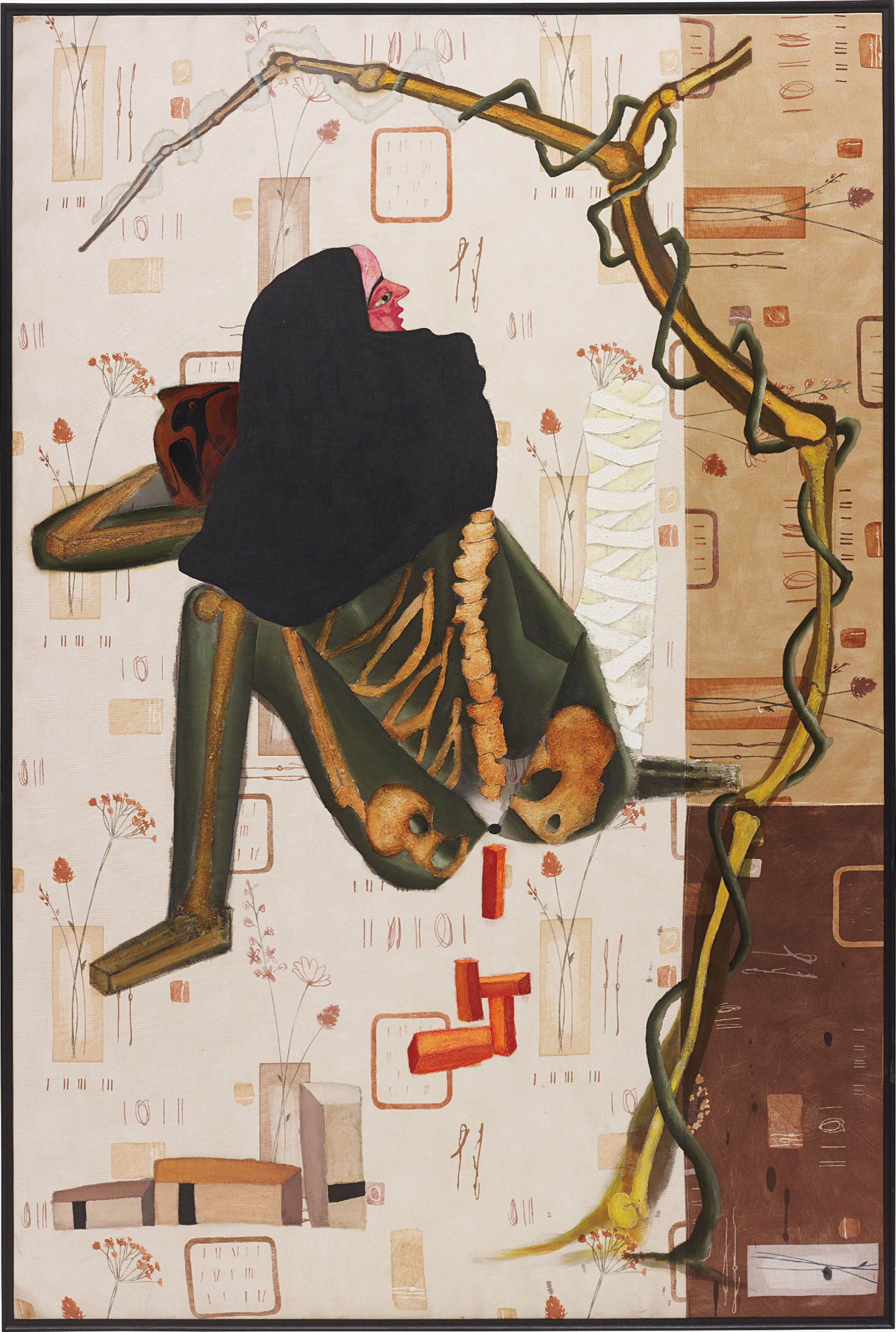
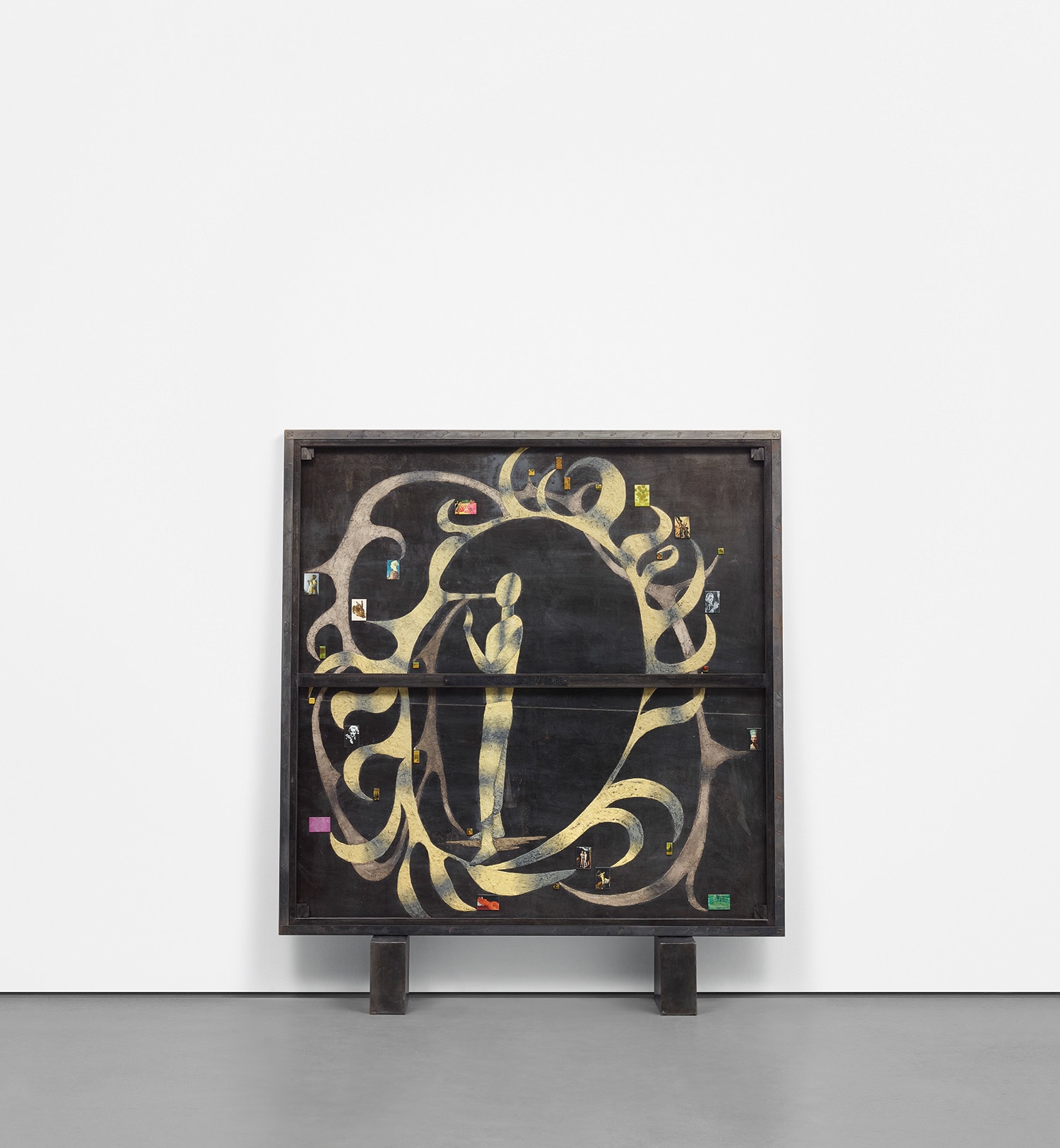
When Tate Modern added works by Atul Dodiya to its permanent collection, it was not simply an acquisition but a recognition of something long overdue: that one of India's most searching and intellectually generous painters had secured a permanent place in the global conversation about what contemporary art can do. The Guggenheim followed, as did the National Gallery of Modern Art in New Delhi, and together these institutions confirmed what collectors in Mumbai, London, and New York had understood for years. Dodiya is an artist whose work rewards return visits, whose layered surfaces hold more on the fifth encounter than they offered on the first. Born in Mumbai in 1959, Dodiya came of age in a city that was itself a palimpsest, a place where colonial architecture sat beside street shrines, where Bollywood hoardings competed with memories of the independence movement, where the sacred and the commercial shared the same wall. He studied at the Sir J. J. School of Art in Mumbai, one of the oldest and most storied art institutions in India, where he trained rigorously in the classical Western tradition even as he remained immersed in the textures of Indian daily life. That double inheritance, the museum and the street, the canon and the vernacular, became the generative tension at the heart of everything he would make. In the early 1990s, Dodiya received a French government scholarship that took him to Paris, where he studied at the École des Beaux Arts. The experience deepened his engagement with European modernism without displacing his Indian sensibility. He returned to Mumbai with an expanded vocabulary and a sharpened sense of what it meant to paint as an Indian artist in the postcolonial present, neither rejecting Western art history nor deferring to it, but entering into a genuine and sometimes playful dialogue with it. This position, confident and critical in equal measure, gave his subsequent work its distinctive charge. The breakthrough that brought Dodiya to sustained critical attention was his series of paintings on roller shutters, the corrugated metal doors that cover the storefronts and workshops of Indian cities overnight and serve as informal canvases for graffiti, political slogans, and devotional imagery. By transplanting this found object into gallery space, Dodiya was doing something more complex than a simple gesture of appropriation. He was insisting on the continuity between the world outside the gallery and the world within it, on the impossibility of separating aesthetic experience from social and political context. The shutters also carried a metaphorical charge, something that opens and closes, that protects and conceals, that stands between the public and the private. Among the works that best demonstrate the range and ambition of his practice is "Krishna Swallowing Forest Fire," completed in 2009. Rendered in oil and auto body solder on oxidised mild steel mounted on two mild steel stands, the work is as much sculpture as painting, an object that insists on its own material presence while reaching toward the mythological. The choice of Krishna swallowing fire, an episode from the Bhagavata Purana in which the god protects his people by consuming destruction itself, speaks to Dodiya's consistent interest in themes of protection, sacrifice, and the relationship between the divine and the political. The industrial materials, auto body solder and oxidised steel, refuse any sentimentality, grounding the sacred image in the contemporary world of labor and manufacture. "Fallen Leaves: A Stroll Number 1," made in 2006, takes an entirely different approach to similar questions. Here, oil paint is applied to actual dried leaves, which are then mounted on powder coated mild steel with auto body solder and red oxide. The work is almost unbearably delicate and at the same time formally precise, a meditation on impermanence, on the relationship between the organic and the industrial, between what falls naturally and what is constructed. There is something in this series that echoes the Japanese tradition of mono no aware, the bittersweet awareness of transience, filtered through a distinctly Indian sensibility and a modernist attention to process and material. The work called "Woman from Kabul," made in acrylic and marble dust on fabric and set in a frame the artist constructed himself, demonstrates yet another register: political, elegiac, and intimately human. The use of marble dust gives the surface a quality that is somewhere between fresco and skin, and the artist's own frame makes the work an object complete in itself, a total proposition. For collectors, the appeal of Dodiya's work lies precisely in this multiplicity. His practice cannot be reduced to a single style or period, and each work demands to be understood on its own terms while also speaking to the larger body of work that surrounds it. Collectors drawn to the intersection of art history and contemporary practice will find in Dodiya an artist who takes that intersection seriously, who knows exactly which modernist references he is invoking and why. His work has appeared at Christie's and Sotheby's and has consistently performed well at South Asian art sales, with works on shutter, works on found materials, and his more conventional canvases all attracting serious interest. The works that tend to generate the most sustained collector enthusiasm are those that combine material innovation with strong conceptual underpinning, which describes a significant portion of his output. In the broader context of contemporary art, Dodiya occupies a position that invites comparison with artists who have navigated similar crossroads between tradition and modernity, between local specificity and global ambition. His work shares certain concerns with that of Nalini Malani, another Mumbai artist whose practice engages with Indian history and mythology through formally adventurous means. International parallels can be drawn with Neo Expressionists who similarly sought to reintroduce narrative and historical content into painting after conceptualism had seemed to foreclose those possibilities. But Dodiya's voice is finally his own: too Indian to be assimilated into any European tendency, too formally sophisticated to be read only through the lens of postcolonial theory. What matters most about Atul Dodiya, in the end, is that his work remains genuinely alive. It does not illustrate a position or demonstrate a thesis. It thinks, in the way that only the best painting thinks, through material and form and image simultaneously. To spend time with his shutters and leaves and steel panels is to be reminded that painting can still be a primary site of cultural memory, a place where the personal and the historical, the sacred and the industrial, the local and the universal meet without any of them losing their distinctness. That is a rare achievement, and it is one that collectors, curators, and institutions across the world have recognized. The question now is not whether Dodiya matters but how deeply his work will continue to be understood.