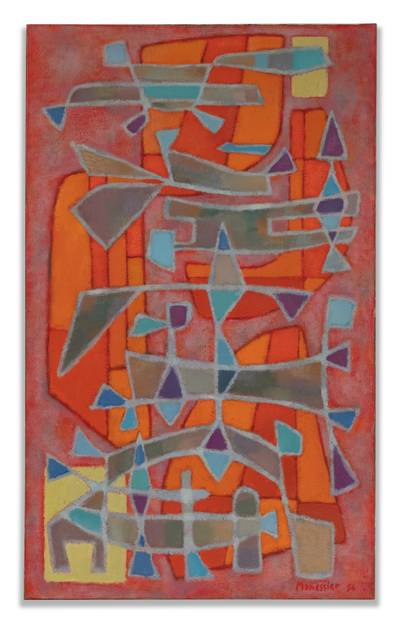
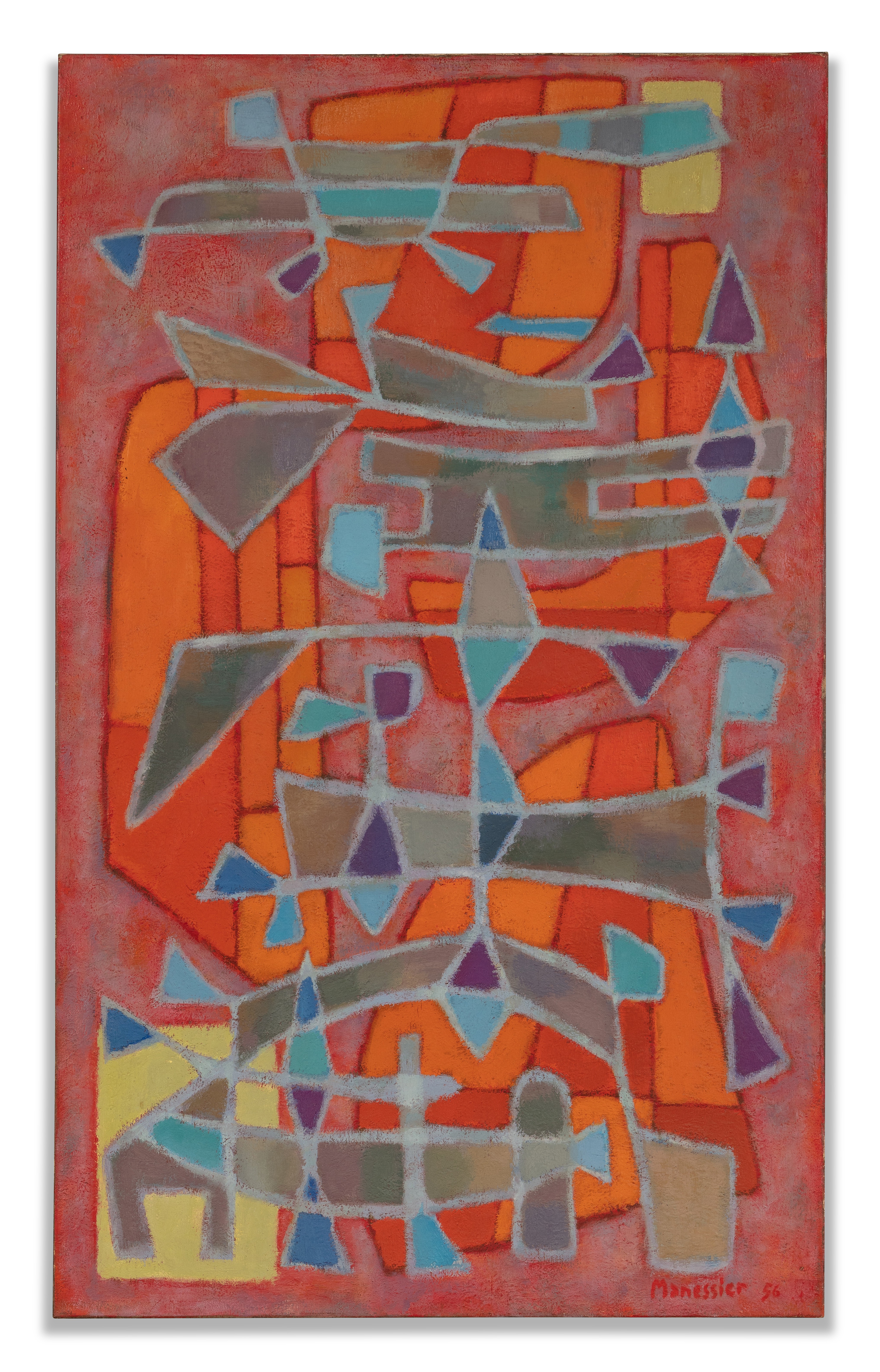
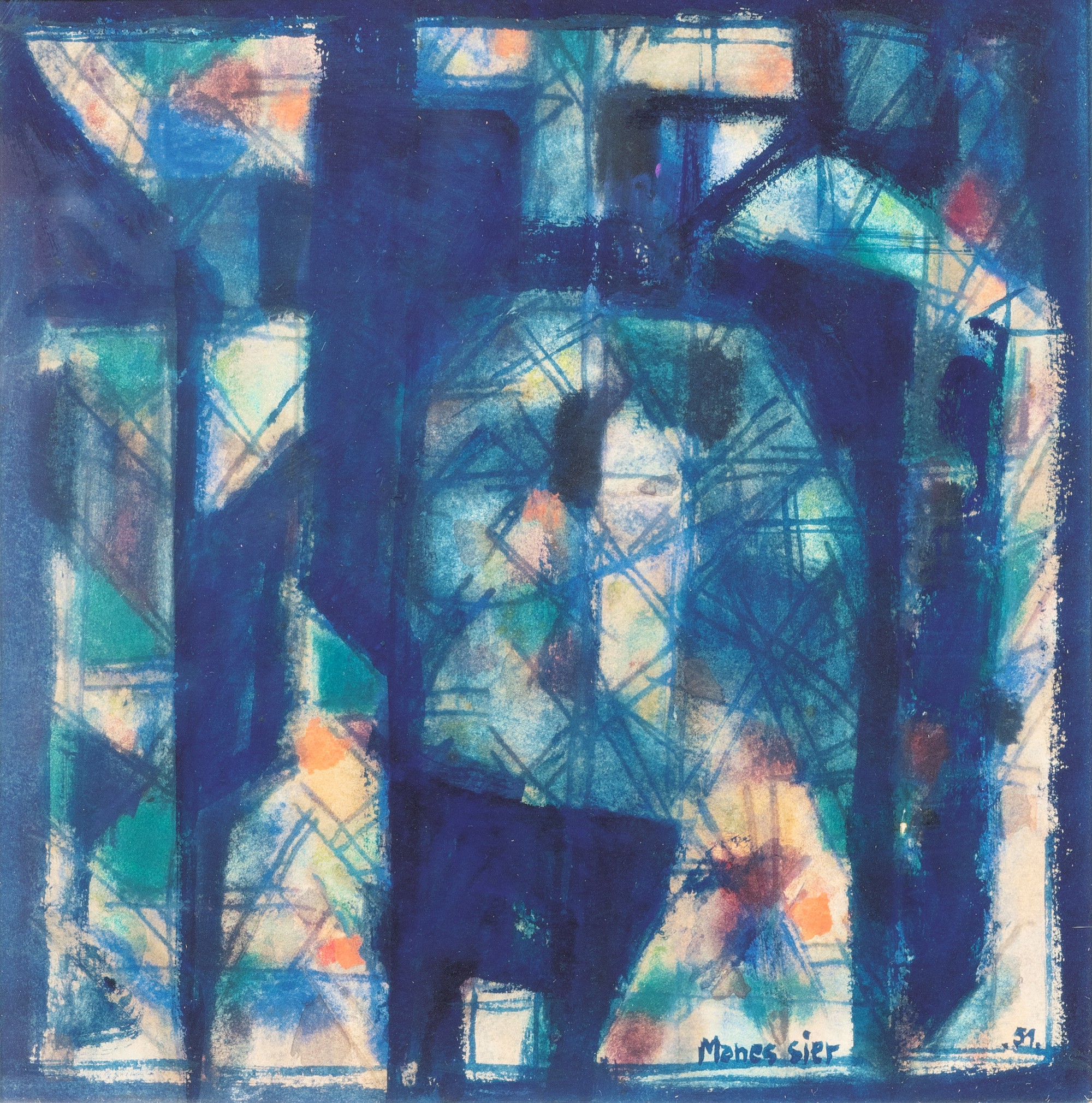
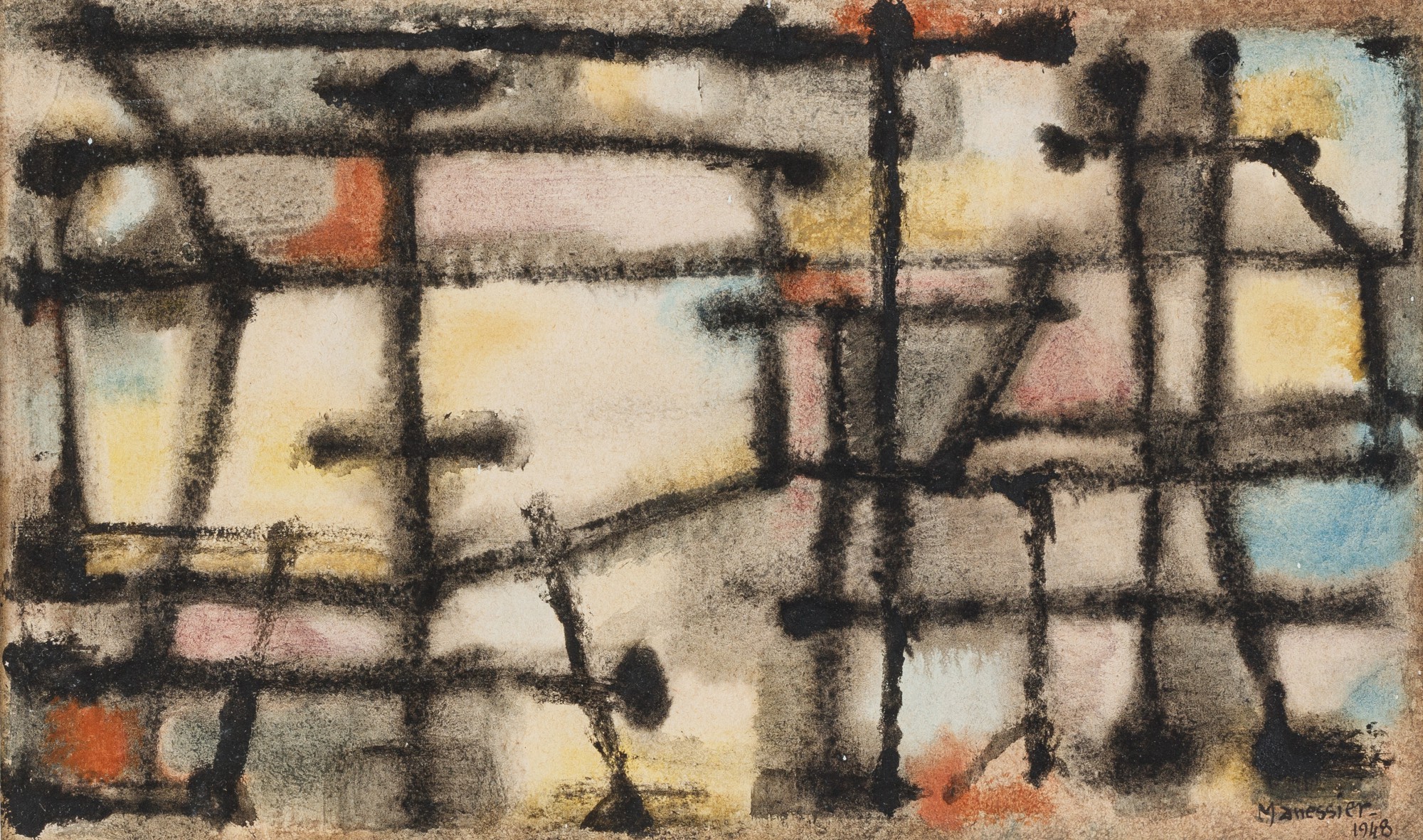
There is a particular quality of light that falls through the windows of the Abbey of Ligugé in western France, a trembling, color saturated glow that transforms stone interiors into something approaching the sacred. Alfred Manessier understood this quality not merely as a decorator or craftsman, but as a painter who had spent decades training his eye to see color as spiritual force. When the postwar generation of French abstractionists gathered in the studios and galleries of Paris to reinvent what painting could do, Manessier stood apart by insisting that abstraction and devotion were not opposites but partners, and the stained glass commissions that flowed from that conviction remain among the most moving works of religious art produced in the twentieth century. Alfred Manessier was born in 1911 in Saint Ouen, a commune just north of Paris, into a world that still carried the formal rhythms of prewar French provincial life. He arrived in Paris to study architecture, but the city's galleries and the presence of so many restless young artists quickly redirected his ambitions. He entered the École des Beaux Arts and immersed himself in the great tradition of French painting, absorbing the lessons of Cézanne and the Fauves with the attentiveness of someone who knew he was building a foundation that would need to last. His early work moved in a more figurative register, shaped by the same reverence for material and observation that characterized the best French painting of the interwar period. The decisive turn in Manessier's development came in January 1943, when he joined a group of artists on a retreat at the Cistercian monastery of La Trappe in Normandy. The experience was not simply biographical, it was transformative at the level of vision itself. The silence, the liturgical rhythms, the way light moved through plain windows at prescribed hours of the day, all of this lodged itself in his painterly imagination and gave him a new reason to pursue abstraction. He returned to Paris with what he later described as a renewed sense of purpose, and his painting rapidly shed its remaining figurative references in favor of interlocking fields of color that evoked spiritual states rather than visible landscapes. By the late 1940s and into the 1950s, Manessier had found his place within the broader current that critics would come to call Art Informel, a European counterpart to the American Abstract Expressionists. He exhibited with the group that gathered around the Galerie de France in Paris and was recognized alongside artists such as Jean Bazaine, Roger Bissière, and Pierre Tal Coat as part of a generation remaking French abstraction from within a humanist and often spiritually inflected tradition. The 1952 Venice Biennale awarded him its International Grand Prize for Painting, a recognition that confirmed his standing not only in France but across the European art world. He was, at that moment, among the most celebrated painters in Europe. The three works available through The Collection offer an intimate window into the period when Manessier's mature language was crystallizing. The aquarelle and gouache on paper titled Sans Titre from 1948 dates to the immediate aftermath of his Trappist revelation and shows his characteristic layering of translucent color planes, forms that float and overlap in ways that suggest illuminated manuscript pages or, more precisely, the inner surface of a stained glass window seen from within. The 1951 watercolor and gouache on paper catalogued as Untitled continues this vocabulary with a slightly more confident hand, the color relationships more daring and the spatial logic more assured. Then there is the Petit paysage hollandais of 1956, an oil on canvas that reveals another dimension of the artist: his ability to absorb a landscape encounter, a trip to the Netherlands, and distill it into something that retains the emotional register of a specific place without offering any literal description of it. These works are not studies for larger projects. They are complete expressions of an artist working at full intensity in an intimate format, and they carry all the meditative weight of his most celebrated achievements. For collectors, works on paper and small canvases from Manessier's peak years carry particular appeal. The 1948 to 1960 period represents the moment when his visual language was fully formed but still charged with the excitement of discovery, and works from these years appear with relative infrequency at auction. When they do come to market, they tend to attract not only specialists in postwar European abstraction but also collectors drawn to the intersection of modernism and spiritual tradition, a combination that speaks to audiences well beyond the usual boundaries of the art market. His work has appeared at major auction houses in Paris and London, and prices for authenticated works on paper from this period reflect the genuine rarity of strong examples in private hands. Understanding Manessier fully requires situating him within a specifically French conversation about what painting could owe to faith without becoming illustration. His closest peers, Bazaine and Bissière in particular, shared his conviction that abstraction could carry devotional weight without resorting to iconographic shorthand. Farther afield, his stained glass work invites comparison with the great religious commissions of Henri Matisse at the Chapelle du Rosaire in Vence and Fernand Léger's windows at Audincourt, works that collectively demonstrate the extraordinary ambition of postwar French artists to bring the whole force of modern painting into sacred architecture. Manessier's windows, created for churches across France and beyond, belong in that company without apology. Alfred Manessier died in 1993 following a road accident, leaving behind a body of work that has never quite received the sustained critical attention it merits outside of France. Yet the conditions for a fuller appreciation seem better now than they have been in decades. The renewed interest in postwar European abstraction, the growing collector appetite for work that holds spiritual or contemplative content, and the simple beauty of the paintings themselves all argue for a closer look. To spend time with a Manessier canvas or a sheet of his luminous gouache is to understand that the postwar period in France produced not only angst and theory but also radiance, and that one painter found a way to make that radiance feel entirely modern and entirely sincere.