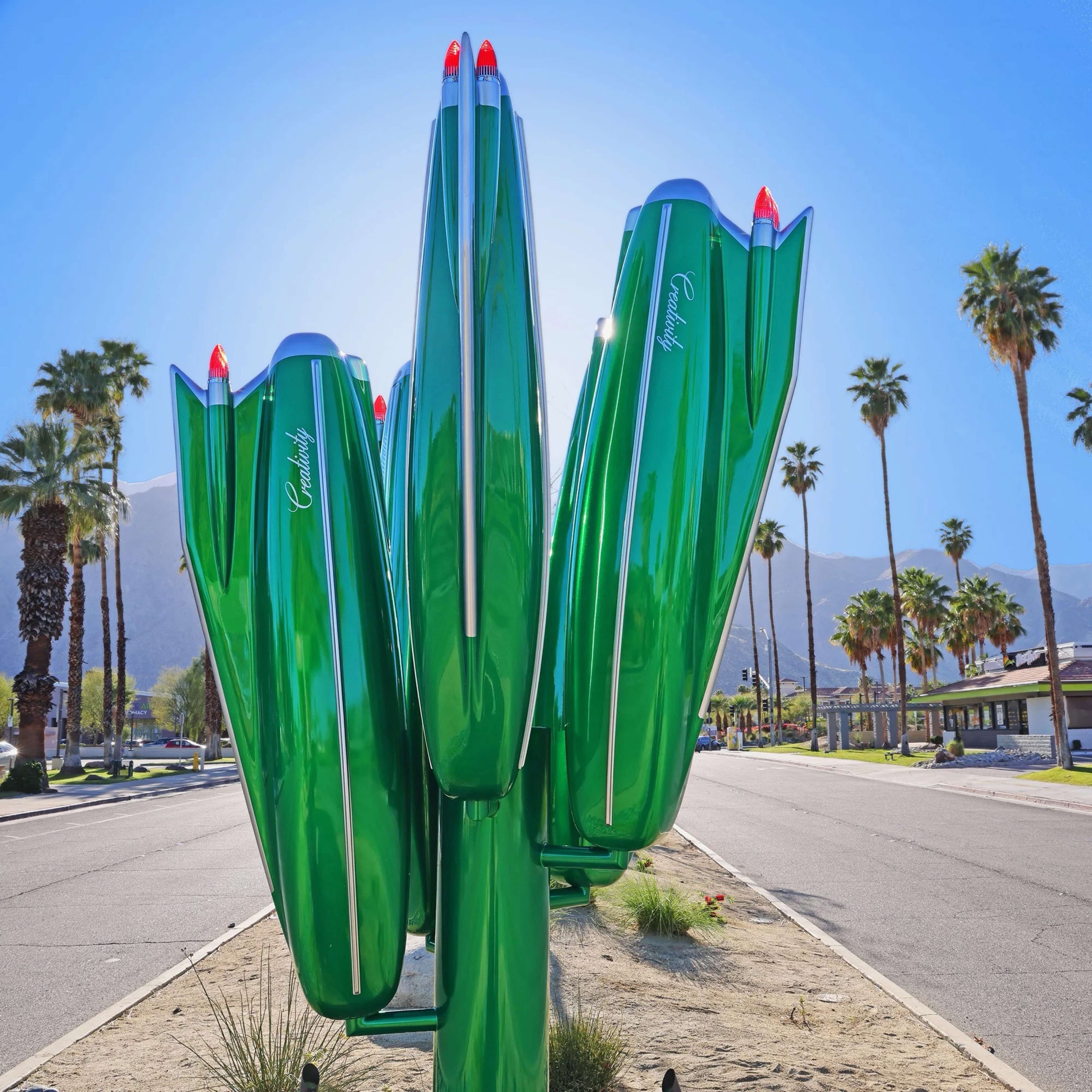
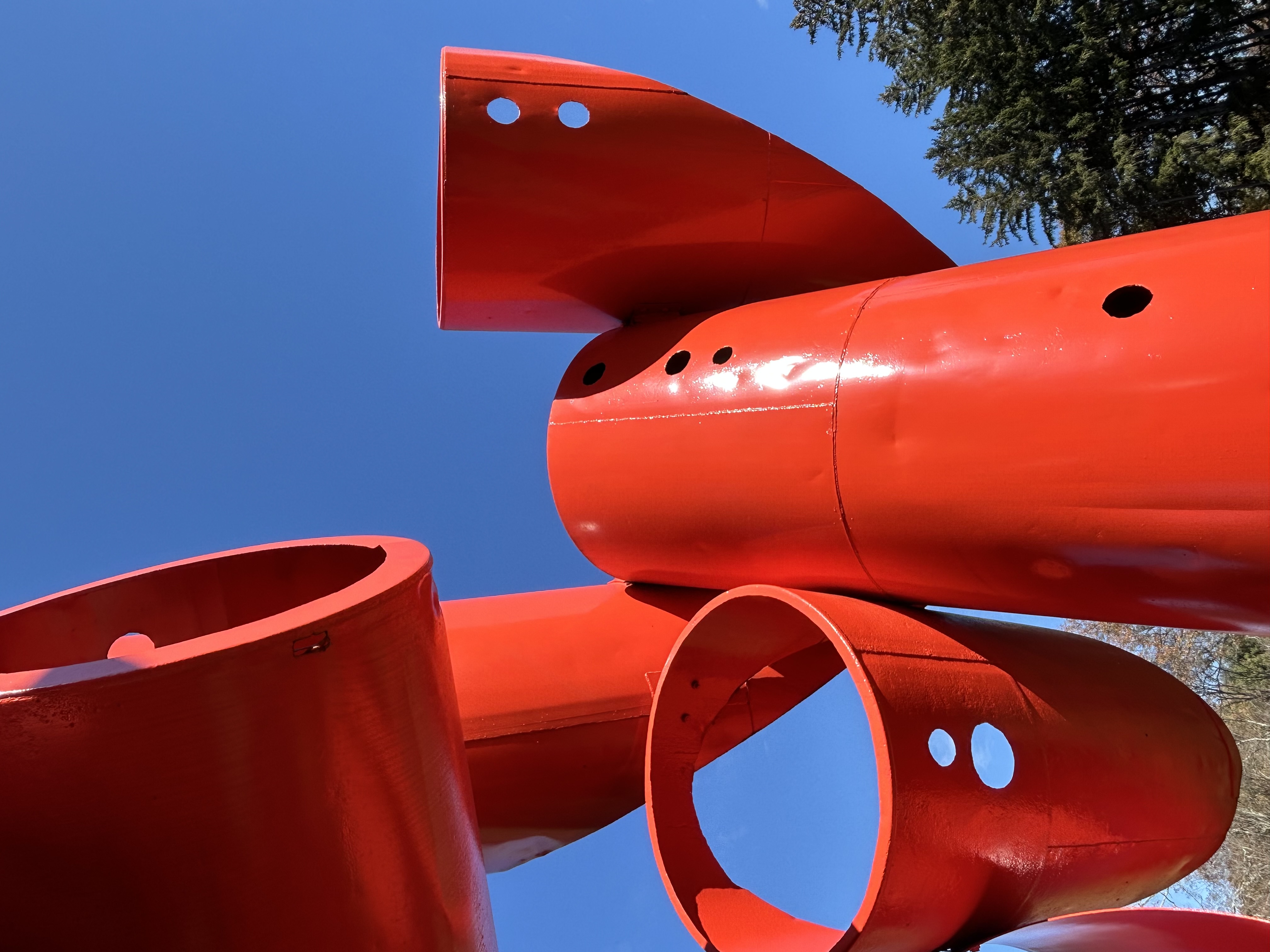
Painted Steel
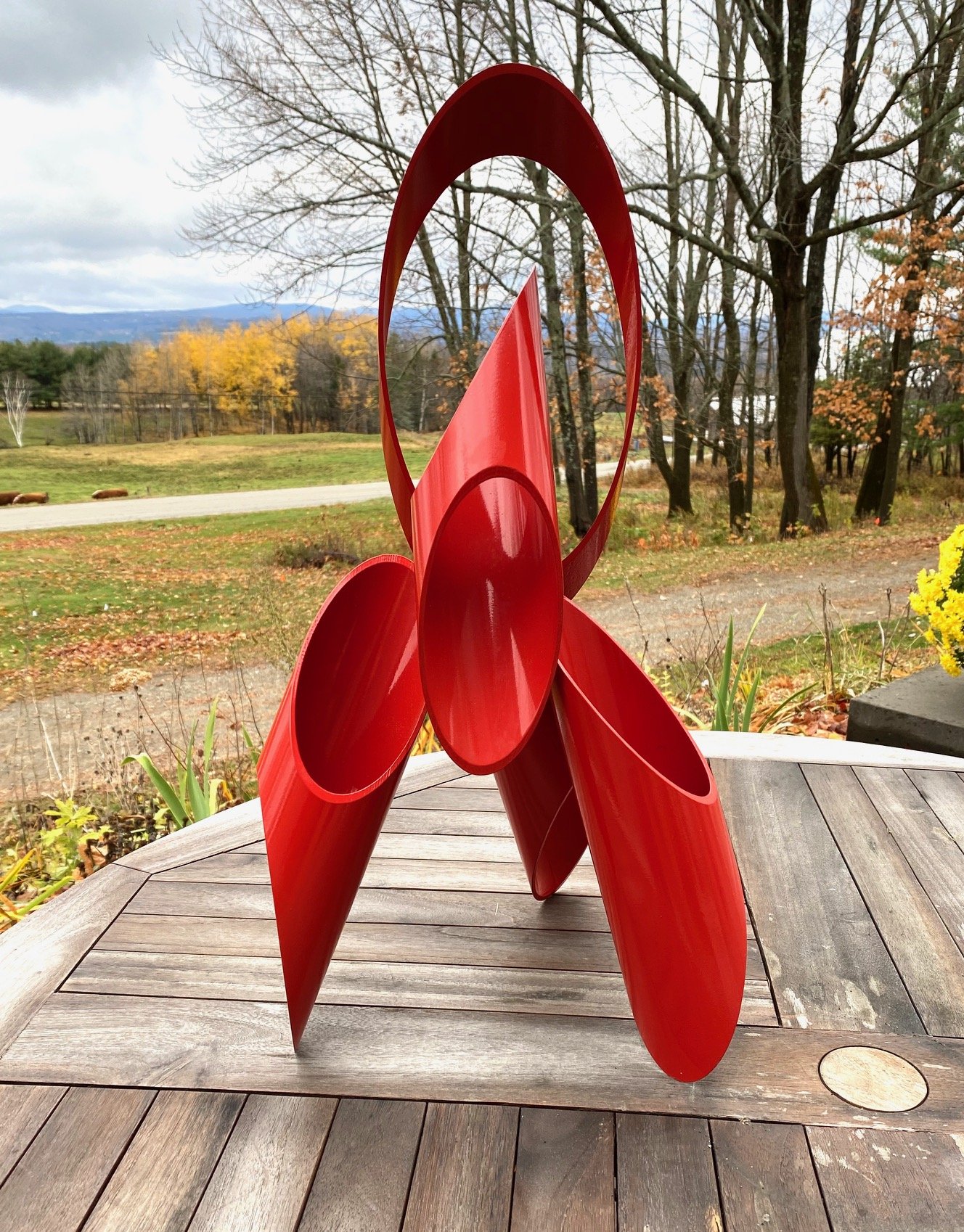
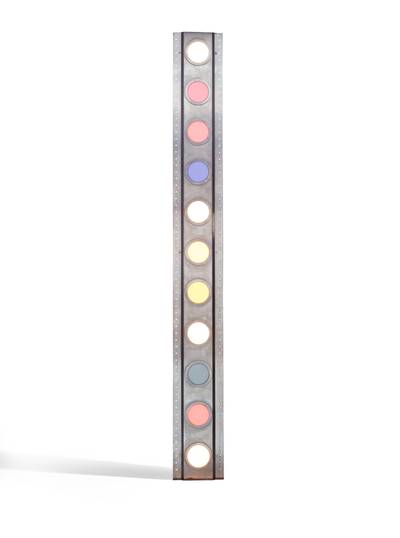
Alexander Liberman
Untitled, 1987
Steel That Bends, Burns, and Demands Your Attention
There is something almost irrational about wanting to live with a large piece of painted steel. It is heavy, often angular, sometimes awkward in domestic space, and completely indifferent to the soft furnishings around it. And yet collectors who have placed one of these works in their home or office will tell you the same thing: the room reorganizes itself around the sculpture. The steel wins.
That quality, the gravitational pull of fabricated and finished metal given color and intention, is precisely what draws serious collectors to this category and keeps them coming back. Painted steel occupies a strange and thrilling position in the collecting landscape. It sits at the intersection of industrial process and fine art ambition, of the handmade and the engineered. The color transforms the object.
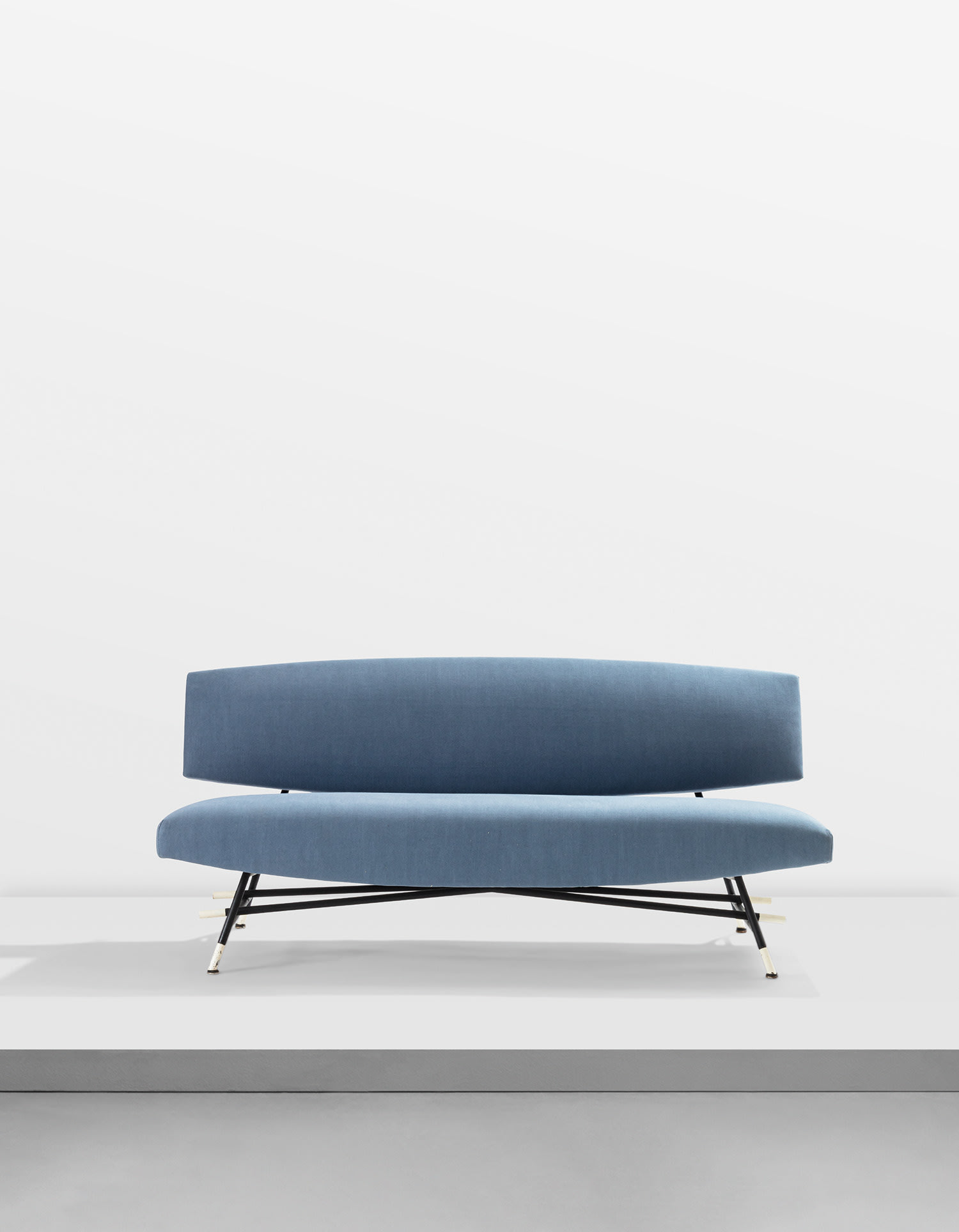
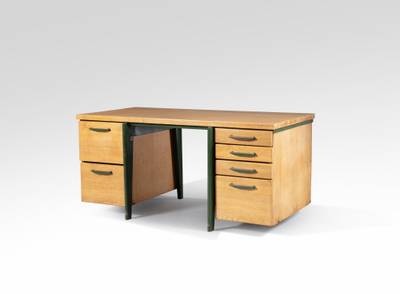
Ico Parisi
Sofa, model no. 865, 1958
A raw steel form reads as industrial artifact. Add a field of cadmium red or oxide yellow and it becomes something else entirely, a philosophical statement about what sculpture is allowed to be. Collectors who understand this distinction tend to build extraordinary collections, because they are not simply buying objects. They are buying arguments.
Knowing what separates a strong work from a truly great one takes time and looking. The best painted steel works have an internal logic to them. The form and the color are not decorative partners but genuine collaborators, each pushing the other further. Scale matters enormously.
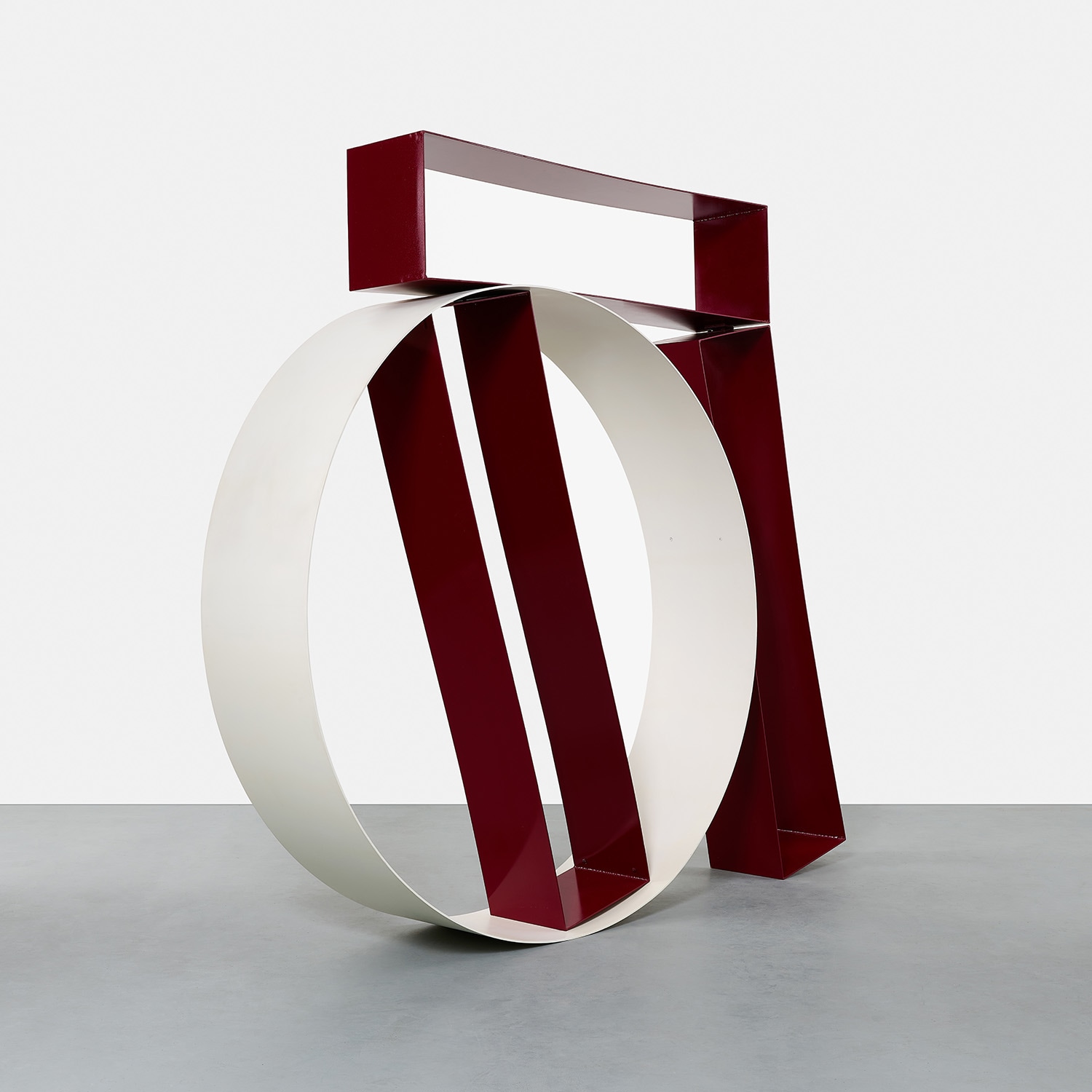
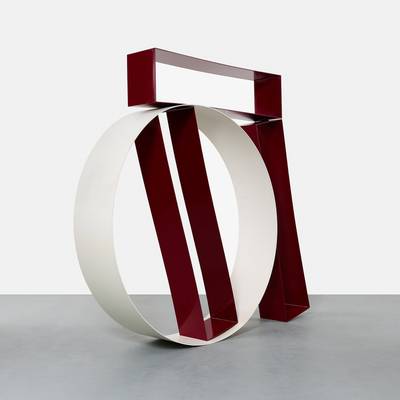
David Annesley
Three Red Boxes and Circle, 1967
Works that feel resolved at their actual dimensions, rather than works that seem as though they could have been larger or smaller without consequence, carry a conviction that holds up over decades of living with them. Weld quality, surface consistency, and the evenness of paint application all speak to whether the work was made with full commitment or finished quickly. Ask yourself whether the color feels chosen or applied, and you will already be thinking like a serious buyer. The artists represented on The Collection give a real sense of how broad and how deep this territory runs.
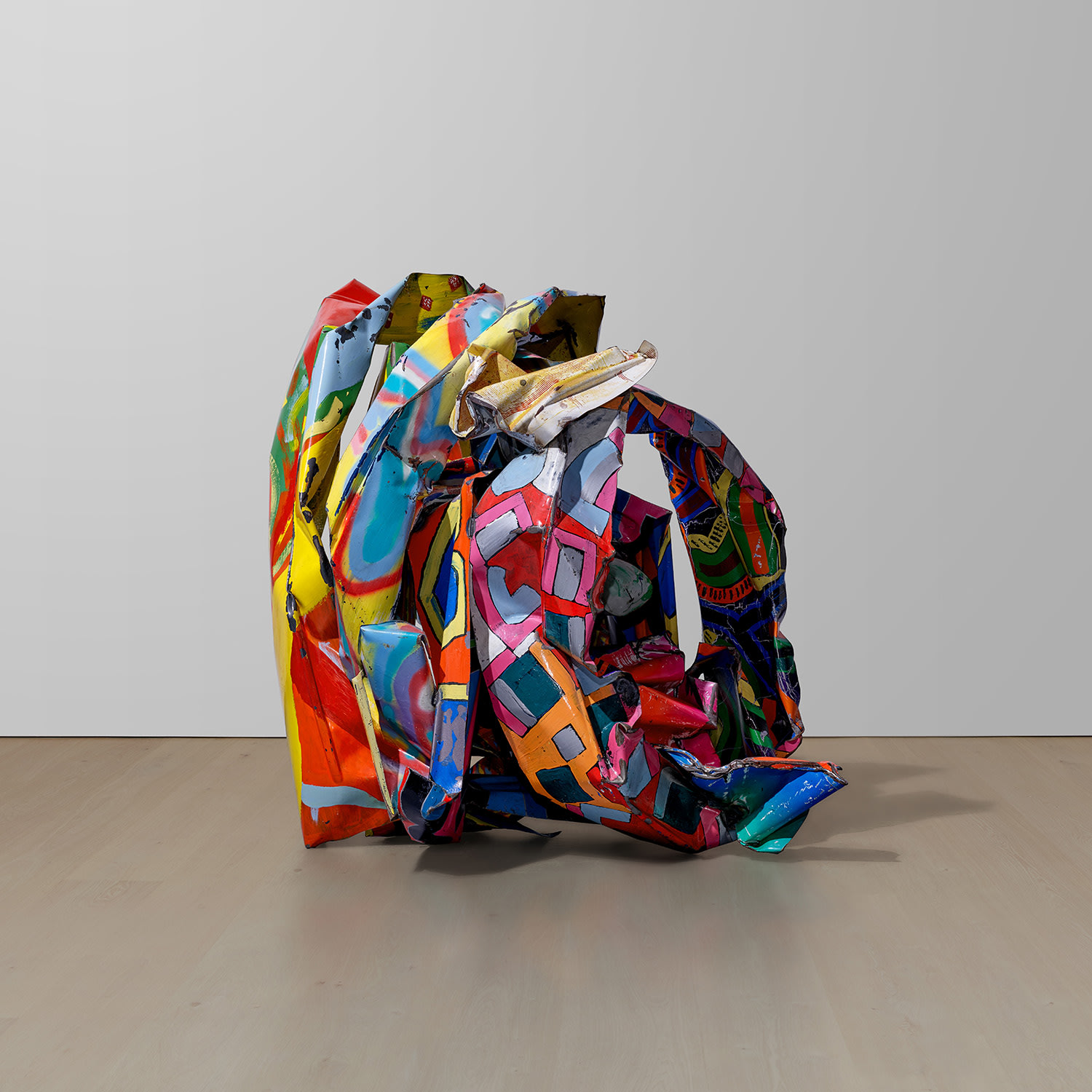
John Chamberlain is essential. His compressed automobile bodies, lacquered and arranged into dense sculptural masses, remain among the most argued about and most loved works of postwar American art. Chamberlain came to prominence in the late 1950s and early 1960s showing at Leo Castelli, and his reputation has only consolidated since his death in 2011. Works on the secondary market consistently attract serious institutional and private competition.
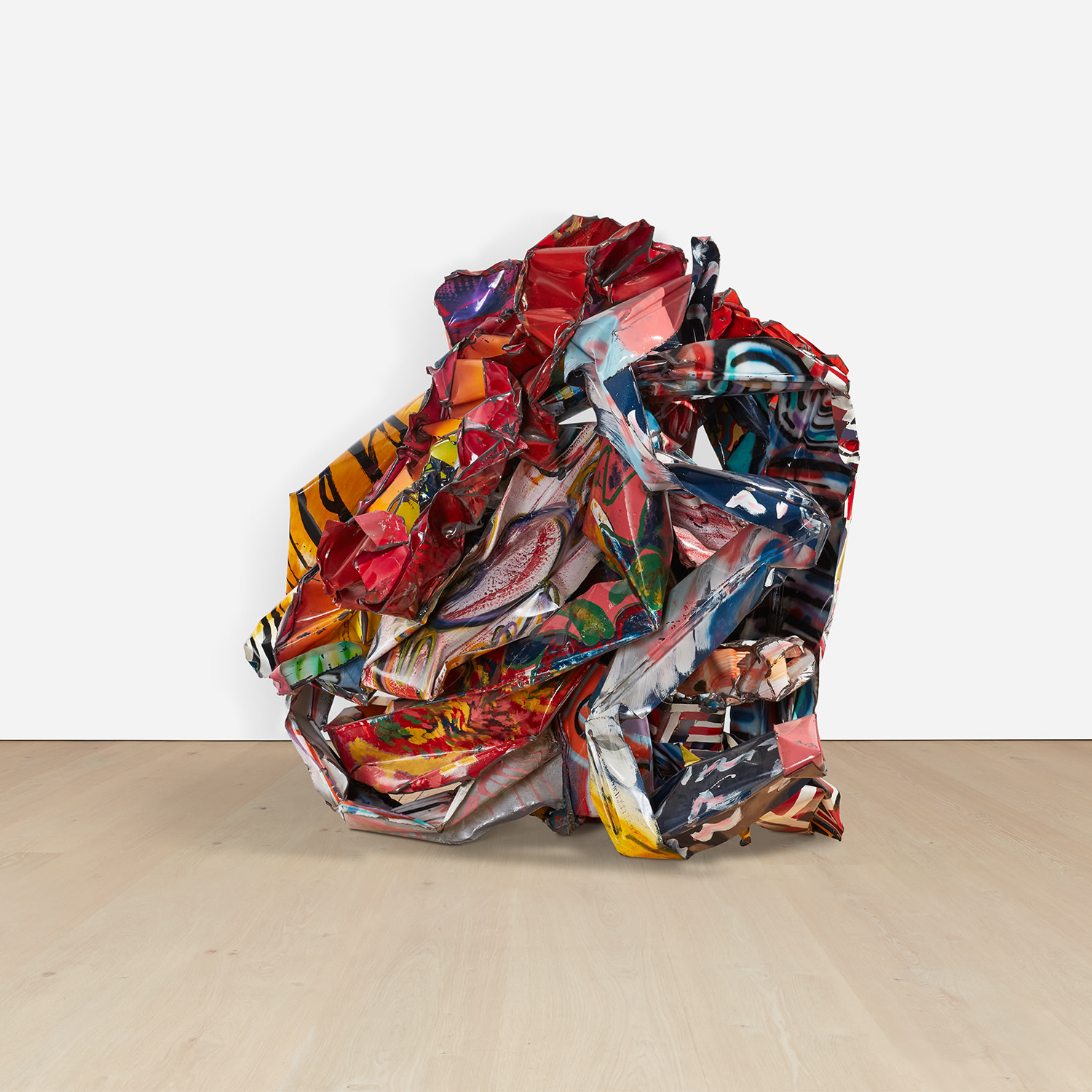
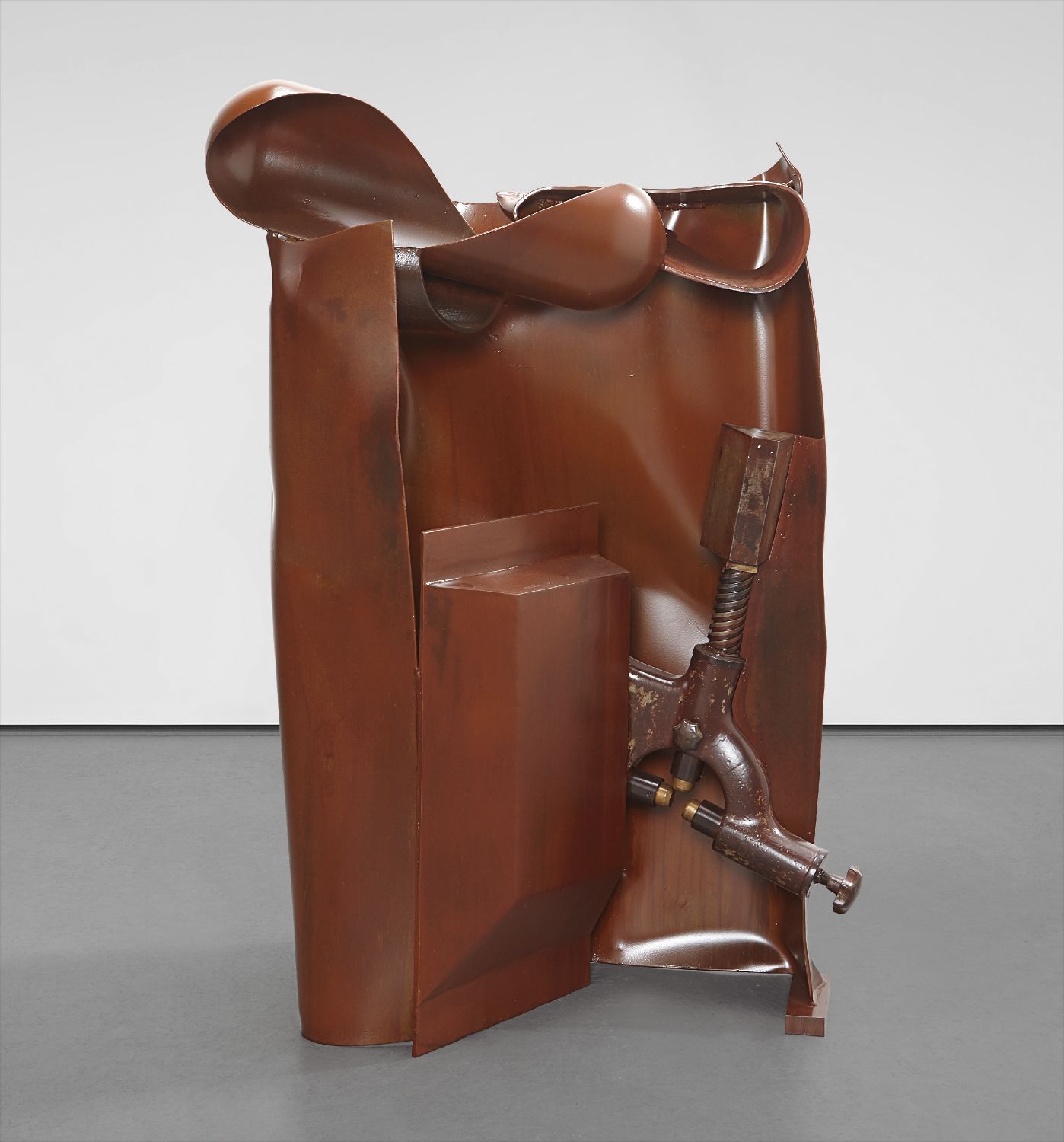
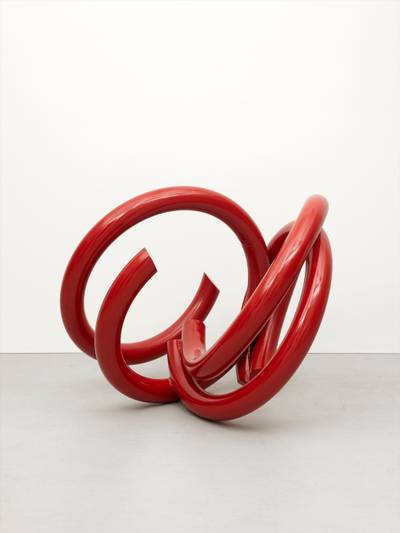
John Chamberlain
Taoist Toast, 1994
Anthony Caro is equally foundational, having essentially invented the grammar of painted steel sculpture as an autonomous floor based form during his Bennington period in the early 1960s. His decision to remove the plinth and place painted steel directly on the ground was one of the more consequential moves in twentieth century sculpture. Both artists represent proven, blue chip stability, but they require meaningful capital to enter. For collectors working with a broader range of price points, or those interested in building a collection with more diversity and discovery built into it, the list extends in rewarding directions.
David Smith, who preceded both Caro and Chamberlain and whose welded steel practice influenced almost everyone who followed, is represented here and remains one of those artists where demand reliably outpaces available supply at auction. Philippe Hiquily, the French sculptor who worked in welded metal through a surrealist and often playful visual language, offers something tonally different and has seen growing institutional interest in Europe over the past decade. His work is still relatively accessible compared to his historical significance. Alexander Liberman, whose large scale painted steel environmental works were placed at major American institutions throughout the 1970s and 1980s, is another figure whose market has not fully caught up with his ambition or his legacy.

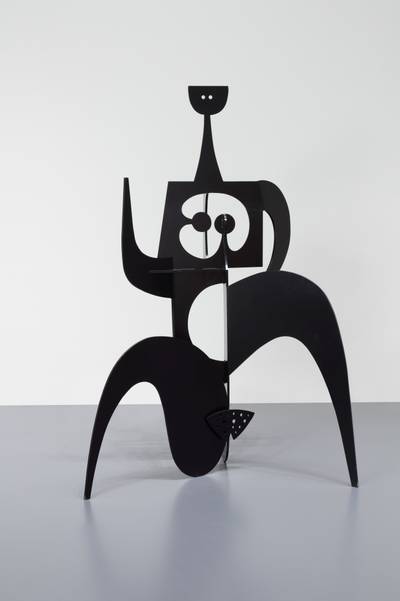
Philippe Hiquily
Girouettes (Marabella - Shanghai), 1963
The space for emerging and underrecognized artists in painted steel is genuinely interesting right now. Michael Sailstorfer, the German artist known for conceptually driven work that often involves physical transformation and industrial materials, brings a rigor to fabricated sculpture that feels very much of the present moment. His works think carefully about process and time in ways that collectors attuned to contemporary discourse will find compelling. Jorge de Oteiza, the Basque sculptor whose metaphysical approach to empty space and steel form sits slightly outside the Anglo American canon, is another figure worth serious attention.
His influence on subsequent generations of sculptors is well documented but his market presence in the English speaking world remains far below where it deserves to be. At auction, painted steel performs with a clarity that reflects the underlying logic of the category. Works by established figures with strong exhibition histories and clear provenance tend to find buyers quickly and often exceed estimates when condition is good and the scale is right for institutional or large private collection placement. The complicating factor, and this is worth being honest about, is condition.
Steel rusts, paint chips, and fabricated joins can stress over time in ways that are difficult and expensive to remediate. Before any purchase, ask for a full condition report and ideally arrange an independent assessment. Inquire specifically about any previous restoration, repainting, or structural repair. For unique works, any alteration to the original surface is a collecting conversation you want to have before the invoice, not after.
Display demands honest conversation too. Painted steel works need space, good light, and ideally a floor surface that can bear real weight without question. Works intended for outdoor placement have different coating requirements than indoor pieces, and confusing the two categories leads to accelerated deterioration. For editions, and several artists in this space did produce editioned works in steel, ask the gallery or auction house about the total edition size, how many have been sold, and where the remaining works reside.
A large edition with many unsold examples can suppress secondary market values in ways that a unique work simply does not face. The best advice, then and always, is to buy the work that genuinely stops you, understand exactly what you are buying, and give it the space it deserves.