Neo-Geo
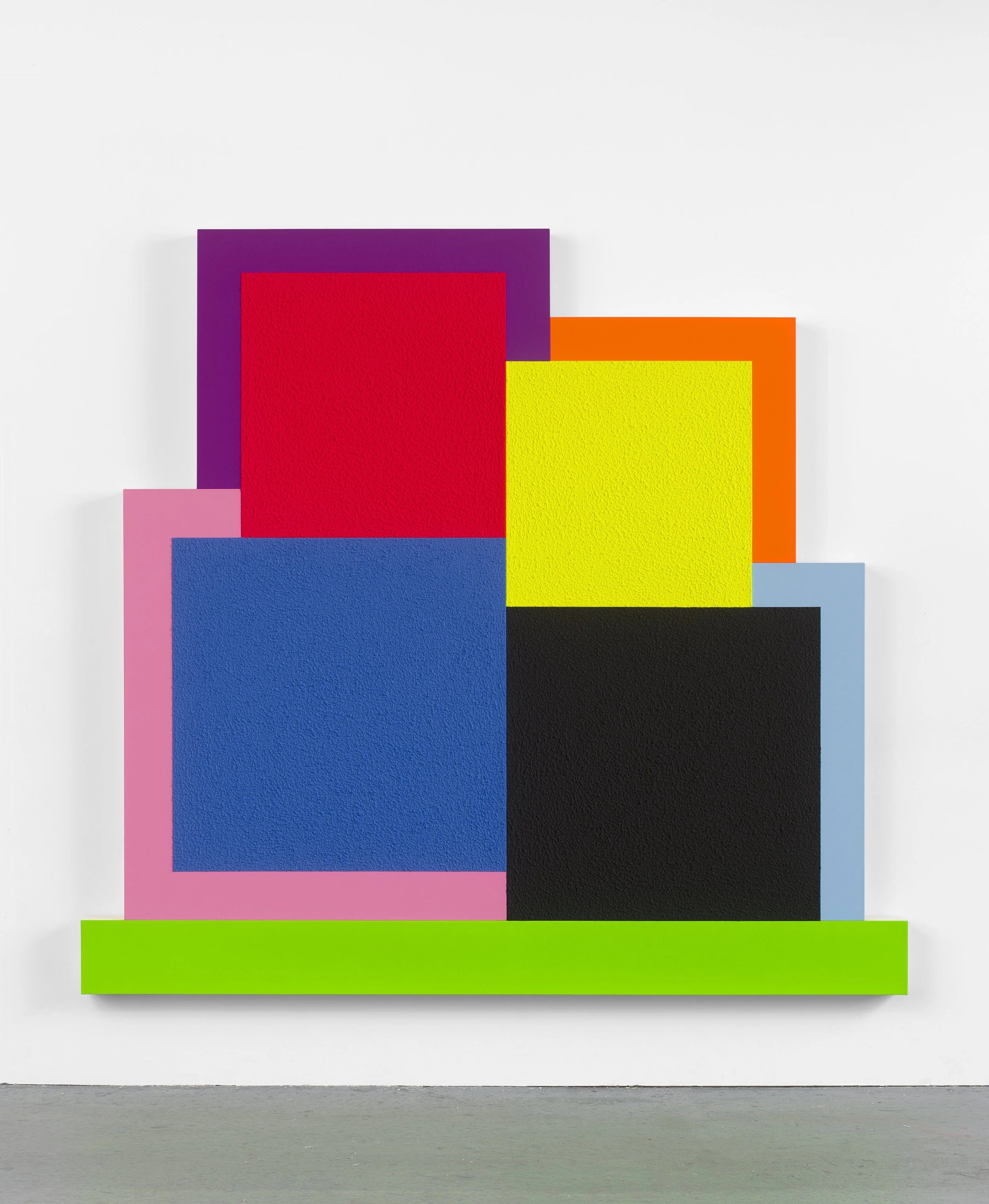
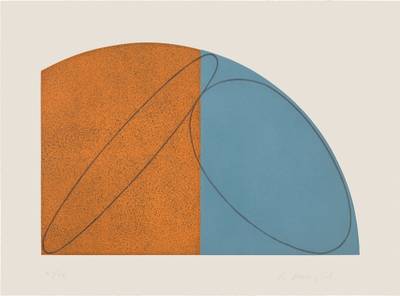
Peter Halley
Untitled



Geometry Never Lies: Neo-Geo Returns
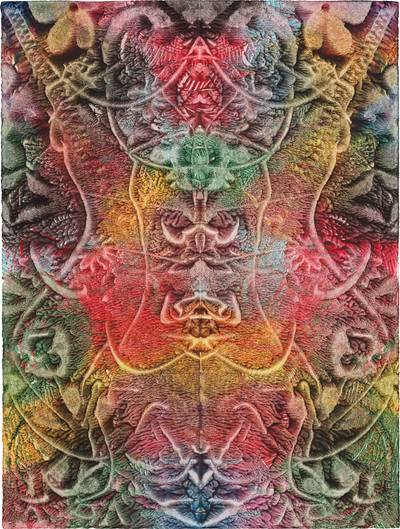
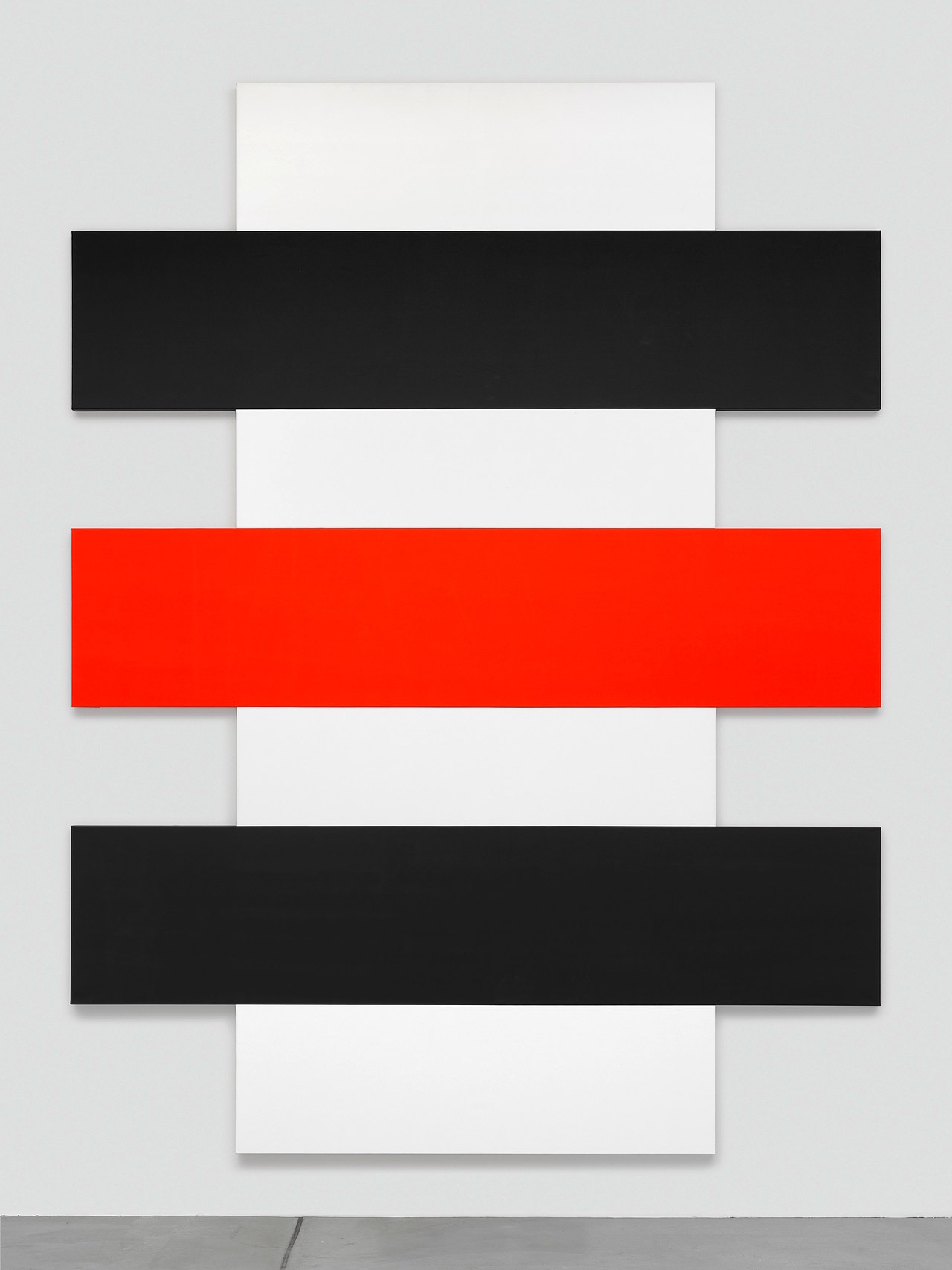
When a Peter Halley canvas appeared at Phillips New York in late 2023 and sailed past its high estimate, it felt less like a market correction and more like a confirmation. The work, with its buzzing fluorescent cells and conduit passages rendered in Day Glo Rollatex, reminded the room that Halley's visual language had never really gone quiet. It had simply been waiting for a cultural moment sophisticated enough to hear it again. Neo Geo, the loosely affiliated movement that coalesced in New York in the mid 1980s around galleries like International With Monument and Sonnabend, was always more than a stylistic tendency.
It was a theoretical provocation. Artists including Halley, Ashley Bickerton, Jeff Koons, and Philip Taaffe appropriated the formal vocabulary of geometric abstraction and ran it through a postmodern filter, forcing questions about what it meant to paint a grid or a stripe in an era of mass reproduction, financial speculation, and information overload. The critical scaffolding came fast and it came dense, with writers like Peter Schjeldahl and the philosopher and critic Fredric Jameson lending the movement an intellectual legitimacy that survived long after the first wave of market enthusiasm receded. That receding was dramatic.
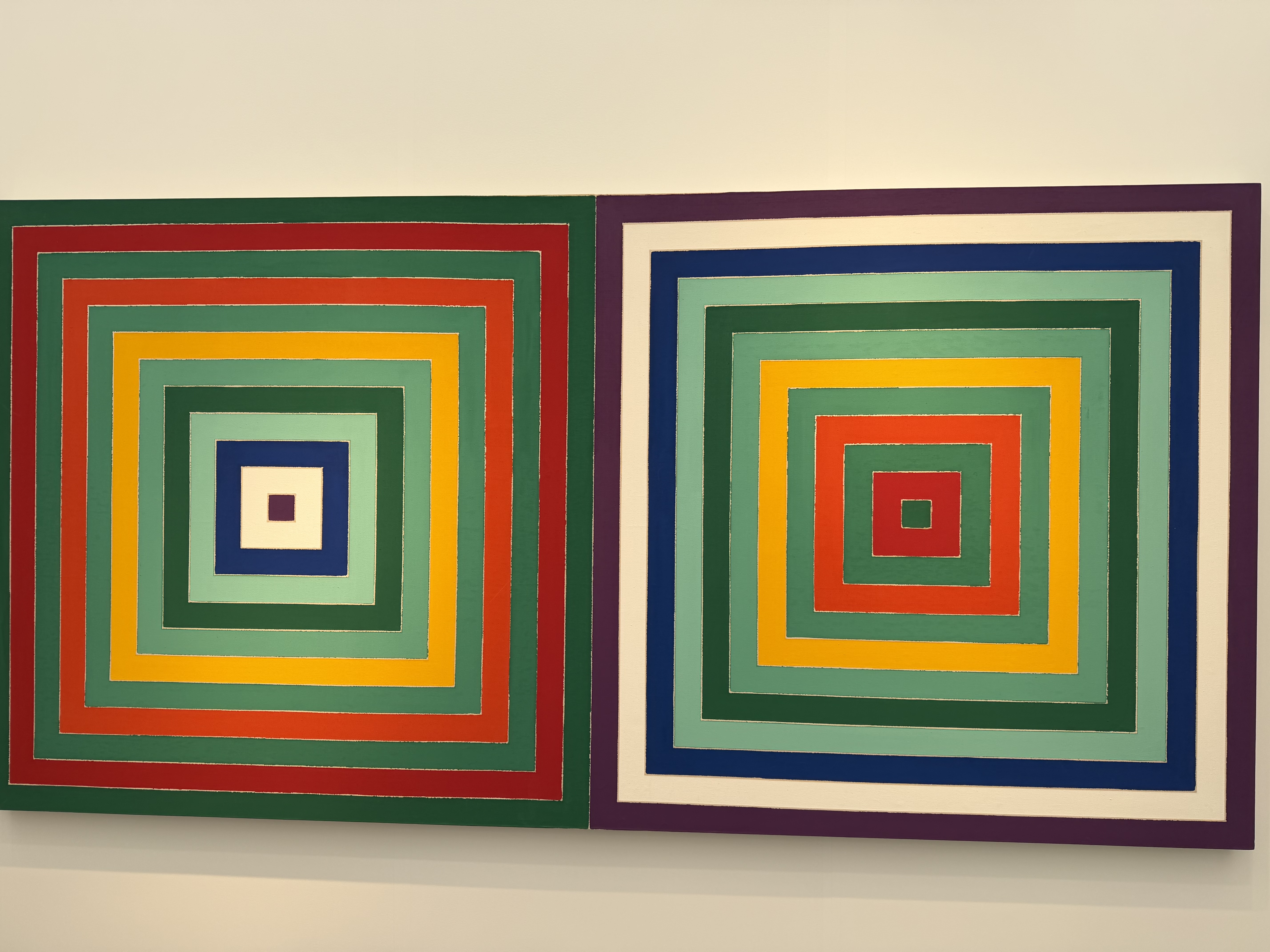
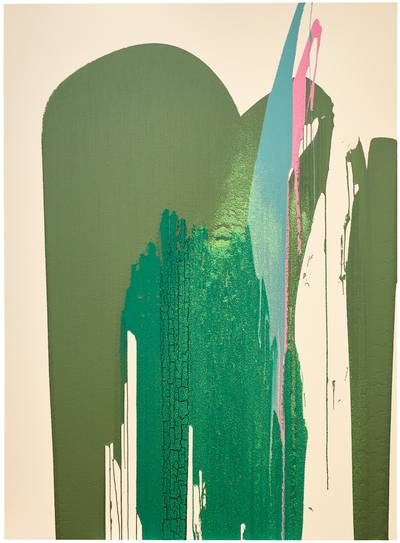
Frank Stella
Scramble: Green Double/ Left N, Right 8, 1977
By the early 1990s Neo Geo had become shorthand for everything critics distrusted about 1980s art commerce. Yet the work endured in museum collections, and the artists continued making serious, evolving bodies of work. The past decade has seen a sustained reappraisal. Halley's retrospectives in Europe, particularly the survey mounted at the Museum Tinguely in Basel in 2018, reframed his project as a genuinely philosophical one, rooted as much in Foucault and Baudrillard as in Mondrian and Frank Stella.
Seeing those works in an institutional context, alongside critical essays engaging with his writings in Index magazine and his ongoing curatorial activities, made it impossible to dismiss him as a market construct. The auction record bears this out in specific terms. Halley's strongest secondary market results have clustered around his signature cell and conduit paintings from the late 1980s and early 1990s, with major works at Christie's and Sotheby's regularly achieving six figure sums and occasionally crossing into the low seven figures for exceptional examples. Philip Taaffe, whose decorative yet intellectually charged canvases blend Op Art patterning with sources ranging from Islamic tile work to Celtic ornament, has also seen renewed collector interest, with institutions and private buyers responding to the meditative complexity of his surfaces.
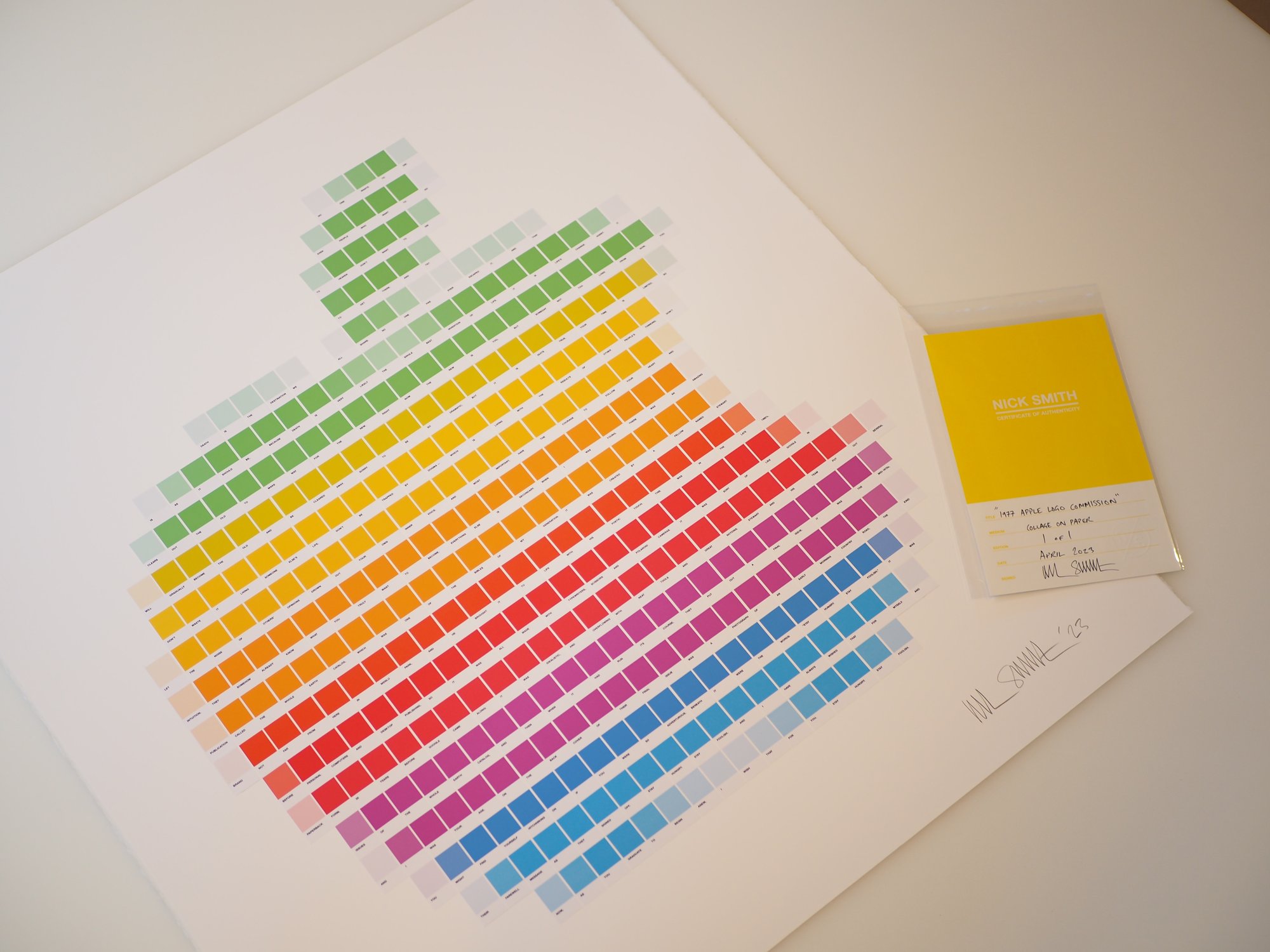
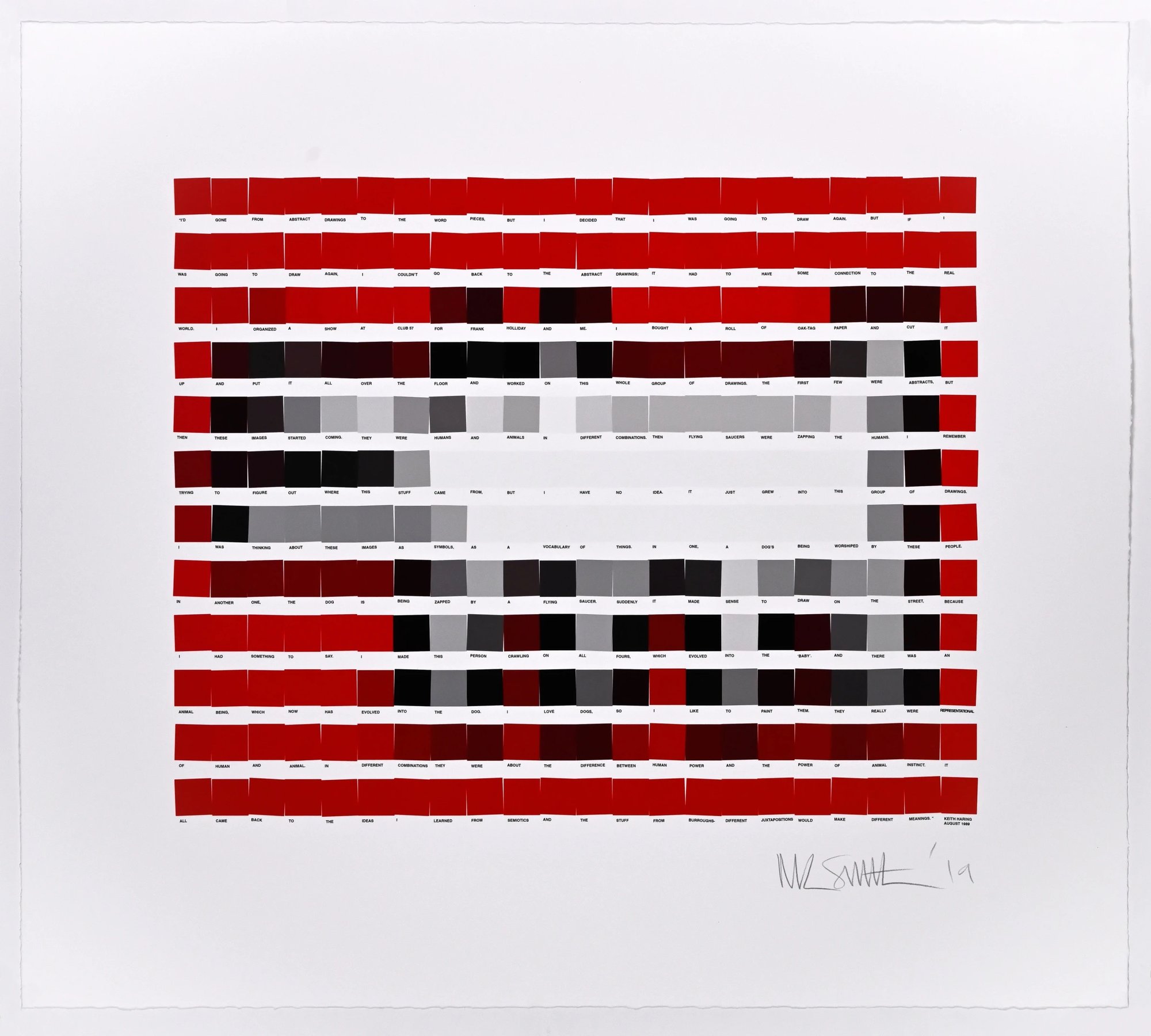
Nick Smith
Apple 1977 Logo Commission, 2023
Taaffe represents something important within this conversation: the sense that geometry in painting is not a retreat from meaning but a different route into it. John Armleder's presence in this space adds a crucial layer of wit and institutional critique. His Furniture Sculptures and poured Pour Paintings interrogate the boundary between decoration and fine art with a lightness that keeps them perpetually relevant. Armleder emerged from the Fluxus influenced milieu of Geneva in the 1970s before finding a broader audience in the 1980s and his work has been the subject of serious museum attention, including at the Musée d'Art Moderne de la Ville de Paris.
The fact that both Armleder and Halley are well represented on The Collection points to a collecting intelligence that understands Neo Geo not as a historical footnote but as an ongoing conversation about how we live inside images and systems. Ashley Bickerton's work, with its packaged object aesthetic and brand logo accumulations, has attracted renewed attention as younger collectors engage with questions of corporate identity and ecological anxiety that his canvases anticipated by thirty years. His work in the permanent collection at the Guggenheim Museum has helped anchor his critical standing, and estate sales as well as private transactions have placed his pieces in increasingly prominent institutional hands. Victor Vasarely, whose optical investigations predate Neo Geo proper but whose influence on the movement is undeniable, has also seen striking market performance in recent years, particularly at European auction houses where his major works have set new benchmarks.
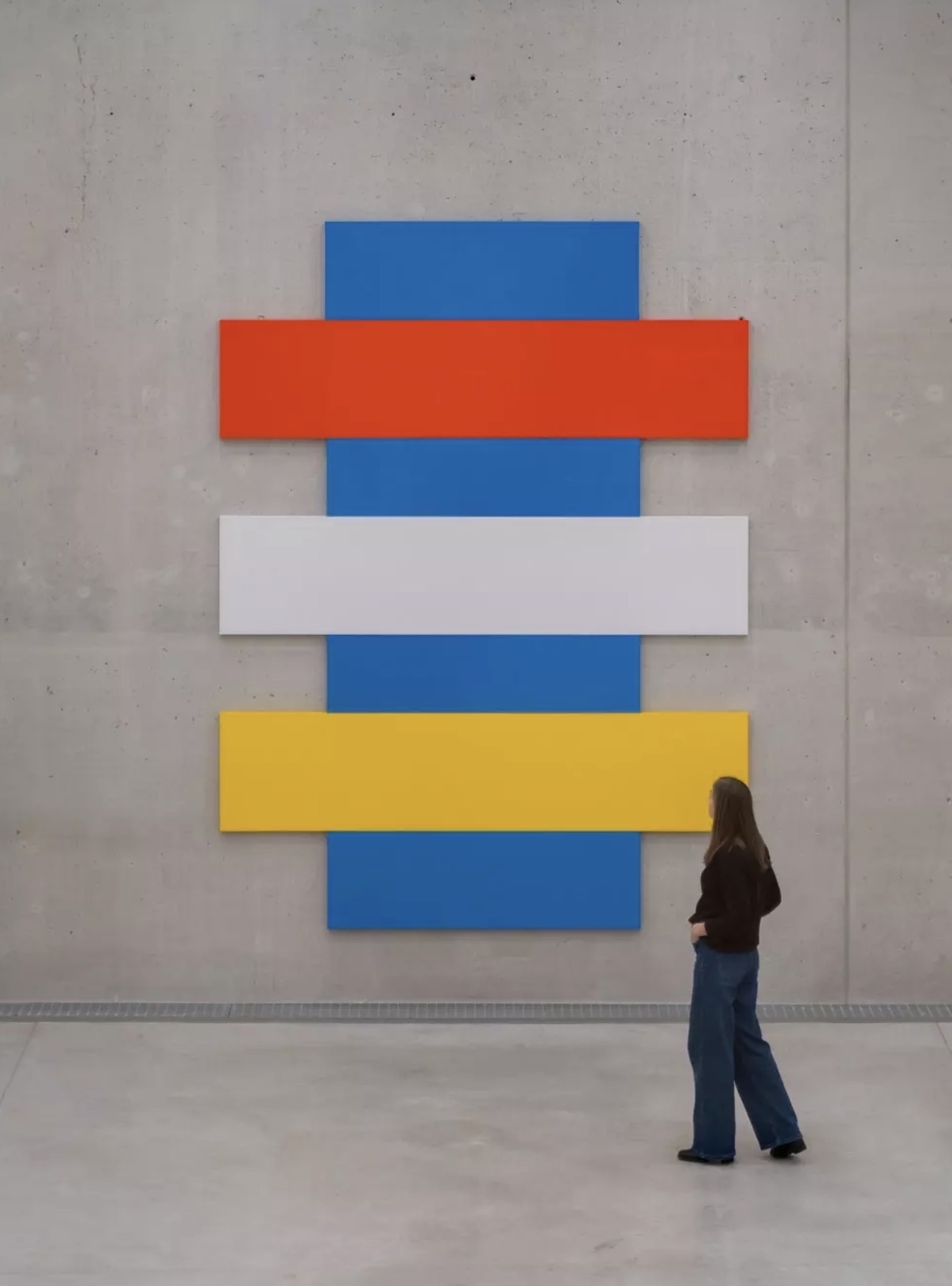
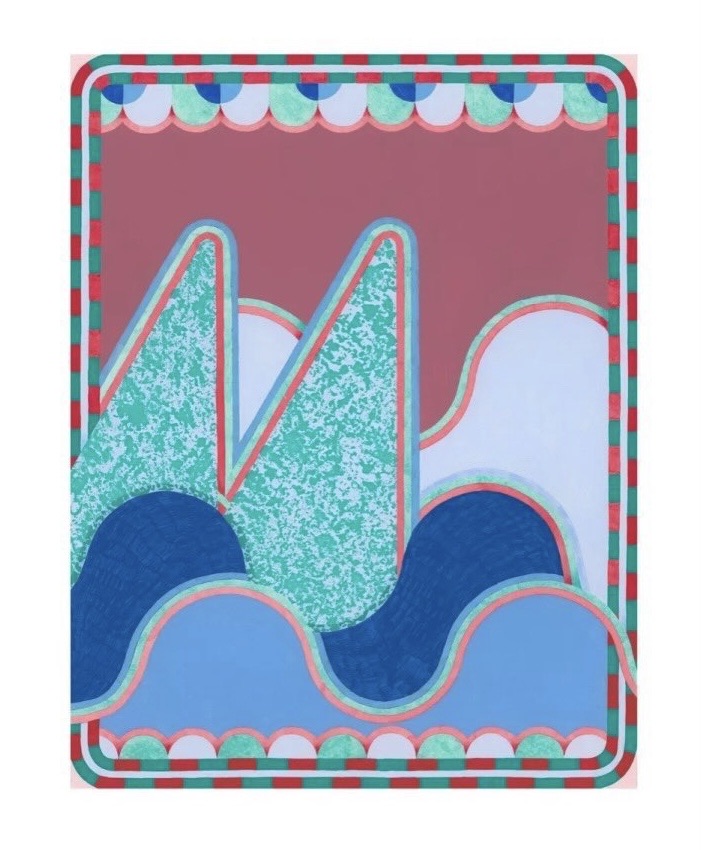
Joe Bradley
Untitled
The critical conversation has matured considerably. Curators like Laura Hoptman and writers associated with October magazine have contributed nuanced reassessments that move beyond the boom and bust narrative. The publication of Halley's collected essays has made his theoretical framework more accessible, and younger critics writing in venues like Artforum and frieze have connected Neo Geo's geometric lexicon to contemporary concerns about surveillance infrastructure, digital architecture, and the aesthetics of platform capitalism. When you look at a Halley cell and conduit painting now and think about server farms and network topology, the work does not feel dated.
It feels prescient. Institutional collecting has accelerated in ways that signal long term confidence. The Museum of Modern Art, the Whitney, and the Broad have deepened their holdings, while European institutions from the Stedelijk in Amsterdam to the Castello di Rivoli in Turin have made significant acquisitions. Private museums including the Brant Foundation and the Broad have treated this generation of artists as central to any serious account of late twentieth century American art rather than as a colorful aside.
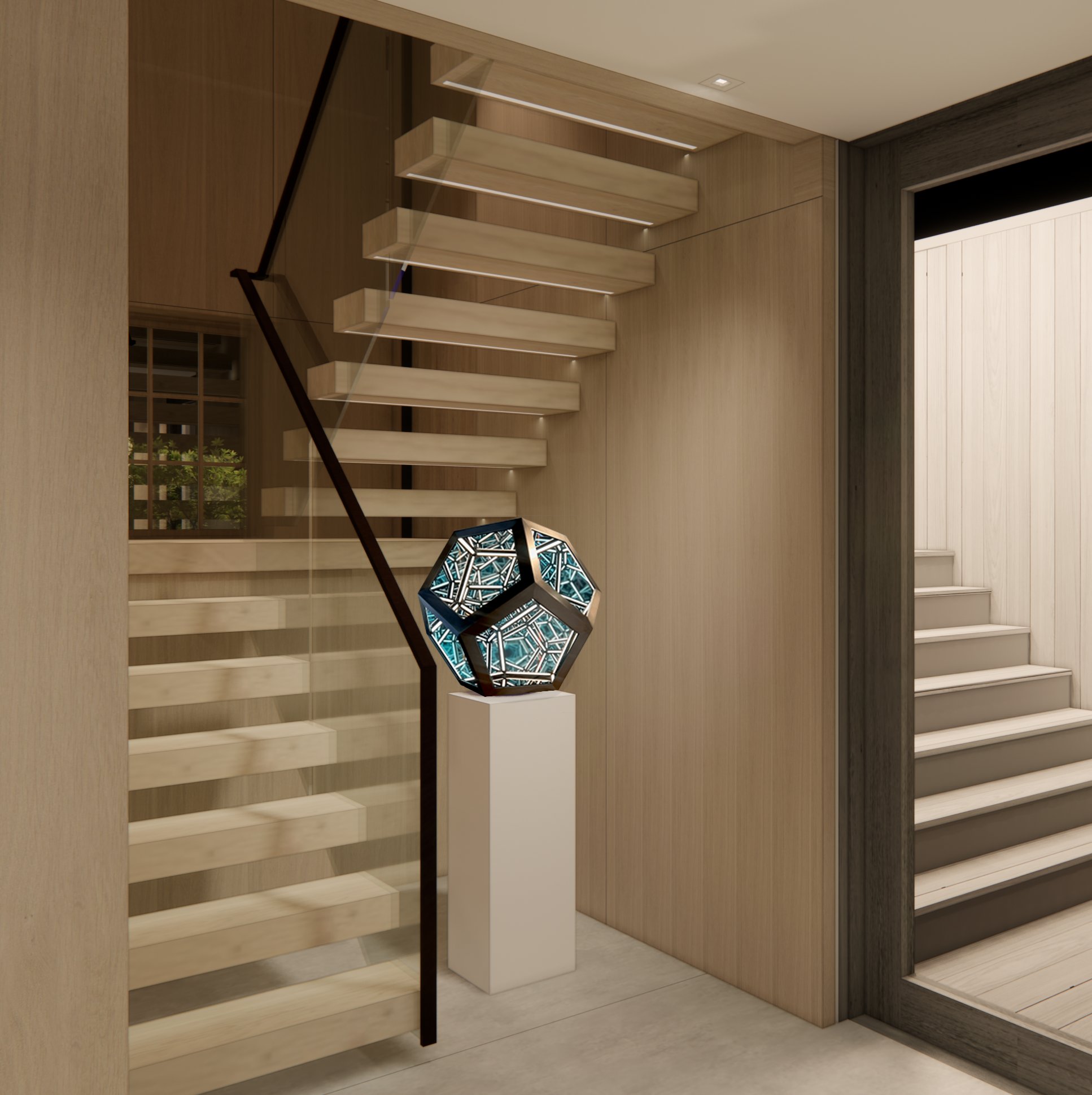
Anthony James
Dodecahedron (Solar Black), 2025
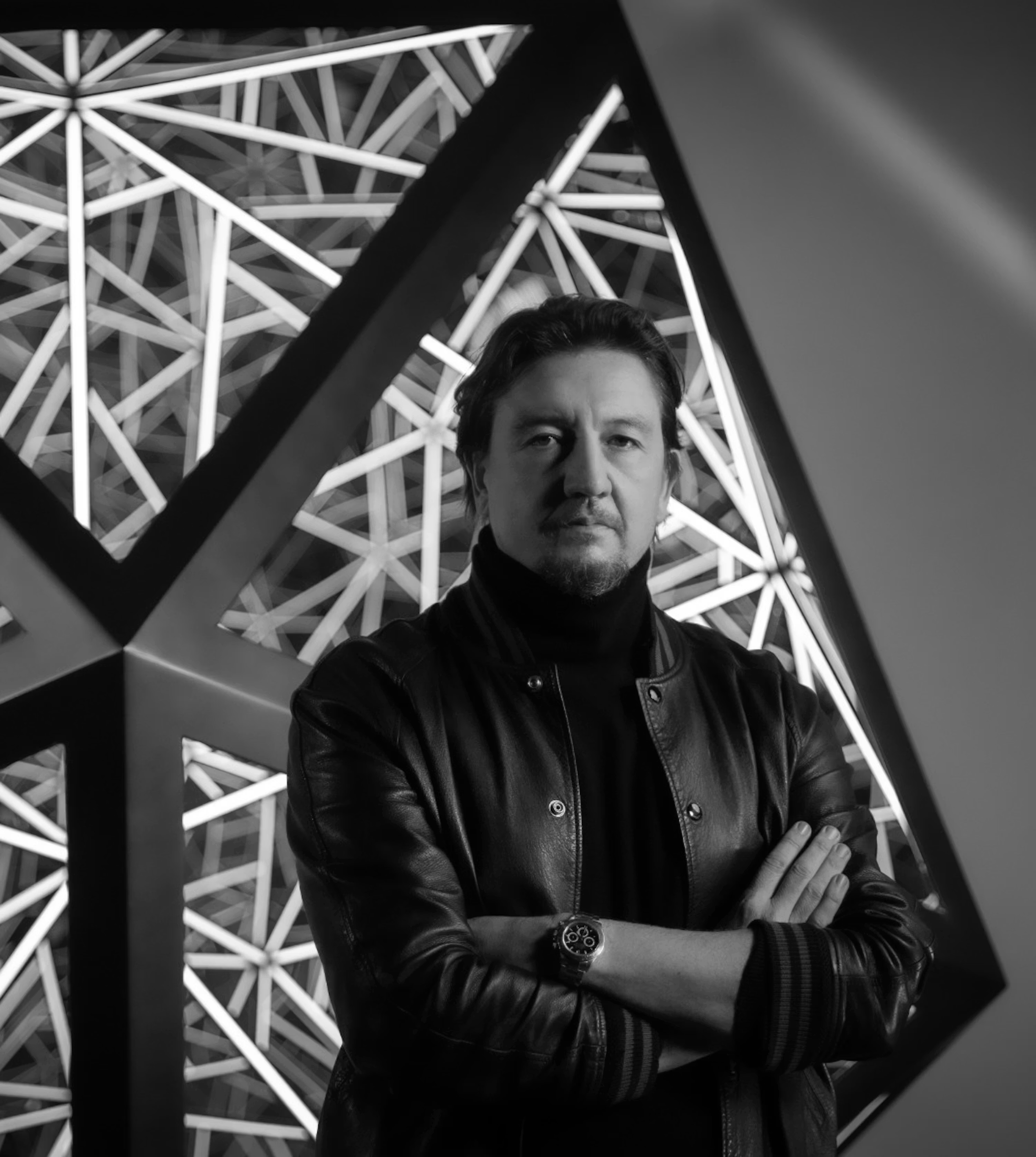
That institutional weight matters for the market and for the historical record. What feels alive right now is the intersection of Neo Geo's geometry with the current appetite for works that function beautifully as images in digital contexts while carrying genuine intellectual substance in person. The paintings photograph well, which is not a cynical observation. It speaks to a formal rigor that holds up across scales and resolutions.
What feels settled is the argument about whether these artists matter. That argument is over. What surprises are coming likely involve younger painters, many working in Los Angeles and Berlin, who are absorbing this lineage and pushing it toward questions about code, interface design, and synthetic color that the original Neo Geo artists opened but could not have fully anticipated. The geometry was always pointing somewhere.
We are starting to see where.