Genre Scene
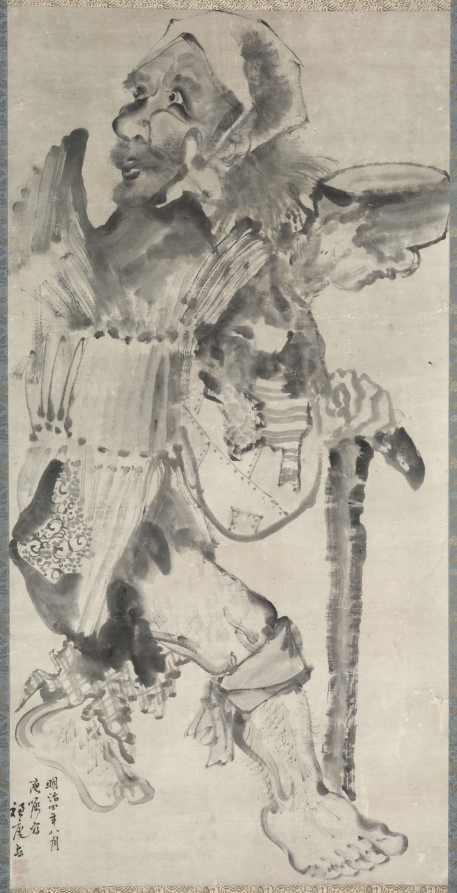
Hirafuku Suian
Beggar (Kojiki), 1871



The Ordinary World Was Always Extraordinary
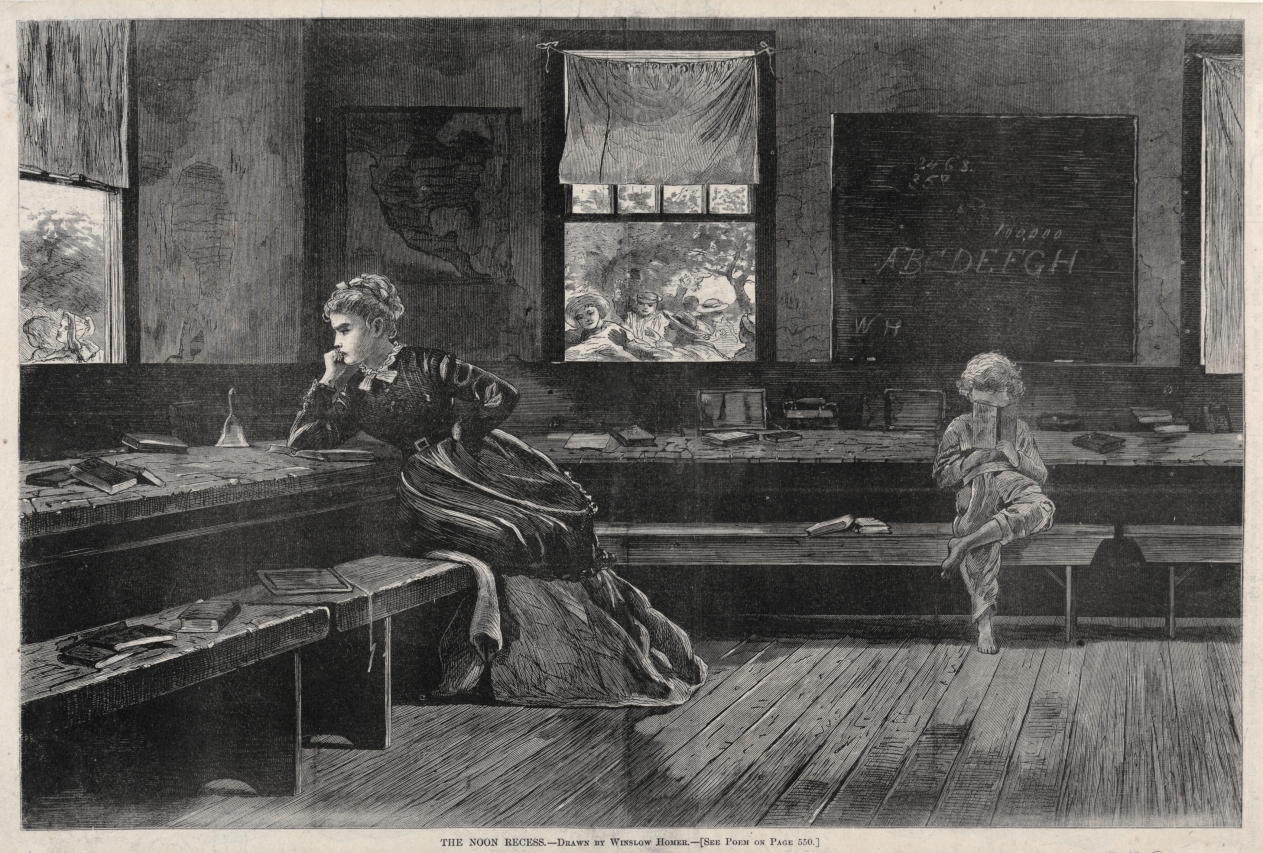
When Sotheby's brought a Winslow Homer watercolor of boys swimming to auction in 2023 and it sailed past estimate into seven figures, the result said something about more than one painting. It confirmed what a growing number of serious collectors already knew: genre painting, long condescended to as the comfortable middle ground between history and portraiture, has become one of the most keenly contested territories in the market. Scenes of ordinary life, the tavern drinkers and laundresses and farmers and children at play, are no longer being treated as the lesser cousins of grand narrative work. They are being recognized as the most honest pictures ever made.
The critical rehabilitation has been building for decades, but it accelerated visibly in the past ten years through a series of landmark exhibitions. The Metropolitan Museum of Art's sustained engagement with Dutch Golden Age painting brought artists like Adriaen van Ostade and David Teniers the Younger into sharper focus for American audiences who might have overlooked them in favor of Rembrandt's portraits and self portraits. Rembrandt himself, so well represented across major collections and on platforms like The Collection, was a genre painter in his quieter moments, and scholars have argued persuasively that his etchings of beggars and street figures were as radical as anything on his larger canvases. The lines between categories have been dissolving.
Unknown
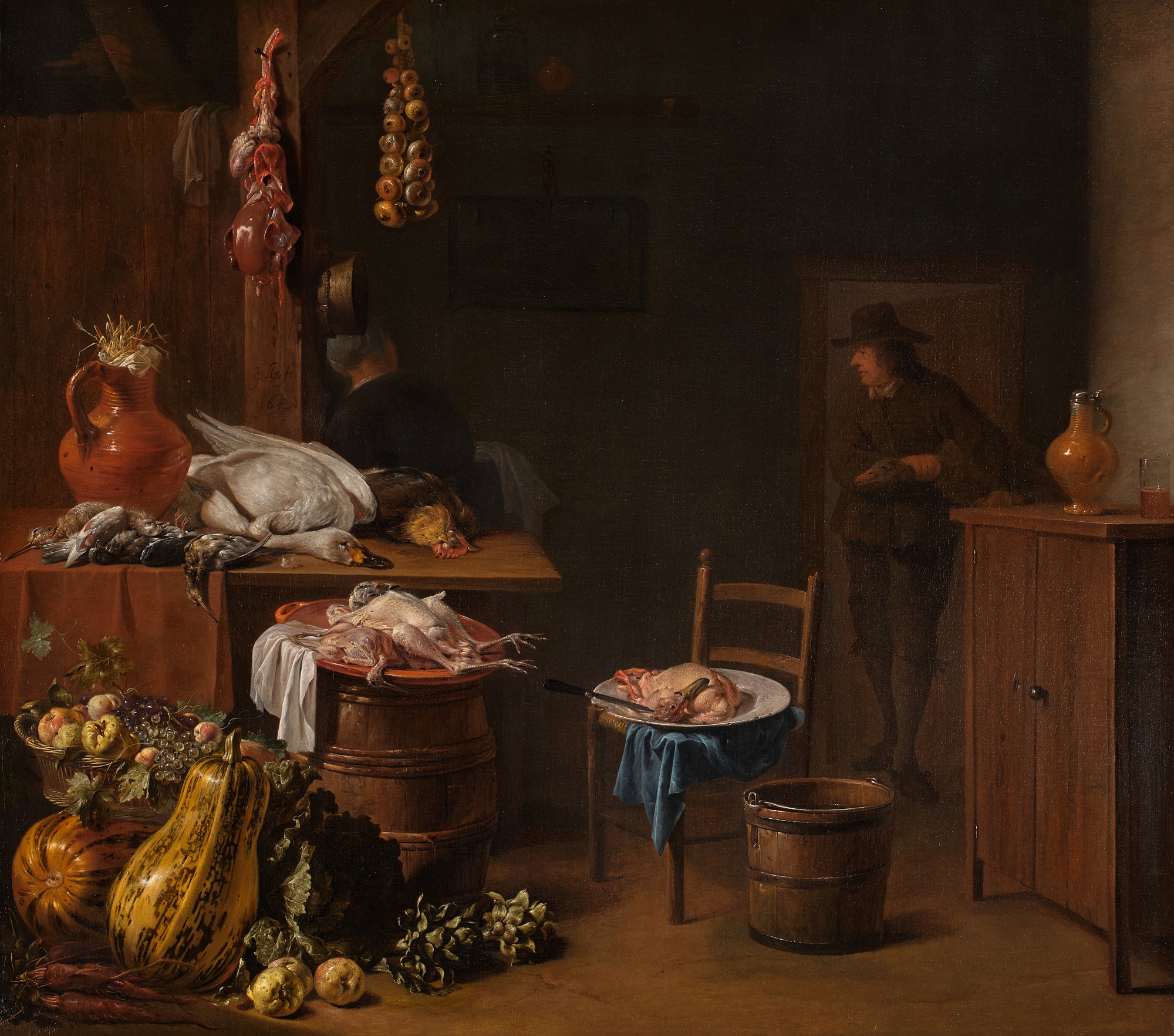
Kitchen Interior with a Maid Preparing Fruits, Vegetables, and Poultry
The Bruegel dynasty has had a remarkable few years in terms of institutional attention. Pieter Brueghel the Younger, who carried his father's vocabulary of village festivals and peasant labor into the seventeenth century, appeared prominently in a major Flemish painting survey at the Kunsthistorisches Museum in Vienna that drew international crowds and renewed conversation about how these works function as social documents rather than mere decoration. Collectors took notice. Works from the Brueghel workshop that might once have been treated as secondary to Italian Renaissance material are now generating serious competition at the major houses.
The appetite is real and it is not slowing. In the American context, no artist embodies the genre tradition more powerfully right now than Winslow Homer, and the market has priced that recognition accordingly. His depictions of rural Black life in the postwar South, his fishermen and hunters in the North Woods, his Caribbean watercolors, all of them locate the extraordinary in the unremarkable moment. William Sidney Mount, Homer's predecessor in chronicling American rural life in the nineteenth century, has also attracted renewed scholarly interest as institutions reckon more carefully with questions of who was depicted in these scenes and how.
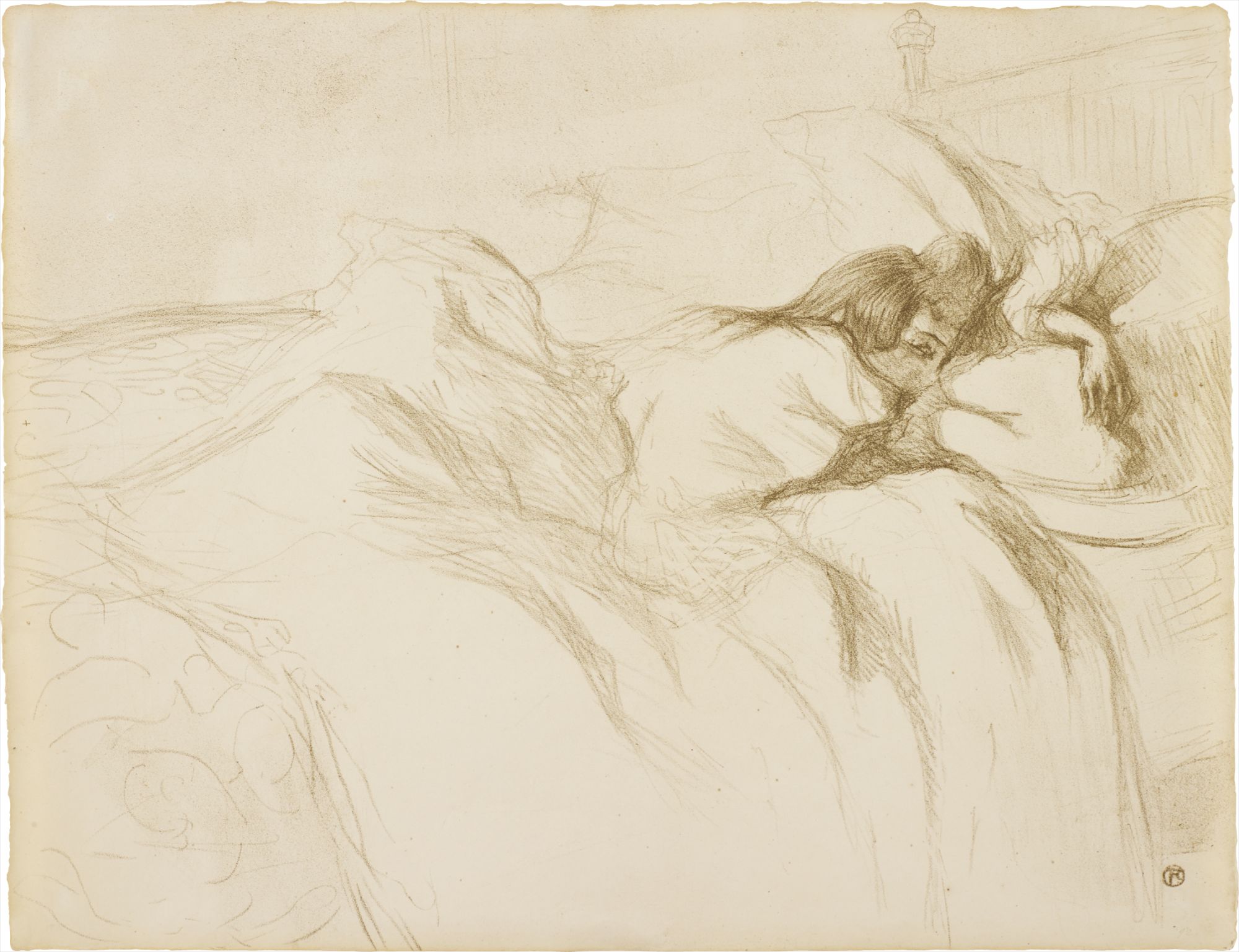
Henri de Toulouse-Lautrec
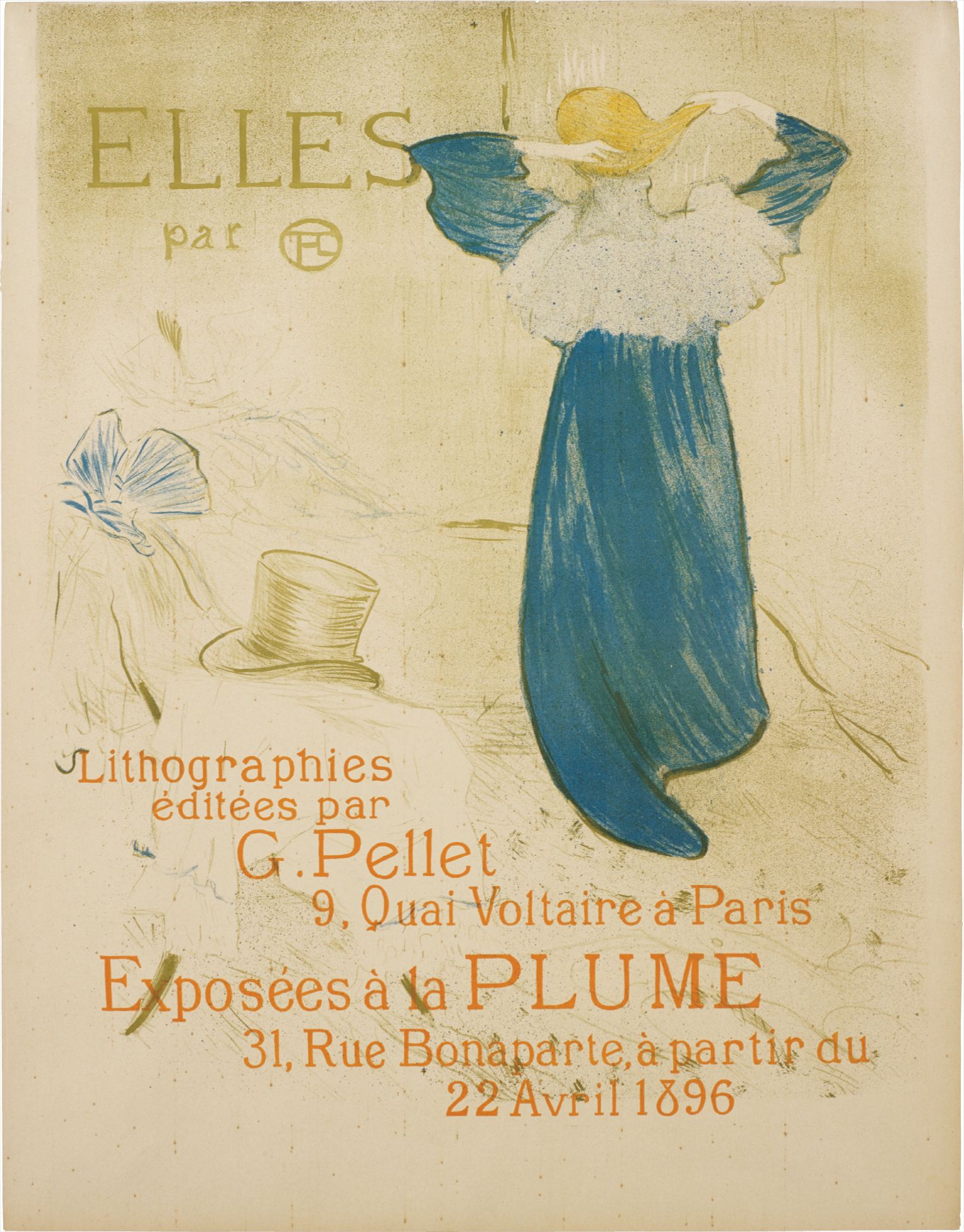
Elles frontispice
The genre painter was always, whether consciously or not, making an argument about whose life deserved to be remembered. That argument feels urgent in a way it did not twenty years ago. The satirical wing of genre painting has its own momentum. Honoré Daumier and Paul Gavarni both worked in the space between fine art and popular print culture, and their work now reads as a forerunner of everything from graphic journalism to social media commentary.
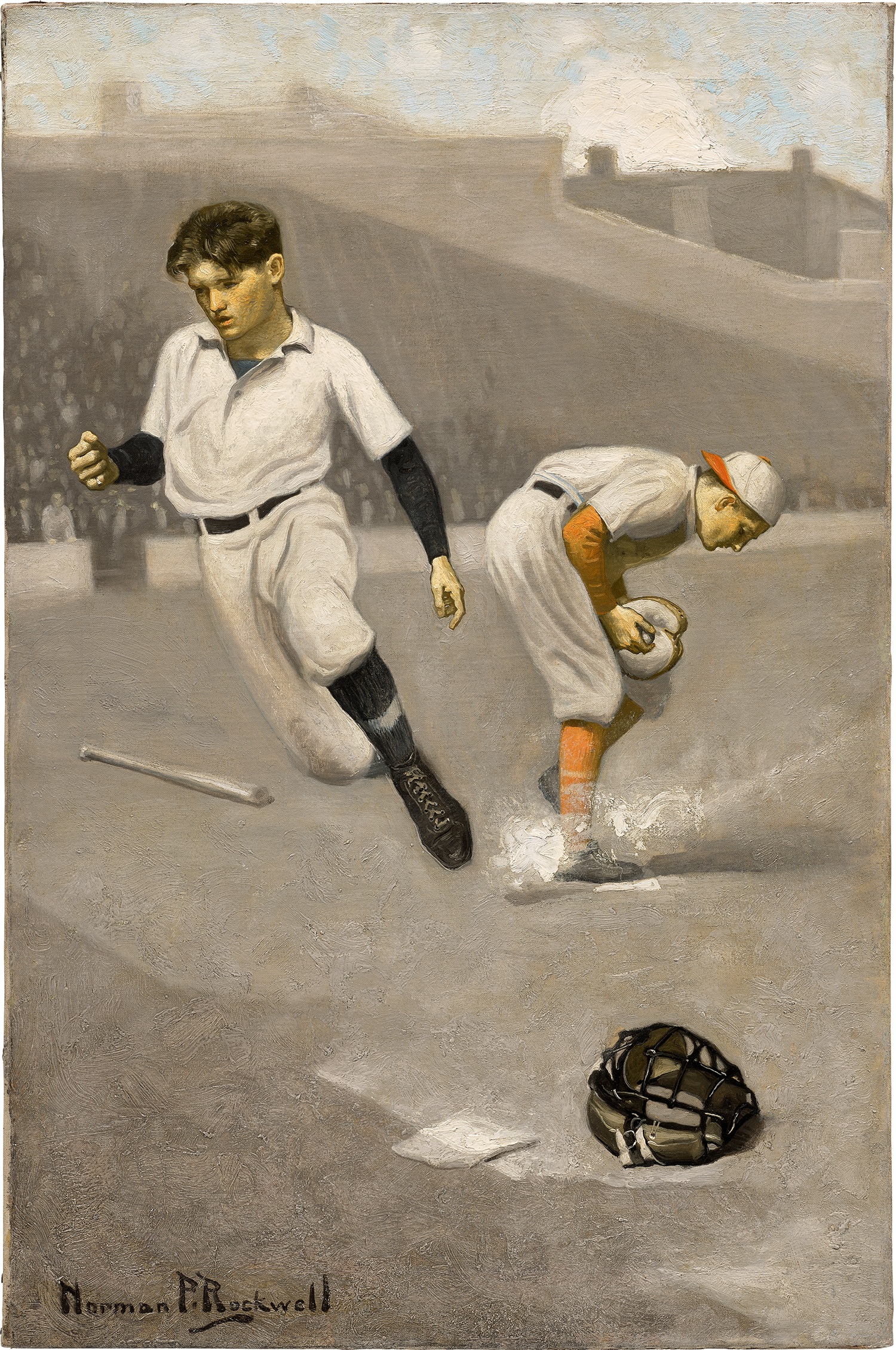
Daumier's lawyers and politicians and theater audiences carry a sting that has not dulled. Christie's and Drouot have both posted strong results for Daumier works in recent sale seasons, and there is a growing sense among French collectors especially that his drawings and lithographs have been undervalued relative to his historical importance. Henri de Toulouse Lautrec, who inherited Daumier's interest in the performed social world of Paris, commands prices at a completely different level, but the conceptual thread between them is one that curators are increasingly keen to trace publicly. Norman Rockwell presents the most fascinating case study in genre painting's critical journey.
Ernie Barnes
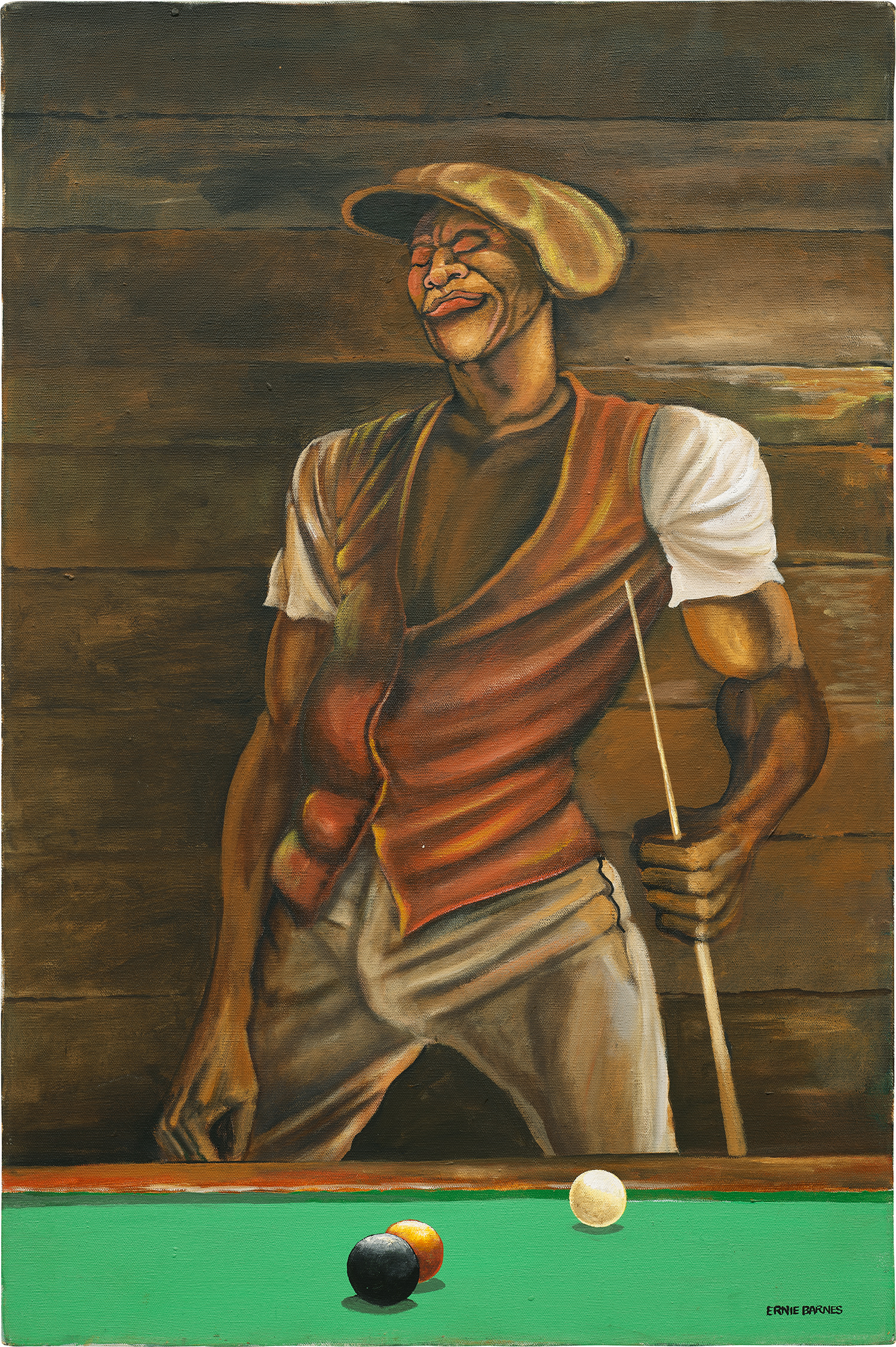
Pool Player, 1970
His rehabilitation from illustration icon to serious fine artist, cemented by the touring show organized by the Norman Rockwell Museum in Stockbridge and amplified by the Whitney Museum's 2001 exhibition, is now nearly complete in market terms. Three works on The Collection represent a painter who sells for prices that would have seemed unthinkable to the midcentury critics who dismissed him. More interesting still is how Rockwell's resurgence has created space to look at related figures differently. Ernie Barnes, whose depictions of Black American community life carry a warmth and physical specificity that has earned him a devoted following since his posthumous market surge, is now being discussed alongside Rockwell in ways that are genuinely illuminating for both.
Institutionally, the direction of travel is clear. The Rijksmuseum's ongoing commitment to contextualizing Dutch genre painting within the social and economic structures of the seventeenth century has set a standard for how these works can be presented without reducing them to costume history. The Art Institute of Chicago and the Museum of Fine Arts in Boston have both strengthened their genre holdings through recent acquisitions. Meanwhile the field of global genre painting is opening up in ways that deserve more attention than they have received.
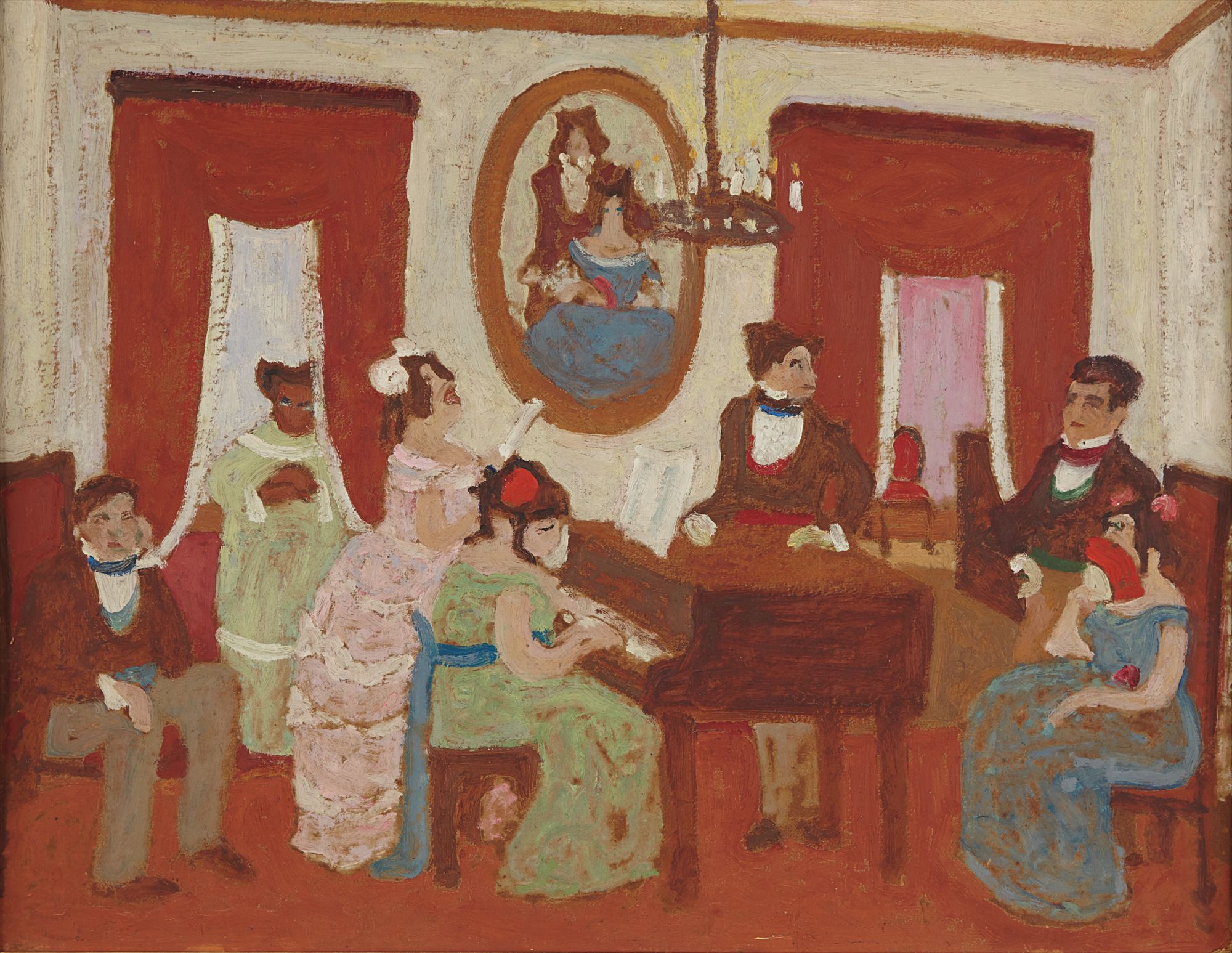
Pedro Figari
Desafinación
Hendra Gunawan's scenes of Indonesian working life, painted during and after his long political imprisonment, are beginning to find the international audience they warrant. Pedro Figari's Afro Uruguayan candombe scenes occupy a place in South American modernism that has no real equivalent elsewhere. What feels alive right now is the conversation about who the genre painter was really serving. Was it the patron who wanted a flattering image of contented peasants on his estate, or the painter who found in those same figures a subject worthy of the most careful looking?
The best critics working in this space, scholars like Celeste Brusati writing on Dutch illusionism and Anne Higonnet on images of childhood, are refusing comfortable answers. That critical tension is exactly what makes collecting in this area feel genuinely rewarding rather than merely decorative. The genre scene was never just a slice of life. It was always a point of view, and the argument about whose point of view it was has never been more interesting to follow.