Join The Collection to save, track, and explore works like this.

Art Institute of Chicago

Spotted

Melvin Edwards — Afrophoenix No. 1
Melvin Edwards

Afrophoenix No. 1

1963

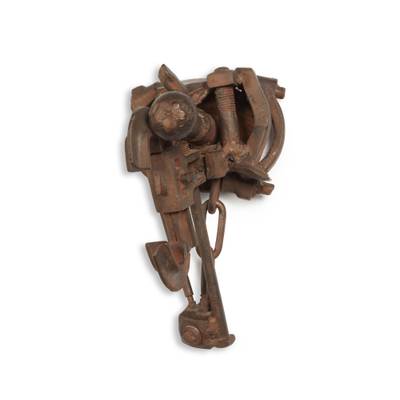
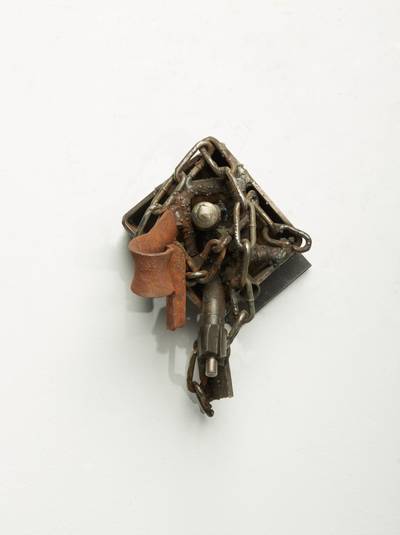
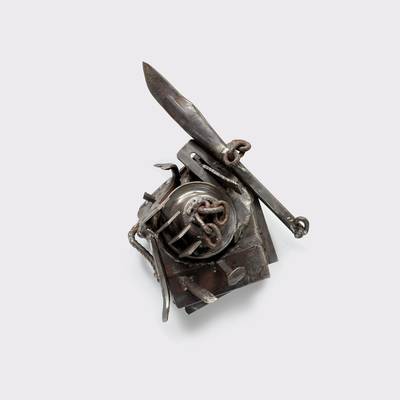
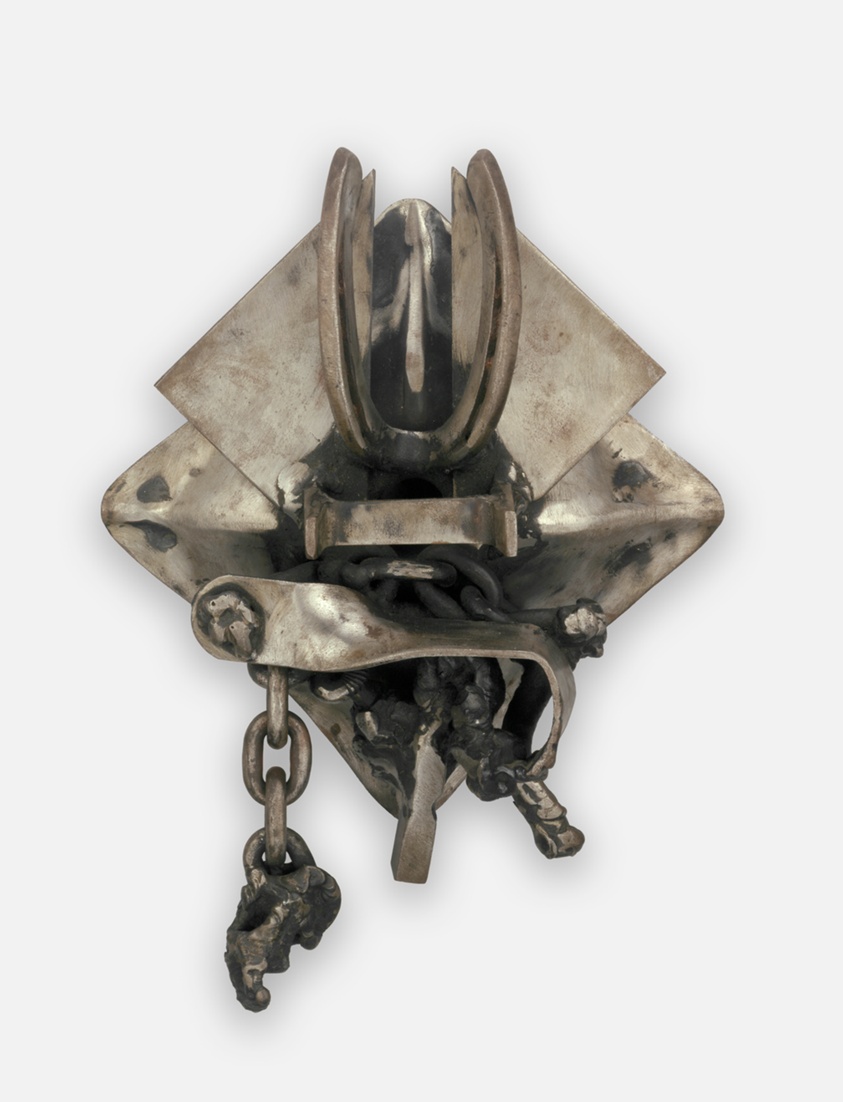
In 1960 Melvin Edwards shifted his artistic practice from abstract painting to sculpture. Three years later,he began Lynch Fragments, a series of welded steel assemblages made in response to the tumultuous social climate of the Civil Rights movement. Edwards addressed African American identity within an abstract sculptural language. Afrophoenix No. 1, one of the earliest objects from the series, exemplifies how the artist physically transformed found objects and brought them together in poetically suggestive, tension-filled compositions. Here the formal arrangement of steel elements evokes an equestrian bridle and bit. Chains, hammers, nails, spikes, and screws magnify the sculpture’s associative power, recalling implements of labor and torture. At the same time, the title references the mythological phoenix—alluding to death, rebirth, and transformation. Suggesting a range of meanings, the work demonstrates Edwards’s desire to fuse abstraction with personal and collective histories.

Medium
Steel
Dimensions

Start the Discussion

Request access to join the discussion

Spotted works by Melvin Edwards

About this work

Melvin Edwards, Afrophoenix No. 1, 1963

In 1960 Melvin Edwards shifted his artistic practice from abstract painting to sculpture. Three years later,he began Lynch Fragments, a series of welded steel assemblages made in response to the tumultuous social climate of the Civil Rights movement. Edwards addressed African American identity within an abstract sculptural language. Afrophoenix No. 1, one of the earliest objects from the series, exemplifies how the artist physically transformed found objects and brought them together in poetically suggestive, tension-filled compositions. Here the formal arrangement of steel elements evokes an equestrian bridle and bit. Chains, hammers, nails, spikes, and screws magnify the sculpture’s associative power, recalling implements of labor and torture. At the same time, the title references the mythological phoenix—alluding to death, rebirth, and transformation. Suggesting a range of meanings, the work demonstrates Edwards’s desire to fuse abstraction with personal and collective histories.

Medium
Steel
Dimensions
24.1 x 10.1 cm
Year
1963
Seen at
Art Institute of Chicago, Chicago, IL

Related themes

Steel, Small Scale, Sculpture, Post-War, Modern, Unique Work

More works by Melvin Edwards

Collected by

Art Institute of Chicago