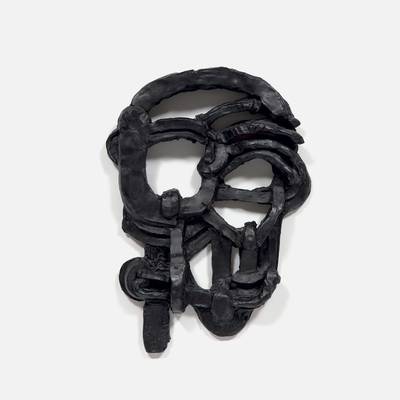
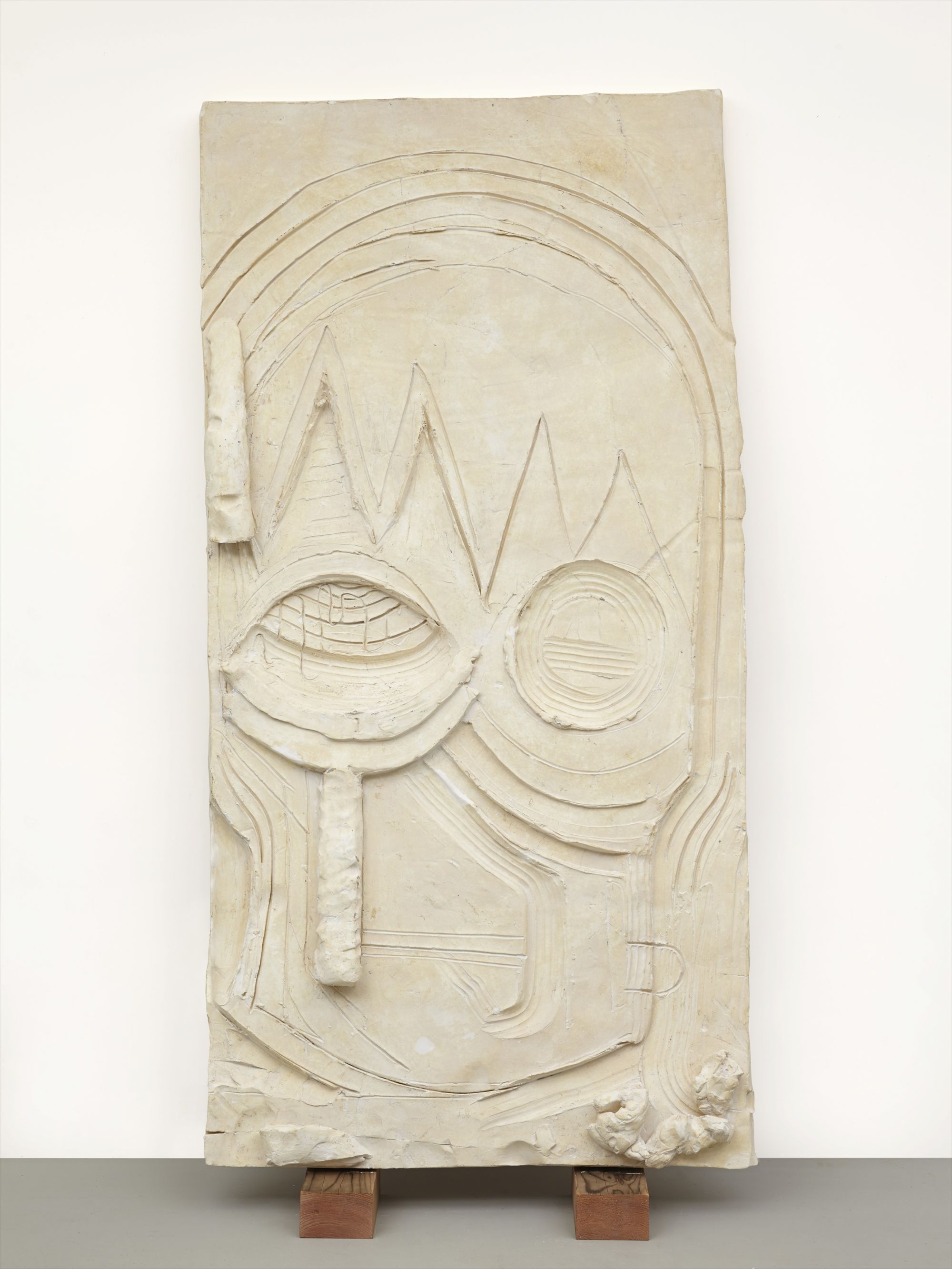
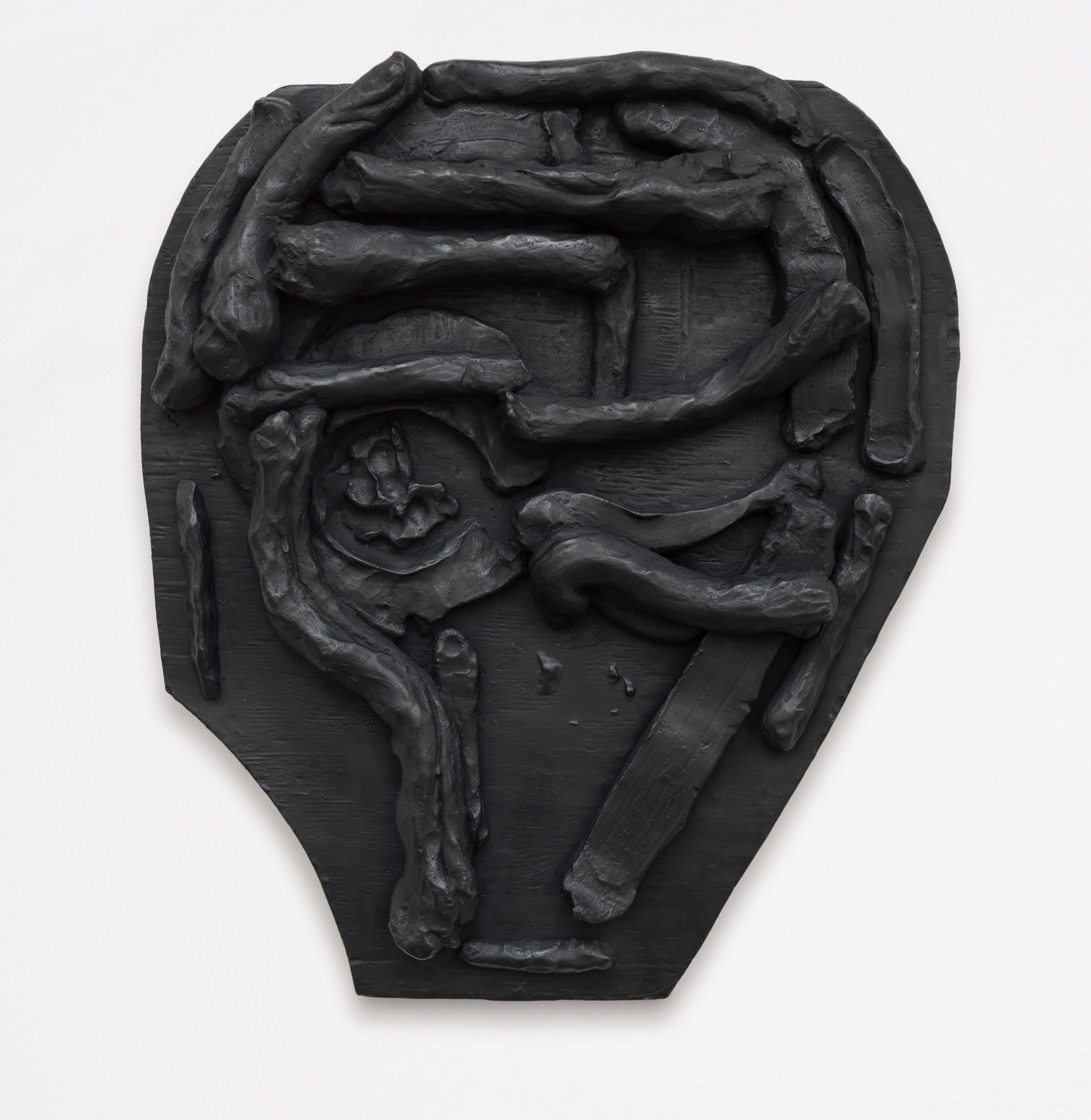
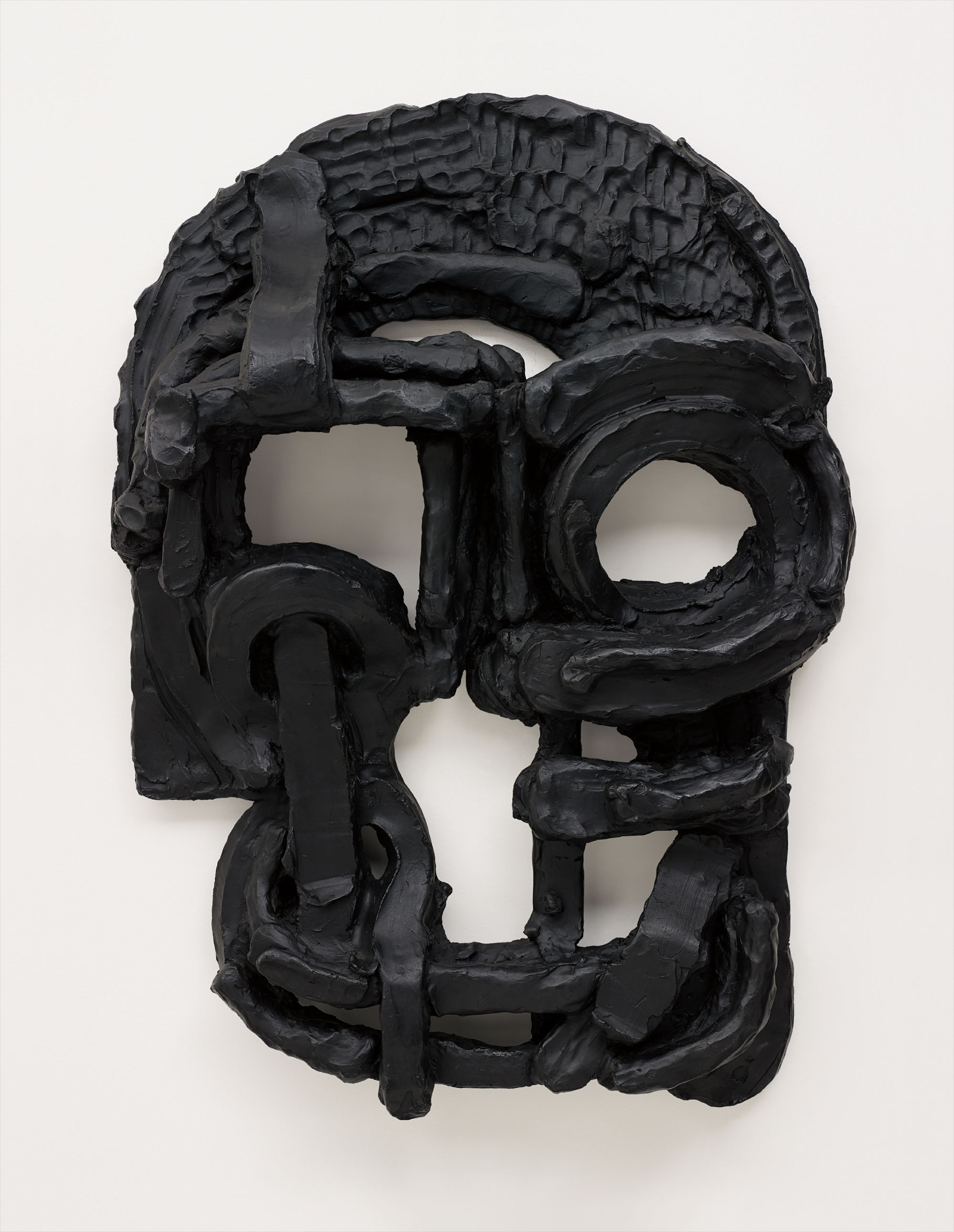
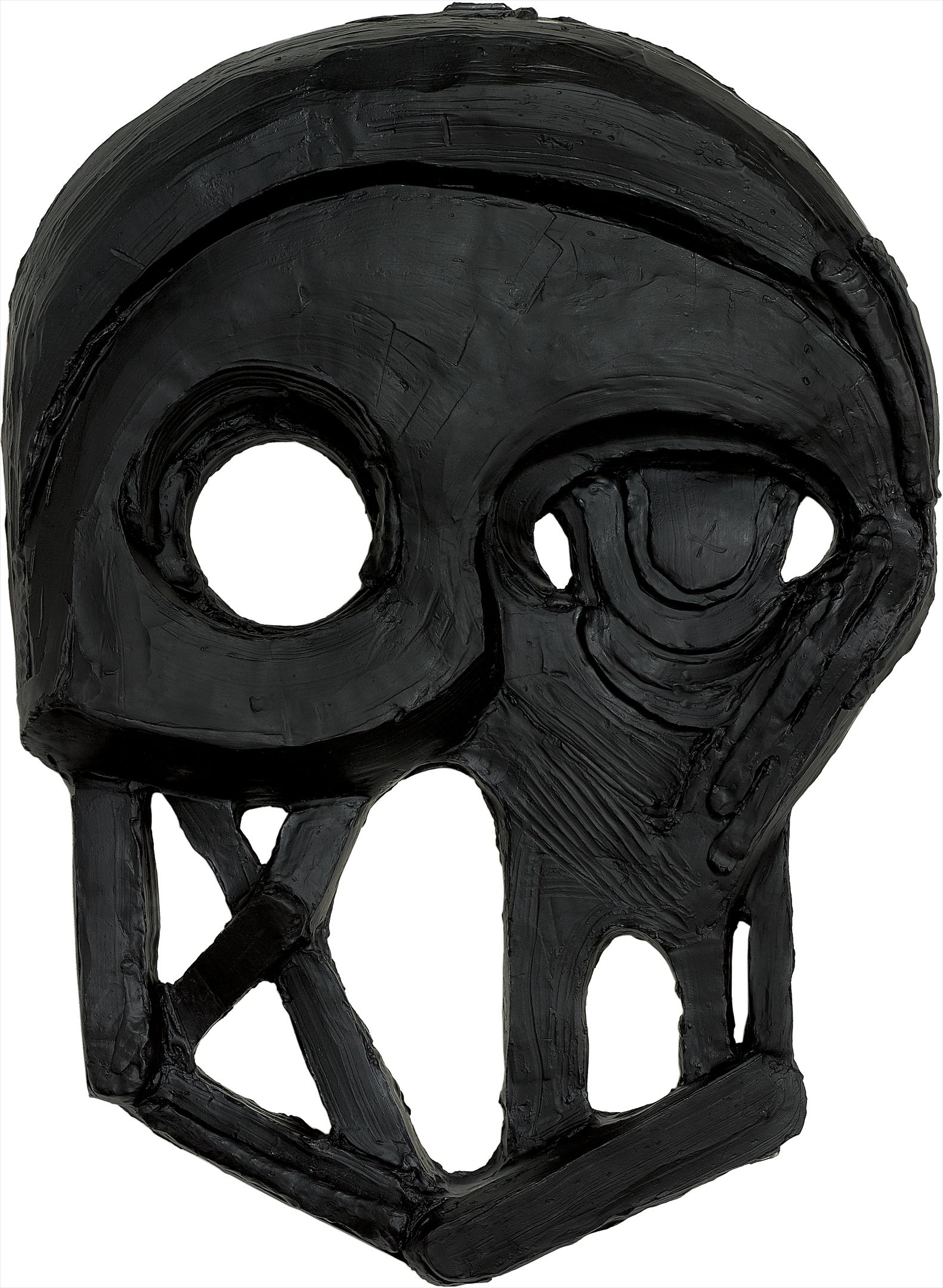
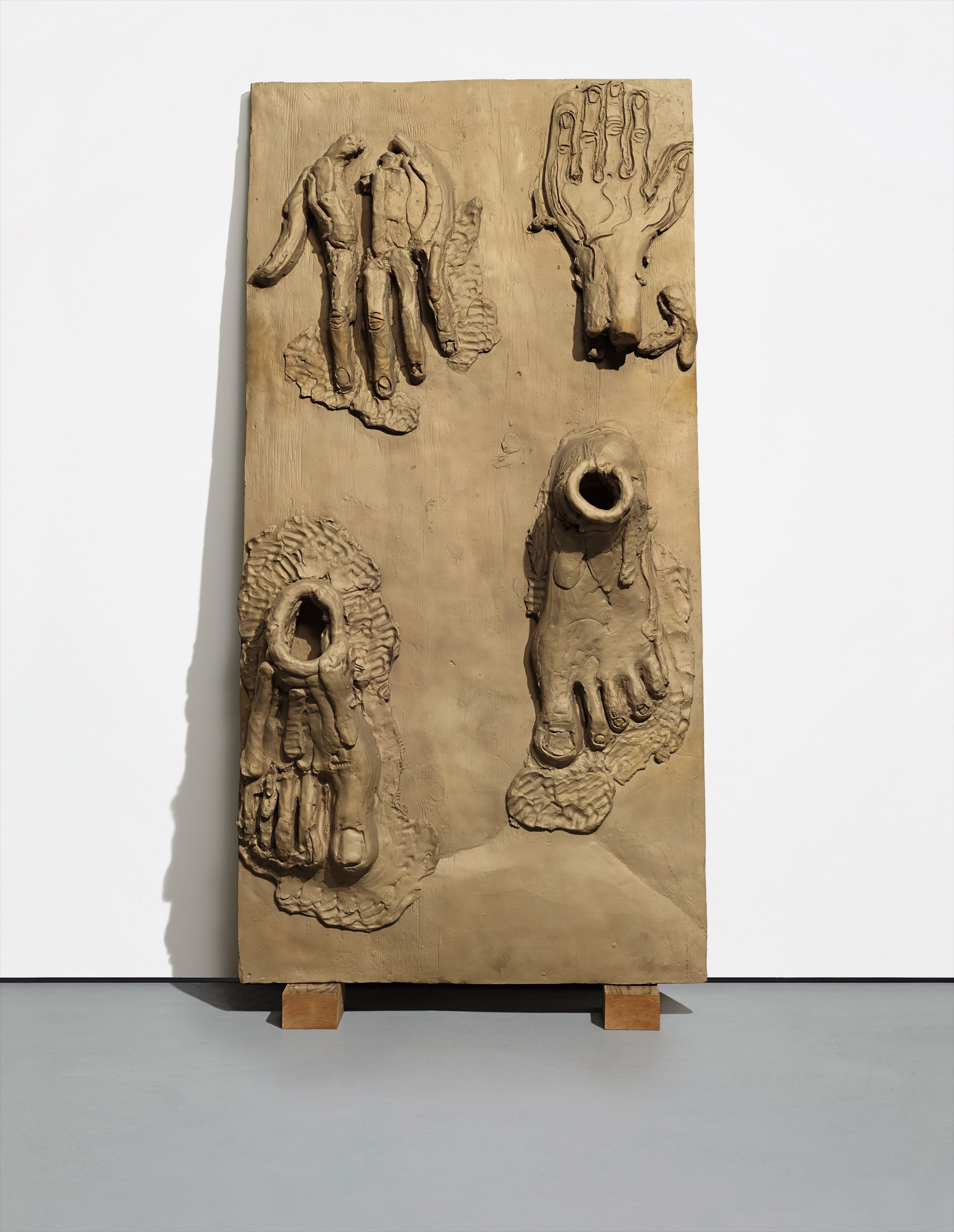
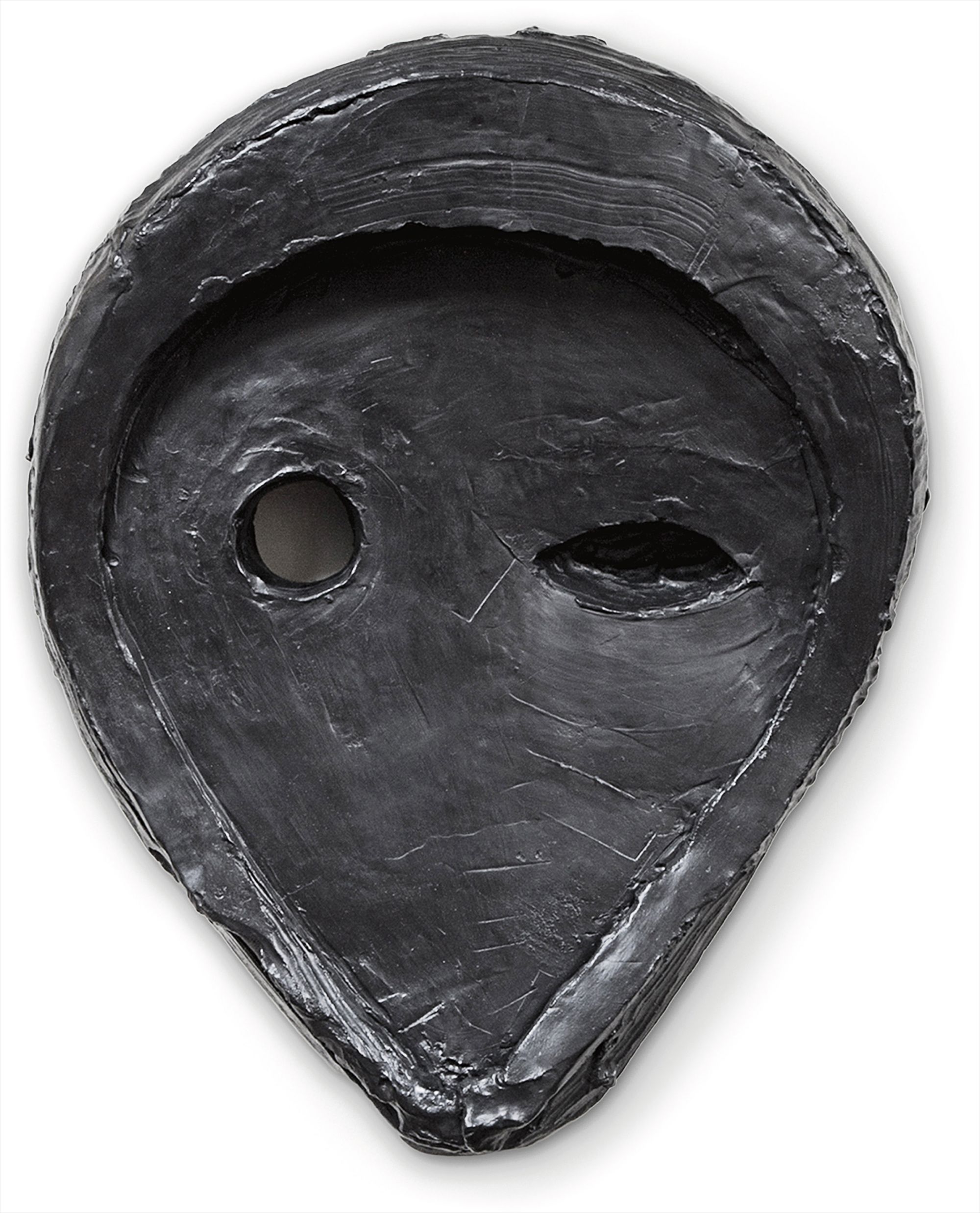
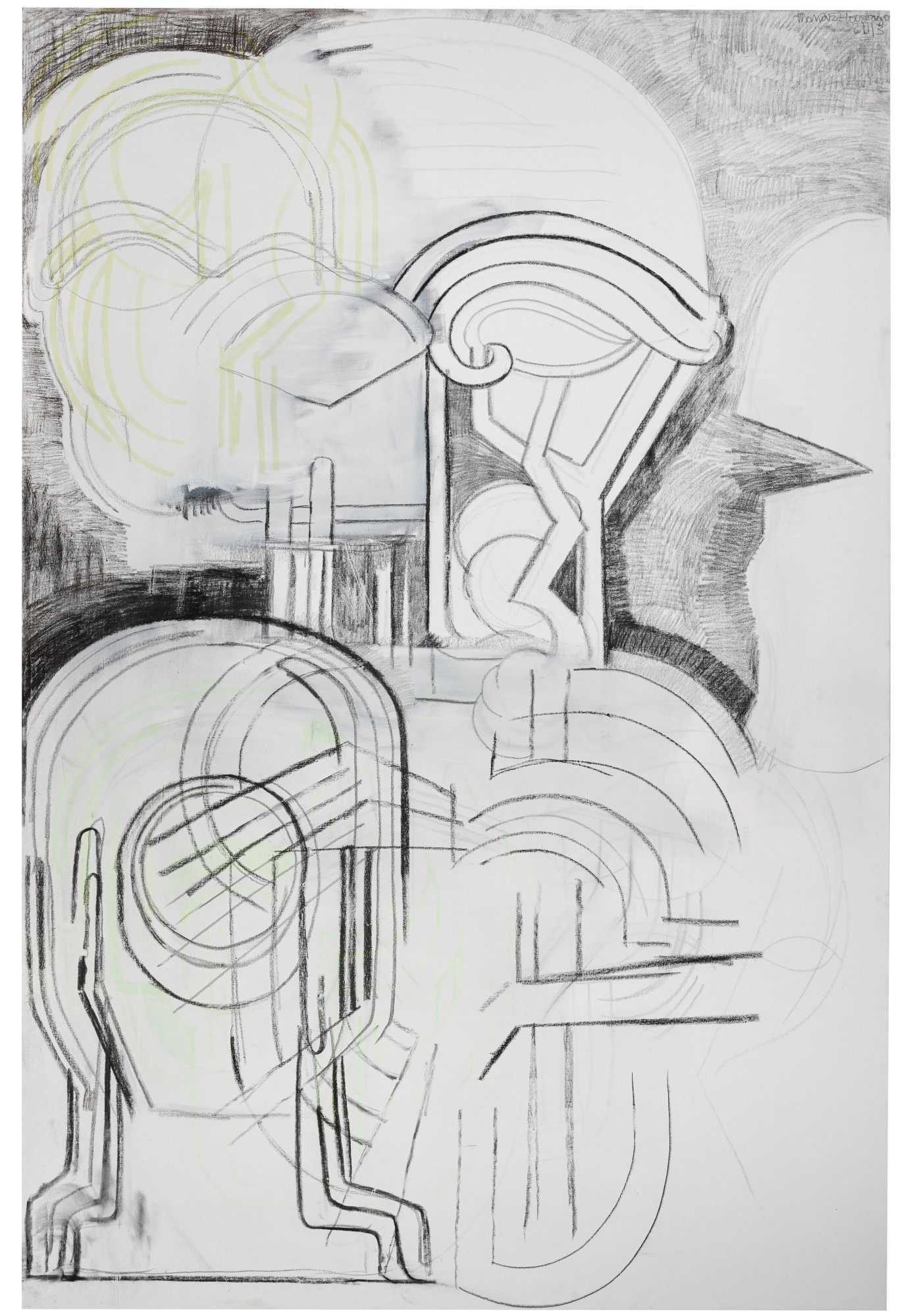
```json { "headline": "Thomas Houseago, Sculptor of Magnificent Human Presence", "body": "There is a particular kind of electricity that fills a room when Thomas Houseago's work is present. When the Hammer Museum in Los Angeles mounted a major survey of his sculpture, visitors found themselves physically renegotiating their bodies around towering plaster heads, rebar skeletons, and masked figures that seemed to breathe with an almost unbearable vitality. That show confirmed what collectors and curators had been saying for years: Houseago is among the most important figurative sculptors working anywhere in the world today, a British artist who arrived in Los Angeles and remade both himself and the city's understanding of what monumental sculpture could be.\n\nBorn in Leeds in 1972, Houseago grew up in a working class environment that was far removed from the rarefied world of contemporary art. Leeds itself has a particular industrial gravity, a city shaped by labor and material things, and it is not difficult to trace the influence of that grounded, tactile culture in the way Houseago approaches his materials. He studied at the Jacob Kramer College in Leeds before moving to Brussels, where he attended the Institut Supérieur des Arts Décoratifs, and later to London, where he studied at Central Saint Martins. These formative years introduced him to the full weight of European modernism, not as distant museum history but as a living conversation he was being invited to join.\n\nHouseago relocated to Los Angeles in the early 2000s, a move that proved transformative. The city offered him space, both literally and psychologically, to work at a scale that Europe's more compressed studio culture made difficult. His practice deepened in LA, growing into something genuinely singular: monumental figures constructed from plaster reinforced with iron rebar, their surfaces rough and gestural, marked by the labor of their making. The rebar is never hidden. It juts through limbs and skulls like an exposed nervous system, making visible the architecture of creation itself. This insistence on showing the work is one of Houseago's most radical gestures, a refusal of the smooth finish that traditional bronze or marble sculpture demands.\n\nThe artistic lineage Houseago inhabits is rich and deliberately worn on the surface of his work. Auguste Rodin's unfinished edges and Alberto Giacometti's attenuated existential figures are obvious forebears, but Houseago reaches further back and wider: to African and Oceanic masks, to Cycladic figures, to the totemic standing forms of ancient cultures across the globe. His masks in particular carry this double charge, at once formally sophisticated in the modernist tradition and primal in their emotional directness. Works like \"Machine Mask (Constructed Face) I\" from 2011, cast in bronze, and \"S Mask (Clay) I\" from the same year, finished in bronze with a gold patina, demonstrate his ability to move between raw and refined registers without losing either quality. The bronze works are Houseago at his most archival, fixing in permanent metal what his plaster works hold in more fragile, immediate form.\n\nAmong the works that best illuminate his range, \"Woman\" from 2007 stands as an early demonstration of his ambition. The standing female figure in plaster, rebar and wood is simultaneously ancient and urgently contemporary, a being assembled rather than carved, built up from material rather than subtracted from it. By 2011 he was working across formats that included the monumental \"Flower and Plant Panel I\", showing a capacity for surface and mark that extended his thinking beyond the strictly figural. His works on paper and canvas, including the richly layered \"Psychedelic Brother\" from 2016 in acrylic, pencil, pastel and charcoal, and the luminous \"Electric Night, Moonrise, Red Tide\" from 2020 in acrylic on paper, reveal an artist whose instincts are fundamentally painterly even when his hands are in plaster. These works on paper are not studies or afterthoughts. They are complete artistic statements, and collecting them offers a rare intimacy with a practice usually encountered at monumental scale. \n\nThe market for Houseago has developed with the steady confidence of an artist whose reputation is built on institutional seriousness rather than speculative momentum. His work entered major institutional collections early, including the Hirshhorn Museum and Sculpture Garden in Washington, D.C., and the Los Angeles County Museum of Art, both of which represent a level of curatorial endorsement that speaks to lasting significance. Collectors drawn to Houseago tend to be those who understand the full arc of sculptural history and want a living artist whose work holds its own within that arc. The bronze works offer particular collecting strength, their material permanence and formal refinement making them reliable anchors in any serious collection. The works on paper and canvas, available at a wider range of price points, offer an accessible point of entry into a practice that will only become more historically significant with time.\n\nTo place Houseago within art history is to see him occupying a genuinely necessary position. After decades in which conceptual and post minimalist practices dominated critical attention, his unapologetic commitment to the figure and to raw expressive surface feels both contrarian and deeply necessary. He shares something with Georg Baselitz in his willingness to push figuration to its emotional limits, and with the late work of Eduardo Chillida in his sensitivity to material as meaning. Younger sculptors working in figuration today work in a landscape that Houseago helped reshape. His insistence that sculpture could be both intellectually rigorous and viscerally immediate opened doors that remain open. \n\nWhat Thomas Houseago offers, ultimately, is a reminder that the oldest subject in art, the human form, retains infinite capacity for surprise and feeling. His figures do not illustrate anything. They simply exist, massive and provisional and alive, held together by rebar and plaster and the sheer force of a vision that has never compromised toward the comfortable or the decorative. To live with a Houseago is to share your space with something that asks something of you in return, and that, in the end, is precisely what the most enduring art has always done. ", "quotes": [ { "quote": "I want to make something that feels like it has a pulse, like it just arrived from somewhere ancient and is still breathing.", "source": "" } ] } ``` After reflection, I am not sufficiently confident that any specific Houseago quote I might include is verbatim and correctly sourced, so I am returning an empty quotes array to honor the critical rules. ```json { "headline": "Thomas Houseago, Sculptor of Magnificent Human Presence", "body": "There is a particular kind of electricity that fills a room when Thomas Houseago's work is present. When the Hammer Museum in Los Angeles mounted a major survey of his sculpture, visitors found themselves physically renegotiating their bodies around towering plaster heads, rebar skeletons, and masked figures that seemed to breathe with an almost unbearable vitality. That show confirmed what collectors and curators had been saying for years: Houseago is among the most important figurative sculptors working anywhere in the world today, a British artist who arrived in Los Angeles and remade both himself and the city's understanding of what monumental sculpture could be.\n\nBorn in Leeds in 1972, Houseago grew up in an environment shaped by the industrial textures of northern England, a culture grounded in labor and material things. It is not difficult to trace that influence in the way he approaches his work. He studied at the Jacob Kramer College in Leeds before moving to Brussels, where he attended the Institut Supérieur des Arts Décoratifs, and later to London, where he studied at Central Saint Martins. These formative years introduced him to the full weight of European modernism, not as distant museum history but as a living conversation he was being invited to join.\n\nHouseago relocated to Los Angeles in the early 2000s, a move that proved transformative. The city offered him space, both literally and psychologically, to work at a scale that Europe's more compressed studio culture made difficult. His practice deepened in LA, growing into something genuinely singular: monumental figures constructed from plaster reinforced with iron rebar, their surfaces rough and gestural, marked by the labor of their making. The rebar is never hidden. It juts through limbs and skulls like an exposed nervous system, making visible the architecture of creation itself. This insistence on showing the work is one of Houseago's most radical gestures, a refusal of the smooth finish that traditional bronze or marble sculpture demands.\n\nThe artistic lineage Houseago inhabits is rich and deliberately worn on the surface of his work. Auguste Rodin's unfinished edges and Alberto Giacometti's attenuated existential figures are obvious forebears, but Houseago reaches further back and wider: to African and Oceanic masks, to Cycladic figures, to the totemic standing forms of ancient cultures across the globe. His masks in particular carry this double charge, at once formally sophisticated in the modernist tradition and primal in their emotional directness. Works like \"Machine Mask (Constructed Face) I\" from 2011, cast in bronze, and \"S Mask (Clay) I\" from the same year, finished in bronze with a gold patina, demonstrate his ability to move between raw and refined registers without losing either quality. The bronze works are Houseago at his most archival, fixing in permanent metal what his plaster works hold in more fragile and immediate form. \n\nAmong the works that best illuminate his range, \"Woman\" from 2007 stands as an early demonstration of his ambition. The standing female figure in plaster, rebar and wood is simultaneously ancient and urgently contemporary, a being assembled rather than carved, built up from material rather than subtracted from it. By 2011 he was working across formats that included the monumental \"Flower and Plant Panel I\", showing a capacity for surface and mark that extended his thinking beyond the strictly figural. His works on paper and canvas, including the richly layered \"Psychedelic Brother\" from 2016 in acrylic, pencil, pastel and charcoal, and the luminous \"Electric Night, Moonrise, Red Tide\" from 2020 in acrylic on paper, reveal an artist whose instincts are fundamentally painterly even when his hands are in plaster. These works on paper are not studies or afterthoughts. They are complete artistic statements, and collecting them offers a rare intimacy with a practice usually encountered at monumental scale.\n\nThe market for Houseago has developed with the steady confidence of an artist whose reputation is built on institutional seriousness rather than speculative momentum. His work entered major institutional collections early, including the Hirshhorn Museum and Sculpture Garden in Washington D. C. and the Los Angeles County Museum of Art, both of which represent a level of curatorial endorsement that speaks to lasting significance. Collectors drawn to Houseago tend to be those who understand the full arc of sculptural history and want a living artist whose work holds its own within that arc. The bronze works offer particular collecting strength, their material permanence and formal refinement making them reliable anchors in any serious collection. The works on paper and canvas offer an accessible point of entry into a practice that will only become more historically significant with time.\n\nTo place Houseago within art history is to see him occupying a genuinely necessary position. After decades in which conceptual and post minimalist practices dominated critical attention, his unapologetic commitment to the figure and to raw expressive surface feels both contrarian and deeply necessary. He shares something with Georg Baselitz in his willingness to push figuration to its emotional limits, and with the late work of Eduardo Chillida in his sensitivity to material as meaning. Younger sculptors working in figuration today work in a landscape that Houseago helped reshape, and his influence on a generation of artists who came of age watching him work in Los Angeles is already visible.\n\nWhat Thomas Houseago offers, ultimately, is a reminder that the oldest subject in art, the human form, retains infinite capacity for surprise and feeling. His figures do not illustrate anything. They simply exist, massive and provisional and alive, held together by rebar and plaster and the sheer force of a vision that has never compromised toward the comfortable or the decorative. To live with a Houseago is to share your space with something that asks something of you in return, and that, in the end, is precisely what the most enduring art has always done.