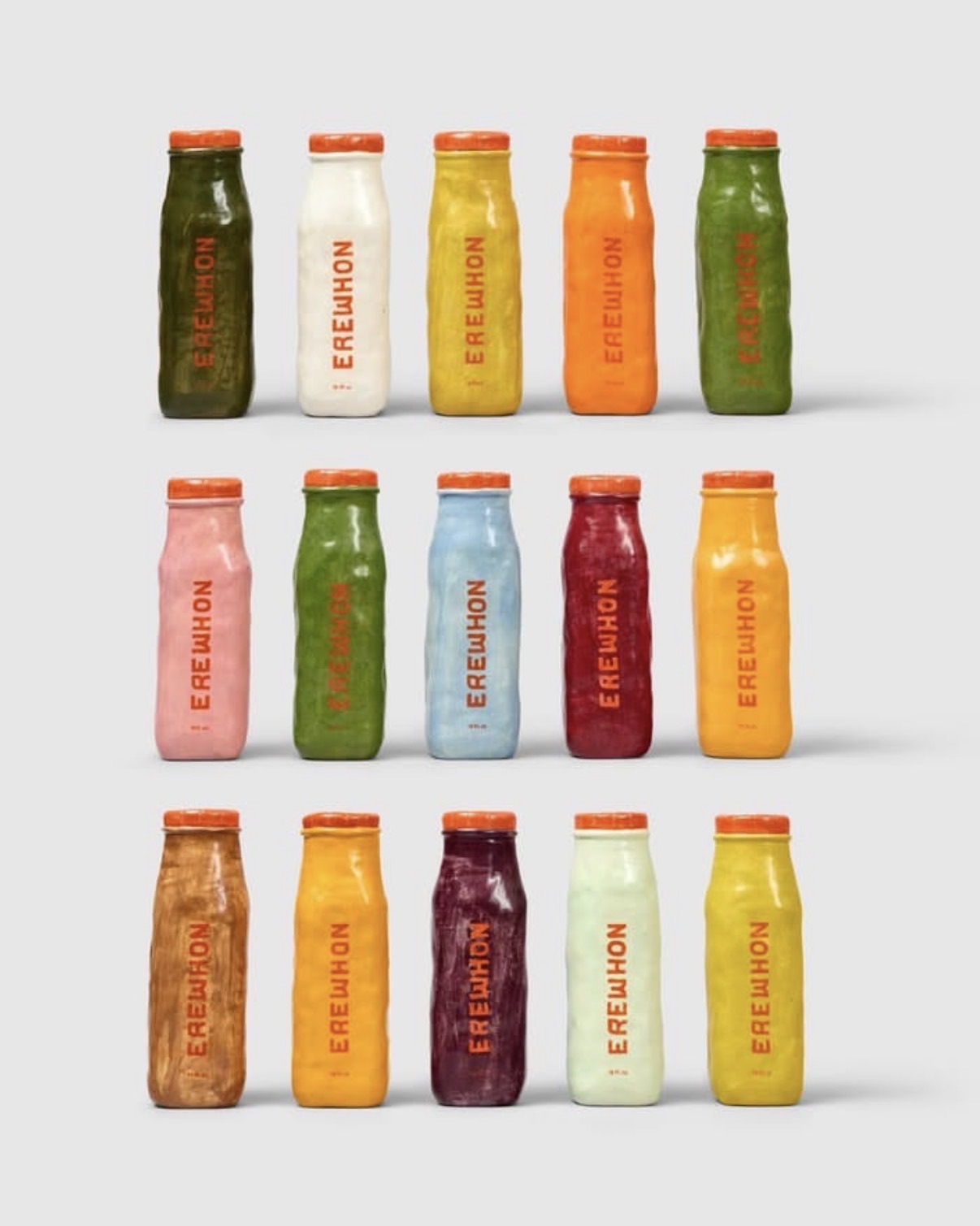
There is a particular kind of attention that transforms the overlooked into the luminous, and Stephanie H. Shih has made that attention her life's work. In recent years, the Taiwanese American ceramic artist has emerged as one of the most compelling voices in contemporary sculpture, her meticulously hand built objects accumulating a following that spans museum curators, devoted collectors, and anyone who has ever felt the quiet pull of a familiar label on a pantry shelf. Her sculptures of soy sauce bottles, oyster crackers, Spam cans, and beloved Asian American grocery staples have appeared in exhibitions across the United States and generated genuine cultural conversation about what it means to be seen, to belong, and to remember. The moment feels less like arrival and more like recognition long overdue. Shih grew up navigating the dual inheritance of Taiwanese heritage and American upbringing, that particular in between space that many children of immigrants know intimately. Food, as it so often is in diasporic households, was a primary language of love, identity, and continuity. The pantry was a kind of archive, its contents telling stories that could not always be spoken aloud. These formative experiences planted the seeds for an artistic practice that would eventually center the domestic object as a vehicle for something far larger than nostalgia. Shih studied and developed her craft over years, bringing to ceramics a seriousness of purpose that anchors even her most playful surfaces. Her artistic development reflects a patient, considered approach to a medium that rewards both technical discipline and conceptual clarity. Ceramics, with its ancient associations and its tactile intimacy, turns out to be the ideal vessel for the kinds of questions Shih is asking. She works by hand building rather than wheel throwing, constructing each object with a fidelity to its source material that borders on devotional. The colors, the typography, the slight imperfections of a mass produced container, all of it is rendered in clay with an almost meditative precision. Yet the work never tips into mere imitation. There is always a warmth, a slight softening, that reminds you a human being made this, that love went into it. Among her most talked about bodies of work is a series of sculptures replicating the kinds of products found in Asian grocery stores across America, items that mainstream culture long ignored or exoticized but that for millions of families represented comfort, home, and continuity. By placing these objects in gallery contexts, Shih performs a quiet but insistent act of elevation. The work insists that these pantry staples deserve the same contemplative gaze we give to a Morandi still life or a Claes Oldenburg pop sculpture. Her piece "Erewhon [Various Juice Flavors]," anticipated for 2026 and rendered in ceramic, extends this inquiry into new commercial territory, examining how wellness culture and upscale grocery aesthetics have begun to absorb and repackage the very idea of niche food identity. It is a sharply observed and richly layered addition to a practice already full of intelligence. The collecting community has responded to Shih's work with genuine enthusiasm, drawn by a combination of factors that serious collectors recognize immediately: conceptual rigor, technical accomplishment, cultural timeliness, and an emotional resonance that crosses demographic lines. Her sculptures feel personal and political at once, which is a difficult balance to strike and rarer than it should be. There is also something about the scale and intimacy of her objects that makes them powerful presences in a domestic setting, which is fitting, given that domesticity itself is her subject. Collectors who live with her work often describe a kind of daily conversation with it, the way a familiar object rendered in ceramic continues to reveal new layers of meaning over time. Within the broader landscape of contemporary art, Shih's practice enters into dialogue with a rich tradition of artists who have used the everyday object as a site of investigation. The lineage runs from the pop art provocations of Oldenburg and Andy Warhol through the quieter, more intimate still life traditions of artists like Wayne Thiebaud, and connects as well to the work of contemporary artists such as Ken Price and Betty Woodman, who elevated ceramics as a serious fine art medium. More recently, her work resonates alongside artists exploring Asian American identity and the politics of representation, a conversation that has grown significantly more visible and more urgent in American cultural life over the past decade. Shih occupies a distinct and important position within that conversation, her formal choices always in service of her ideas. What makes Shih's contribution to this moment so valuable is precisely its combination of accessibility and depth. Her work can be encountered on an immediate, even joyful level, you recognize the object, you feel the tug of memory, you smile. But it does not let you stop there. It asks you to sit with questions about visibility and value, about which cultures get to see themselves reflected in the spaces where art lives, about how objects carry and transmit identity across generations. These are not small questions, and Shih approaches them without didacticism or sentimentality, which is a mark of real artistic maturity. As her practice continues to evolve, with new works pushing into fresh commercial and cultural territories, the sense is of an artist fully in command of her voice and generous enough to share it widely.