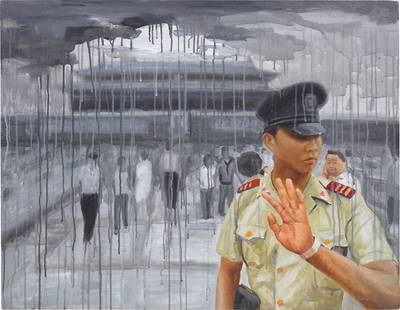
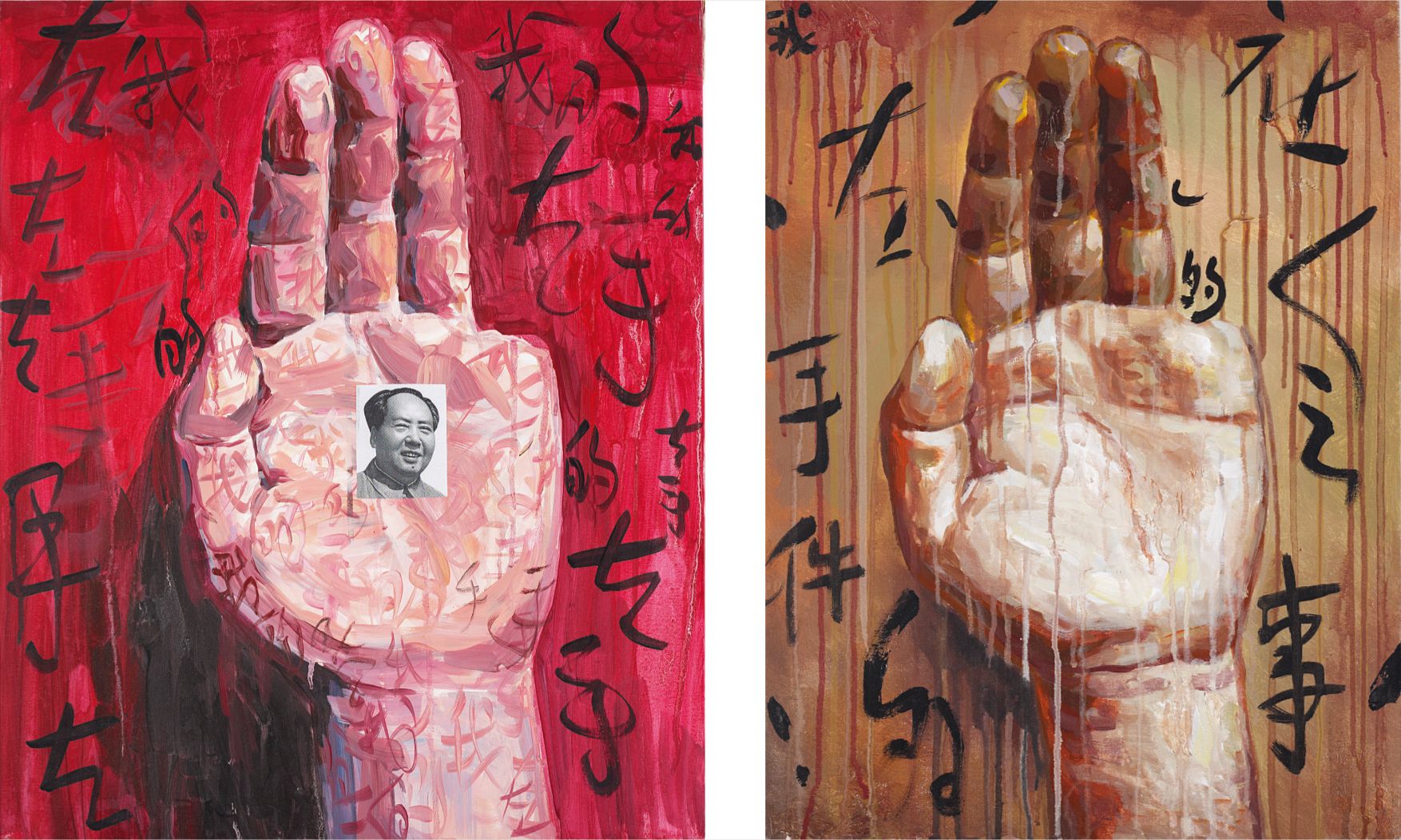
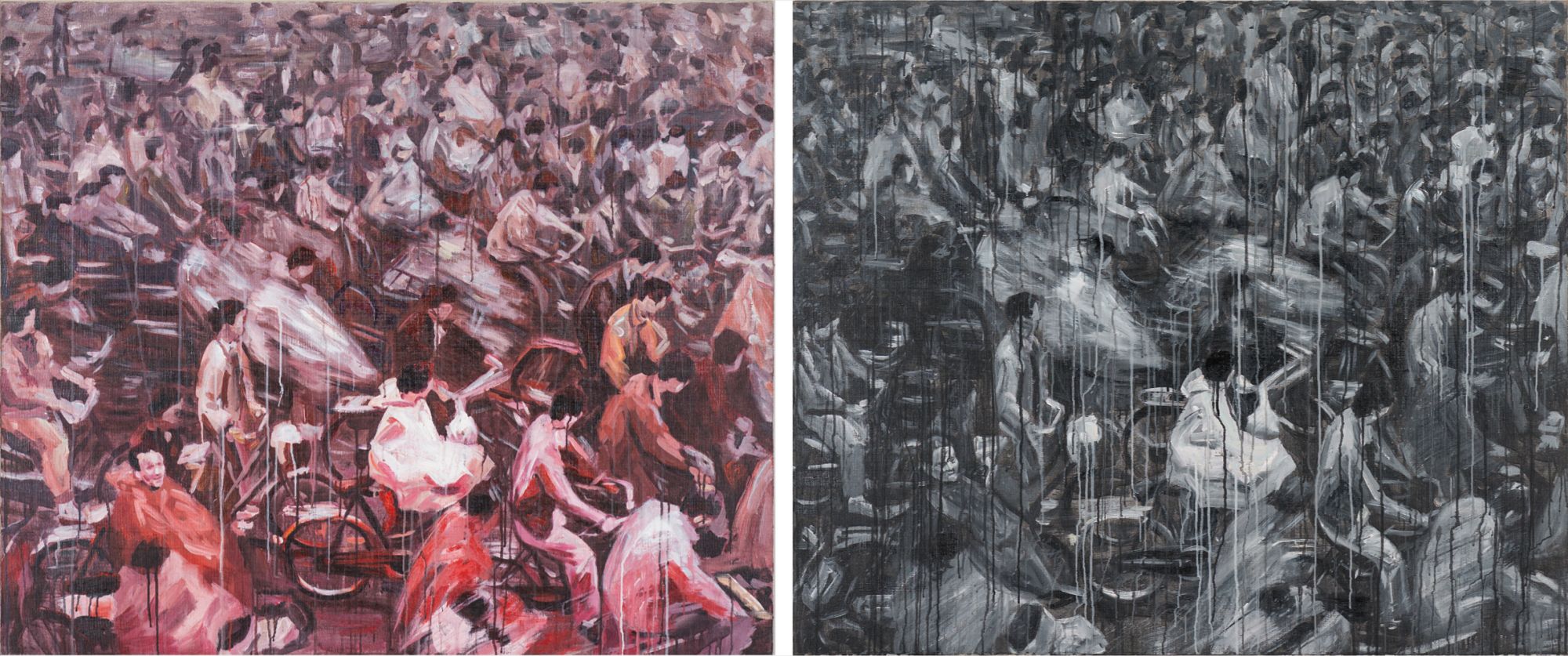
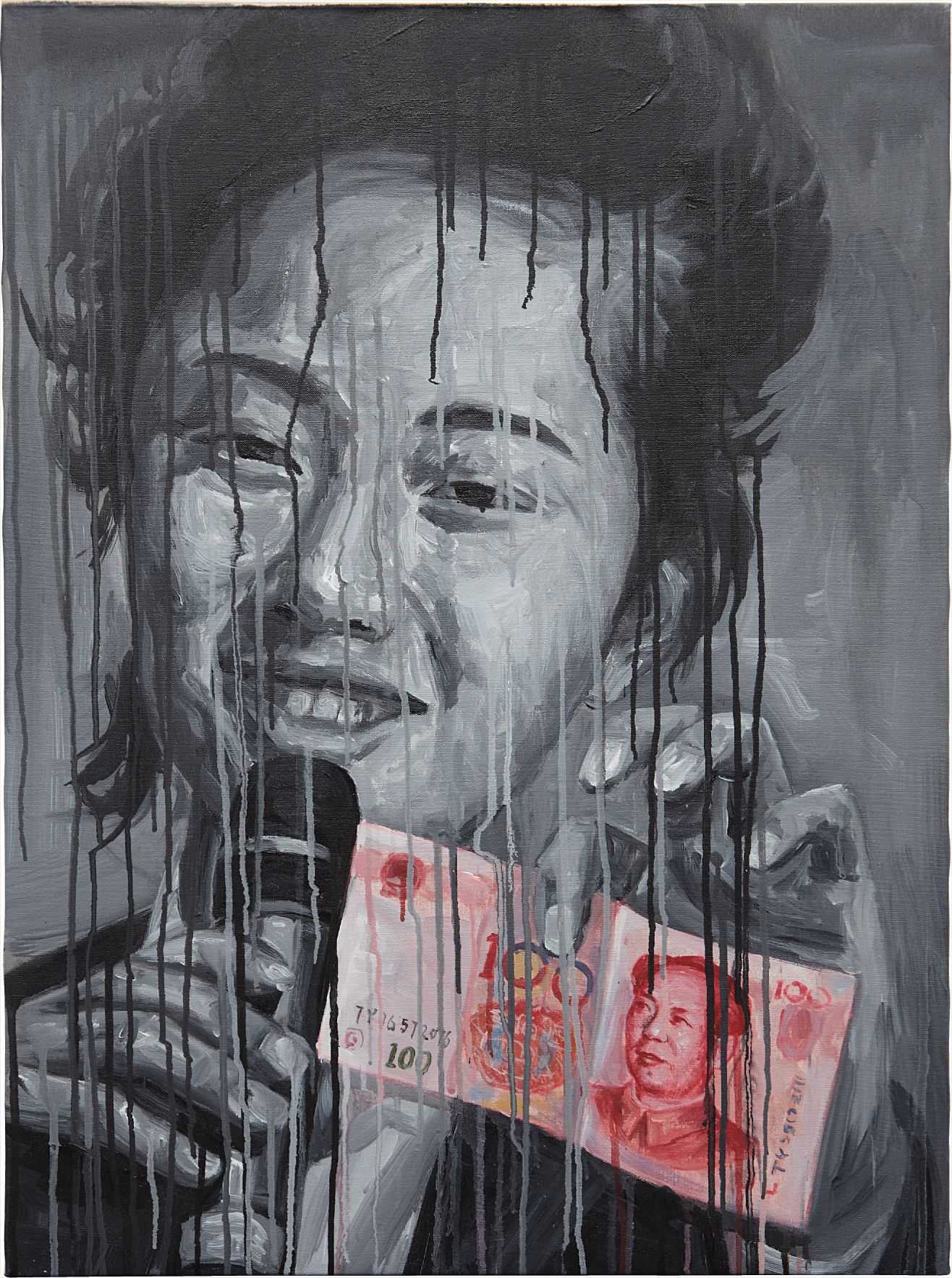
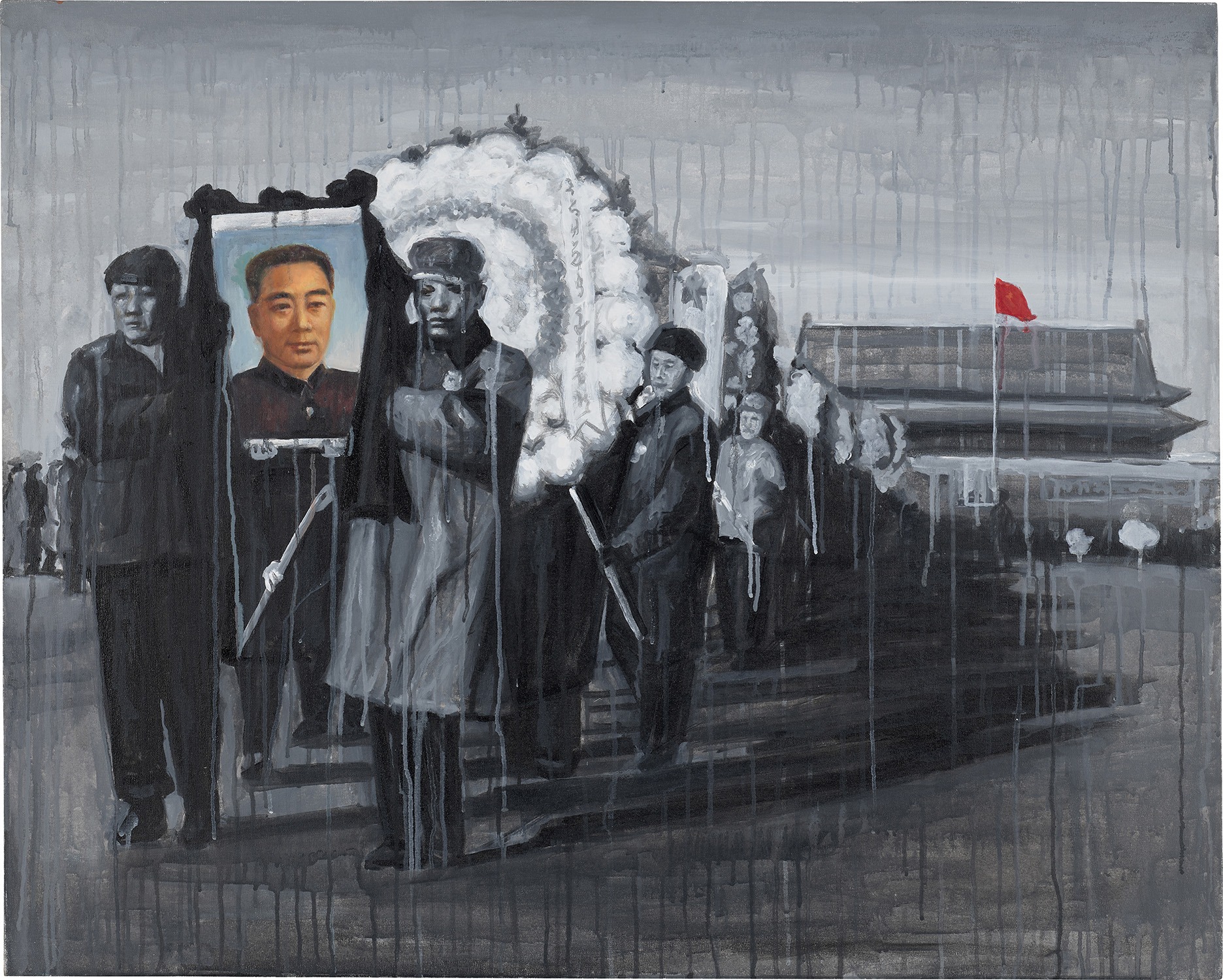
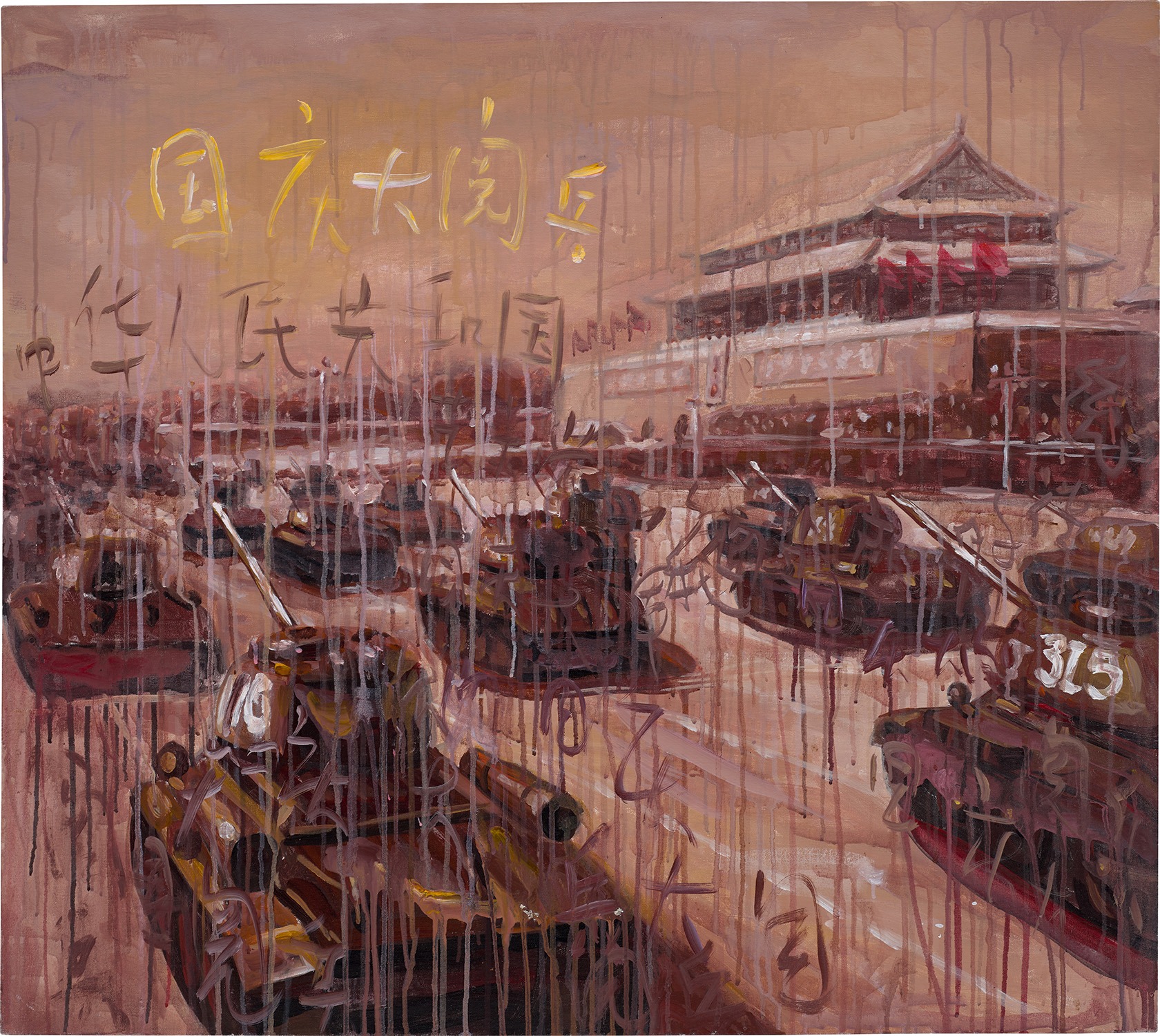
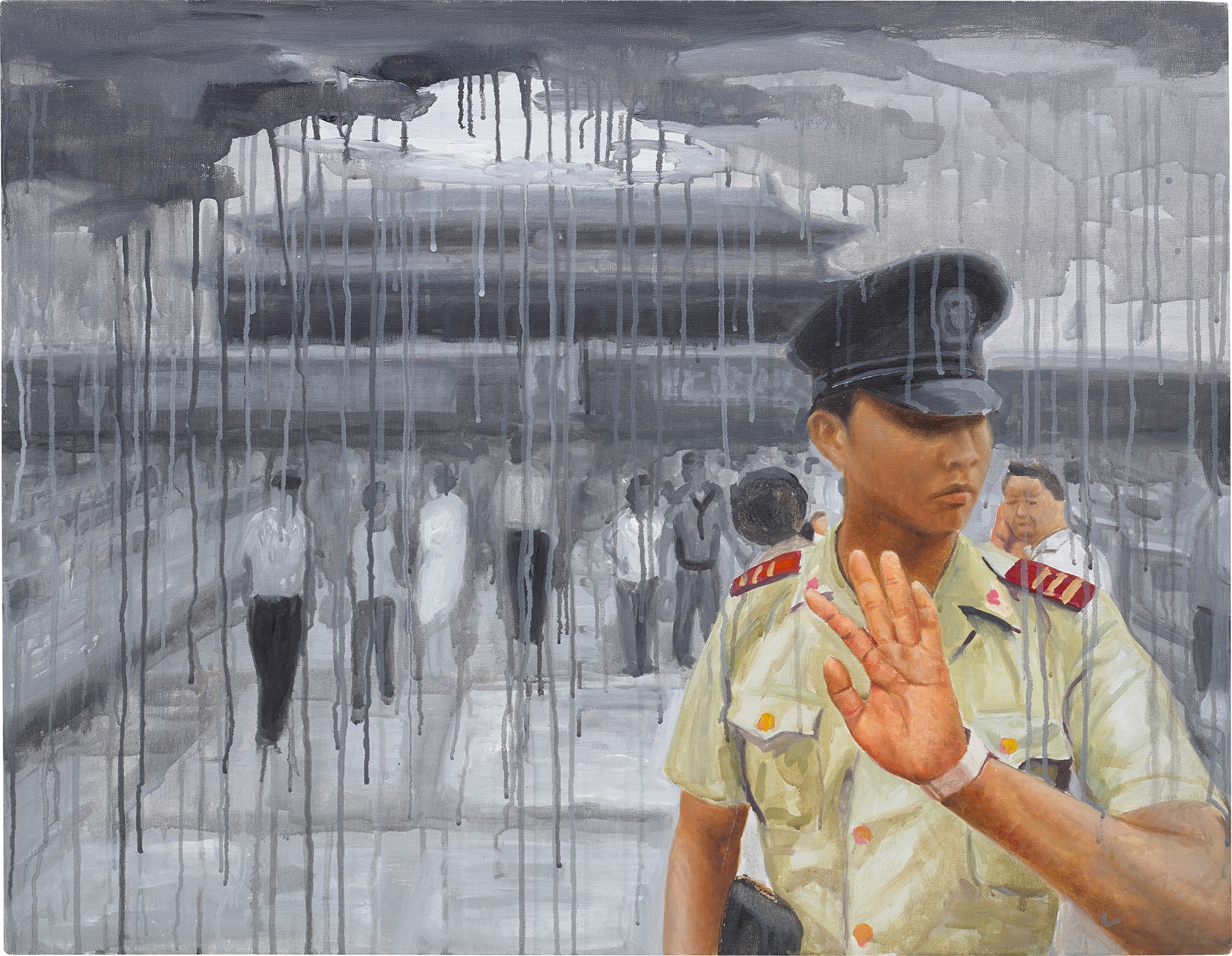
There is a particular kind of courage required to make your own body the primary document of history. Sheng Qi has spent more than three decades doing exactly that, building one of the most morally serious and visually arresting bodies of work in contemporary Chinese art. His paintings and photographs do not merely reference historical trauma; they emerge from it, carrying within them the weight of a finger severed, a homeland abandoned, and a generation whose aspirations were crushed on a single catastrophic night in June 1989. To encounter his work in a gallery is to feel the full gravity of that bargain between an artist and his own history. Sheng Qi was born in 1965 in Hefei, in China's Anhui province, and came of age during the final convulsions of the Cultural Revolution, that period of ideological upheaval that reshaped every dimension of Chinese society between 1966 and 1976. He moved to Beijing to study art, arriving in a city that, by the late 1980s, was electric with possibility. The Democracy Movement that coalesced in Tiananmen Square in the spring of 1989 drew hundreds of thousands of students, workers, and intellectuals into its orbit, and Sheng Qi was among them. When the military crackdown came on the night of June 3rd and into the 4th, it ended not only the movement but shattered the futures of an entire generation of young Chinese people who had believed, however briefly, that change was within reach. What Sheng Qi did before fleeing China became the founding gesture of his entire artistic life. In an act that fused political protest with ancient traditions of bodily sacrifice, he severed his own left little finger and buried it in the soil of Tiananmen Square. The act was simultaneously a form of mourning, a mark of permanent witness, and an irreversible statement of rupture from the country he was leaving behind. He then made his way to Europe, eventually settling between Rome and London, where he began to reconstruct an artistic practice from the fragments of memory, exile, and physical loss that he carried with him. His most celebrated works are the self portrait photographs in which he holds a small childhood image of himself in the cupped palm of his left hand, the hand from which the finger is absent. The missing finger becomes a void that pulls the viewer's eye and the viewer's conscience simultaneously. These photographs, quiet and intimate in scale, operate with the precision of great conceptual art while retaining an emotional directness that much conceptual work deliberately avoids. They have been exhibited internationally and have come to stand as some of the most powerful images produced by any artist of Sheng Qi's generation, Chinese or otherwise. His paintings reveal a parallel and equally compelling dimension of his practice. Works such as Farewell Premier Zhou and National Parade, both from 2006 and executed in acrylic on canvas, engage with the iconography of Chinese political history with a gaze that is neither simply nostalgic nor straightforwardly critical. The imagery of official commemoration, of parades and leaders and collective ceremony, is rendered with a painterly touch that introduces ambiguity and personal memory into what was designed to be impersonal and monumental. Forbidden, also from 2006, continues this interrogation of state imagery and the spaces that power designates as sacred or off limits. These paintings are not agitprop; they are meditations, and their intelligence lies in the way they hold contradictory feelings in suspension without resolving them into simple political statement. Works such as Bicycle (Side), a diptych in acrylic on canvas, and Singer, painted in acrylic on linen, demonstrate the breadth of Sheng Qi's visual thinking beyond the explicitly political register. The bicycle, that quintessential symbol of everyday Chinese modernity in the twentieth century, is rendered with the same attentive seriousness he brings to images of Tiananmen. Singer introduces a lyrical, performative quality into the work, suggesting that Sheng Qi is as interested in the textures of ordinary life and culture as he is in the grand machinery of history. This range is part of what makes his practice so durably interesting to collectors and curators alike. The Two Works pairing of My Left Hand, one rendered in pure acrylic and one incorporating acrylic and collage paper, returns to the central motif of absence and presence with characteristic directness, the hand that carries loss made into an image that refuses to let the viewer look away. For collectors, Sheng Qi represents a rare alignment of art historical significance and genuine emotional urgency. His work sits in conversation with a remarkable range of artistic predecessors and contemporaries. The bodily and memorial concerns of his photography recall aspects of the Viennese Actionism of Günter Brus and Rudolf Schwarzkogler, while his engagement with political iconography rhymes with the work of fellow Chinese artists such as Zhang Xiaogang and Wang Guangyi, both of whom have transformed the visual culture of the People's Republic into the raw material of painterly reflection. Sheng Qi's particular contribution is the autobiographical anchor: where some of his contemporaries work with collective imagery at a degree of aesthetic remove, Sheng Qi remains inside the image, present in body and in wound. The market for serious Chinese contemporary art has matured considerably since the early 2000s, and within it, artists whose work is grounded in specific historical experience and formal rigour have proven to be among the most resilient. Sheng Qi's works in acrylic on canvas from the mid 2000s represent an especially coherent body of production, united by a shared set of concerns and a distinctive pictorial language that is immediately recognisable. For a collector building a thoughtful survey of art that grapples with the political and personal histories of the twentieth century, his paintings and photographs occupy a position that cannot be filled by any other artist. Sheng Qi's legacy is already assured, though the full measure of it belongs to the future. He made of his own body a permanent archive, and from that archive he has drawn thirty years of work that insists on the moral weight of individual experience against the erasure that political violence always seeks to accomplish. In an era when questions of memory, testimony, and the relationship between personal history and public power feel more urgent than ever, his art speaks with clarity and with force. To collect Sheng Qi is to take seriously the idea that art can be a form of witness, and that witness, properly made, is one of the most beautiful things a human being can offer.