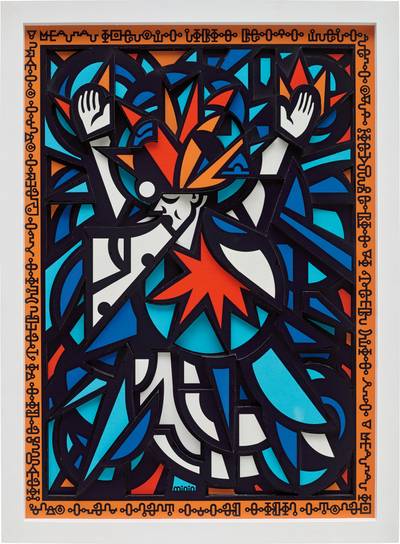
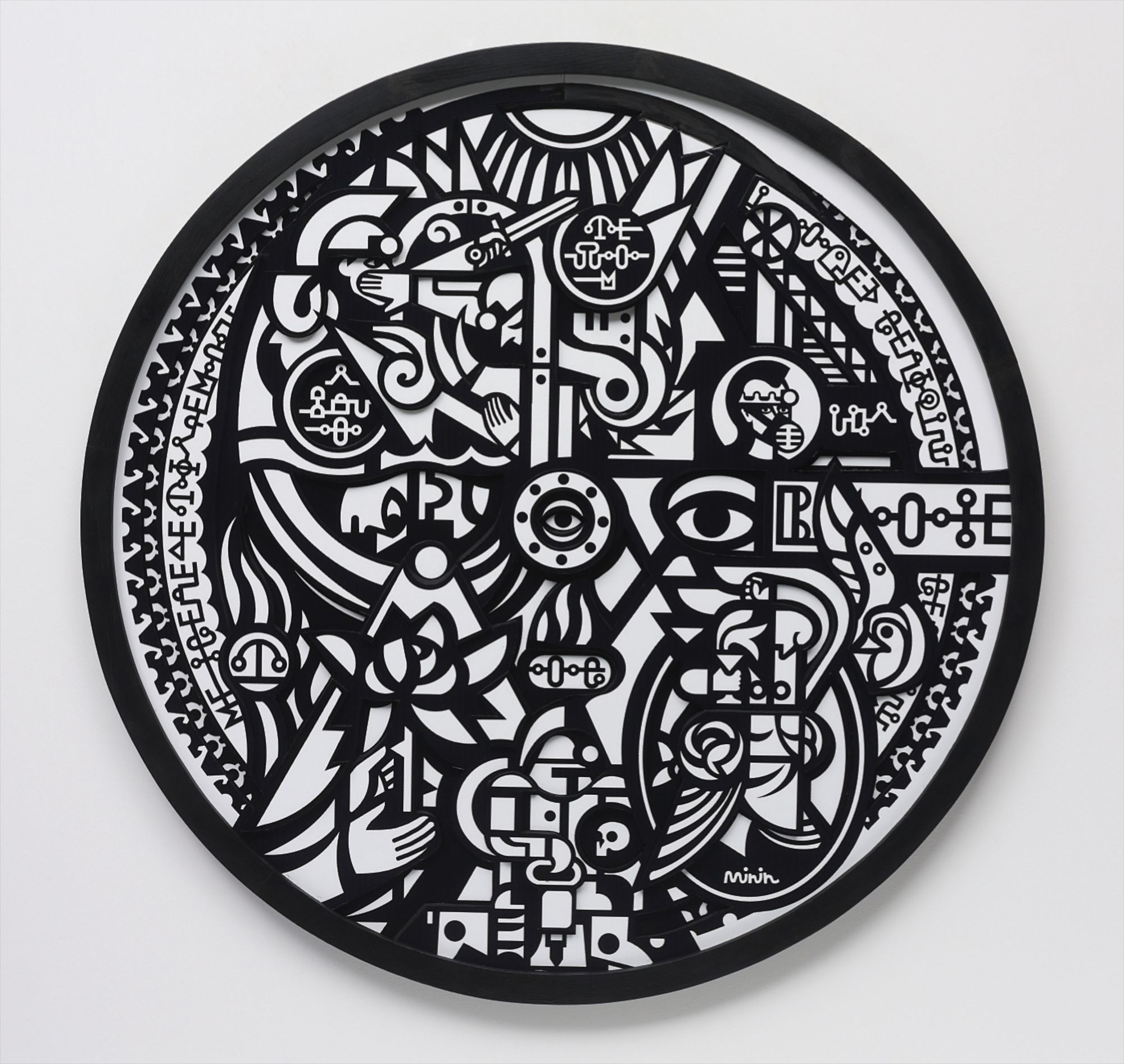
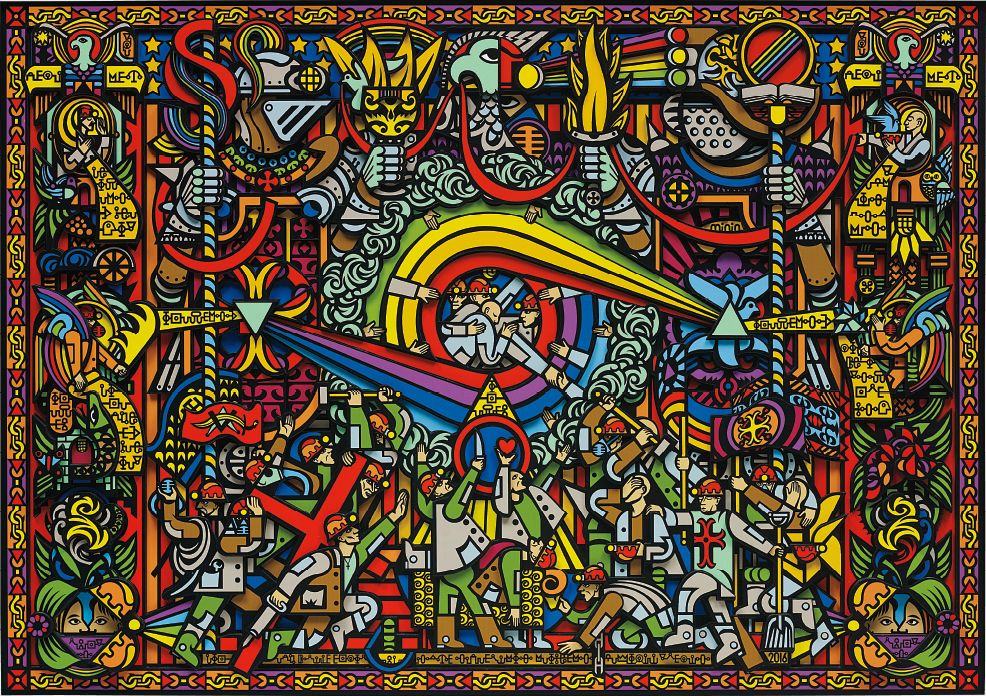
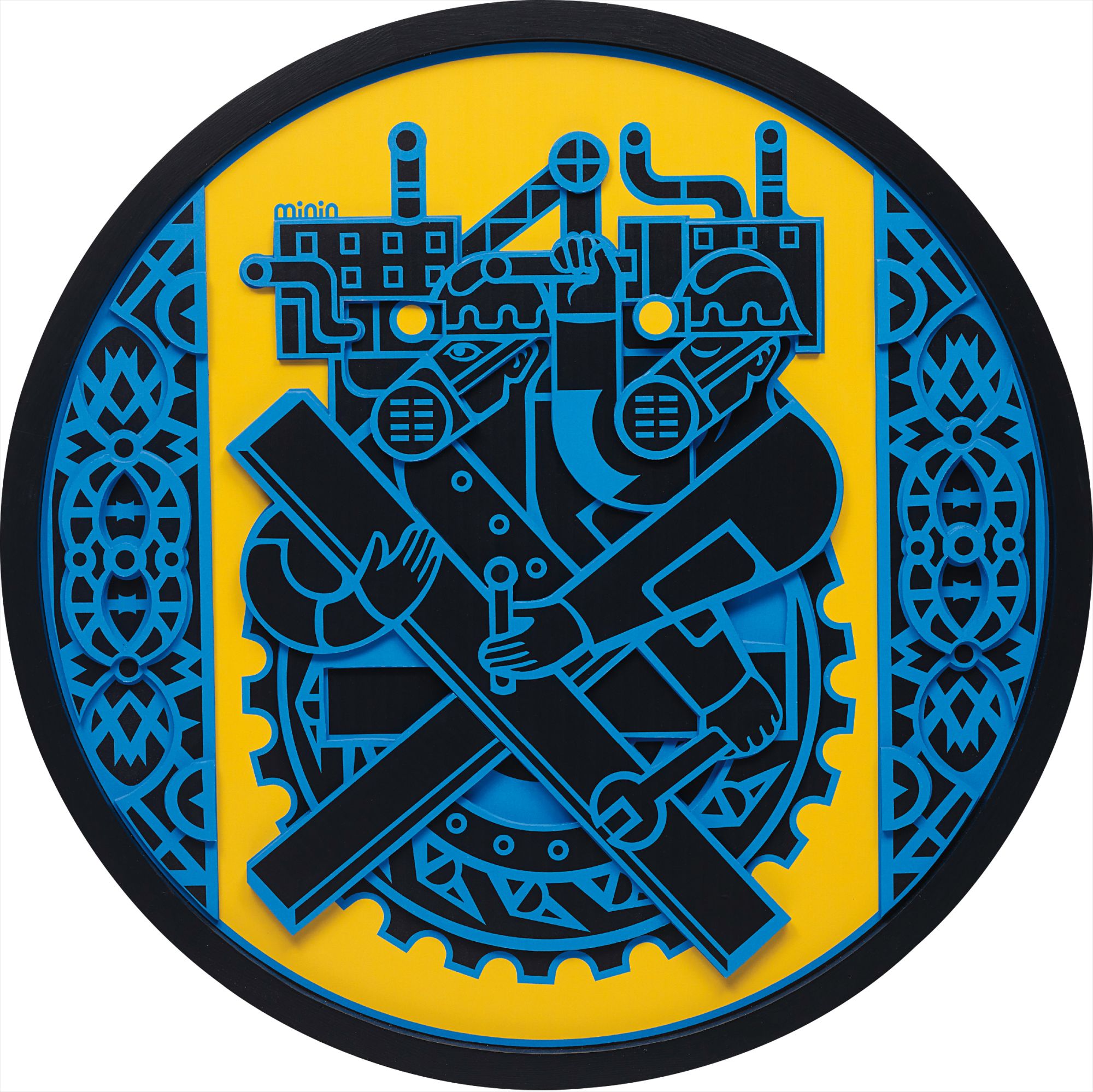
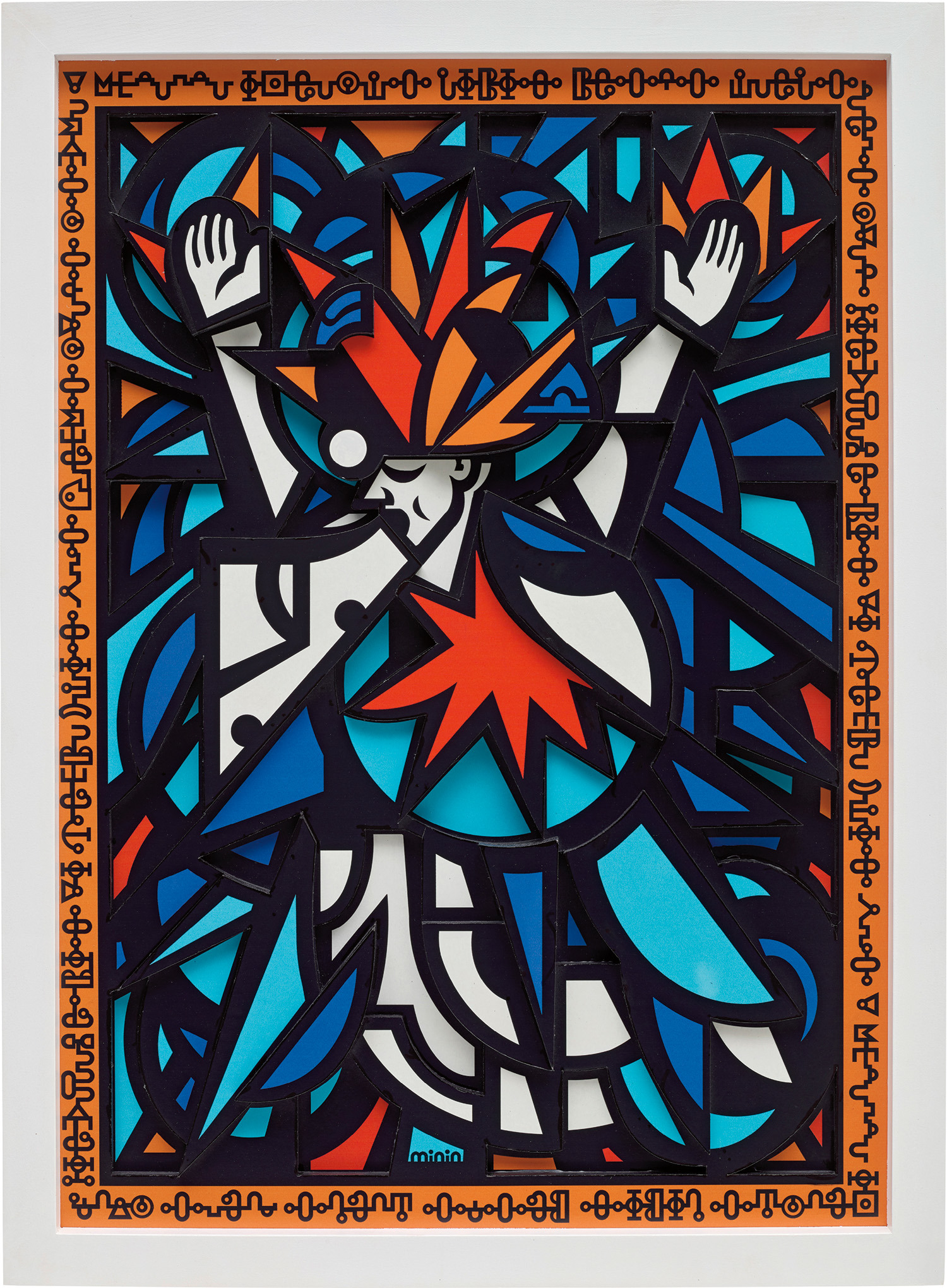
In the spring of 2023, visitors to a leading contemporary art fair in Europe found themselves stopping mid step before a cascade of glowing neon text and soft luminescence that seemed to pulse with something close to a heartbeat. The work belonged to Roman Minin, a Ukrainian artist whose practice had, over the preceding decade, quietly become one of the most emotionally urgent and visually arresting propositions in international contemporary art. That moment of arrested attention, that involuntary pause before something both beautiful and searching, is perhaps the defining experience of encountering his work in person. His art does not ask for your attention so much as it earns it, and then refuses to let go. Minin was born in 1985 in Ukraine, coming of age in a country navigating the difficult and often disorienting aftermath of Soviet collapse. That formative experience, growing up in a landscape saturated with the residue of one era while reaching toward the possibilities of another, would prove foundational to everything he would eventually create. The industrial city of Donetsk, in eastern Ukraine, figures prominently in his personal geography, and the cultural textures of that region, its Orthodox spirituality, its Soviet architectural legacy, its working class resilience, and its complicated relationship with memory and place, all find their way into his visual language. He came to art not through a single eureka moment but through a sustained, searching engagement with the world around him, and that groundedness gives his practice a sense of genuine necessity rather than mere stylistic ambition. Minin's artistic development gathered momentum through the 2010s as he refined a distinctive approach that sets him apart from nearly every other practitioner working in light based installation today. Where many artists use neon as a medium of cool irony or blunt declaration, Minin approaches it with something closer to devotion. His installations combine neon tubing, found objects, text, and carefully constructed spatial environments to produce work that operates simultaneously as visual spectacle and interior conversation. The works are immersive but never overwhelming; they invite contemplation rather than demanding spectacle. This balance, between the grandeur of the installation and the intimacy of the emotional address, is the hallmark of a mature and confident artistic intelligence. By the mid 2010s he had established himself as a figure of genuine importance within Ukrainian contemporary art and was drawing the attention of international curators and collectors in equal measure. Among the works that best illustrate his range and ambition, "Generator of Donetsk Subway" from 2015 stands as an especially resonant achievement. Created at a moment when the region it references had become a site of devastating conflict, the work functions as a kind of elegy, a luminous act of memory for a place and a way of life under profound threat. It is the kind of work that only an artist with deep personal roots in a subject can produce with this degree of feeling and restraint. "All for Vita," also from 2016, and "Human Alien" from the same year, a work in bronze with chemical metallization and silvering in two parts, demonstrate his facility across media. The sculpture reveals a Minin who is equally at home with physical mass and material weight as he is with light and ephemerality. "Love" from 2017 and "Heartburn" from 2018 extend his exploration of language as a visual and emotional force, while "Super Game" from 2018 shows an artist willing to probe the boundaries between play, desire, and the structures of power. Works such as "Carpet of Promises," "Prize for Silence," "Cage Elevator," and "Self Sufficiency Complex" each contribute a further dimension to a practice that is nothing less than a sustained meditation on what it means to be human in a world shaped by ideology, faith, and longing. For collectors, Minin represents a compelling proposition at a moment when the art market has grown increasingly attentive to voices from Eastern and Central Europe. His work occupies a space that is aesthetically generous and intellectually serious, accessible in the sense that it speaks to shared human experience while remaining grounded in a specific and distinctive cultural vision. The materiality of his sculptures and installations ensures that works hold their presence across different environments, from intimate domestic settings to institutional galleries. Collectors who have engaged with his practice tend to speak of it in terms that go beyond aesthetic pleasure, describing a quality of accompaniment, a sense that the work continues to offer something new the longer one lives with it. That quality of sustained resonance is among the most reliable indicators of lasting value in the contemporary market, and it is a quality that Minin's best works possess in abundance. Within the broader landscape of contemporary art, Minin's practice invites comparison with a constellation of artists working at the intersection of light, language, and cultural memory. The neon text works of Bruce Nauman, the immersive light environments of James Turrell, and the politically charged installations of Ilya Kabakov all offer useful points of orientation, though Minin's synthesis is entirely his own. His work is perhaps closest in spirit to that of artists who treat their medium as a form of testimony, who use the formal resources of contemporary art to bear witness to specific histories and collective emotional experiences. In this sense he stands within a distinguished tradition while extending it into new territory, bringing to it the particular weight of the post Soviet Ukrainian experience and the particular luminosity of his own imagination. Roman Minin matters today for reasons that go beyond the considerable formal accomplishments of his individual works. At a time when the cultural identity of Ukraine has assumed a significance that extends far beyond the art world, his practice offers something rare and valuable: a vision of Ukrainian creative life that is neither nostalgic nor polemical but genuinely searching. He reminds us that art can hold complexity with grace, that beauty and grief, irony and devotion, can coexist within a single glowing form. To collect Minin is to invest not only in one of the most distinctive visual voices of his generation but in a body of work that seems likely to grow in stature and resonance with every passing year. He is, in every sense that matters, an artist for now.