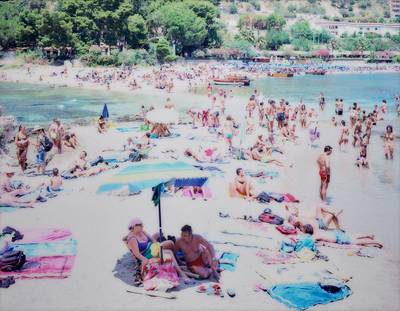
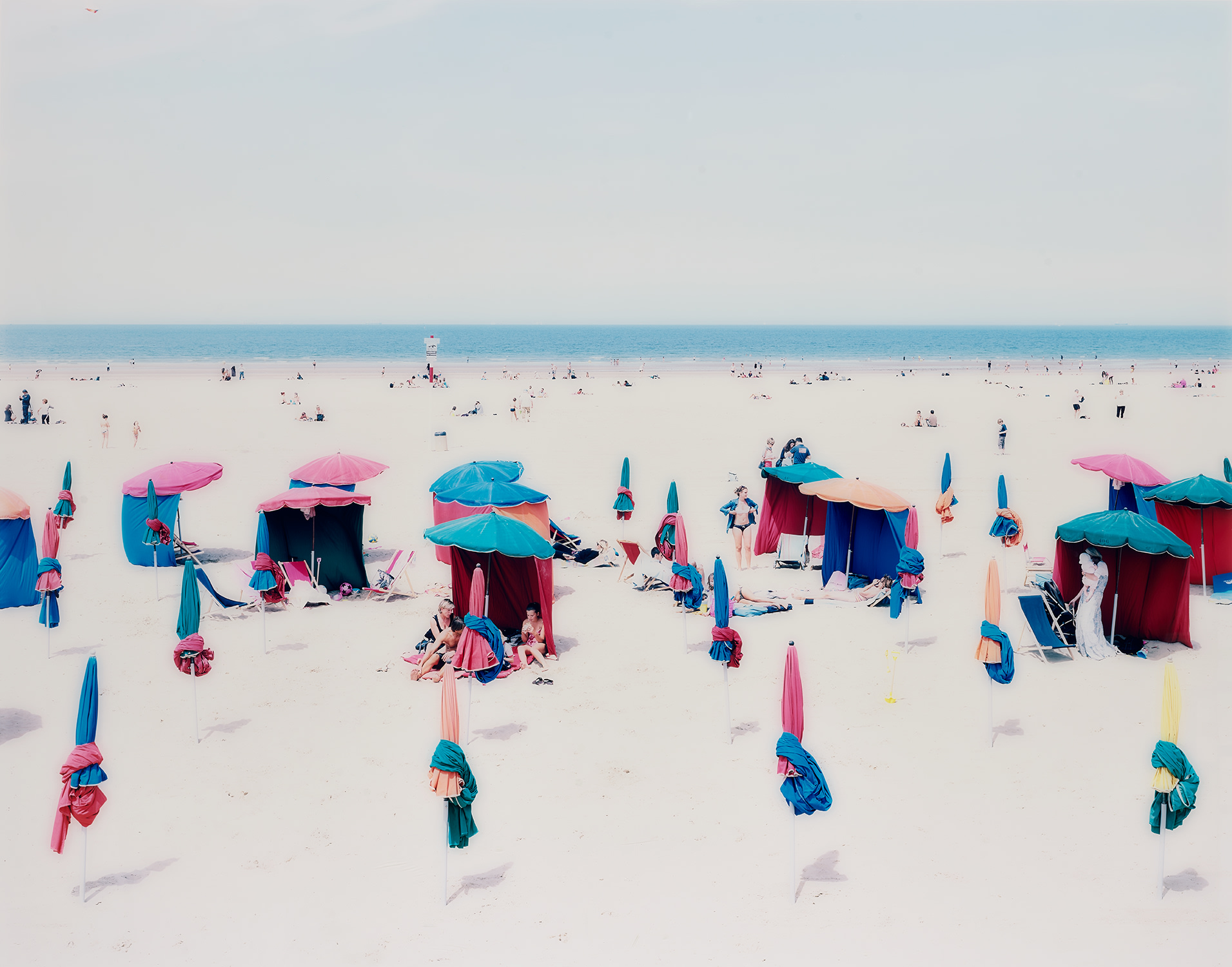
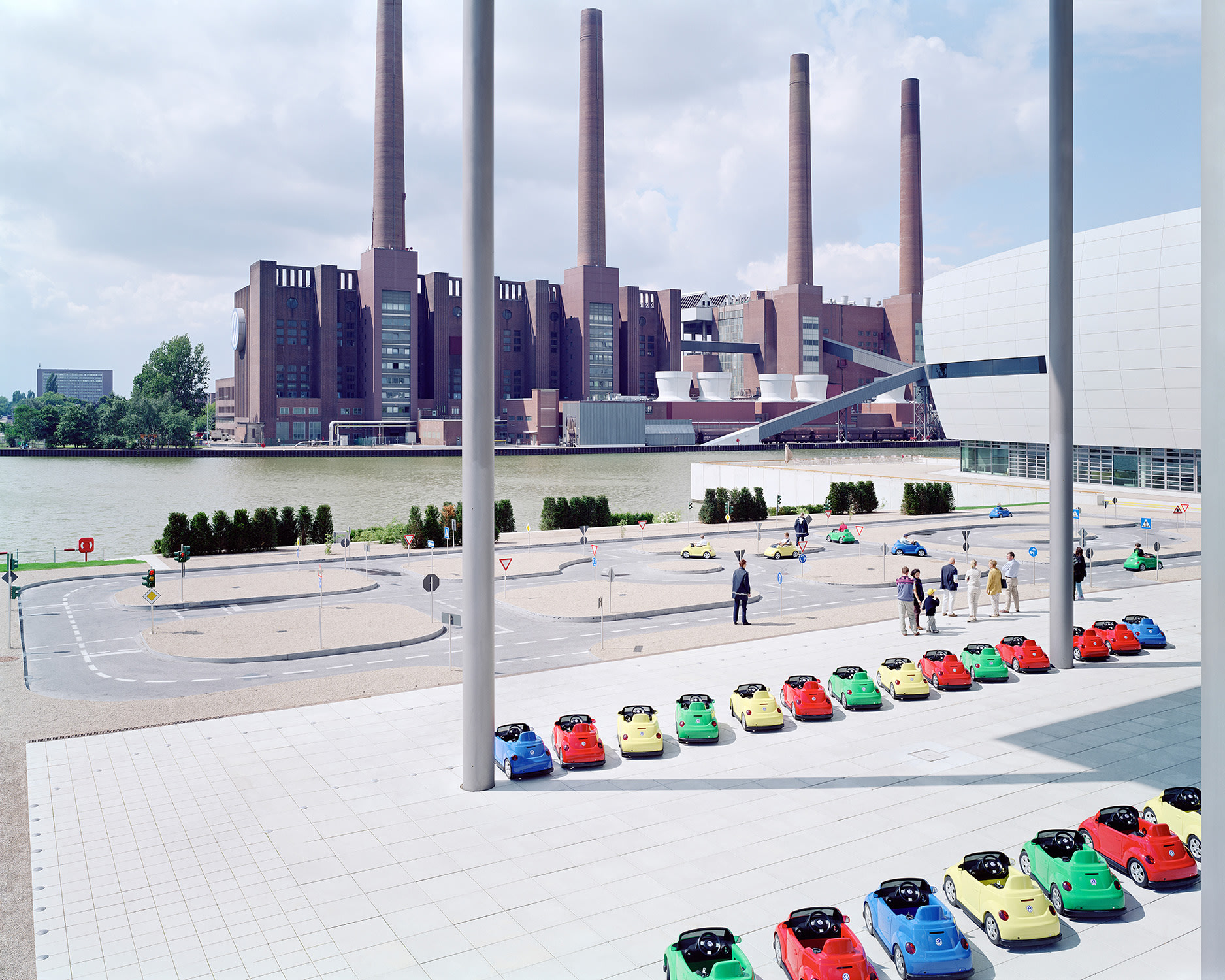
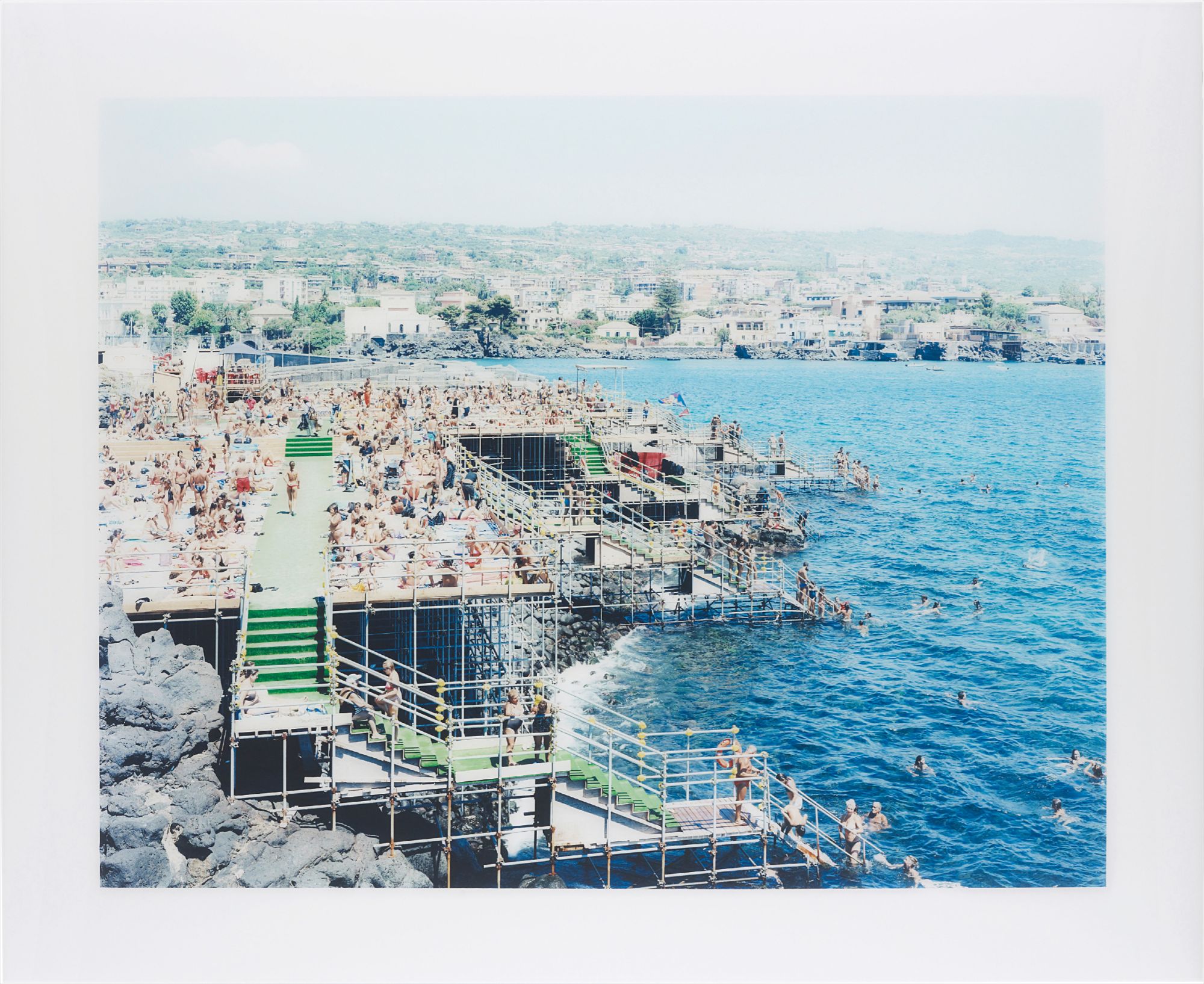
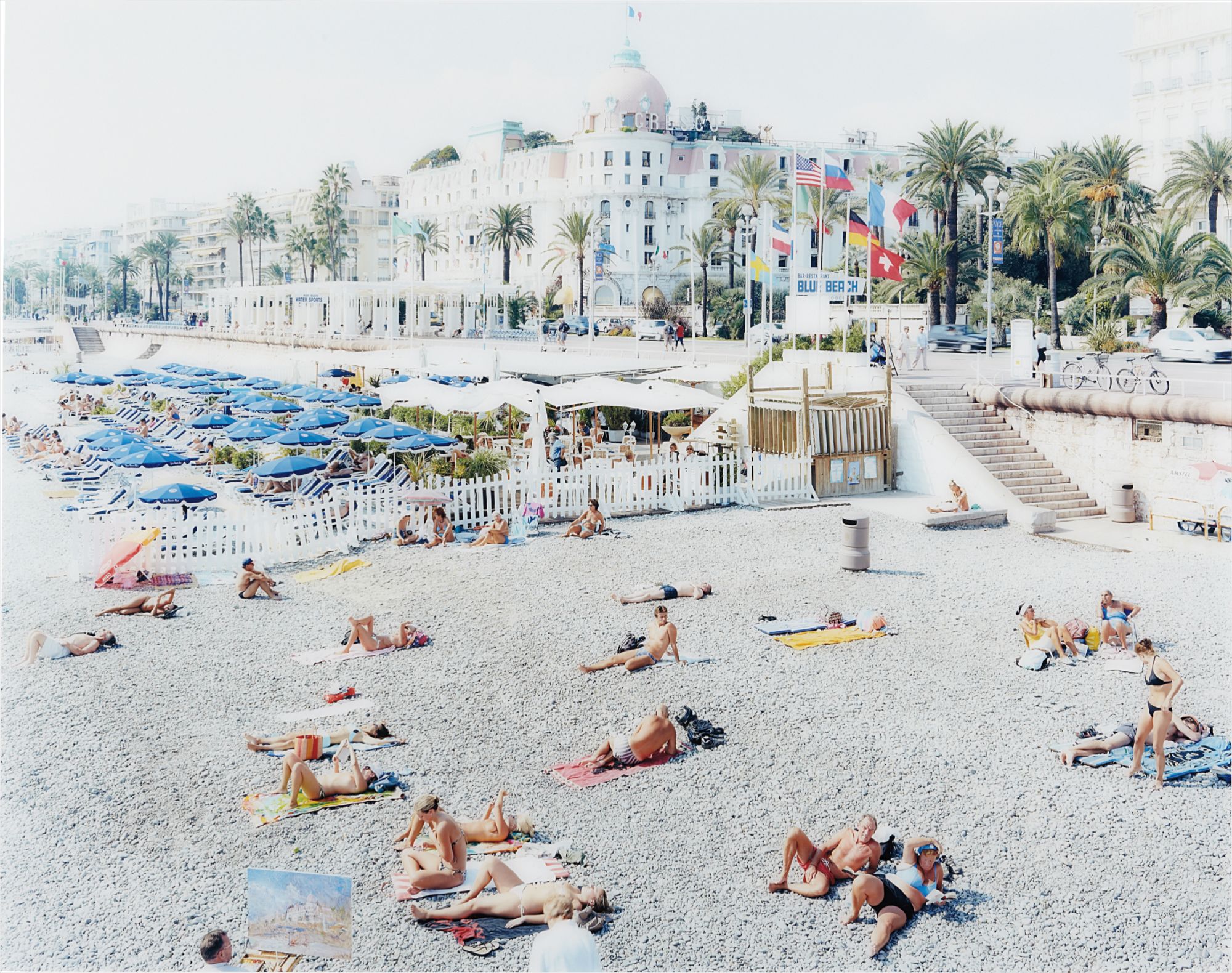
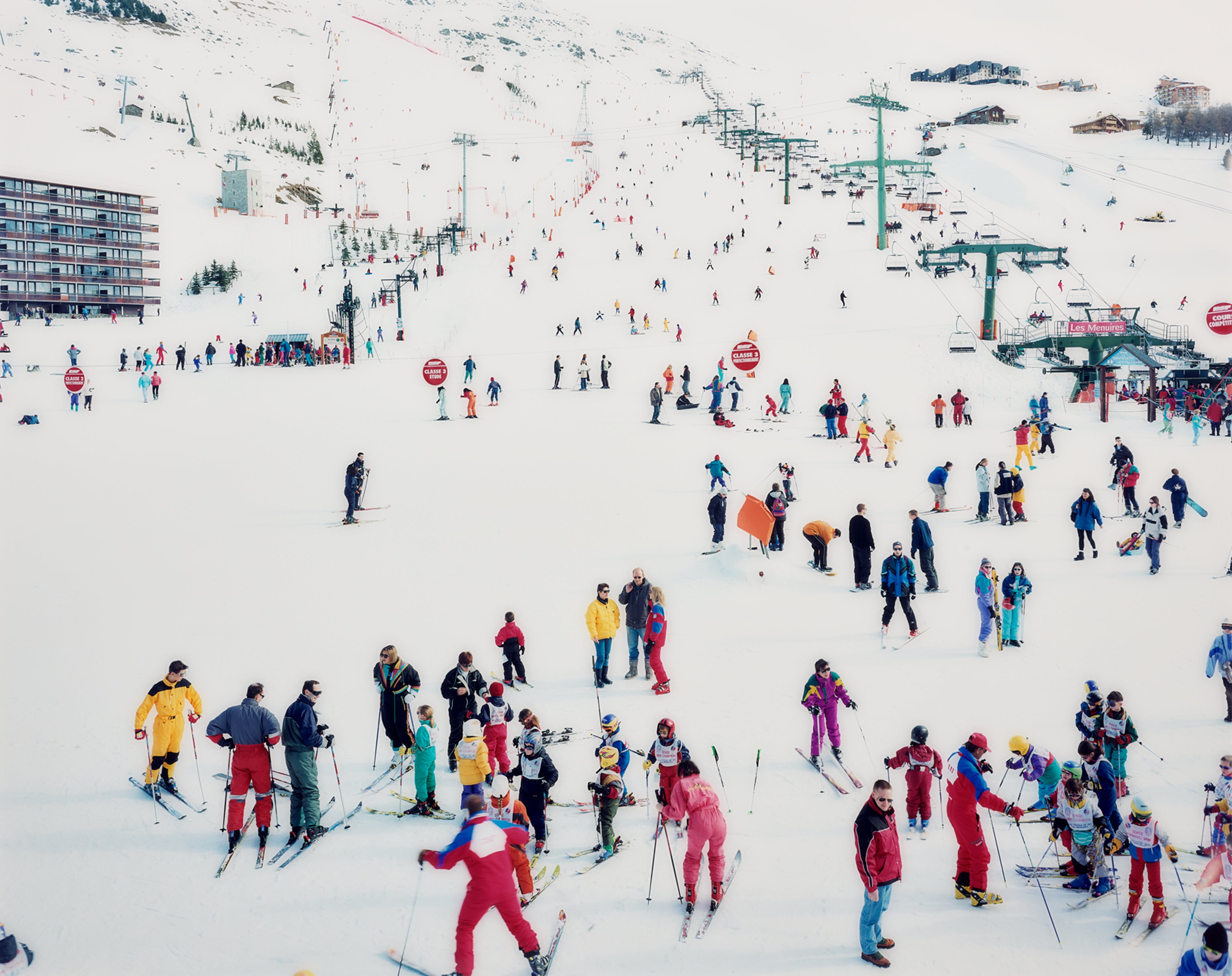
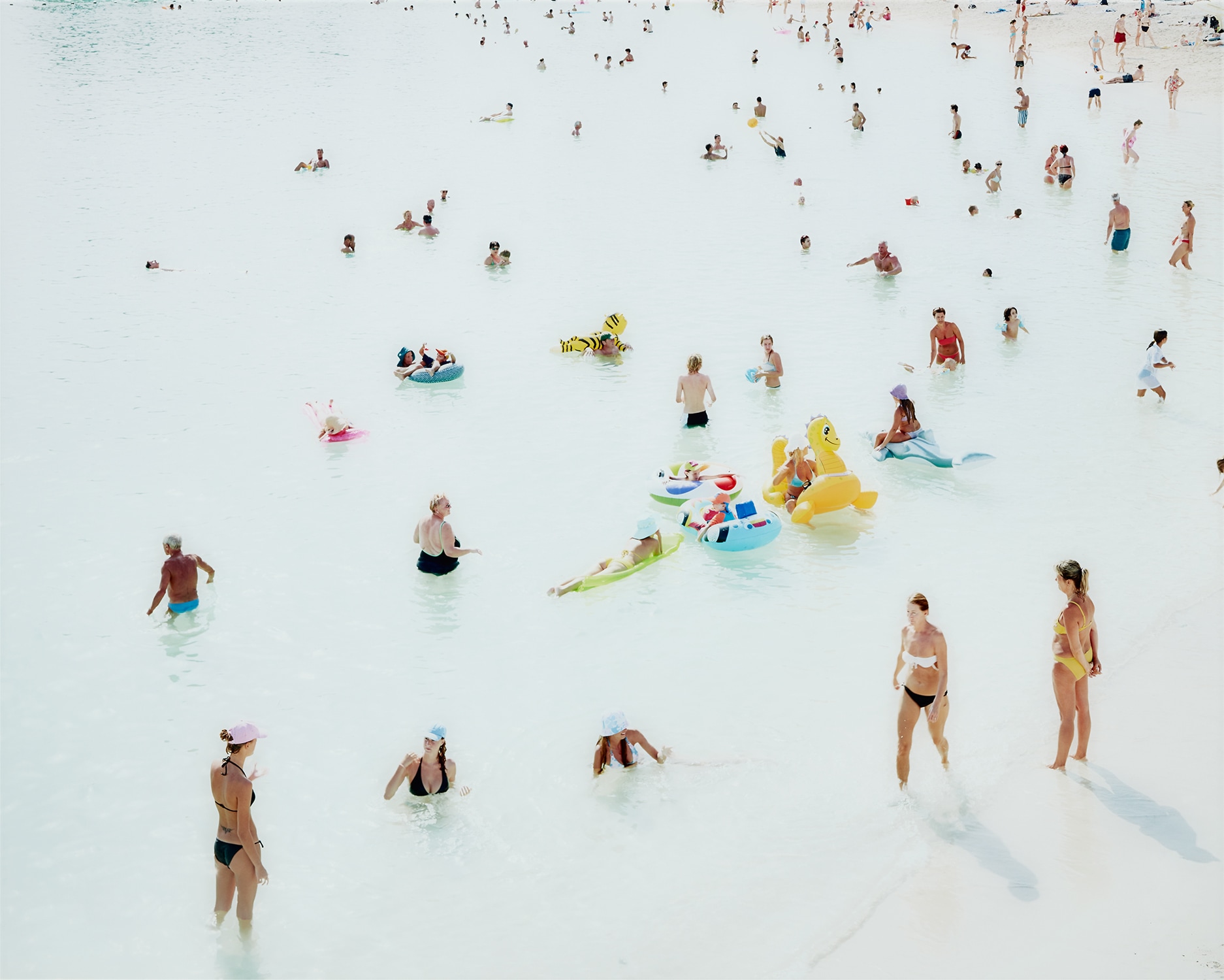
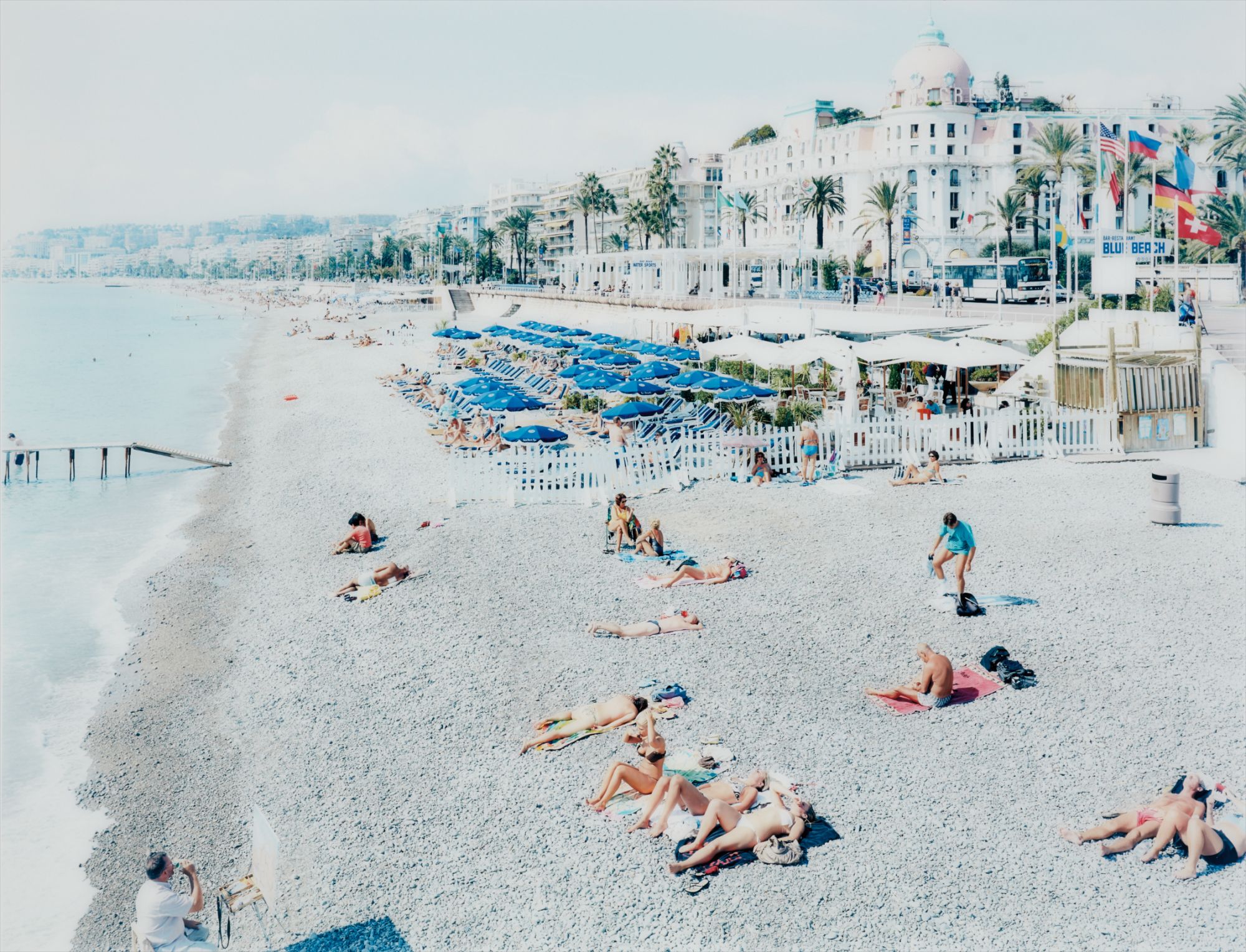
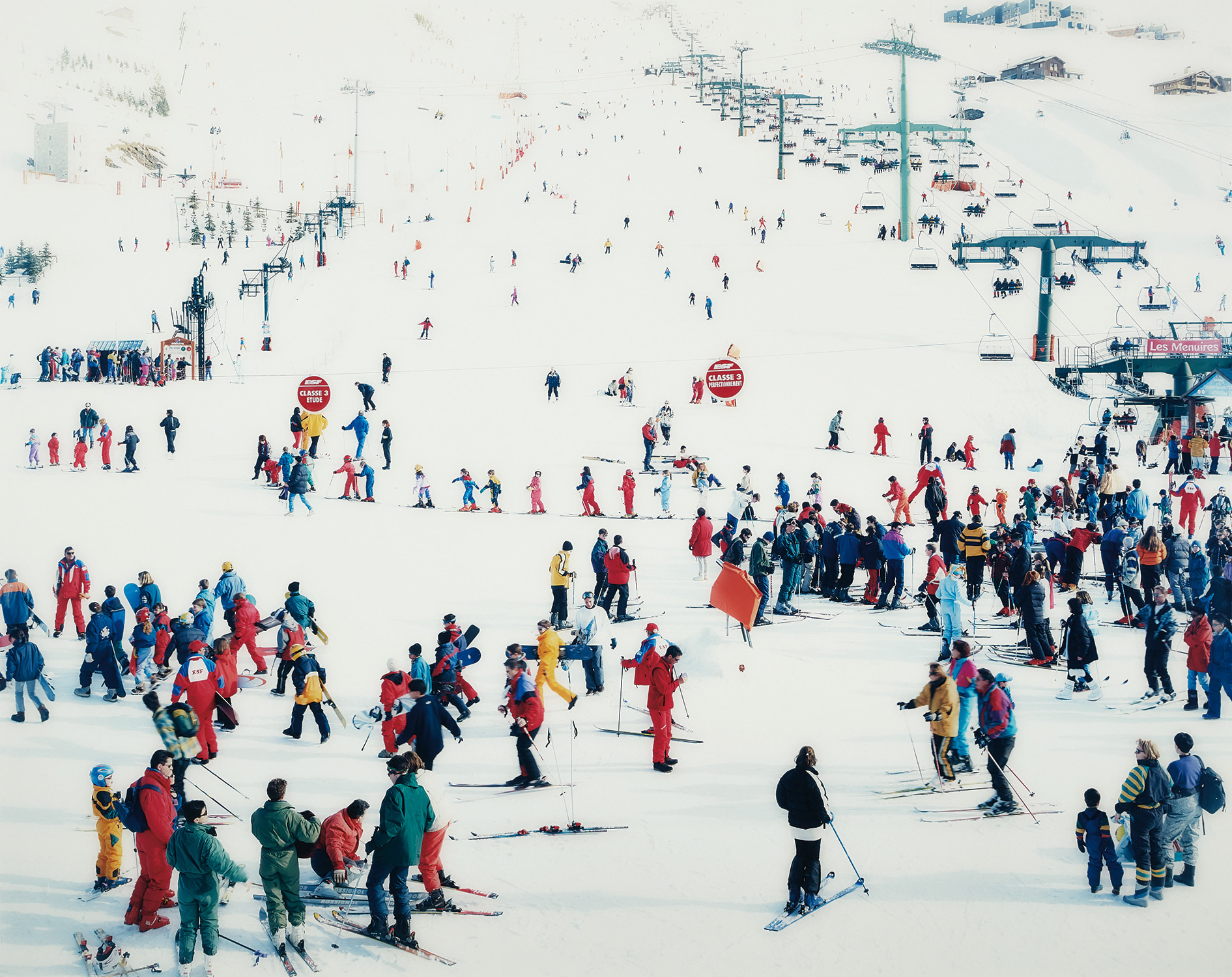
There is a particular kind of pleasure that comes from standing before a Massimo Vitali photograph and simply getting lost in it. At a 2023 presentation of his ongoing large format work at Galerie Nathalie Obadia in Paris, visitors were observed lingering far longer than the usual gallery pace allows, leaning close to find a lone swimmer drifting at the edge of a frame, or a child building something small and private amid thousands of strangers. That quality of sustained attention, the sense that the image will always yield one more discovery, is the hallmark of a practice that has quietly become one of the most beloved bodies of work in contemporary photography. Massimo Vitali was born in Como, Italy, in 1944, and his early formation straddled the worlds of commerce and art in a way that would prove foundational. He trained at the London College of Printing in the late 1960s and spent the following two decades working as a photojournalist and editorial photographer, contributing to major publications across Europe. That professional discipline sharpened his eye for the decisive moment and taught him to read a scene with speed and precision. But it was a growing restlessness with the narrowing frame of journalistic photography that eventually pushed him toward something far more expansive and personal. The pivotal shift came in the mid 1990s, when Vitali acquired a large format 8x10 view camera and began climbing elevated platforms he constructed himself above the beaches and ski slopes of Europe. The decision to shoot from height was not merely aesthetic. It was philosophical. By removing himself from the crowd while remaining intimately connected to it, Vitali found a vantage point that was both empirical and tender, the gaze of someone who loves humanity enough to observe it without judgment. His first major body of work in this mode, presented in the late 1990s and accompanied by the influential monograph published by Steidl, announced a fully formed and genuinely original vision. What makes Vitali's photographs so distinctive is the combination of scale, detail, and emotional temperature. Working with chromogenic prints that are face mounted to Plexiglas or Diasec mounted, he produces images of monumental physical presence, works that can stretch several meters wide and command an entire wall. Yet within that grandeur lives an almost tender intimacy. In works such as Negresco Mare and Papeete Beach Prima, the viewer hovers above a Mediterranean scene populated by hundreds of figures, each one absorbed in their own private ritual of rest, play, or simply being. The sea is always present, a luminous horizontal band that anchors the composition and reminds us that these gatherings are ancient, repeated across centuries of human longing for water and sun. His series range across geography and season with remarkable consistency of vision. Les Menuires Grandes and Les Menuires Quartett, set against the snow packed slopes of the French Alps, translate the beach formula into a colder register and prove that the method is not about sunshine but about the sociology of leisure itself. His Sicily series, including the striking Catania Under the Volcano, introduces a more loaded historical and geographical context, placing Italian summer rituals in the shadow of natural and cultural forces that predate modernity entirely. Meanwhile, a work like Venezia San Marco turns the camera toward a piazza rather than a shoreline, demonstrating that Vitali's true subject is not the beach but the assembled human being, the crowd as a portrait of our collective life. For collectors, Vitali's work presents a compelling combination of visual authority and intellectual depth. His prints are produced in limited editions and their physical construction, with face mounting, Plexiglas, and Diasec techniques, gives them a jewel like surface quality that rewards both close inspection and viewing from a distance. Major institutions have recognized his importance for some time. The San Francisco Museum of Modern Art, the Guggenheim Bilbao, and several significant European collections hold his work, lending it an institutional seriousness that complements its popular appeal. On the secondary market, his larger format prints command consistent attention, with auction results at Christie's and Phillips reflecting steady collector demand, particularly for the classic beach and ski slope compositions from the early 2000s. Vitali occupies an interesting position within the broader history of photography, sitting comfortably in conversation with artists who have used the photographic document as a vehicle for social observation and formal ambition simultaneously. The comparisons that come most readily to mind include Andreas Gursky, whose similarly elevated and densely populated large format work shares Vitali's interest in the spectacle of mass leisure, and Martin Parr, whose documentary approach to leisure culture is inflected with a sharper satirical edge that Vitali deliberately softens into something more empathetic. Where Gursky leans toward the abstract and the systemic, and Parr toward the comic and the critical, Vitali sits warmly between them, deeply fond of the people he photographs. That warmth is perhaps his most enduring gift. In a period when photography is often deployed in the service of anxiety or critique, Vitali's work insists on the beauty and dignity of ordinary pleasure. The figures in his images are not objects of irony or pity. They are participants in something genuinely human, the old and recurring desire to gather near water, to rest in the company of strangers, to let the afternoon pass without consequence. His Portfolio of Landscapes With Figures from 2006 crystallized this vision in a form designed for the collector's library as much as the gallery wall, confirming that his practice extends naturally across formats and contexts. More than two decades into this signature body of work, Vitali continues to travel, construct his platforms, and make photographs that feel simultaneously immediate and timeless. The crowds at his beaches have not changed in any essential way, and that continuity is itself a kind of argument. Against the acceleration of contemporary life, his images propose a counter rhythm, slow, wide, full of sunlight and water and the unself conscious beauty of people at rest. For any collector who values photography that functions as both aesthetic object and humanist document, Vitali's work represents not just a sound acquisition but a genuine joy to live with.