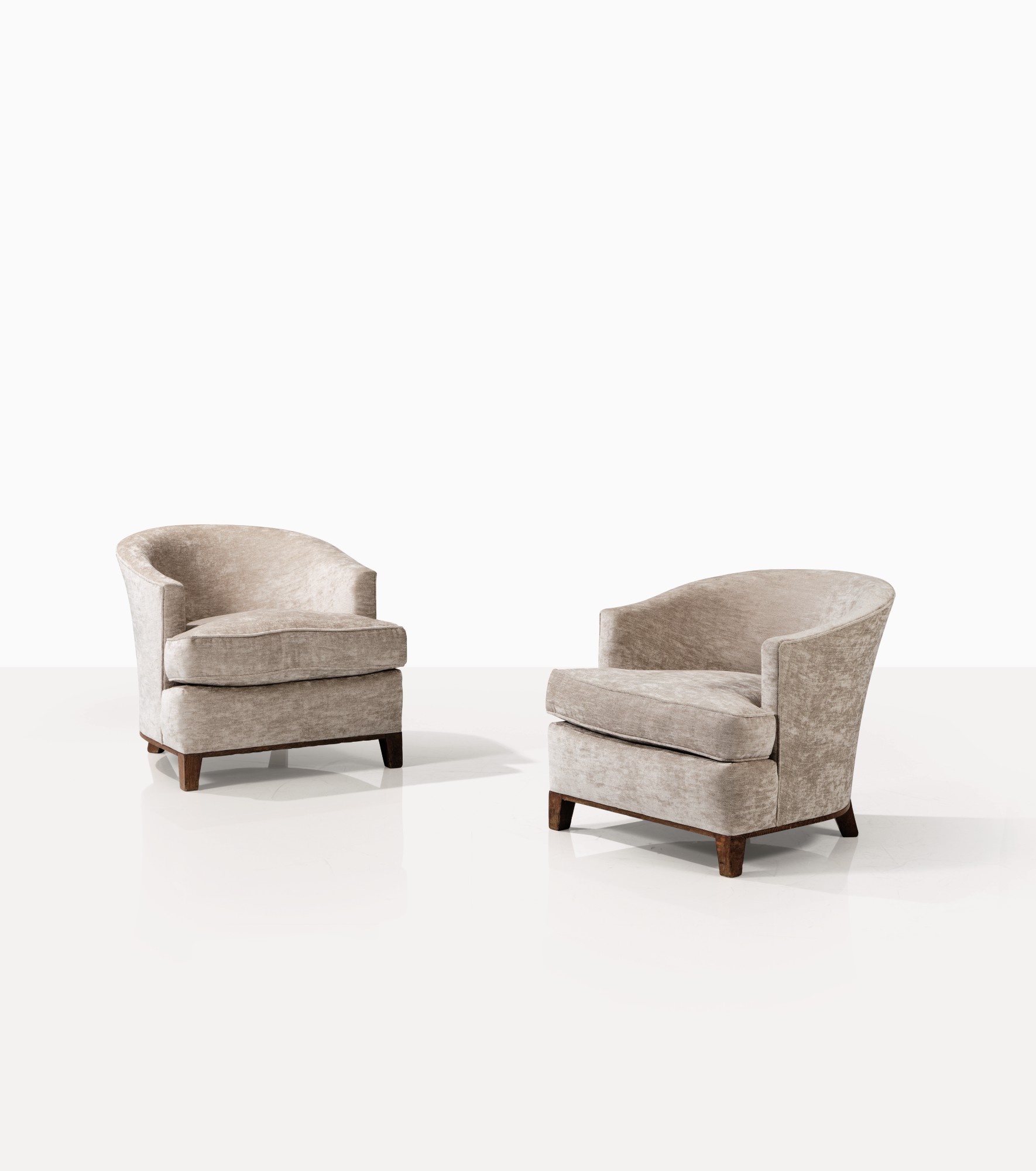
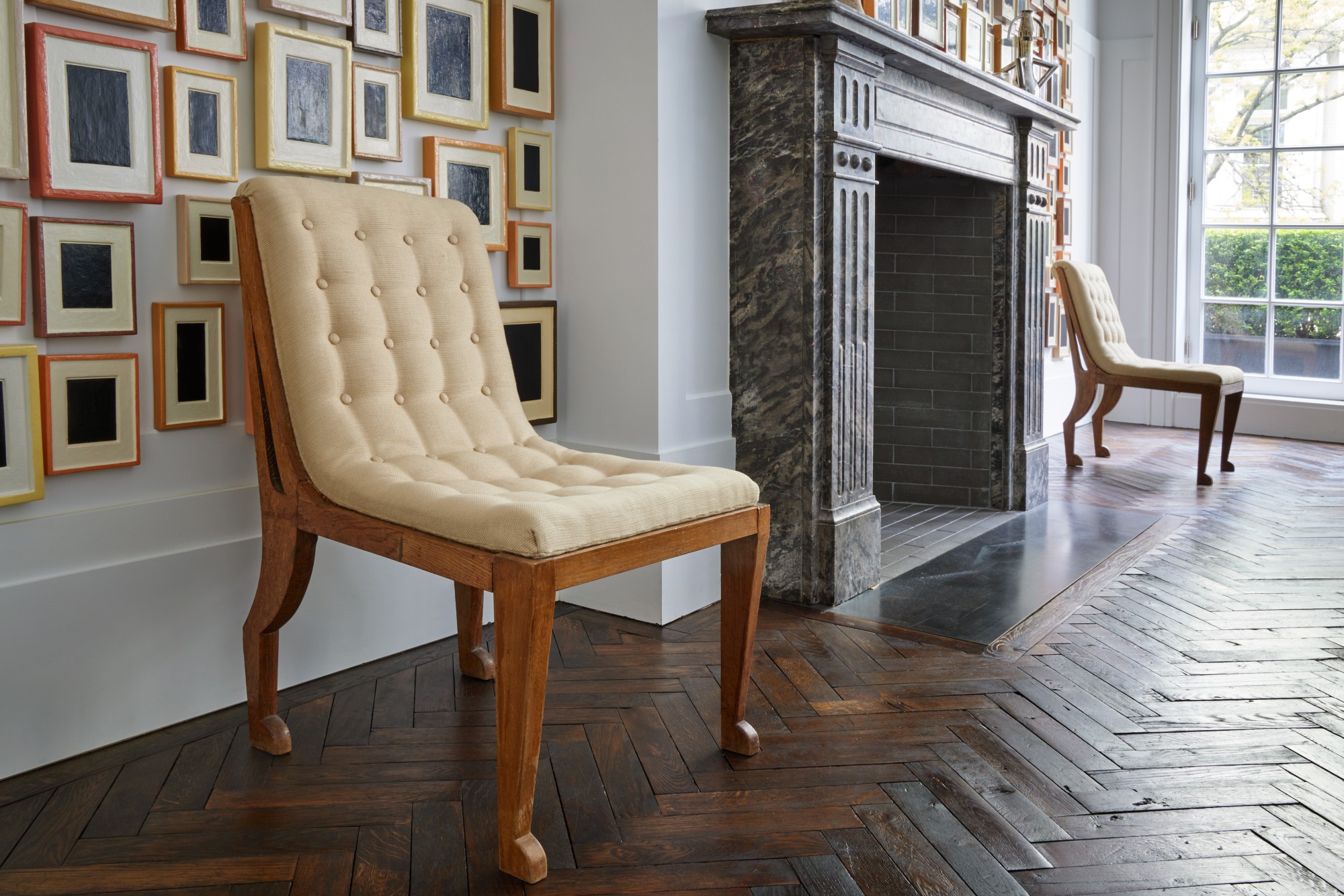
When a pair of sinuously formed armchairs attributed to Marc du Plantier appeared at a major Paris auction in recent years, the room stilled in that particular way it does when something genuinely rare comes to light. The bidding climbed steadily past estimate, as it reliably does with du Plantier's work, a testament to an enduring appetite among sophisticated collectors for furniture that refuses to choose between grandeur and restraint. That moment crystallized something collectors and dealers have understood for decades: du Plantier's work occupies a singular position in the canon of French decorative arts, one that grows only more assured with time. Marc du Plantier was born in 1901, arriving into a France still drunk on the confidence of the Belle Époque but about to be remade entirely by the upheavals of the twentieth century. The precise details of his early formation remain somewhat intimate, known more through the evidence of the work itself than through autobiography. What is clear is that he came of age in a Paris that was simultaneously the world capital of luxury craft and the crucible of modernist reinvention. The tension between those two poles, the hand of the classically trained artisan and the eye of the modernist, would animate everything he made for the rest of his life. Du Plantier established himself as a decorator and designer working primarily across the mid twentieth century, a period that now reads as one of the richest in French interior history. He found his footing among an elite Parisian clientele who required their domestic environments to project both culture and contemporary taste. This was demanding work: the clients who sought out du Plantier were not merely wealthy but genuinely educated in beauty, and they expected interiors and furnishings that could hold their own alongside inherited Old Master paintings and ancient bronzes. Du Plantier answered that expectation with a vocabulary that felt entirely his own. The materials du Plantier favored tell the story of his sensibility with unusual directness. Gilded bronze appears again and again in his work, used not with the heavy pomp of Second Empire decoration but with a lightness that catches and redirects light rather than simply reflecting it. Lacquer surfaces in his pieces have a depth that rewards long looking, pools of color that seem to recede inward rather than sitting flat on a plane. Exotic woods provided structure and warmth, grounding compositions that might otherwise have floated entirely into the realm of fantasy. He understood, as the great French ensembliers always have, that furniture is architecture at the scale of the body, and he designed accordingly. Among his most celebrated works are the seating pieces that continue to appear at auction under titles such as Paire de fauteuils and similarly composed pairs of chairs, works whose pairing is itself meaningful. Du Plantier understood that furniture in the French tradition is rarely a solo performance; rooms are conceived as unified environments, and his chairs, armchairs, and accompanying pieces were designed to speak to one another across space. The profiles of his seating forms reward study from multiple angles: what appears from the front as a composition of restrained elegance reveals, from the side, a subtlety of curve and proportion that only becomes more impressive the longer one looks. This is design that discloses itself slowly, which is precisely why it wears so well in private collections. From a market perspective, du Plantier occupies a position that collectors with genuine connoisseurship have long recognized as undervalued relative to his historical importance. His work appears regularly at Sotheby's and Christie's, where pieces in good condition with clear provenance consistently perform above estimate. The collector base for du Plantier tends to be international and discerning, drawn not by fashionable momentum but by a real understanding of French decorative arts history. This means the market is relatively stable and driven by quality rather than speculation, which is precisely the kind of collecting environment that rewards patience and knowledge. For those building a collection with genuine depth, du Plantier represents an opportunity to acquire work of serious historical standing while the broader art world continues to catch up with what specialist collectors have long understood. To situate du Plantier properly within art history is to think about the extraordinary generation of French designers and decorateurs who flourished across the 1930s, 1940s, and 1950s. Artists and makers such as Jean Michel Frank, Gilbert Poillerat, and Diego Giacometti were navigating similar territory, that charged space between the handcrafted luxury of the French tradition and the formal severity that modernism demanded. Like those figures, du Plantier worked at a moment when the boundaries between fine art, craft, and design were actively contested, and the best practitioners moved fluidly among all three categories. His gilded bronze work in particular invites comparison with Poillerat, while his feeling for lacquer surfaces recalls the influence of Asian decorative traditions that ran so productively through French design of the period. The legacy of Marc du Plantier, who died in 1975, is one of those that feels more secure with each passing decade rather than less. As collectors and institutions have grown more sophisticated in their understanding of the decorative arts as a field deserving the same serious attention as painting and sculpture, makers like du Plantier have moved from the footnotes toward the center of the story. His interiors and objects embody a conviction that daily life deserves to be beautiful, that the chair one sits in and the table one works at are not lesser concerns than the paintings on the wall. That conviction, expressed through materials of extraordinary quality and forms of enduring elegance, is precisely what makes du Plantier's work feel not merely historical but urgently relevant to how thoughtful collectors build and live with their collections today.