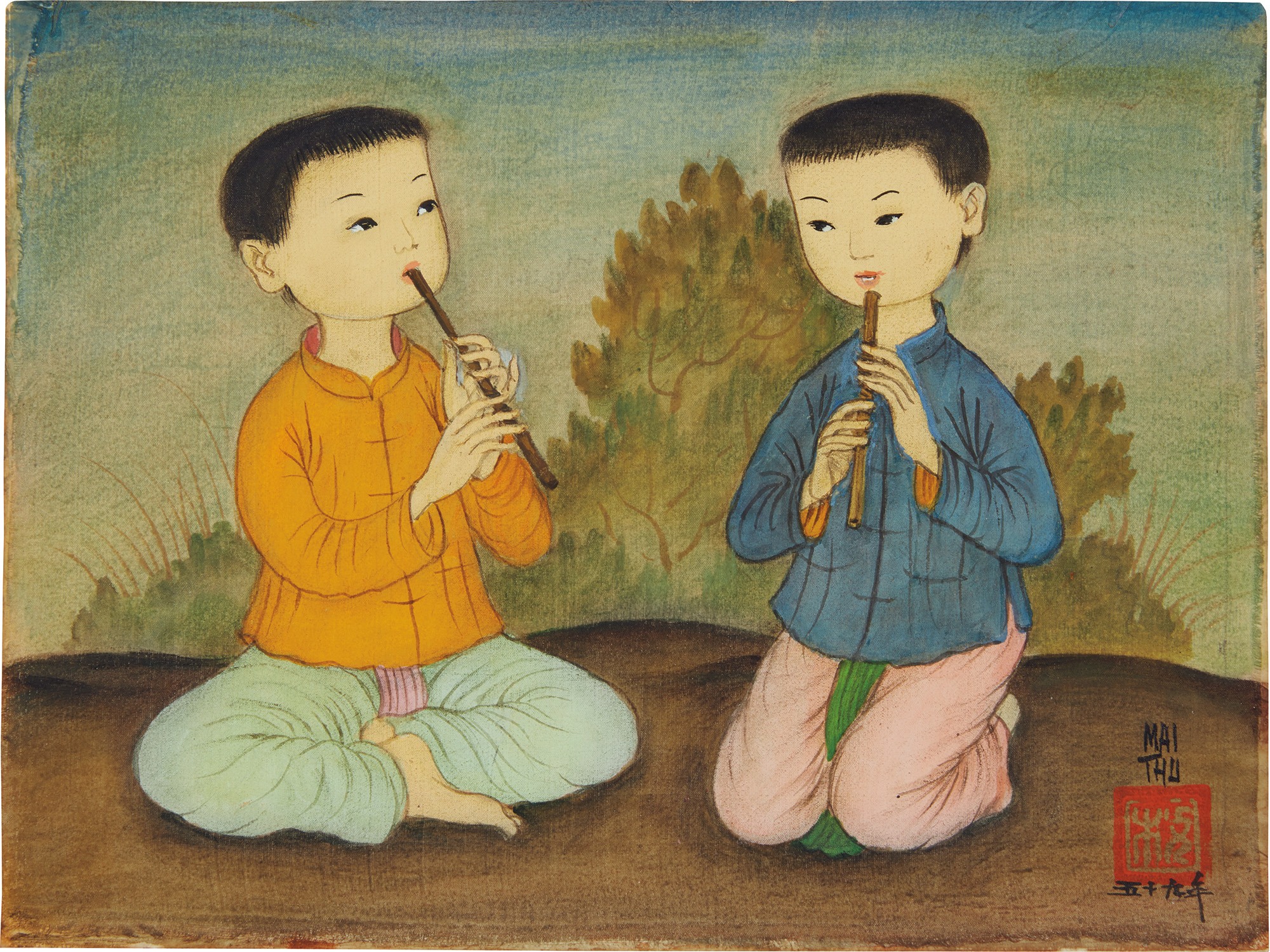
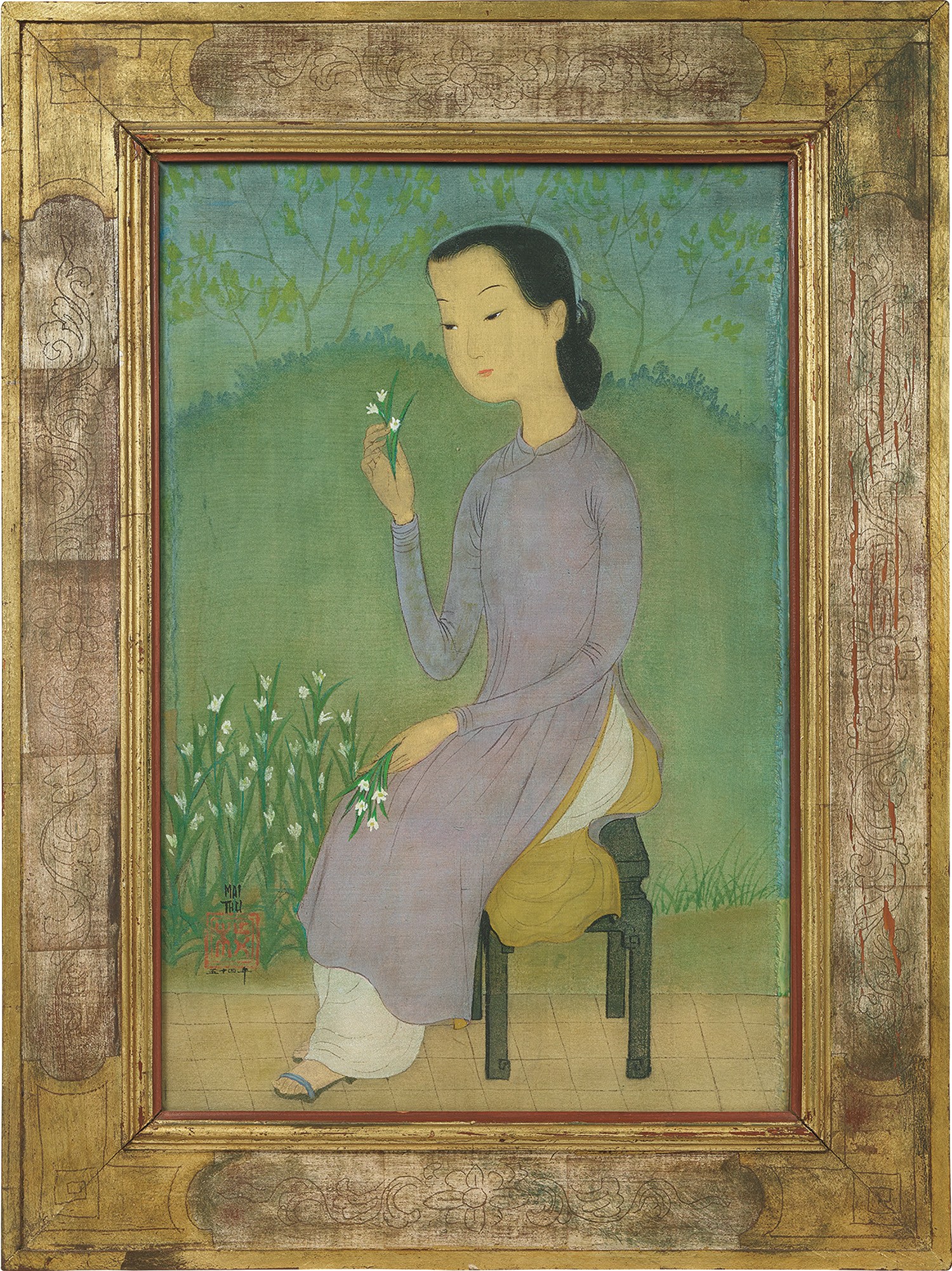
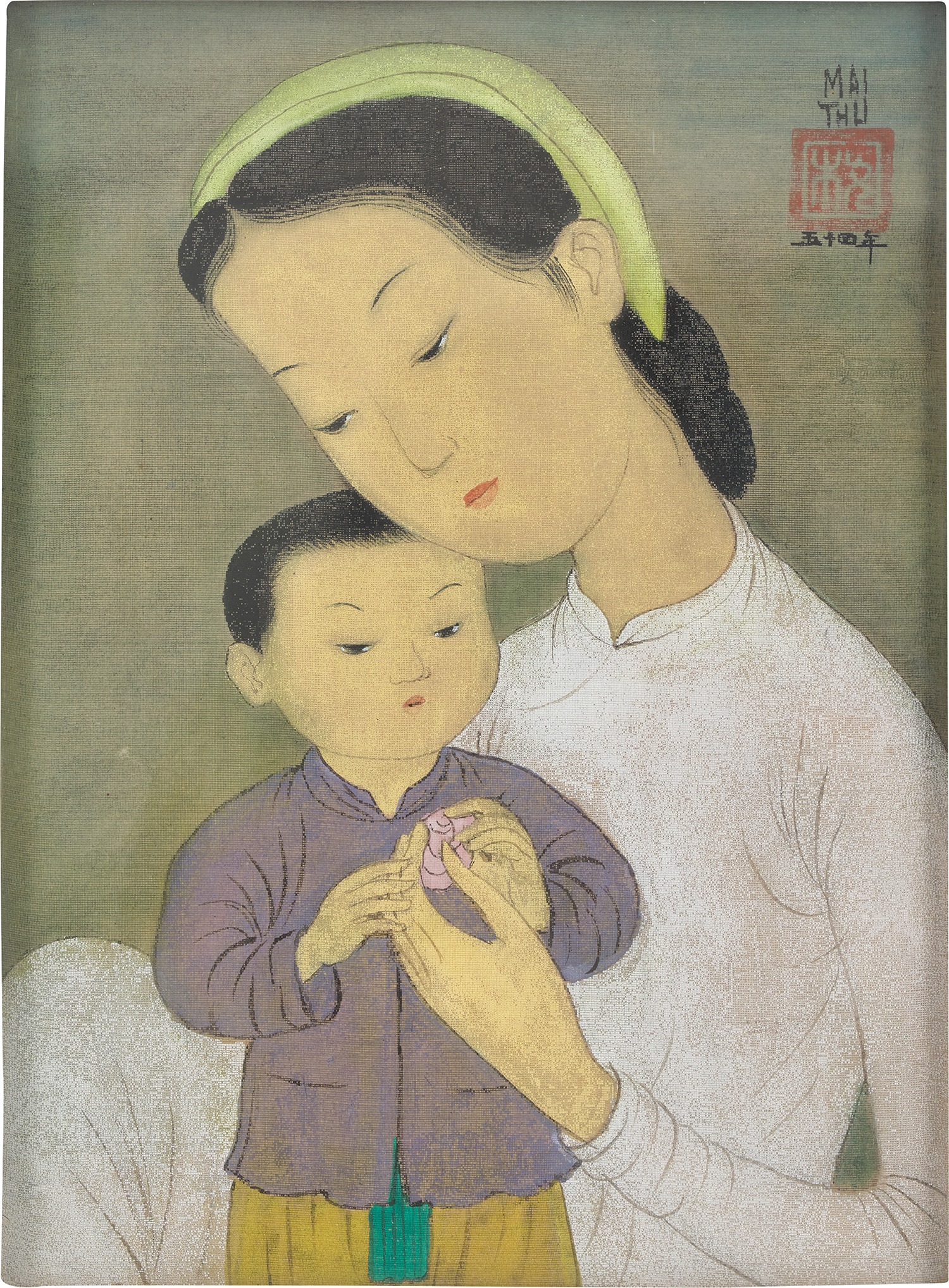
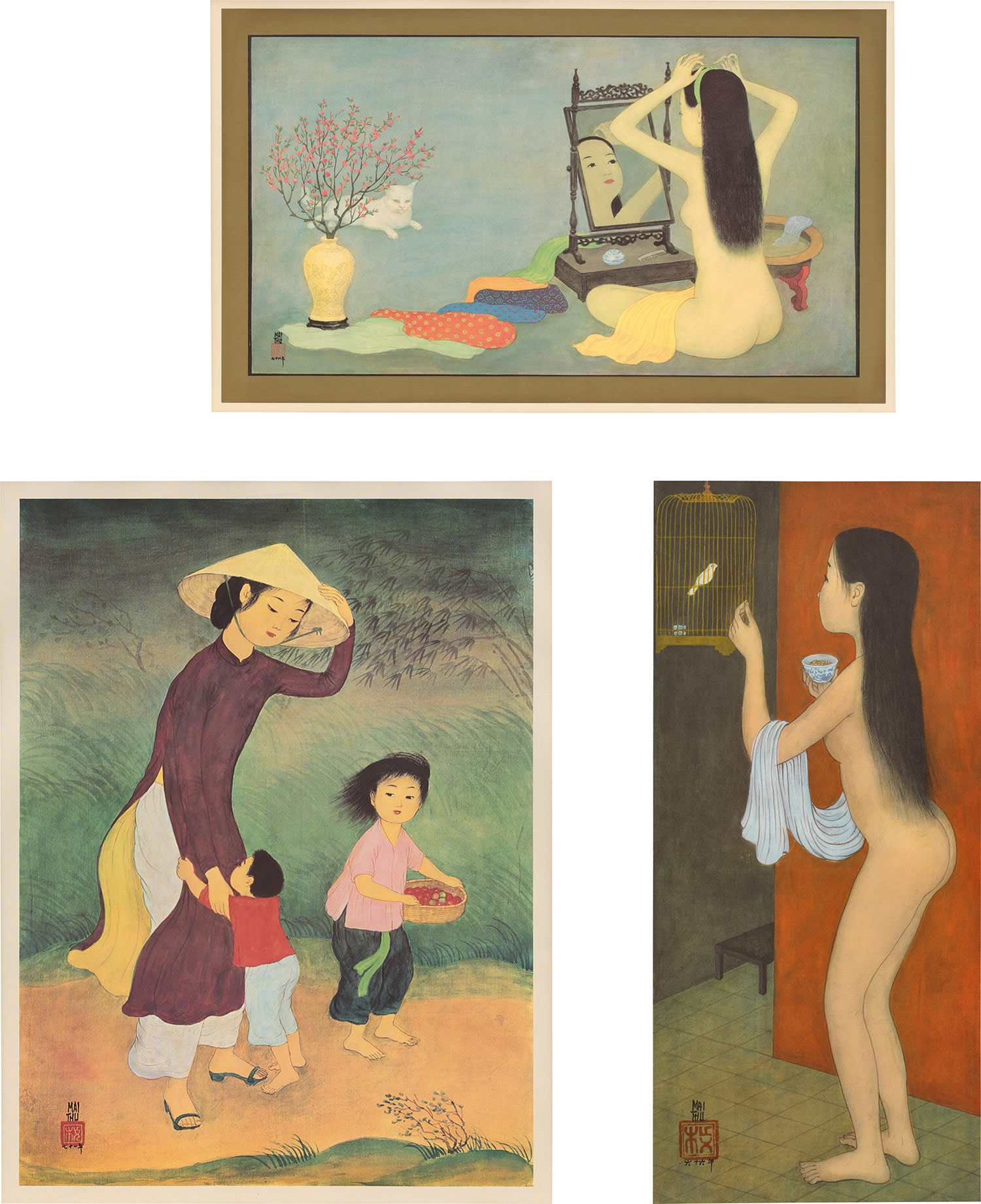
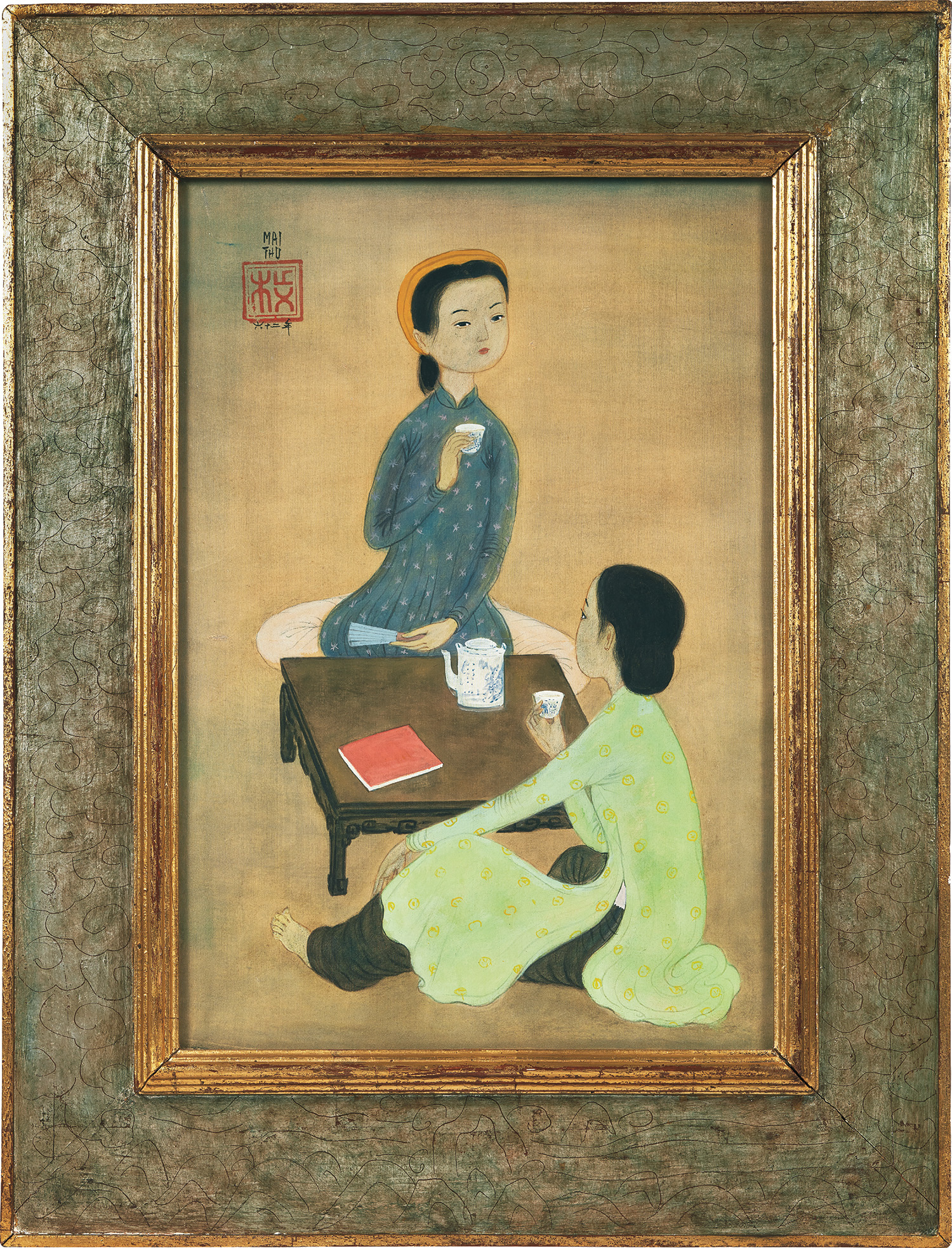
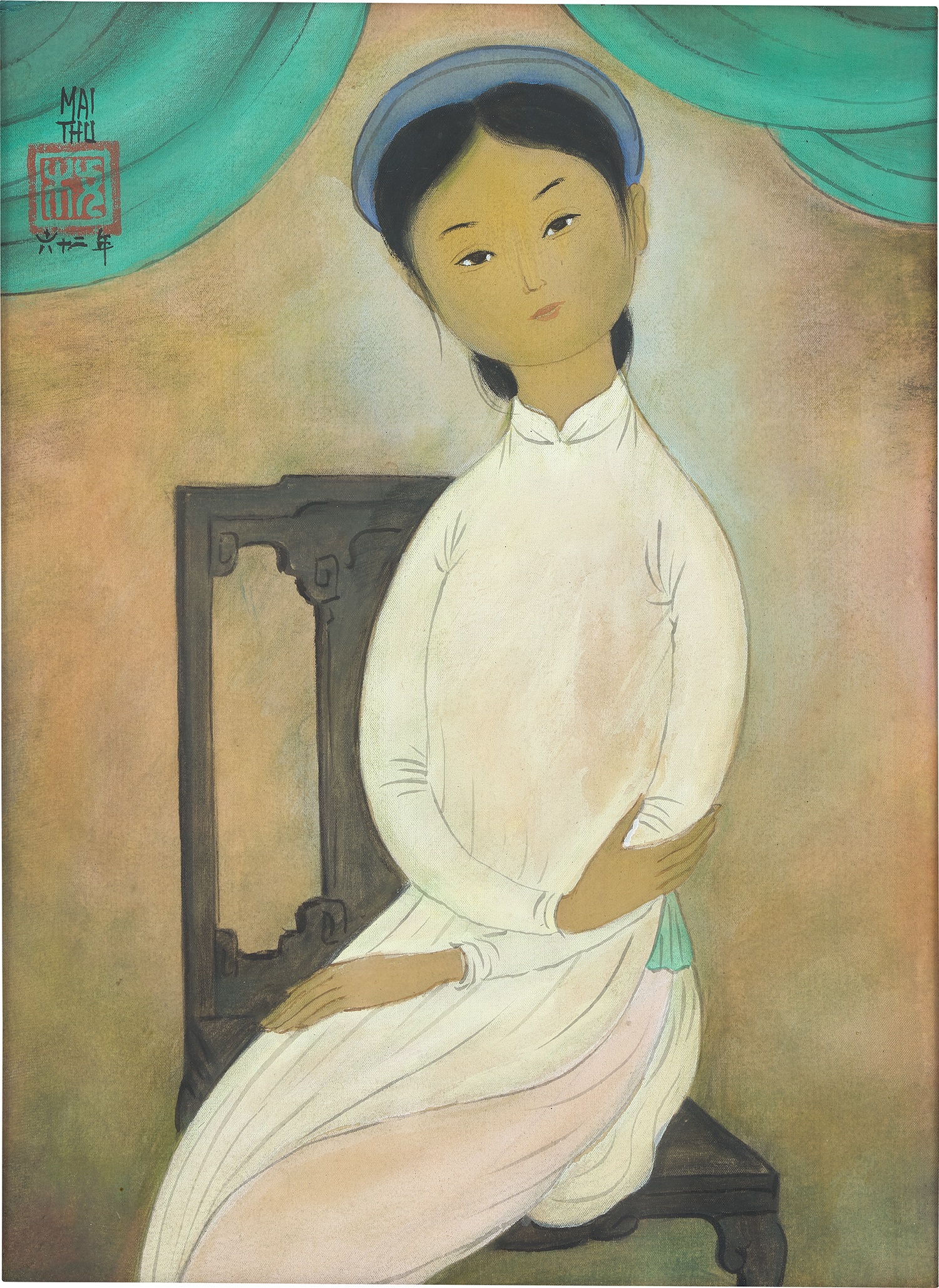
In the spring of 2021, a single painting by Mai Trung Thứ crossed the auction block at Sotheby's Hong Kong and shattered expectations, achieving a result that confirmed what a growing circle of devoted collectors had long understood: that this quietly luminous Vietnamese master belongs among the most important painters of the twentieth century. The sale was part of a broader reckoning with Southeast Asian modernism, a movement that major auction houses and museum curators have embraced with genuine enthusiasm in recent years. For Mai Trung Thứ, known affectionately as Mai Thu, the timing feels like long overdue recognition for a body of work of extraordinary beauty and emotional intelligence. Mai Trung Thứ was born in 1906 in Hai Duong, in what was then French Indochina, into a world balanced between two civilizations. He came of age during a period of immense cultural transformation, when French colonial administration had brought both new institutions and new aesthetic possibilities to Vietnam. His formation as an artist began at the École des Beaux Arts de l'Indochine in Hanoi, the pioneering school founded in 1925 by the French painter Victor Tardieu alongside the Vietnamese artist Nam Son. Tardieu recognized in his young student an exceptional sensitivity, and Mai Thu became one of the school's most celebrated graduates in its first cohort. The school's founding philosophy, to teach European techniques while remaining rooted in local materials and traditions, would prove decisive in shaping everything Mai Thu would go on to create. In 1937, Mai Trung Thứ made the journey to France, settling in Paris and later in Antibes, where he would spend the remainder of his life. The move was not an act of abandonment but of translation. He carried Vietnam with him entirely, in memory, in longing, and in the recurring images of women, children, and domestic interiors that populate his canvases with such warmth and precision. Living as an expatriate allowed him to observe his homeland from a tender distance, and that distance gave his work a quality of heightened attention, as though each painting were an act of remembrance performed with the utmost care. He died in 1980, having spent more than four decades refining a vision that remained remarkably consistent and recognizably his own. The medium Mai Thu favored above all others was ink and gouache on silk, and his mastery of it is one of the defining achievements of Vietnamese modernism. Silk as a support demands a particular kind of confidence. It absorbs pigment in ways that cannot be fully corrected, and its surface rewards only the painter who has internalized his subject completely before beginning. Mai Thu worked with the precision of a draughtsman and the feeling of a poet. His line, visible in the careful contours of a woman's robe or the delicate fingers of a child holding a flute, carries both structural clarity and emotional warmth. The gouache he applied over this ink framework gave his figures a softness and a gentle luminosity that no reproduction quite does justice. Among his most admired works is "Two Boys Playing the Flute" from 1959, a painting that encapsulates everything that makes Mai Thu so compelling as an artist. Two young musicians share a quiet moment of music making, their figures rendered with tenderness and a remarkable economy of means. The folds of their clothing, described in ink with extraordinary precision, give the composition a rhythmic quality that echoes the music the boys are imagined to be playing. Works like "La Rose Rouge" from the same year demonstrate his command of portraiture, where the influence of classical Western conventions meets the specificity of Vietnamese dress and manner in a way that feels entirely natural rather than contrived. His series of domestic scenes featuring women at tea, women reading, women with children, collectively form one of the most sustained and loving meditations on everyday life in modern painting. For collectors, Mai Trung Thứ represents a rare convergence of art historical significance and genuine visual pleasure. His works have appeared at Christie's, Sotheby's, and Bonhams, where they have attracted bidders from Vietnam, France, Southeast Asia, and beyond. Prices have risen considerably over the past decade as institutional interest has grown, and works on silk from his mature period, roughly the 1950s through the early 1970s, are considered the most desirable. Collectors are advised to seek out works with strong provenance and to pay particular attention to the condition of the silk support, which can be sensitive to light and humidity. The intimacy of scale that characterizes much of his output, many works are modest in dimension yet enormous in presence, makes them ideal for living with, which is perhaps why they have inspired such loyal and passionate collecting. To understand Mai Thu fully it helps to place him within the remarkable generation that emerged from the École des Beaux Arts de l'Indochine. His contemporaries included Nguyen Phan Chanh, the master of ink on silk who is sometimes seen as the more traditional counterpart to Mai Thu's more Westernized sensibility, and Le Pho, who also settled in France and developed a comparably lyrical approach to figuration. Vu Cao Dam rounded out this remarkable cohort of Vietnamese painters who brought their country's visual culture into dialogue with European modernism. Together they form a school of genuine distinction, and Mai Thu stands at its center as perhaps its most consistently graceful voice. Seen alongside the work of Henri Matisse or even the intimist paintings of Édouard Vuillard, his affinities with French modernism become clear, while his essential Vietnameseness remains entirely his own. The legacy of Mai Trung Thứ is inseparable from the question of what it means to hold two worlds simultaneously. He never returned to Vietnam after 1937, yet Vietnam never left his paintings. In an era when global art history is being rewritten to include the voices that were long marginalized by a Eurocentric canon, his work stands as evidence of a modernism that was always more plural, more geographically dispersed, and more richly cross cultural than the standard account allowed. Museums and collectors who engage seriously with his art are not simply acquiring beautiful objects. They are participating in a larger act of cultural recognition, affirming that the quiet painting of a woman drinking tea in Antibes in 1953 was, and remains, one of the most eloquent things that twentieth century art produced.

![La Rose Rouge (J. femme à l’écharpe) [The Red Rose (Young Lady with Scarf)]](https://rtwaymdozgnhgluydsys.supabase.co/storage/v1/object/public/artwork-images/auction-lots/HK010219-252019-lot1774366333624.jpg)