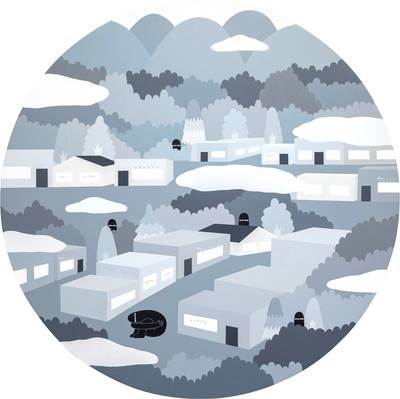
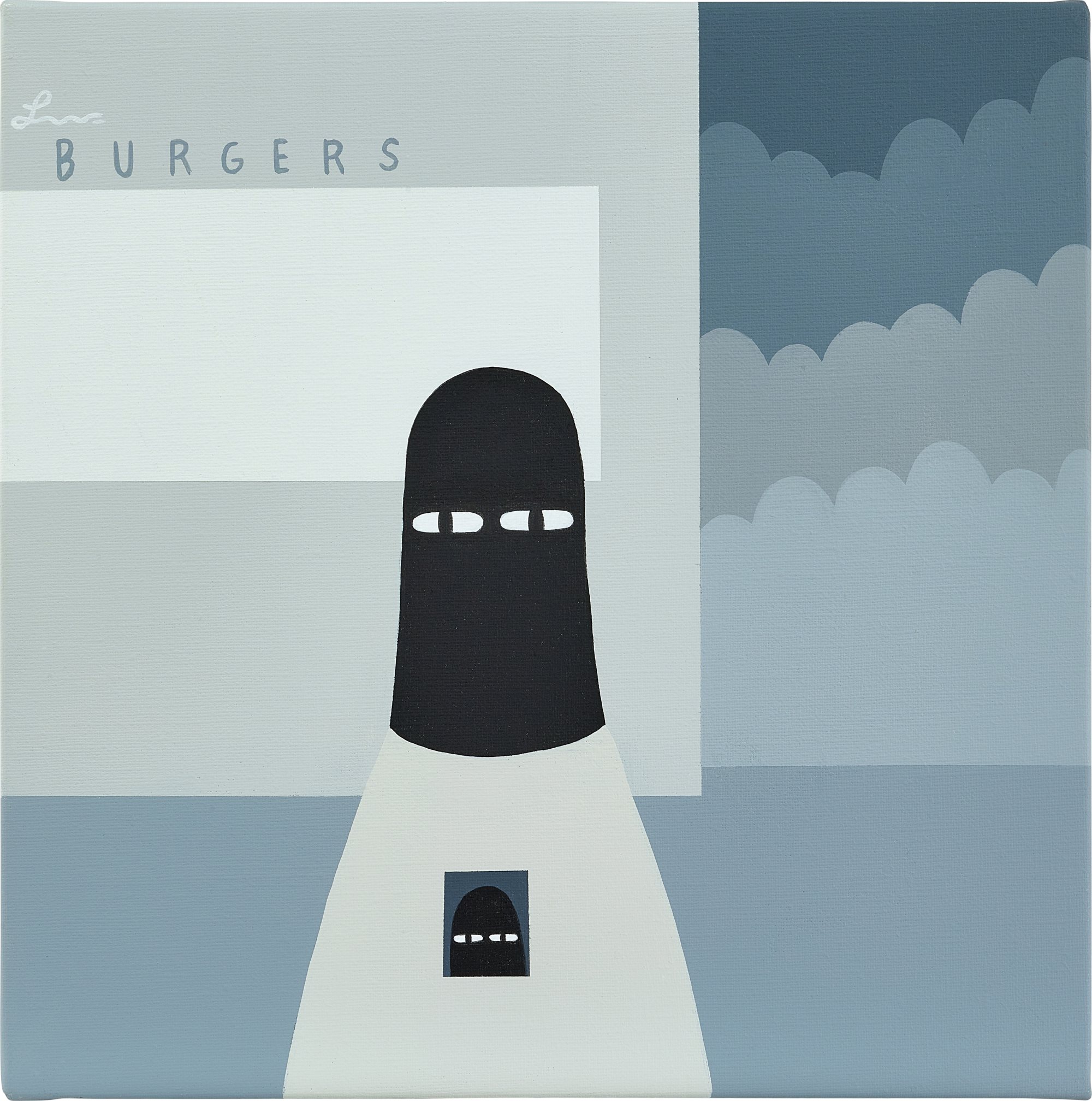
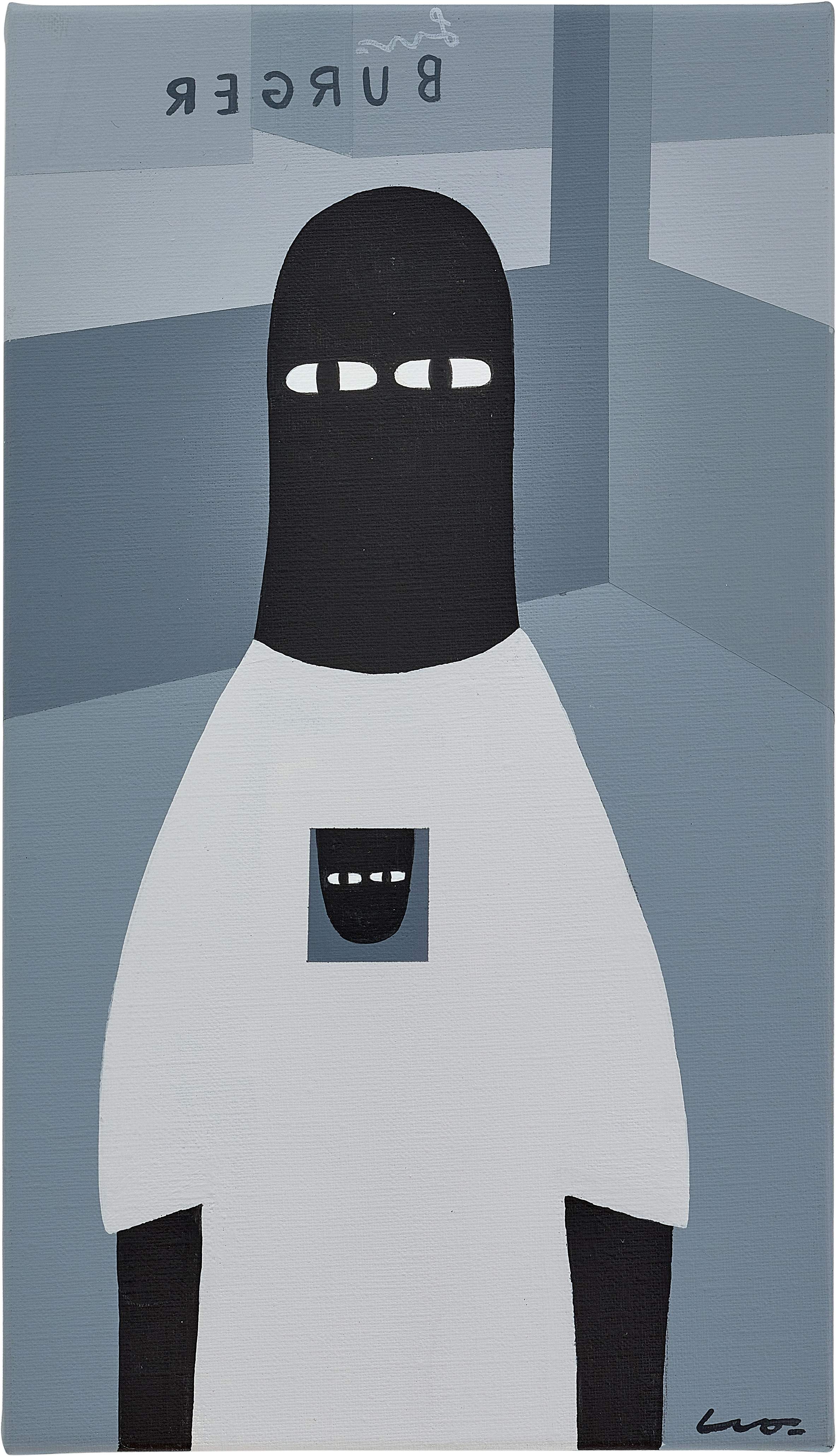
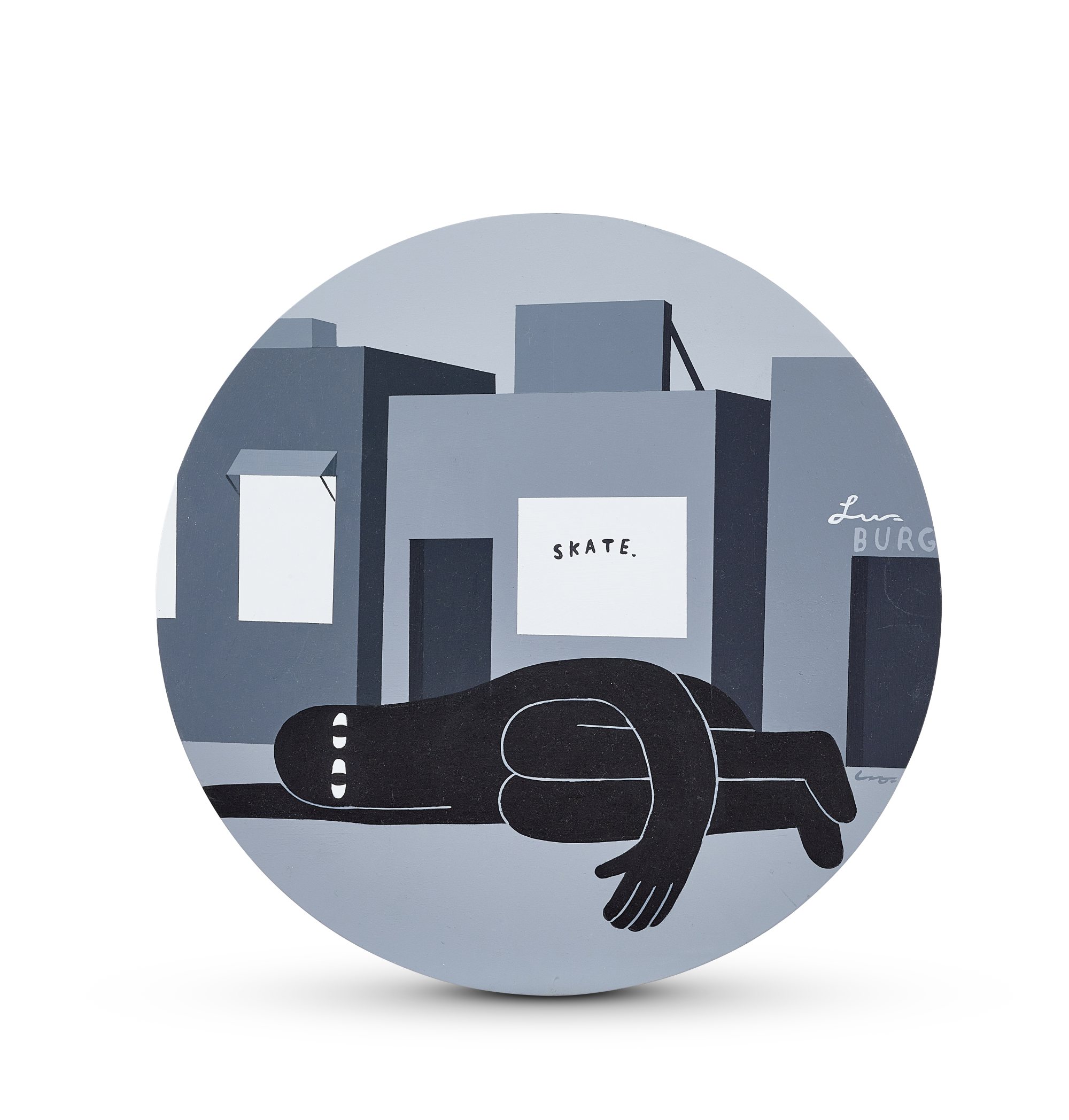
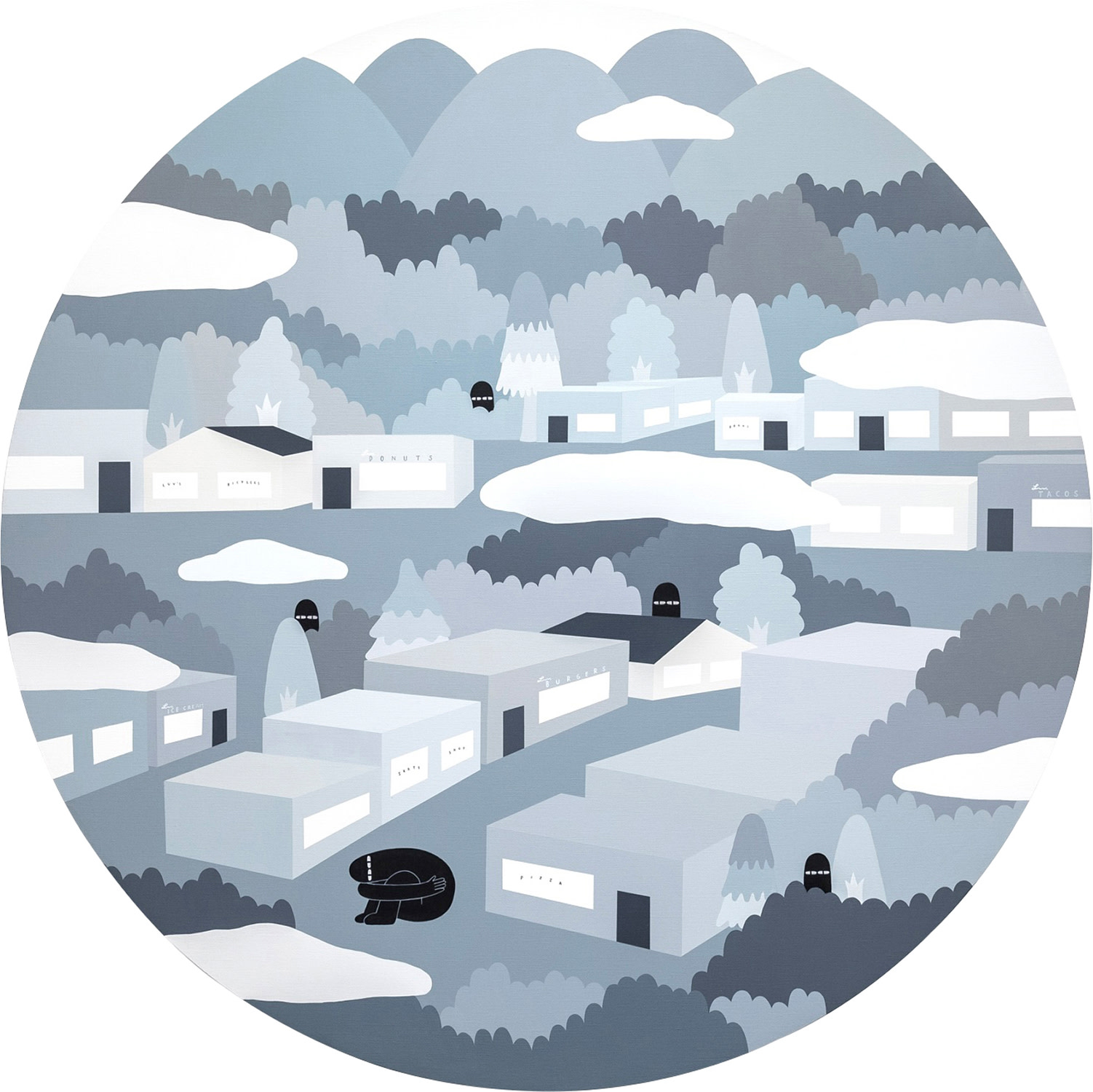
There is a particular quality of light in LY's paintings that feels immediately familiar and entirely new at the same time. Acrylic on canvas and board, these works pulse with a warmth that draws the eye inward, inviting the viewer to sit with a feeling rather than simply observe a surface. In recent years, a growing circle of collectors and enthusiasts have been quietly discovering LY's practice, recognizing in it something rare: an artistic voice that balances tenderness with formal confidence, and personal mythology with universal emotional resonance. LY's work operates at the intersection of lived experience and visual poetry. The titles alone tell a story of a sensibility shaped by multiple cultural and linguistic worlds. Works titled in both English and Chinese, such as "Luv's Deck Was Stolen" alongside its Chinese counterpart "Luv 的滑板被偷走了", and "我是愛" (which translates as "I Am Love"), suggest an artist who moves fluidly between registers of language, identity, and feeling. This bilingual naming is not merely decorative. It is a structural choice, a commitment to holding more than one way of knowing something at once, and it speaks to a formation that spans cultural geographies. The early contours of LY's artistic development point toward an artist who has always been drawn to the intimacy of everyday life. Skateboarding, street life, and the textures of urban experience filter through the work in ways that feel both documentary and dreamlike. "Luv的街道" (Luv's Streets) is a title that captures this quality precisely: the street is not merely a backdrop but a subject in its own right, a site of encounter and memory. This grounding in the particular, in the named and the known, gives LY's practice its emotional specificity. These are not abstractions about the human condition. They are portraits of a life being lived, rendered in acrylic with directness and care. The signature work "Eternal Landscape", completed in 2020, represents a pivotal moment in LY's development. Acrylic on canvas, the piece carries the ambition its title suggests: a desire to locate something enduring within the transient, to find the permanent within the personal. 2020 was of course a year of extraordinary global disruption, and to make a work called "Eternal Landscape" in that context is a quietly courageous act. It speaks to an artist who turns toward beauty not as an escape from difficulty but as a genuine response to it. The painting functions as an anchor, something to return to, which is precisely what the best landscape painting has always offered. "我是愛" extends this emotional ambition into the realm of identity and self declaration. Translated as "I Am Love", the work carries an affirmation that resists irony. In an art world that has long been suspicious of sincerity, LY's willingness to make that statement, plainly and in paint, is both refreshing and significant. The use of Chinese script in the title grounds the declaration in a specific cultural and linguistic tradition, one with deep roots in calligraphic practice and the weight that written characters carry as visual as well as semantic objects. This layering of meaning is characteristic of LY's approach: nothing is merely one thing. For collectors, LY's practice offers something genuinely compelling. The works are intimate in scale and feeling, suited to close looking and private contemplation, while simultaneously carrying a conceptual richness that rewards sustained engagement. The bilingual titling, the personal iconography drawn from skateboarding and street culture, and the confident handling of acrylic all mark LY as an artist with a coherent and evolving vision. Collectors drawn to artists such as Salman Toor, whose work similarly navigates personal identity and cultural in betweenness with warmth and painterly skill, or to the emotionally direct figurative work of artists like Toyin Ojih Odutola, will find in LY a practice that speaks to comparable questions with its own distinct voice. The material choices in LY's work are worth noting for their collector significance. Acrylic on canvas and acrylic on board represent two distinct registers of surface and finish, and LY moves between them with apparent ease. Board supports tend to produce a harder, more immediate surface, one that can hold crisp edges and dense color differently than canvas. The choice of board for "Luv's Deck Was Stolen" feels entirely apt: the skateboard deck is itself a board, a surface designed for both function and personal expression, and the material echo between support and subject adds a layer of conceptual precision to what might otherwise read simply as a narrative image. This kind of attentiveness to material meaning is a marker of a mature practice. LY's positioning within contemporary art reflects a broader generational shift in which artists from Asian diasporic backgrounds are claiming space in global art conversations on their own terms, in their own languages, with their own iconographies. The insistence on bilingual titles is part of this, as is the embrace of subcultures like skateboarding that carry their own rich histories of community, creativity, and resistance. LY is not explaining these worlds to an outside audience but painting from within them, for an audience that includes people who share those experiences as well as those who are encountering them for the first time through the work. What makes LY matter now, and what will make LY matter in the years to come, is precisely this quality of authenticity combined with formal ambition. The paintings are not simply records of personal experience but transformations of it, processed through careful attention to color, surface, and composition into something that belongs to anyone who encounters them. The love in these titles, the Luv of the street and the stolen deck and the bilingual declaration of self, is not sentimental. It is structural. It is the organizing principle of a practice that insists on the value of tenderness, connection, and the particular beauty of lives fully inhabited. That is a vision worth collecting, and worth watching very closely.