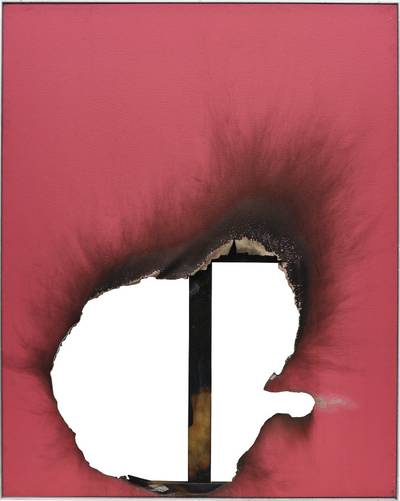
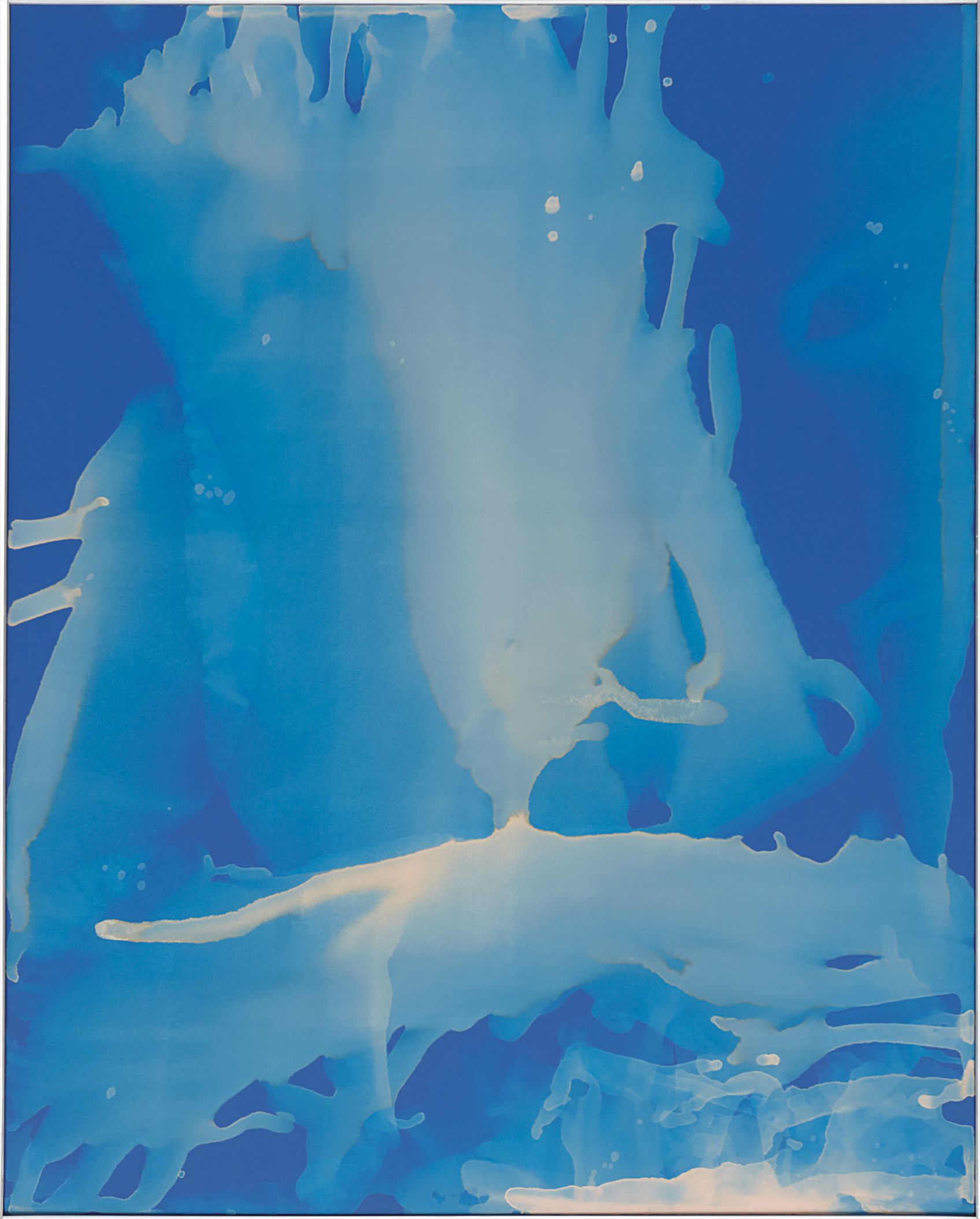
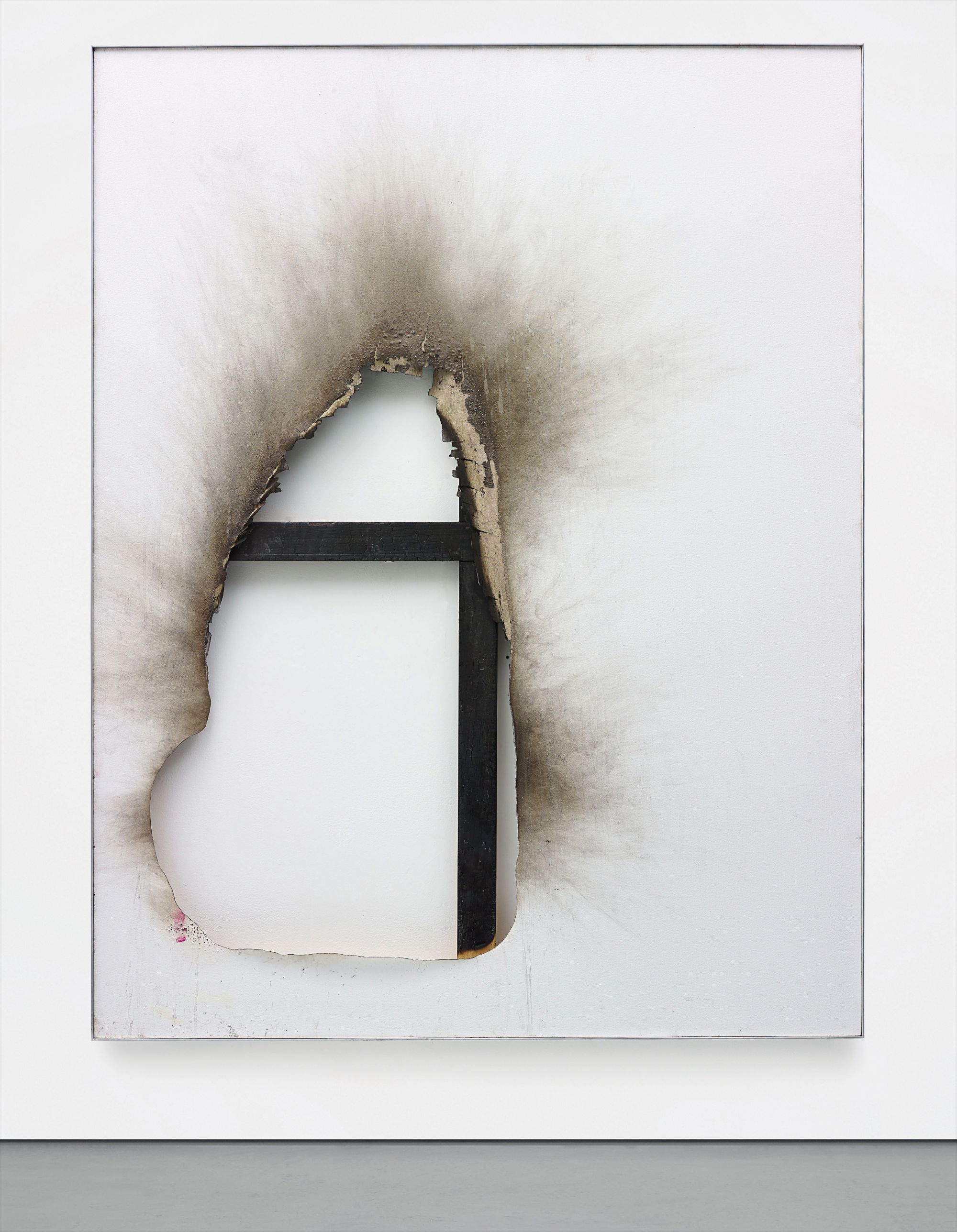
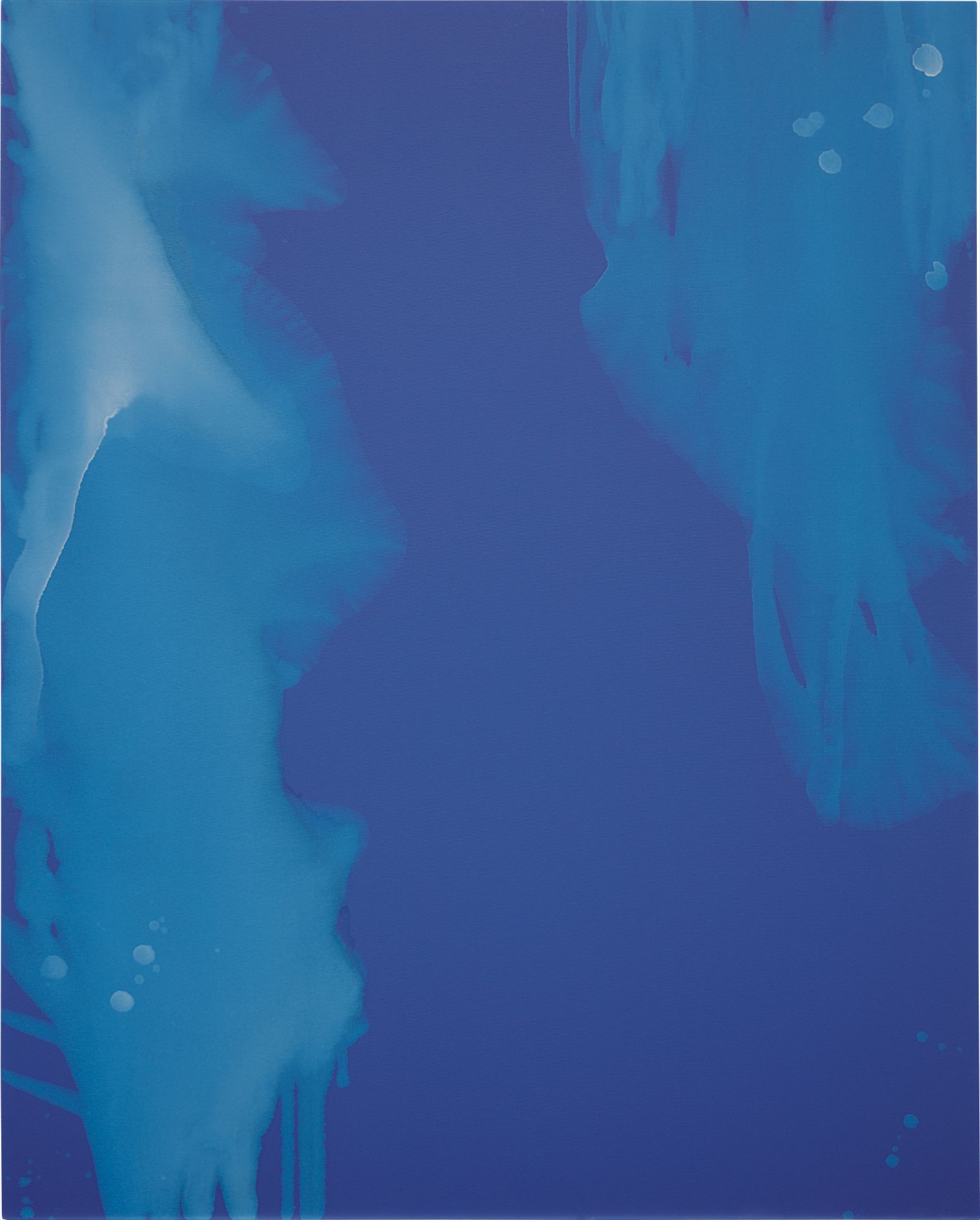
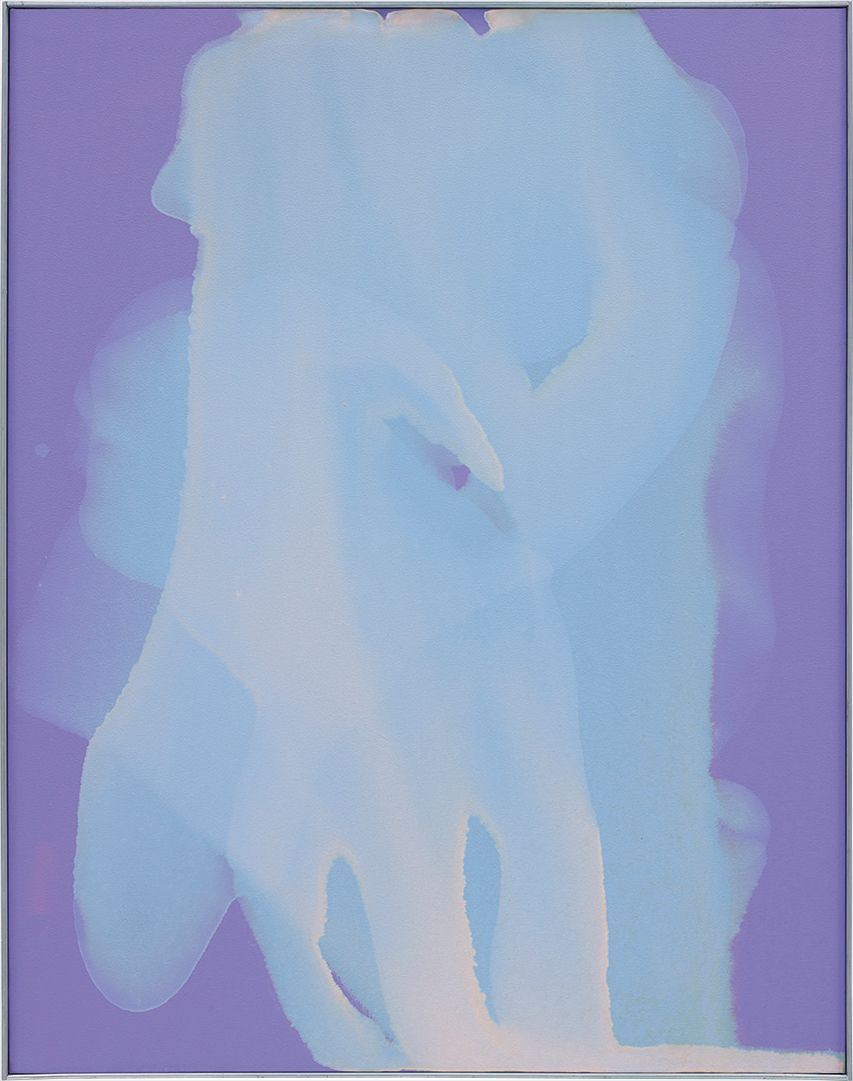
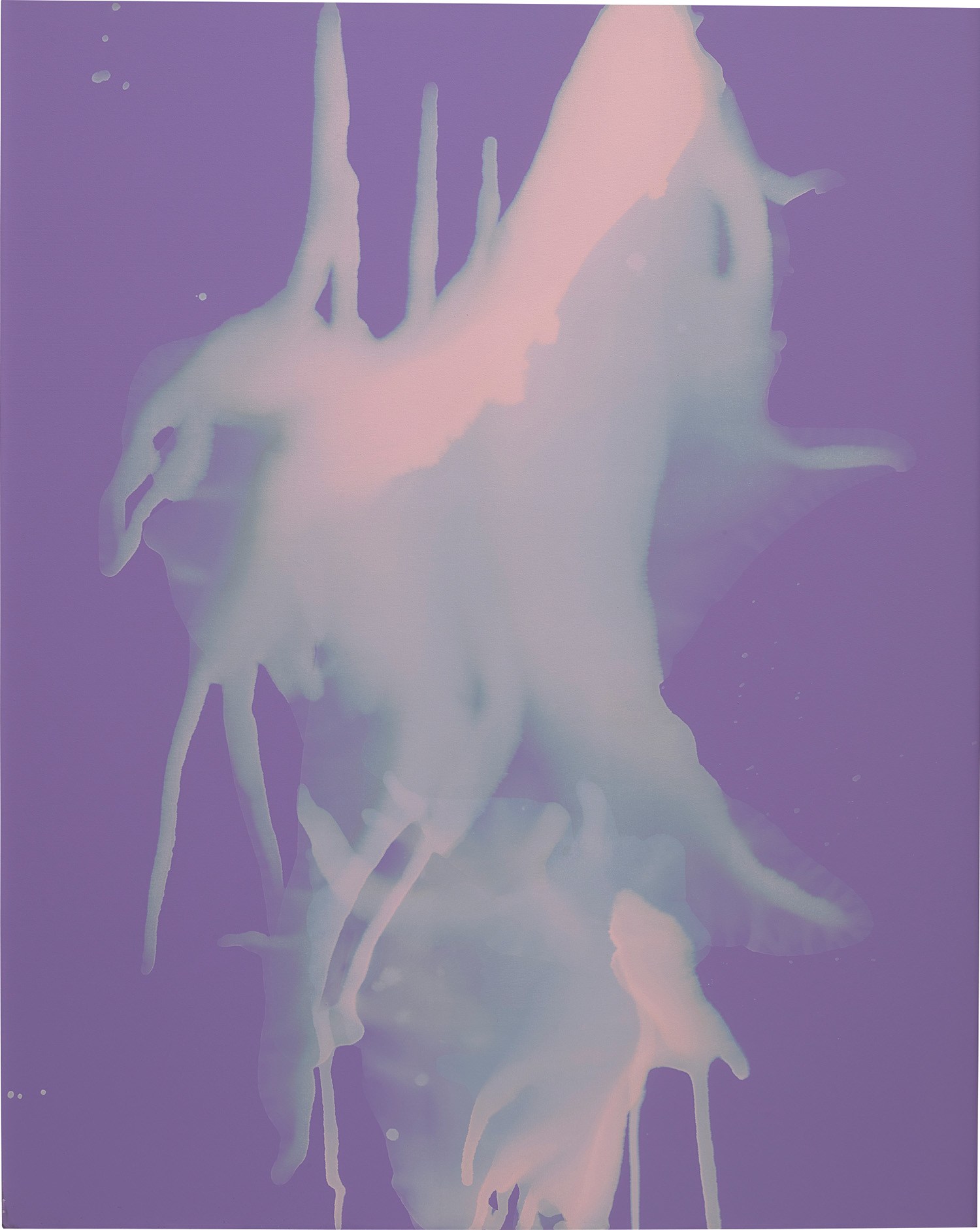
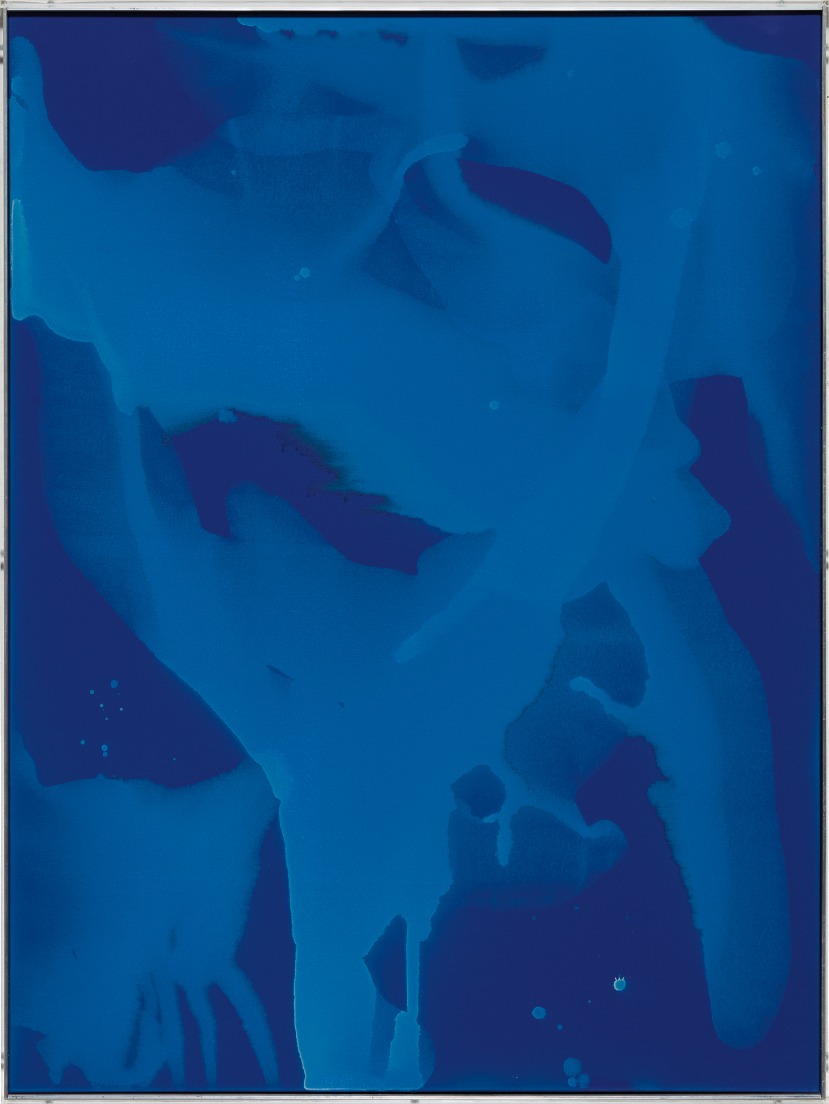
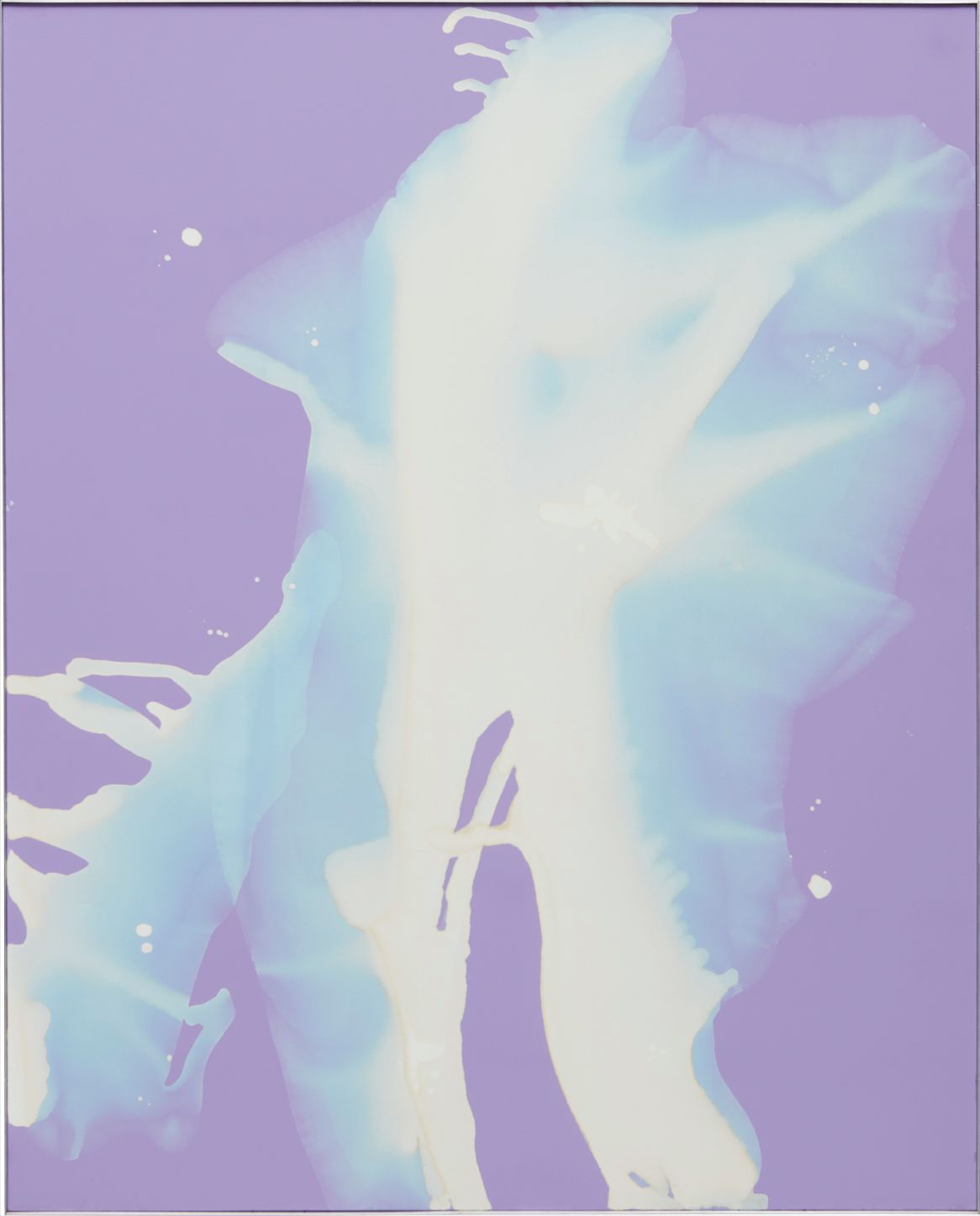
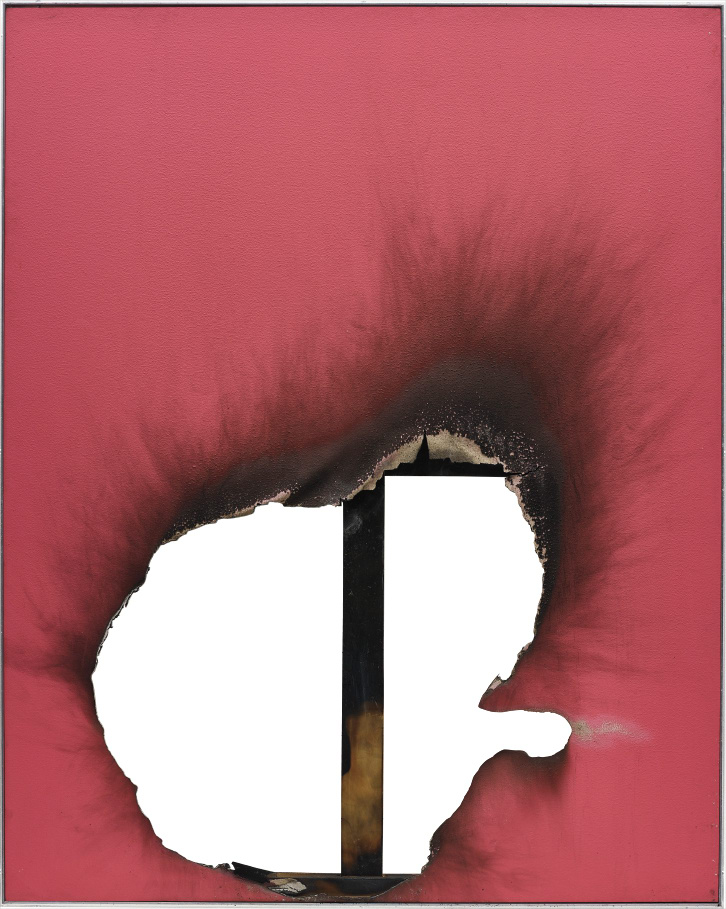
There is a particular kind of attention that Kasper Sonne's paintings demand. Standing before one of his large canvases, you do not immediately understand what you are looking at, and that uncertainty is precisely the point. In recent years, collectors and curators across Europe and North America have found themselves drawn to his work with growing urgency, drawn to surfaces that feel simultaneously ancient and futuristic, geological and mechanical, deeply personal and rigorously impersonal. His canvases do not explain themselves, and that refusal is one of the most compelling things about them. Sonne was born in Denmark in 1974, coming of age in a country with a rich tradition of functional design and a quiet but serious commitment to craft. Scandinavian culture tends to privilege restraint and material honesty, a tendency that would prove formative for a painter who would later build his practice around the behavior of industrial substances on canvas. His early formation unfolded at a moment when European painting was renegotiating its relationship with abstraction, wrestling with the legacies of Arte Povera, process art, and the broader conceptual movements that had redefined what painting could be and do. Sonne absorbed these conversations deeply, and his mature work can be read as a sustained, generous response to them. The decisive turn in Sonne's practice came when he began incorporating industrial paints and chemical compounds into his canvases. This was not a gesture of provocation or irony but a genuine inquiry into materiality. Where a traditional oil painter works with substances refined for centuries to behave predictably and beautifully, Sonne introduced materials that resist domestication. Industrial coatings, chemical agents, and layered processes became his vocabulary, and his role shifted from author to something closer to collaborator, working with substances that have their own logic, their own timelines, their own ideas about how they want to settle and cure and react. The resulting surfaces carry a sense of history, as though the canvas has been subjected to forces larger than any single human intention. The series of works bearing the title TXC, many of them completed in 2014, represents some of the most concentrated and assured work of Sonne's career to date. Paintings such as TXC57, TXC66, TXC53, TXC72, and TXC34 announce themselves immediately as objects of unusual physical presence. Each is executed in industrial paint and chemicals on canvas, and each is housed in a frame fabricated by the artist from aluminum, a detail that matters enormously. The frame is not an afterthought or a convention but an integral component of the work, extending the logic of industrial material from the painted surface outward into the environment of the viewer. The aluminum frames insist that these objects belong to a world of fabrication and function even as they operate as paintings, as aesthetic experiences, as invitations to sustained looking. The TXC series as a whole reads like a sustained meditation on threshold states, moments when a substance is between identities, neither liquid nor solid, neither color nor form. The Borderline (New Territory) series deepens this inquiry in related but distinct ways. Works such as Borderline (New Territory) No. 44 and Borderline (New Territory) No. 46, both from 2014, push into territory where figuration and abstraction become genuinely difficult to distinguish. The titles are worth sitting with. Borderline. New Territory. These are spatial and cartographic terms applied to paintings that feel like they are mapping something, charting the edges of perception itself. The work invites the viewer to ask where one thing ends and another begins, where seeing becomes interpretation, where material becomes image. This is a philosophical project carried out through purely painterly means, and it is conducted with considerable sophistication and discipline. For collectors, Sonne's work presents an unusual combination of qualities. The paintings are visually arresting in a way that holds up over time precisely because they reward close and repeated looking. They do not give everything up at once. A collector who lives with a Sonne canvas will find that the work looks different in morning light than in the late afternoon, different in summer than in winter, different after a year of acquaintance than it did at first encounter. This is partly a function of the materials, which interact with ambient light in ways that more conventional painting surfaces do not. It is also a function of the conceptual depth underlying the work. There is always more to notice, always another layer of meaning or material incident to discover. Artists whose work operates in adjacent territories include the German painter Gerhard Richter, whose exploration of the boundary between abstraction and representation has set the terms of conversation for a generation, as well as the Belgian painter Luc Tuymans and the American process painters who took their cues from the innovations of the 1960s and 1970s. Within the Scandinavian context, Sonne's work can be productively understood alongside a tradition of rigorous, material minded abstraction that prizes substance over spectacle. What makes Sonne particularly relevant at this moment in the broader cultural conversation about painting is his insistence on process as meaning. At a time when the art market has often rewarded surface dazzle and legible brand, his work asks for patience and commitment. It asks collectors to trust that complexity earned through material process is more durable than complexity performed through stylistic gesture. This is a serious proposition, and the collectors who have embraced it tend to be the kind of collectors who think carefully about what they live with and why. Sonne's paintings are not decorative objects that happen to be made of paint. They are arguments about perception, materiality, and the relationship between human intention and physical process, arguments conducted at a high level and with genuine intellectual rigor. Sonne continues to develop a practice that feels genuinely alive to its own possibilities. His work does not repeat itself so much as deepen, returning to fundamental questions with each new series while pushing the inquiry further into unfamiliar territory. That quality of sustained inquiry, of a career organized around genuine curiosity rather than market positioning, is precisely what distinguishes artists whose work retains its power over decades. Danish art has given the world painters of quiet intensity and material seriousness, and Sonne belongs to that tradition while extending it in directions that feel urgently contemporary. For those who have not yet encountered his paintings in person, the experience awaits, and it is one worth seeking out.