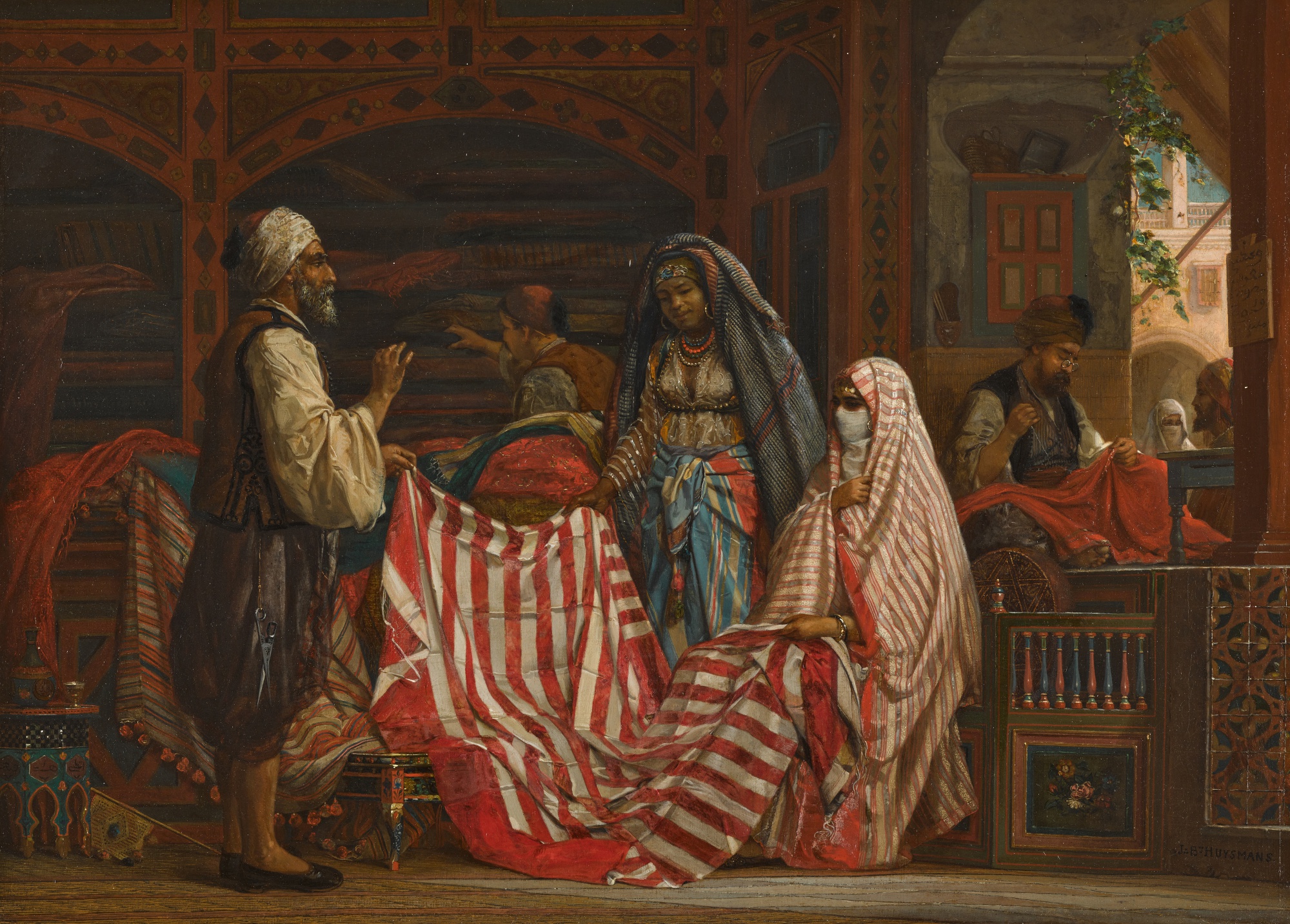
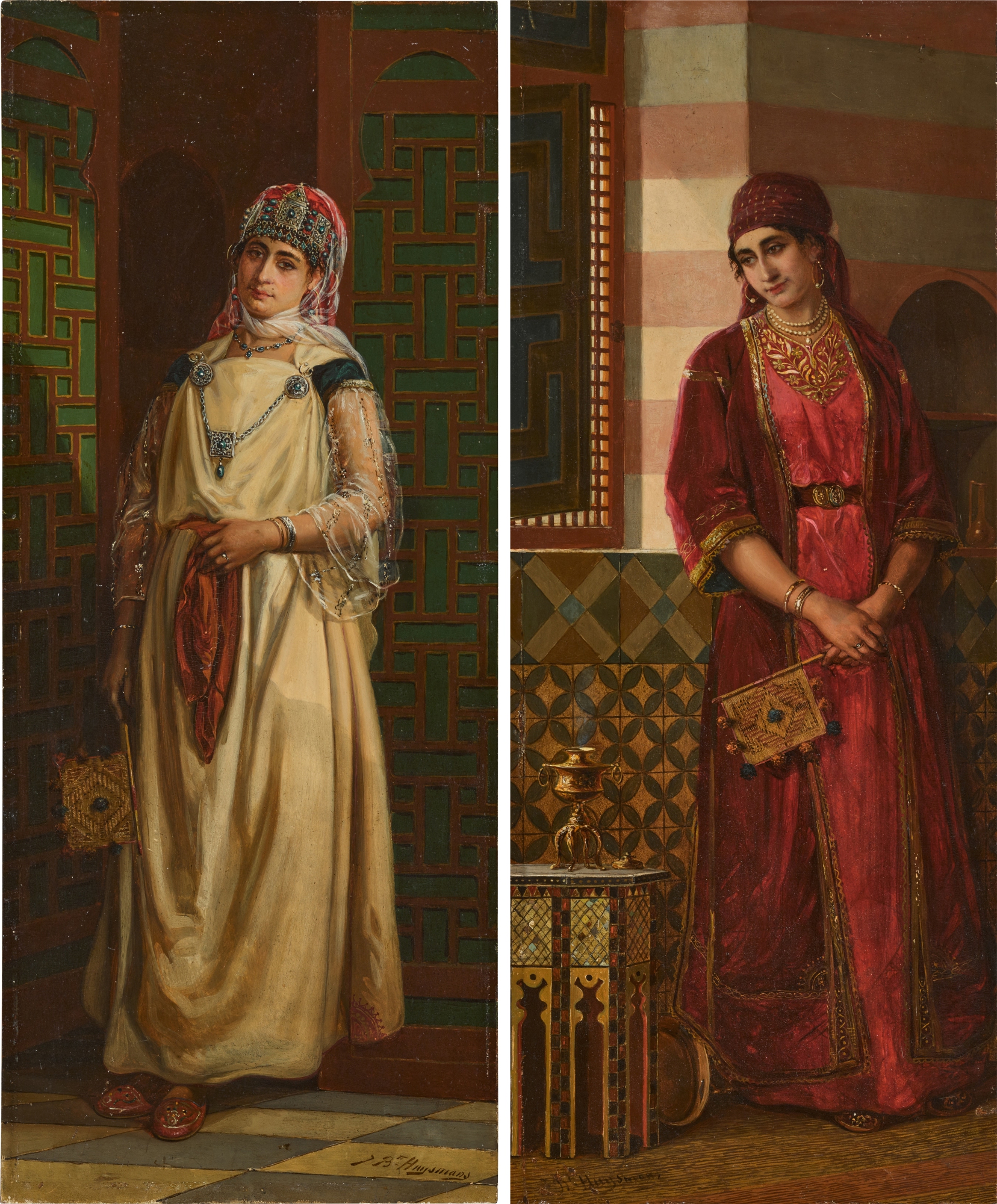
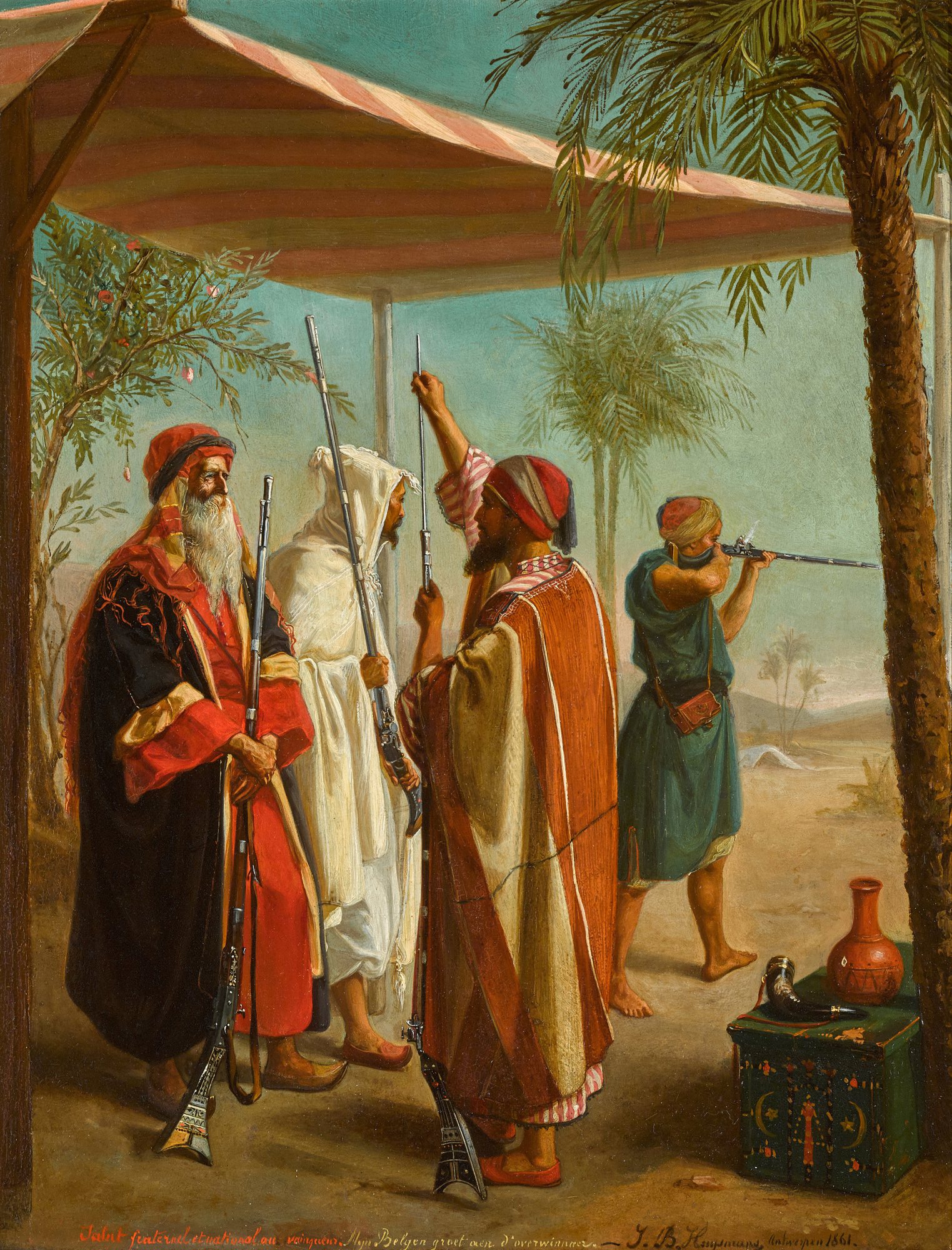
There is a particular quality of light that defines the great Flemish landscape tradition, a golden warmth that settles over ancient ruins and green canopies alike, making the world feel both timeless and intimately observed. When a work by Jan Baptist Huysmans appears on the market or in a well appointed private collection, that quality announces itself immediately. Born in Antwerp in 1654, Huysmans occupies a distinguished place in the late Baroque period of Flemish painting, and for collectors and curators who have spent time with his canvases and panels, the encounter is rarely forgotten. His is a world of cultivated beauty, where classical antiquity and the living natural world exist in elegant conversation. Huysmans came into his artistic formation at a remarkable moment in Antwerp's cultural life. The city had been the epicenter of Northern European painting for over a century, shaped first by the grandeur of Pieter Paul Rubens and then sustained by a generation of painters who carried that monumental ambition into more intimate and domestic registers. The Huysmans family itself was a distinguished presence in this creative milieu, producing several painters across the seventeenth and early eighteenth centuries, among them Cornelis Huysmans, whose own lyrical landscapes would become deeply admired across Europe. Jan Baptist absorbed the family inheritance with evident care, developing an eye for lush, complex environments that feel populated by history and memory in equal measure. The artistic development of Huysmans reflects a deep engagement with the grand European landscape tradition as it stood at the end of the seventeenth century. His compositions frequently incorporate classical ruins, an element that places human ambition within the longer sweep of natural cycles. Where some of his contemporaries allowed these ruins to suggest melancholy, Huysmans tends toward warmth and abundance. His vegetation is thick and vital, his skies open in ways that invite rather than oppress. There is a generosity to his vision that feels characteristic of a painter who genuinely loved the world he depicted. Over time, his style settled into a confident and recognizable mode, one that balanced naturalistic observation with an organizing sense of pictorial theater. Among the works that reveal the full range of Huysmans's abilities, The Fabric Merchant, rendered in oil on canvas, demonstrates his capacity to integrate human commerce and daily life within environments of considerable pictorial sophistication. The painting rewards close attention, offering precisely the kind of layered detail that collectors of Old Masters find endlessly rewarding over years of ownership. The Favourites, a pair of works executed in oil on panel, shows Huysmans at his most refined in terms of surface handling, the smaller format concentrating his compositional intelligence into something jewellike in its precision. A Shooting Party, also on panel, places figures within a landscape setting in a manner typical of aristocratic taste in this period, when sporting life and the pleasures of the estate were considered entirely worthy subjects for serious painting. Together these works suggest a painter whose range encompassed both the intimate and the social, the contemplative and the animated. From a collecting perspective, works by Huysmans occupy a rewarding position in the Old Masters market. They carry the prestige of the great Flemish tradition without the stratospheric prices that attach to the very top tier of seventeenth century Northern European painting, which makes them genuinely accessible to collectors building serious collections with intelligence and discernment. Aristocratic European collections in the eighteenth century actively sought works of this kind, and the appearance of Huysmans's name in historical inventories and sale records from that era speaks to the sustained regard in which he was held. For today's collector, his works offer the particular pleasure of owning something that connects directly to a lineage of great European taste while also standing beautifully on its own terms. Panel works in good condition are especially desirable, and the pairing of works, as in The Favourites, adds a dimension of rarity that the market continues to recognize. To understand Huysmans fully it helps to place him within the broader company of Flemish and Netherlandish landscape painters who shaped the European imagination between roughly 1650 and 1720. The landscape tradition he inherited drew from the dramatic pastoral visions of painters working in Rome and the Netherlands, and later found rich expression in artists such as Cornelis Huysmans himself, as well as figures like Jacques d'Arthois and Lodewijk de Vadder, who explored the dense forests and open fields of the Low Countries with similar devotion. The presence of classical ruins in Huysmans's work also places him in dialogue with the Italianate current that ran through Northern European painting throughout the seventeenth century, a tradition that looked toward Claude Lorrain and the Roman campagna for its organizing principles. Huysmans translated these influences into something distinctly his own, marked by Flemish richness of color and a tactile pleasure in the rendering of natural growth. The legacy of Jan Baptist Huysmans is that of a painter who held his craft to a high standard across a career that spanned the closing decades of the seventeenth century and the early years of the eighteenth. He worked during a period when Flemish painting was negotiating its relationship to the great traditions of the past and finding new ways to speak to aristocratic and mercantile patrons who wanted beauty, cultivation, and a sense of connection to classical European civilization. His landscapes and figural compositions answered that need with grace and skill. For contemporary collectors, engaging with his work means participating in a conversation that stretches back through centuries of discerning taste, and forward into the ongoing appreciation of painting that rewards patience, knowledge, and genuine love of the medium. In a market increasingly attentive to the deeper layers of the Old Masters tradition, Huysmans stands as an artist whose moment of full recognition feels, pleasingly, very much alive.