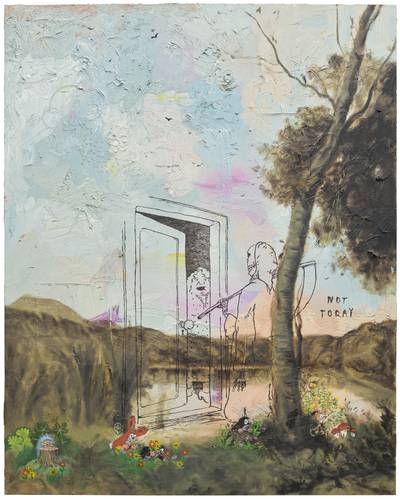
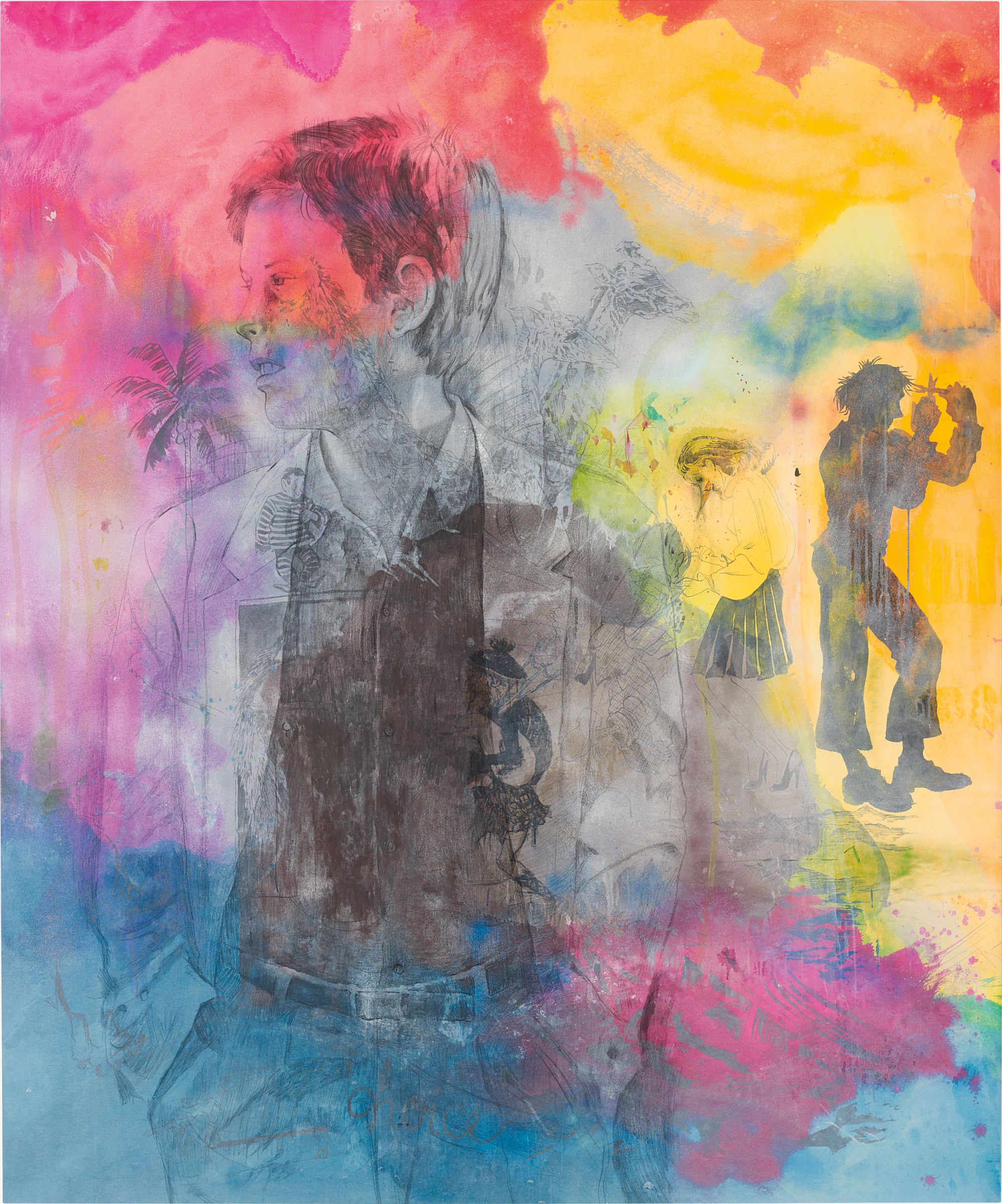
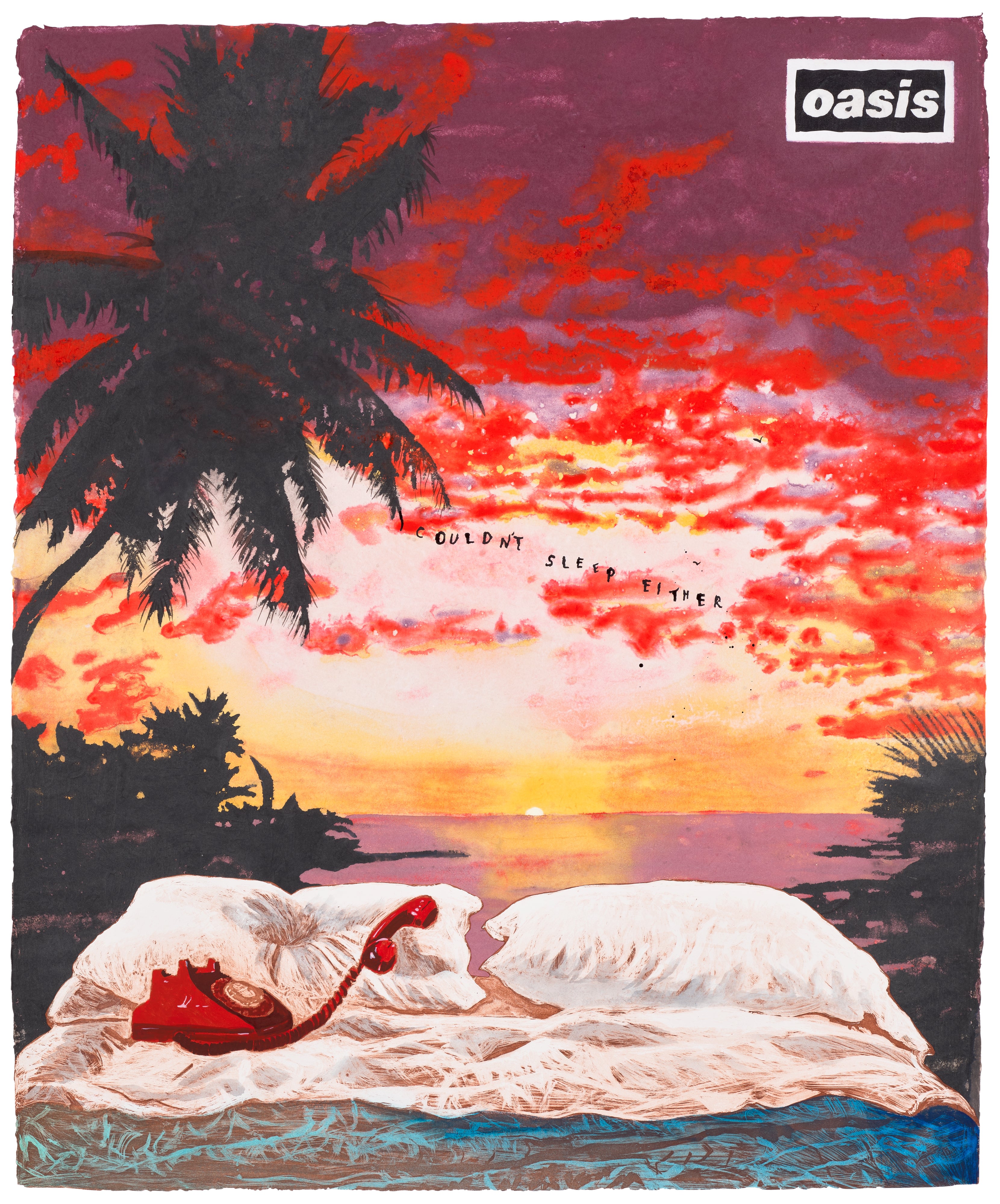
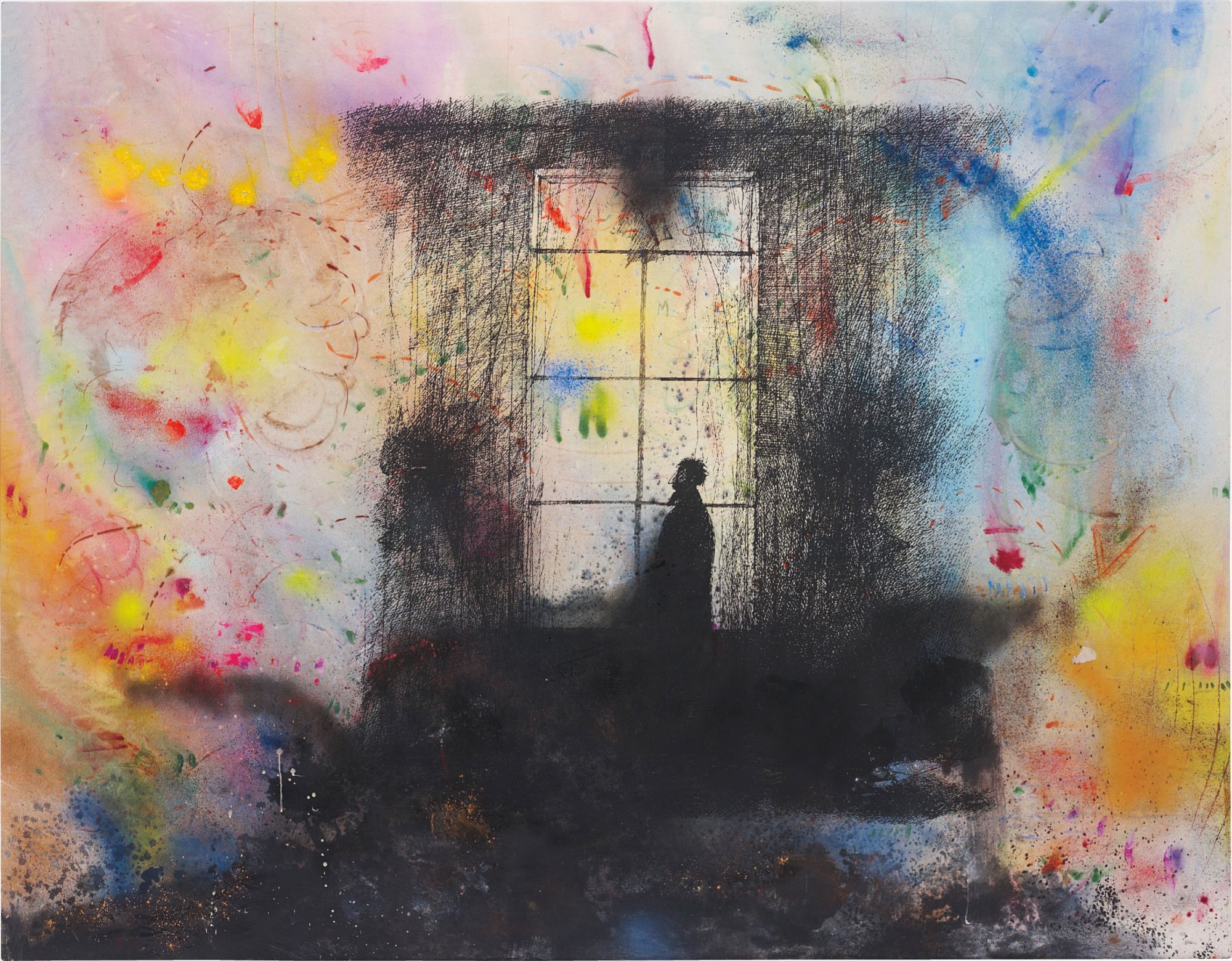
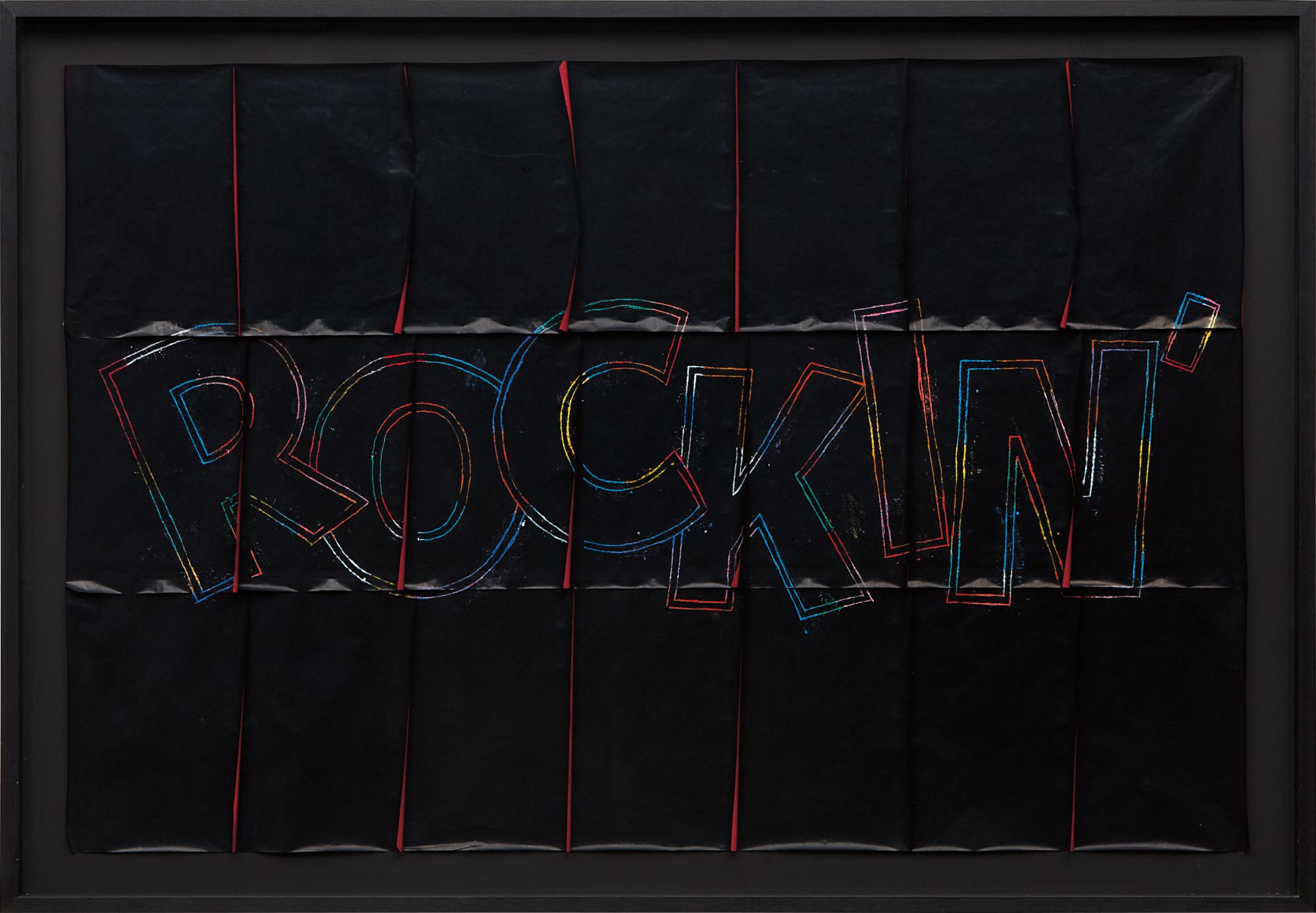
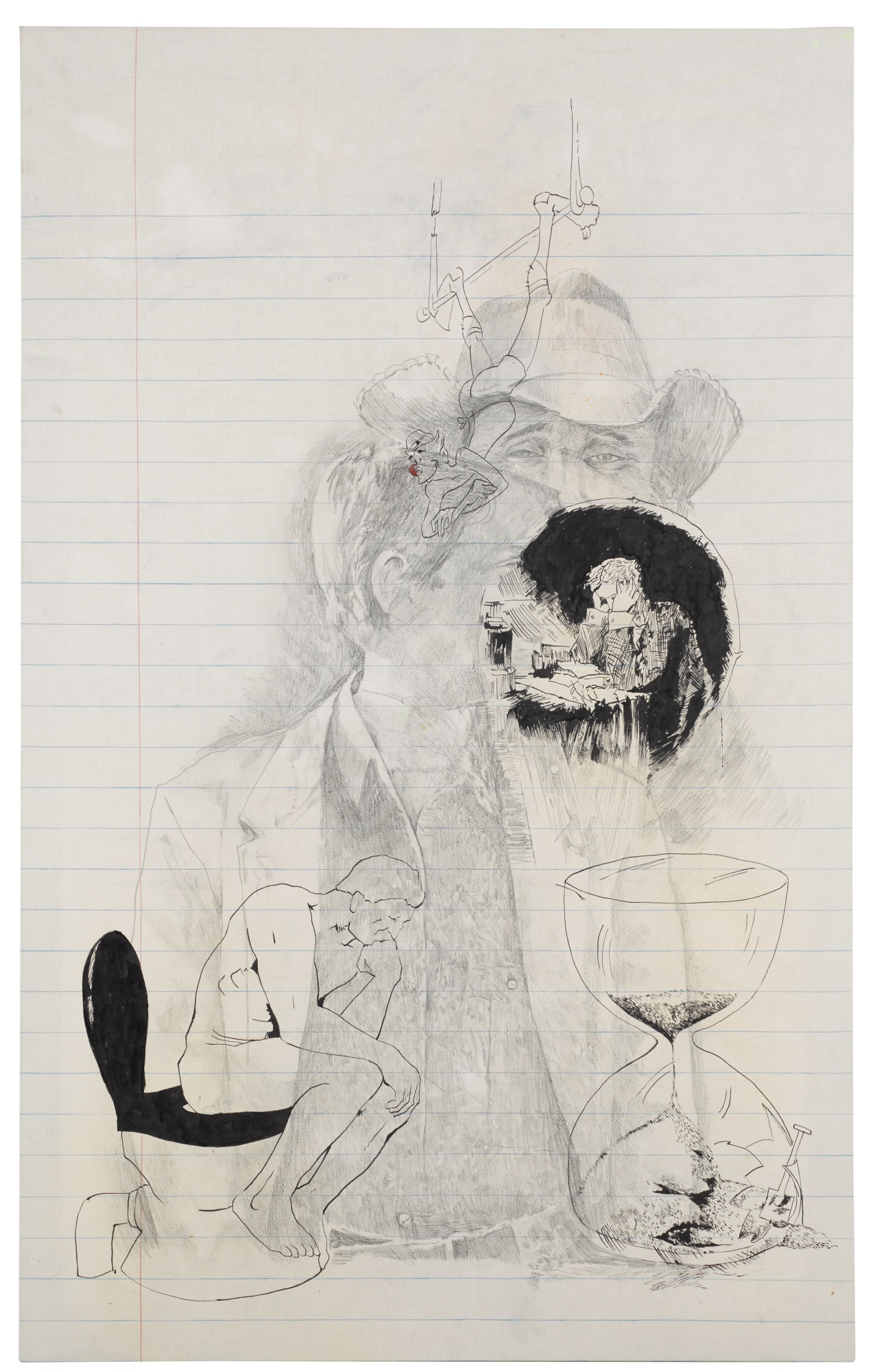
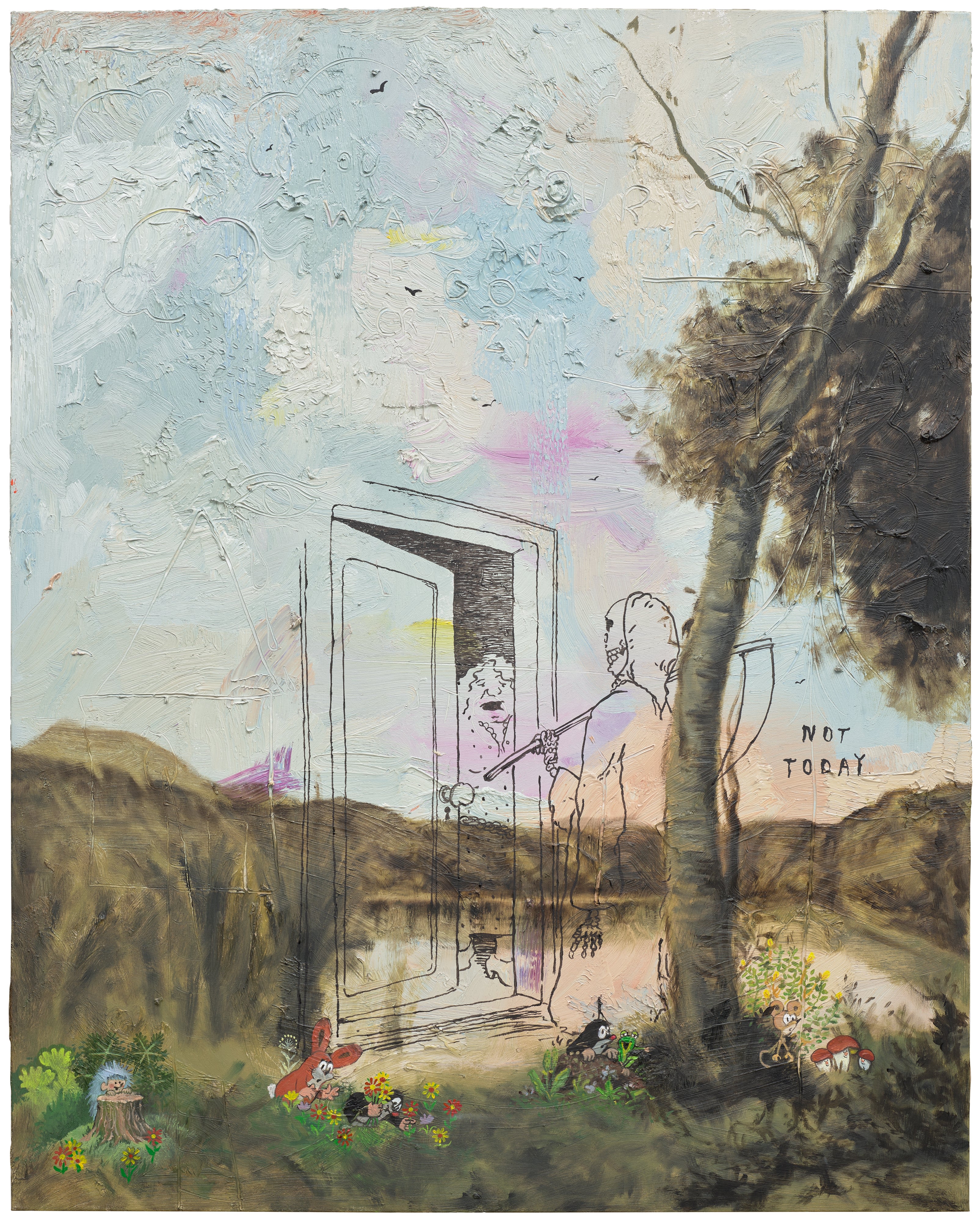
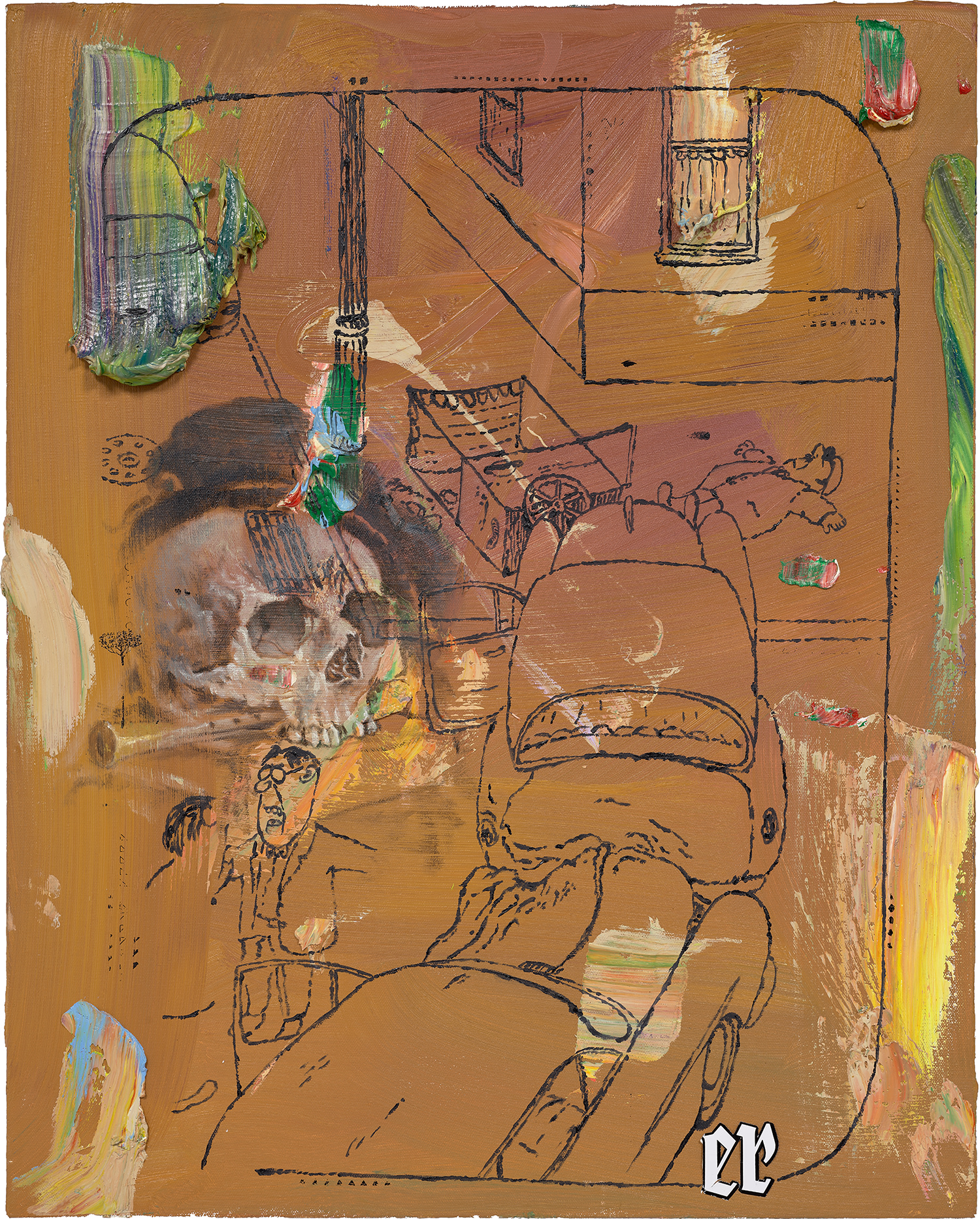
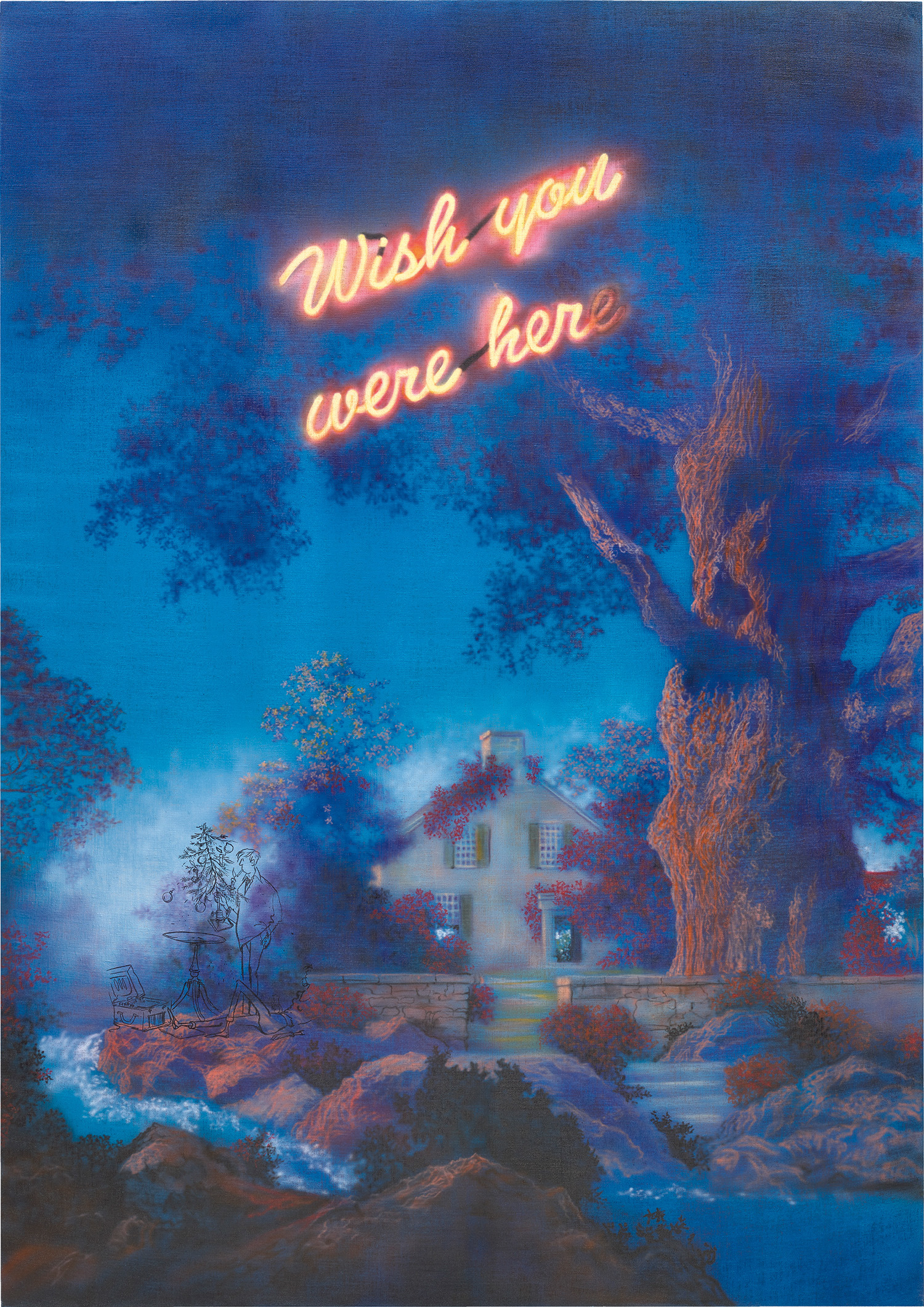
Something is in the air around Friedrich Kunath. The Los Angeles based German artist has spent the better part of two decades building one of the most emotionally generous bodies of work in contemporary painting, and the art world is paying closer attention than ever. His recent exhibitions at Blum and Poe in Los Angeles and König Galerie in Berlin have drawn collectors and curators alike, drawn by a practice that manages to be simultaneously funny, heartbroken, and visually ravishing. There is a growing sense that Kunath, long cherished by a devoted circle, is arriving at a broader moment of recognition that his work has quietly earned. Kunath was born in 1974 in Chemnitz, then part of East Germany, and the cultural and psychological textures of that origin never fully leave his paintings. Growing up in a landscape shaped by the weight of history, the residue of Romantic longing, and the strange humor that survives under pressure gave him a sensibility that no art school curriculum could manufacture. He studied at the Hochschule für Bildende Künste in Braunschweig before eventually making his way to Los Angeles, a city whose sunshine and sprawl provide the perfect ironic counterpoint to the interior cloudiness his work so beautifully maps. The move west was not an escape from his origins but a way of holding them at a new angle to the light. His artistic development unfolded with a rare coherence. From early on, Kunath worked across painting, drawing, installation, and video, refusing to let any single medium domesticate his ideas. His paintings layer oil, acrylic, watercolor, pencil, charcoal, and ink onto canvas and muslin in ways that feel less like technical decisions and more like emotional accumulation, as though the surface itself is remembering something. The German Romantic tradition, particularly the tradition of Caspar David Friedrich with its lone figures before vast and indifferent landscapes, pulses through his imagery. But so does the vernacular world of pop music, old films, and the quietly desperate humor of everyday life. The result is a body of work that holds high and low culture in a single trembling frame. Among his most celebrated paintings, "Wer weiss wo" from 2009 offers a quietly stunning example of how Kunath uses text and image together to create a kind of philosophical shrug that somehow moves you deeply. "Finis" and "Paisley Past," both from 2010, show his command of delicate layering, their surfaces gossamer and yet emotionally dense. "On The Wrong Beach (Erzgebirge)" from 2012 brings together oil, acrylic, watercolor, pastel, charcoal, and felt tip pen on muslin in a work of real formal ambition, its title threading together personal geography and the comedy of displacement. "a chord that can not resolve (lexapro)" from 2014 is perhaps his most direct statement of the condition his entire practice inhabits, naming both a musical structure and a pharmaceutical one in the same breath, with neither irony nor self pity. These titles alone reveal a mind at work that is literary, self aware, and generous with meaning. For collectors, Kunath occupies a particularly attractive position. His works exist in a space that rewards both immediate emotional response and sustained looking, the mark of painting that has genuine staying power. Works on canvas in mixed media, which make up a substantial portion of his output, show well across a wide range of domestic and institutional contexts. Collectors who came to Kunath early, through his gallery relationships with Blum and Poe and with other international partners, have watched their acquisitions mature alongside an artist whose reputation has built steadily rather than spiked and retreated. That kind of durability is increasingly rare and increasingly prized. The works available on The Collection represent a meaningful cross section of his practice across key years, offering collectors a genuine opportunity to engage with the arc of his development. In terms of art historical context, Kunath belongs to a generation of painters who took the emotional inheritance of German Romanticism and ran it through the particular filter of contemporary life, irony included. He shares certain affinities with artists like Neo Rauch in his embrace of German cultural memory, with Karen Kilimnik in his willingness to let popular culture and high feeling coexist, and with Dana Schutz in his commitment to painting as a space of psychological intensity and formal invention. But the specific register Kunath occupies, that particular frequency of melancholy wit, is entirely his own. He is not a nostalgic artist despite appearances. He uses the past as a lens through which the present becomes more visible. What makes Kunath matter today is precisely what makes him difficult to summarize. He is an artist of genuine feeling at a moment when feeling in painting is sometimes treated with suspicion, and he is an artist of genuine humor at a moment when humor in painting is sometimes treated as decoration. He refuses both traps. His paintings sit with you after you leave the room, not because they are heavy but because they are honest about the weight of being alive in a world that is beautiful and absurd in equal measure. "Capri is just a name now" from 2017 says it perfectly, a title that is both a joke about tourism and a quiet elegy for everything that names fail to hold. That is the Kunath frequency, and once you are tuned to it, very little else sounds quite the same.