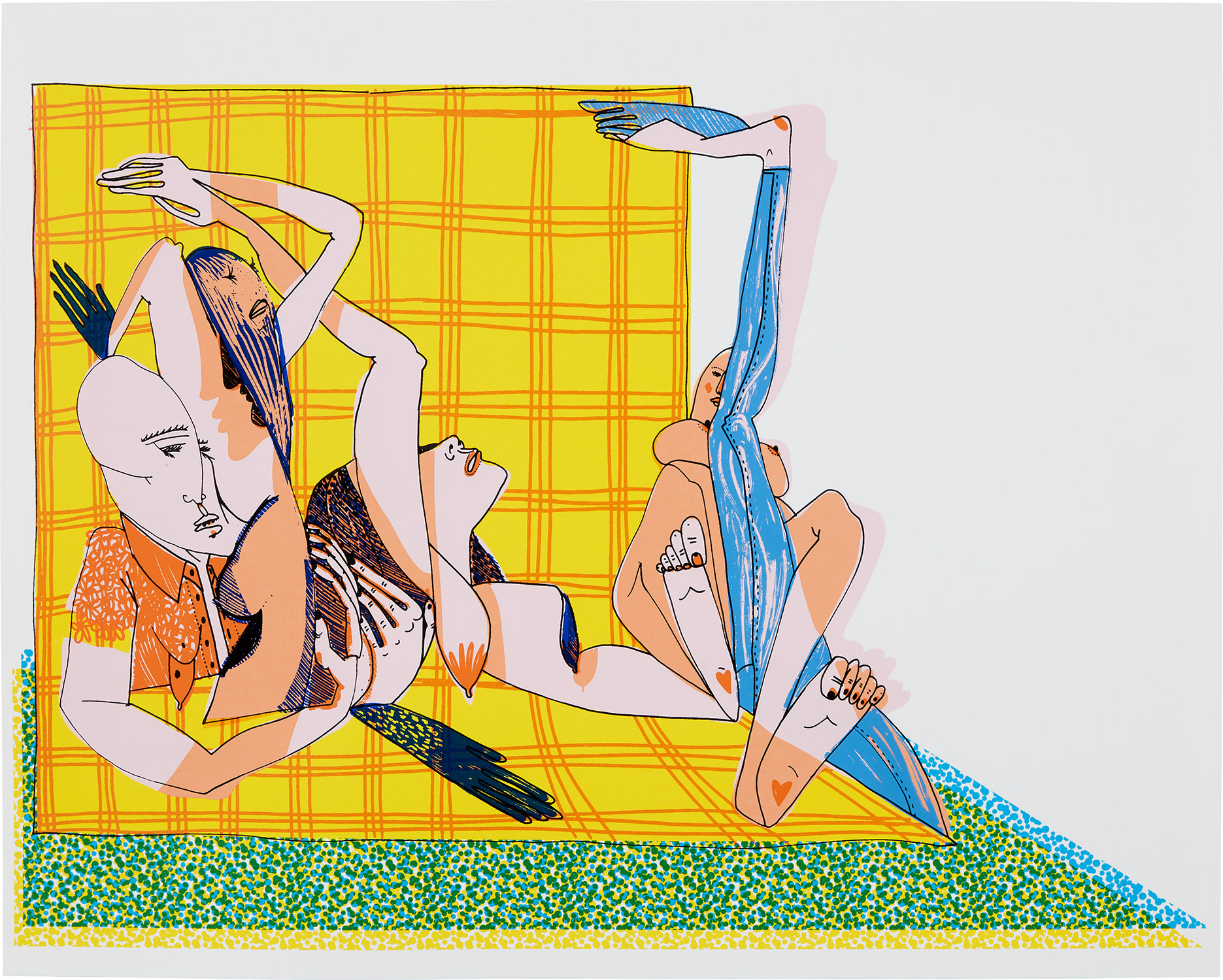
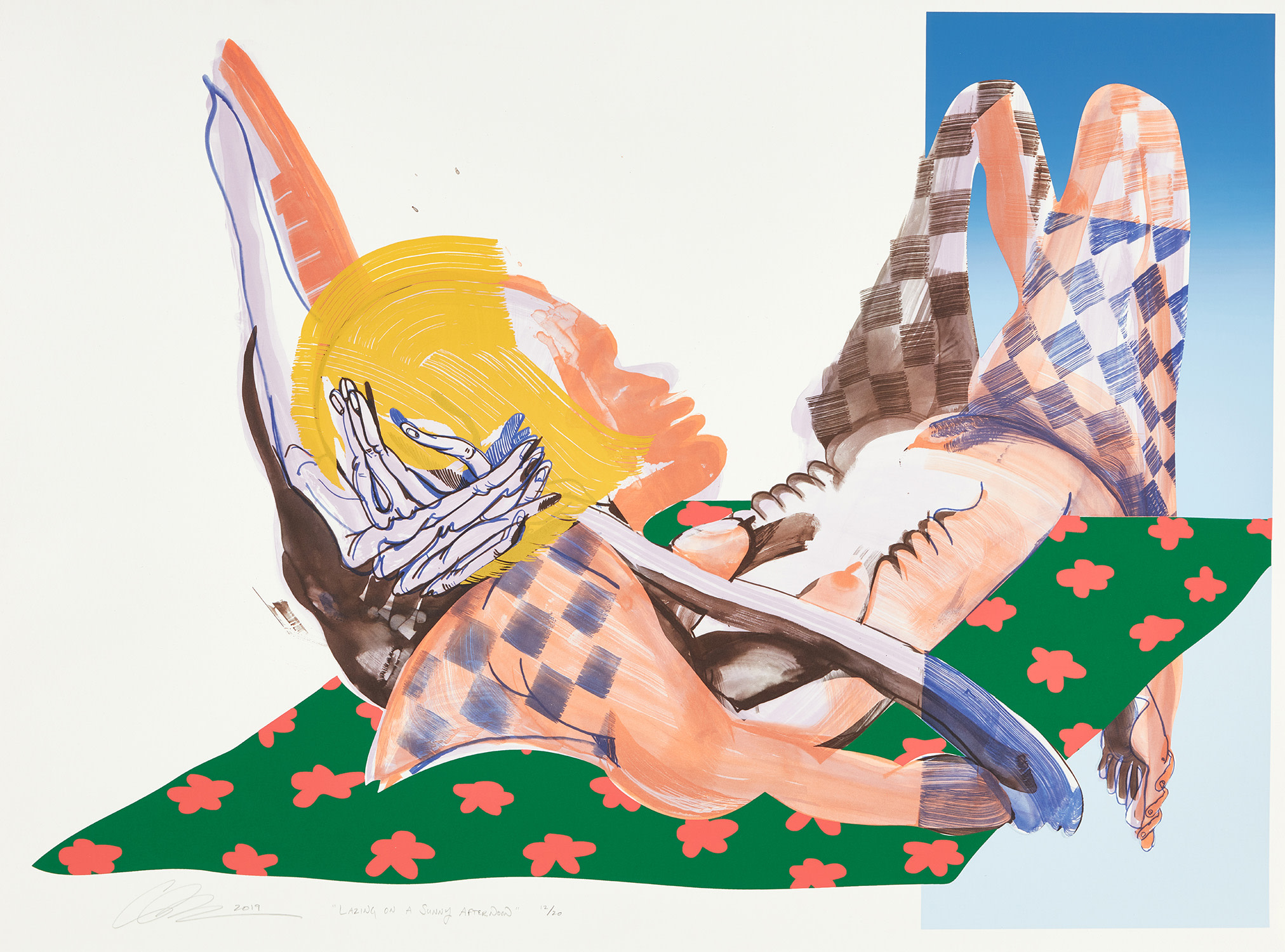
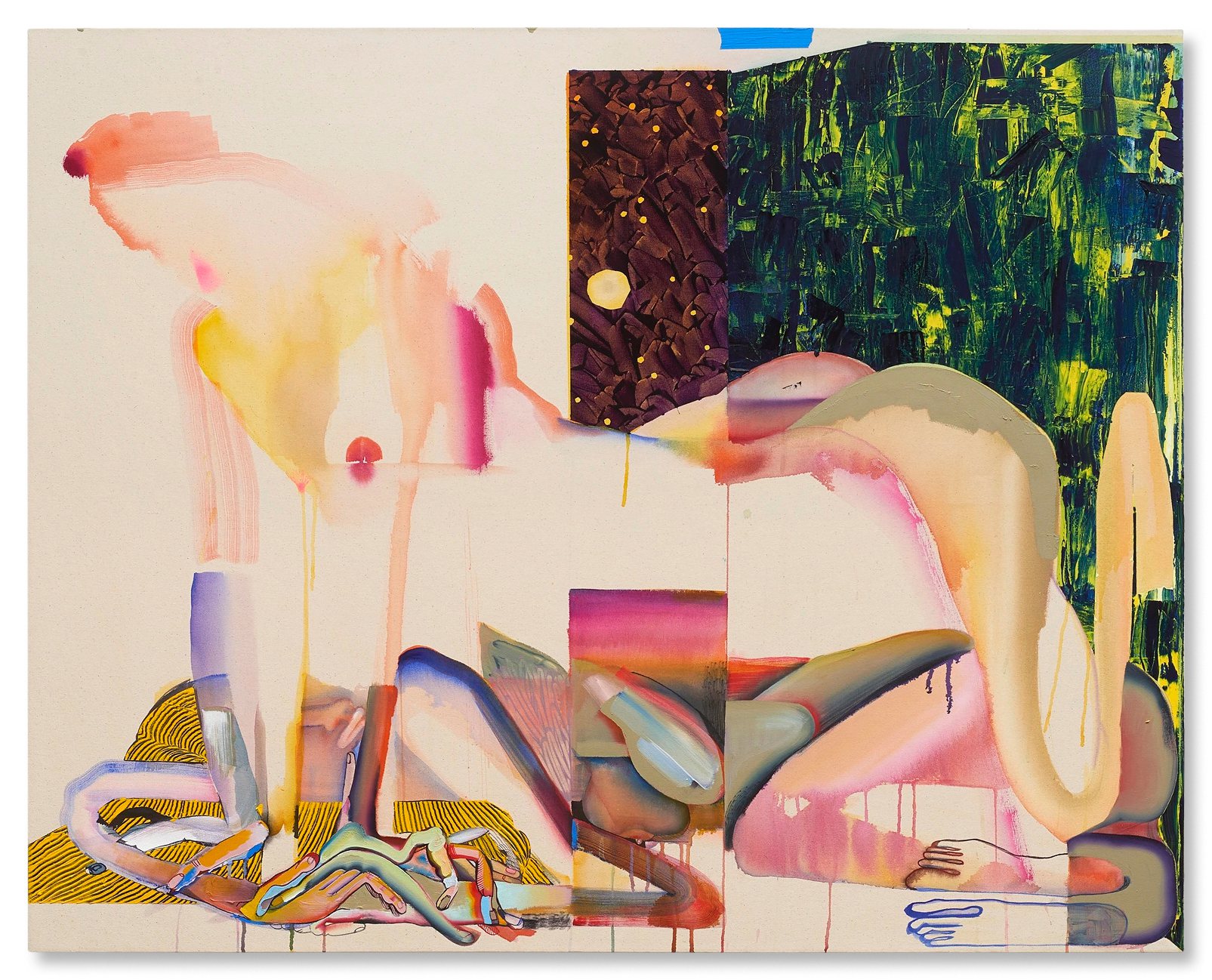
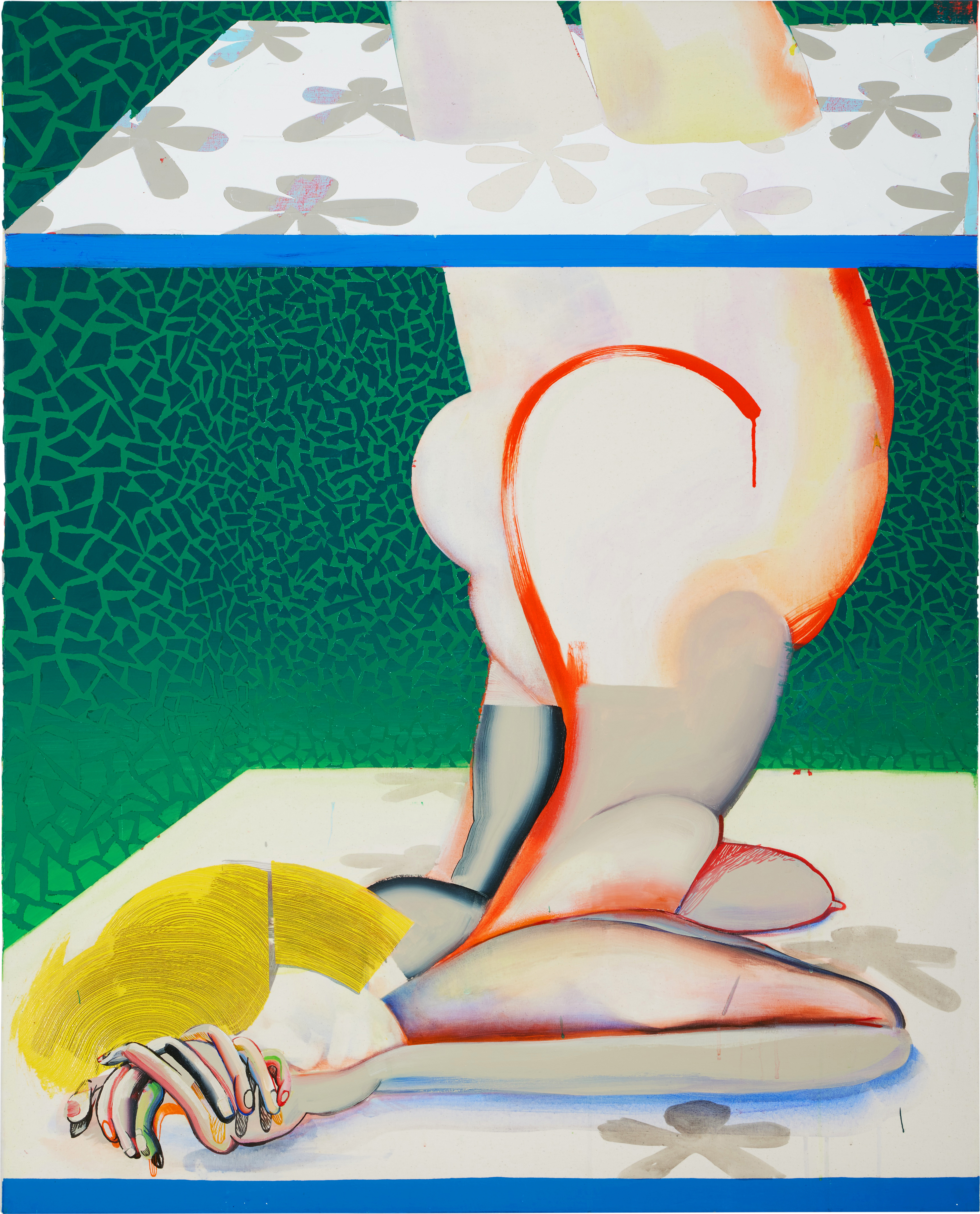
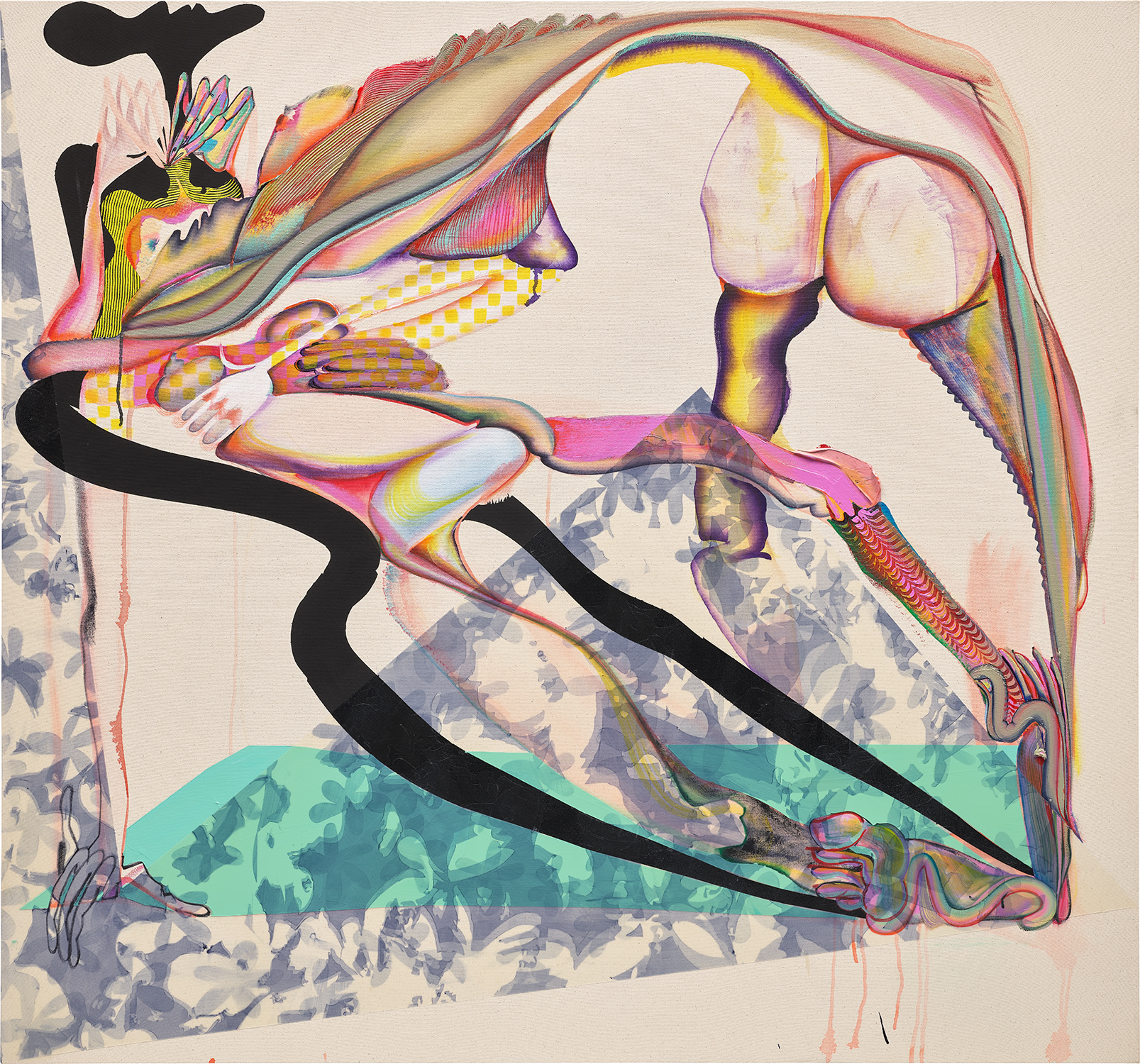
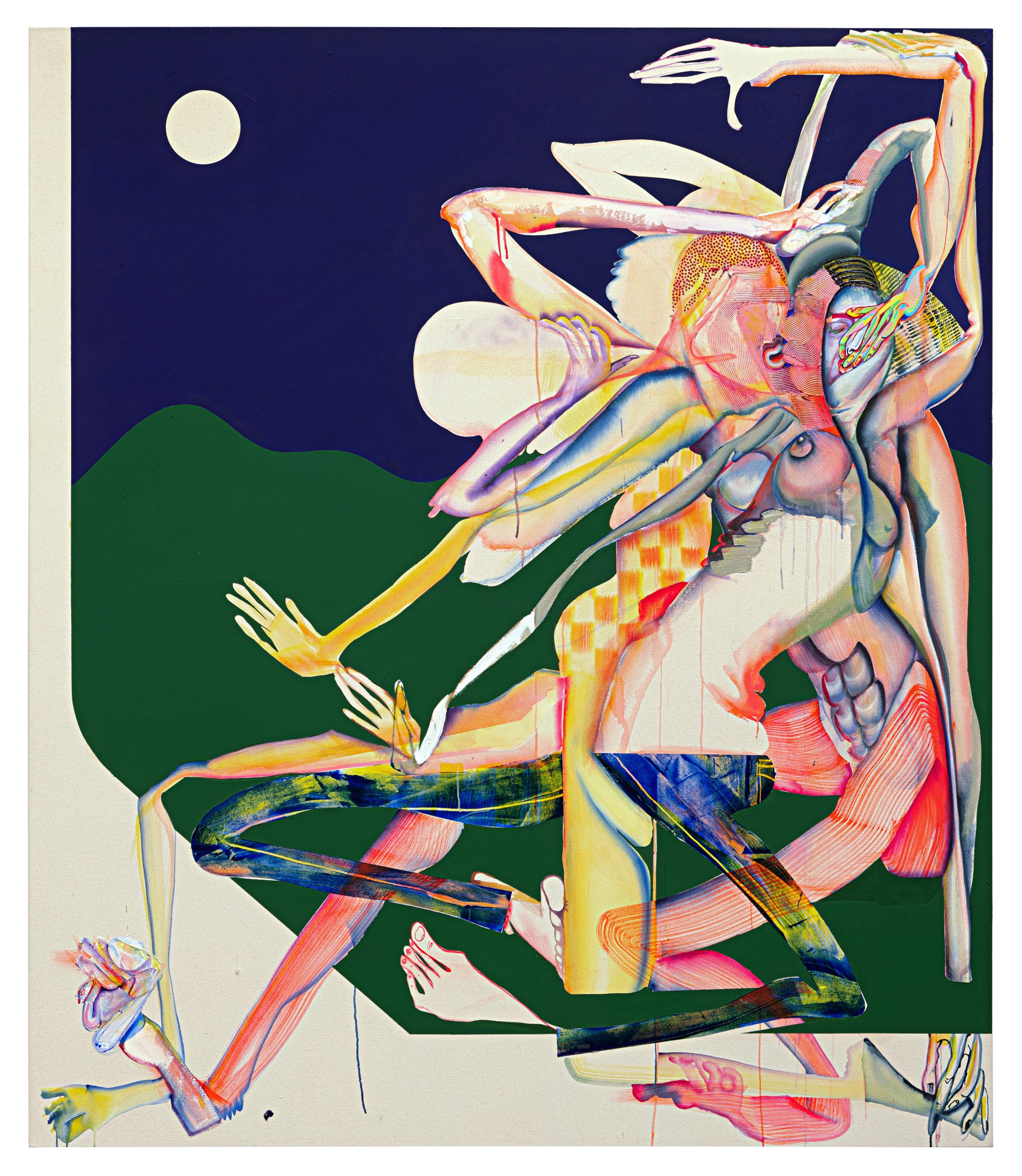
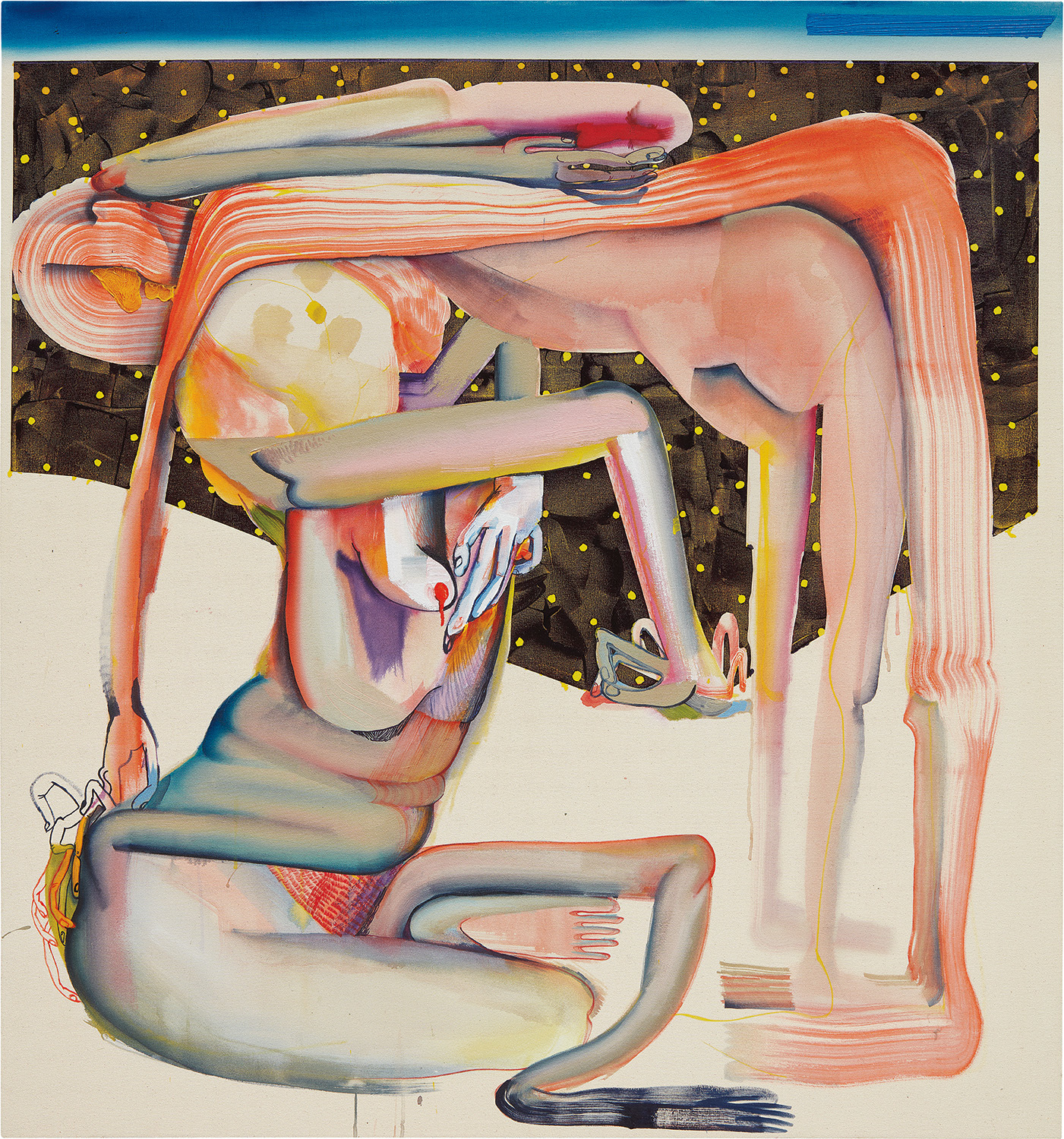
When Christina Quarles exhibited at the Hammer Museum in Los Angeles and saw her work enter major institutional collections across the United States and Europe, it confirmed what her most attentive collectors had sensed for years: this is one of the most urgent and genuinely original painters working today. Her rise has been swift but never accidental, built on a practice of extraordinary intellectual depth and painterly daring that feels absolutely essential to the cultural conversation of this moment. Museums and biennials have taken notice, and the broader art world has followed, drawn in by canvases that seem to breathe and shift even as you stand before them. Quarles was born in 1985 in Chicago, Illinois, and grew up navigating a world that persistently tried to categorize her in ways that felt insufficient or simply wrong. She is mixed race, queer, and has spoken openly about the experience of moving through spaces where others project identities onto her body that do not correspond to her own sense of self. These biographical realities are not incidental to her art but are its very foundation. The dissonance between how the world sees a body and how that body feels from within became the animating question of her entire practice. She earned her MFA from the Yale School of Art in 2016, arriving with a background that included studies in creative writing, a discipline whose influence never fully left her. The presence of language in her work, in the form of handwritten phrases and fragments of text woven directly into the painted surface, reflects a writer's sensitivity to the inadequacy of words as much as their seductive power. Yale sharpened her conceptual thinking and connected her to a community of peers who would go on to reshape contemporary painting, but her vision was already distinctly her own by the time she graduated. Within a year of leaving New Haven, her work was appearing in significant group exhibitions and attracting serious collector attention. The paintings Quarles makes are large in scale and immediate in emotional impact. She builds her canvases through a layered process, beginning with gestural washes of acrylic that establish atmospheric fields of color, then populating those fields with intertwined, fragmented bodies rendered through quick, confident line work that carries an energy reminiscent of graffiti and street lettering. The figures are deliberately ambiguous: their skin tones shift and blend, their limbs dissolve into background or overlap with other bodies in ways that make clear boundaries impossible to locate. This is not a failure of representation but its entire point. Quarles is asking what it means to depict a body that refuses to be fixed, categorized, or contained by the tools we typically use to read human forms. Among the works that have come to define her practice, titles like "We Woke in Mourning Jus Tha Same" from 2017 and "Night Fell Upon Us Up On Us" from 2019 demonstrate her gift for pairing visual complexity with language that is simultaneously vernacular and poetic. The titles carry a musicality rooted in African American speech patterns and popular culture, and they function as a kind of second layer of meaning that neither explains nor simply decorates the image beneath. Works like "Common Ground (Worlds Apart, Miles Away)" from 2016 and "Moon (Lez Go Out N' Feel Tha Nite)" from 2017 show how early she had already developed this fully integrated voice, where text and image are inseparable aspects of a single statement. The bilingual title "It's Only Night Twice a Day" pushes further still, introducing translation as yet another site where meaning multiplies and slips. For collectors, Quarles represents something rare: a living artist whose market trajectory has been consistent and whose institutional validation has arrived quickly and convincingly. Her works entered the collections of the Museum of Contemporary Art Chicago and other respected institutions early in her career, and that institutional embrace has lent confidence to private collectors who recognized her significance even before the broader market caught up. What draws serious collectors to Quarles is not merely her cultural resonance, though that is considerable, but the quality of the painting itself. The surfaces are varied, alive, and technically assured in ways that reward close looking over time. These are not works that exhaust themselves on first encounter. In the broader context of contemporary painting, Quarles occupies a fascinating position. She is part of a remarkable generation that has revitalized figurative painting by putting identity, embodiment, and social experience at its center. Artists such as Jordan Casteel, Tschabalala Self, and Cecily Brown each explore the painted body with their own distinct concerns, and placing Quarles in that conversation illuminates what makes her particular approach so distinctive. Where some of her contemporaries anchor their figures in specific social or cultural landscapes, Quarles is more interested in the interior experience of inhabiting a body, in what it feels like to exist at the intersection of multiple identities that the outside world cannot easily resolve into a single legible category. Her debt to Neo Expressionism is evident in the gestural freedom of her mark making, but she pushes that tradition toward questions it never fully asked. The legacy Quarles is building is one that will matter well beyond the current moment of institutional enthusiasm for underrepresented voices, because her work is genuinely solving formal and philosophical problems that painting has long struggled with. She has found a visual language for ambiguity that does not feel evasive but instead feels profoundly honest about the complexity of experience. Her canvases make visible something many people feel but rarely see reflected back at them: the sensation of being a body that exceeds the categories assigned to it. That is a remarkable achievement in any era, and it is one that ensures her work will remain vital and worth returning to for decades to come. Collectors who have had the foresight to live with these paintings are living with something genuinely important.