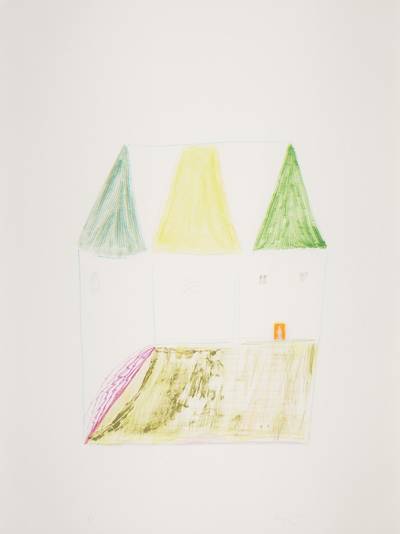
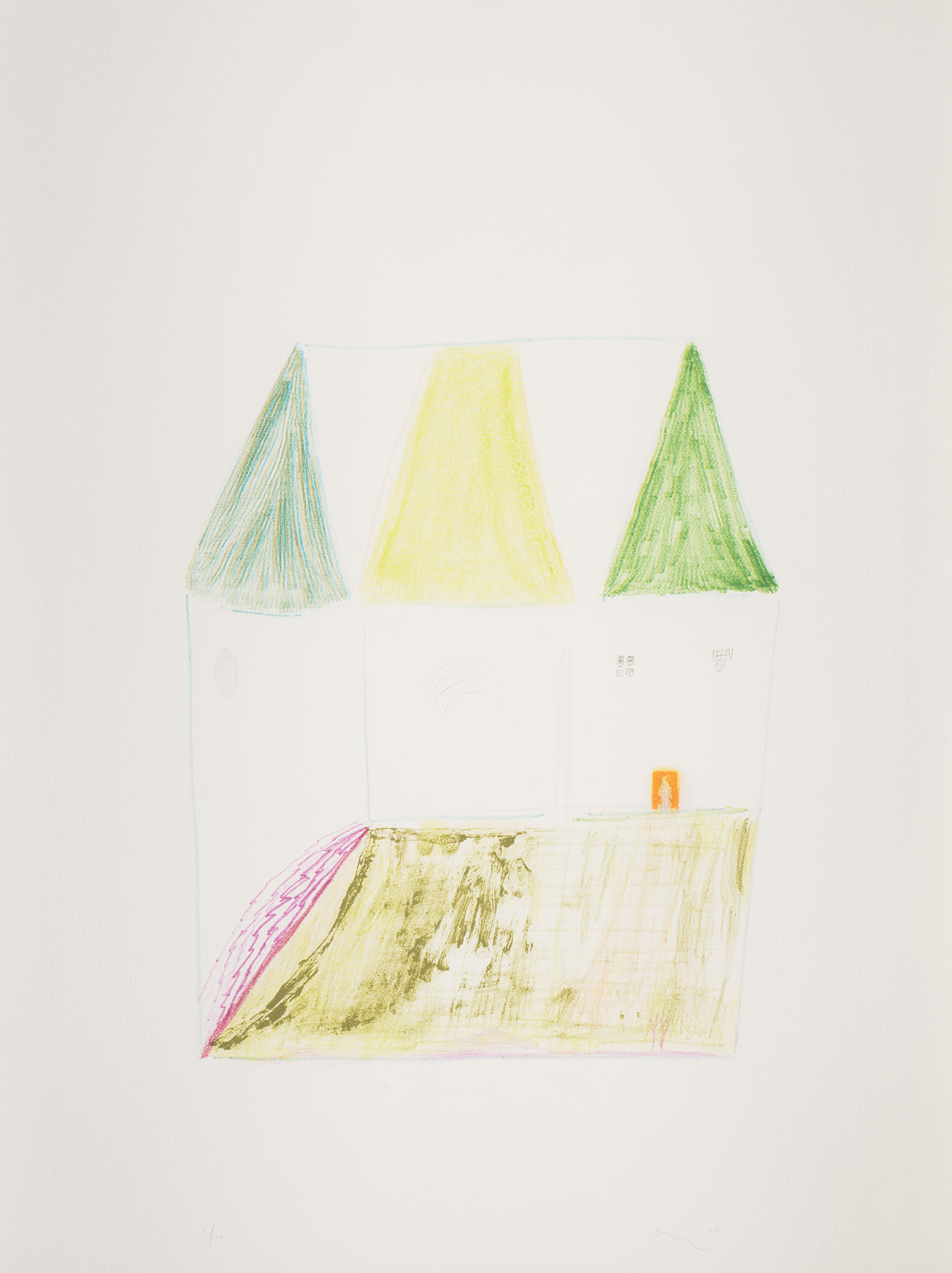
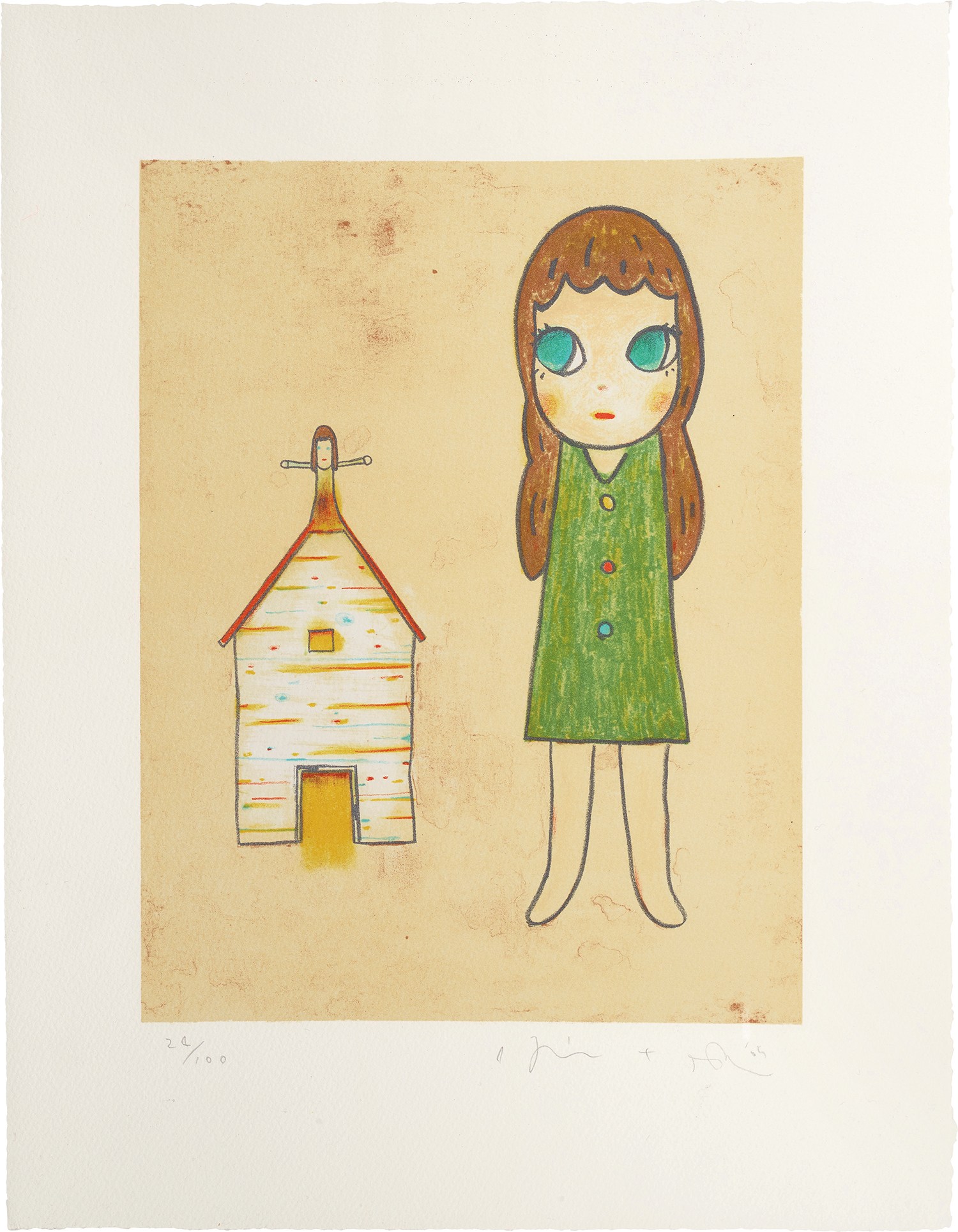
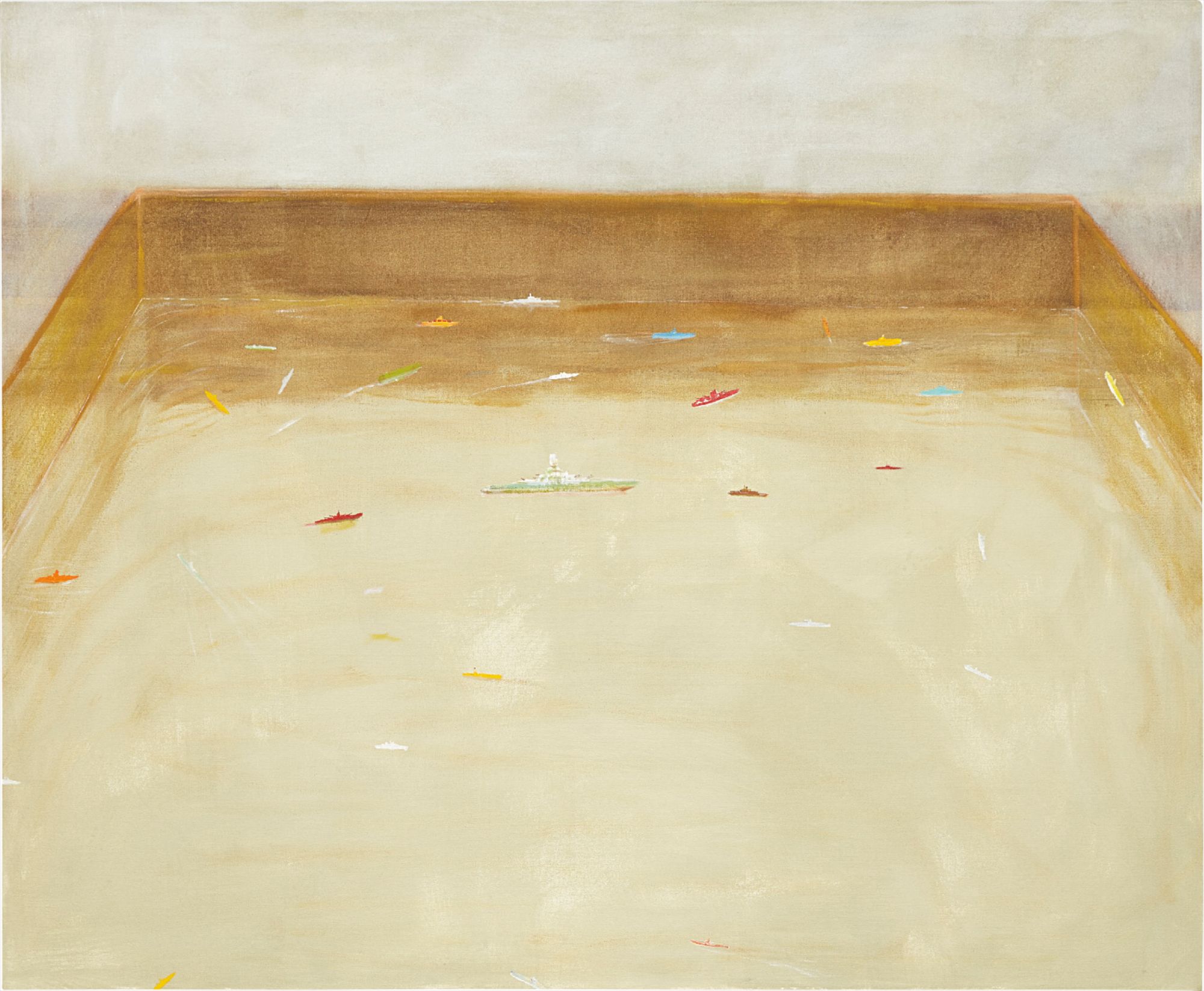
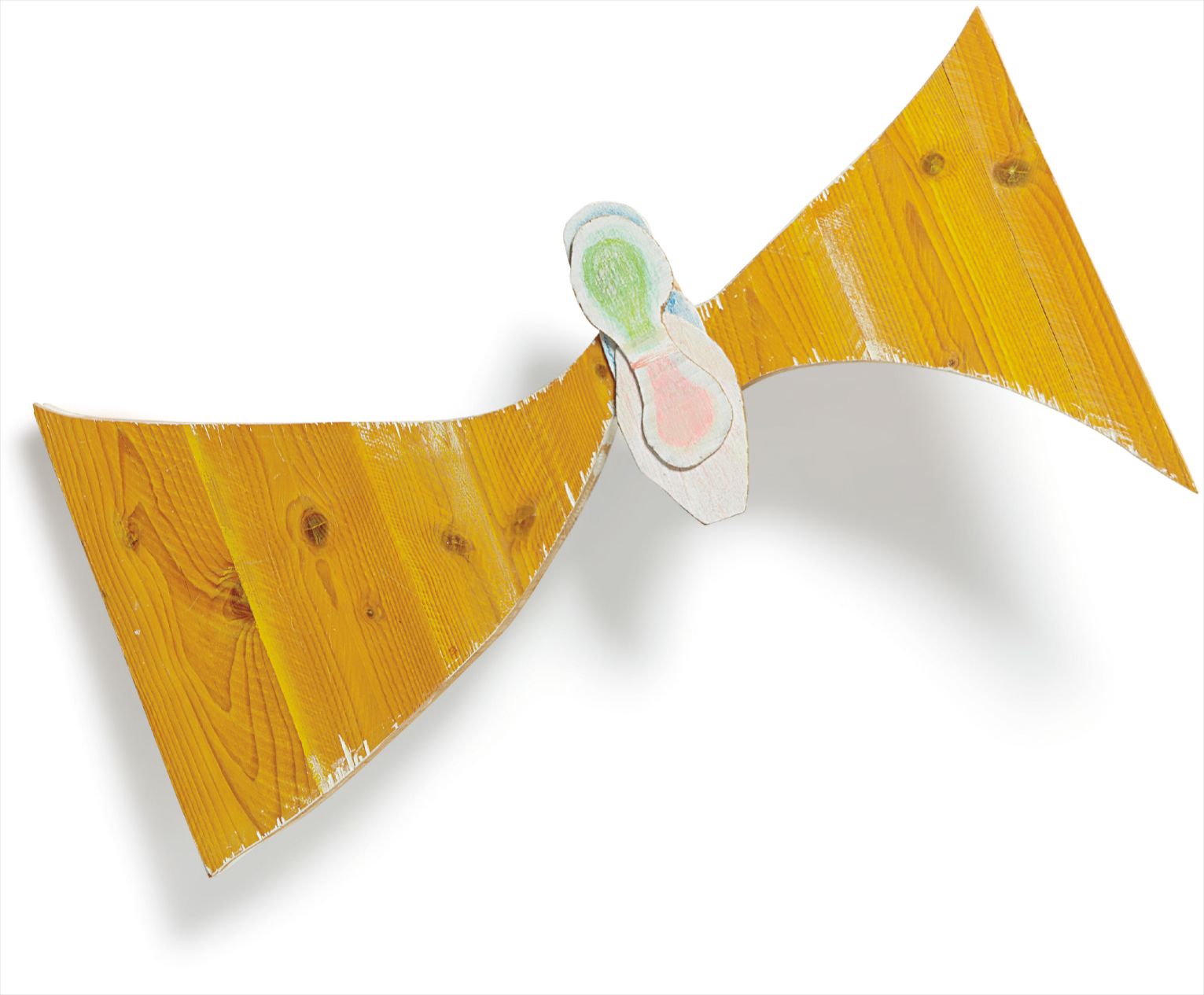
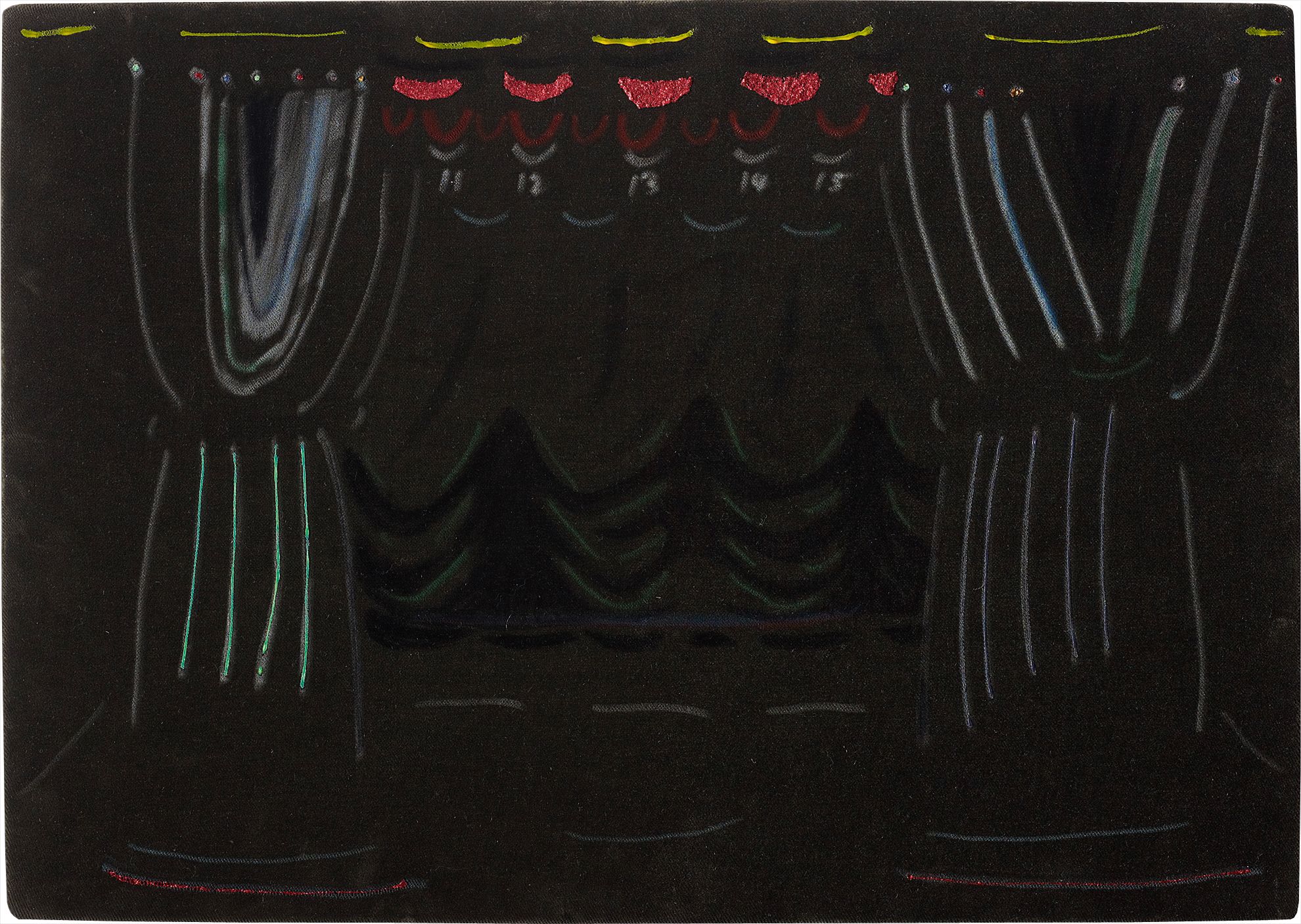
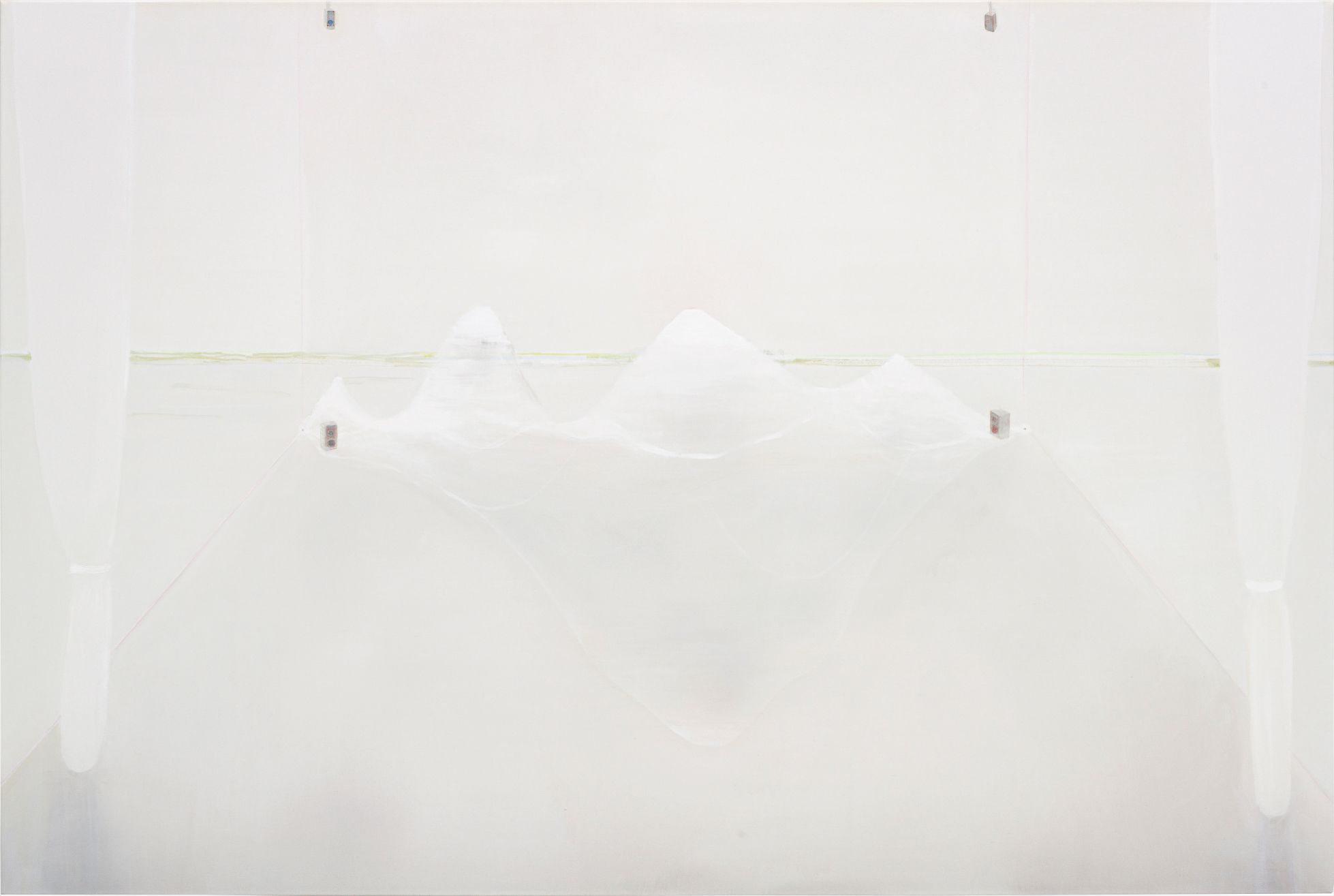
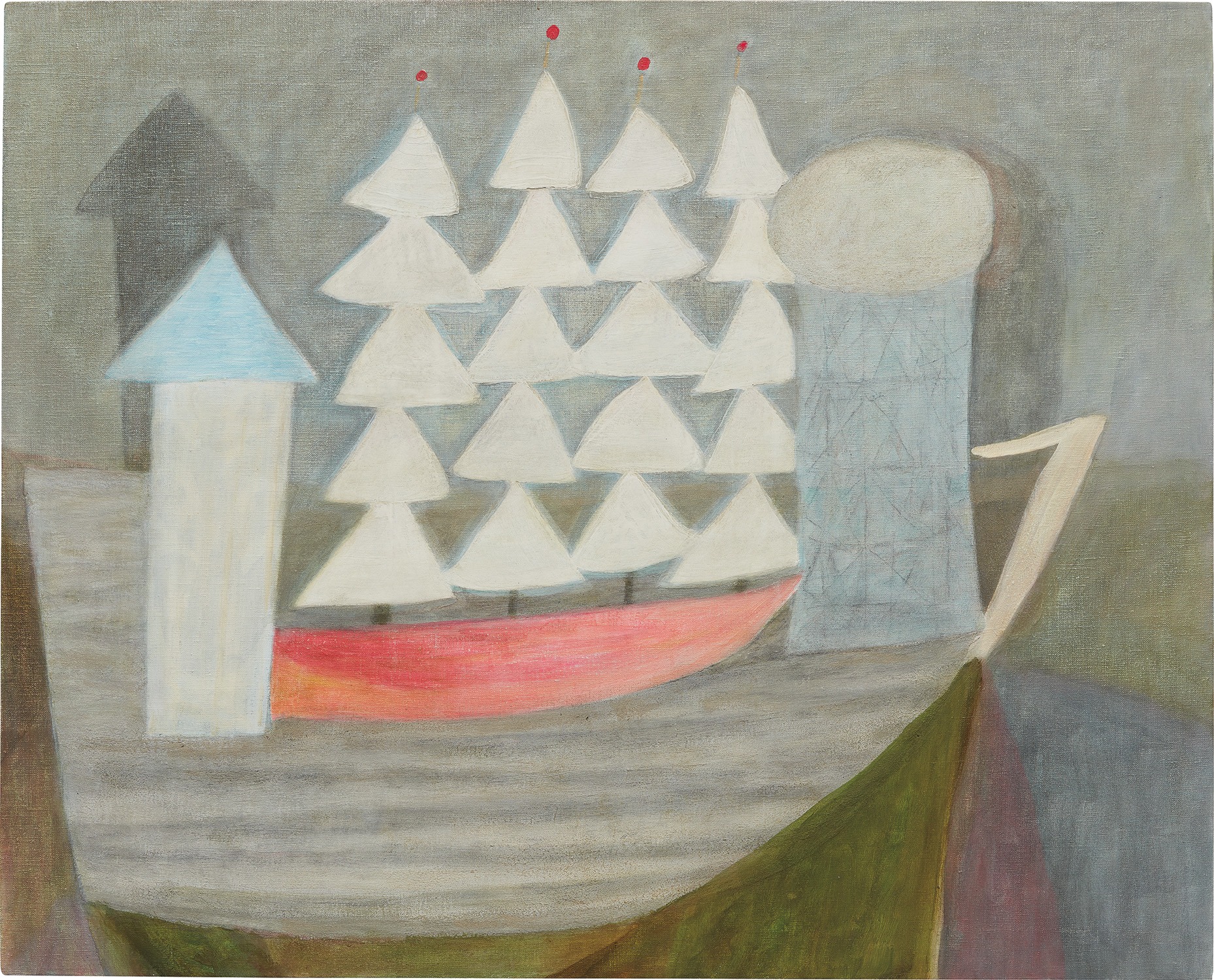
In recent years, the international appetite for Japanese painting rooted in quiet contemplation and layered interiority has grown with remarkable momentum, and few artists embody that sensibility more completely than Hiroshi Sugito. Museum audiences across Europe and North America have increasingly encountered his canvases in survey exhibitions devoted to the generation of Japanese painters who came of age in the 1990s, a generation that absorbed both Western contemporary art and the deep traditions of Japanese pictorial space without being overwhelmed by either. Sugito occupies a singular position within that conversation: lyrical without being decorative, surreal without being theatrical, and always, unmistakably, his own. Sugito was born in 1970 and has remained rooted in Nagoya, a city whose relationship to contemporary art has often been underestimated by those who fix their attention solely on Tokyo and Osaka. Nagoya carries its own cultural gravity, and for Sugito it has served as both studio and sanctuary, a place where the pace of life allows for the slow, meditative accumulation of imagery that defines his practice. His formation as a painter coincided with a period of remarkable creative ferment in Japan, when artists were negotiating the legacy of Mono Ha, the influence of American abstraction, and the emerging energies of what would eventually be grouped under the broad and imperfect label of Superflat. Sugito absorbed all of this while remaining fundamentally independent of any single movement. His artistic development in the 1990s established the core vocabulary that would carry him through the following decades. Works from this period, including pieces on paper with acrylic, pigment, and graphite such as the 1999 piece known as The Dog, reveal an artist already in command of a distinctive touch: paint applied in translucent layers, forms that hover between recognition and abstraction, and a color sense that feels simultaneously warm and otherworldly. The Dog, with its economy of means and its quietly charged presence, exemplifies how Sugito could invest a simple subject with an almost meditative weight. Animals, figures, architectural elements, and strange organisms appear throughout his work not as protagonists of a narrative but as inhabitants of a pictorial atmosphere. The early 2000s brought some of his most celebrated canvases, including The Speaker Room of 2002 and The Blue Room of 2003, both executed in acrylic and pigment on canvas. These works demonstrate his gift for conjuring enclosed environments that feel simultaneously interior and infinite. The rooms in these paintings are not places you could locate on a floor plan; they are states of attention, zones where domestic familiarity dissolves into something stranger and more open. Light in these pictures does not come from an identifiable source. It seems instead to emanate from the paint itself, a consequence of his translucent layering technique that allows earlier passages to glow through subsequent ones. This quality of inner luminosity is perhaps the most immediately recognizable feature of his mature work and the quality that collectors most consistently describe as the reason a Sugito canvas stays with you long after you have left the room. By 2005, with works such as For the bird executed in oil on canvas, Sugito had expanded his material range while preserving his atmospheric consistency. The choice of oil in that period introduced a new density and richness to certain passages, creating productive tensions with the more gossamer effects he achieved in acrylic. His later work, including Table 3 from 2013 in acrylic and graphite on canvas, reveals an artist willing to introduce harder edges and more deliberate structural elements without sacrificing the dreamlike ambiguity that defines the experience of standing before his paintings. The graphite here functions not merely as drawing but as a kind of tonal weather, subtly shifting the emotional register of the composition. Sugito's connection to his peers has also been a meaningful dimension of his public presence. His association with Yoshitomo Nara, documented in collaborative and co credited print editions including a lithograph in colors on wove paper, places him within one of the most discussed artistic friendships to emerge from Japan in that era. Nara's international celebrity has sometimes cast a shadow over the quieter accomplishments of artists in his orbit, but Sugito's work stands entirely on its own terms. Where Nara's imagery tends toward a graphic directness and emotional confrontation, Sugito's canvases invite a slower, more ruminative kind of looking. They are paintings for people who enjoy the experience of not quite knowing what they are seeing and finding that experience pleasurable rather than frustrating. For collectors, Sugito represents a compelling intersection of critical seriousness and genuine accessibility. His works on paper and his print editions offer meaningful entry points into a practice that has also produced significant canvases sought by serious institutional and private collections. The edition works, many signed, dated, and numbered in pencil, carry the same careful attention to material and surface that characterizes his unique works. Collectors who have followed his career across the past three decades often speak of his consistency as a kind of integrity: here is an artist who has not pivoted in response to market trends but has continued to deepen and refine a singular vision. That fidelity to his own pictorial world is precisely what gives his work its long term resonance in the market and its enduring power in the room. Within art history, Sugito invites comparison to a lineage of painters who have used atmospheric layering and suggestive, ambiguous imagery to create spaces of contemplative mystery. One thinks of certain passages in Paul Klee, of the soft spatial complexity in works by Vija Celmins, and of the floating, weightless environments constructed by some of his Japanese contemporaries. Yet these comparisons ultimately serve mainly to clarify what makes Sugito distinctive: his particular combination of organic softness, architectural suggestion, and a color palette that feels as though it has been steeped in natural light filtered through paper screens. He is a painter of threshold states, of the moment between sleep and waking, between the familiar and the strange. Hiroshi Sugito matters today because the qualities his work embodies, patience, interiority, a willingness to let meaning remain open, feel urgently relevant in a cultural moment that often privileges noise and speed. His canvases ask something of the viewer and reward that asking generously. For anyone building a collection that seeks both visual beauty and genuine intellectual depth, his work offers exactly the kind of lasting conversation that defines a great acquisition.