Surrealist Influences
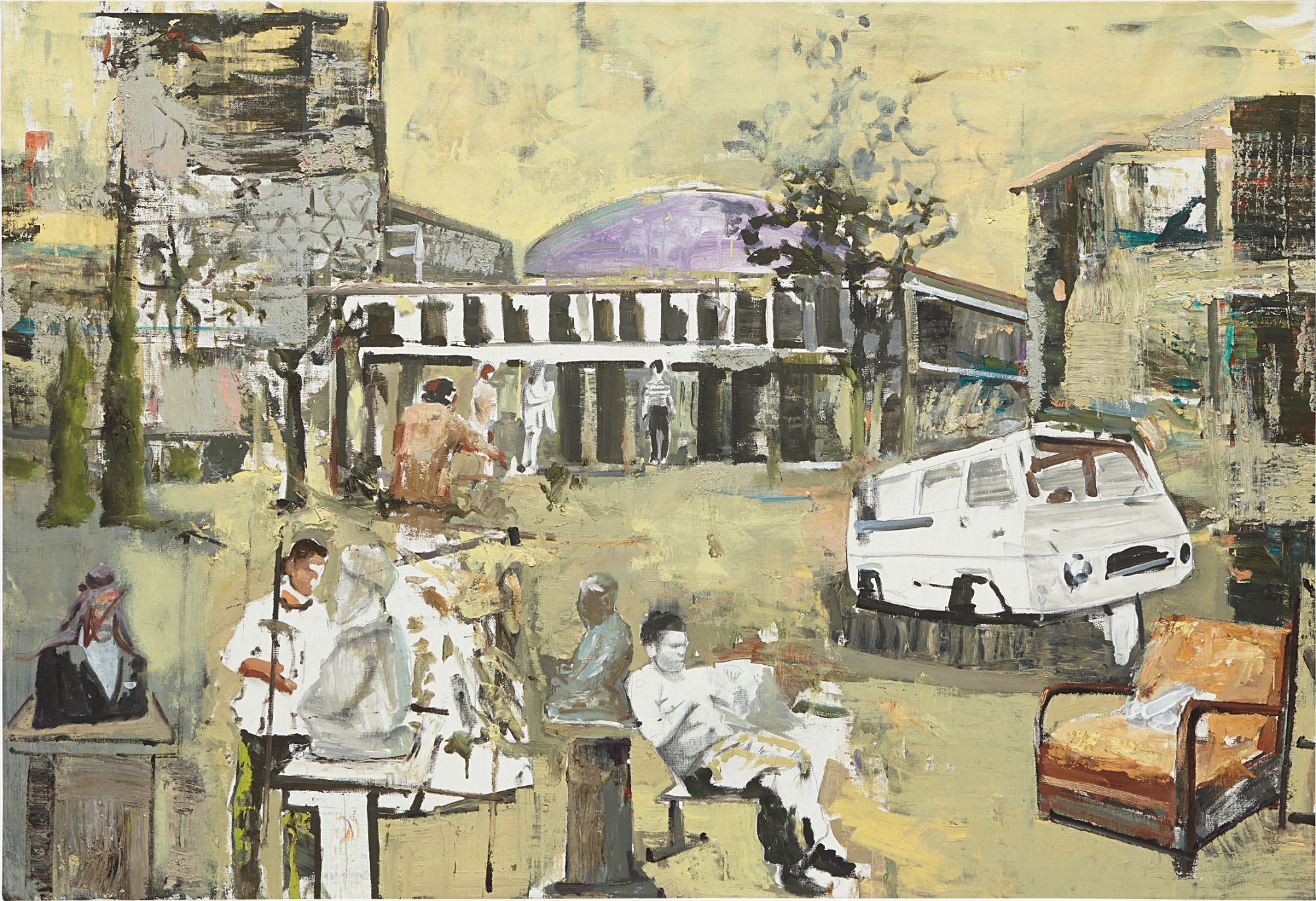
Marius Bercea
Perfume, Pollen and Hysteria


Dreams That Refused to Stay Asleep
There is a particular kind of looking that Surrealism demands. It is not the comfortable scanning of a well composed landscape or the satisfied recognition of a portrait done well. It is something closer to the experience of waking from a vivid dream and trying to hold onto its logic before it dissolves. Surrealism asks you to remain in that threshold, to resist the urge to resolve the image into something sensible.
That quality, unsettling and seductive in equal measure, is precisely what has kept the movement so vital across a century of art history. The movement was formally announced in 1924 when the poet André Breton published the Surrealist Manifesto in Paris, though its roots reached back further into Dada's postwar nihilism and the psychoanalytic theories of Sigmund Freud. Breton and his circle were intoxicated by Freud's model of the unconscious as a repository of repressed desires, fears, and imagery that everyday rational life worked hard to suppress. The manifesto declared the movement's intent to liberate the imagination from the constraints of reason and conventional morality.
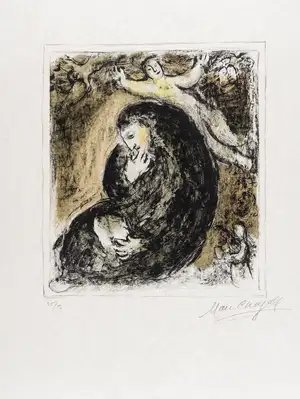
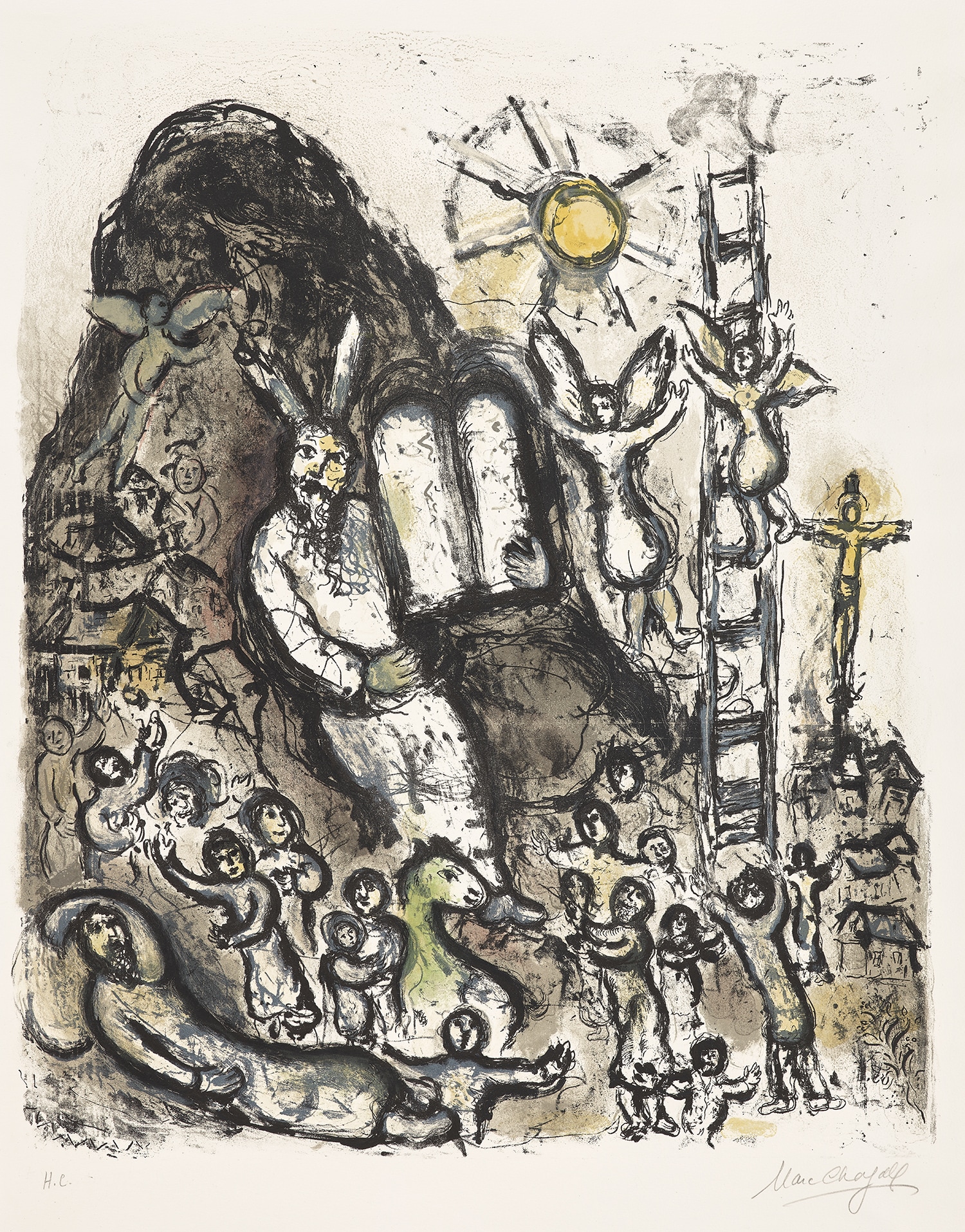
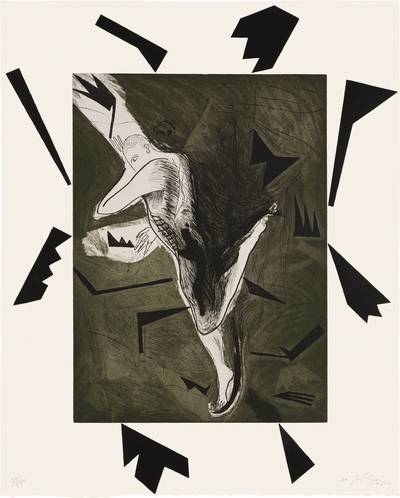
Marc Chagall
The Prophet and the Angel (Mourlot 942)
What followed was one of the most generative and contentious creative experiments of the twentieth century. The early years were concentrated in Paris, where figures like Max Ernst, Salvador Dalí, René Magritte, and Joan Miró developed what would become the movement's twin visual poles. On one side sat the meticulous illusionism of Dalí and Magritte, painters who rendered impossible scenes with almost photographic precision, making the impossible appear mundane. On the other was the more gestural, automatist approach championed by Ernst and Miró, where chance operations and unconscious mark making took precedence over deliberate composition.
The first Surrealist group exhibition, held at the Galerie Pierre in Paris in 1925, brought many of these tendencies together for the first time and established the movement as a collective force rather than a loose gathering of eccentric individuals. Marc Chagall occupies a fascinating position in this story. He was never a card carrying Surrealist in the Breton sense, and Breton was famously ambivalent about him, yet Chagall's floating figures, dreamlike villages, and tender disruptions of gravity anticipate so much of what Surrealism would formalize. His paintings move through a personal mythology rooted in the Jewish folk culture of Vitebsk, transmuting memory and longing into images that feel simultaneously archaic and utterly strange.
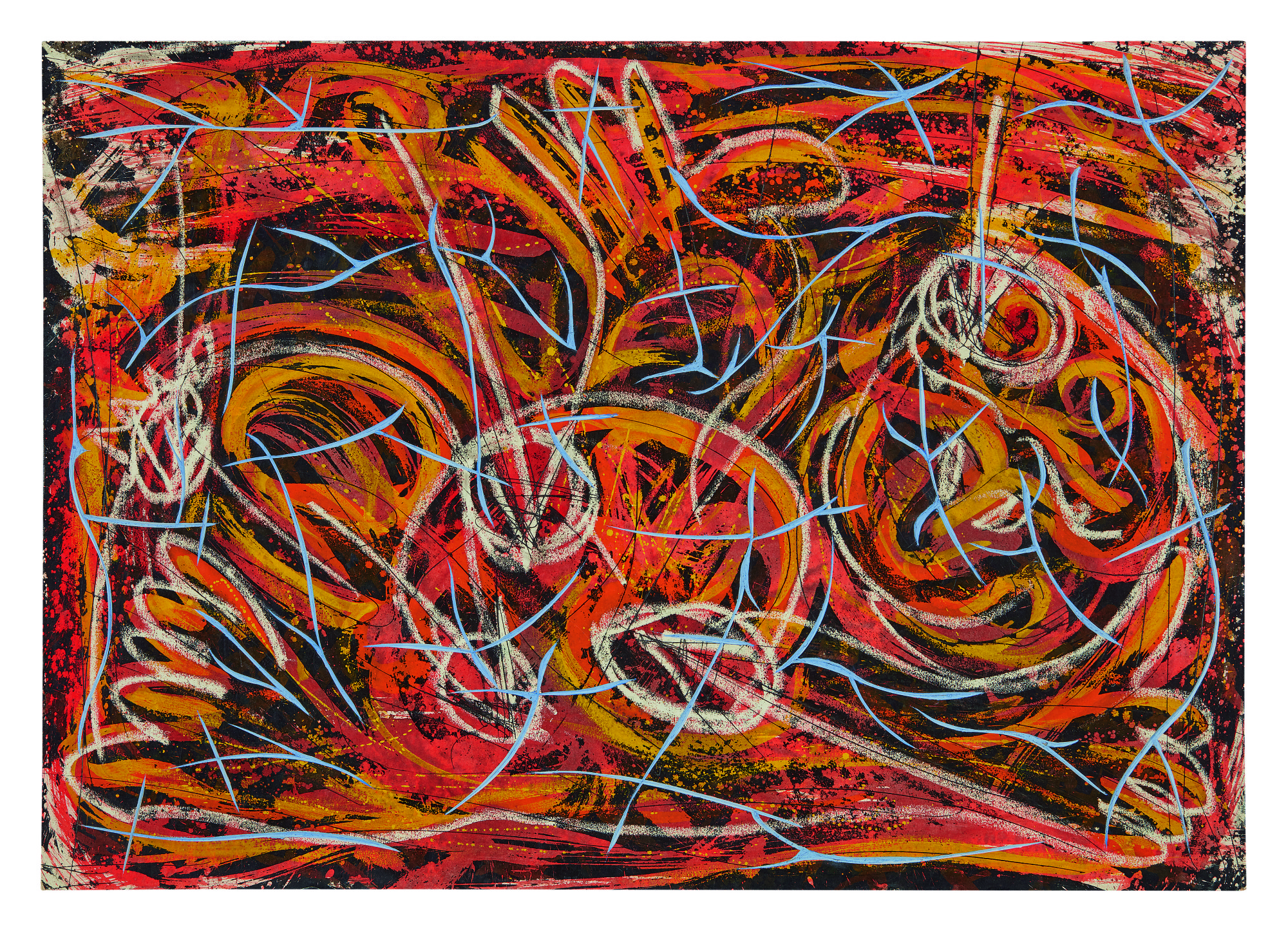
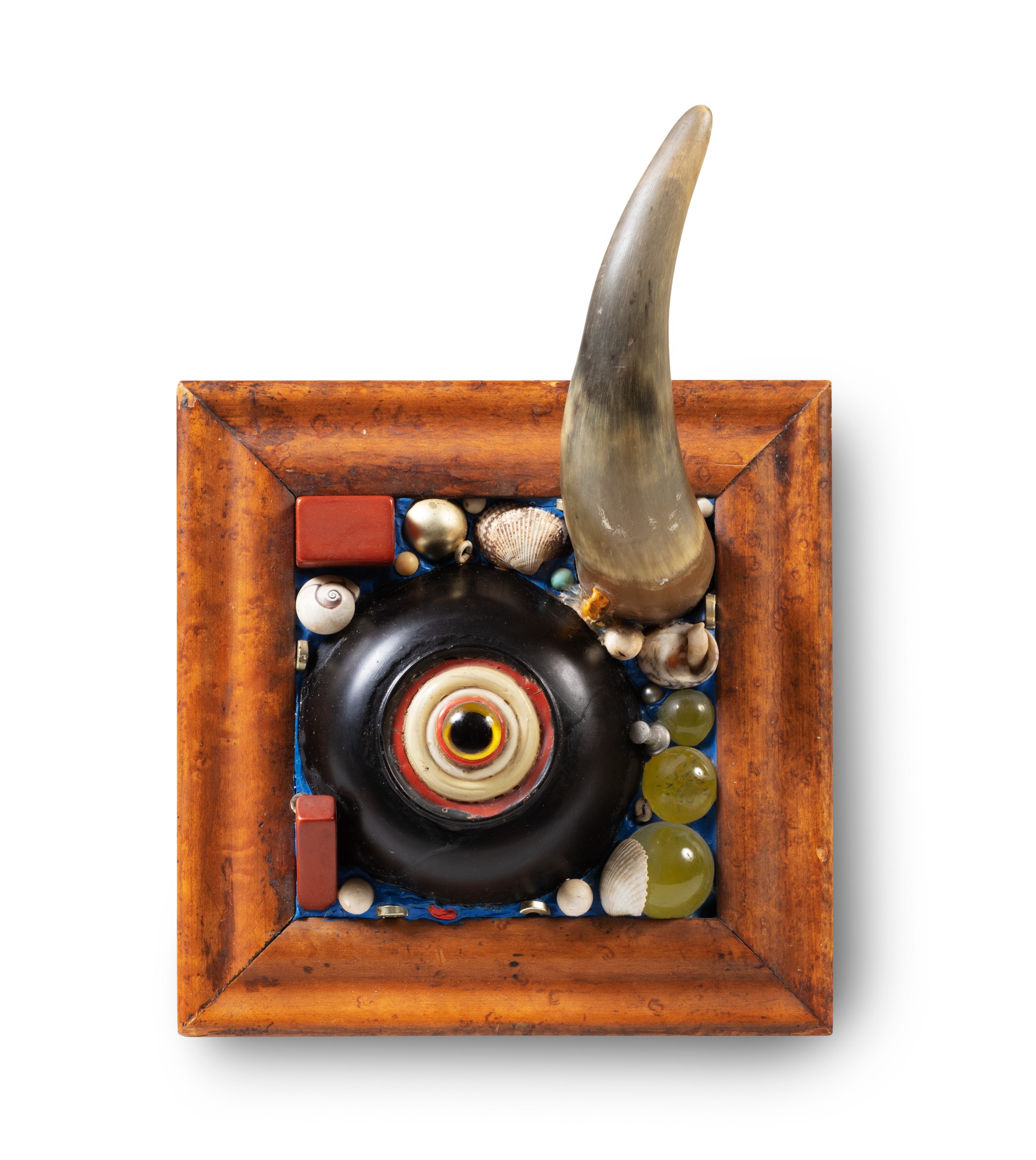
Alfonso A. Ossorio
Turn For The Better, 1950
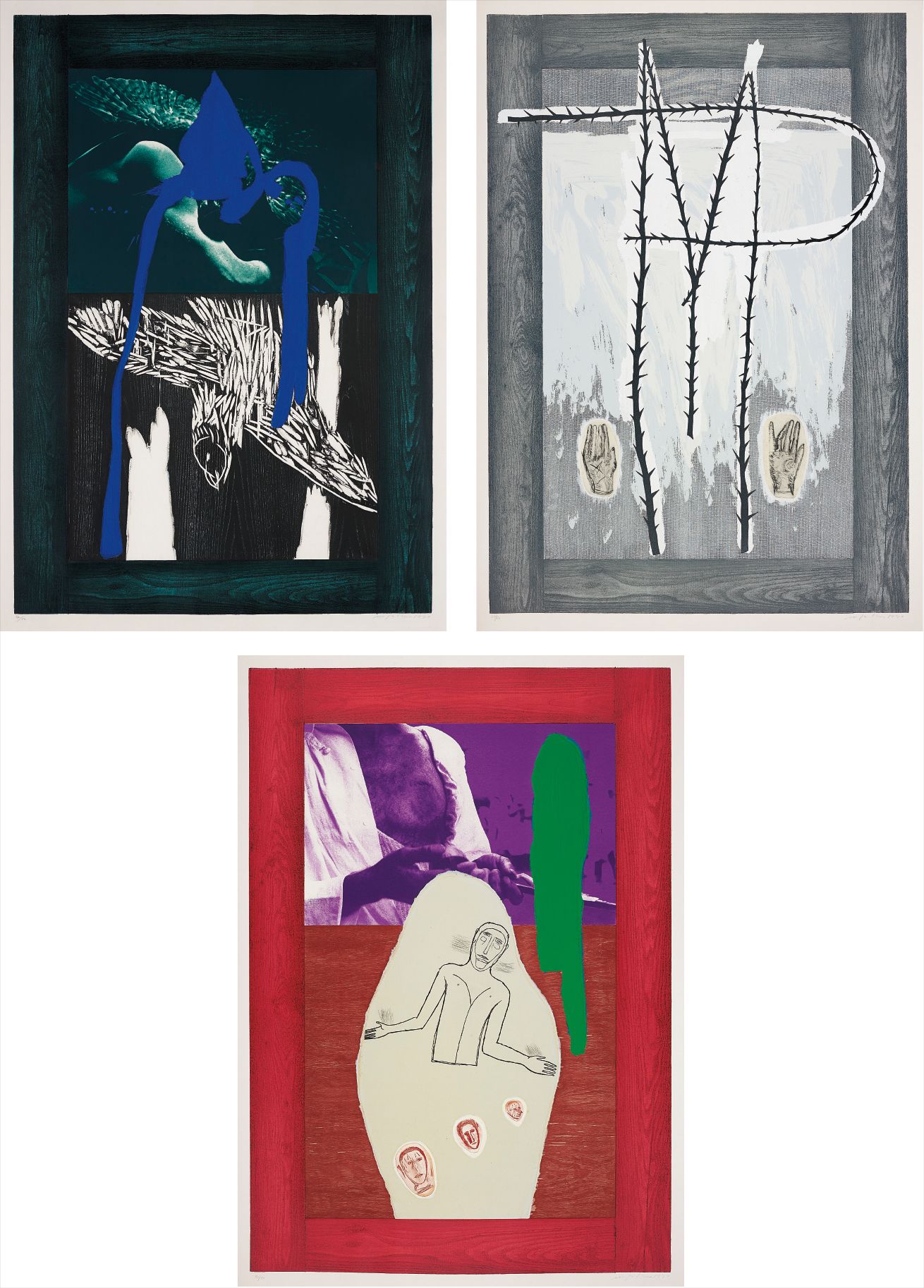
The works by Chagall on The Collection carry this quality with them, that sense of a world where the laws of physics have been lovingly suspended in favor of something more emotionally true. When Surrealism crossed the Atlantic in the late 1930s and early 1940s, carried by European artists fleeing fascism, it seeded the conditions that would eventually give rise to Abstract Expressionism. Alfonso A. Ossorio is one of the more compelling figures in this transatlantic moment.
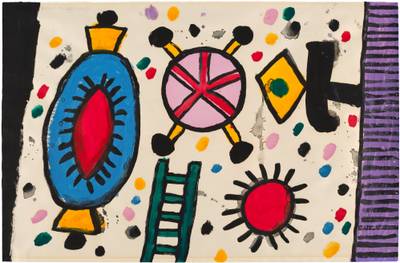
Filipino American and deeply influenced by both automatism and the gestural freedoms the Surrealists had pioneered, Ossorio developed a practice that was wildly idiosyncratic, layering materials, religious symbolism, and psychological intensity in ways that owed a genuine debt to Surrealist precedent while refusing to be contained by it. His work reminds us that the movement's influence spread not just geographically but across cultural contexts that transformed it from within. The British scene was equally rich and distinct. Alan Davie came of age in the late 1940s and developed a painting language that drew on Surrealist automatism alongside jazz, Zen Buddhism, and archaic symbol systems.
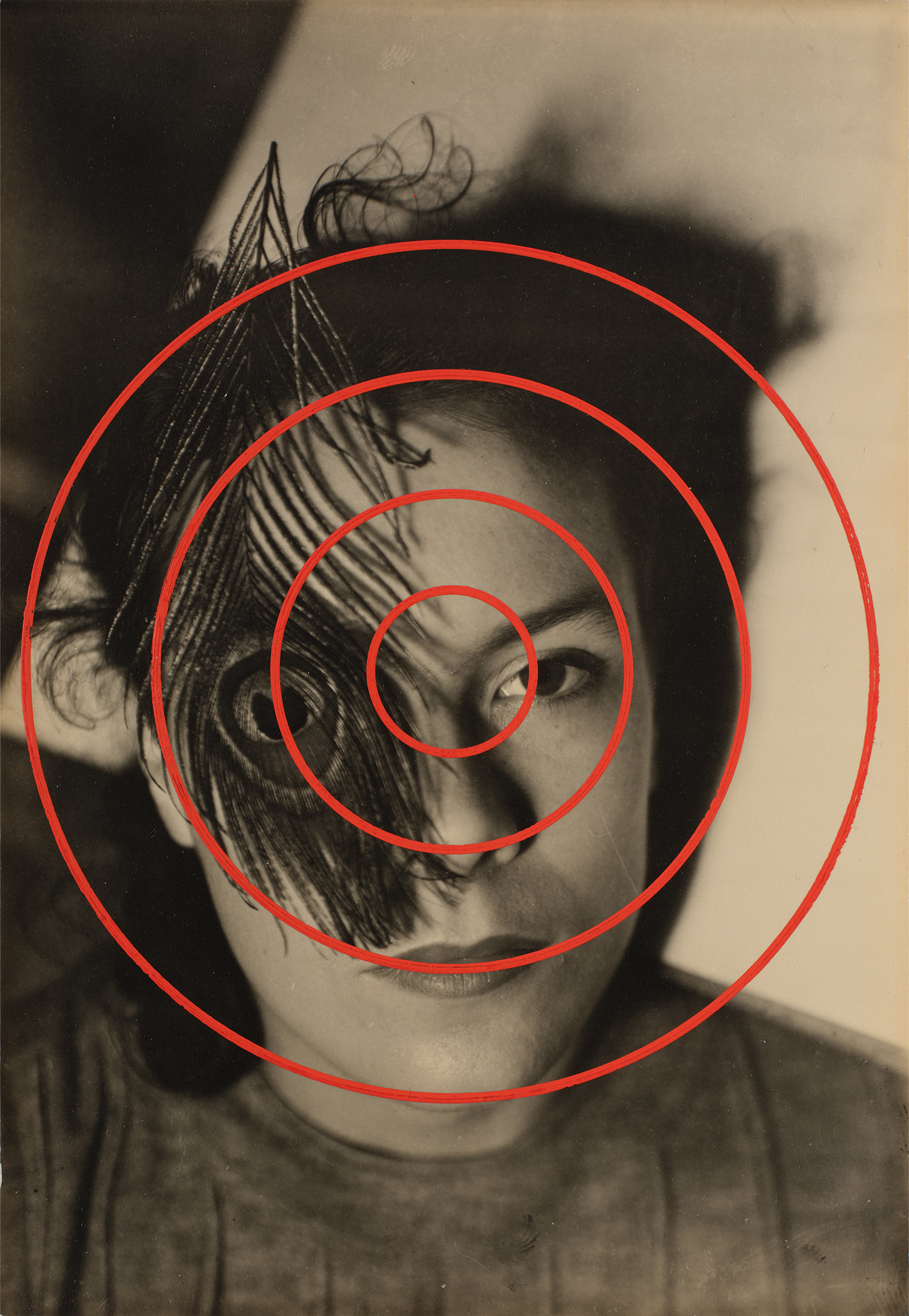
György Kepes
Juliet (with peacock feather and red concentric circles)
His canvases feel like transmissions from some parallel ritual culture, dense with signs that hover between meaning and pure visual energy. In the same vein, György Kepes, the Hungarian born visual theorist and artist who became a central figure at MIT's Center for Advanced Visual Studies, brought a more scientifically inflected imagination to questions that Surrealism had first posed about perception, consciousness, and the hidden structures of reality. By the 1970s and 1980s, what had begun as a revolutionary program had dispersed into the broader bloodstream of contemporary art, informing figuration, performance, installation, and neo expressionism alike. Mimmo Paladino, a key figure of the Italian Transavanguardia movement, brought a mythological and totemic quality to painting that carries clear resonances with Surrealism's interest in archaic imagery and collective dream states.
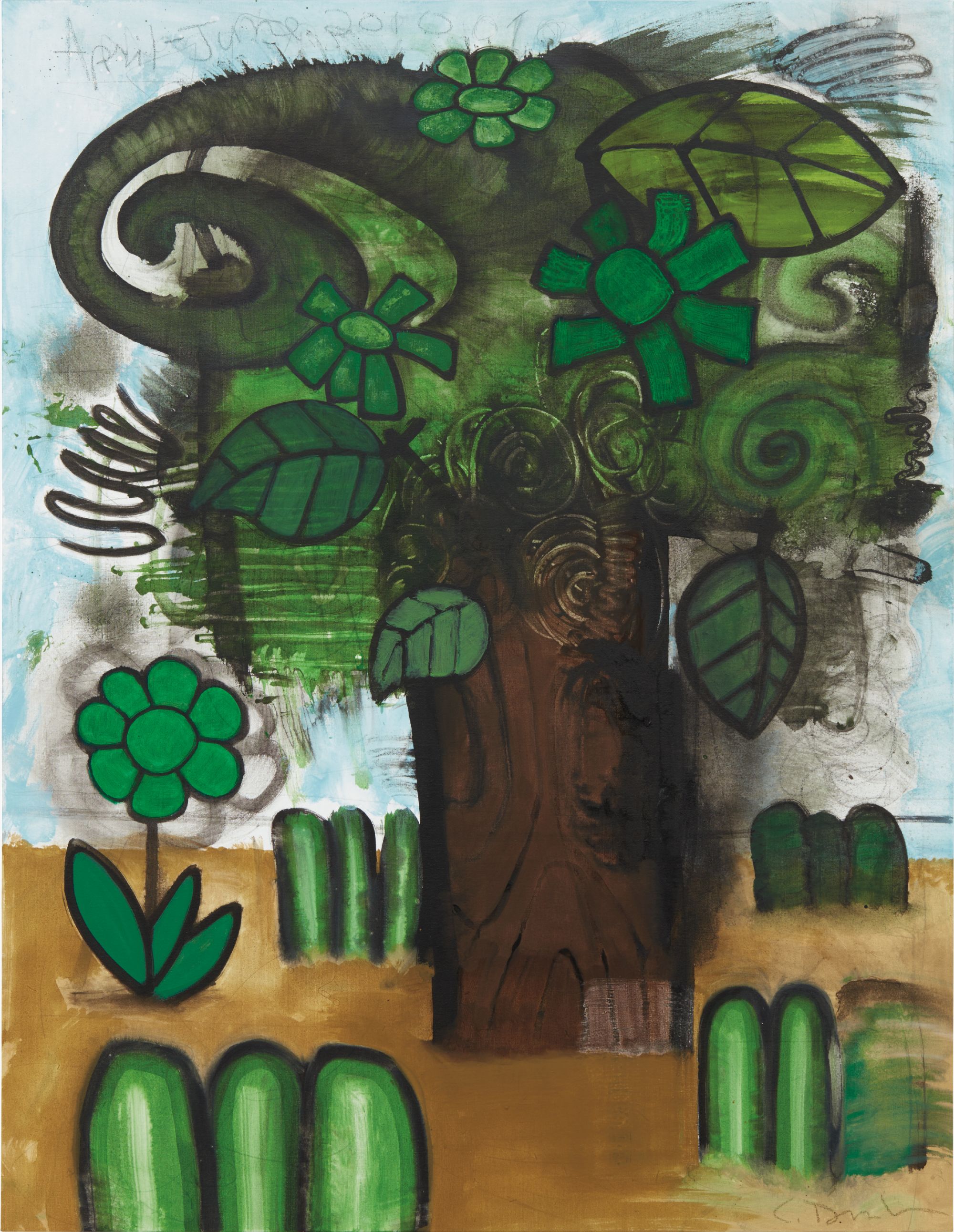
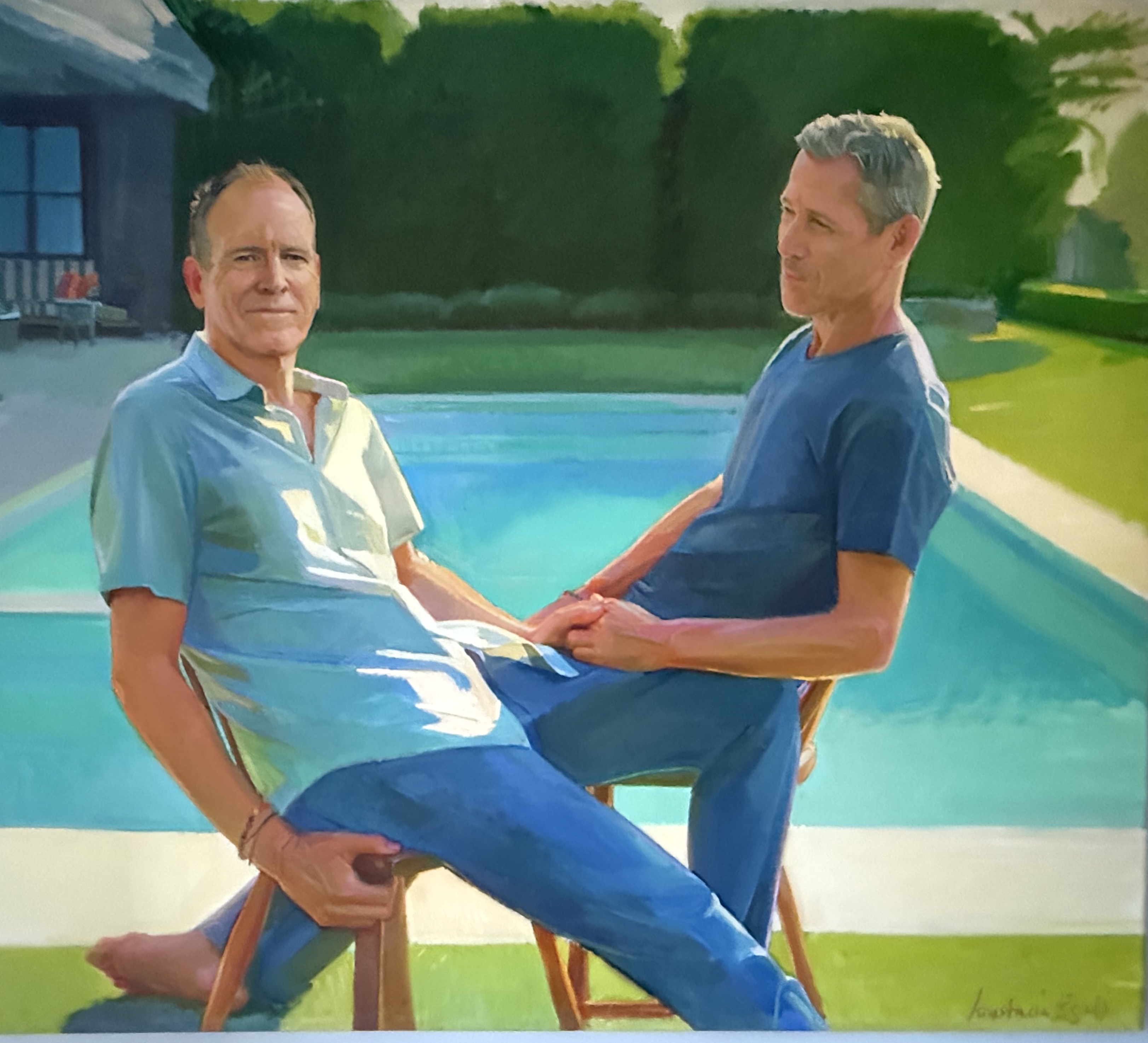
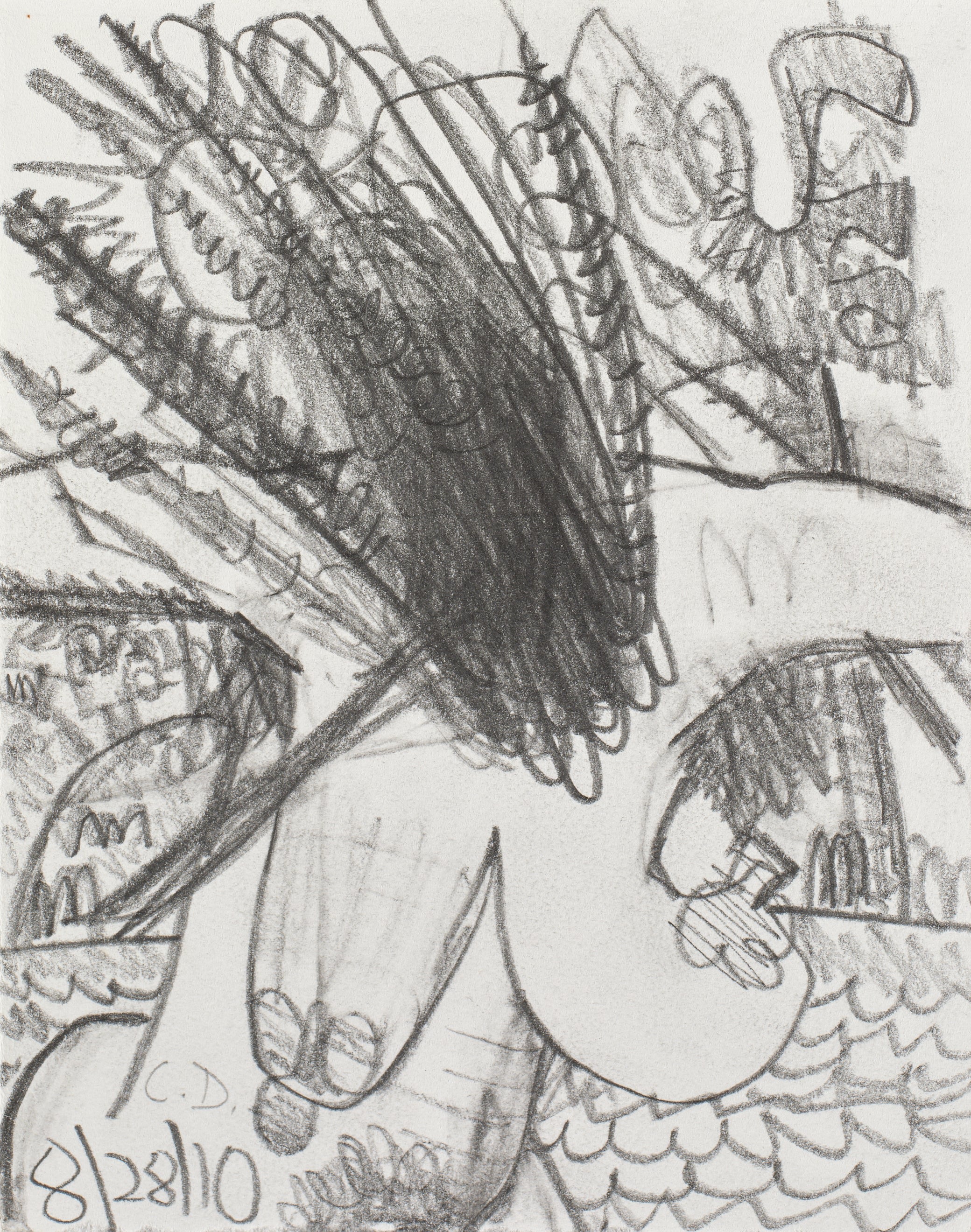
Carroll Dunham, working in New York from the 1980s onward, took the Surrealist tradition of the grotesque body and ran it through a vernacular American sensibility, arriving at something that feels genuinely new while remaining in conversation with older precedents. Marius Bercea, the Cluj based Romanian painter working today, channels a woozy, filmic disorientation that updates the Surrealist project for an era saturated with competing visual realities. What unites these artists across their considerable differences is a shared conviction that painting can access registers of experience that ordinary waking consciousness keeps at bay. The Surrealists believed, and many artists since have confirmed, that the unconscious is not merely a repository of pathology but a source of genuine knowledge.
Marius Bercea
Perfume, Pollen and Hysteria
Dreams, they insisted, are not interruptions of real life but extensions of it, and the job of the artist is to make that continuity visible. That belief has proven remarkably durable. Surrealism also anticipated, with eerie accuracy, the visual culture we now inhabit. In an age of algorithmic image generation, deepfakes, and the constant destabilization of what counts as real, the Surrealists' interrogation of perception and consensus reality feels less like art history and more like prophecy.
The works gathered under this theme on The Collection are not simply historical artifacts or stylistic curiosities. They are invitations to a particular mode of attention, one that the present moment needs perhaps more urgently than ever. To look at them slowly, without rushing toward resolution, is to practice something that is becoming increasingly rare and correspondingly precious.