Postcolonial Art
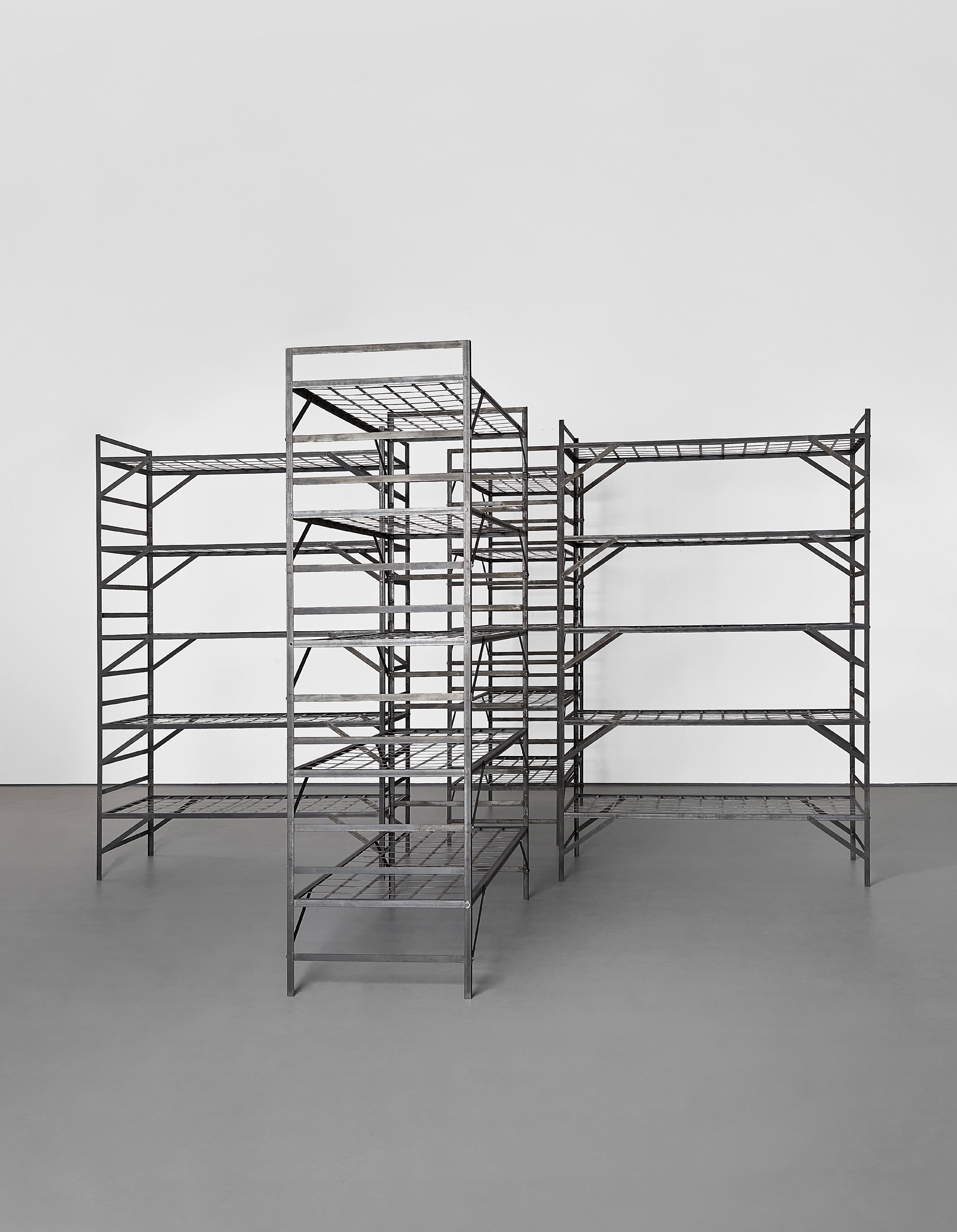
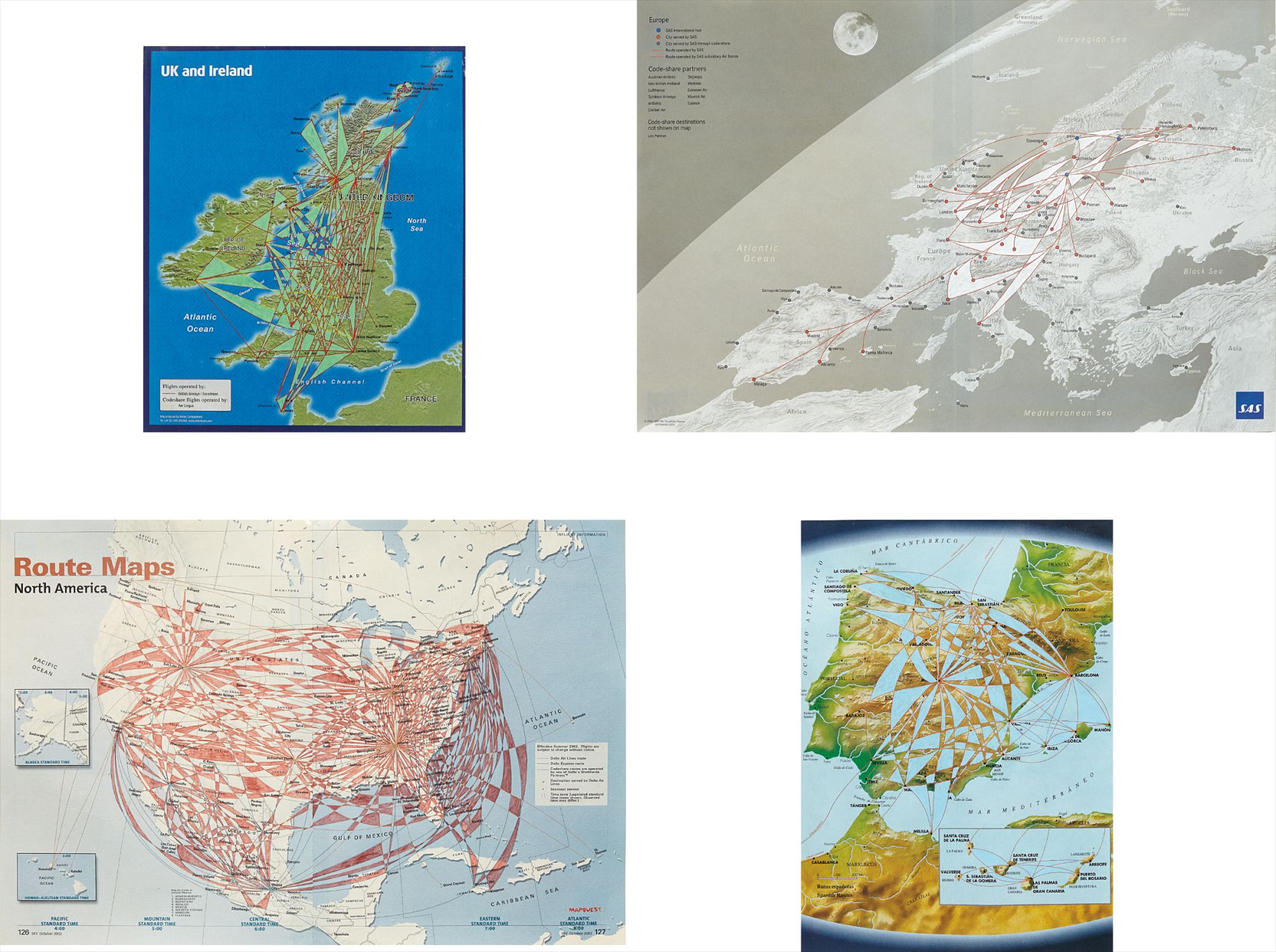
Mona Hatoum
Quarters, 1996


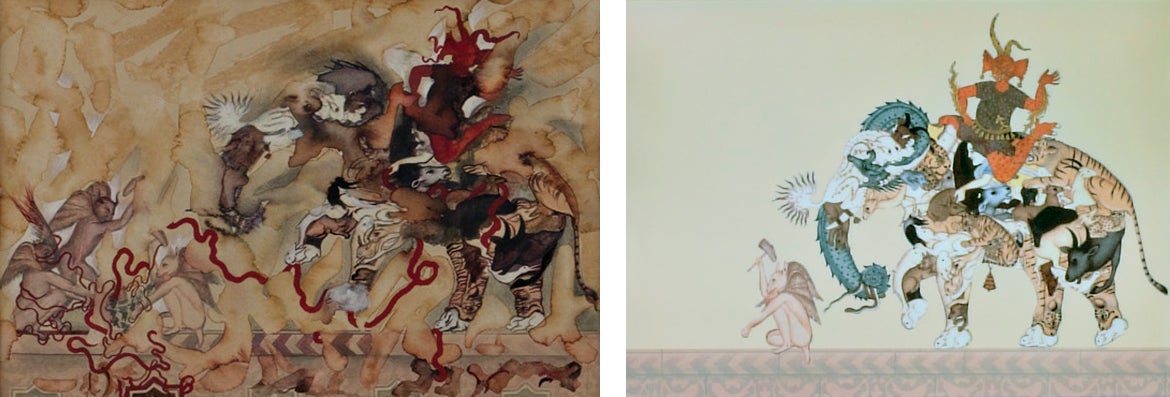
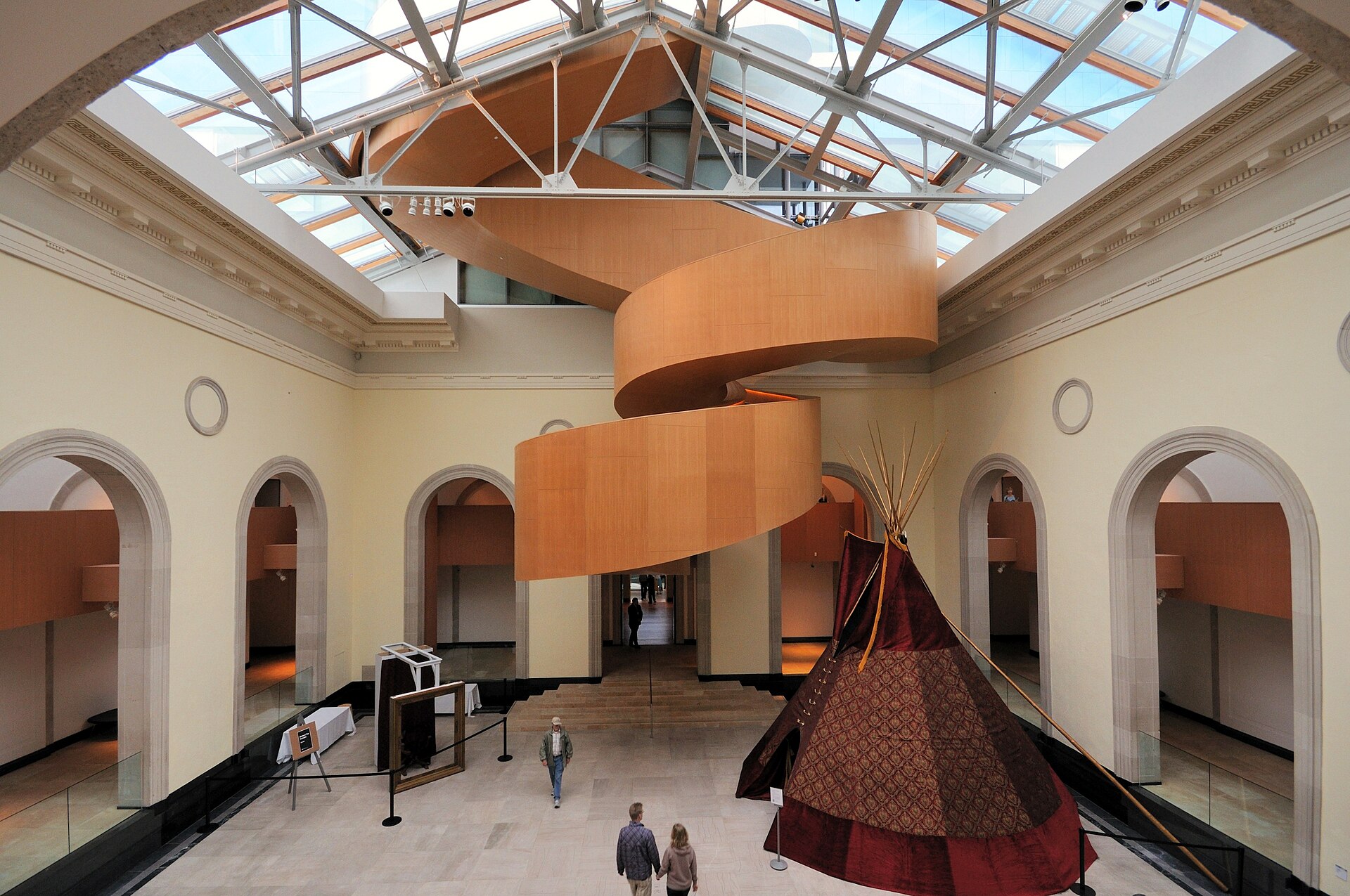
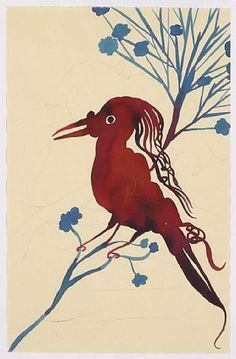
Who Gets to Tell the Story Now
There is a particular kind of urgency that runs through postcolonial art, a current that refuses to let the past settle quietly into history. It is not nostalgia, and it is not grievance alone. It is something more searching than either: a reckoning with how power shapes vision, whose stories get canonized, and what gets buried in the archive. The artists working within this broad and contested territory are not simply responding to empire.
They are rebuilding the very language through which we understand identity, belonging, and the body in space. The intellectual foundations of postcolonial thinking took firm shape in the mid twentieth century, with figures like Frantz Fanon, whose 1961 text The Wretched of the Earth gave artists and thinkers a vocabulary for understanding colonial violence as something psychological and cultural, not merely political. Edward Said's Orientalism, published in 1978, was equally galvanizing, exposing how Western representation of the East was itself an instrument of domination. These texts did not create postcolonial art, but they gave it a theoretical spine, and their influence can be felt in virtually every work that interrogates the gaze, questions the archive, or stages a confrontation between tradition and modernity.
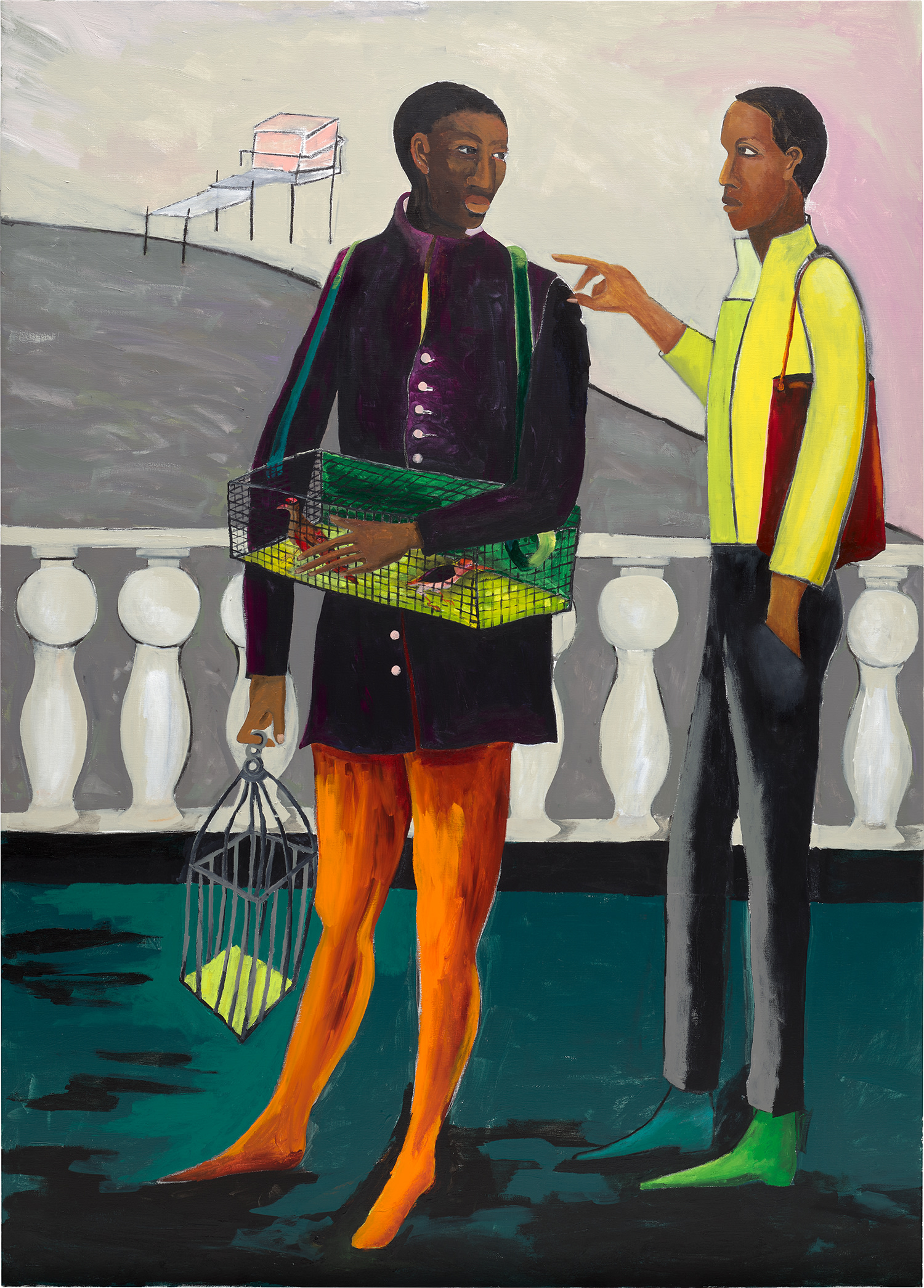
Lubaina Himid
The Bird Seller: Are You Listening, 2021
In the visual arts, the conversation accelerated dramatically through the 1980s and 1990s, when a generation of artists trained in Western institutions began turning their education back on itself. The 1989 exhibition Magiciens de la Terre at the Centre Pompidou in Paris was a flashpoint, one of the first attempts to present work from non Western artists alongside canonical Western contemporaries. It was widely criticized for its curatorial paternalism even as it opened doors, and that tension, between visibility and misrepresentation, between inclusion and tokenism, has never fully resolved. It remains one of the most productive tensions in the contemporary art world.
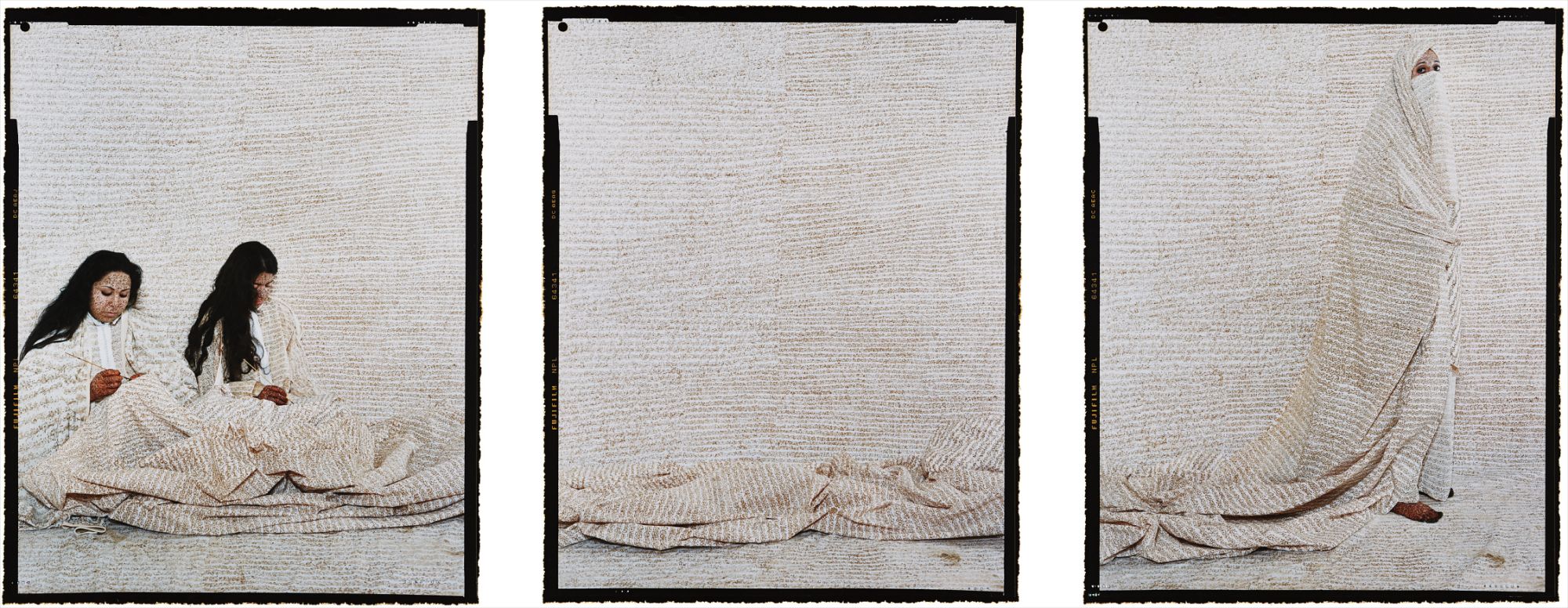
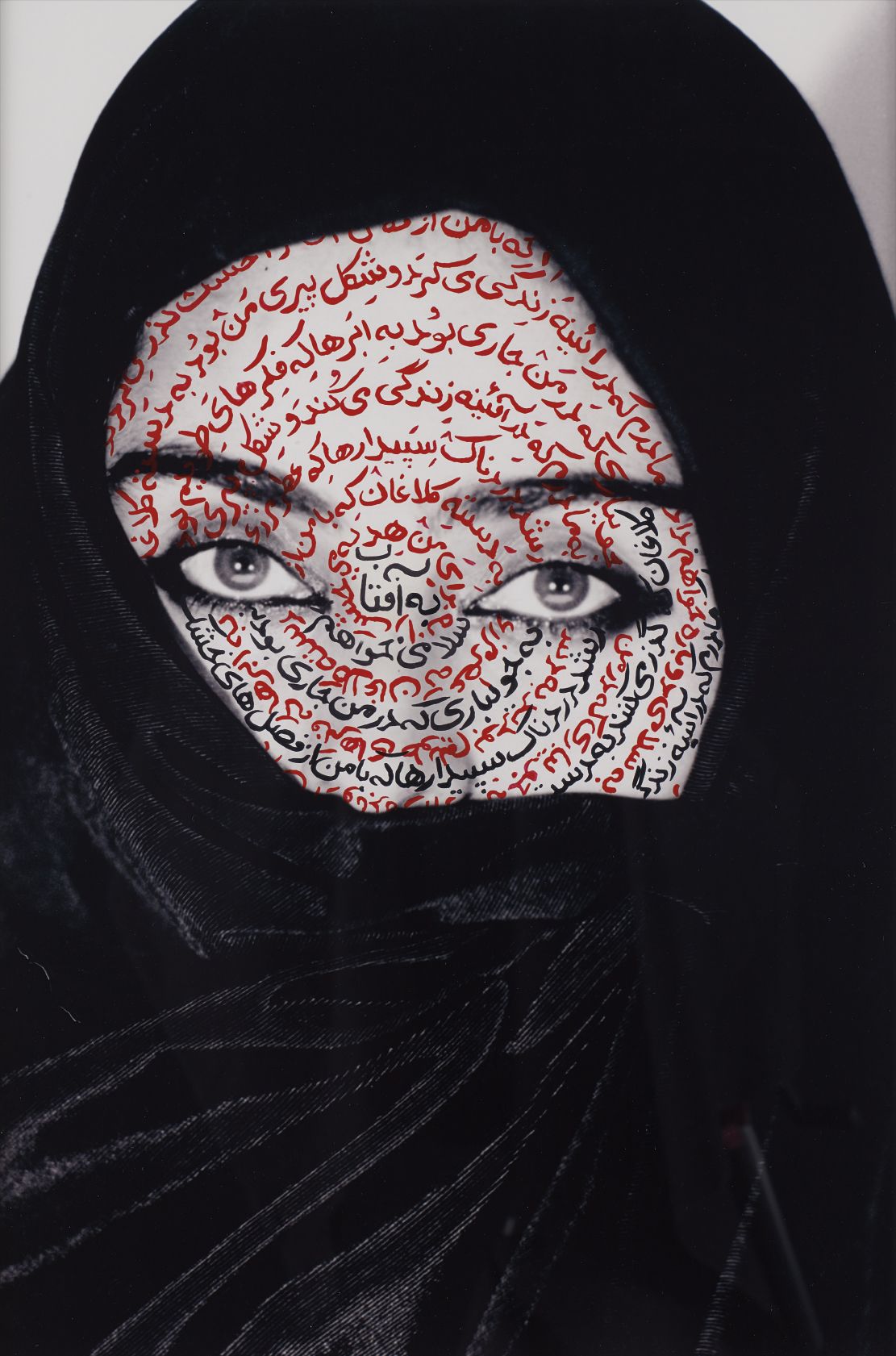
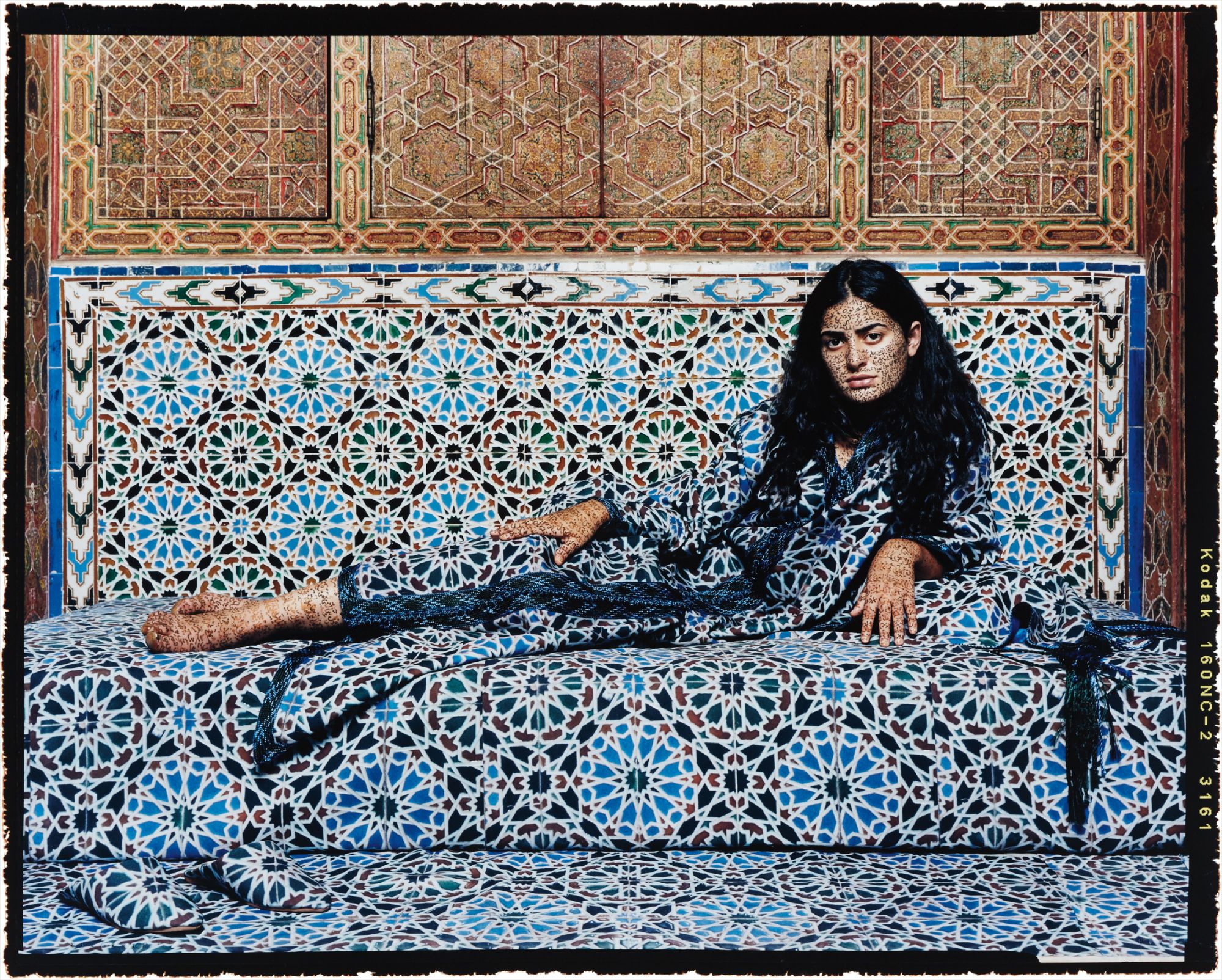
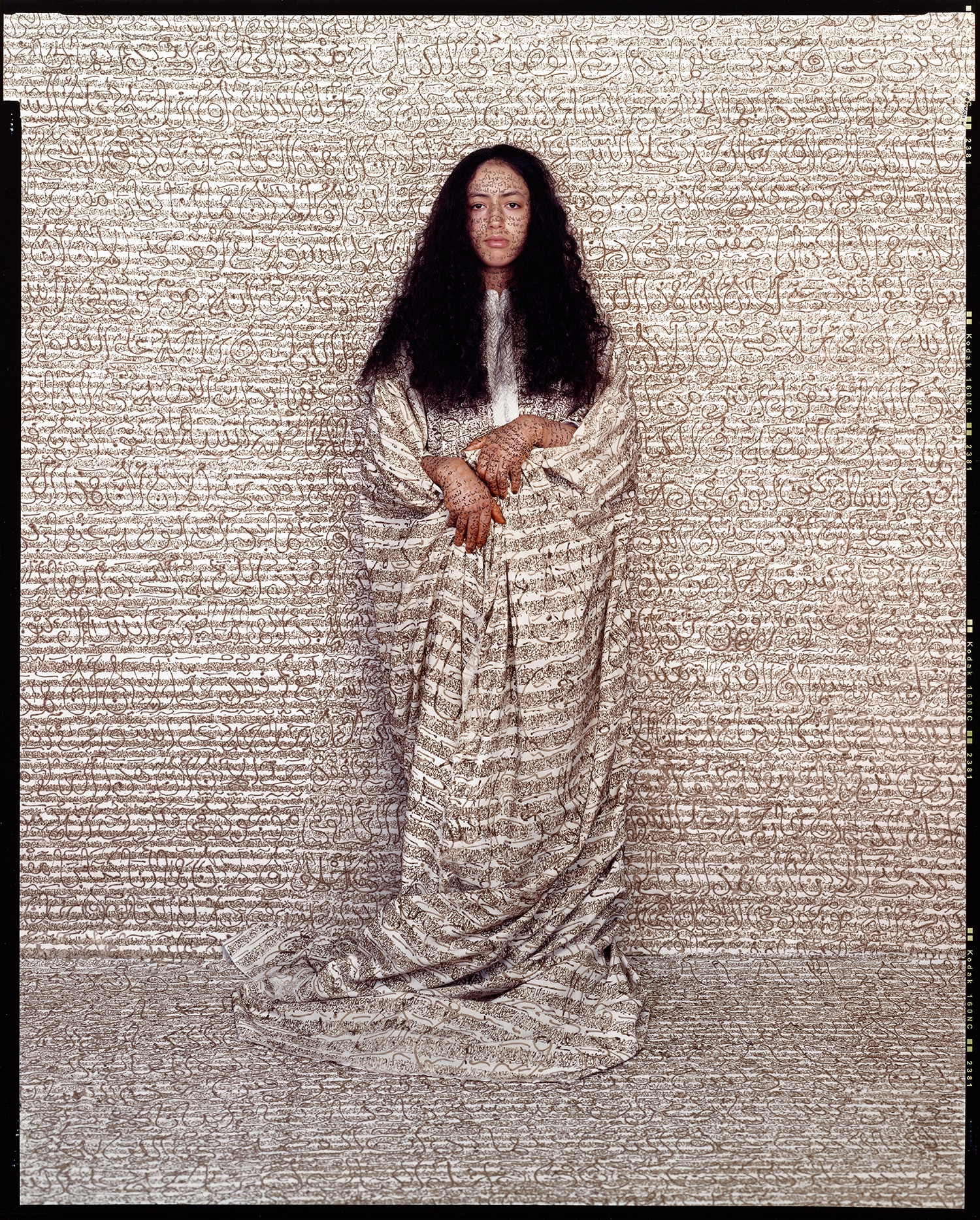
Lalla Essaydi, whose work is well represented on The Collection, is one of the most precise artists working with these inherited complexities. Trained in Morocco and at the School of the Museum of Fine Arts in Boston, she stages large format photographs in which women are inscribed with Arabic calligraphy, reclaiming both the body and the written word from a tradition that historically denied women full access to both. Her visual language draws on Orientalist painting, particularly the odalisque tradition of Ingres and Delacroix, and then systematically dismantles it from within. Shirin Neshat works in a related register, using photography and film to navigate the contested terrain of Iranian womanhood, Islamic identity, and exile.
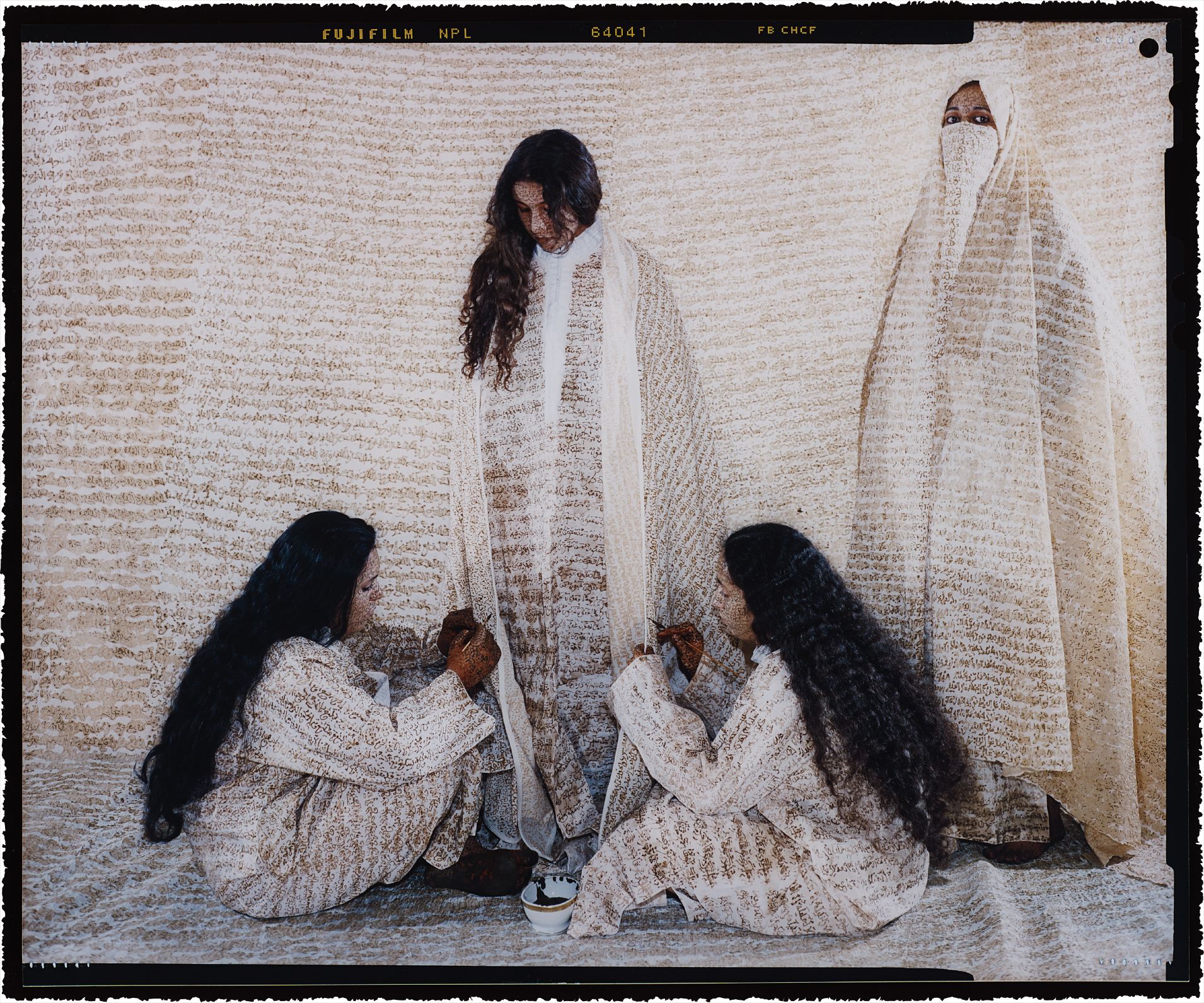
Lalla Essaydi
Converging Territories #13
Her series Women of Allah from the mid 1990s remains among the most arresting works to emerge from the postcolonial canon. Mona Hatoum, born in Beirut to Palestinian parents and long based in London, approaches the subject through a different set of materials entirely. Her sculptures and installations use the everyday to defamiliarize, turning domestic objects into instruments of surveillance, confinement, or longing. Hatoum has described the experience of statelessness as a condition that sharpens one's awareness of space and belonging, and her work makes that heightened awareness visible.
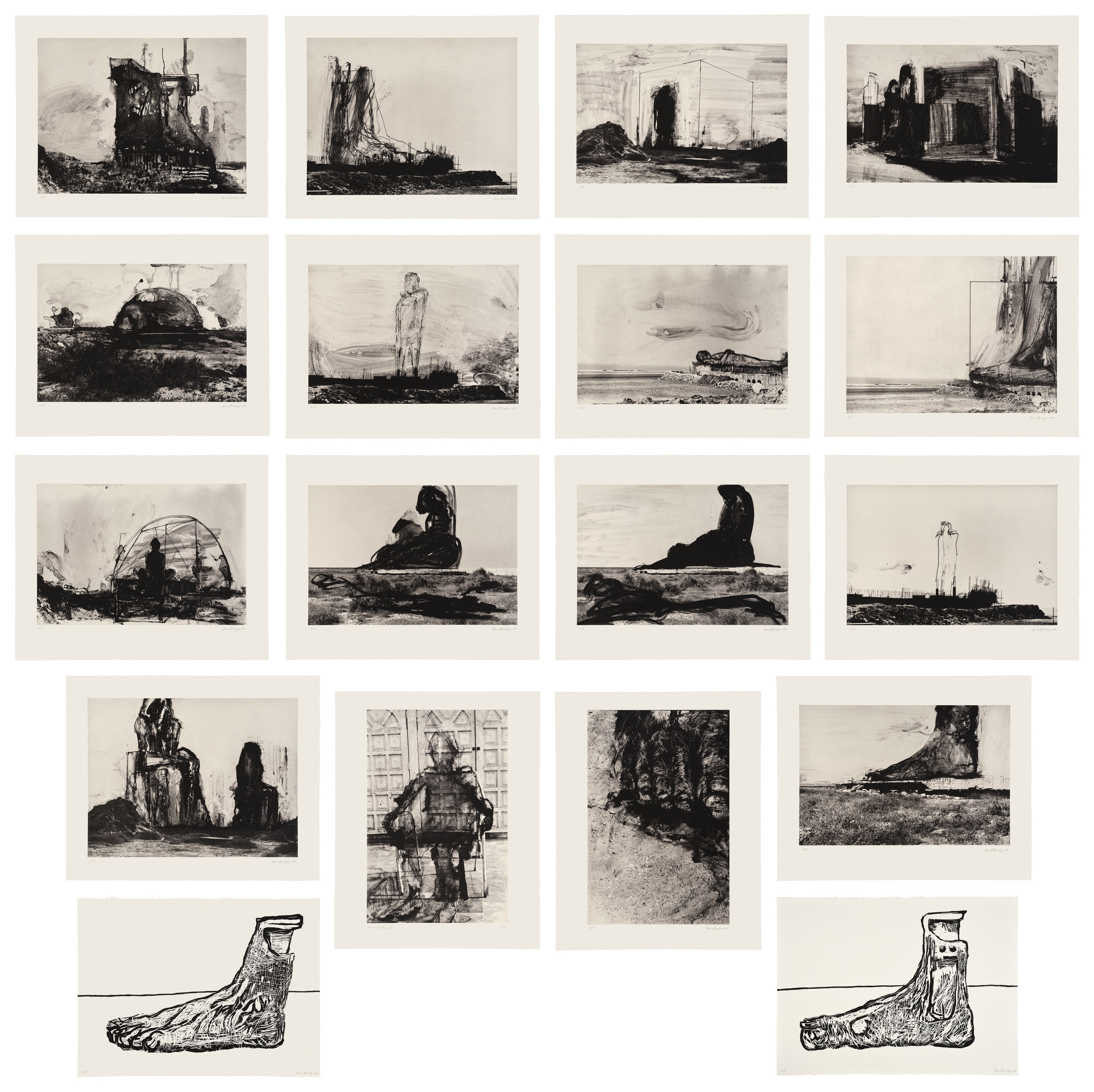
Huma Bhabha, working in New York with cast bronze, clay, and found materials, creates figures that seem to rise out of cultural wreckage, combining African sculptural forms, South Asian iconography, and Western modernism into something that refuses any single inheritance. Both artists are part of The Collection, and placing their work in conversation with each other opens a genuinely rich dialogue about diaspora, form, and survival. The question of craft and technique is central to how postcolonial artists negotiate authority. Shahzia Sikander spent years mastering the Indo Persian miniature painting tradition before beginning to subvert it, introducing feminist and psychedelic distortions into a form once exclusively associated with male court patronage.
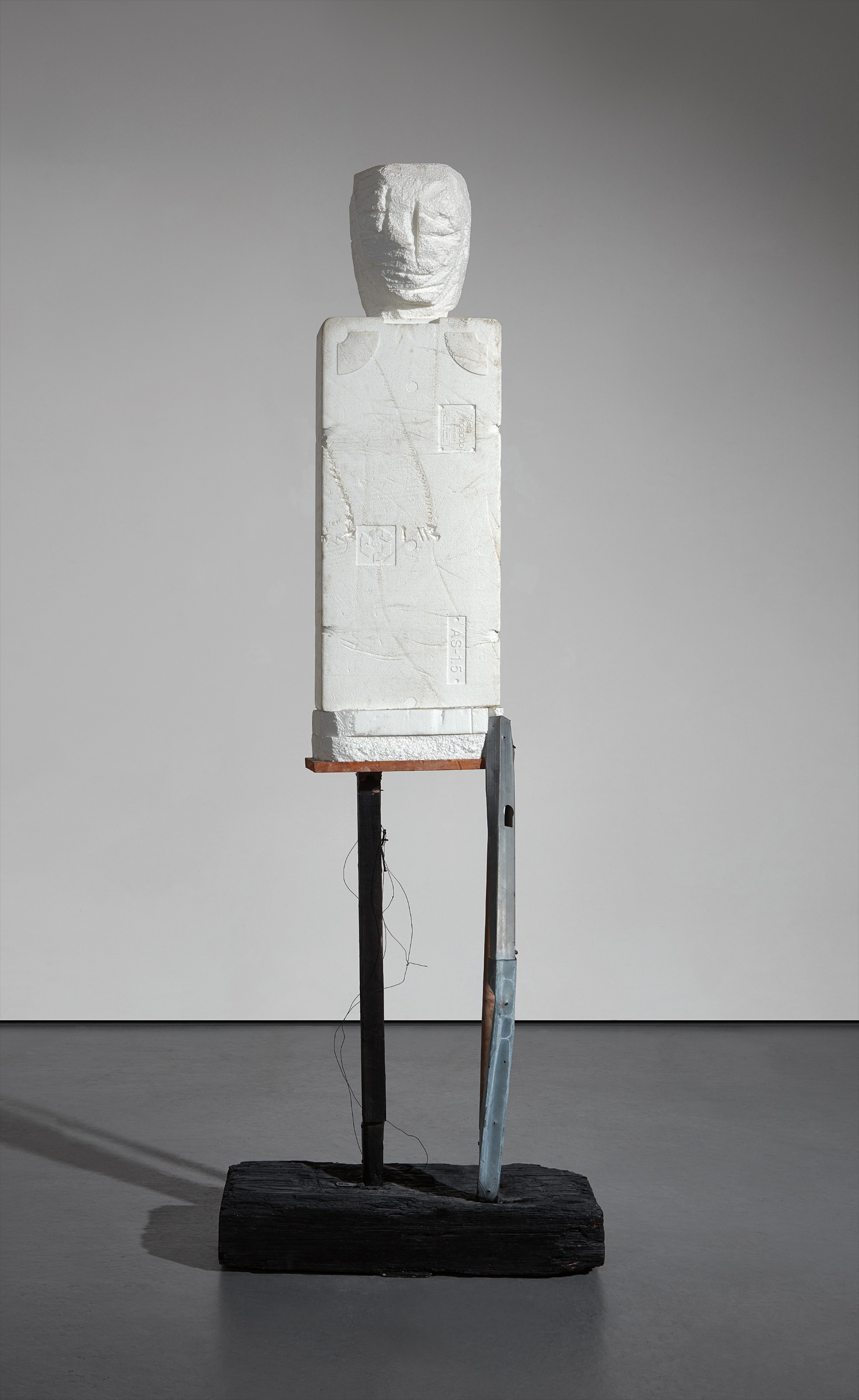
Huma Bhabha
Ghost, 2008
Her work is a masterclass in understanding a tradition deeply enough to transform it. Lubaina Himid, who won the Turner Prize in 2017 at the age of sixty three, works with painting, installation, and pattern to recover the histories of Black presence in Europe that official culture has worked hard to forget. Her practice is archival and celebratory at once, insisting that visibility is not a gift but a right. Dinh Q.
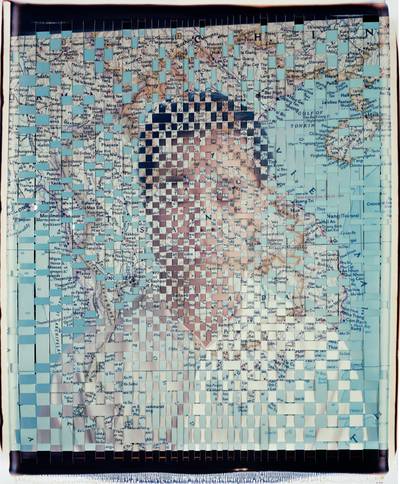
Lê weaves together fragments of documentary photography using a technique borrowed from traditional Vietnamese mat weaving, creating works that literally entwine Western media representations of the Vietnam War with Vietnamese visual culture. The result is an image that neither perspective can fully claim. Subodh Gupta transforms everyday stainless steel utensils, the kind found in millions of Indian kitchens, into monumental sculptures that probe consumption, migration, and the texture of ordinary life in a rapidly changing country. Kent Monkman, the Cree artist working in Canada, takes the tradition of nineteenth century landscape painting and repopulates it with Indigenous figures as protagonists rather than footnotes, reversing the colonial gaze with a theatrical confidence that is entirely his own.
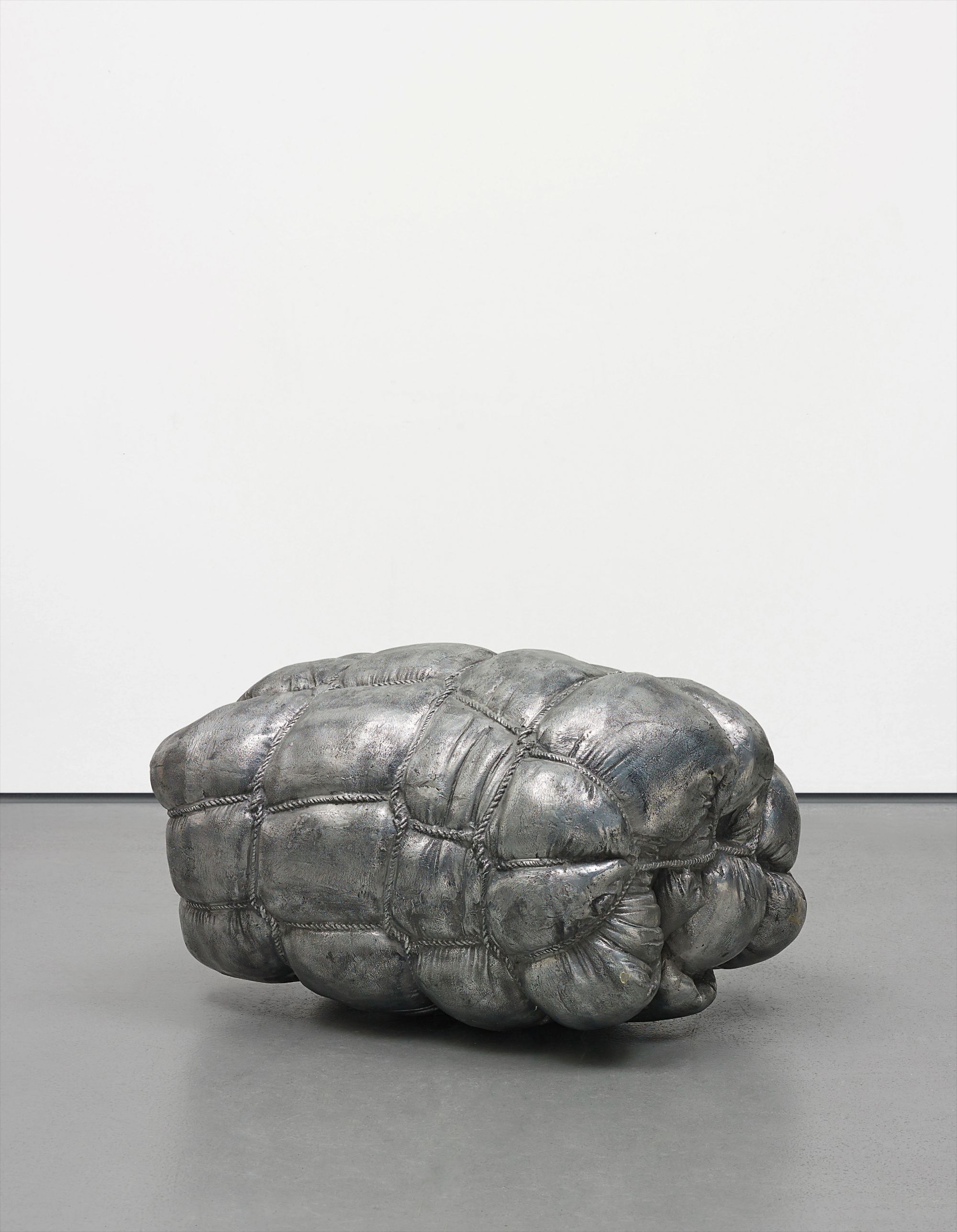
Subodh Gupta
Sans Titre #11
Chris Ofili, perhaps best known for his use of elephant dung as a material, weaves together Black Atlantic culture, art history, and spirituality into paintings of dense, joyful, and sometimes politically charged beauty. What unites these artists across such different geographies and practices is a shared insistence on complexity. Postcolonial art is not a style. It is a critical orientation, a set of questions brought to bear on history, representation, and power.
It asks who made the archive and who was excluded from it. It asks what it means to inherit a tradition that was not built for you, or worse, was built at your expense. These are not abstract questions. They are the questions that make art matter, that connect the object on the wall to the world outside it.
The artists working in this space are not offering answers so much as teaching us how to look more honestly, and that, in the end, is the deepest function art can serve.