Language And Meaning
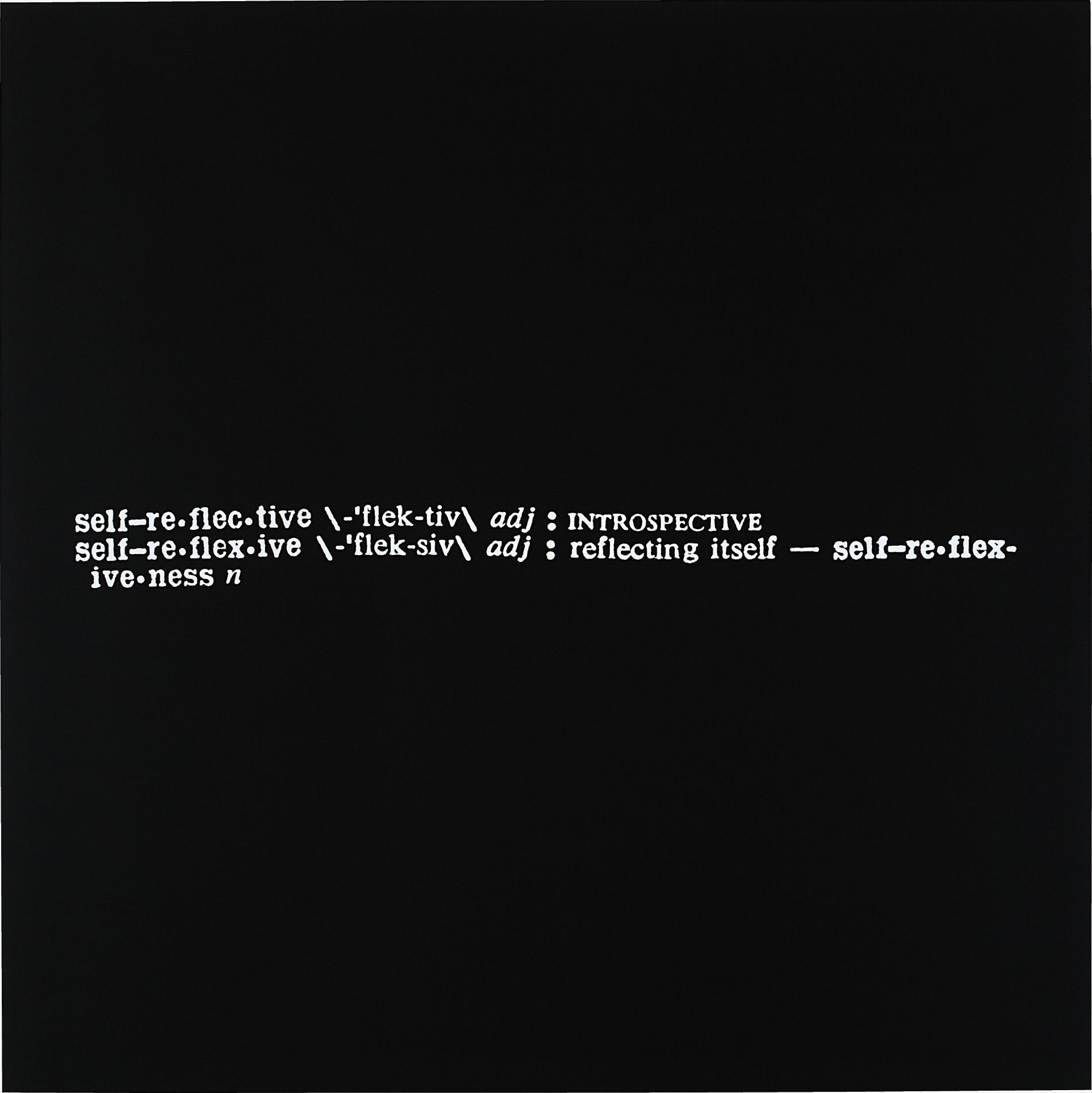
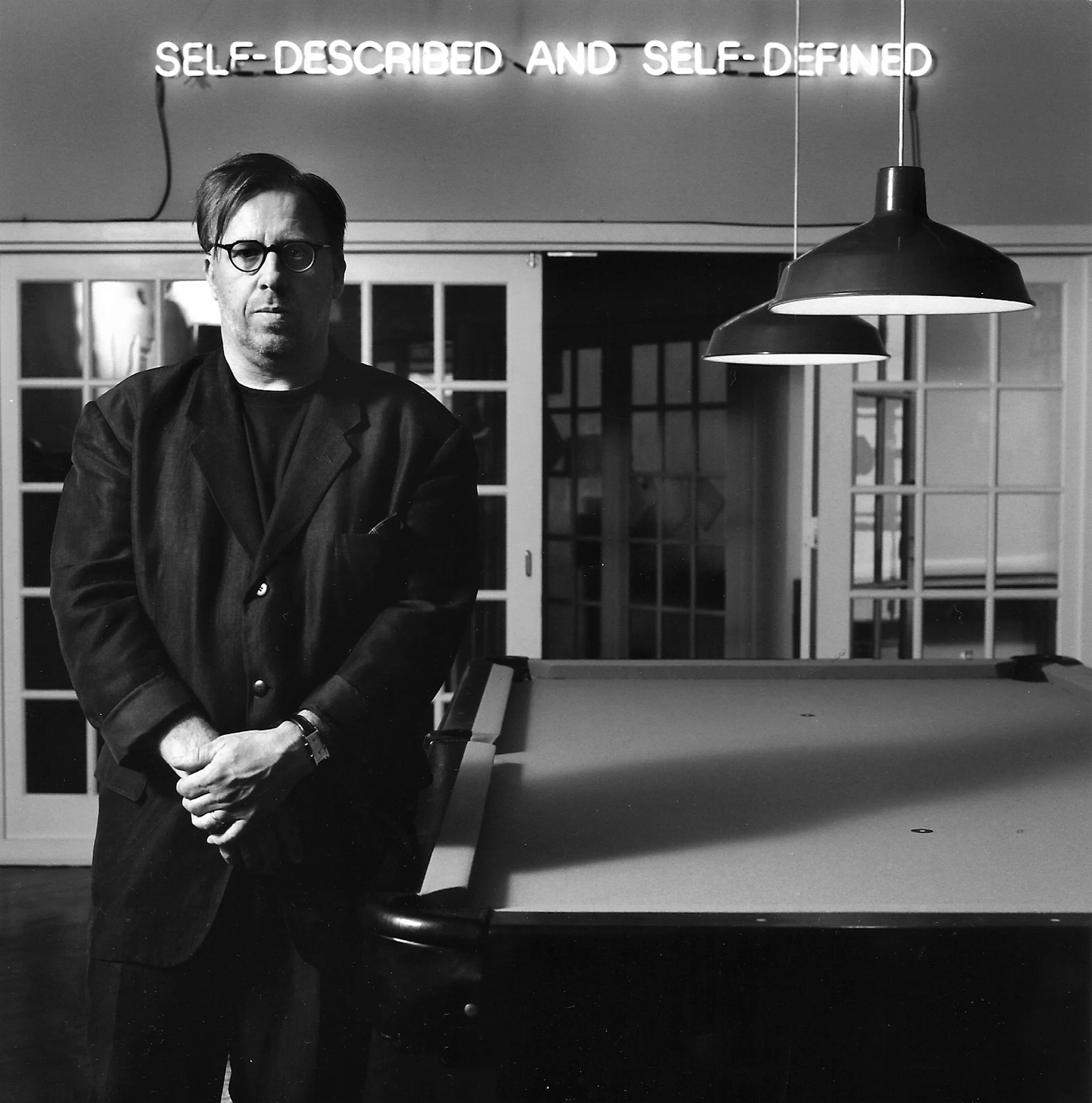
Joseph Kosuth
Self-Reflective
Words That Stare Back At You
There is a particular kind of vertigo that comes from standing before a work of art made entirely of words. Not illustration, not decoration, not caption. The words are the thing itself. You read them, and then you realize you are also looking at them, and then you begin to wonder whether those two activities are as different as you always assumed.
This is the territory that language art has occupied for more than half a century, and it remains one of the most intellectually alive spaces in contemporary collecting. The roots of this practice reach back to the early twentieth century, when the historical avant garde began questioning whether visual art needed to be visual in any traditional sense. Marcel Duchamp's readymades introduced the idea that naming could be a creative act, that the artist's intention and the institutional frame around an object mattered as much as any formal quality. But the more direct lineage of language as primary artistic material begins in the 1960s, when Conceptualism emerged as a full blown movement on both sides of the Atlantic.
Joseph Kosuth
Self-Reflective
The British artist Terry Atkinson and his collaborators at Art and Language founded their journal of the same name in 1969, making theory and text not merely supplementary to art but equivalent to it. Joseph Kosuth is perhaps the central figure in this story. His 1965 work "One and Three Chairs," presented at the Museum of Modern Art in New York as part of the landmark 1970 exhibition "Information," placed a physical chair alongside a photograph of that chair and an enlarged dictionary definition of the word chair. The work is a philosophical proposition as much as an artwork.
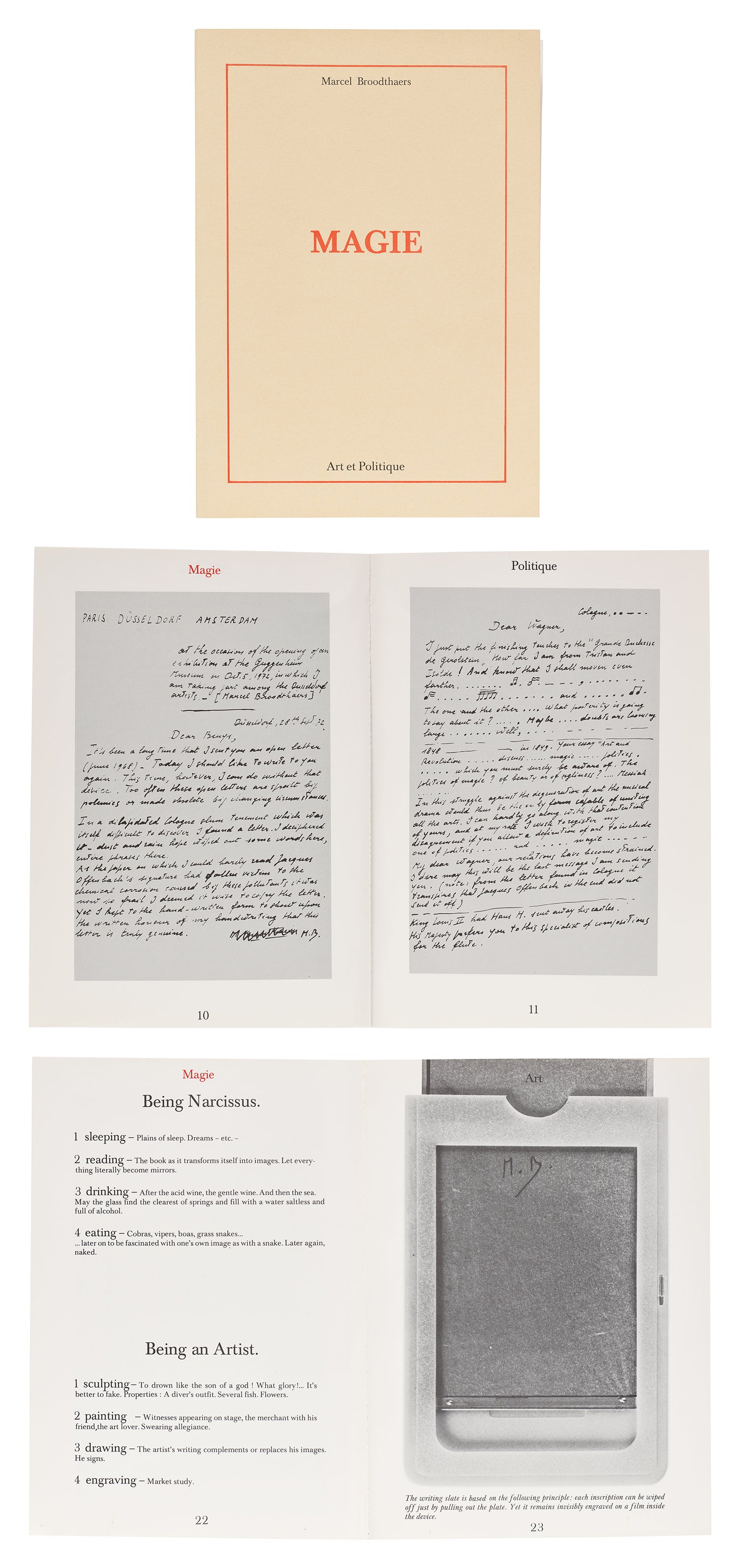
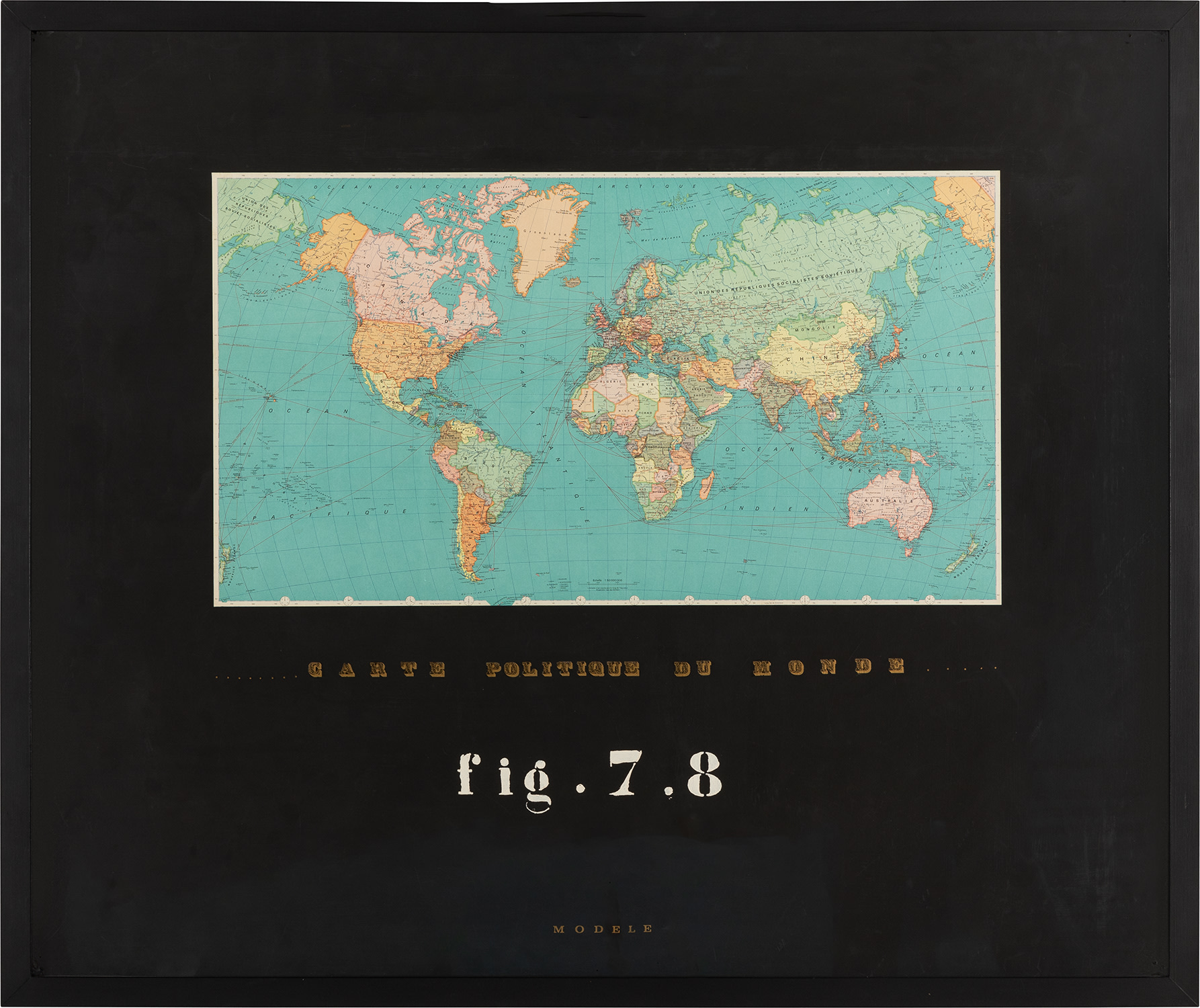
Kosuth drew heavily on logical positivism and the philosophy of language, and his 1969 essay "Art After Philosophy" effectively argued that all art is fundamentally definitional. His works on The Collection extend that inquiry across decades, each piece treating language not as a vehicle for meaning but as its very substance. Marcel Broodthaers, the Belgian artist who began his practice in the mid 1960s after years as a poet, brought a more sardonic and poetic sensibility to similar questions. His fictitious Musée d'Art Moderne, Département des Aigles, which he inaugurated in his Brussels home in 1968, used institutional language, labels, and classifications to expose the arbitrary nature of meaning making in culture.
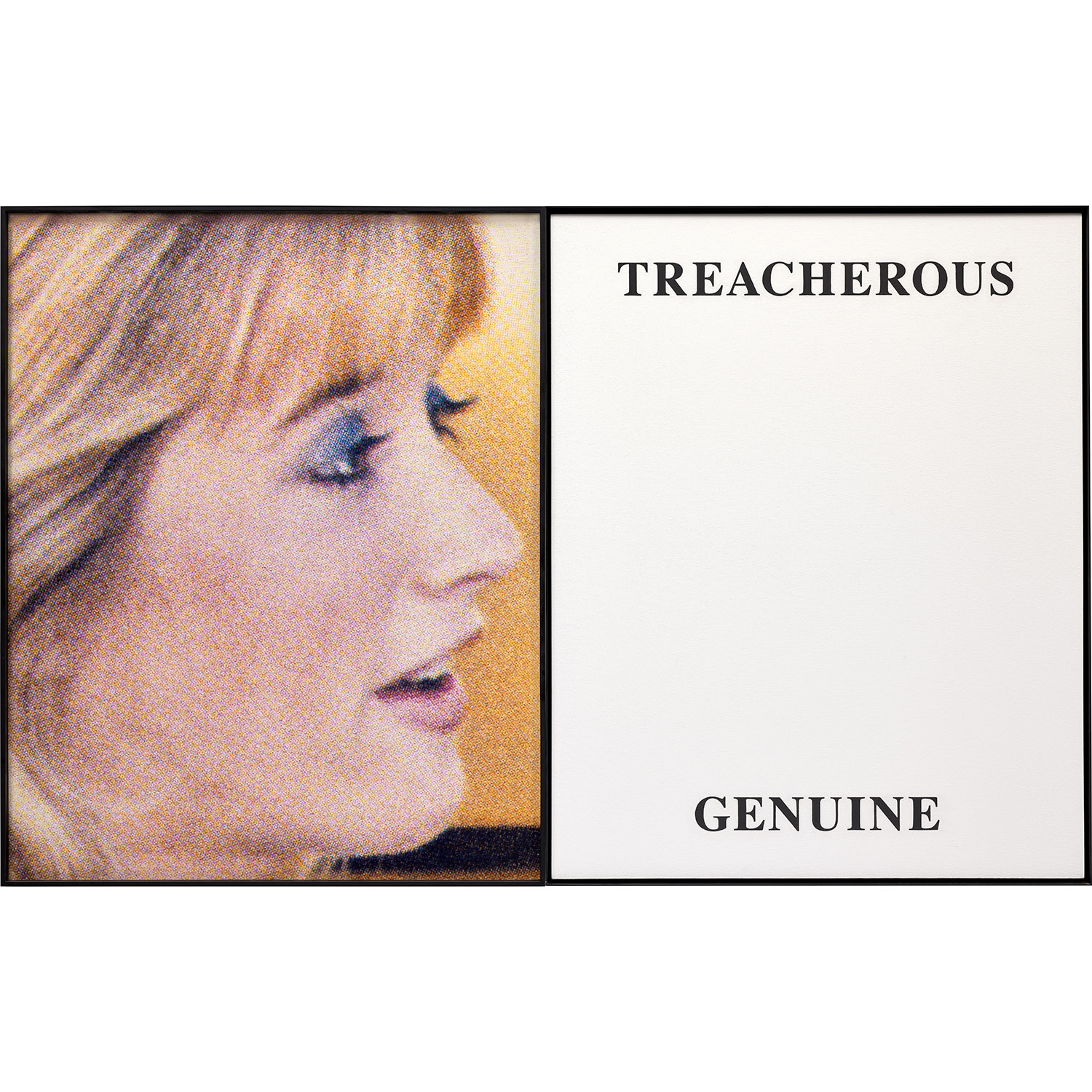
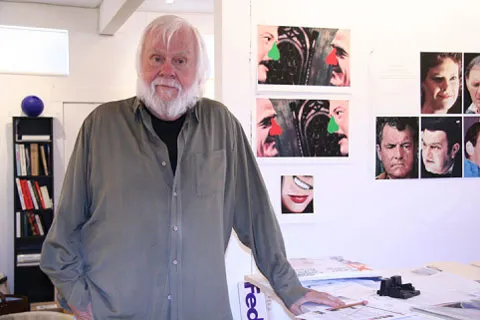
John Baldessari
Prima Facie (Third State): Treacherous/Genuine, 2005
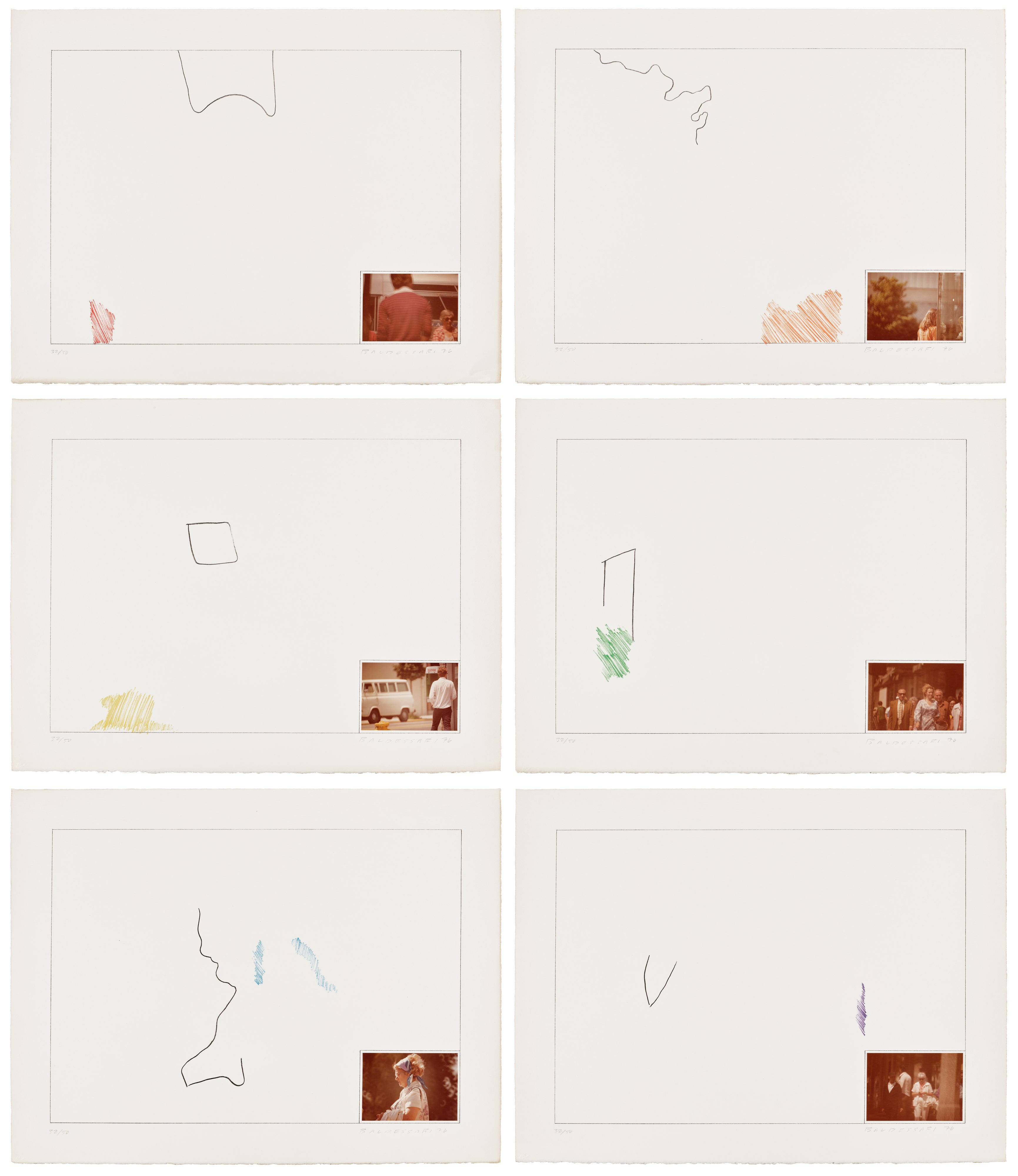
Broodthaers was fascinated by the gap between a word and the thing it describes, a fascination that connected him to the Surrealists and to Magritte in particular. His presence on The Collection situates him exactly where he belongs, in conversation with artists who treat the sign and the signified as a permanently unstable relationship. John Baldessari approached language with characteristic wit and irreverence. Working in Los Angeles from the late 1960s onward, he incorporated text into photographs and painted works in ways that drew on advertising, cinema, and everyday speech rather than philosophy seminar rooms.
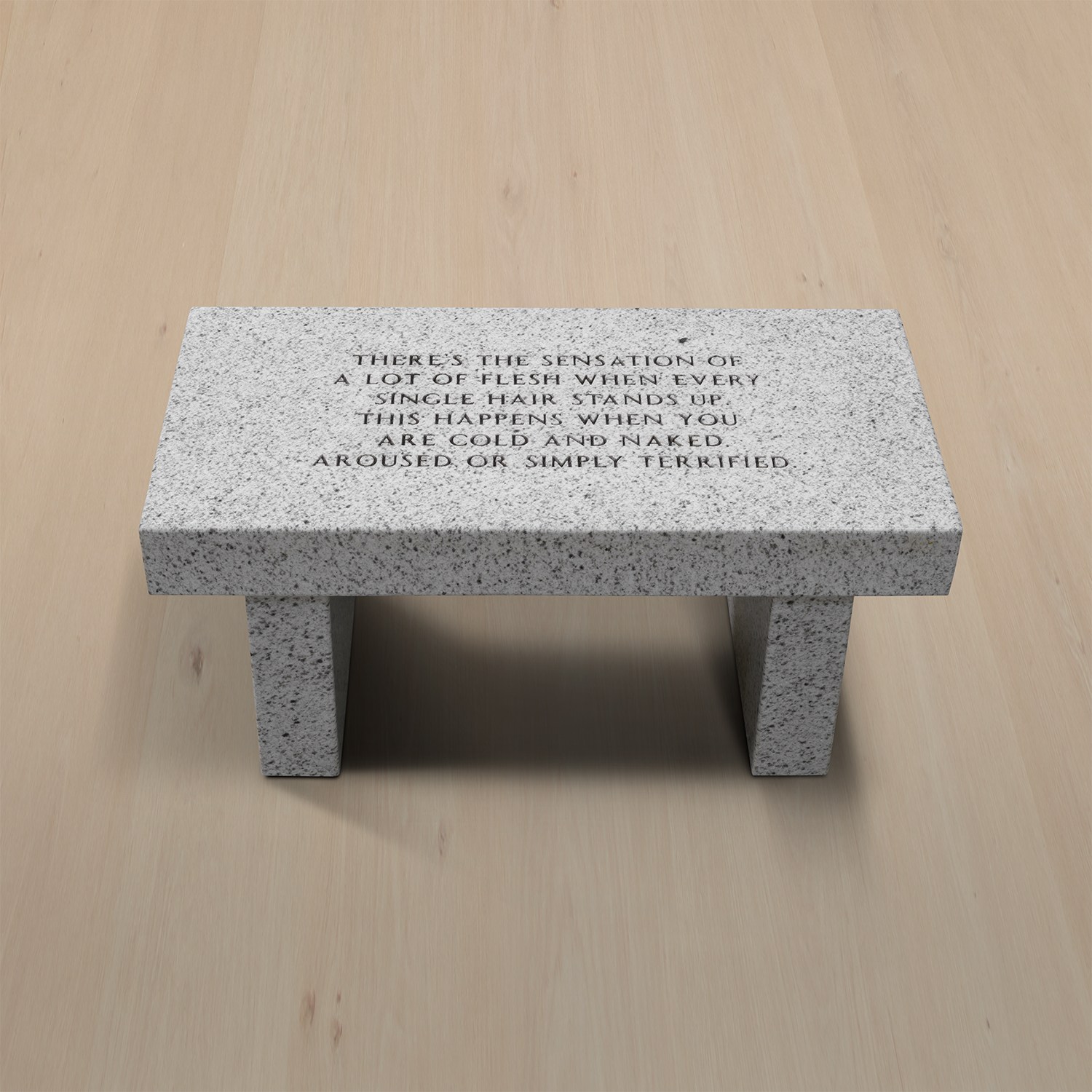
His 1967 to 1968 "Wrong" series, in which he documented his own compositional mistakes with deadpan captions, made the gap between instruction and outcome into something genuinely funny and genuinely profound. Baldessari understood that language in art could be a form of comedy as well as critique, and the works he left behind continue to feel fresh and slightly dangerous. Jenny Holzer took language into the street. Beginning with her "Truisms" series in the late 1970s, she plastered Lower Manhattan with posters bearing statements that seemed simultaneously authoritative and absurd.
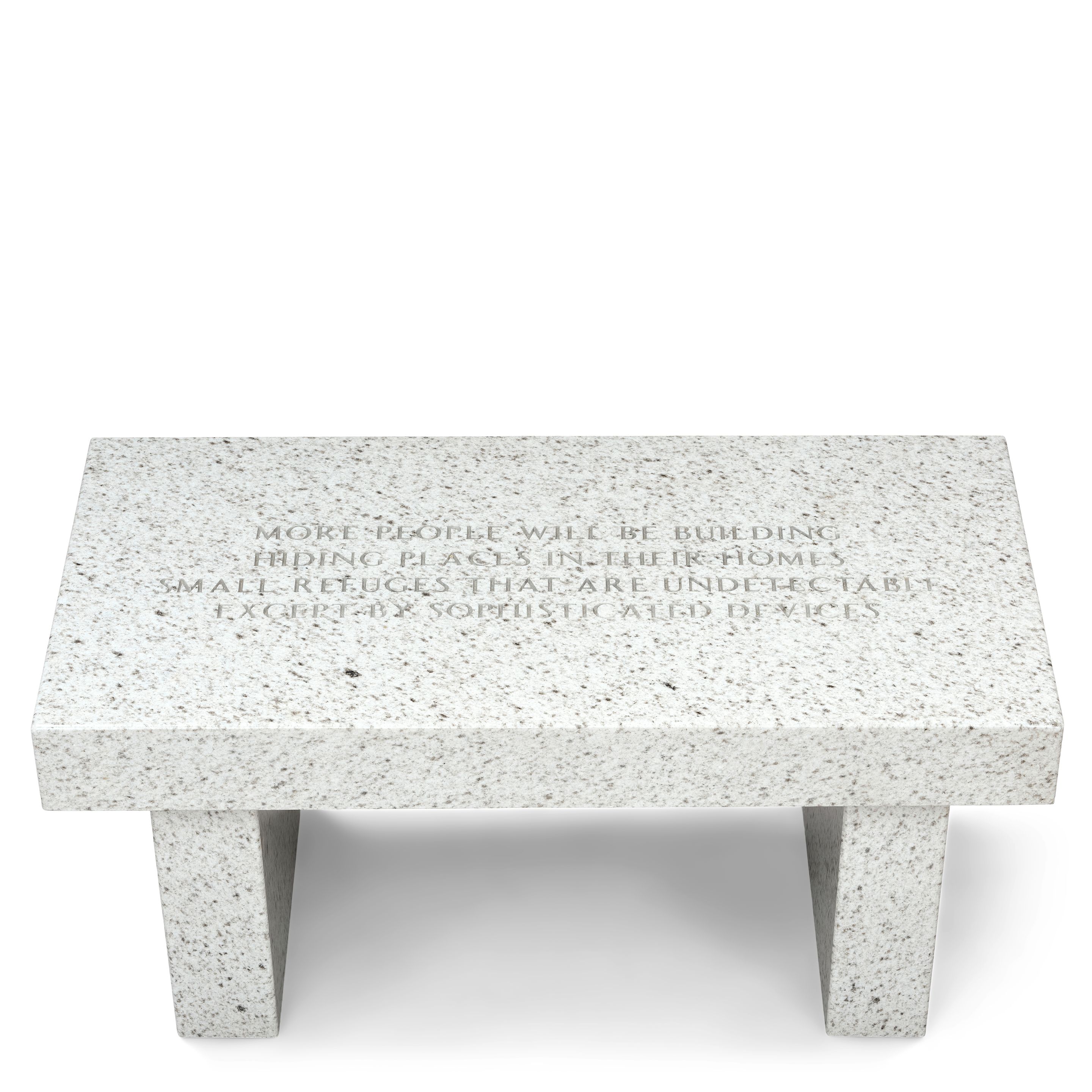
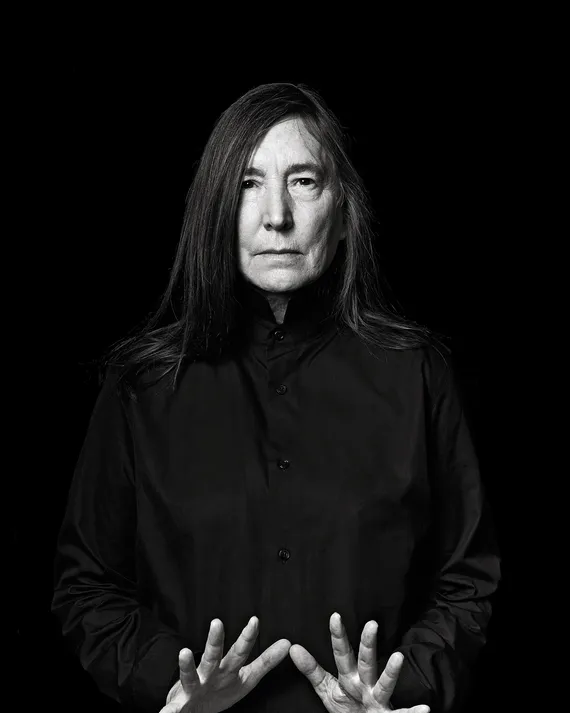
Jenny Holzer
The Living Series: More people will be building..., 1989 17 x 36 x 18 in (43.1 x 91.4 x 45.7 cm)
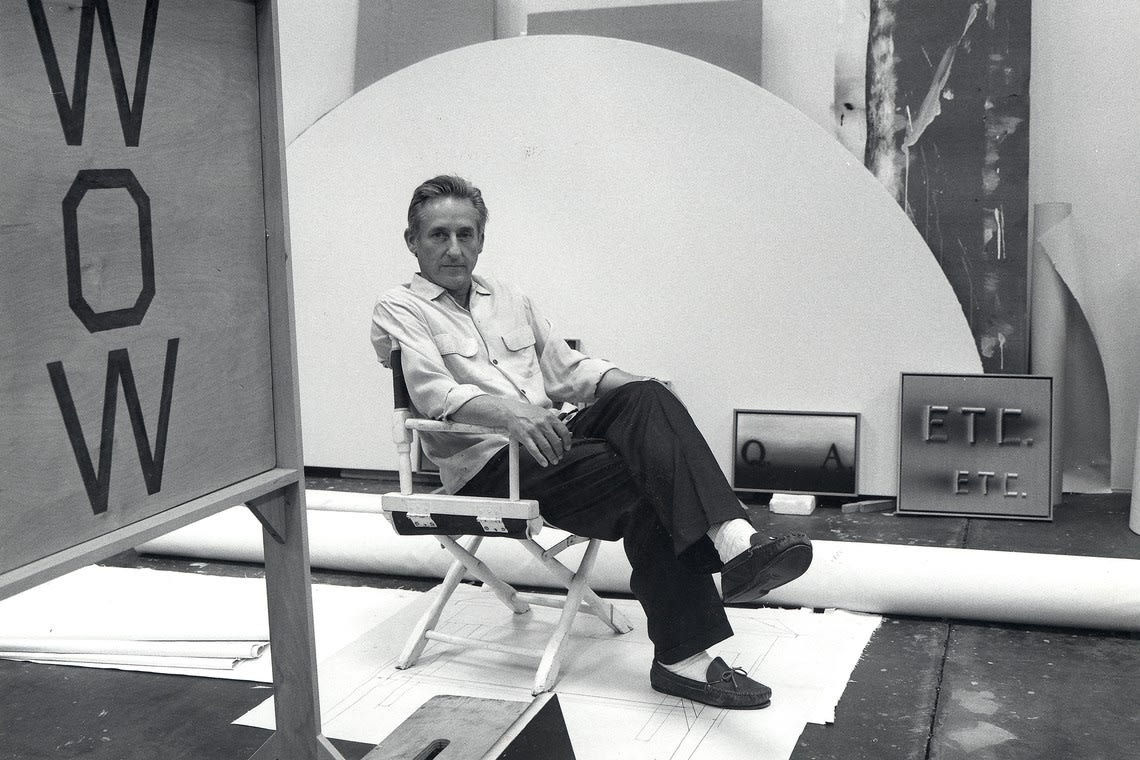
As the work evolved through LED signs, stone benches, and eventually projections onto buildings and landscapes, it retained that essential quality of language behaving as power. Her contribution to The Collection represents a practice that has always understood that where words appear matters as much as what they say. Ed Ruscha, working across painting, photography, and artists' books from the early 1960s onward, approached the word as a pure visual object, treating gasoline stations and parking lots with the same detached fascination he brought to the word "OOF" rendered in grey paint on a grey field. The conceptual and material frameworks within this category are surprisingly varied.
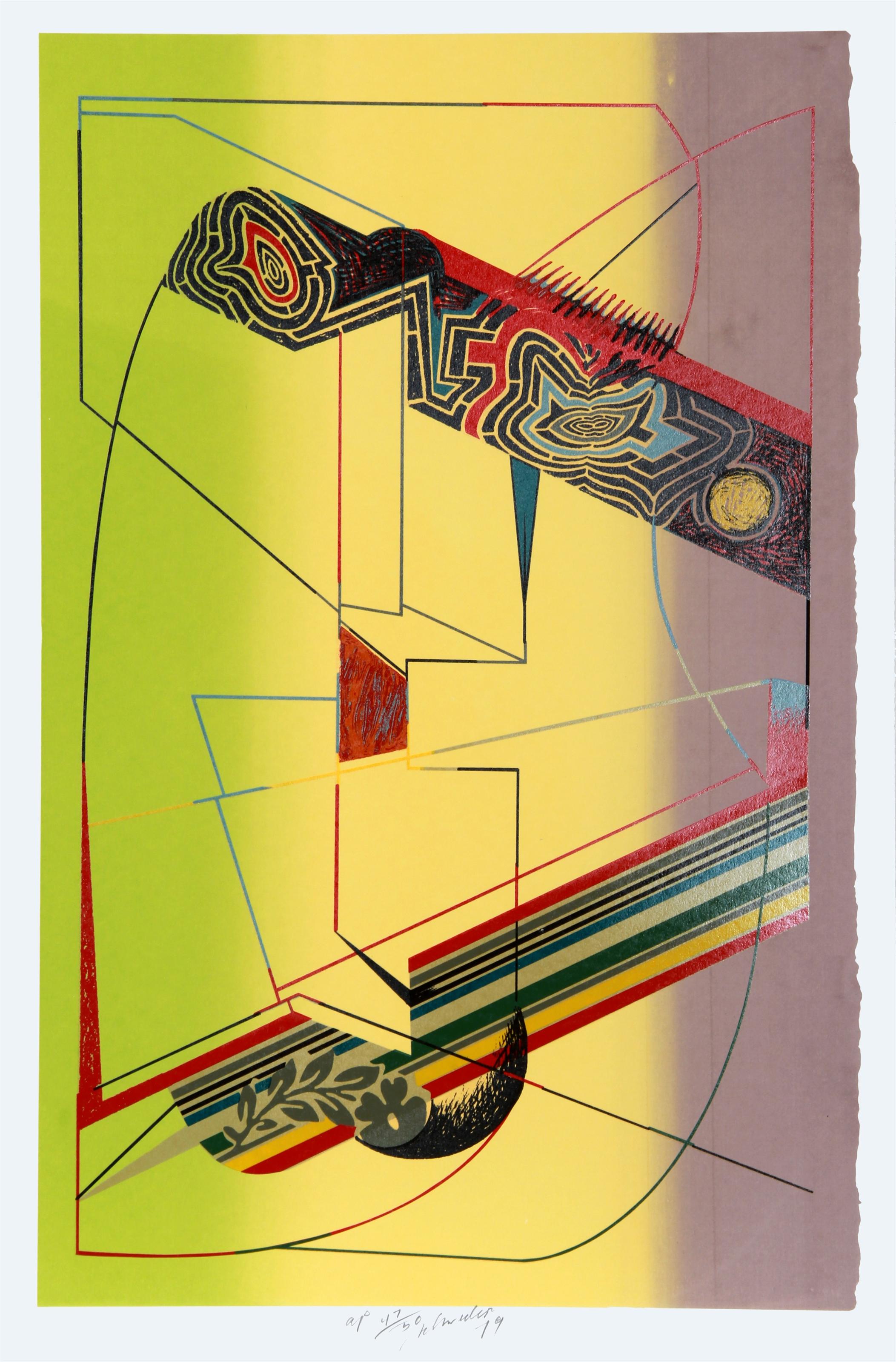
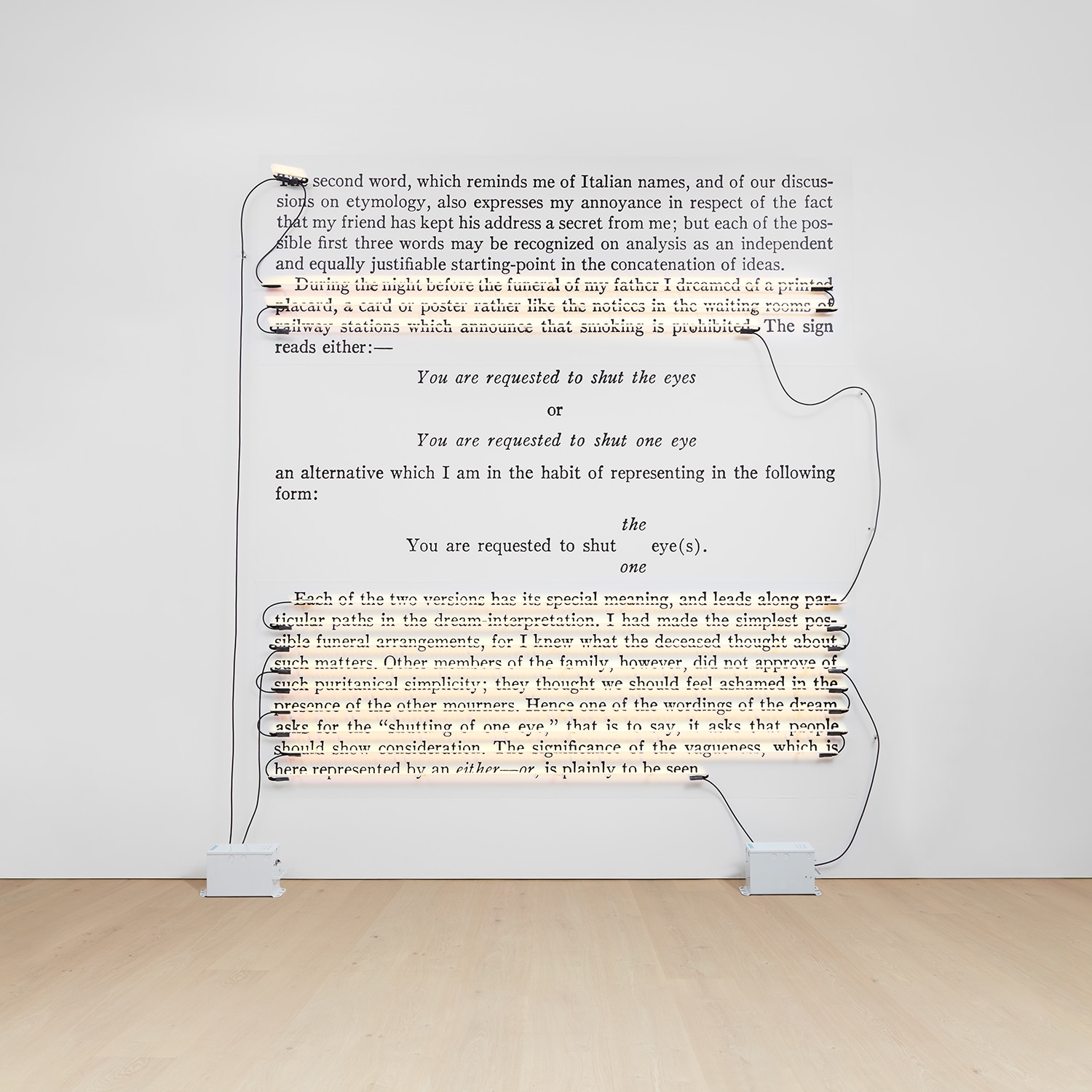
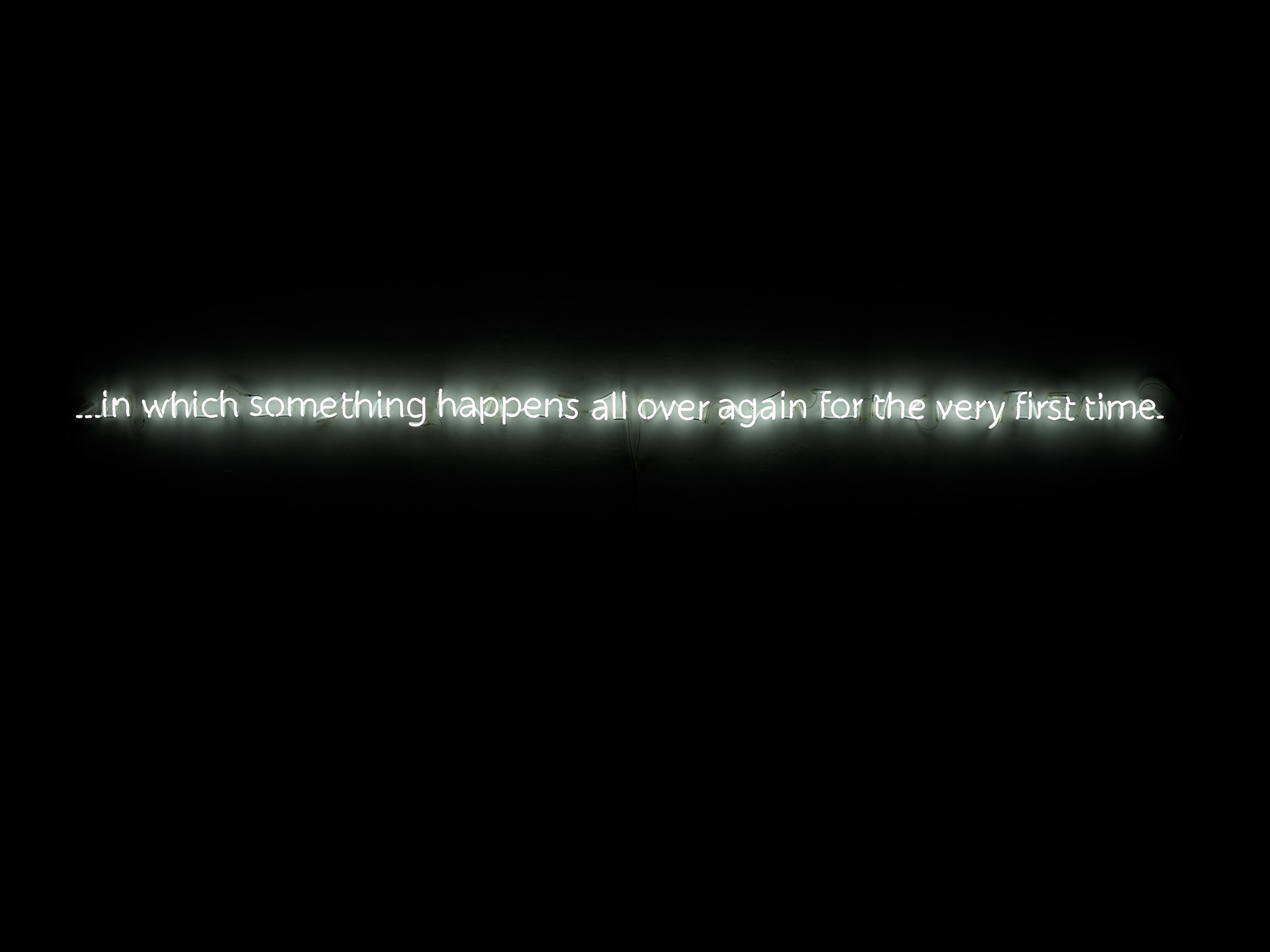
Some artists work with neon and light, as Cerith Wyn Evans does with extraordinary elegance, transforming found texts and quotations into luminous sculptural forms. Others, like Roni Horn, embed language into cast glass or scatter it across the floor of a gallery space, making reading into a physical and durational act. William Schwedler brought a quieter, more intimate register to text based work, and his paintings reward the kind of close attention that most scrolling culture discourages. Jeppe Hein, though known primarily for his participatory and mirror sculptures, has engaged with language in ways that activate the viewer's body and social awareness simultaneously.
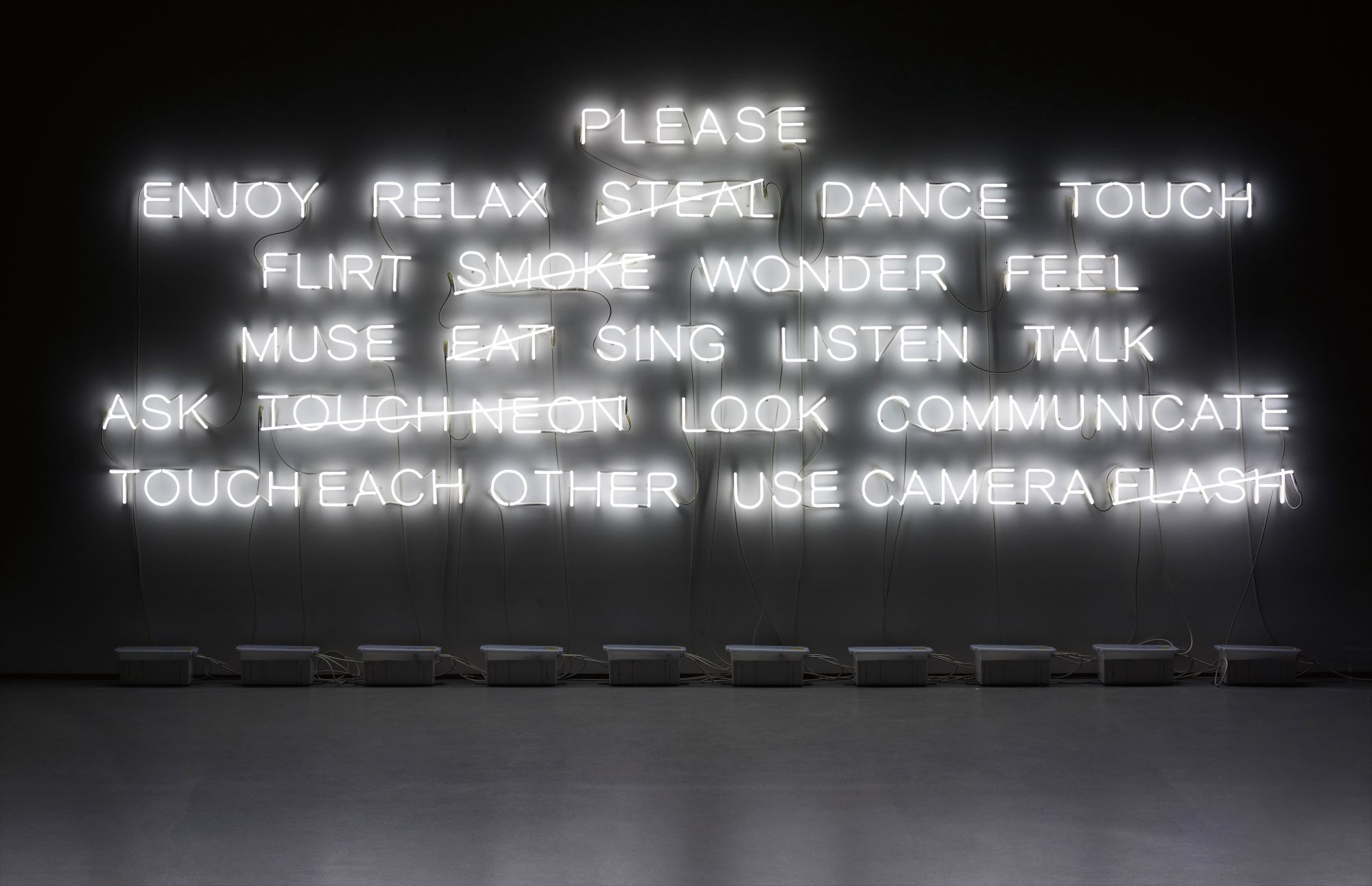
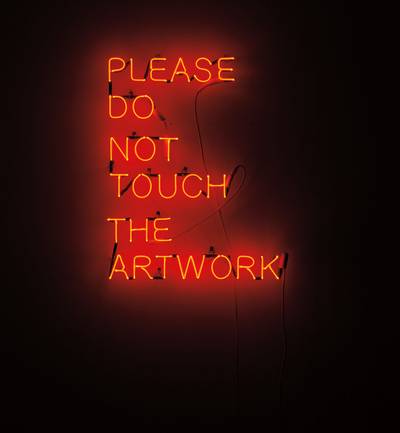
Jeppe Hein
Please...
What unites these practices across their considerable formal differences is a shared conviction that language is not neutral, that every word carries history, power, assumption, and desire. This was a radical idea when Kosuth first articulated it in the late 1960s, but it has only become more relevant as the digital world has made us all producers of text and image simultaneously. We live now inside a torrent of language that mostly passes through us without sticking. Works in this tradition insist on slowing that process down, on making a single word or phrase hold still long enough to be examined.
For collectors, language and meaning works offer something rare: the possibility of a genuinely different kind of looking that is also a kind of reading and also a kind of thinking. They tend to resist the passive appreciation that a beautiful painting can invite and demand instead a certain alertness. Living with such a work changes your relationship to text in the wider world. You start to notice the gap between what words promise and what they deliver.
That alertness, that productive suspicion, is perhaps the most lasting gift this tradition has given to those who engage with it seriously.