Fluorescent Colors
Damien Hirst
Second Series Biopsy: M122/105-Breast_cancer_cells,_immunofluorescent_light_micrograph-SPL.jpg, 2008

Neon Dreams: Art That Refuses to Fade
There is something almost confrontational about fluorescent color. It does not ask for your attention so much as demand it, burning at the edge of the visible spectrum with an insistence that no earthy pigment can match. When an artist reaches for Day Glo orange or acid yellow or screaming magenta, they are not simply making a chromatic choice. They are making an argument about visibility, about consumer culture, about the relationship between the body and its environment.
That argument has been central to some of the most vital art of the last sixty years. The story of fluorescent pigments in fine art is inseparable from the story of industrial chemistry. Fluorescent dyes became commercially available in the late 1930s, developed initially for safety applications and advertising signage. The Switzer brothers, Bob and Joe, are generally credited with pioneering Day Glo pigments in the United States during that decade, and their products quickly saturated popular culture, from circus posters to highway safety equipment.
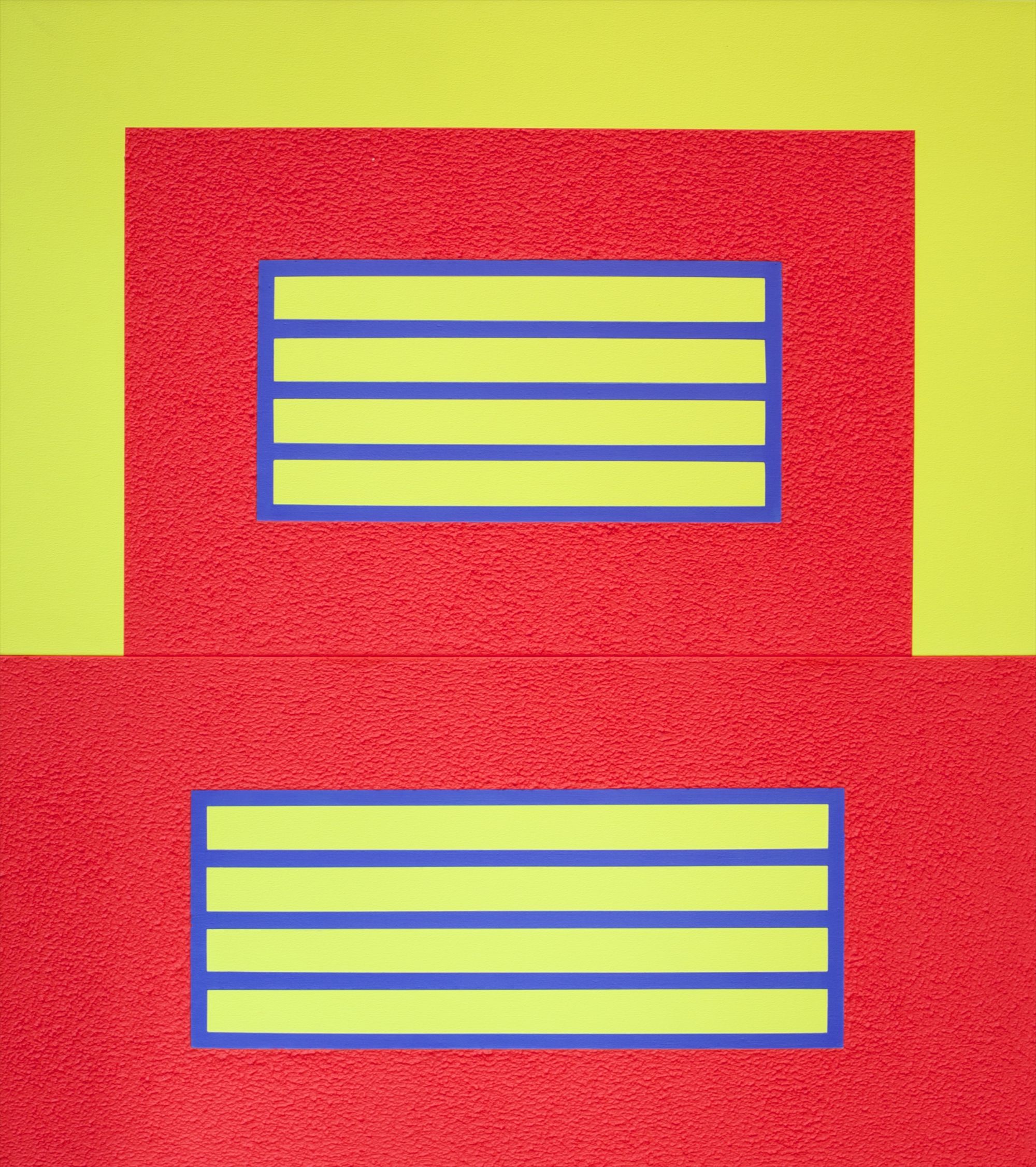
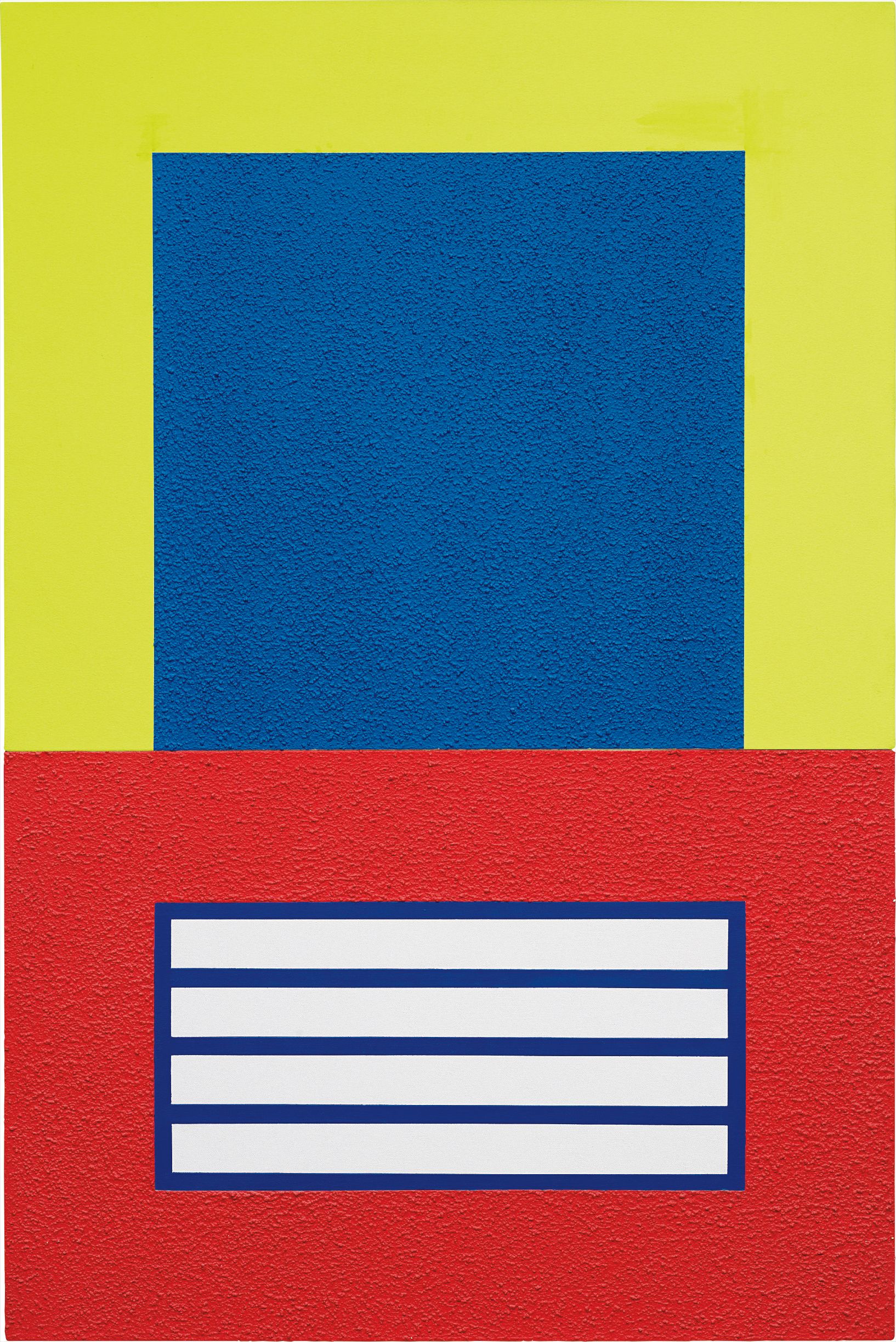
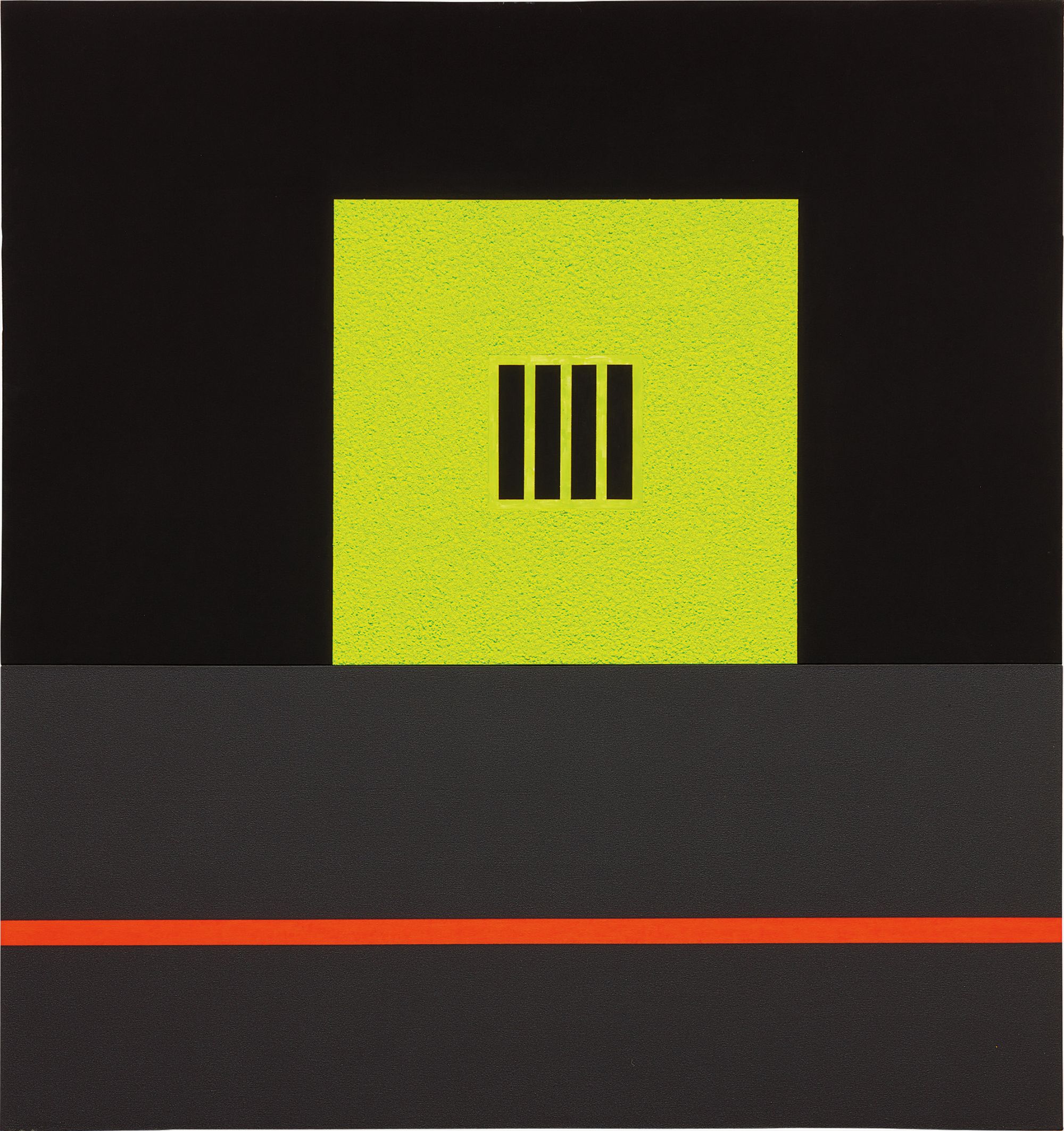
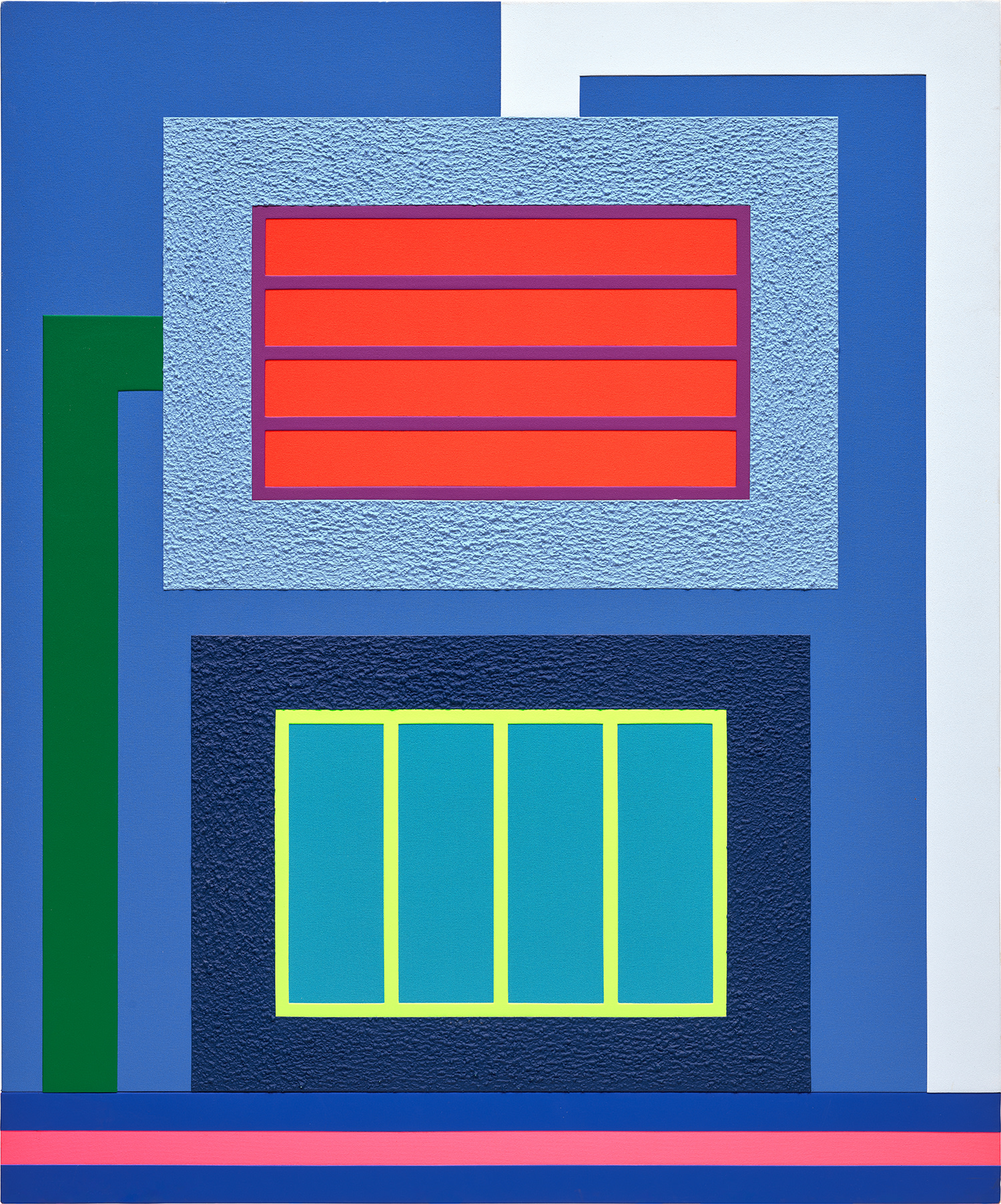
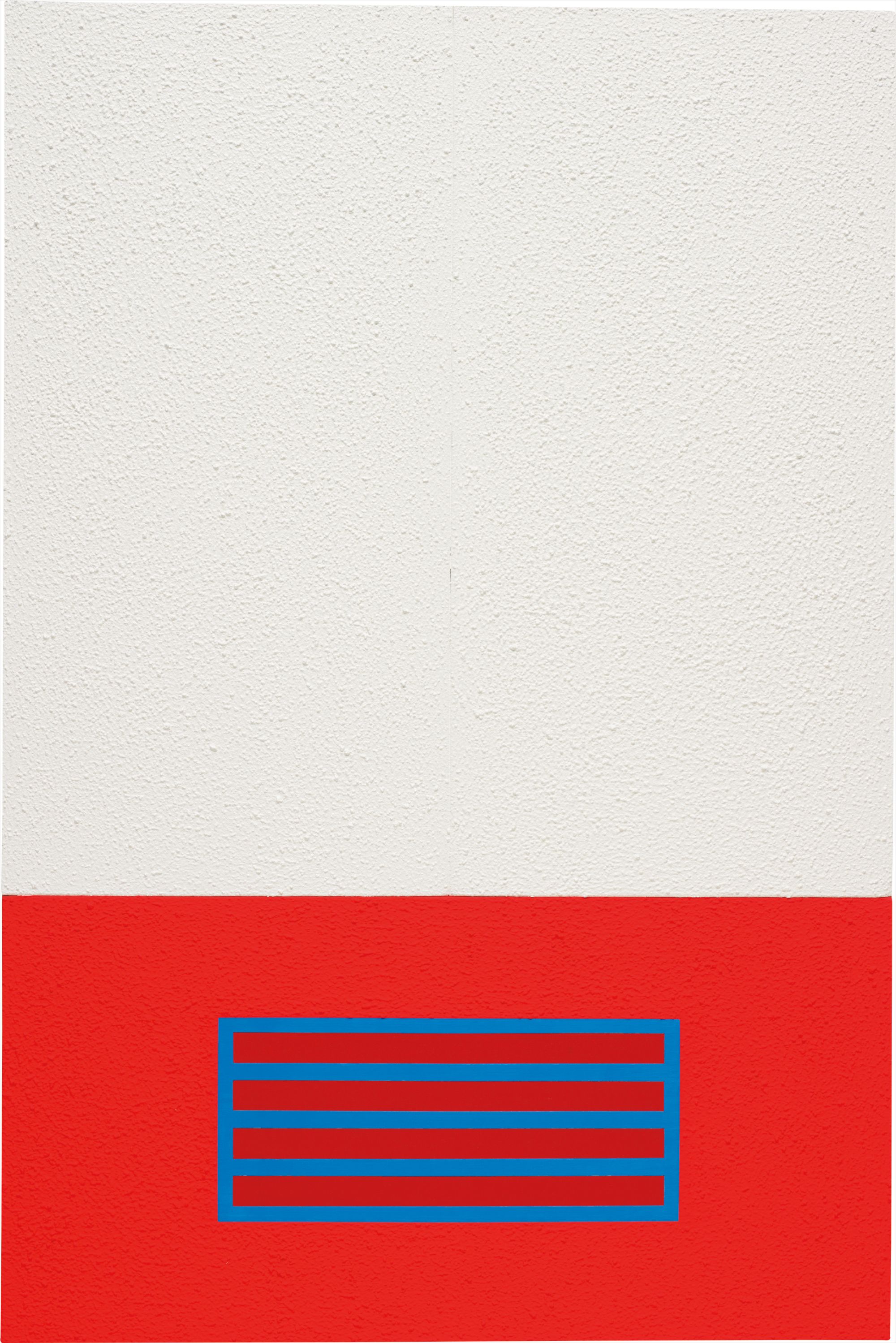
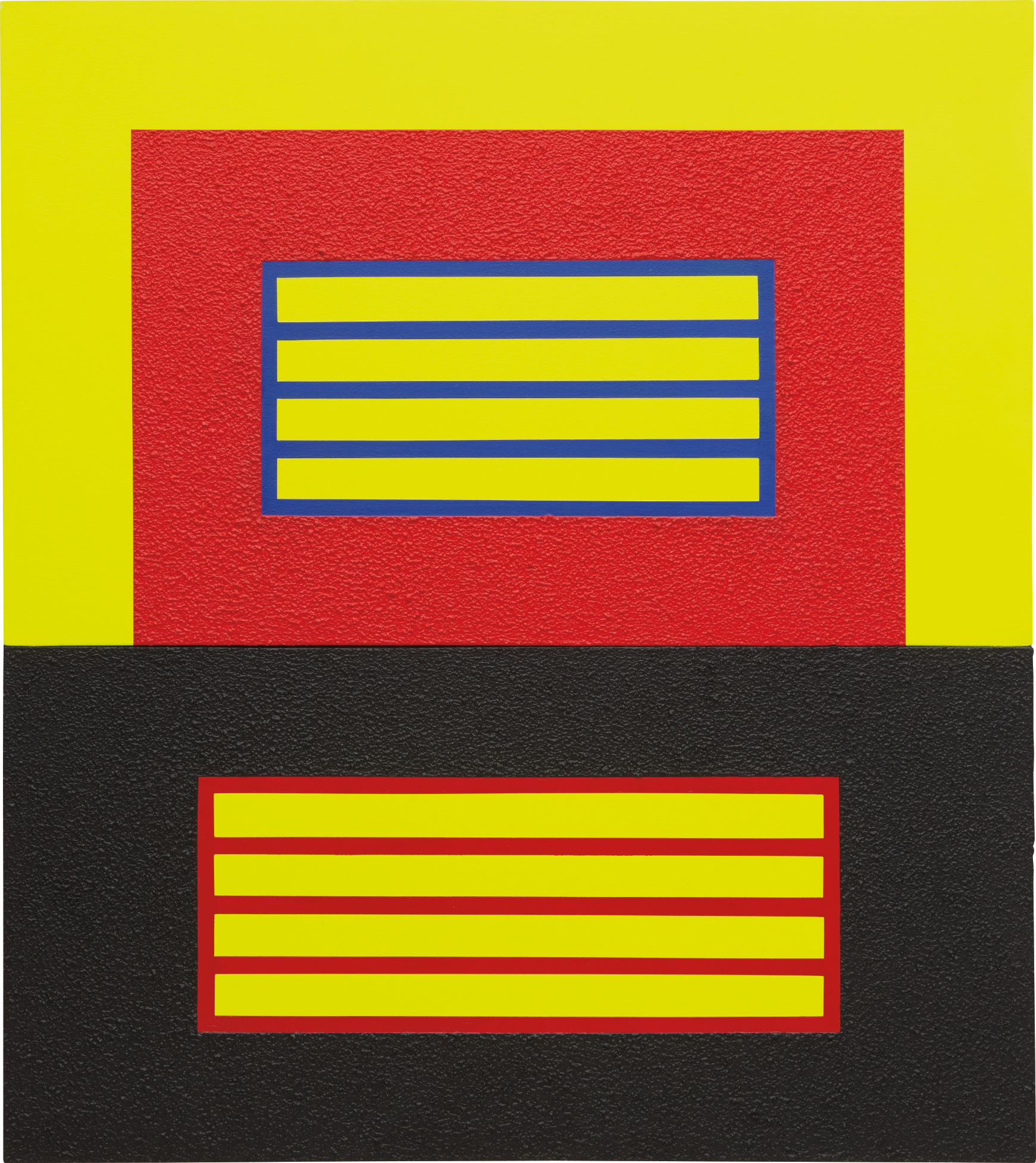
Peter Halley
Two Horizontals Prisons
It was only a matter of time before artists began to see these materials not as novelties but as tools loaded with cultural meaning. The Pop movement of the early 1960s was the first to embrace fluorescence with any real critical seriousness. Artists working in New York and London understood that these lurid, synthetic hues were the colors of the supermarket shelf, the billboard, the television set. They were the colors of postwar abundance and postwar anxiety.
Andy Warhol's silkscreens shimmer with a synthetic brightness that owes much to commercial printing processes, and though Warhol was not always using strictly fluorescent pigments, the visual register he established normalized a kind of chromatic intensity that fluorescence would come to define. The boundary between painting and advertising had never felt so productively unstable. By the late 1970s and into the 1980s, fluorescent color migrated into the vocabulary of Neo Geo and the broader conversation about painting in an age of simulation. This is where Peter Halley becomes essential.
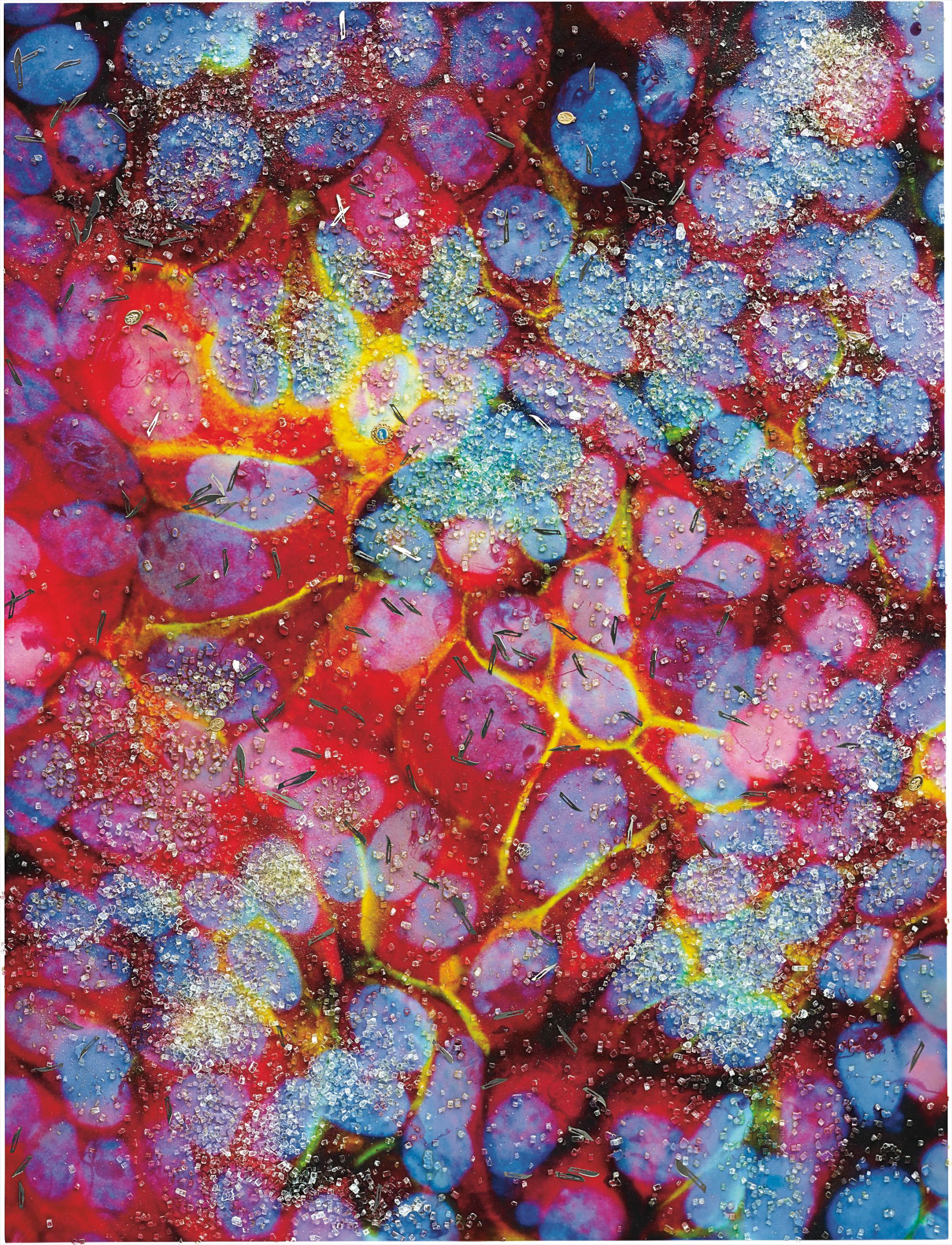
Damien Hirst
Second Series Biopsy: M122/105-Breast_cancer_cells,_immunofluorescent_light_micrograph-SPL.jpg, 2008
Working in New York from the early 1980s onward, Halley developed a rigorous and deeply considered body of work built around geometric forms, Roll a Tex acrylic, and a palette of industrial fluorescents that seemed to glow from within. His cells and conduits, those iconic rectangular forms connected by tunneling passages, were painted in colors that read as simultaneously beautiful and toxic. Halley drew explicitly on the theories of Jean Baudrillard, arguing that these high keyed synthetic hues were not expressions of feeling but symptoms of a society organized around the circulation of simulated signs. The fluorescent color in his work is never casual.
It carries the weight of an entire critical position. His paintings, well represented on The Collection, reward sustained looking precisely because the surface brightness keeps you at arm's length even as the underlying geometry invites you deeper. The use of fluorescence also intersects with the long history of artists thinking about light itself as a medium. Dan Flavin's fluorescent light tubes, which he began making in the early 1960s, are perhaps the most famous example of fluorescence understood not as pigment but as actual luminescence.
Flavin used standard commercial fixtures and tubes, treating them as both sculptural objects and sources of ambient, colored light. His 1963 dedication of a diagonal of personal ecstasy, a single yellow fluorescent tube mounted at a forty five degree angle, is one of the genuinely pivotal gestures in postwar art. It collapsed the distinction between the artwork and its illumination, between the object and its atmosphere. That move echoes through decades of subsequent practice.
Damien Hirst's use of color operates on a different register but draws on a similarly charged relationship to consumer goods and industrial production. His spot paintings, which he began in the late 1980s, employ a range of pharmaceutical and candy colors that edge into fluorescent territory, playing with the seductions of pure chromatic sensation divorced from representation or gesture. Hirst has consistently positioned color as something almost pharmacological, a substance that acts on the viewer before the intellect has a chance to intervene. The works of his available on The Collection demonstrate how brilliantly he understands color as spectacle, and how that spectacle can serve as both pleasure and provocation.
The cultural resonance of fluorescent color extends well beyond the gallery. These are the hues of rave culture, of safety vests worn by workers on construction sites, of highlighter pens and energy drink packaging. When an artist uses them, all of that cultural freight comes along for the ride. This is not a weakness but a richness.
The best fluorescent paintings are in constant dialogue with their own visibility, aware that they are competing for attention in a world saturated with engineered brightness. They turn that competition into content. What makes fluorescent color so durable as an artistic strategy is its resistance to nostalgia. Unlike the warm browns of earth pigments or the muted greens of verdigris, fluorescents have no deep historical past.
They are modern, synthetic, and relentlessly present tense. In an art world that cycles rapidly through movements and counterreactions, that quality is genuinely rare. Whether you encounter it in Halley's austere geometric fields or in more recent practices influenced by digital screens and LED technology, fluorescent color continues to insist on its own uncomfortable relevance. It is the color of now, which means it will probably remain the color of the future.