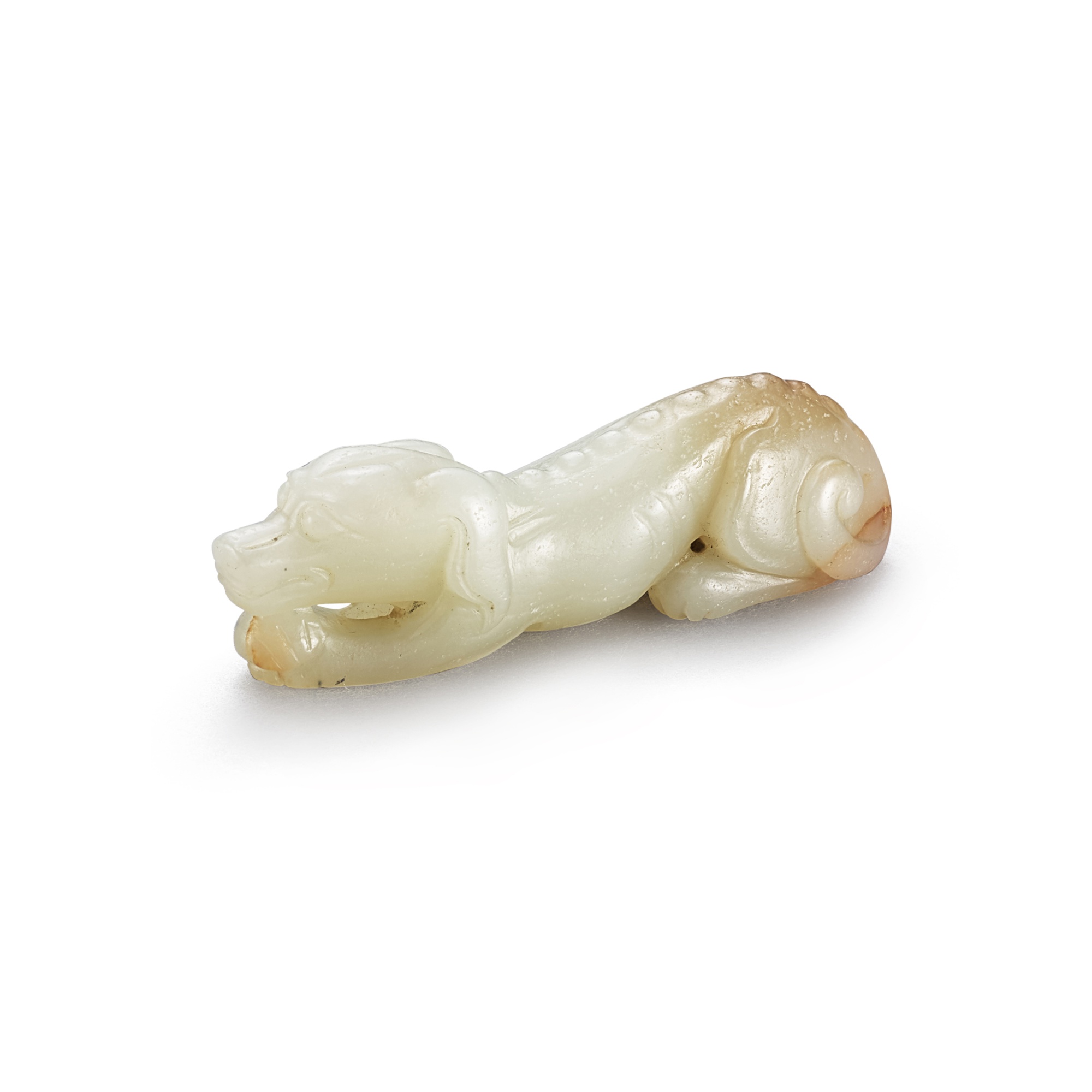
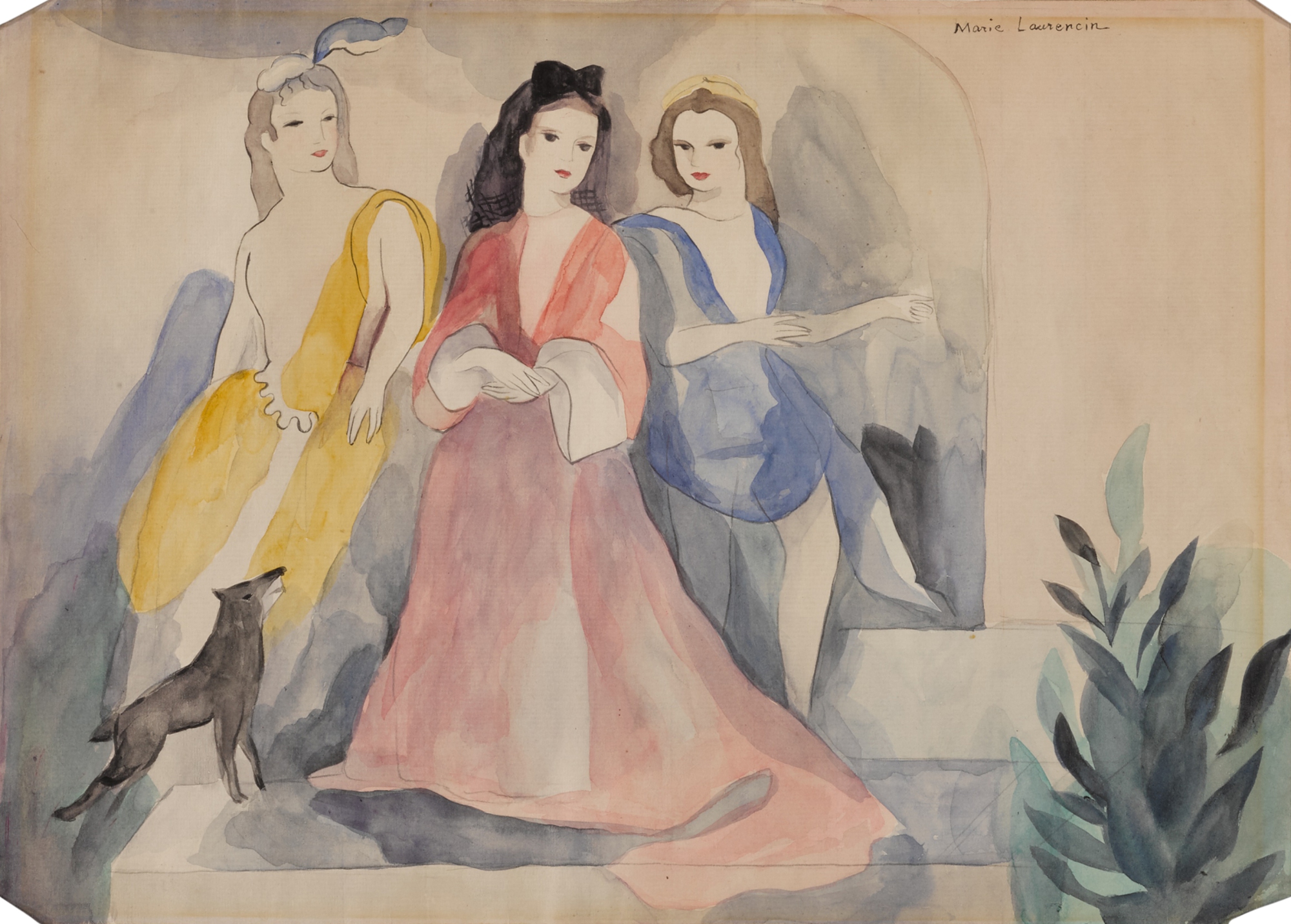
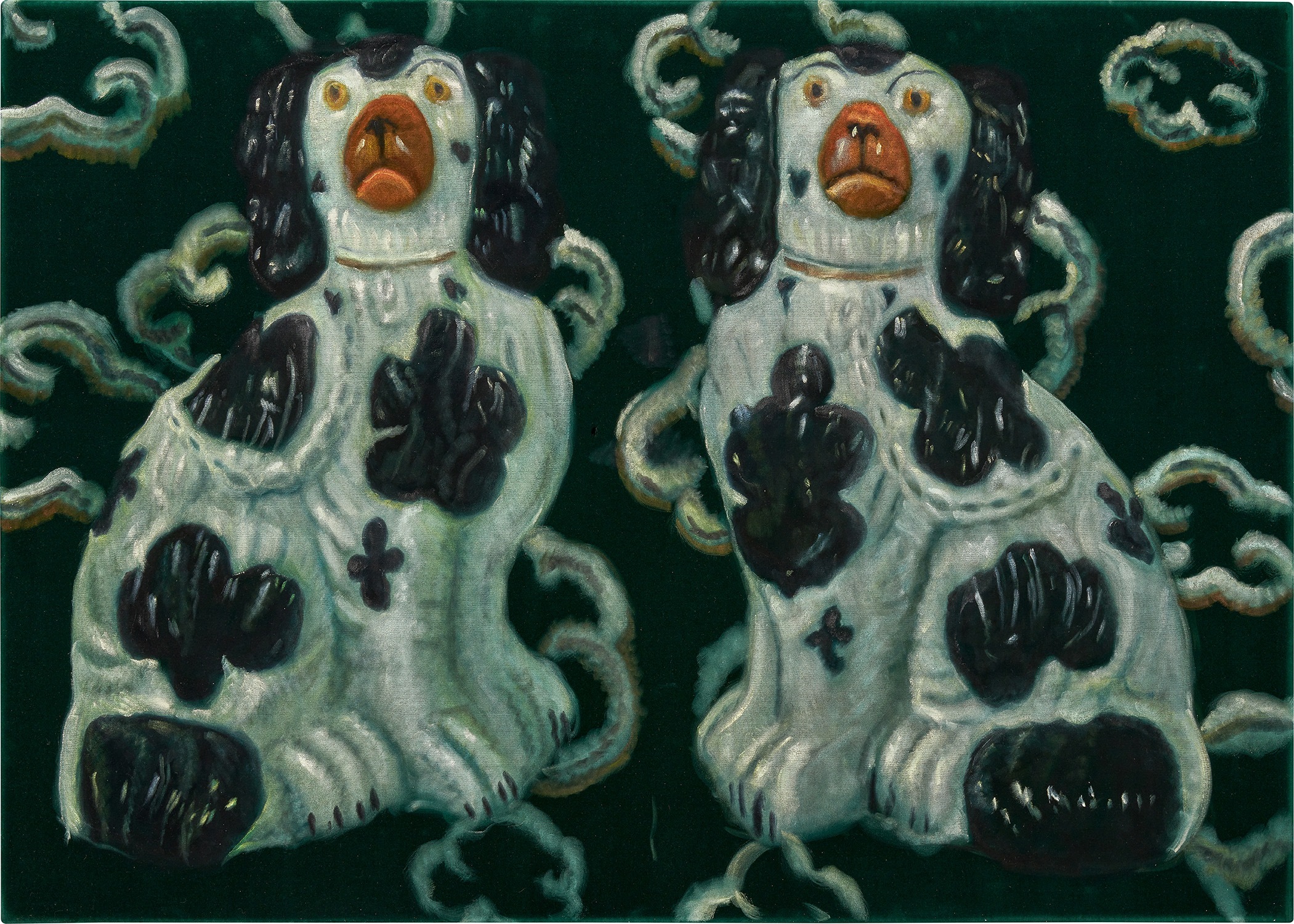
Dog
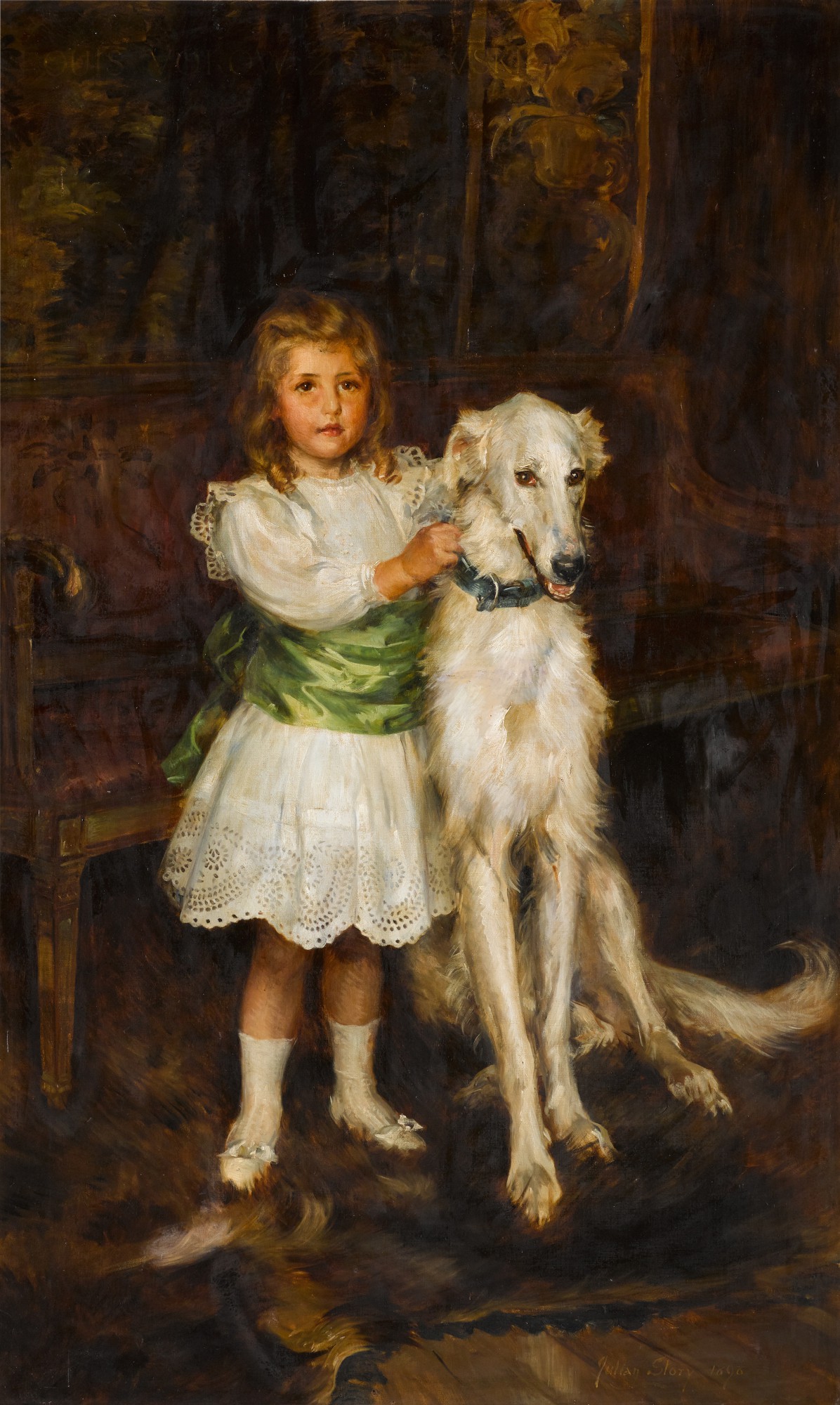
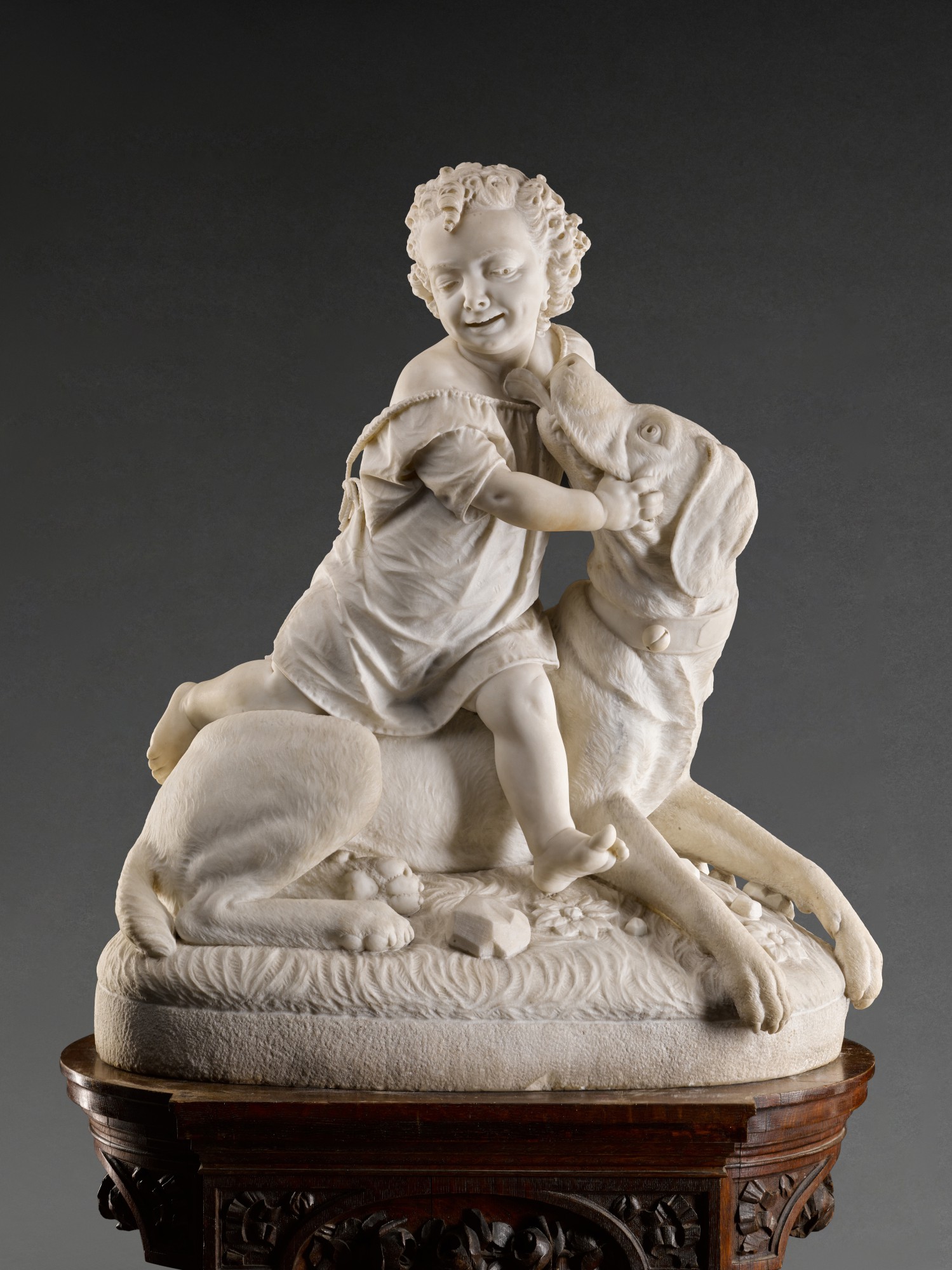
Julian Story
Best Friends (Louis Zborowski and his Borzoi)


The Dog in Art Has Never Felt More Alive
When William Wegman's Weimaraner photographs sold at Christie's in recent seasons, something interesting happened in the room. Bidders who might have been expected to treat them as charming novelties pushed past estimate after estimate, signaling that the dog in contemporary art is no longer a footnote or a soft category. It is a genuine area of critical and commercial seriousness, one that collectors across generations are now competing over with real conviction. The dog has always been present in Western art, from the hunting scenes of Flemish masters to the aristocratic portraits where a spaniel at the foot of a sitter signals loyalty, wealth, and breeding.
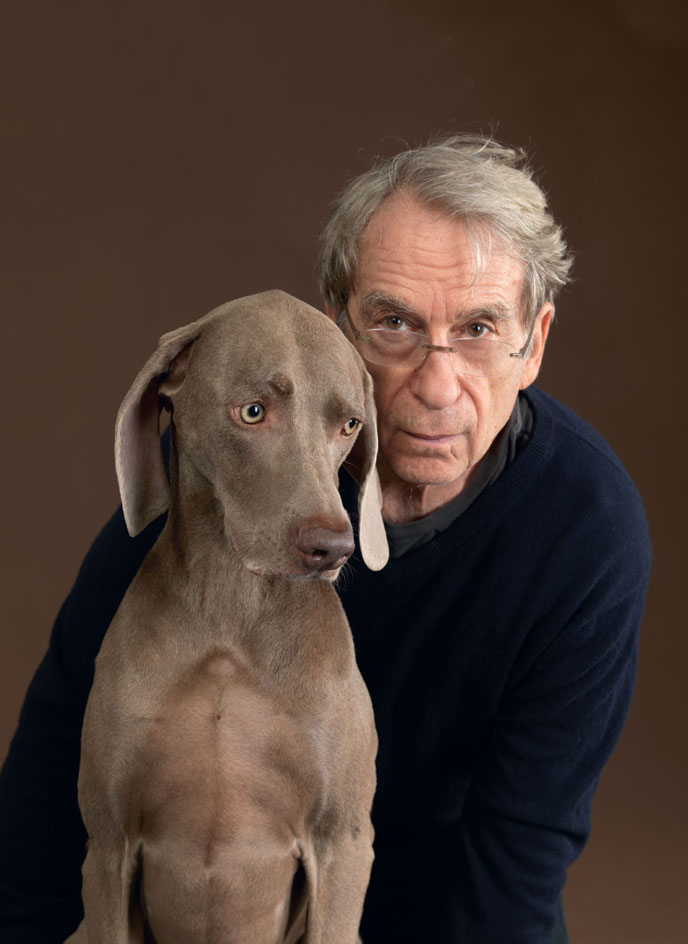
But what is happening right now feels qualitatively different. The animal is no longer a prop or a symbol borrowed for human purposes. Across painting, sculpture, photography, and now AI generated image making, artists are using the dog to think through questions of consciousness, intimacy, vulnerability, and what it means to be looked at and to look back. Wegman is perhaps the most important figure in this conversation, and his work repays serious attention beyond the affectionate reputation it sometimes carries.
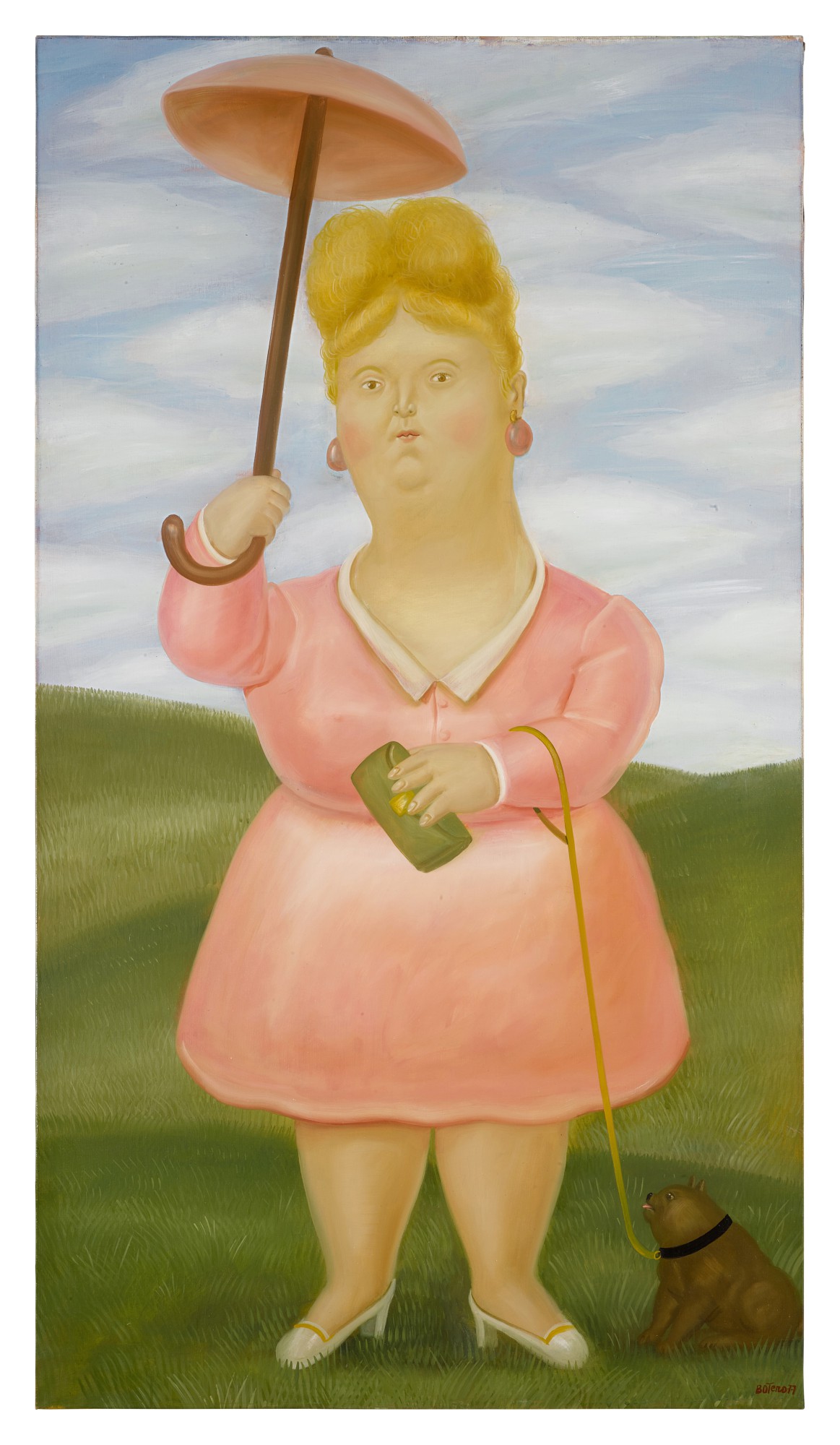
The Eph & Shirley Diamond Collection of Palm Beach
Woman with Parasol and Dog, 1977
His photographs, videos, and paintings of his dogs, particularly the Weimaraners Ray Man and Fay, operate in a genuinely strange register somewhere between portraiture, conceptual art, and theater. The Metropolitan Museum of Art and the Brooklyn Museum have both given his practice sustained institutional attention, and the market has followed. Works from the 1980s and 1990s regularly clear six figures at auction, and the recent renewed interest in that era of New York conceptualism has brought fresh eyes to his project. The sculptural tradition is equally rich.
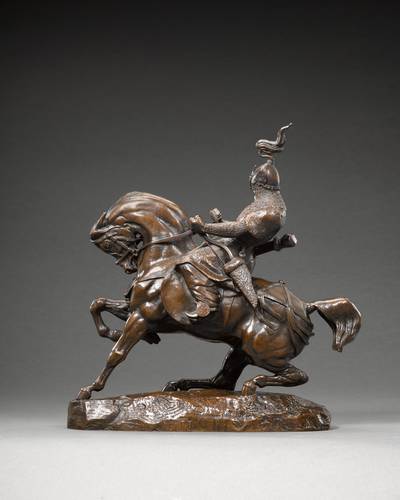
Antoine Louis Barye, the great nineteenth century French animalier, remains a compelling presence in any serious discussion of the dog in art. His bronzes of dogs, often paired with prey or shown in moments of coiled tension, were revolutionary in their attention to musculature and movement, and they continue to perform well at auction. Barye pieces pass through Sotheby's and Christie's with regularity, and institutional collections from the Walters Art Museum in Baltimore to the Louvre hold significant holdings. The appetite for his work among collectors who move between decorative arts and fine art is real and ongoing.
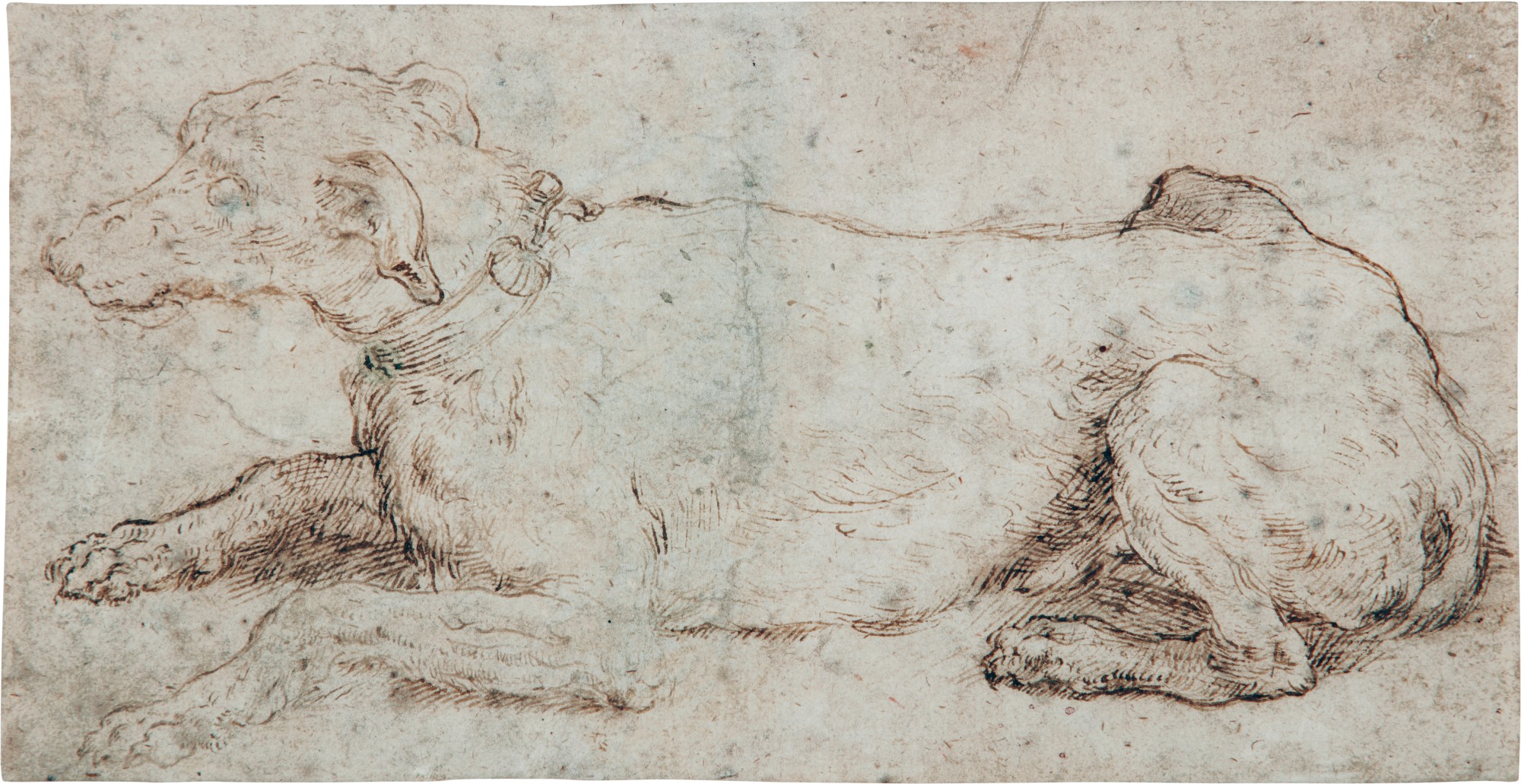
Girolamo Francesco Maria Mazzola, called Parmigianino
A dog wearing a collar decorated with scallop shells
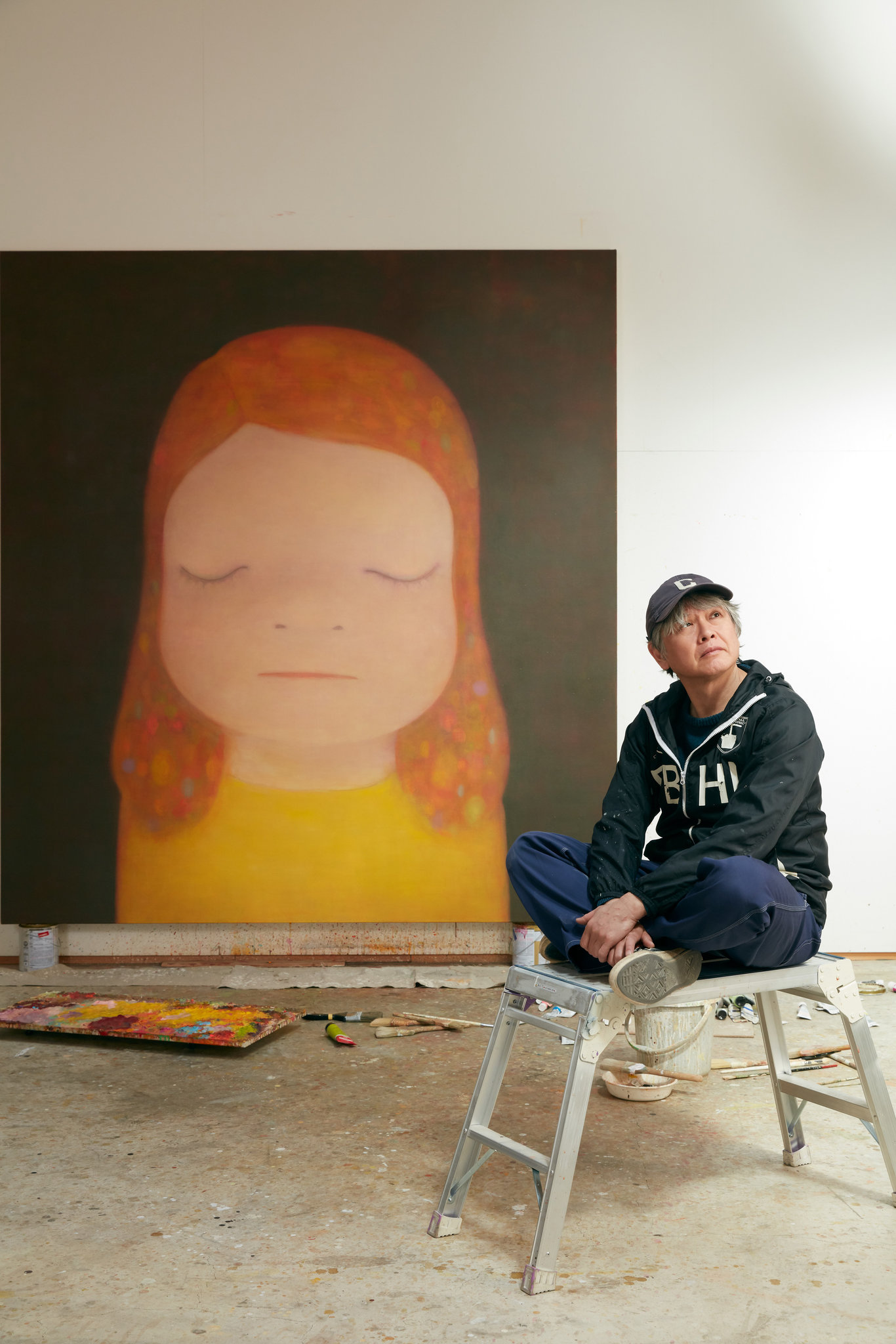
Elisabeth Frink, whose rough cast bronzes of dogs and dog headed figures carry a psychological weight that still feels urgent, has seen serious reassessment in the years since her 2022 Sainsbury Centre retrospective reminded the art world how strange and unresolved her practice truly is. The market for dog imagery in contemporary painting is where things feel most alive right now. Yoshitomo Nara's dogs, which appear throughout his career as alter egos carrying a kind of sweet menace, have become among the most sought after works in the global contemporary market. His auction records are astonishing by any measure, with major paintings clearing tens of millions at leading houses, and the dogs specifically carry a charge that his other subjects do not quite match.
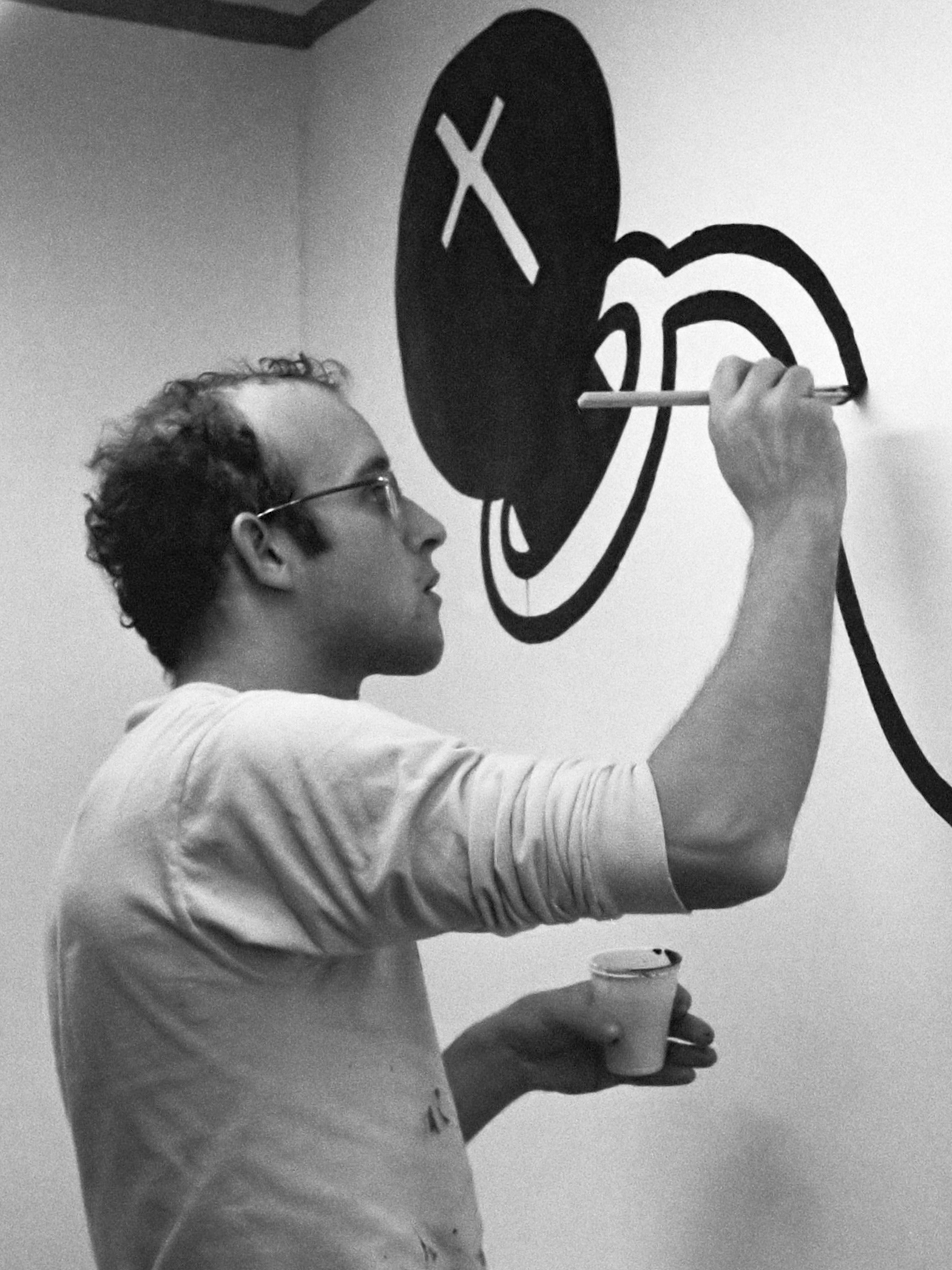
Zhou Chunya's Green Dog series, which emerged from his post Sichuan earthquake period in the 1990s, has found a passionate following among Asian collectors and increasingly among Western institutions alert to the depth of that body of work. Keith Haring's barking dogs, pulsing with the urgency and anxiety of the AIDS crisis era, remain among the most legible and emotionally direct images he produced, and the secondary market for his dog works consistently outperforms expectations. Jeff Koons brought the dog to its most extreme commercial apotheosis with Balloon Dog, whose various iterations have set records and generated genuinely heated critical debate about the relationship between desire, kitsch, and the art object. The orange Balloon Dog that sold at Christie's in 2013 for over 58 million dollars remains the highest price ever achieved at auction for a work by a living artist at that time.
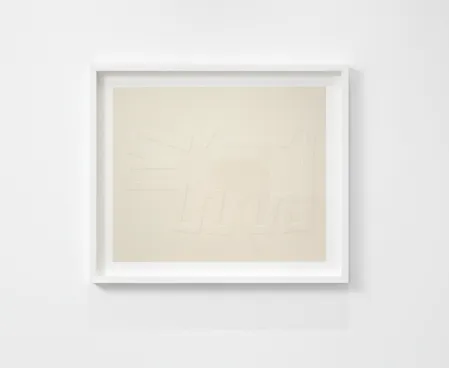
Keith Haring
Barking Dog from White Icons, 1990
Whatever one thinks of the conceptual underpinnings, the appetite the work revealed was real: collectors wanted the dog not despite its familiarity but because of it. Curators and critics have been slower than the market to fully theorize what is happening in this space, but that is beginning to change. Steve Baker's book The Postmodern Animal, though published in 2000, has become a touchstone for a younger generation of curators thinking about animal representation, and his subsequent work on what he calls the botched taxidermy aesthetic has influenced group exhibitions in London and Amsterdam that take the animal seriously as a critical category. The journal Antennae, dedicated to nature and visual culture, has published important essays on both Frink and Nara that read their dog imagery through lenses of trauma, care, and interspecies relation.
What is arriving now, and what feels genuinely open rather than settled, is the question of AI generated dog imagery as an aesthetic and critical space in its own right. The dog is among the most trained upon subjects in the vast datasets behind image generating systems, which means that algorithmically produced dog images carry within them a kind of accumulated cultural memory of every painted, photographed, and drawn dog that has ever been digitized. Artists and platforms working with this material are beginning to ask what it means that our most intimate animal companion has become also our most processed and mediated one. The Collection's engagement with this category at the intersection of AI and the long history of dog representation in fine and decorative art feels like exactly the right moment to be thinking about these questions.
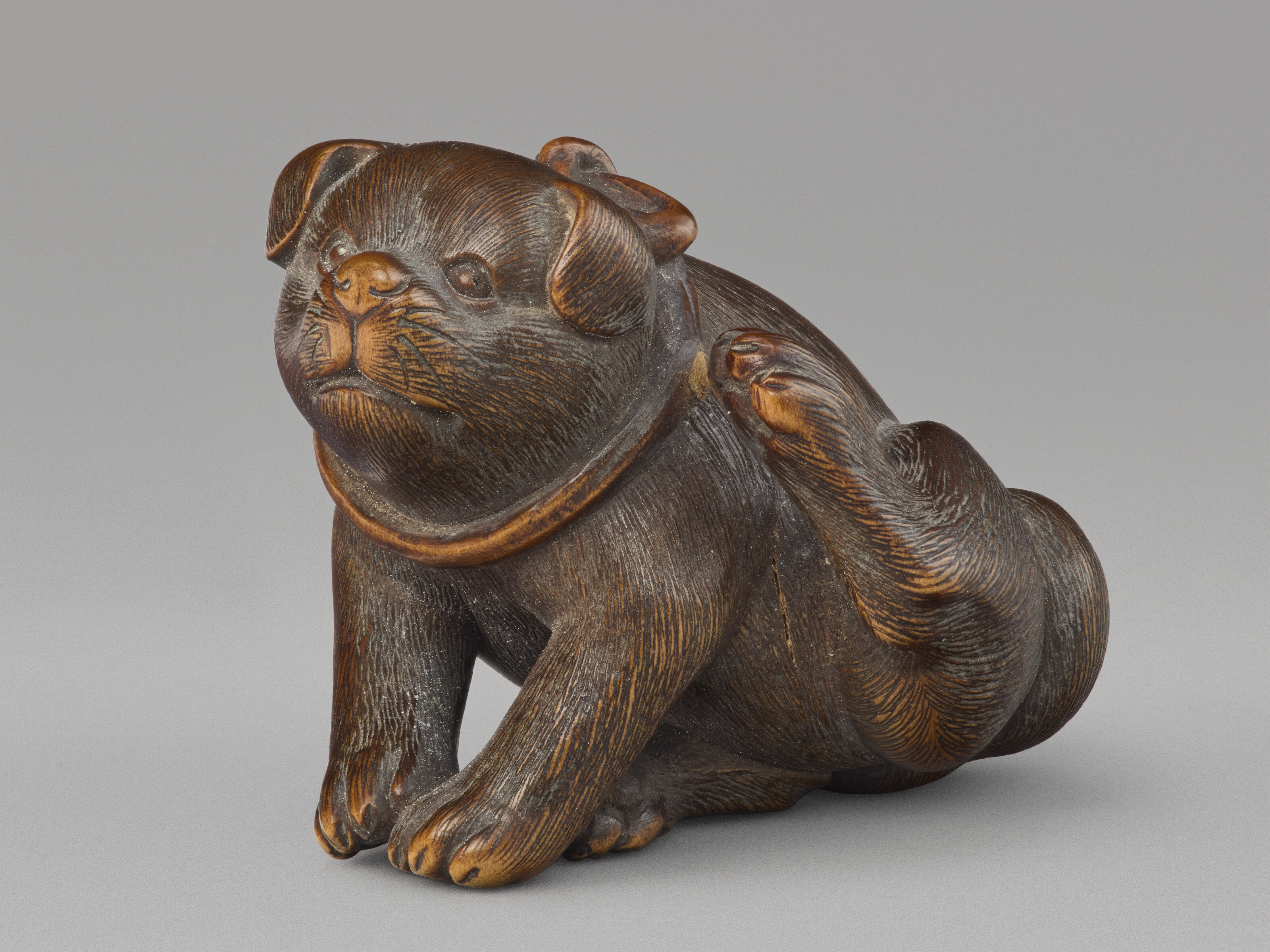
A Carved Wood Netsuke Miniature Sculpture Of A Dog
EDO PERIOD (19TH CENTURY), SIGNED MASANAO
For collectors, the signal is clear. Whether your entry point is the animalier bronzes of Barye or the neon inflected paintings of Nara, whether you are drawn to Wegman's deadpan theater or Haring's activist urgency, the dog in art is holding real value and generating real ideas. The category rewards collectors who are willing to think across periods and media rather than staying safely inside a single movement or moment. The dog, it turns out, has always been watching us as carefully as we have been watching it.