Coloured Pencil
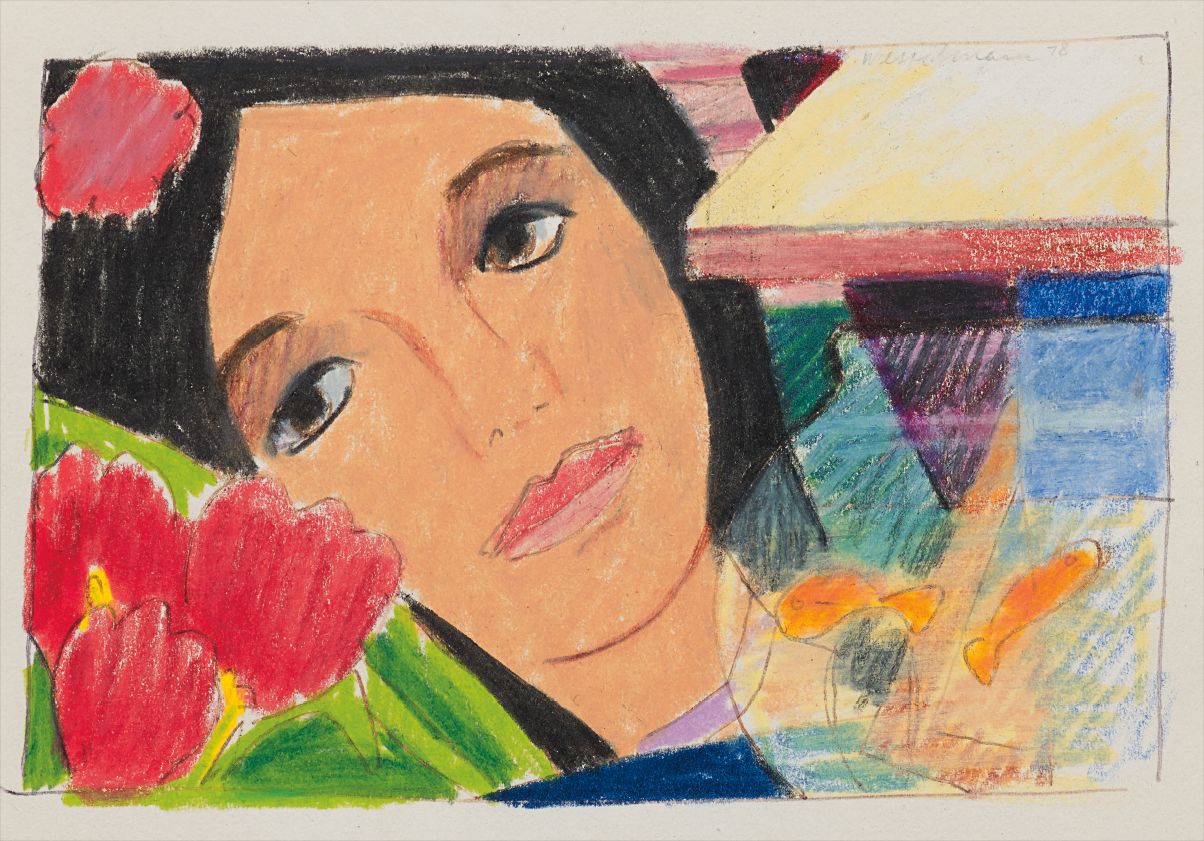
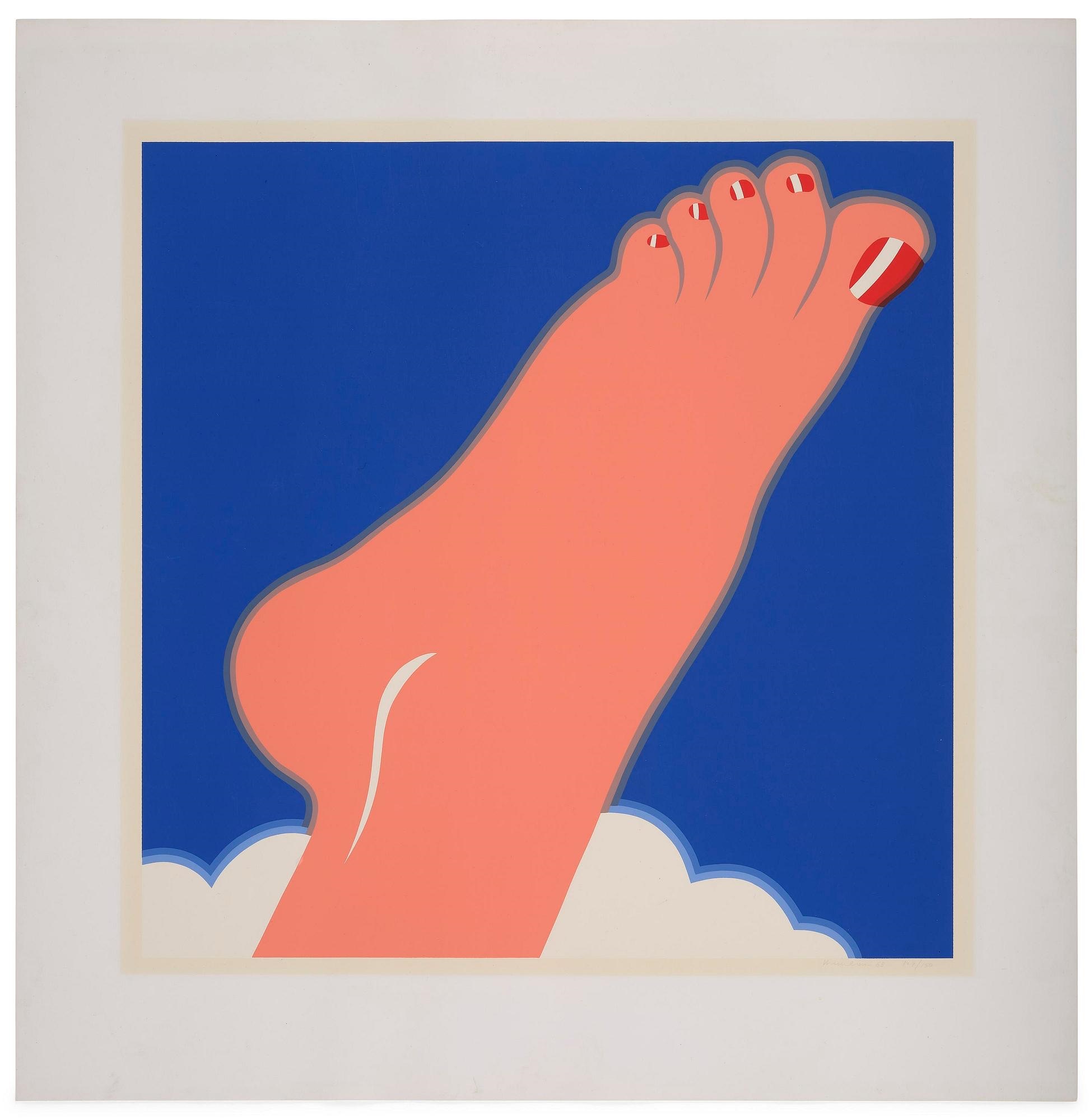
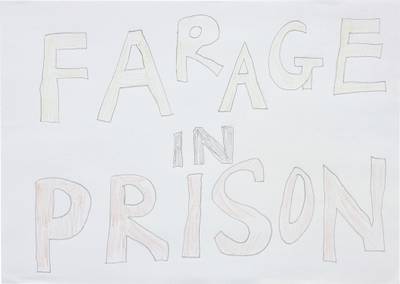
Tom Wesselmann
Sketch for Bedroom Painting #43


The Humble Pencil That Seduced Everyone
There is something almost conspiratorial about coloured pencil as an art medium. It arrives without ceremony, associated in most minds with childhood craft tables and school projects, and then quietly does something extraordinary. In the hands of serious artists, it becomes a vehicle for psychological depth, technical virtuosity, and a kind of tender intimacy that oil paint, for all its grandeur, rarely achieves. The story of coloured pencil in fine art is really the story of a medium reclaiming its dignity, one careful layer at a time.
Coloured pencils as we recognise them today emerged in the early twentieth century, developed initially by companies like Faber Castell and Caran d'Ache for commercial illustration and technical drafting purposes. Artists were not the primary audience. The medium sat for decades in a curious middle ground between fine art and applied craft, used seriously by illustrators and designers but largely overlooked by the academy. It was not until the 1960s and 1970s that a generation of artists began to interrogate that hierarchy deliberately, drawn precisely to the medium's lowly status as a conceptual position in itself.
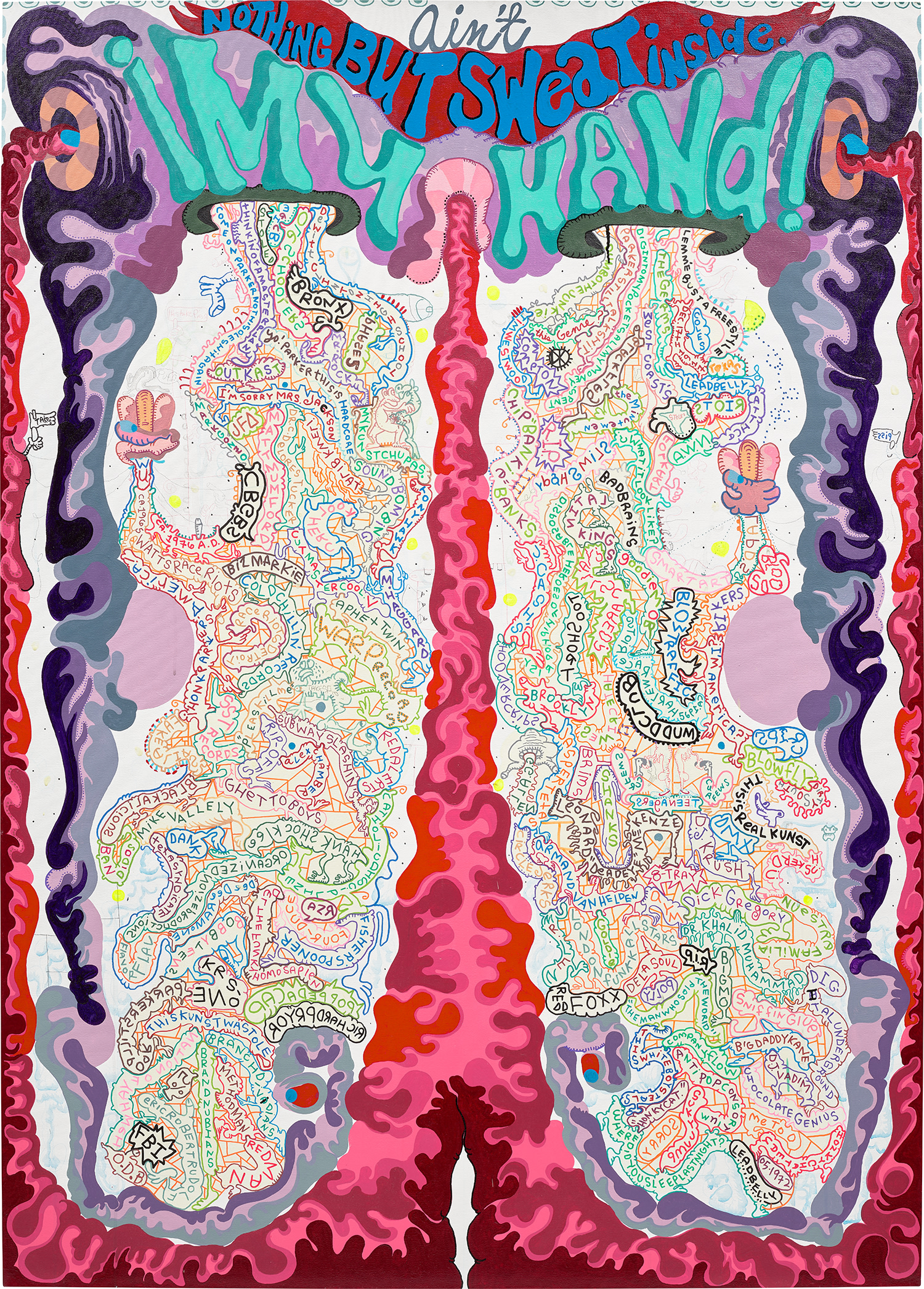
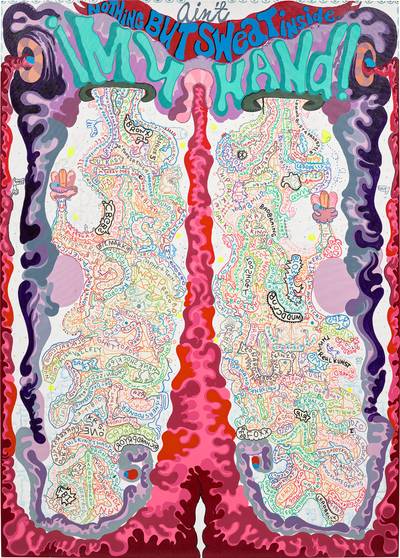
Erik Parker
Ain't Nothing But Sweat Inside My Hand, 2000
The Photorealist movement of the late 1960s gave coloured pencil one of its most visible moments of serious critical attention. Artists working in the American Photorealist tradition found that the waxy, controllable mark of the coloured pencil allowed for an almost uncanny mimicry of photographic surfaces. The slow, meditative process of building tone through layering and burnishing suited the Photorealist temperament perfectly. Around the same time, artists working outside the mainstream gallery system, particularly those associated with outsider and folk traditions, had been using coloured pencil for years without apology, building complex worlds of imagery on paper with the tools most readily available to them.
What makes coloured pencil technically distinctive is the discipline it demands. Unlike watercolour, which rewards spontaneity, or oil paint, which allows almost unlimited revision, coloured pencil is fundamentally a medium of accumulation and commitment. Artists typically work from light to dark, building up translucent layers in a technique called burnishing, where later applications of pigment compress earlier ones into a smooth, luminous surface. The wax or oil binder in the pigment core means that blending is achieved through optical mixing rather than physical mixing, layers of colour interacting on the retina rather than on the surface.
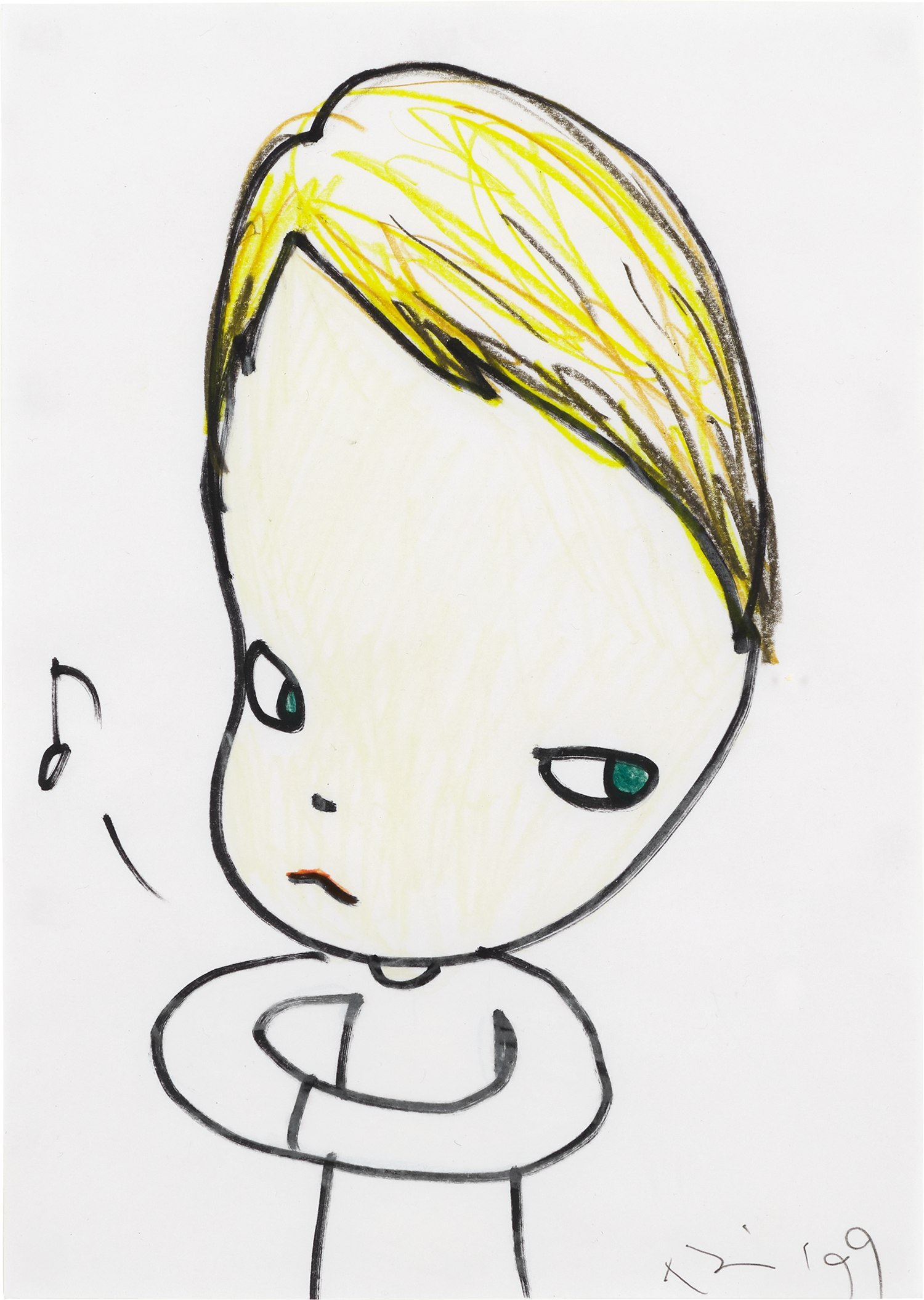
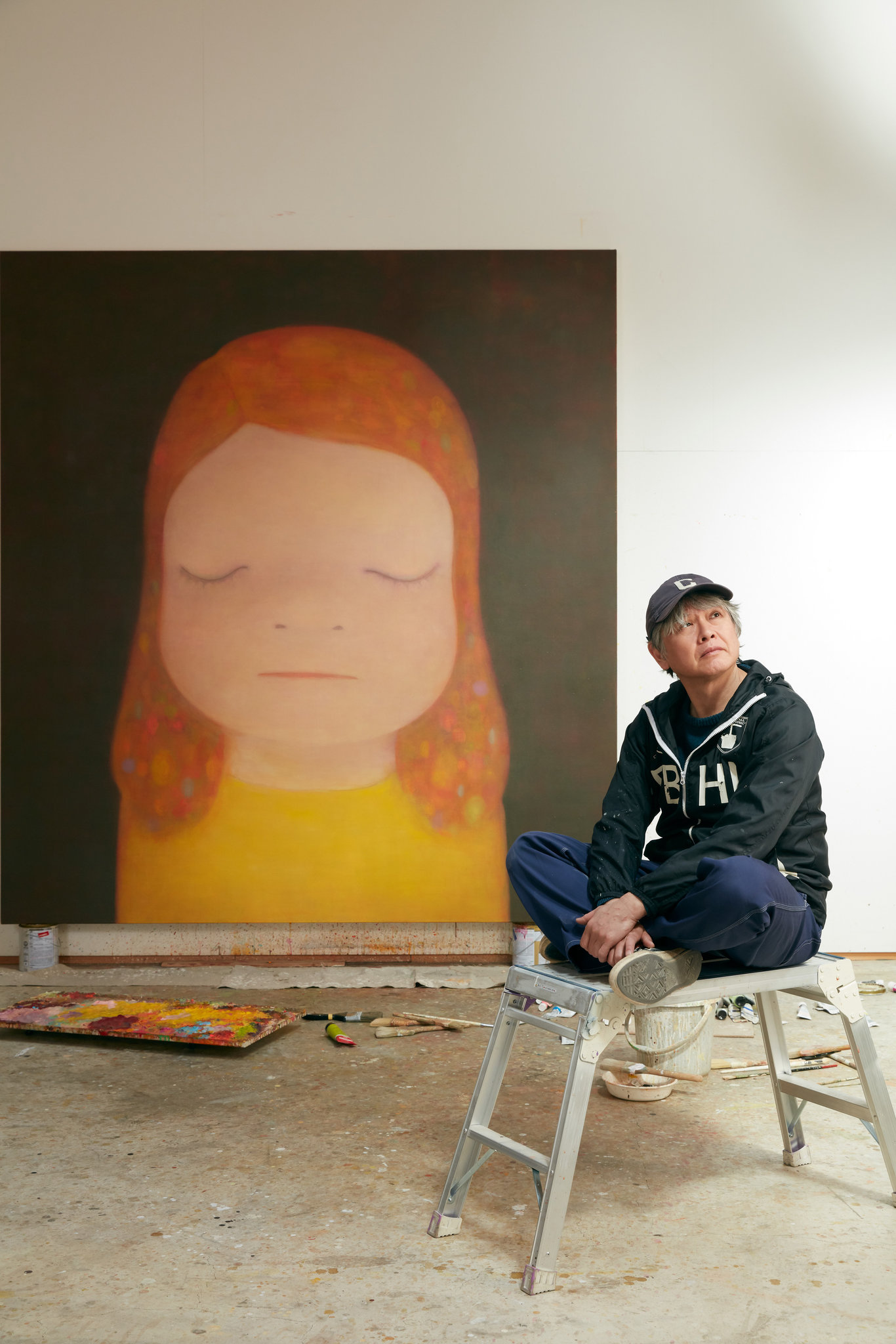
Yoshitomo Nara
Girl, 1999
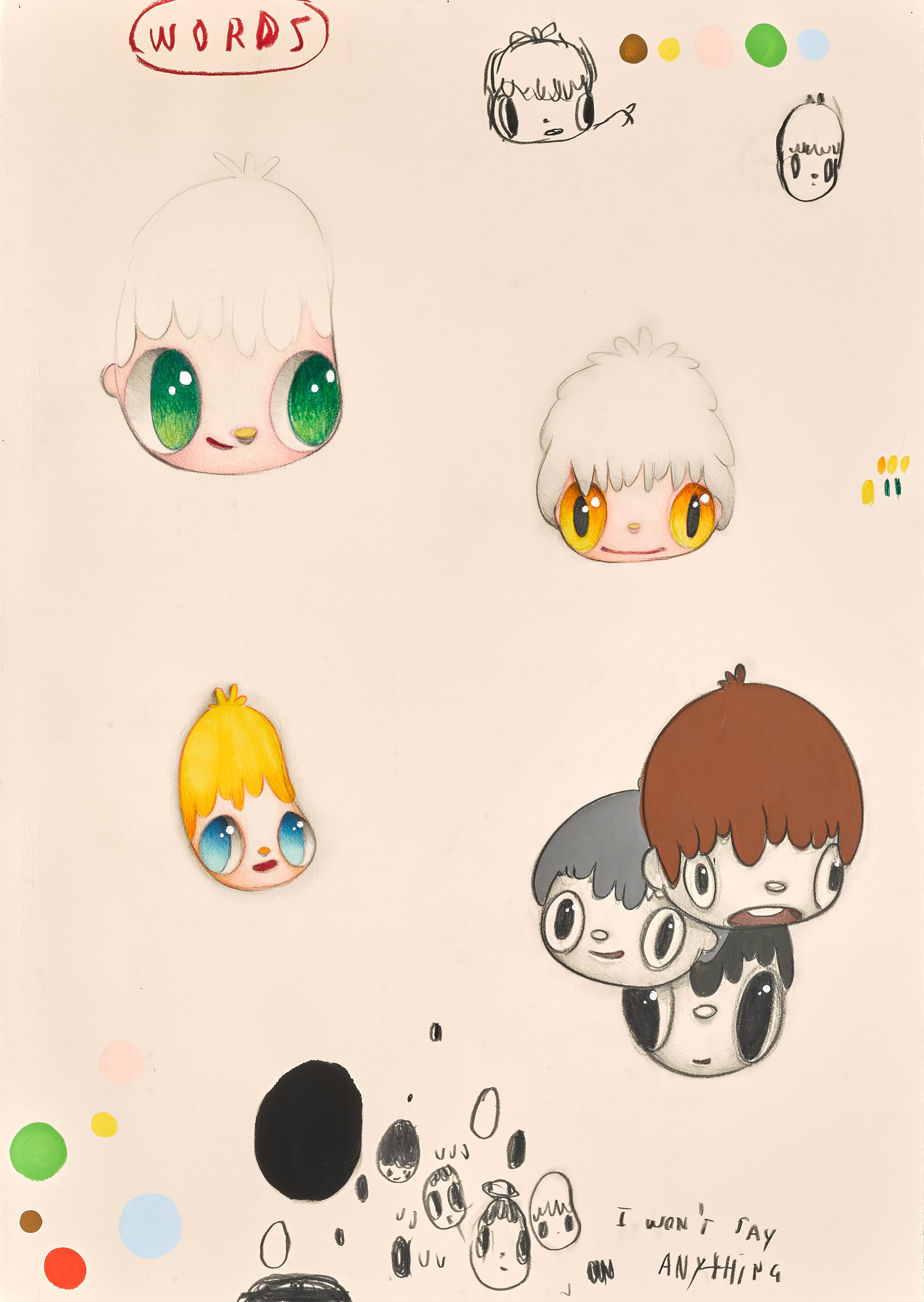
This creates a peculiar vibrancy, a sense that the colour exists just below the surface of the paper, breathing under a skin. The figurative traditions that have historically favoured coloured pencil share a particular sensibility: they are drawn to the psychological portrait, to the close examination of a face or body rendered with almost uncomfortable attentiveness. Yoshitomo Nara, whose work appears on The Collection, understands this instinctively. His deceptively simple figures, wide eyed children hovering somewhere between menace and vulnerability, have often been developed through drawing practices deeply informed by pencil and coloured pencil work.
The line between his preparatory drawings and his finished works is famously blurred, a quality that speaks to how central drawing remains to his entire project. The intimacy of the medium matches the intimacy of his emotional register. Caleb Hahne Quintana, also represented on The Collection, brings a different energy to figurative work that shares that same pencil inflected tenderness. His figures exist in states of quiet reverie, rendered with a softness that recalls both Old Master drawing and contemporary illustration in equal measure.
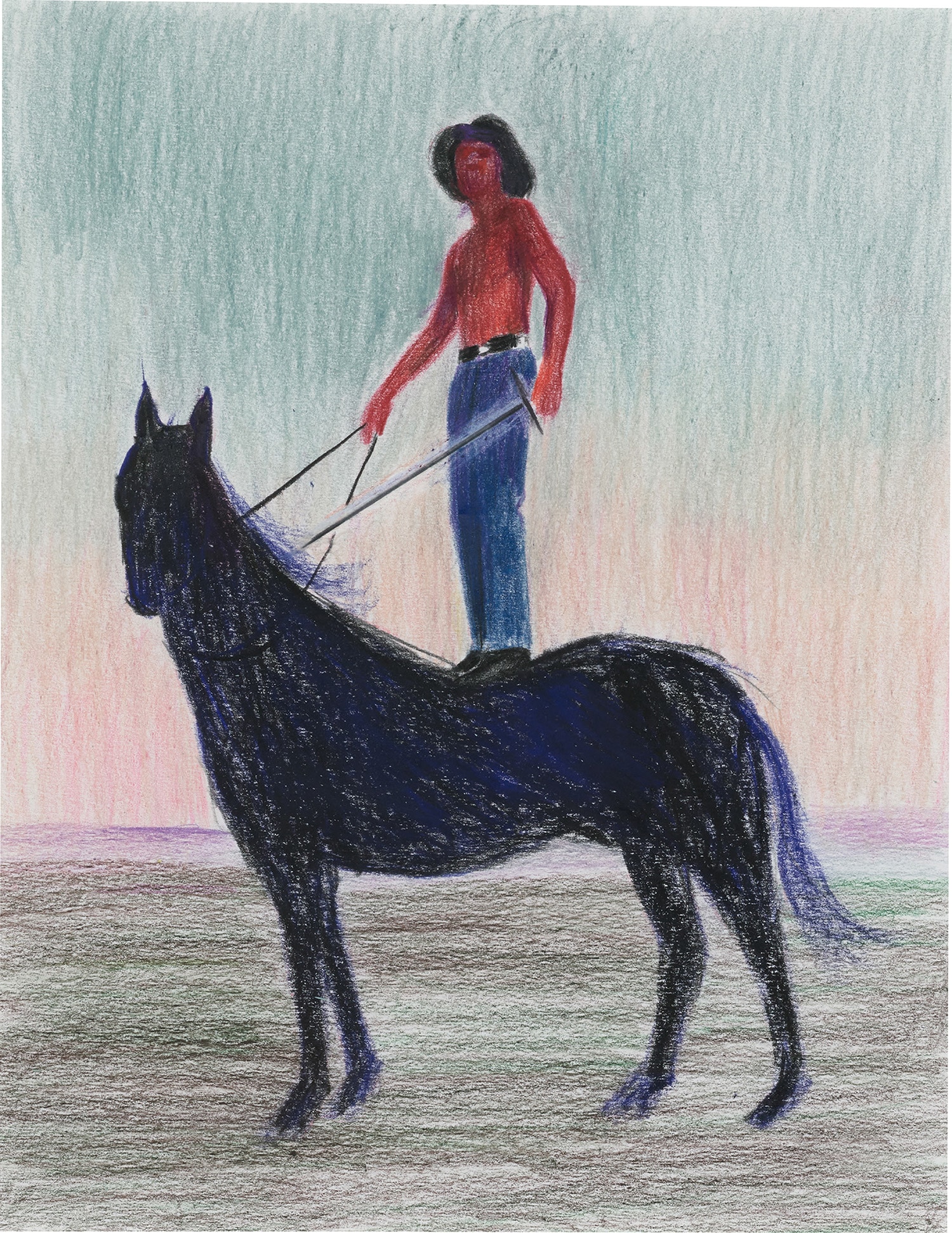
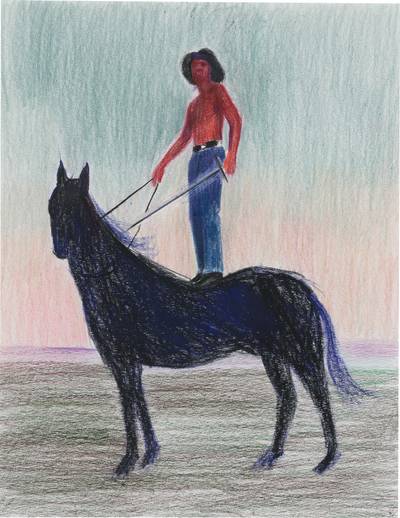
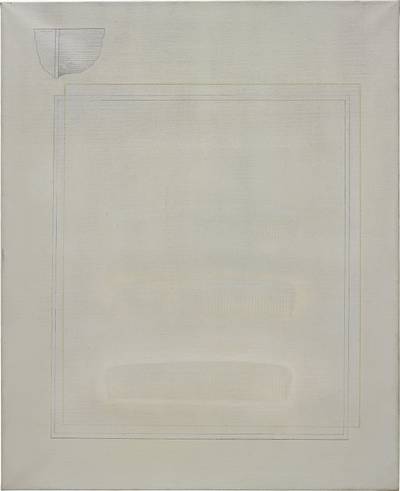
Caleb Hahne Quintana
Instar, 2021
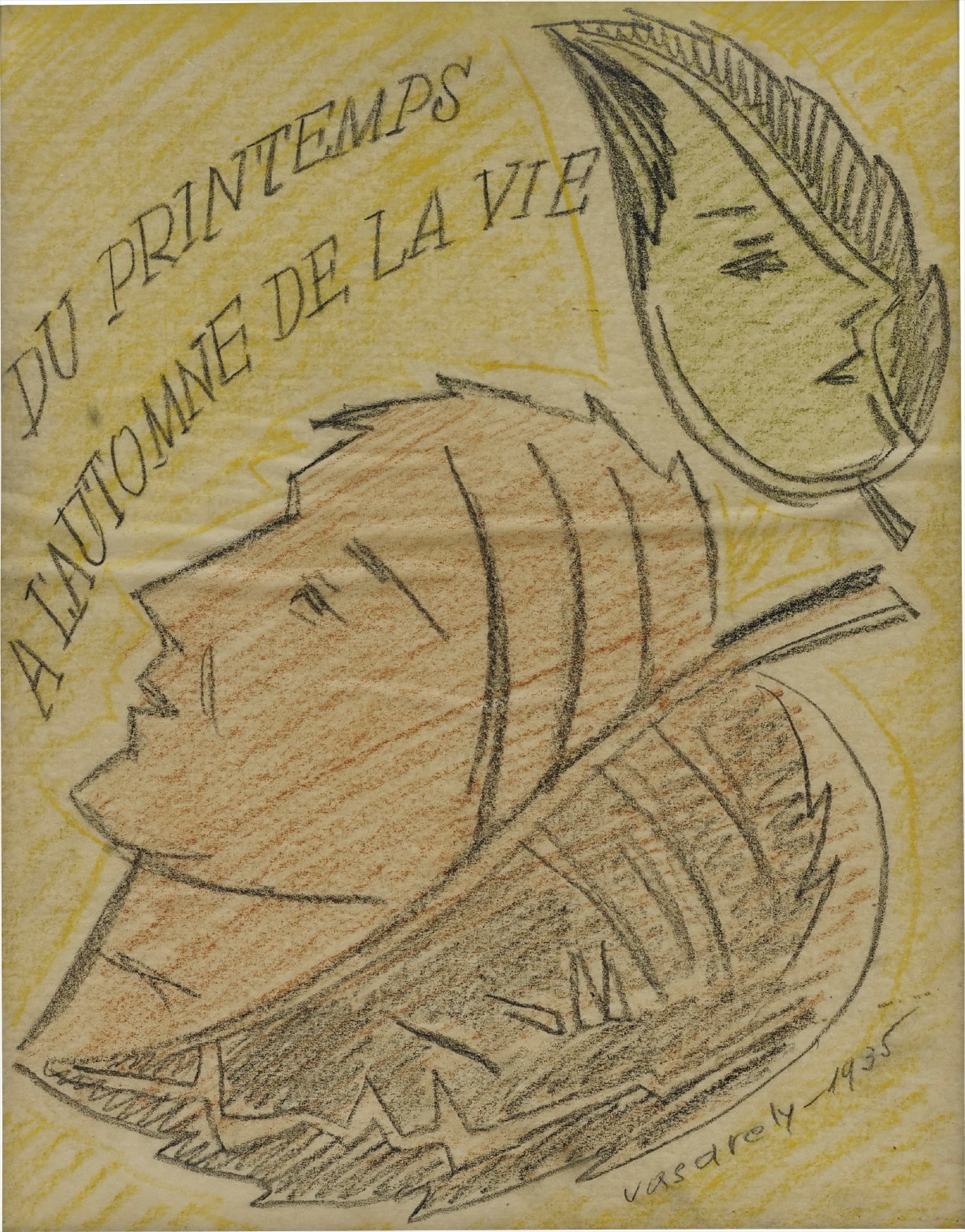
There is a similar quality in the work of Storm Tharp, whose portraits possess a strange, almost hallucinatory precision, the kind of concentrated looking that only a slow medium like coloured pencil can sustain. Louis Fratino, too, works with a graphic intimacy in his depictions of queer domesticity, where the body and the domestic space are treated with equivalent devotion. The question of what coloured pencil means culturally is inseparable from the question of what we value when we value art made slowly, by hand, on an intimate scale. Jean Michel Basquiat used coloured pencils extensively in his notebook drawings throughout the early 1980s, and those works now command serious critical and market attention precisely because they reveal the thinking underneath the painted surface.
William Kentridge, whose practice is rooted in drawing as a philosophical act, has spoken of the drawn mark as inherently political, a form of bearing witness that photography and painting approach differently. The hand that makes a coloured pencil mark is unmistakably present in a way that even the brushstroke sometimes obscures. Chantal Joffe, represented on The Collection, has built a career around the portrait as an act of sustained attention, and her drawn work demonstrates how the pencil sustains a different quality of looking than paint allows. George Condo, whose grotesque and tragicomic figures occupy a world of their own invention, has always maintained drawing as the spine of his practice, the place where characters are first conjured before being translated into other media.
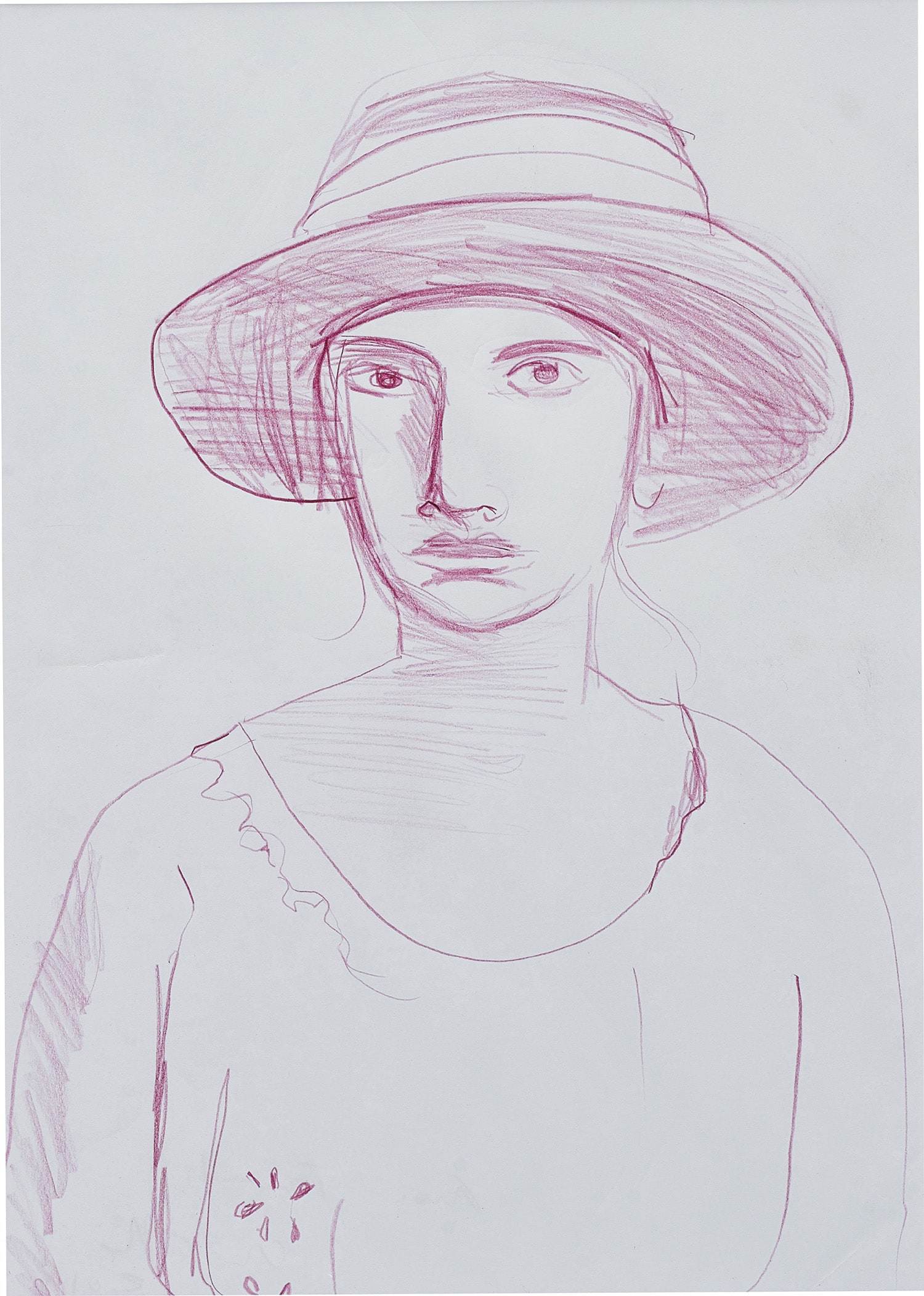
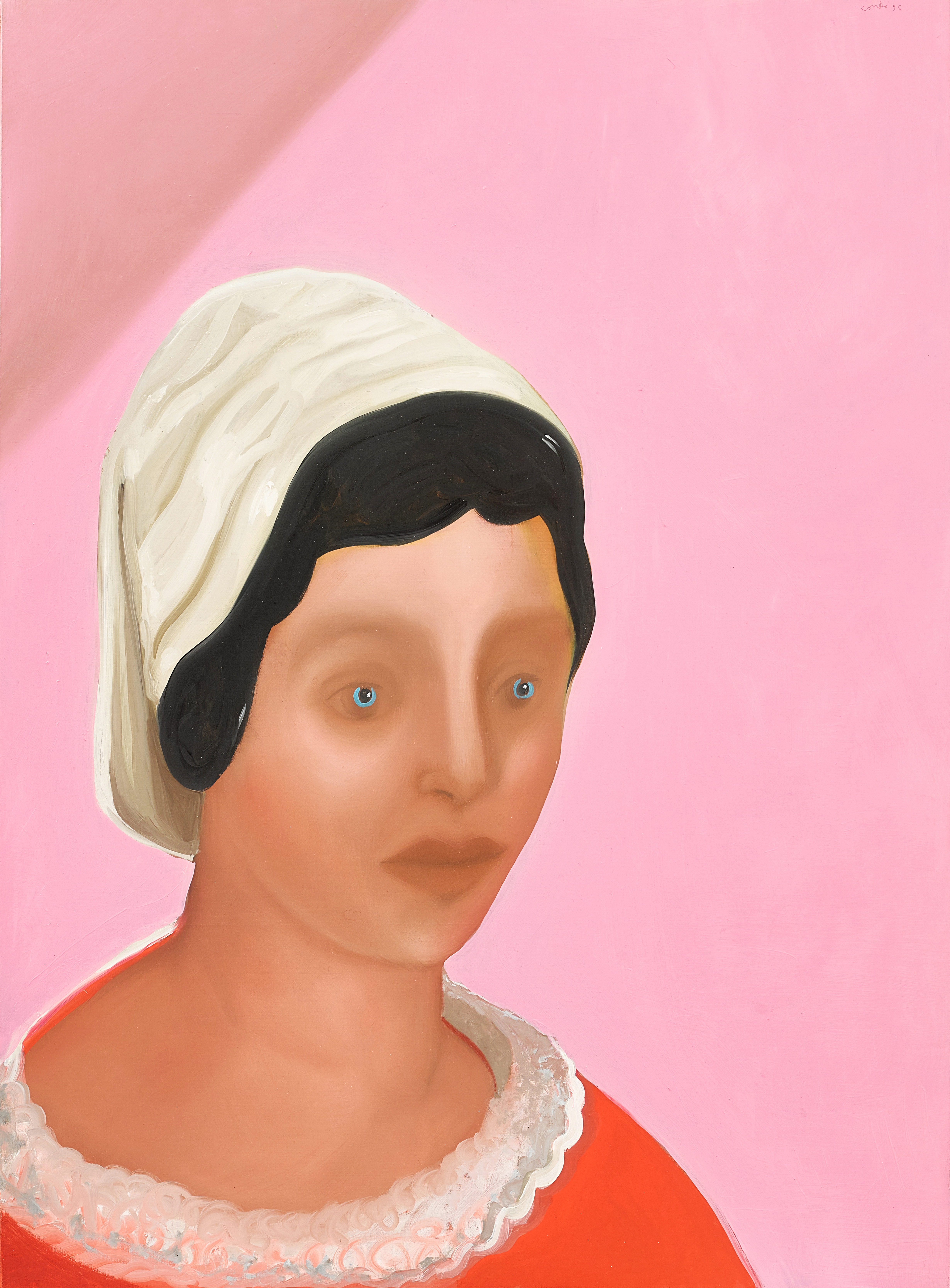
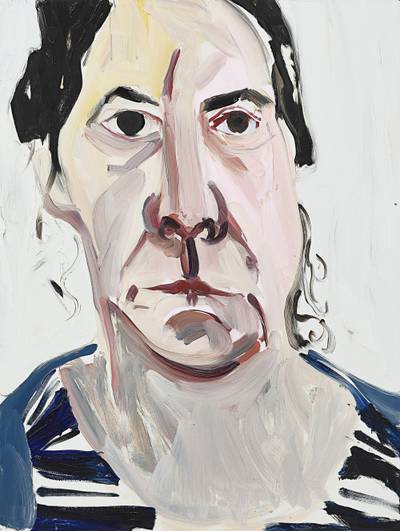
Chantal Joffe
Anna Freud, 2019
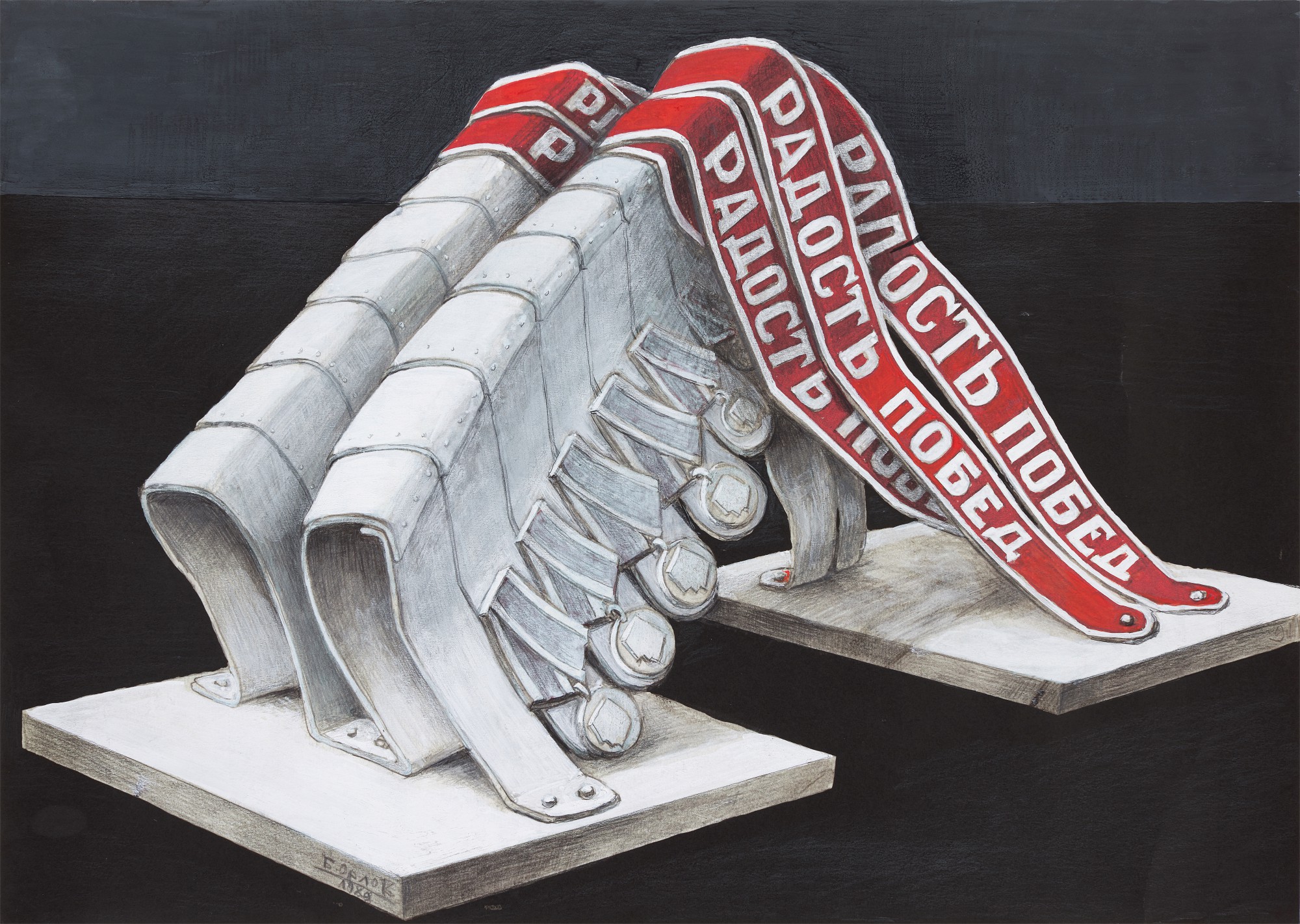
Even artists primarily known for work in entirely different registers, like the conceptual rigour of Ilya Kabakov or the graphic intensity of Erik Bulatov, return to drawing and coloured mark making as a kind of home base. Today, coloured pencil occupies a newly energised position in the contemporary art world. Partly this reflects a broader collector appetite for works on paper, which have grown significantly in market attention over the past decade. Partly it reflects a generational shift among younger artists who came up drawing and have refused to treat that practice as merely preparatory.
The medium carries with it a sincerity, a resistance to ironic distance, that suits the current moment well. When you hold a coloured pencil drawing, you are holding something made at the pace of thought, mark by mark, the artist's concentration physically embedded in the surface. In an era of accelerated image production, that slowness feels like a radical act.