City Life
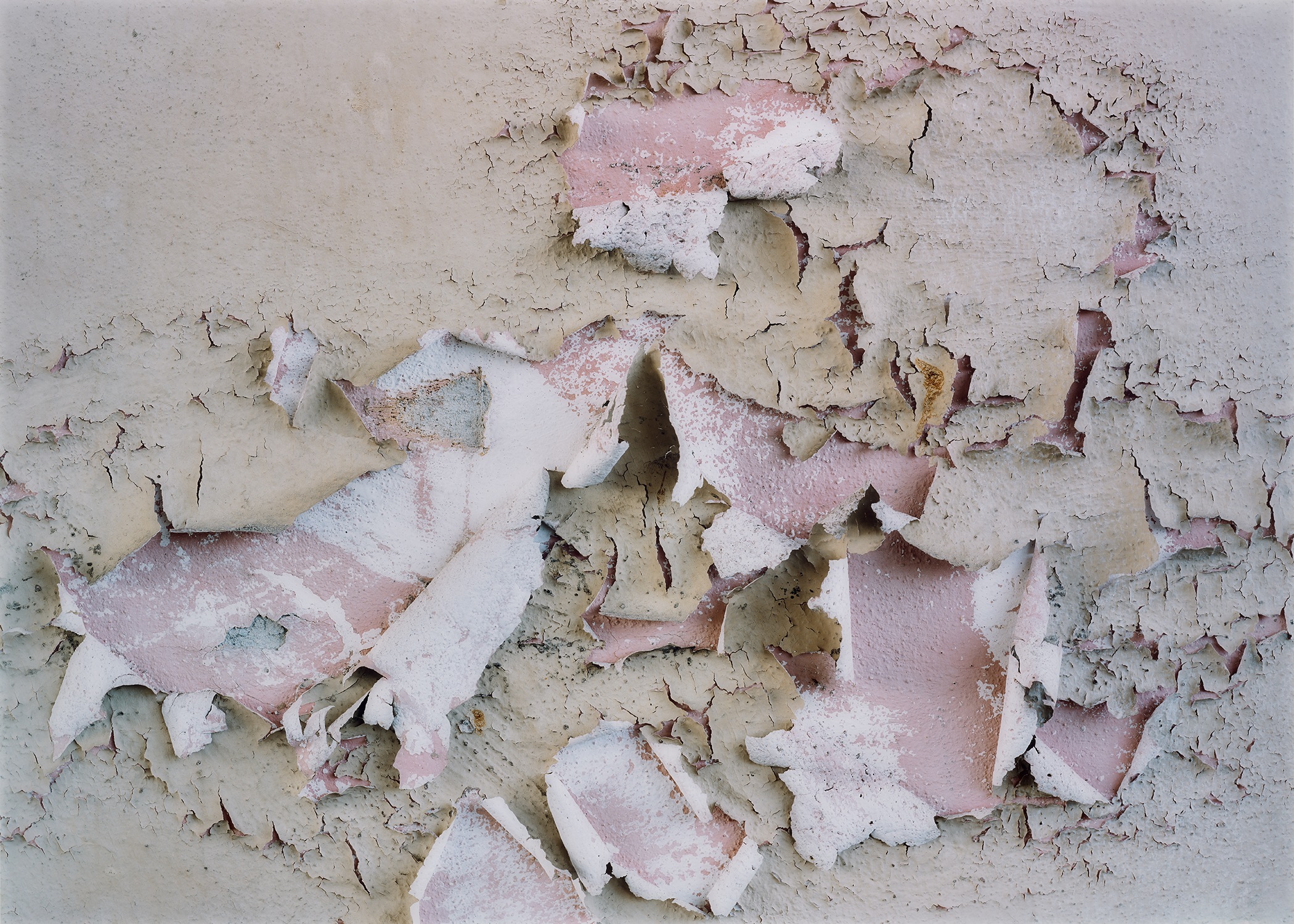
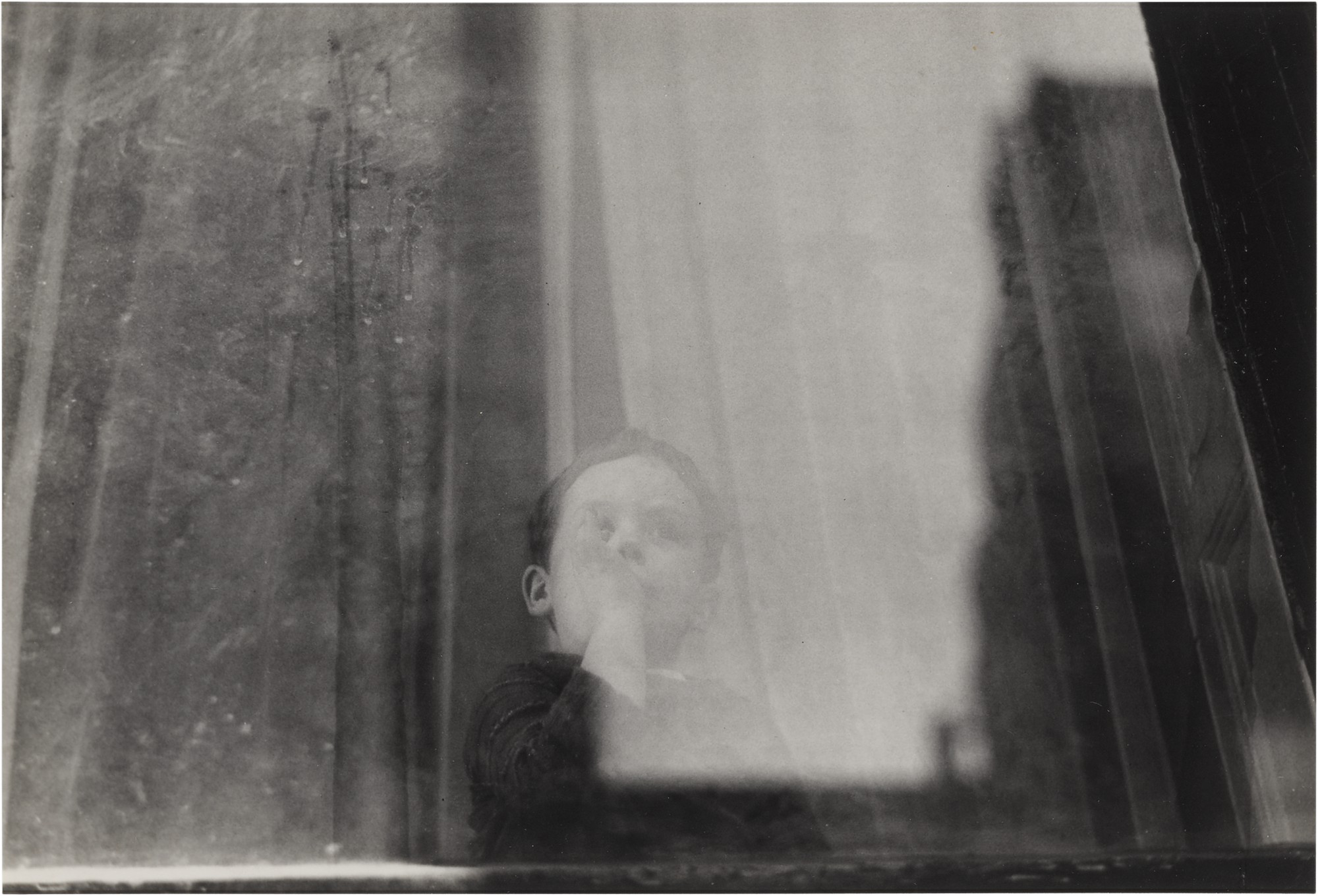
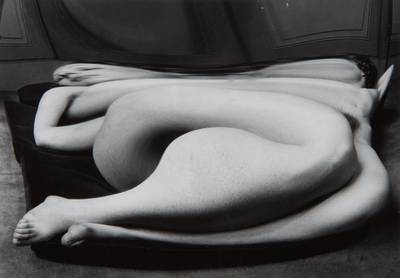
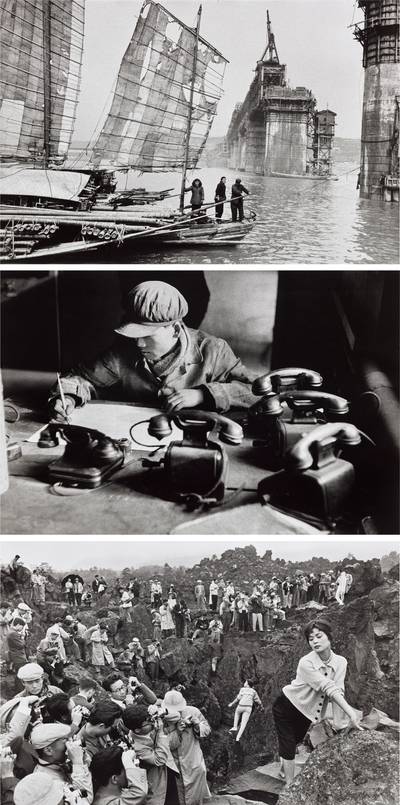
Frank Thiel
Stadt 12/38 (Berlin)

The City Never Stopped Asking to Be Seen
There is something almost involuntary about the way artists turn toward the city. The street pulls at the eye. The crowd generates its own kind of gravity. Long before photography gave us a mechanical means of capturing urban life, painters and printmakers were working to translate the overwhelming experience of the modern metropolis into something a single viewer could hold and contemplate.
That tension between the vastness of city life and the intimacy of art looking back at it remains one of the most generative subjects in the Western tradition, and it shows no signs of exhausting itself. The serious artistic engagement with urban experience accelerated in the nineteenth century alongside industrialization itself. Paris was the great laboratory. Camille Pissarro painted the boulevards with a trembling attentiveness, his brushwork dissolving individual figures into the larger pulse of the street.
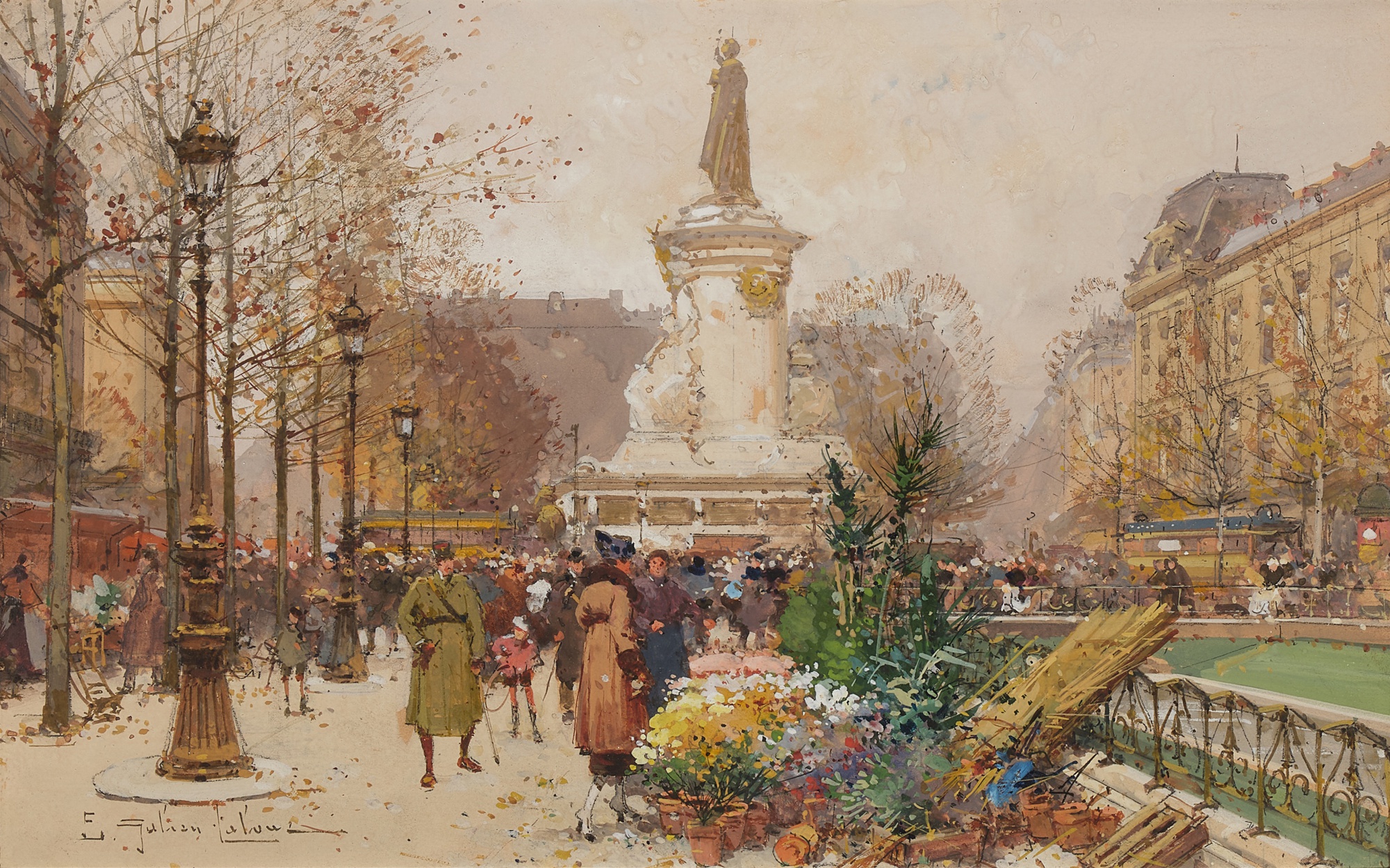
Eugène Galien-Laloue
Place de La Republique
His views of the Boulevard Montmartre from the 1890s capture something essential: that in the city, you are always both participant and spectator, always caught between belonging and observation. The Impressionists understood the city not as backdrop but as atmosphere, as a kind of weather system that penetrated everything, including the act of seeing. Printmakers were equally drawn to urban subjects during this period, often with a rawness that painting could not quite achieve. Auguste Louis Lepère brought to Paris street scenes an almost journalistic directness, his wood engravings registering the grime and energy of working life with genuine affection.
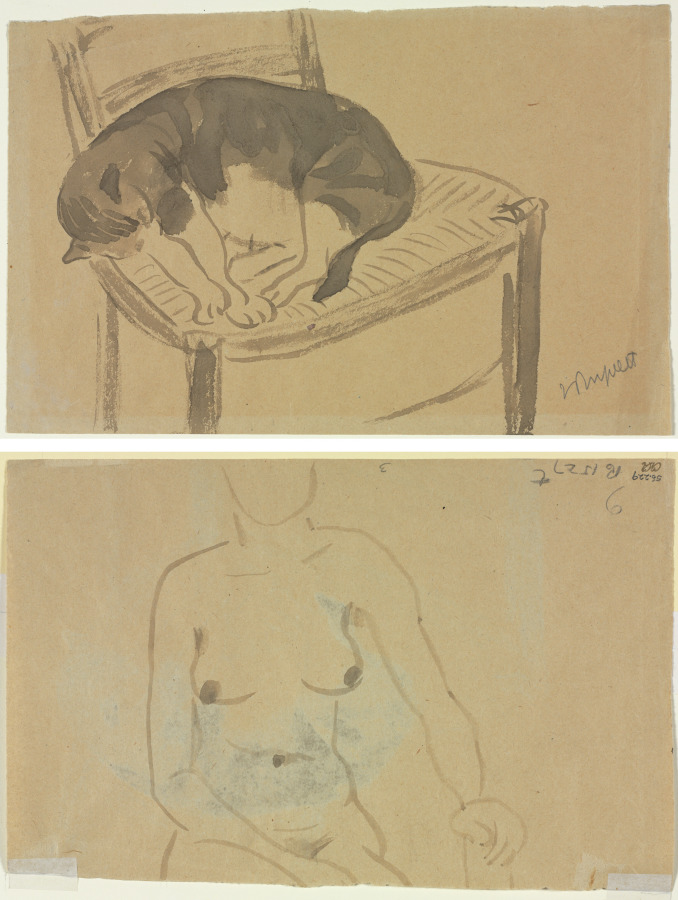
Joseph Pennell, the American expatriate who documented industrial cityscapes across Europe and the United States around the turn of the twentieth century, treated bridges and smokestacks with the same romantic intensity that an earlier generation had reserved for cathedrals. Both understood that the city contained its own sublime, one built not from nature but from human ambition and human friction. The arrival of photography fundamentally changed the conversation. Where painting required time, selection, and inevitable idealization, photography promised the city caught in the act.
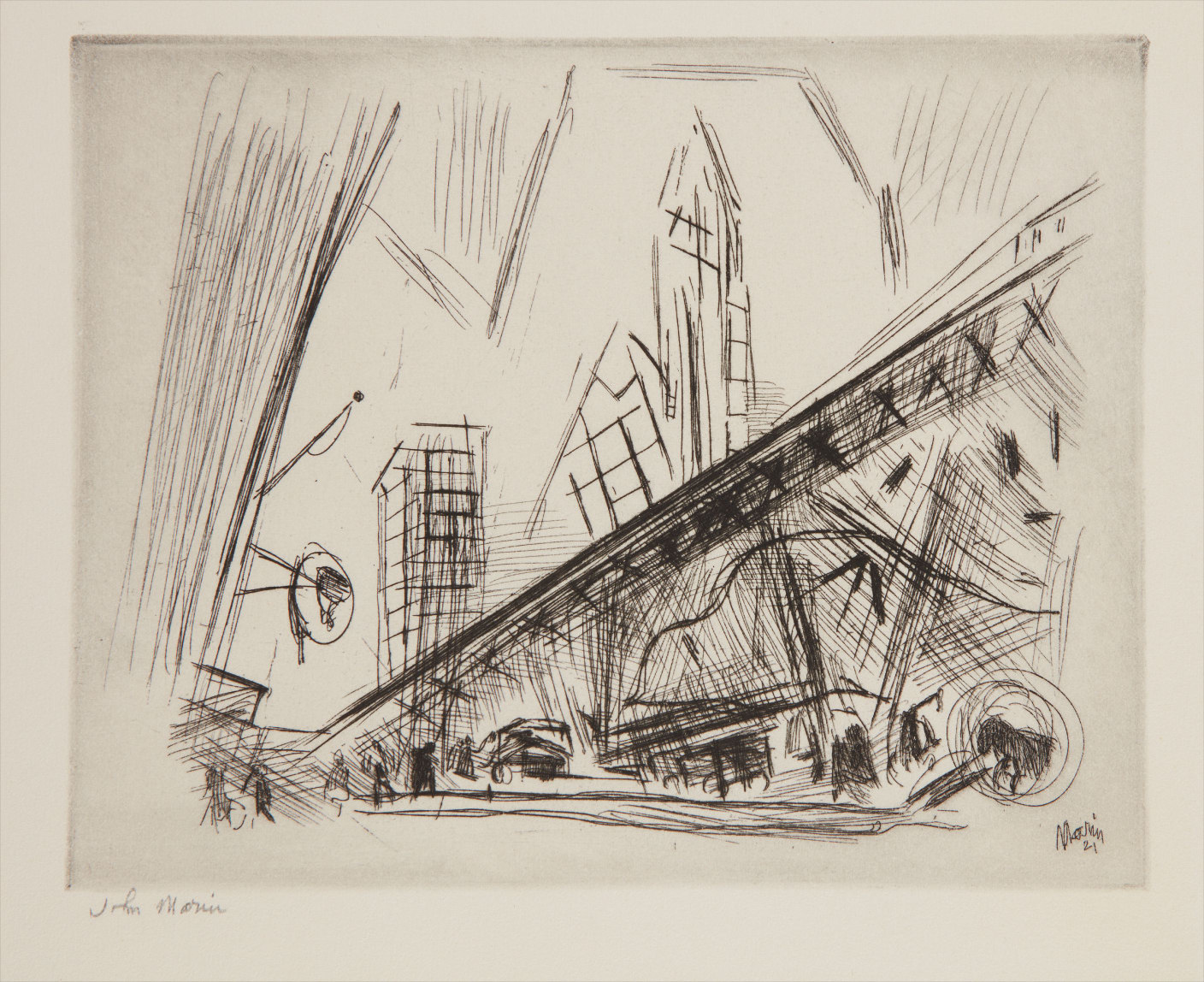
John Marin
Downtown, the El
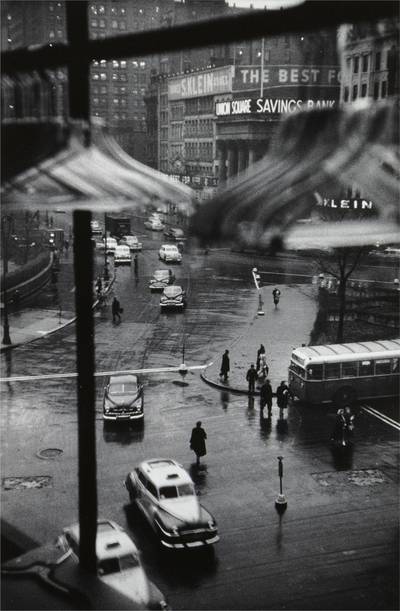
André Kertész arrived in Paris in 1925 and began making pictures that felt like stolen glimpses, moments of unexpected poetry extracted from the flow of urban routine. His New York work from the 1950s onward had a different quality, more melancholy, more aware of alienation, but no less attentive. Around the same time, Saul Leiter was walking the streets of Manhattan with a color sensibility that owed as much to painting as to reportage, turning steamed windows and falling snow and the geometry of awnings into something close to abstraction. Leiter's city was intimate even when it was crowded, which is a remarkable thing to say about midcentury New York.
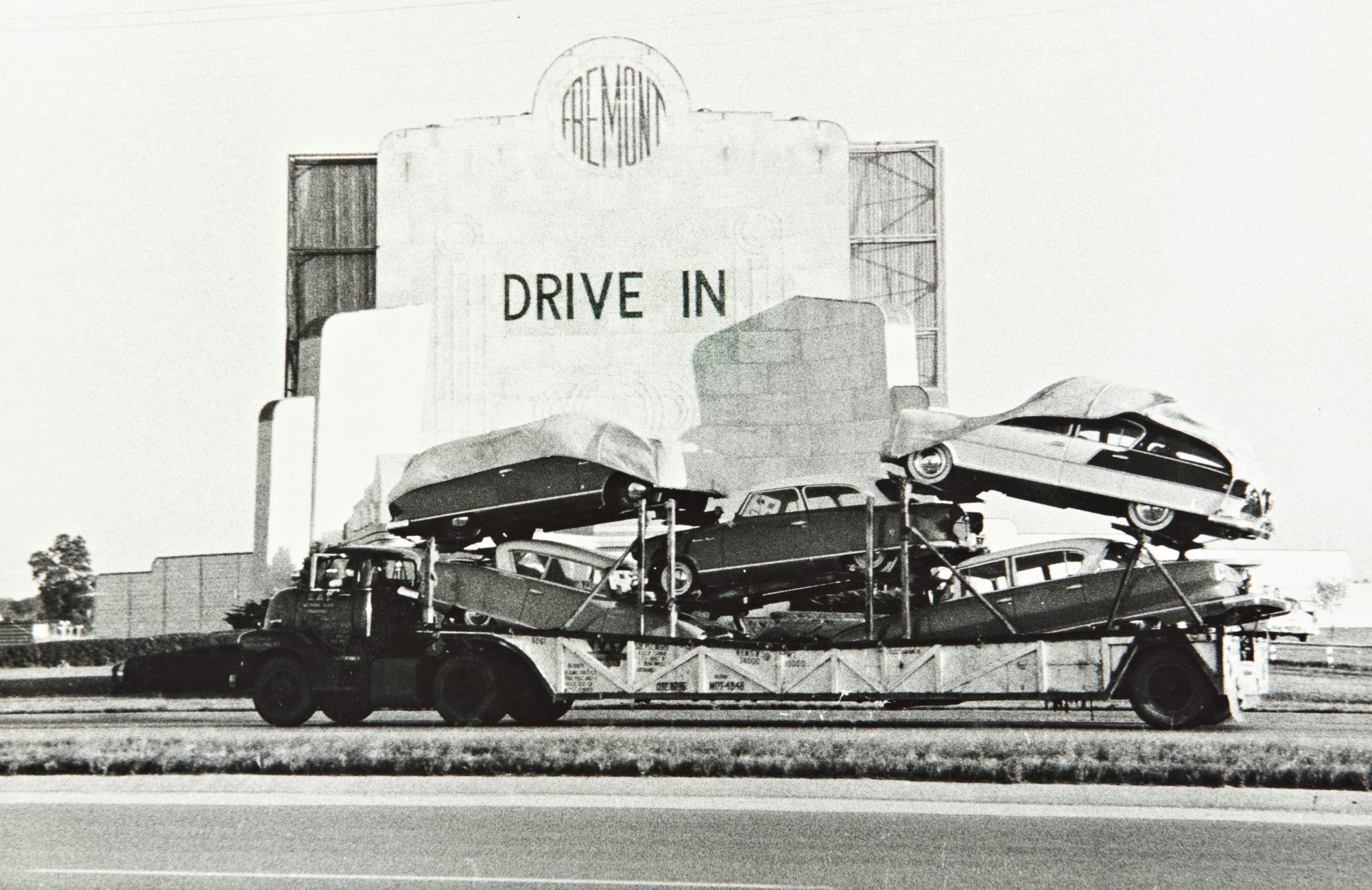
Louis Faurer and Robert Frank were working in related territory during those same years, though each brought his own emotional register. Faurer had a tenderness toward the people he photographed, an awareness of vulnerability beneath the anonymity of the crowd. Frank's landmark publication The Americans in 1958 was received as a provocation, its blurred, tilted, unresolved images of American life striking many reviewers as unnecessarily bleak. In retrospect it reads as ruthlessly honest, a document of a country in which the city and the road were both sites of restlessness rather than belonging.
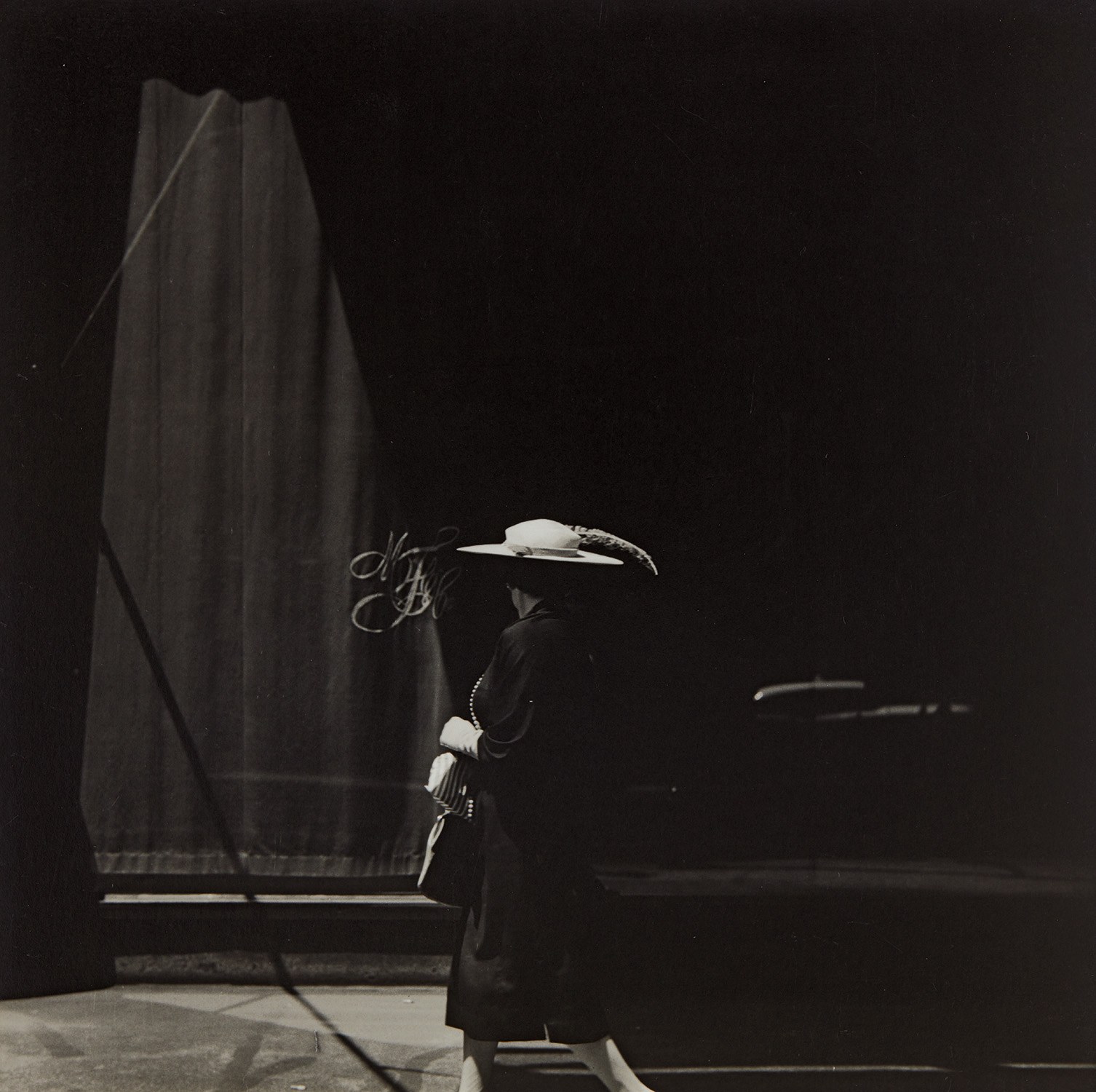
Ray K. Metzker
Chicago
Louis Stettner, who worked across Paris and New York for decades, occupied a quieter space in this tradition, his pictures more openly affectionate, more willing to find warmth in the commuter's face or the lunch counter at noon. Ray K. Metzker pursued a more formally radical approach. His composite prints and multiple exposures from the 1960s, especially the work he made in Philadelphia and Atlantic City, treated the city as raw material for visual experiment.
Figures multiplied and fragmented, shadows became structural elements, and the legibility of the street gave way to something stranger and more demanding. Metzker was interested in what photography could do, not just what it could record, and his city pictures sit at a fascinating intersection between documentation and abstraction. Painting never ceded the territory. The Photorealists of the 1970s took urban observation in a direction that was almost perverse in its intensity.
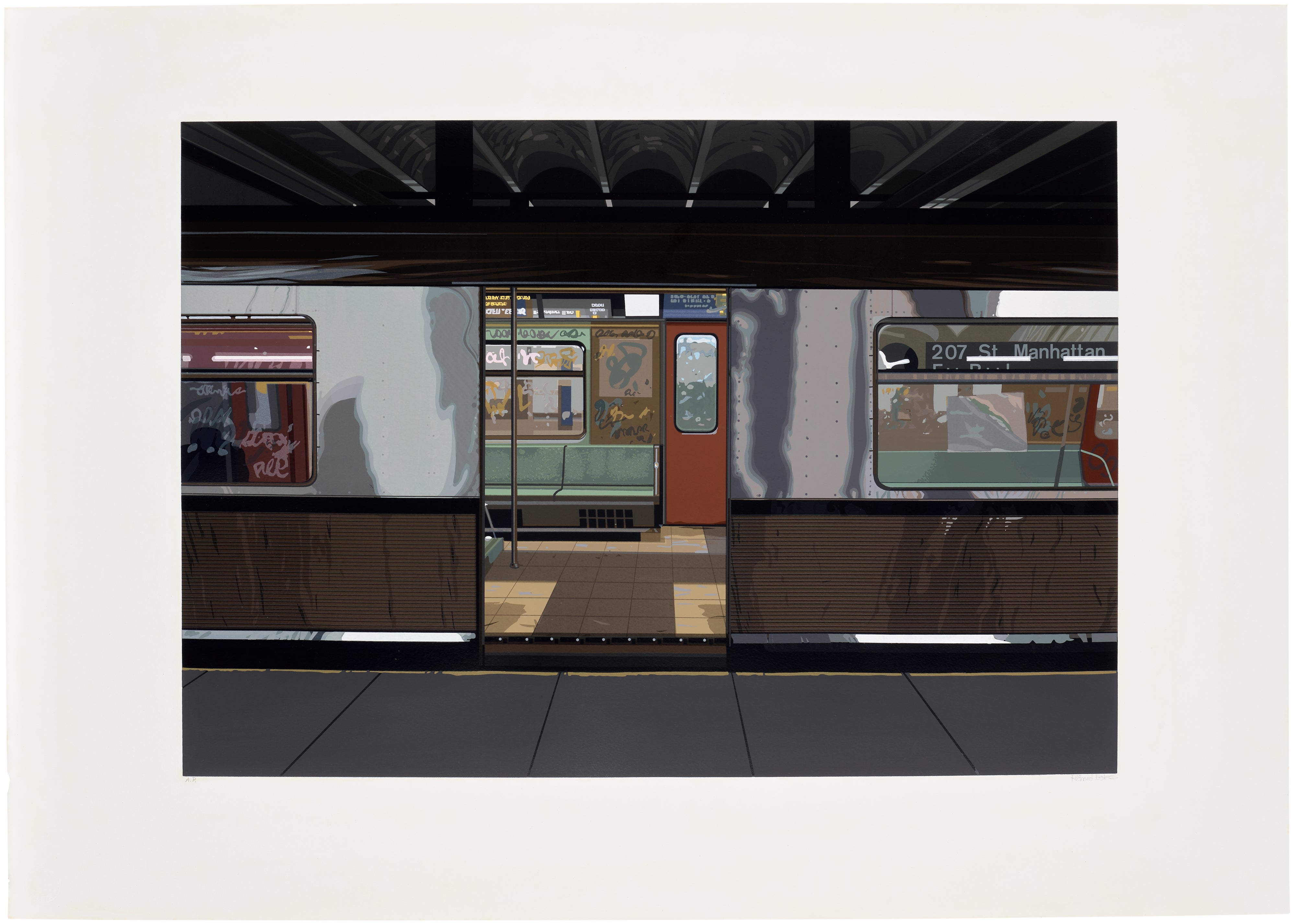
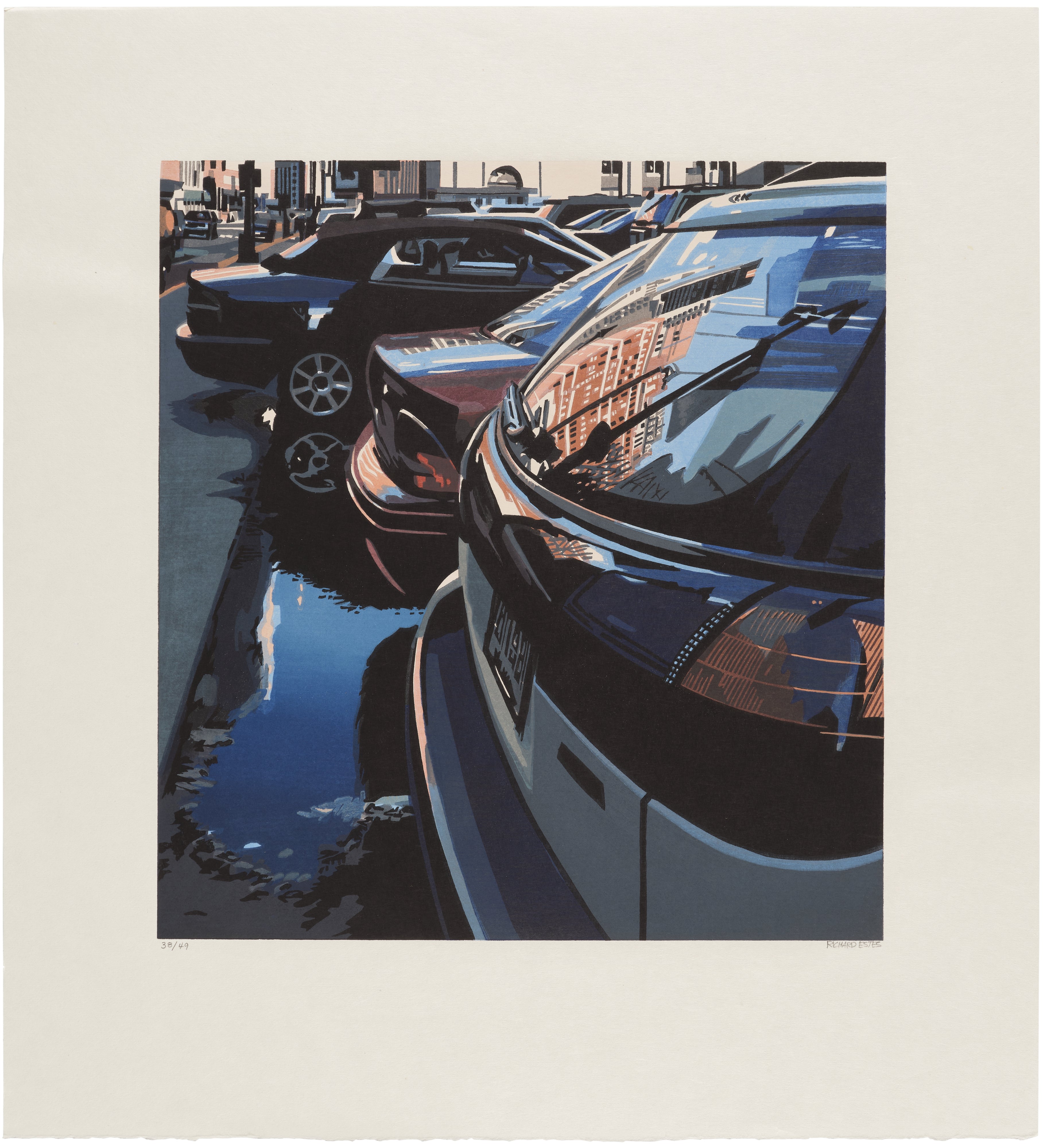
Richard Estes
Subway, from Urban Landscapes No. 3 (A. p. 121)
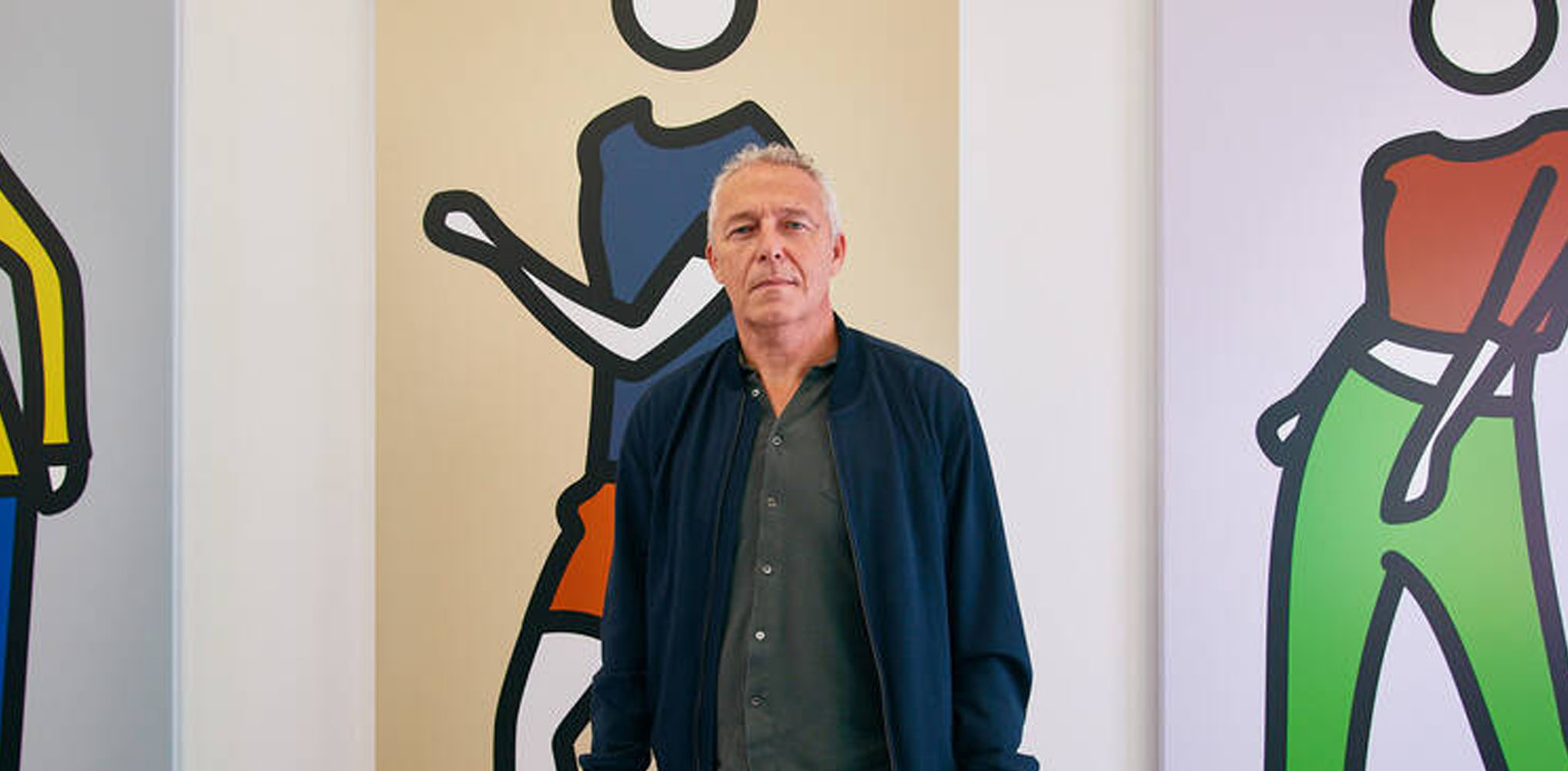
Richard Estes painted New York storefronts and diners with a fidelity so precise that his surfaces read initially as photographs, only to reveal themselves as something more unsettling: a city emptied of human presence, reflected and re reflected in plate glass until the viewer loses any stable point of entry. Julian Opie has approached the city from the opposite direction, reducing pedestrians and streetscapes to their essential graphic elements, stripping away detail until what remains is pure movement and rhythm. Both strategies, hyperrealism and near abstraction, arrive at a similar question about what it means to truly see the place where most of us spend our lives. The city has also been a site of political inscription.
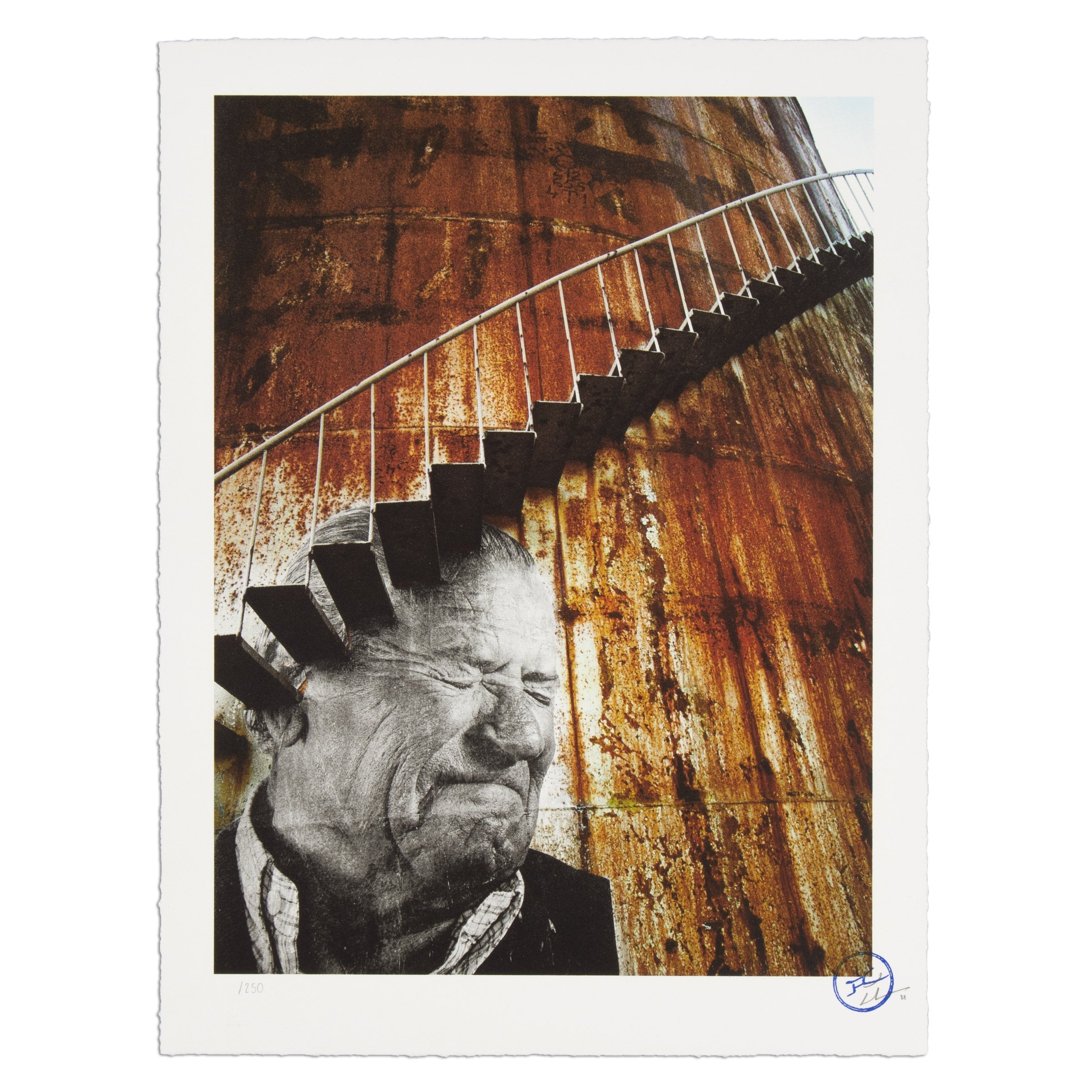
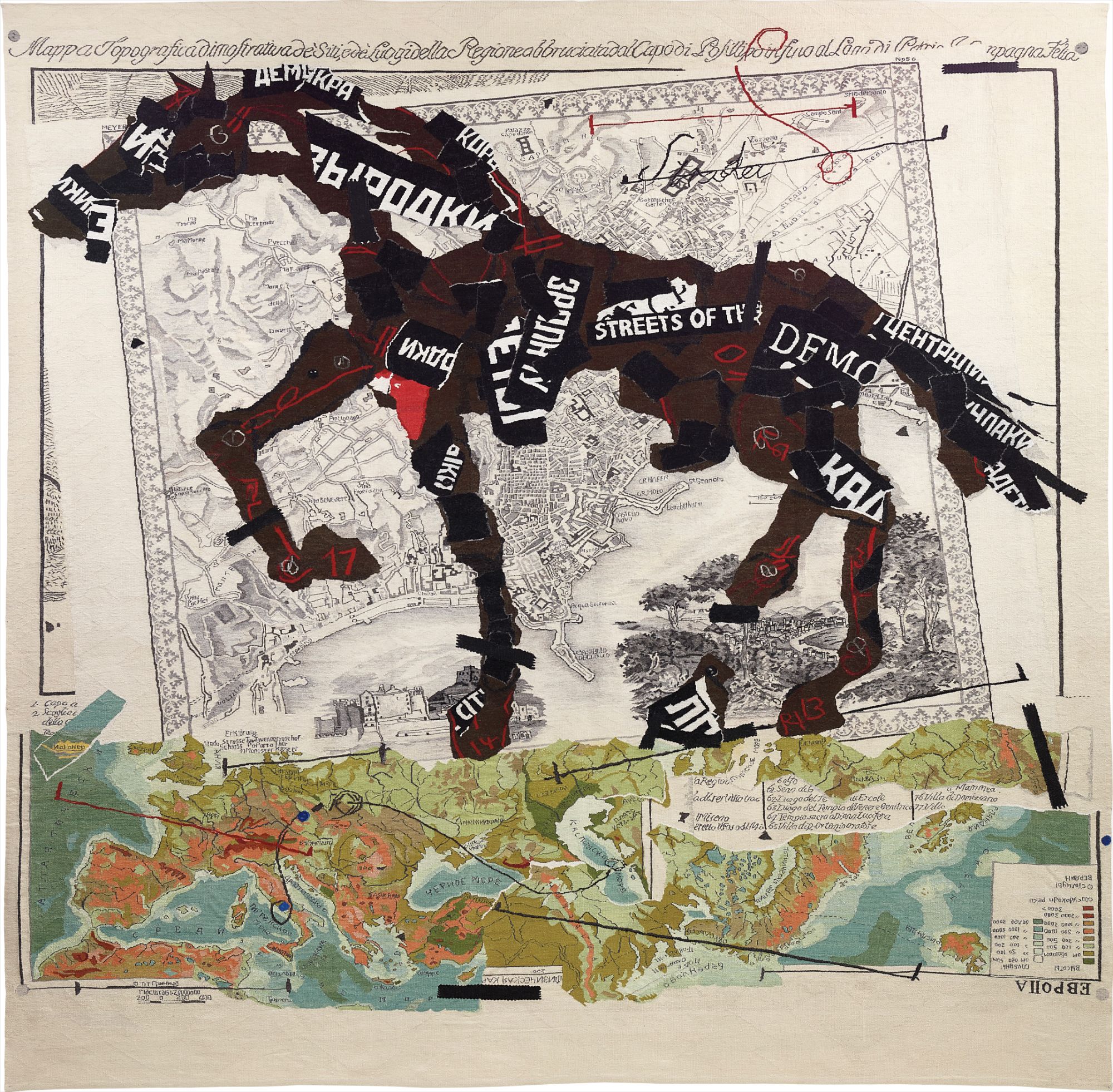
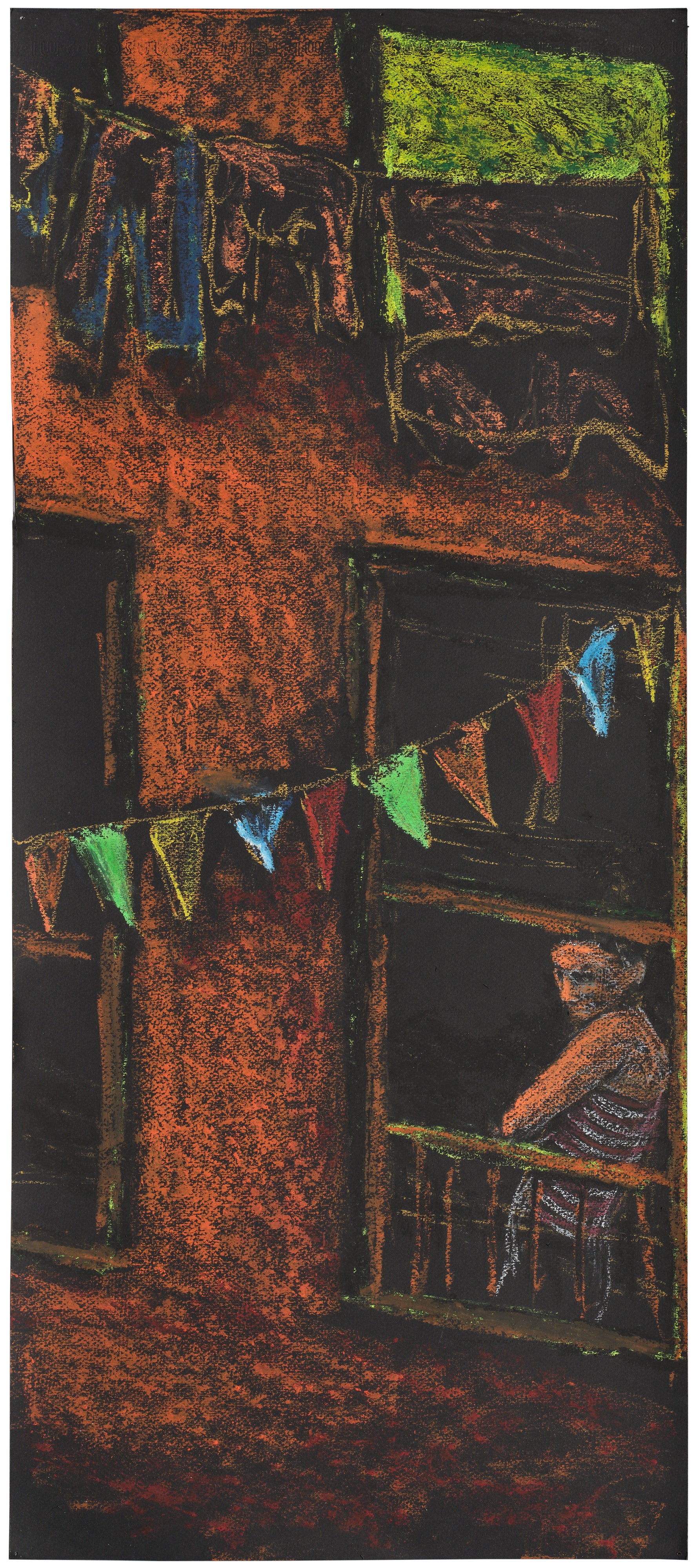
Erik Bulatov, working in the Soviet context, made works in which public space was saturated with ideological language, the street itself a text imposed from above. William Kentridge has long used the city, specifically Johannesburg, as a space through which to think about history, complicity, and the residue of colonial power. Jane Dickson painted Times Square in the 1980s from the perspective of someone who actually lived there, when it was still dangerous and ungentrified, her neon smeared surfaces registering a city that the art world largely preferred not to see directly. What unites work across this breadth of approach and era is a shared conviction that the city matters, that it is where human experience concentrates and where the questions of modernity become impossible to avoid.
The works gathered on The Collection under this theme reflect that conviction across mediums, periods, and sensibilities. From Pissarro's shimmering boulevards to the distilled geometry of Opie's walkers, from the searching documentary instincts of Frank and Faurer to the formal experimentation of Metzker, the city keeps generating new ways of being looked at. It asks something of every artist who enters it, and the artists who respond most honestly bring something back that changes the way the rest of us look too.