Ceramic Tiles
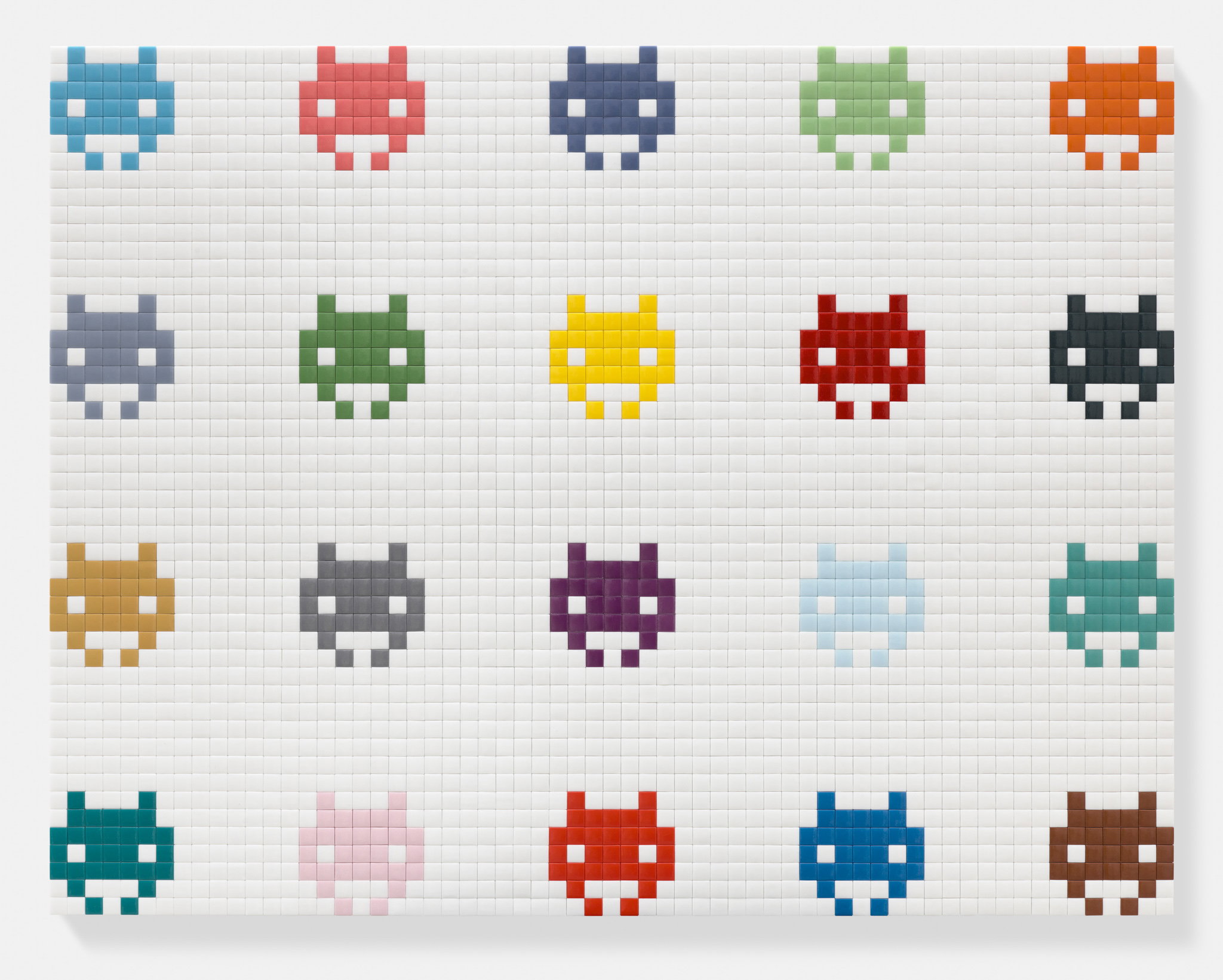
Invader
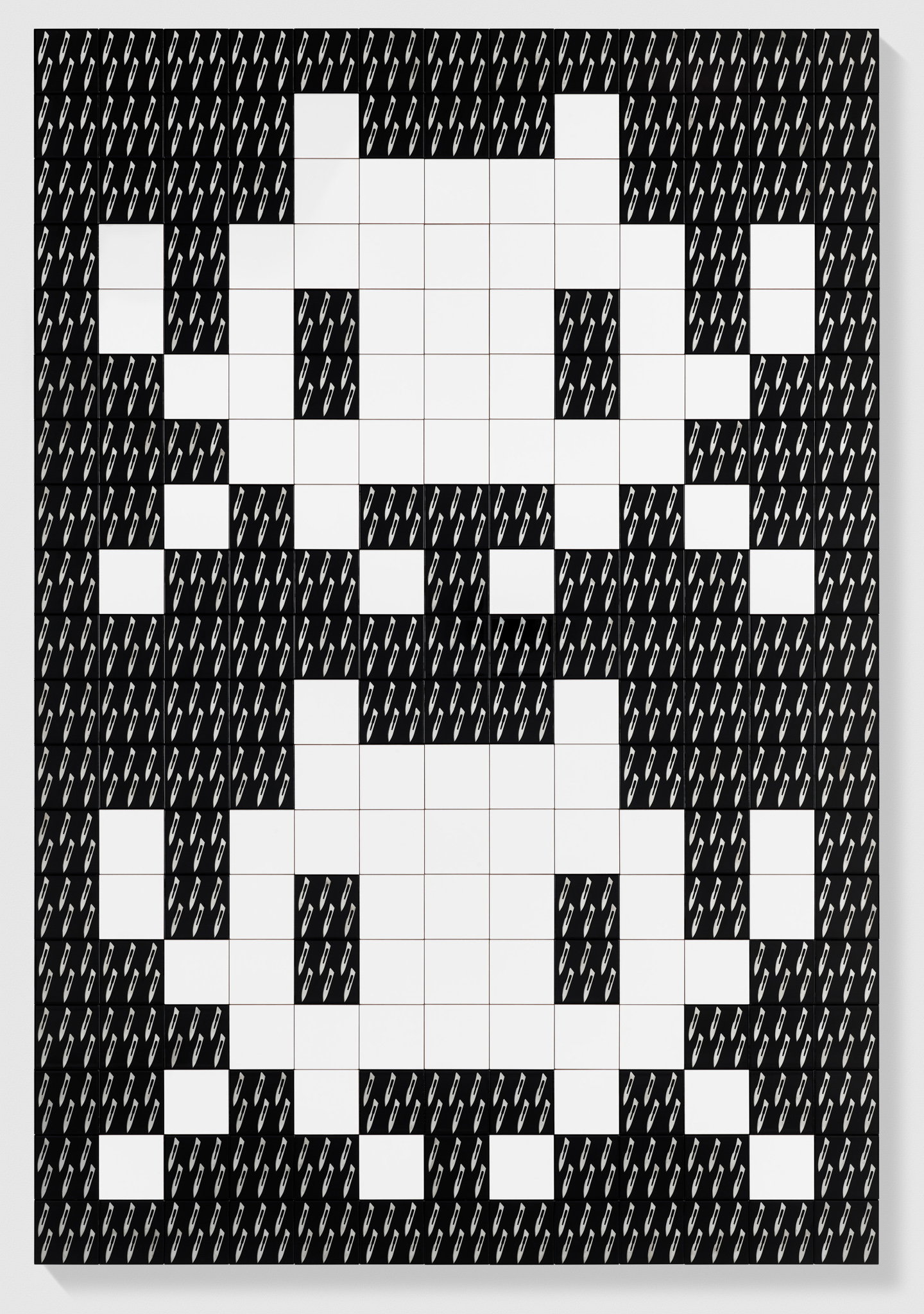
InvadHirst, 2025



The Tile Collectors Who Saw It First
There is something almost perverse about the appeal of ceramic tiles as collectible art objects. They are domestic by nature, associated with kitchens and bathrooms and the unglamorous infrastructure of daily life. And yet collectors who have spent time with a truly great tile work will tell you that nothing else hangs on a wall quite the same way. The surface has a physical authority that paint on canvas simply cannot replicate.
Light behaves differently against glaze. Colour reads with a saturation that feels almost internal, as if the pigment is lit from within. Living with ceramic tile art is living with something that gives back differently depending on the hour, the season, the angle of your reading lamp. The appeal also has something to do with touch, or more precisely the temptation of touch.

Damien Hirst
Spotted Invader 1, 2025
A well made tile announces its materiality immediately and insistently. Collectors describe an almost gravitational pull toward the surface, a desire to confirm with their fingertips what their eyes are already telling them. That tactile dimension creates an intimacy that wall based works on paper or canvas rarely achieve. The work is not asking you to look through it toward some imagined pictorial space.
It is asking you to reckon with it as a physical fact. For collectors who have spent years acquiring works that float in frames, this groundedness can feel like a revelation. Knowing what separates a good tile work from a great one requires looking closely at three things: the quality of the firing, the integrity of the image at the level of the medium itself, and the relationship between the artist's conceptual intentions and the specific constraints of the form. A tile that could just as easily have been a screenprint or a canvas and simply happens to be glazed ceramic is not a tile work in any meaningful sense.
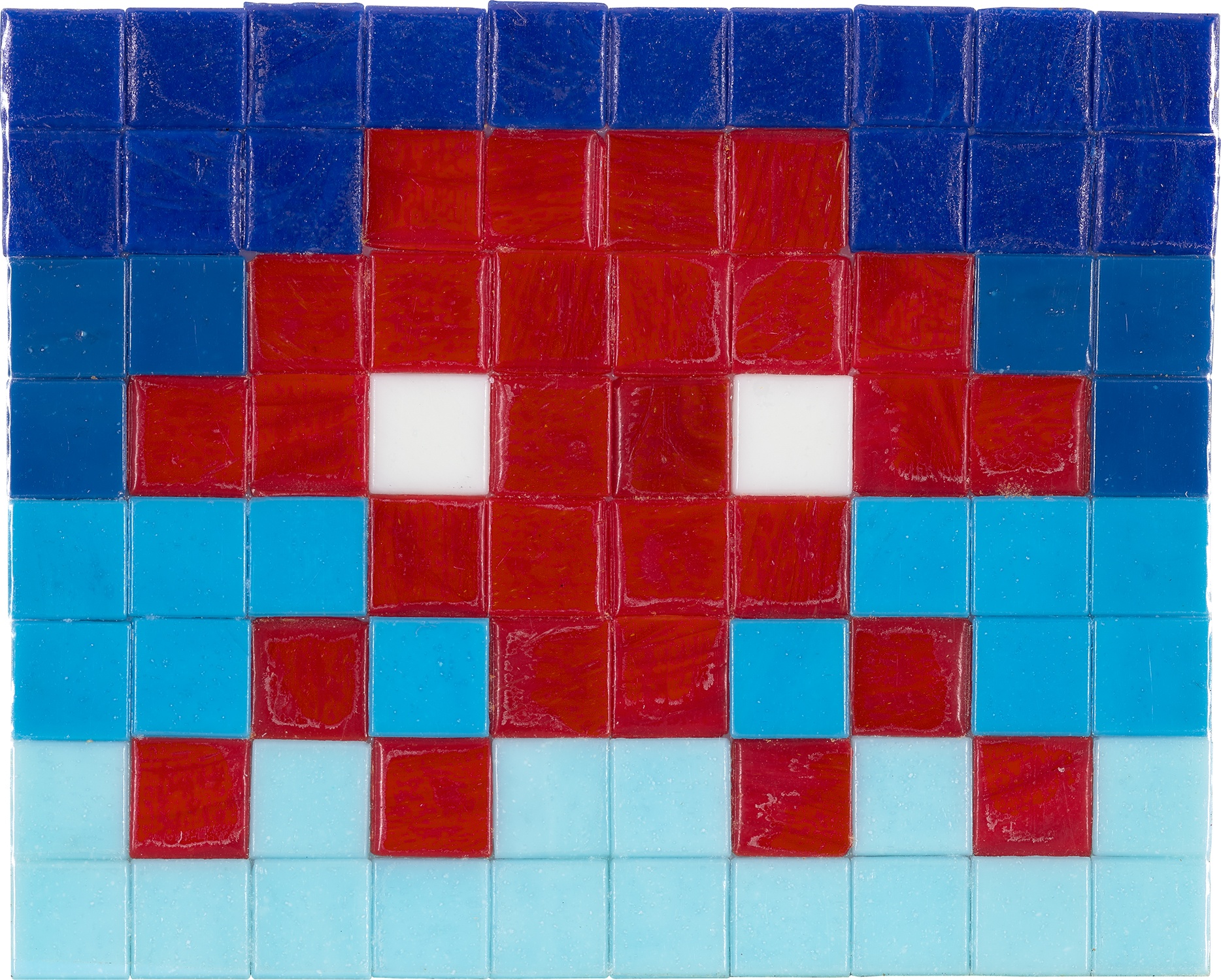
Invader
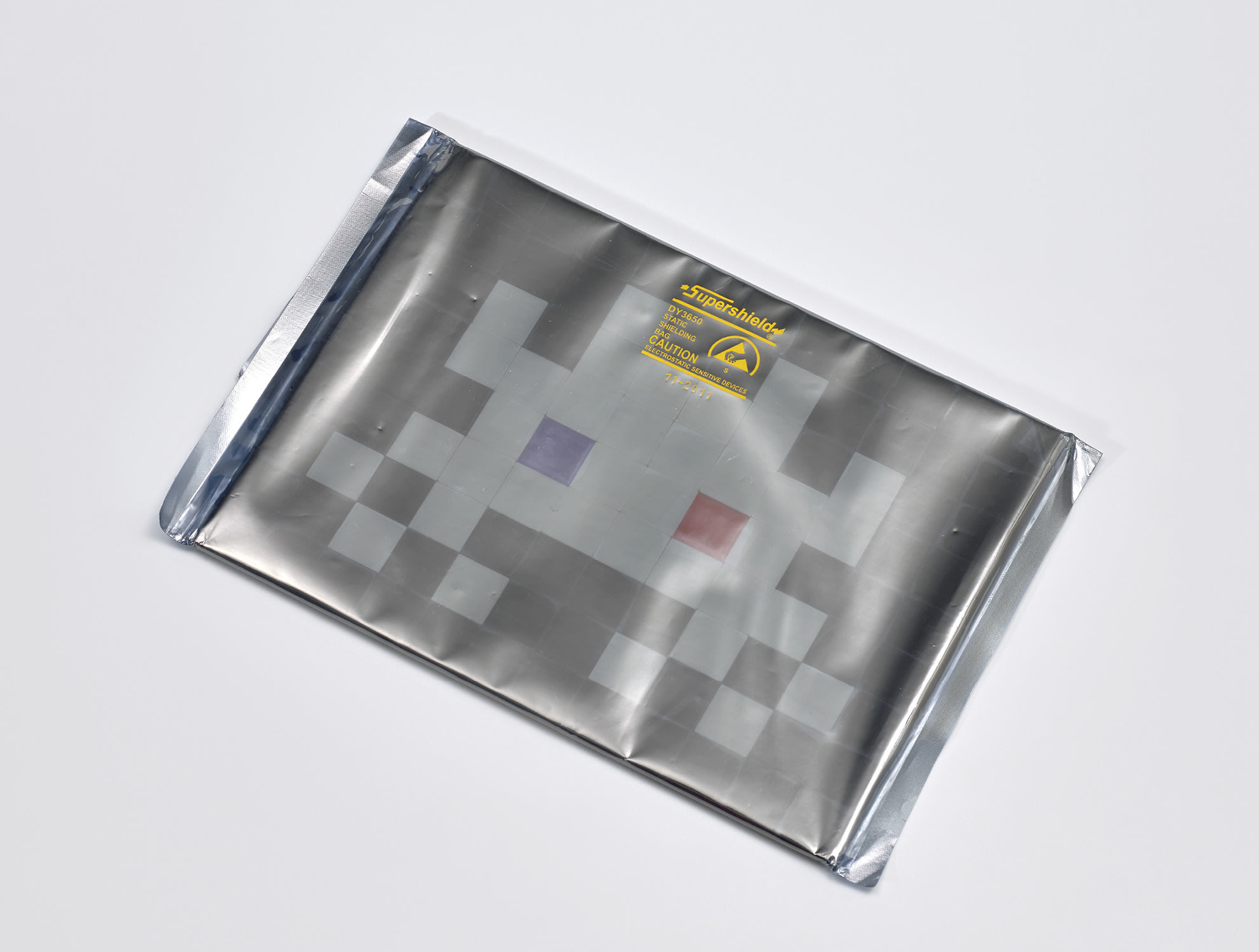
Invasion Kit #14 (3D Vision)
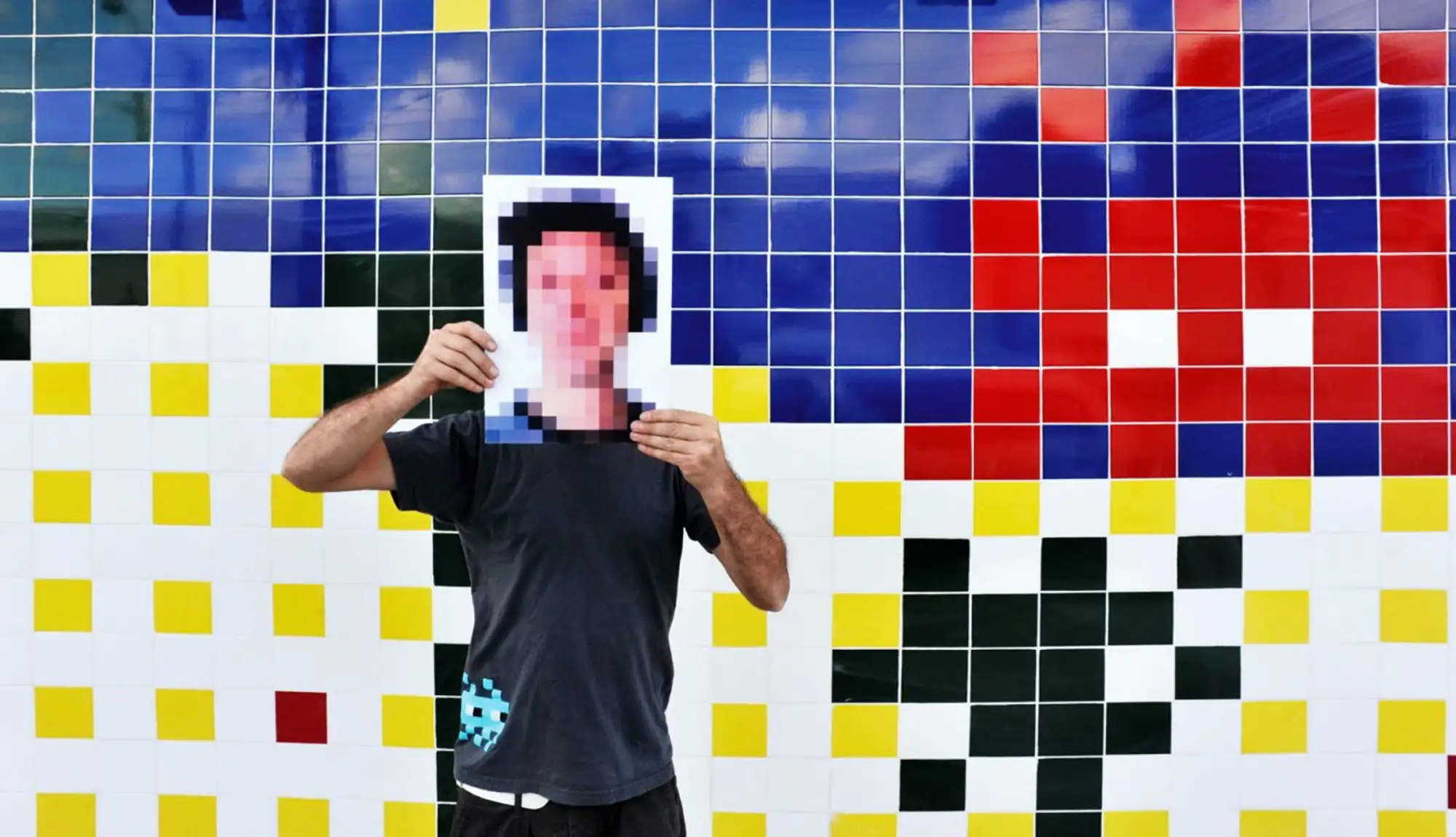
The strongest examples in this category are ones where the artist has genuinely grappled with what tile does and does not allow, where the image has emerged from the medium rather than been imposed upon it. Look for surfaces where the glaze has been used as a compositional element in its own right, not merely as a vehicle for an image that belongs somewhere else. Invader, the Paris based street artist whose practice is built around the visual language of early video game graphics, offers perhaps the most immediately legible case for tile as an artistic medium rather than a support. His choice of ceramic mosaic tiles is not incidental or decorative.
The pixelated logic of his imagery and the physical unit of the tile are the same logic. Each tile is a pixel. The grid of the mosaic is the grid of the screen. When you acquire an Invader work, you are acquiring something where the medium and the message are genuinely inseparable, and that coherence is precisely what gives the work staying power.
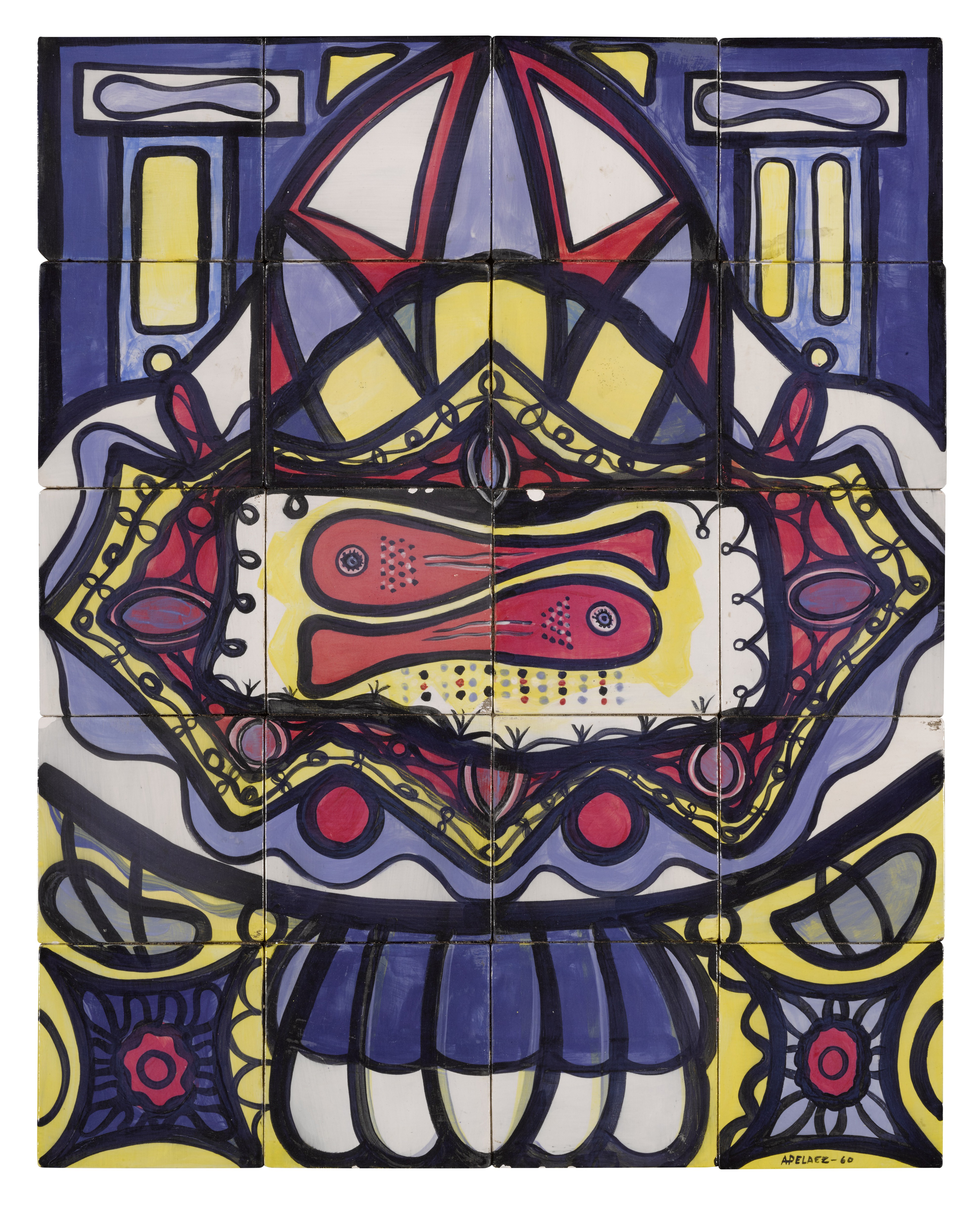
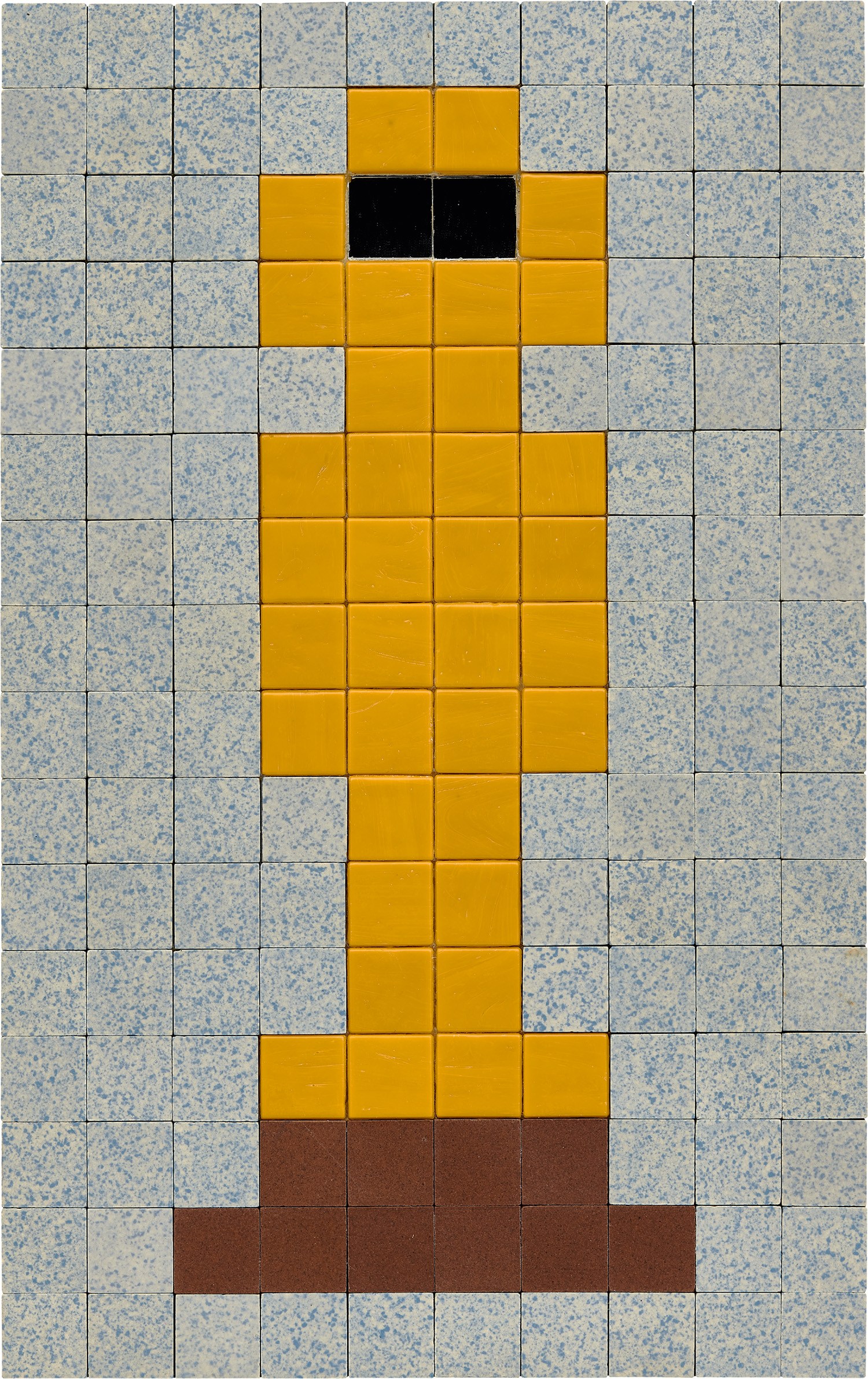
Amelia Peláez
Sin título, 1960
His works are well represented on The Collection, and serious collectors have noted that his studio editions maintain a consistency of quality that is not always easy to find in works that straddle street art and the gallery world. Amelia Peláez, the Cuban modernist whose career flourished in Havana in the mid twentieth century, offers a very different but equally compelling entry point. Peláez worked extensively with ceramic and tile in ways that drew on both the Spanish colonial tradition of azulejo and the exuberant chromatic ambition of Cuban modernism. Her tile work connects to a lineage of decorative and architectural ceramics that is only beginning to receive the scholarly attention it deserves.
For collectors interested in works with real art historical depth and a secondary market that has not yet fully priced in that significance, Peláez represents a genuinely interesting opportunity. On the question of emerging and underrecognized figures, the most interesting activity right now is happening among artists who came to ceramics through craft traditions rather than fine art schools and are now working at the scale and conceptual register that the gallery world recognizes as serious. Several studios in Oaxaca and in the ceramics communities of southern Japan are producing tile based works that have begun attracting attention from advisors who specialize in craft adjacent collecting. This is still early territory, which means the prices are accessible and the field is genuinely open.
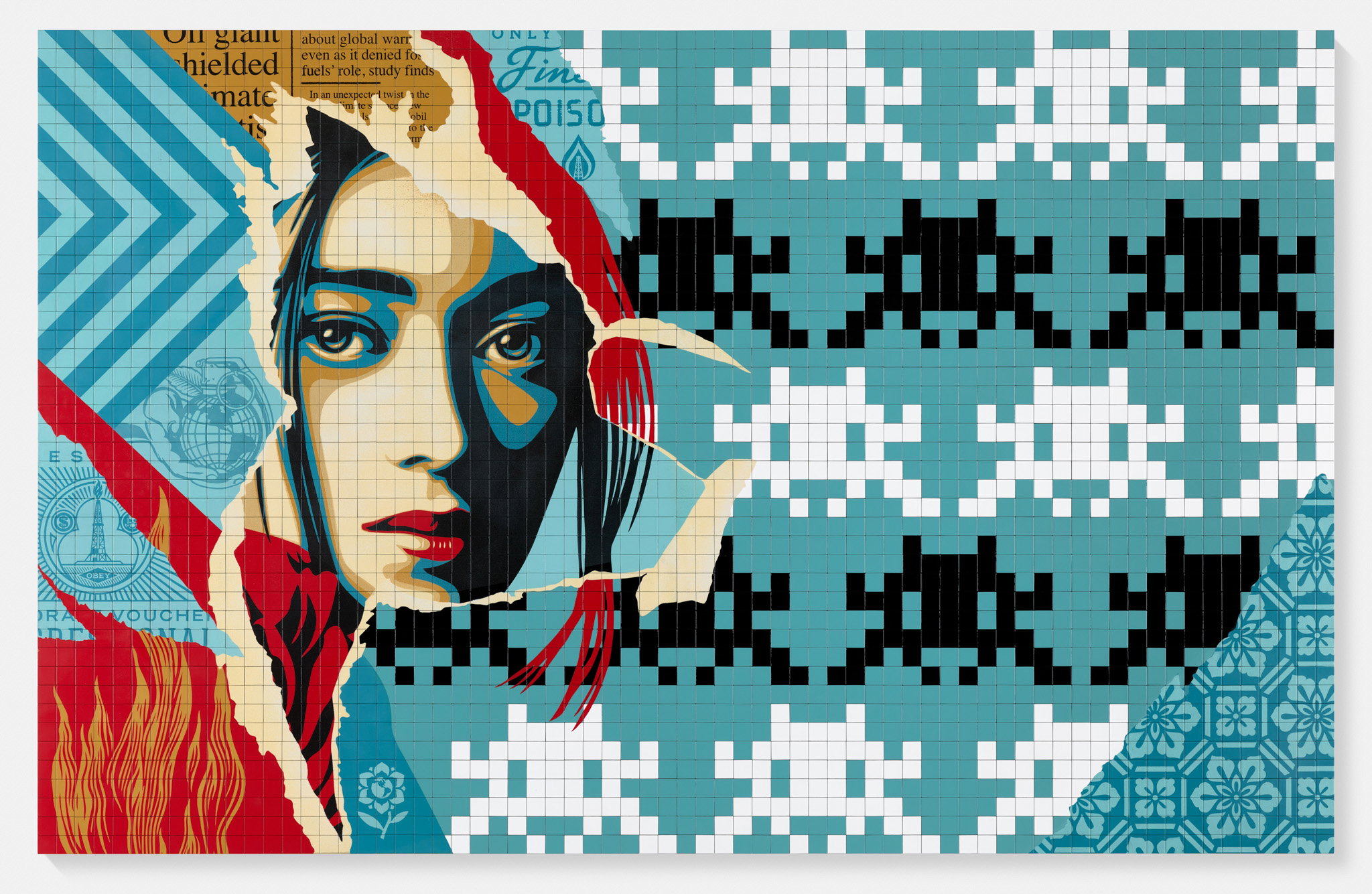
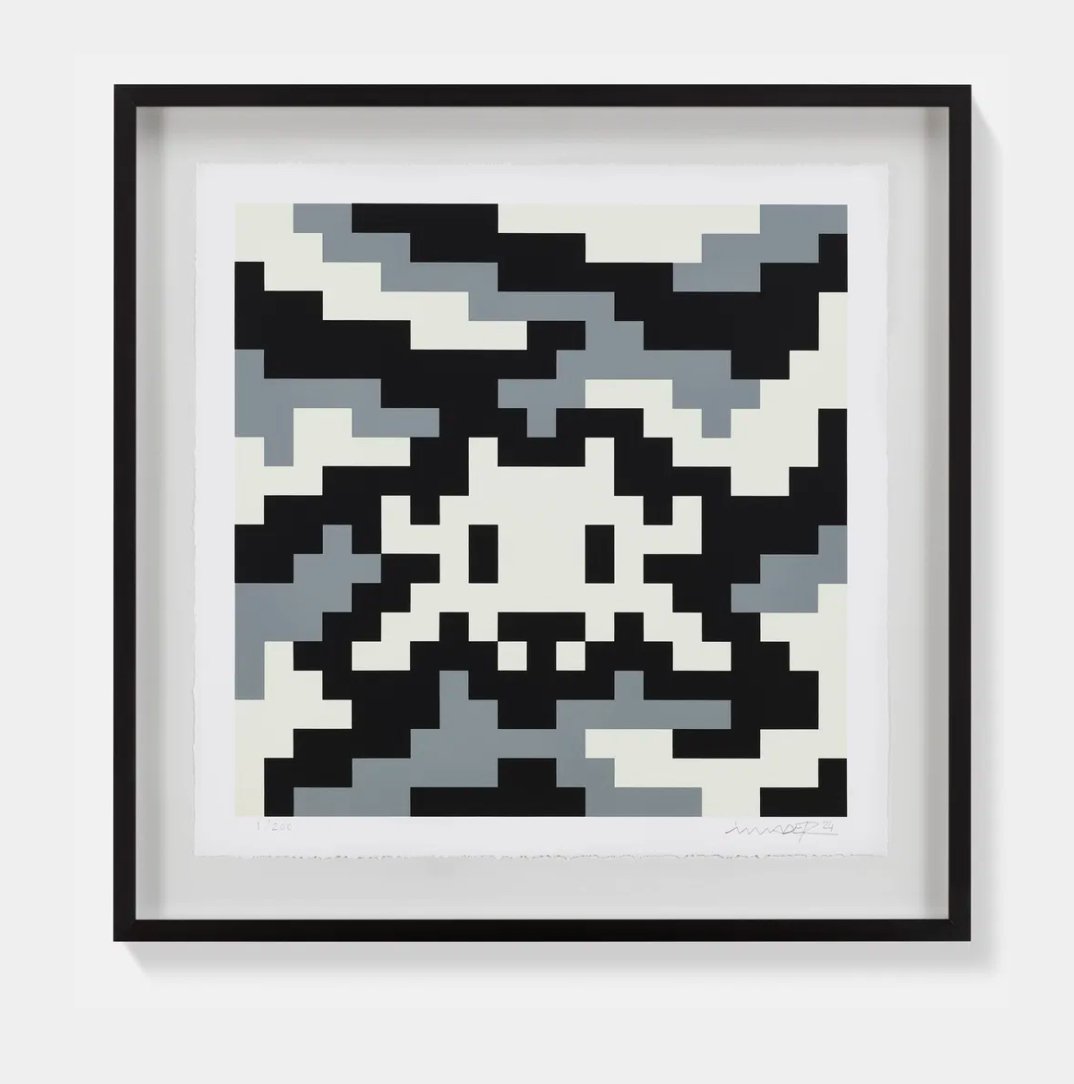
Shepard Fairey
Planetary Threat, 2025
At auction, tile works have historically underperformed relative to their quality, largely because major houses have been uncertain about how to categorize them and buyers have been uncertain about condition risk. That is changing. As the design and art markets have continued to blur, and as collectors have grown more comfortable acquiring works that engage with craft traditions, tile lots at Christie's and Phillips have performed more consistently over the past five years. Invader in particular has shown real resilience at auction, with works maintaining value even in soft market conditions, partly because his collector base is unusually loyal and partly because the works are genuinely difficult to fake convincingly.
On the practical side, condition assessment for ceramic tile works requires a different vocabulary than painting or works on paper. Ask about any restoration to the grout, any replaced or reglazed tiles, and whether the work was originally produced as a freestanding object or extracted from a larger installation. The distinction matters enormously for both authenticity and value. For display, most tile works benefit from mounting that allows for slight air circulation behind the panel, particularly in climates with significant humidity variation.
When dealing with editions, understand whether the edition is truly fixed and certified or whether the artist or estate reserves the right to produce further works from the same design. With Invader, the edition structures are generally clear and well documented, which is part of why advisors feel comfortable recommending the work to clients who value transparency. Ask your gallery for the certificate of authenticity and, where possible, for documentation of the firing history. A work that comes with that level of provenance is a work that will be easier to sell, lend, and insure for the rest of its life.