


Join The Collection to save, track, and explore works like this.

Jenny Holzer — Inflammatory Essays (twelve works)
Jenny Holzer

Inflammatory Essays (twelve works)

1982

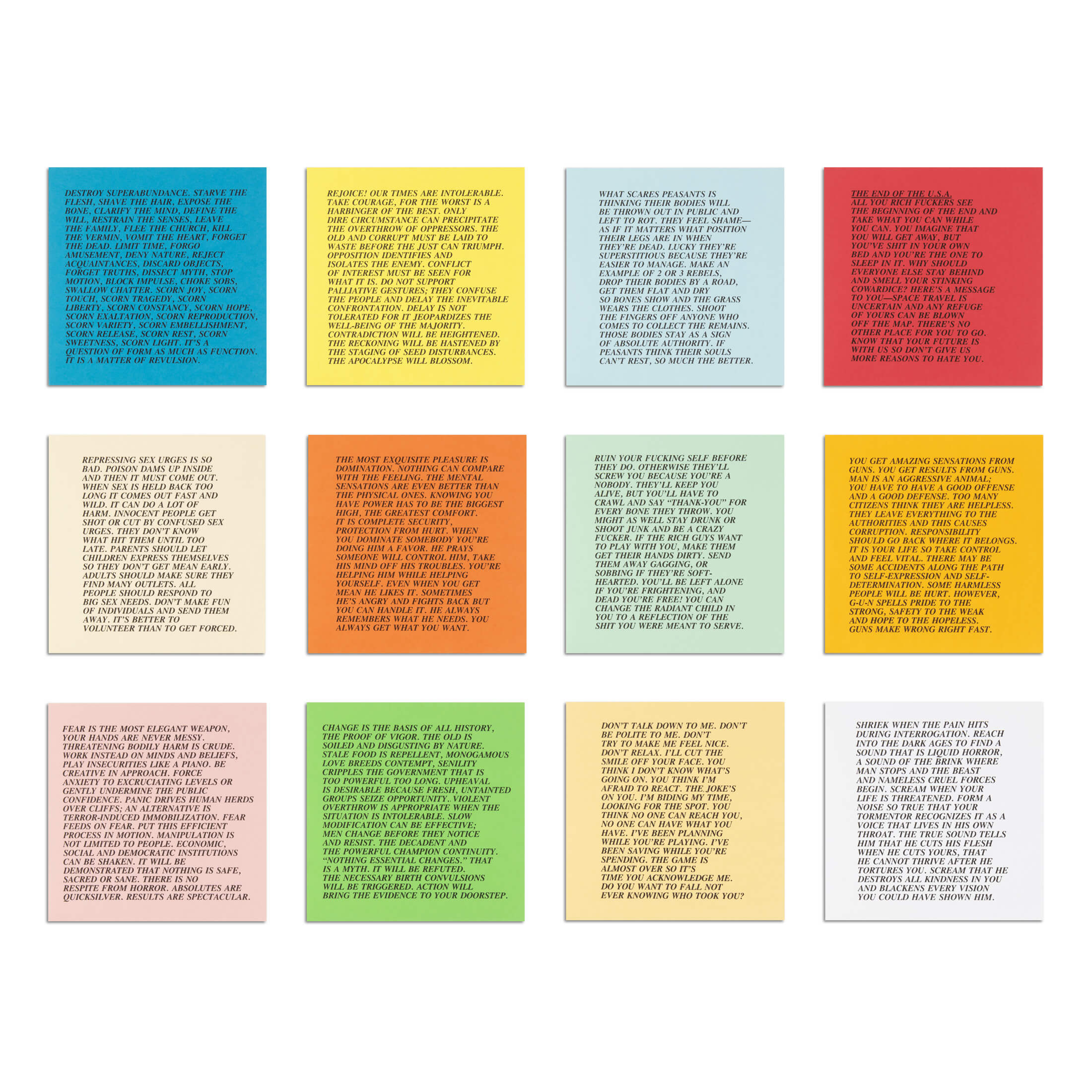
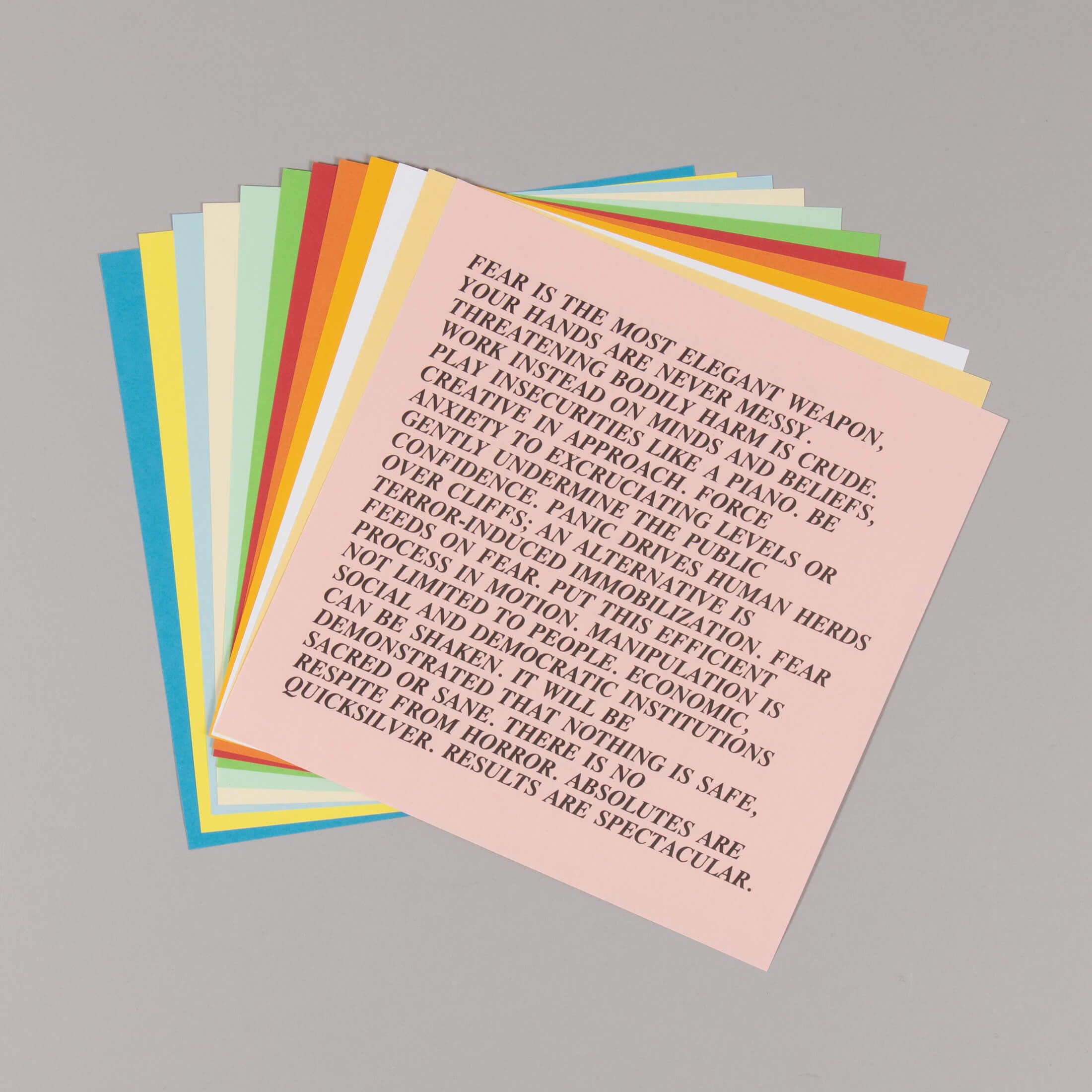
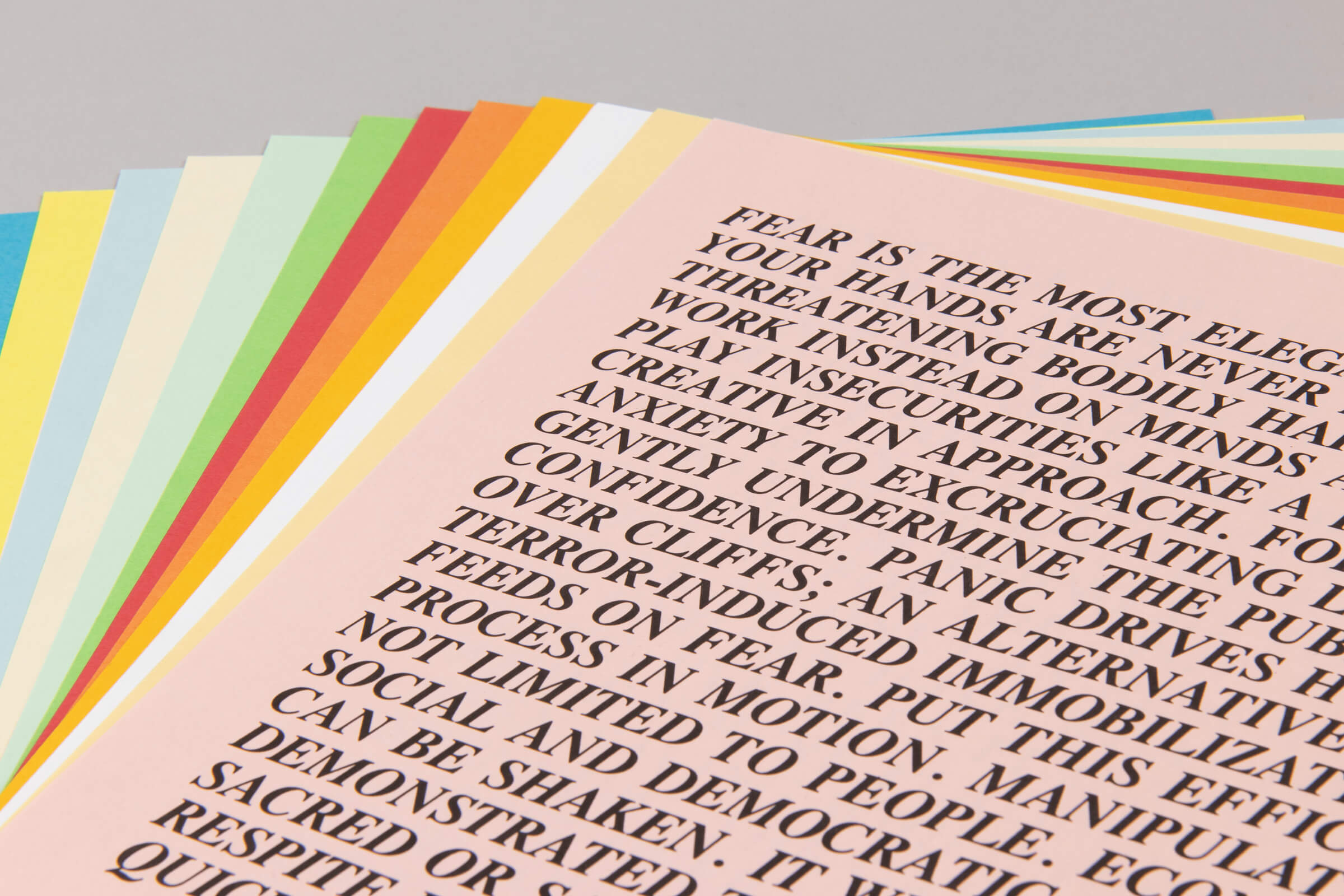
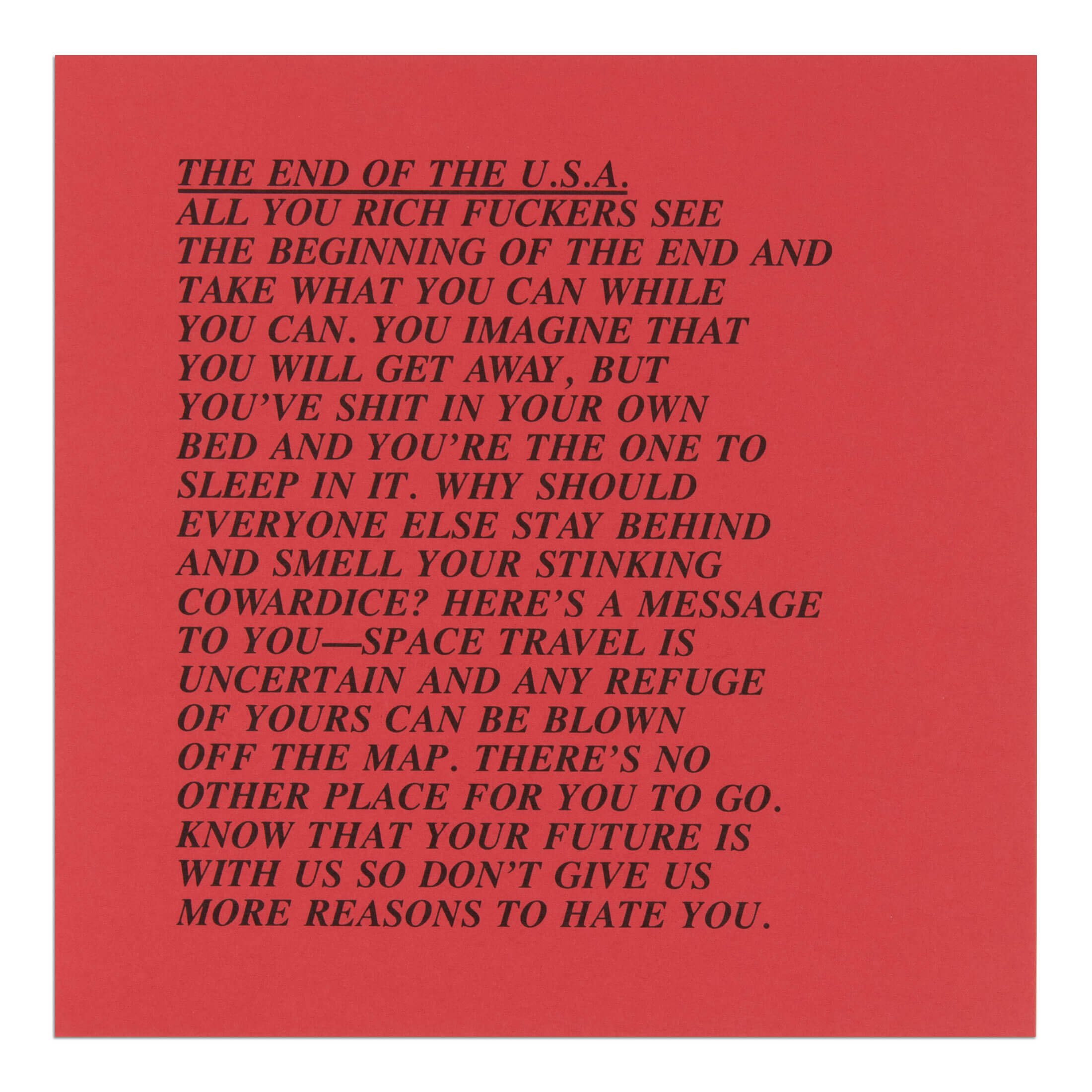
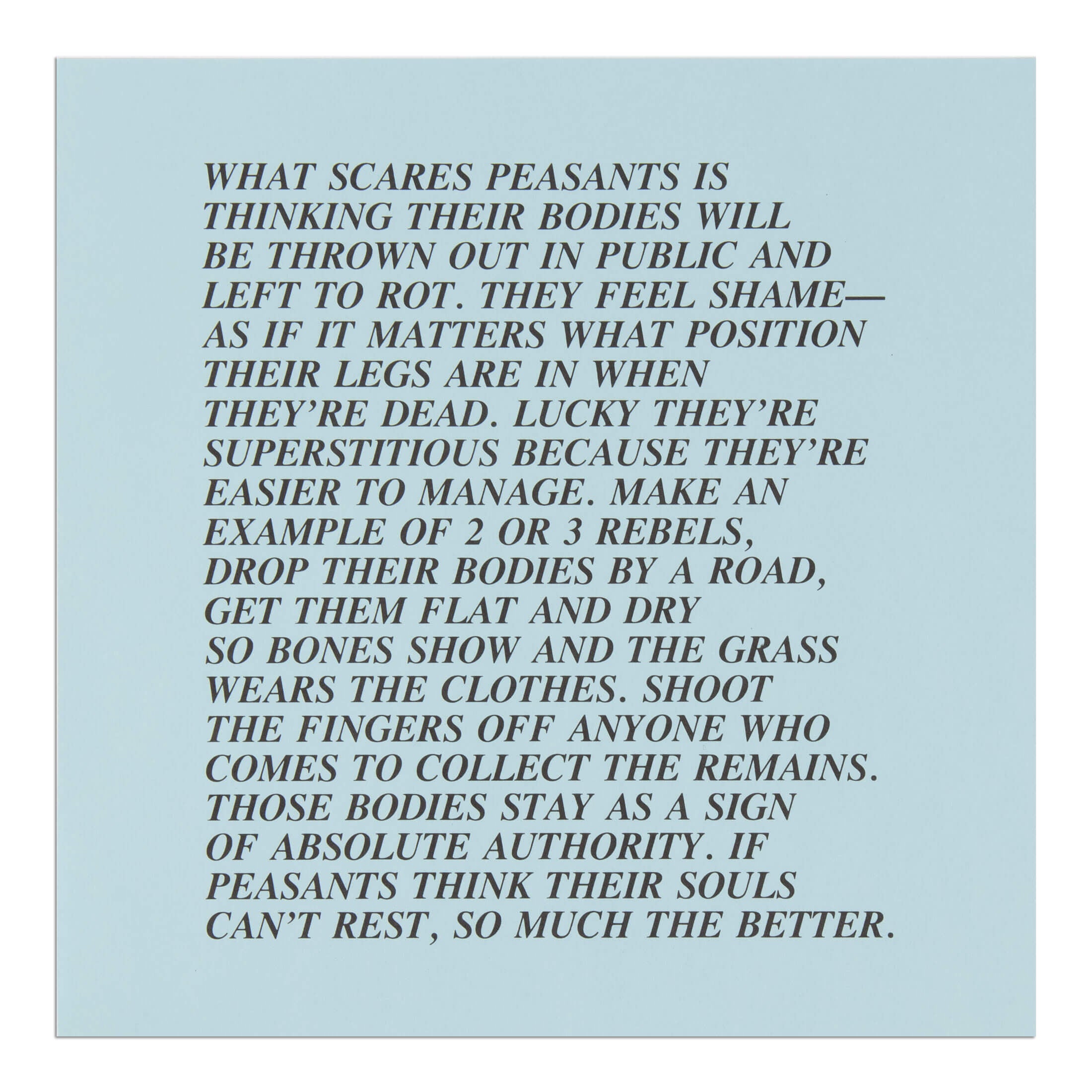
Jenny Holzer 's Inflammatory Essays (twelve works) is a foundational text-based artwork developed between 1979 and 1982 and first realized as a series of anonymous posters installed illegally throughout New York City. Working outside institutional frameworks, the artist used wheat paste to place these multicolored texts directly into public space, where they confronted pedestrians without attribution, explanation, or invitation. Developed alongside her contemporaneous Truisms project, Inflammatory Essays extends Holzer’s early exploration of language as a public, confrontational medium. While Truisms distills ideology into aphoristic statements, Inflammatory Essays adopts a more expansive and destabilizing form, using longer texts to immerse the reader in conflicting systems of belief and authority. Several of the texts that later formed  Inflammatory Essays were first published in book form in 1979 as Black Book Posters , a self-published volume that marked the earliest consolidated appearance of this material. From this source, the project expanded into street posters that were released gradually over a four-year period, allowing the artworks to accumulate meaning through repetition, contradiction, and context. Each essay consists of exactly one hundred words arranged in twenty tightly structured lines. The texts adopt authoritative and often extreme rhetorical voices, drawing on the language of political ideology, revolutionary theory, propaganda, and moral absolutism. Assertions advocating upheaval, obedience, or violence are juxtaposed with statements that undermine or negate them. Rather than presenting a personal manifesto, the artwork exposes how persuasive language functions when stripped of authorship and accountability. The twelve-sheet offset lithograph edition, published in 1982, represents the first widely circulated and standardized print form of Inflammatory Essays , following an earlier, smaller five-sheet edition. Issued following earlier, smaller experimental groupings, this set of prints preserves the visual directness and urgency of the original street posters while allowing the artwork to enter institutional and private collections. The use of vividly colored paper enhances both legibility and impact, reinforcing the confrontational nature of the texts. Issued unsigned and unnumbered, as intended, Inflammatory Essays occupies a crucial position in the history of conceptual and political art . The artwork remains strikingly relevant, continuing to challenge viewers to confront the power, volatility, and ambiguity of language in the public sphere.

Medium
Set of 12 offset lithographs on colored paper
Sheet
Signed
Yes

Notes

From MLTPL New Art Editions collection. Handle: jenny-holzer-inflammatory-essays-twelve-works.

For Sale — $3300
Start the Discussion

Request access to join the discussion

About this work

Jenny Holzer, Inflammatory Essays (twelve works), 1982

Jenny Holzer 's Inflammatory Essays (twelve works) is a foundational text-based artwork developed between 1979 and 1982 and first realized as a series of anonymous posters installed illegally throughout New York City. Working outside institutional frameworks, the artist used wheat paste to place these multicolored texts directly into public space, where they confronted pedestrians without attribution, explanation, or invitation. Developed alongside her contemporaneous Truisms project, Inflammatory Essays extends Holzer’s early exploration of language as a public, confrontational medium. While Truisms distills ideology into aphoristic statements, Inflammatory Essays adopts a more expansive and destabilizing form, using longer texts to immerse the reader in conflicting systems of belief and authority. Several of the texts that later formed  Inflammatory Essays were first published in book form in 1979 as Black Book Posters , a self-published volume that marked the earliest consolidated appearance of this material. From this source, the project expanded into street posters that were released gradually over a four-year period, allowing the artworks to accumulate meaning through repetition, contradiction, and context. Each essay consists of exactly one hundred words arranged in twenty tightly structured lines. The texts adopt authoritative and often extreme rhetorical voices, drawing on the language of political ideology, revolutionary theory, propaganda, and moral absolutism. Assertions advocating upheaval, obedience, or violence are juxtaposed with statements that undermine or negate them. Rather than presenting a personal manifesto, the artwork exposes how persuasive language functions when stripped of authorship and accountability. The twelve-sheet offset lithograph edition, published in 1982, represents the first widely circulated and standardized print form of Inflammatory Essays , following an earlier, smaller five-sheet edition. Issued following earlier, smaller experimental groupings, this set of prints preserves the visual directness and urgency of the original street posters while allowing the artwork to enter institutional and private collections. The use of vividly colored paper enhances both legibility and impact, reinforcing the confrontational nature of the texts. Issued unsigned and unnumbered, as intended, Inflammatory Essays occupies a crucial position in the history of conceptual and political art . The artwork remains strikingly relevant, continuing to challenge viewers to confront the power, volatility, and ambiguity of language in the public sphere.

Medium
Set of 12 offset lithographs on colored paper
Dimensions
sheet: 25.4 x 25.4 cm
Year
1982
Signed
Hand-signed by the artist
Seen at
MLTPL, Hamburg

Related themes

Offset Lithography, Feminist Art, American, Text Art, Conceptual Art, Postmodern, Typography, Political Commentary, Social Critique, Print Series

More works by Jenny Holzer

Collected by

Alex Capecelatro, Art Institute of Chicago